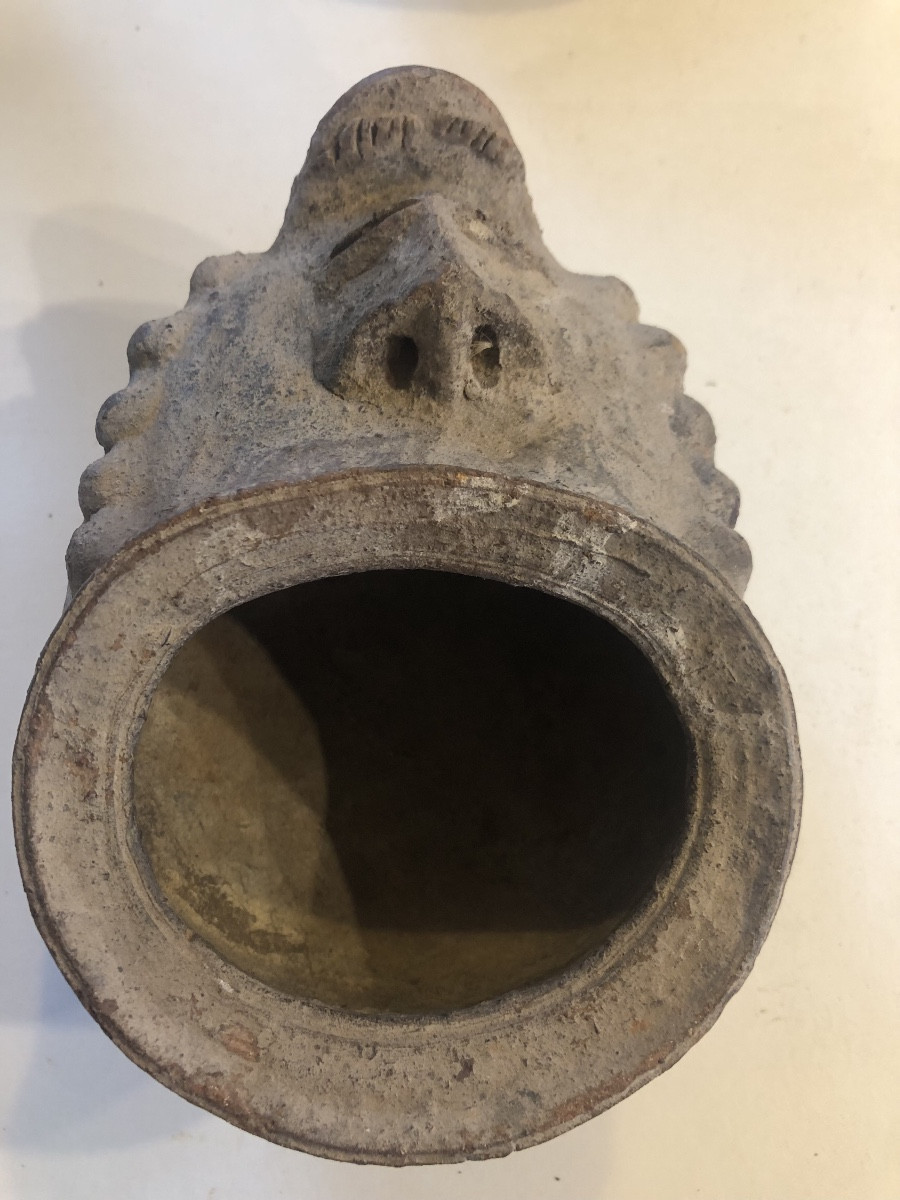

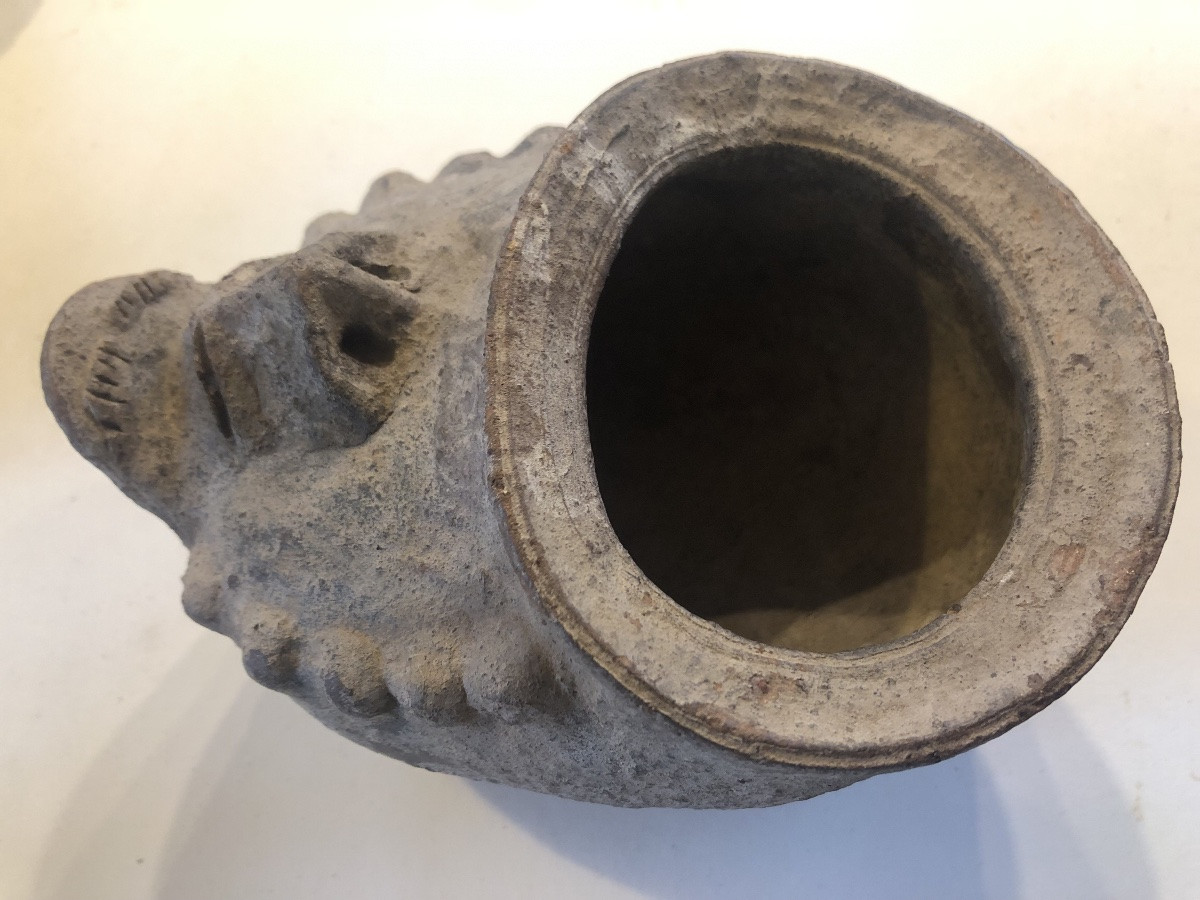
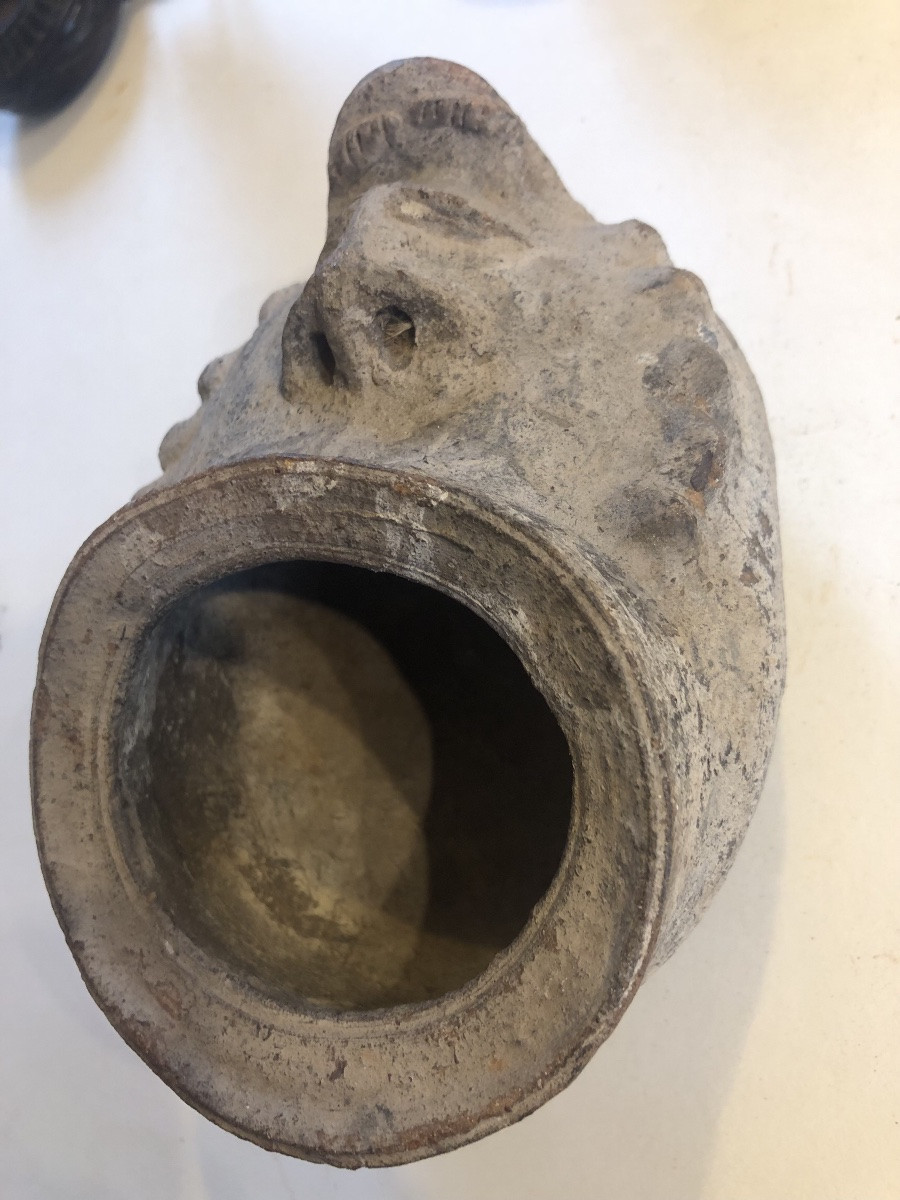

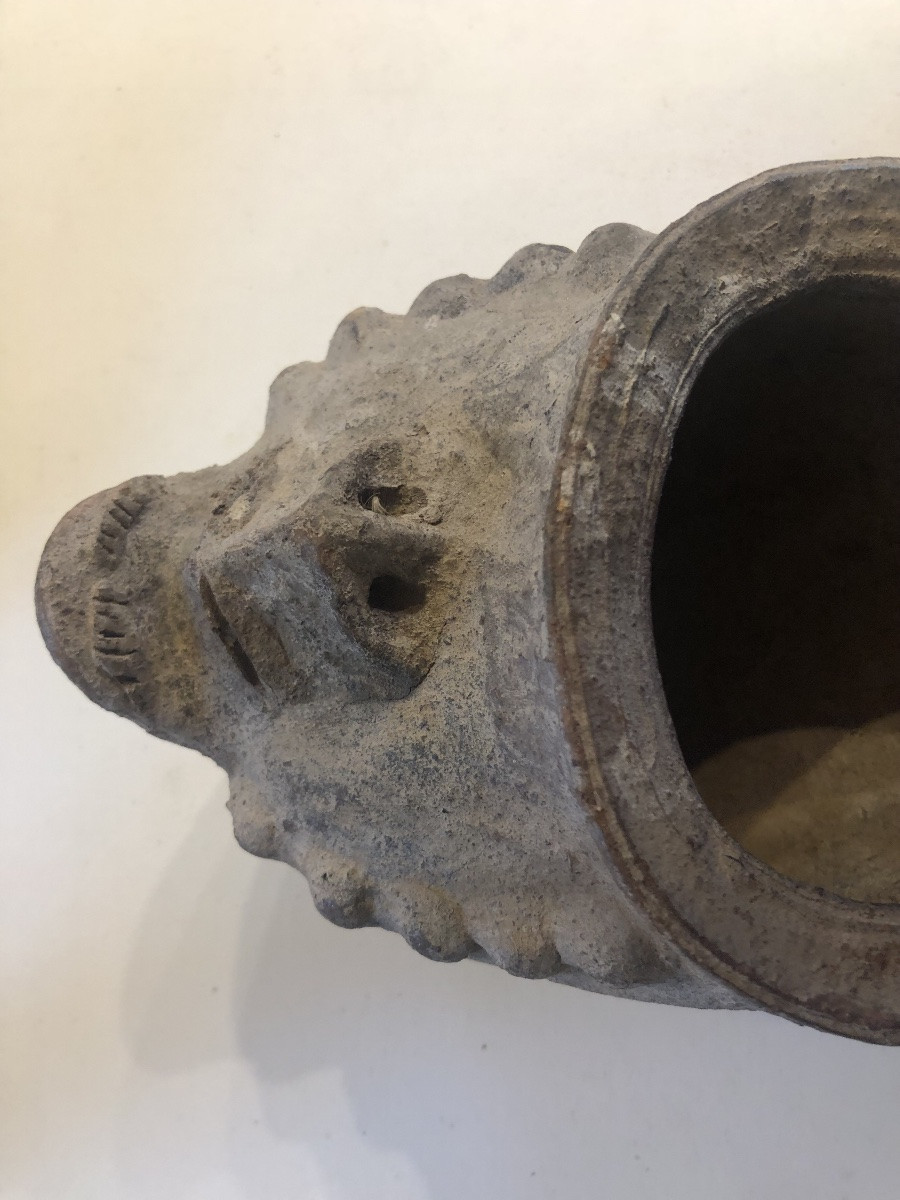
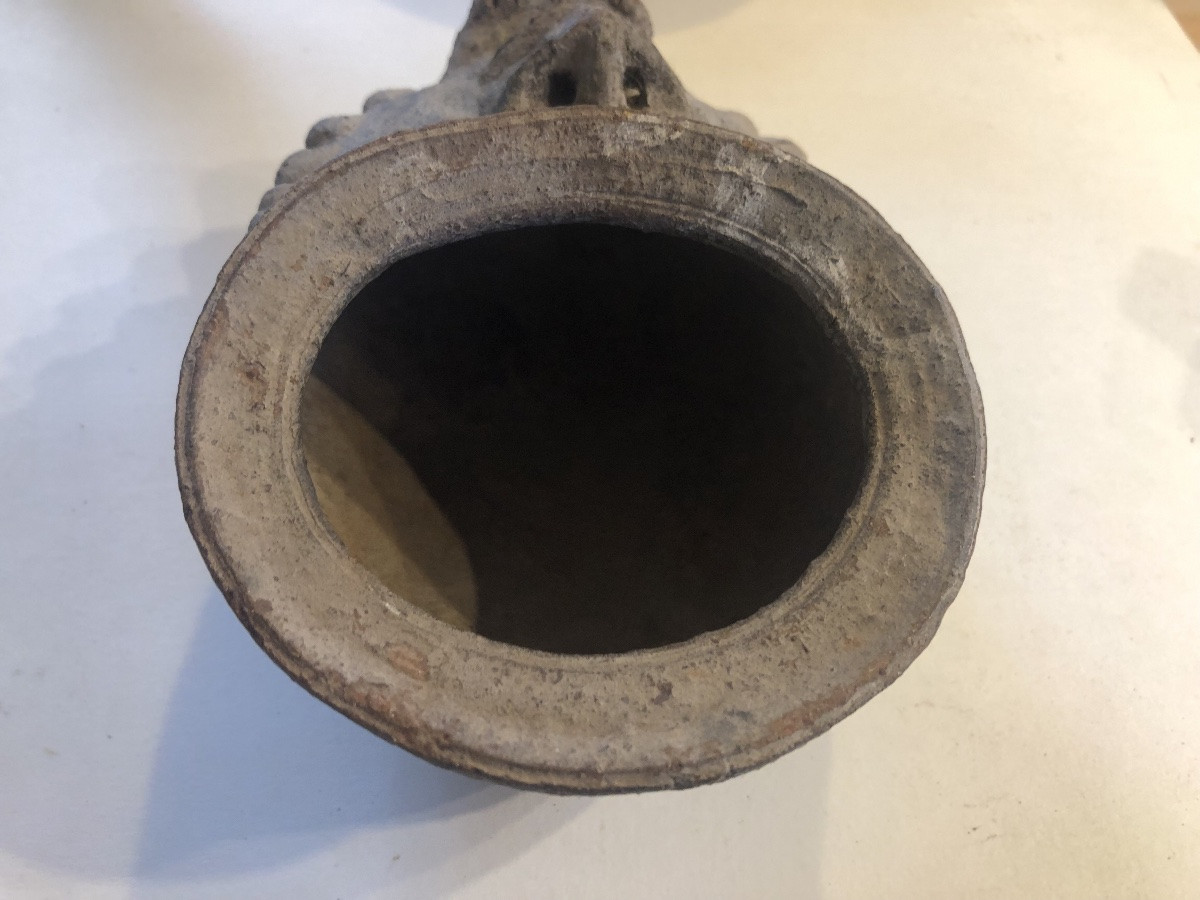

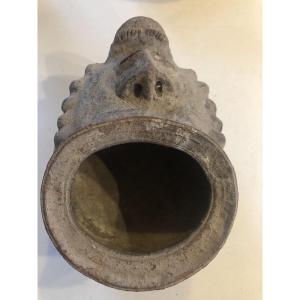


"Anthropomorphic Gargoyle Vessel, Igbo Izzi, Nigeria, 20th Century "
An ancient anthropomorphic terracotta vase, ceremonial or medical, from the Igbo Izzi people of Nigeria, fashioned with incised and raised ornamentation and a human head. African ceramic works can be loosely divided into two categories: figurative terracotta art and faience vessels. Unlike figurative art, ceramic vessels can be further divided into two subcategories: utilitarian and ceremonial items. It is possible to find examples that appear to combine both broad categories when encountering figurative vessels; however, upon closer examination, figurative vessels were almost always used in ceremonial contexts. The association between pottery and ritual may not seem obvious at first. For ancient peoples, the transformation of soft, raw clay into brittle pottery hardened in a fire pit must have seemed nothing short of magical. The clay collection itself was also shrouded in ritual due to the close connection between humanity and nature. Even the firing process was considered sacred and often involved offerings to ensure its success. In many ways, the transformation of clay into fired ceramics was a form of alchemy, and in this respect was related to metalworking. In many African societies, potters and metalworkers were elevated in status because of their ability to create magical objects imbued with all kinds of power. It is not surprising that some of the earliest figurative pottery vessels have been found at elaborate burial sites. Anthropomorphic and figurative vases occupy a unique place in African art. They display the balance between various domains—the utilitarian and the ceremonial, the secular and the religious, as well as the material and the spiritual. 













 Le Magazine de PROANTIC
 TRÉSORS Magazine
 Rivista Artiquariato