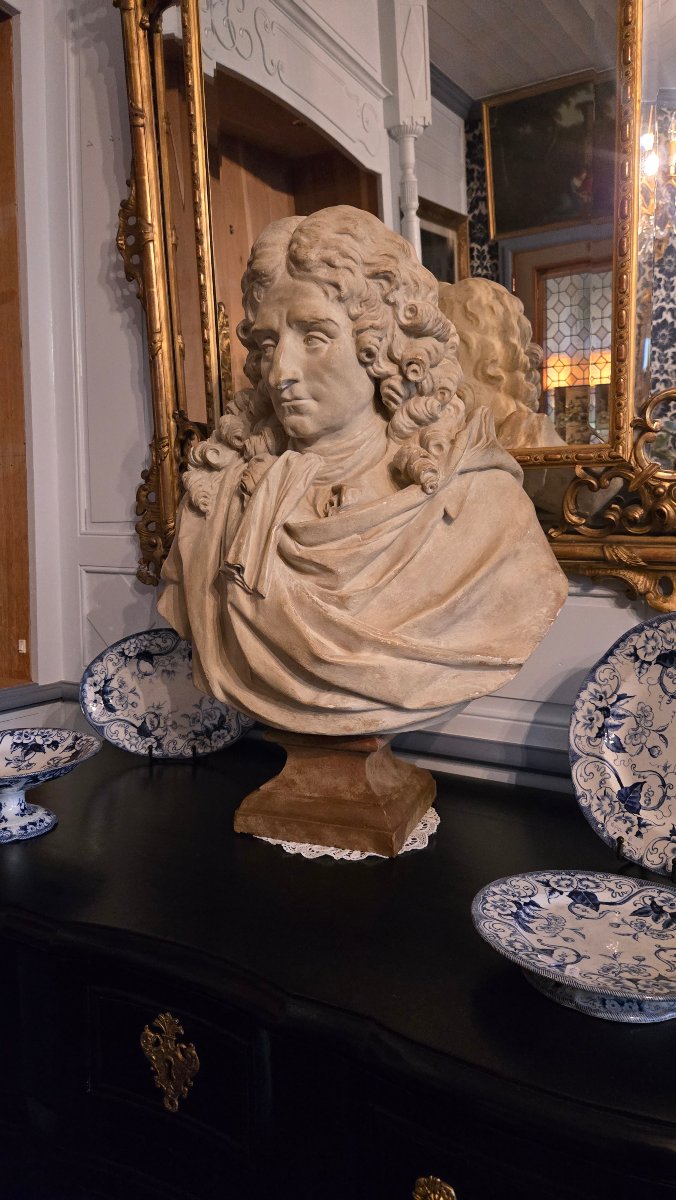
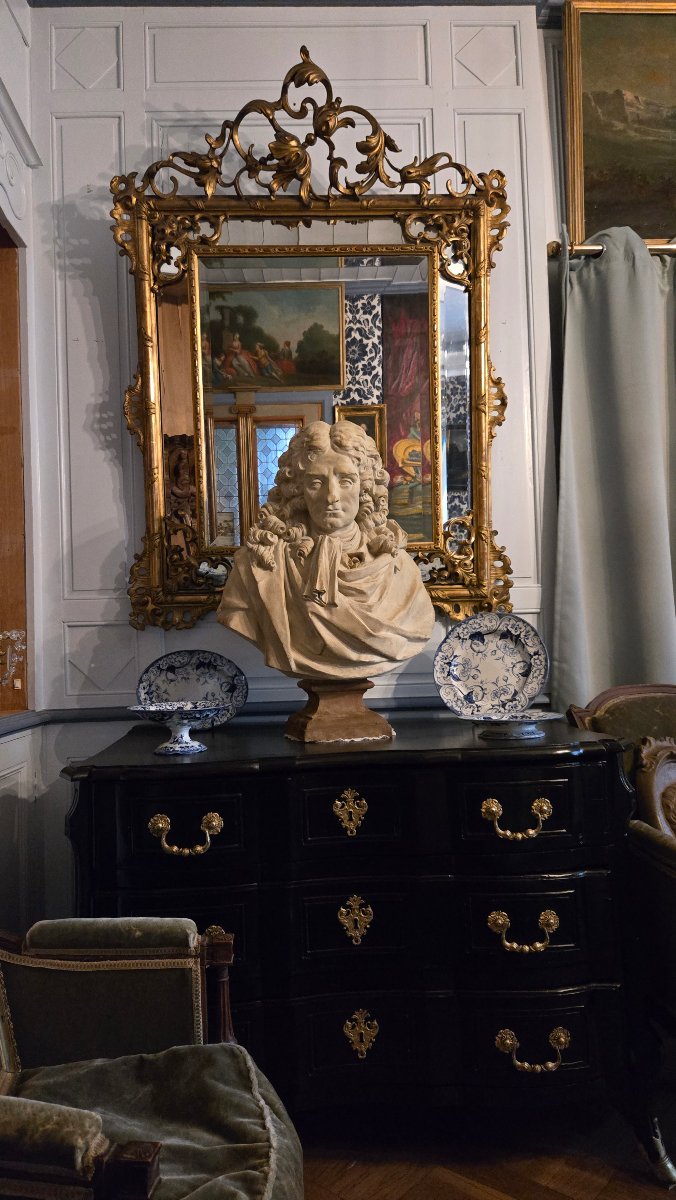


Large Bust Of Jean De La Fontaine – After Louis-pierre Deseine – Louvre Museum
Patinated plaster – Early Louvre Museum casting, circa 1927–1960
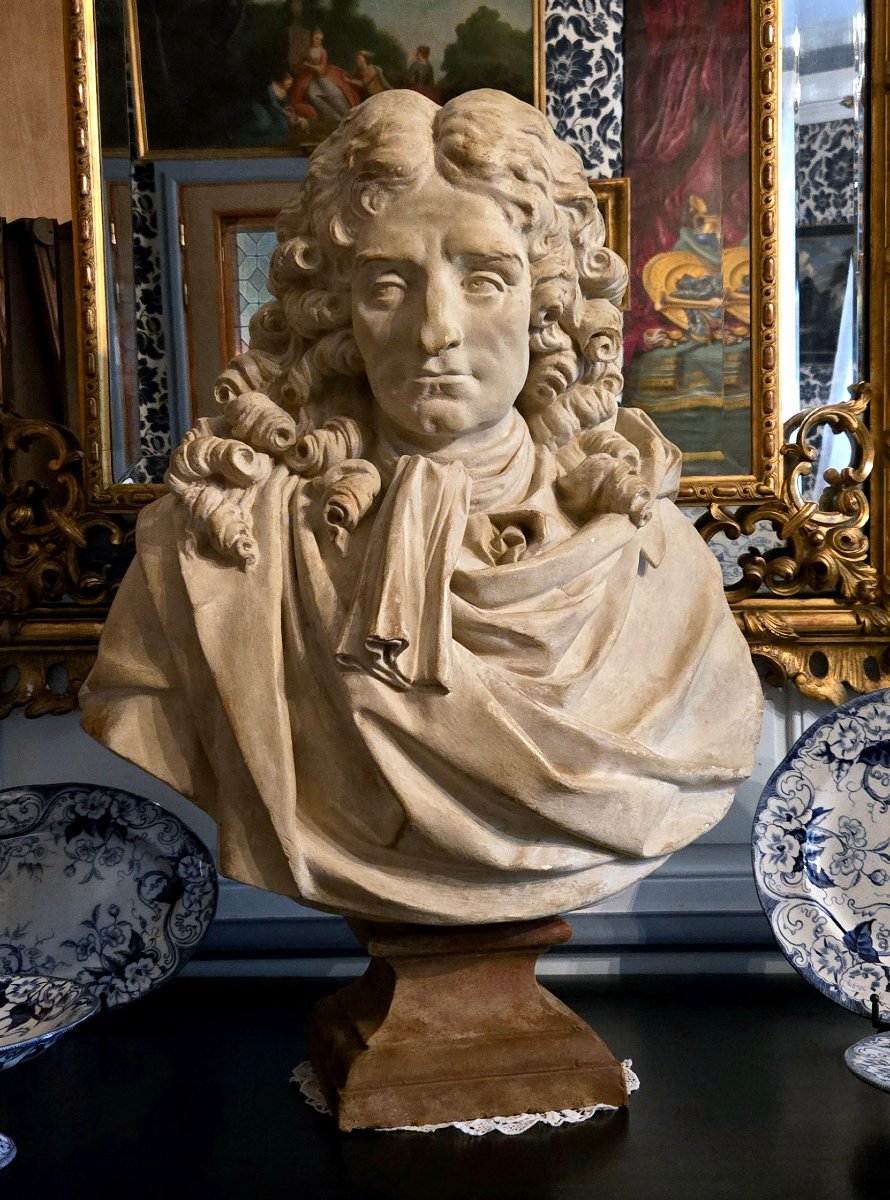
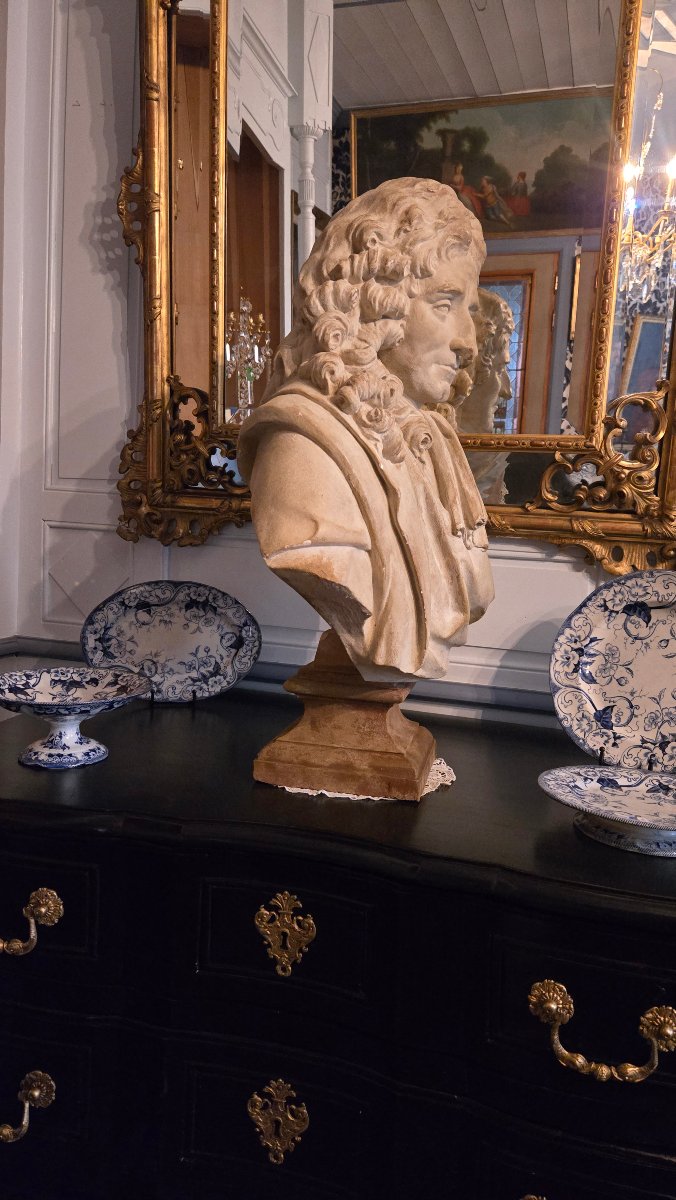
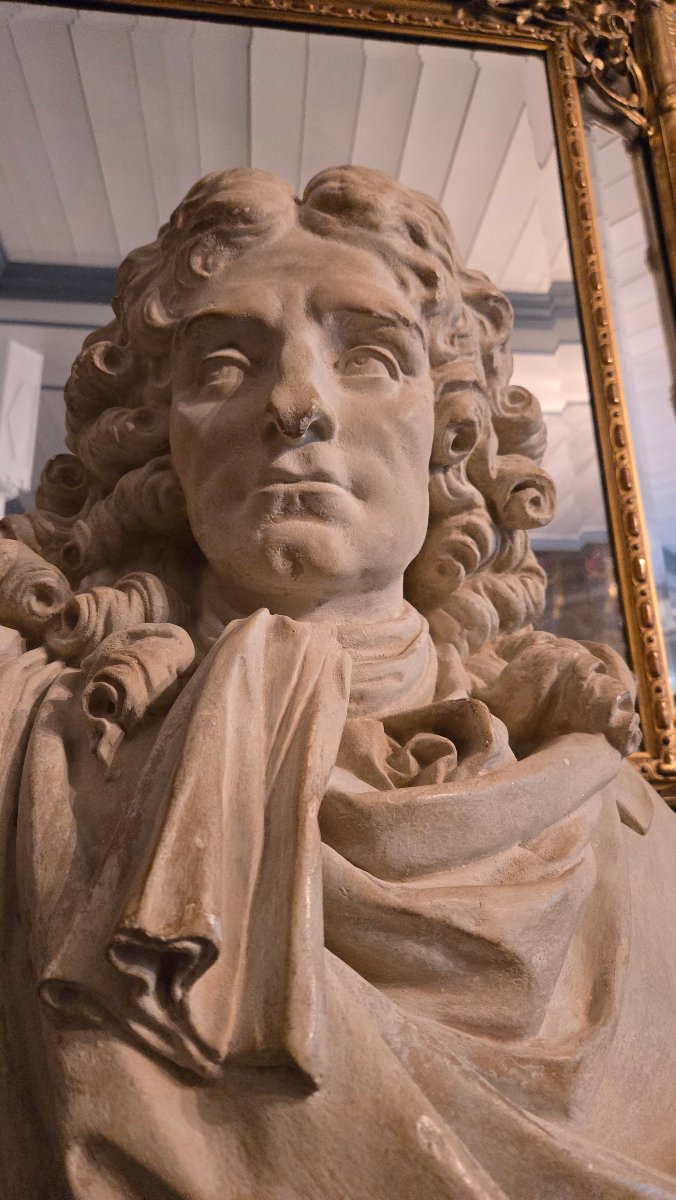
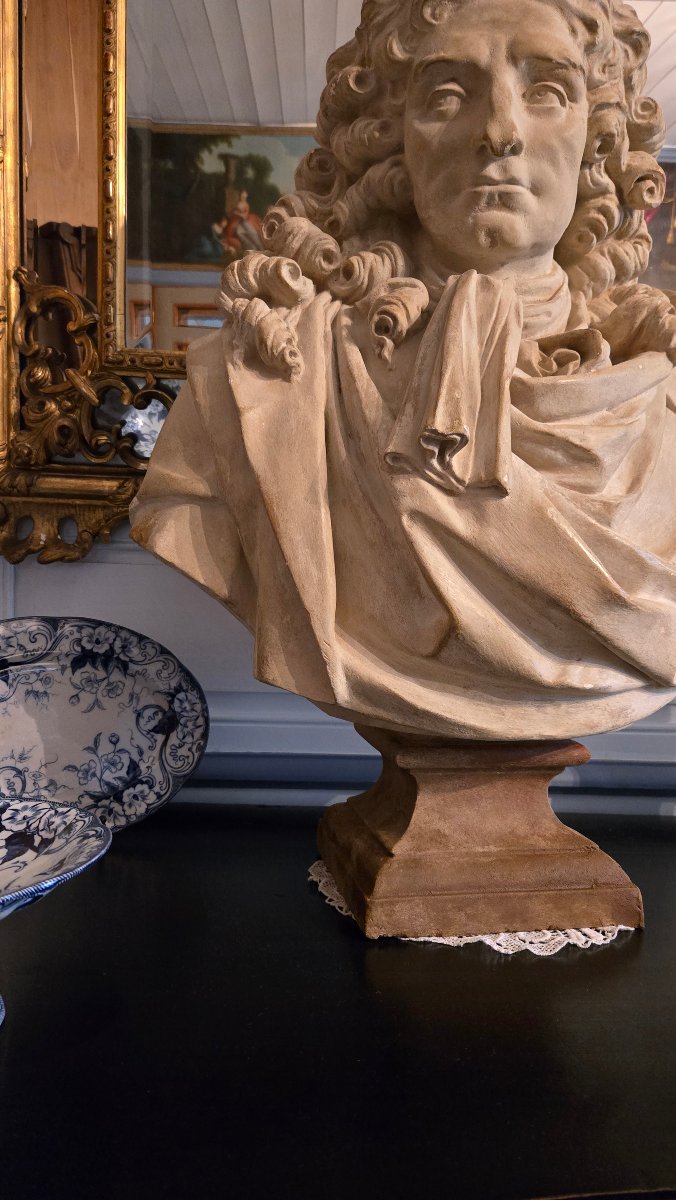
An impressive patinated plaster bust depicting Jean de La Fontaine (1621–1695), the celebrated French poet and fabulist, after an original sculpture by Louis-Pierre Deseine (1749–1822), created at the end of the 18th century.
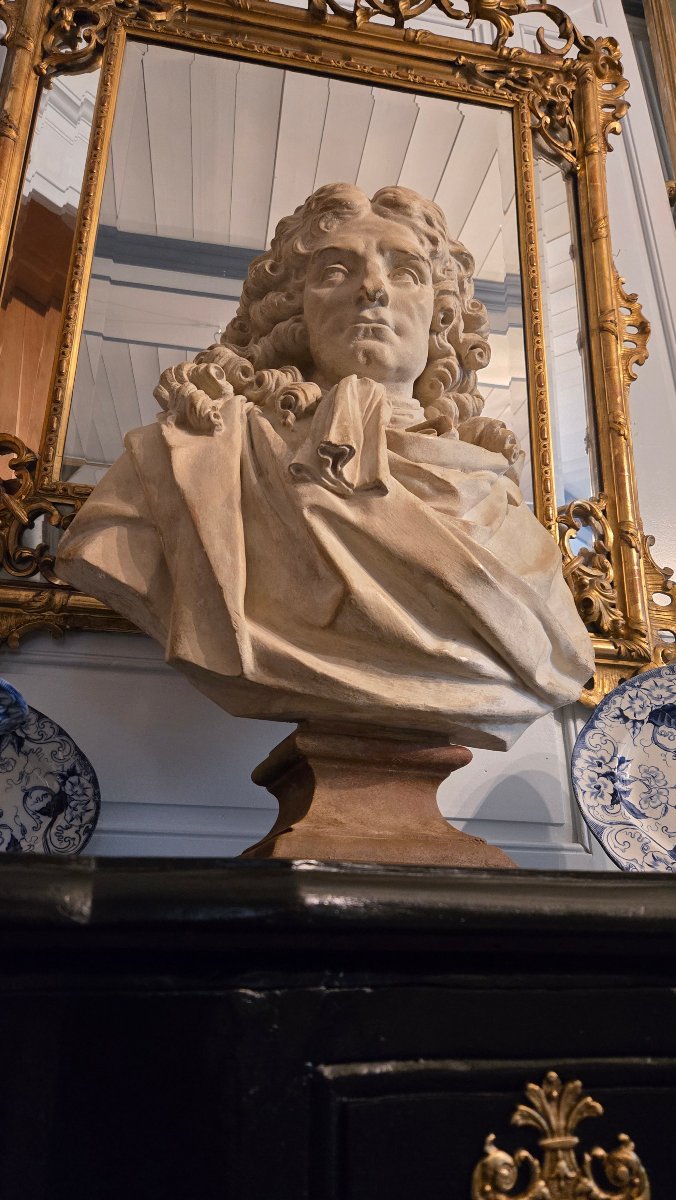
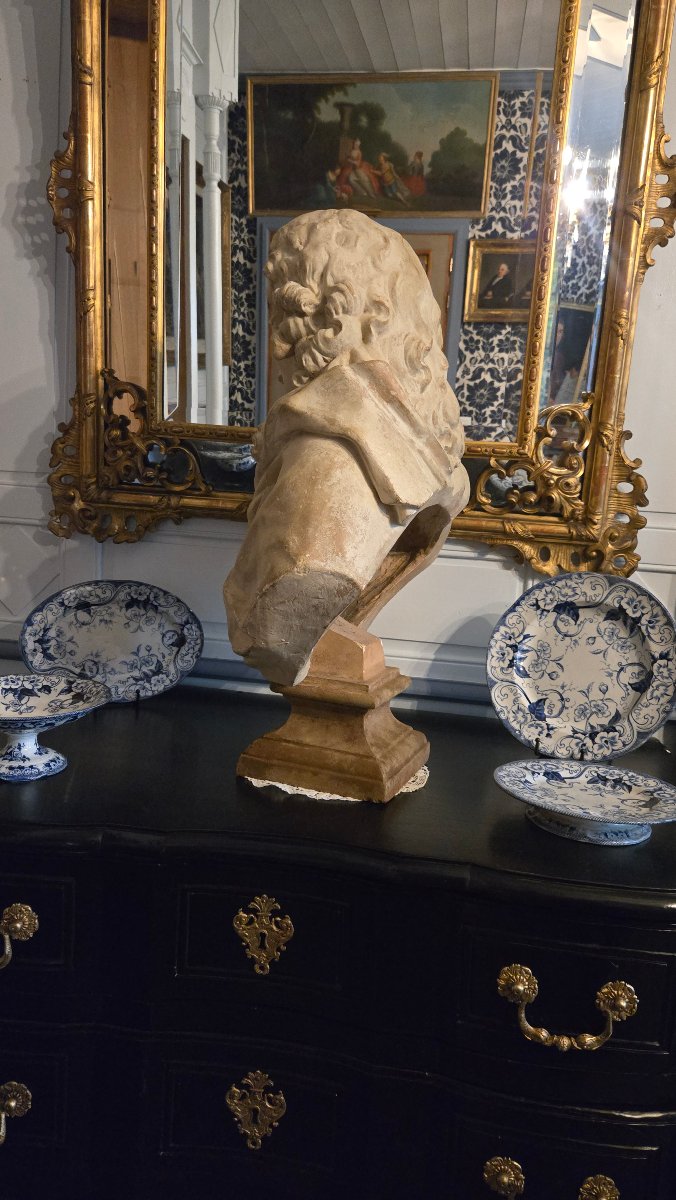
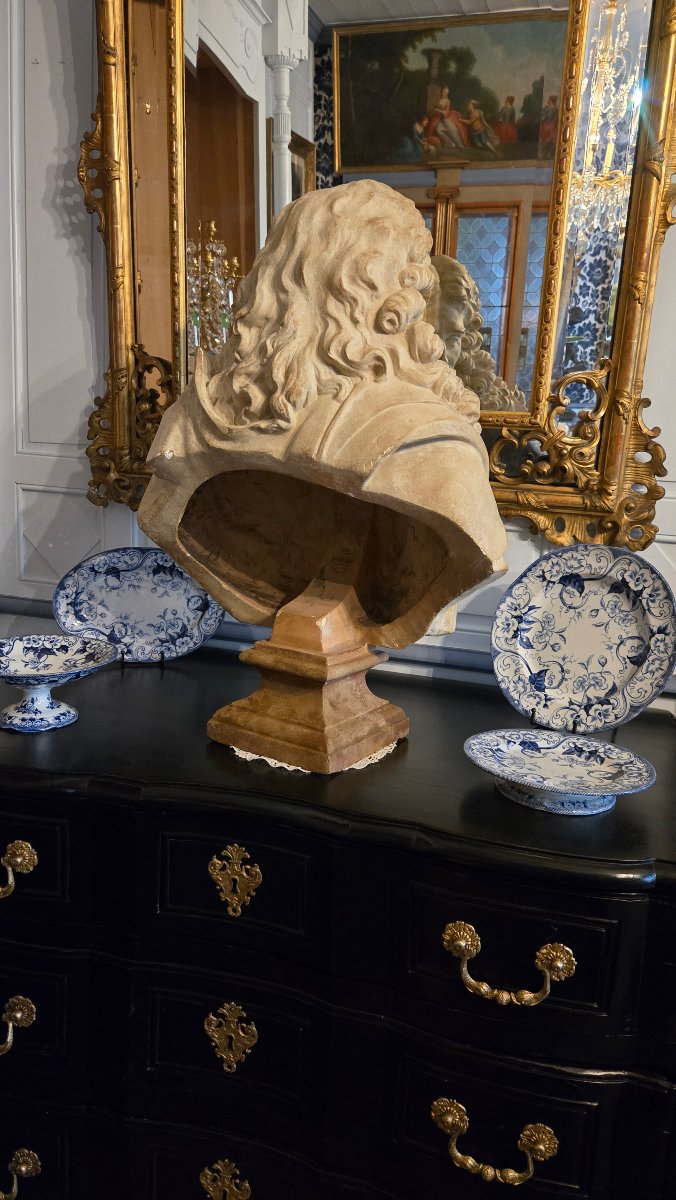
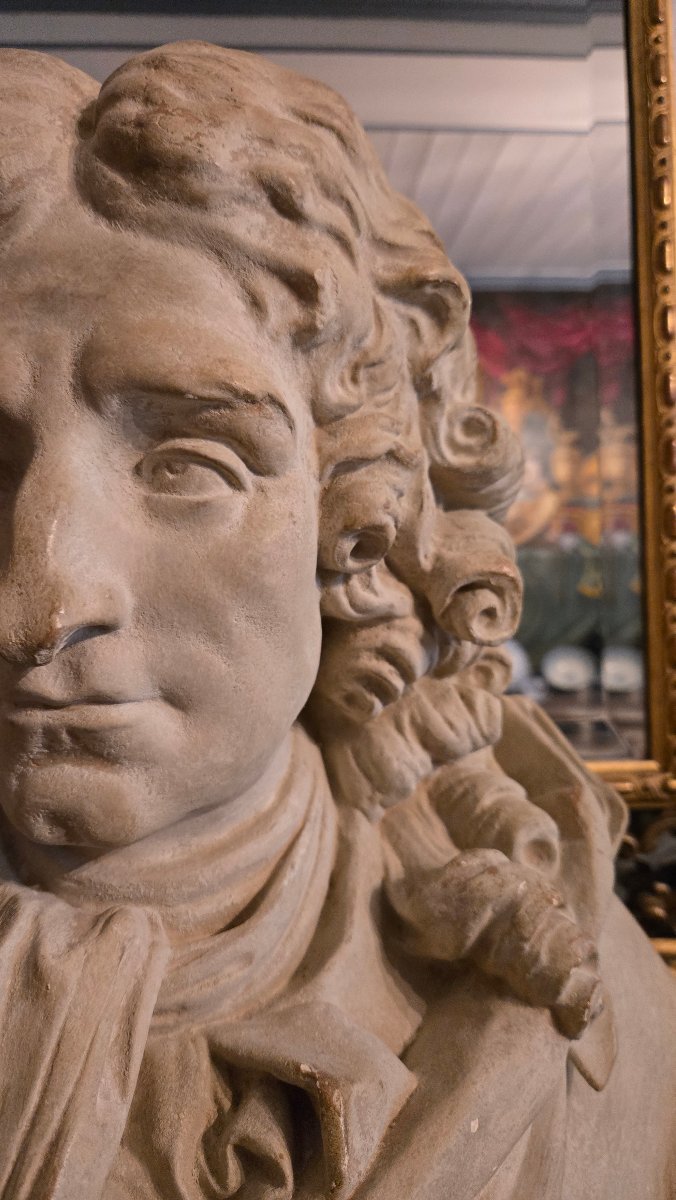
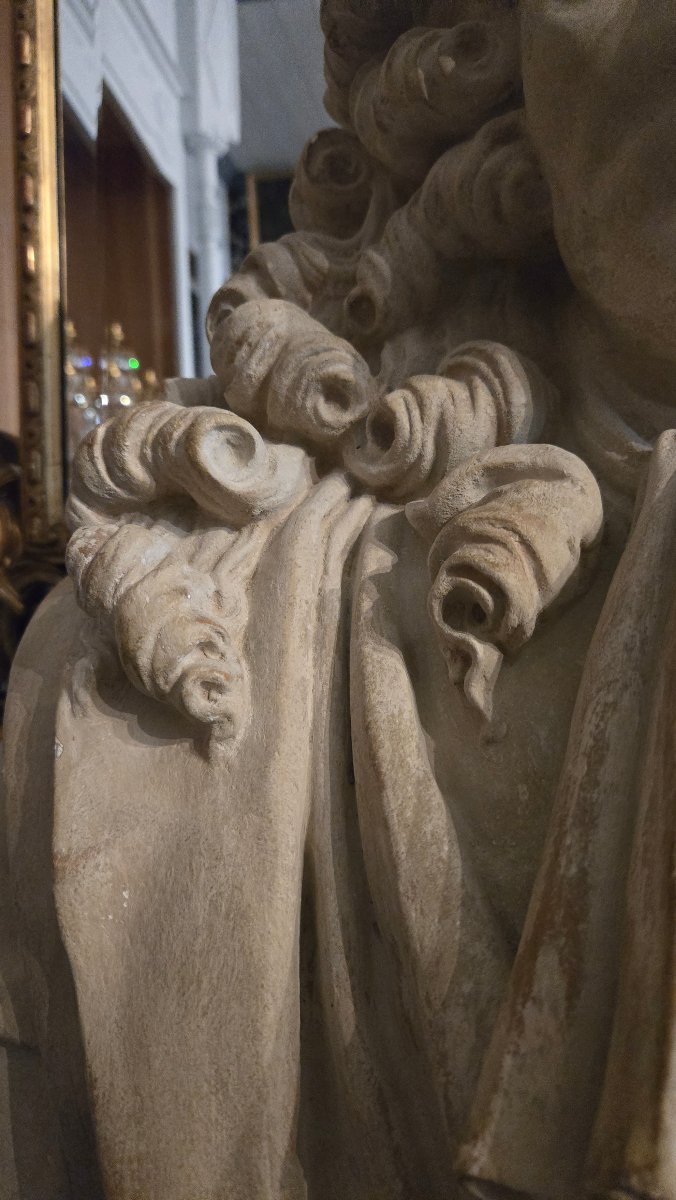
La Fontaine is portrayed with a thoughtful, dignified expression, his face framed by an elaborate, voluminous wig with long curls cascading over his shoulders. The deeply modeled curls, with their intricate overlapping forms, contrast beautifully with the more restrained treatment of the face, whose distinctive features and slightly elevated gaze convey a sense of contemplation.
A generously draped garment envelops his shoulders and chest, forming broad, deeply sculpted folds. A section of fabric falls vertically across the front, introducing movement and balance to the composition. The refined modeling of the face, the elaborate treatment of the wig, and the richness of the drapery reflect the remarkable sculptural quality of the original work.
Historical Background
The original bust was commissioned in 1799 from the French sculptor Louis-Pierre Deseine at the initiative of Alexandre Lenoir, founder of the Musée des Monuments Français in Paris.
It was intended for a commemorative monument erected in the museum's Élysée Garden, honoring four major figures of 17th-century French literature: Molière, La Fontaine, Boileau, and Racine.
This monument reflected the desire, emerging during the French Revolution, to celebrate the writers and artists who had contributed to France's cultural and intellectual heritage.
The original terracotta bust was transferred to the Louvre Museum in 1816, then to the Palace of Versailles collections in 1834, before being placed on long-term loan in 1930 to the Jean de La Fontaine Museum in Château-Thierry, the poet's birthplace.
Louvre Museum Casting
This example is an early plaster cast produced by the Louvre Museum's official casting workshops, established in 1794 and renowned for their faithful reproductions of important works of sculpture.
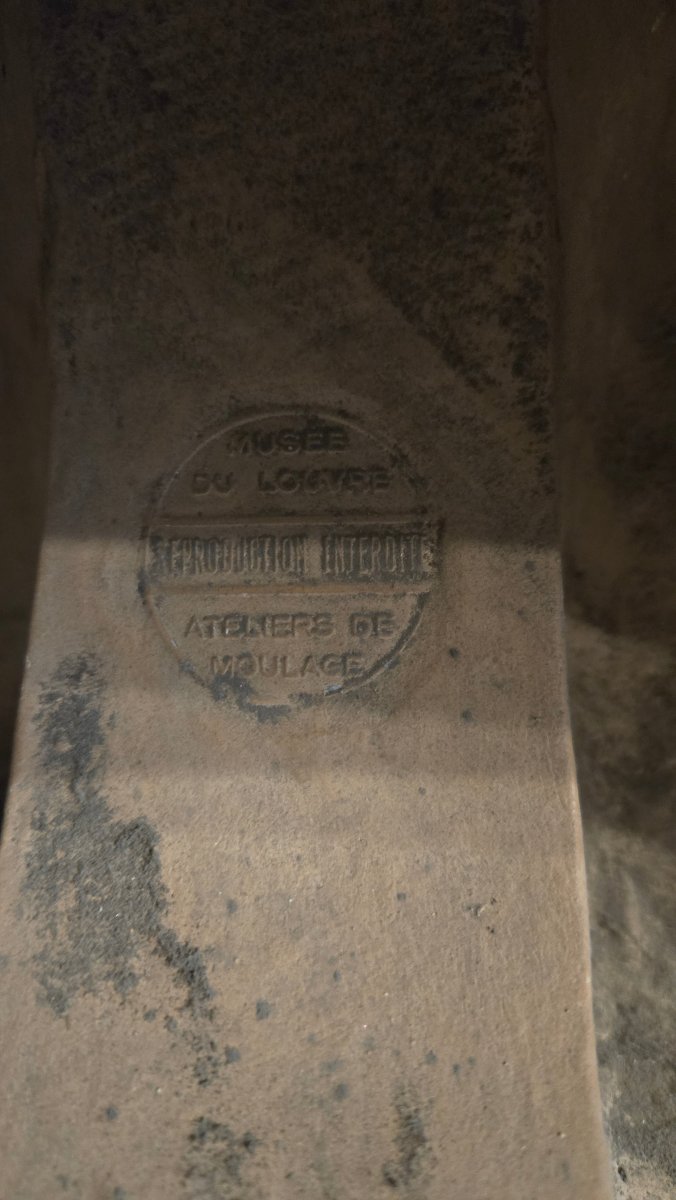
The reverse bears the workshops' circular impressed mark, reading:
"MUSÉE DU LOUVRE – REPRODUCTION INTERDITE – ATELIERS DE MOULAGE"
This official mark was used between approximately 1927 and 1960, providing a documented period for the production of the cast.
Made using traditional hollow plaster-casting techniques, the bust preserves the precision and depth of the original modeling, particularly evident in the detailed curls of the wig, the expressive facial features, and the deeply carved folds of the drapery.
Its attractive aged patina, in warm beige and ochre tones reminiscent of natural stone, enhances the sculptural relief and gives the piece a particularly appealing character.
The bust rests on an integral rectangular socle with a molded base.
With its generous proportions, impressive presence, and distinguished artistic origins, this sculpture is a fine example of the historic Louvre casting workshops' production, combining French sculptural heritage with the legacy of one of France's greatest literary figures.
Condition: Good overall antique condition, with minor age-related wear and slight losses to the patina.
Dimensions:
Height: 75 cm (29.5 in)
Width: 58 cm (22.8 in)
Depth: 30 cm (11.8 in)
1 400 €
Period: 20th century
Style: Louis 14th, Regency
Condition: Good condition
Material: Plaster
Reference (ID): 1844603
Availability: In stock
Print