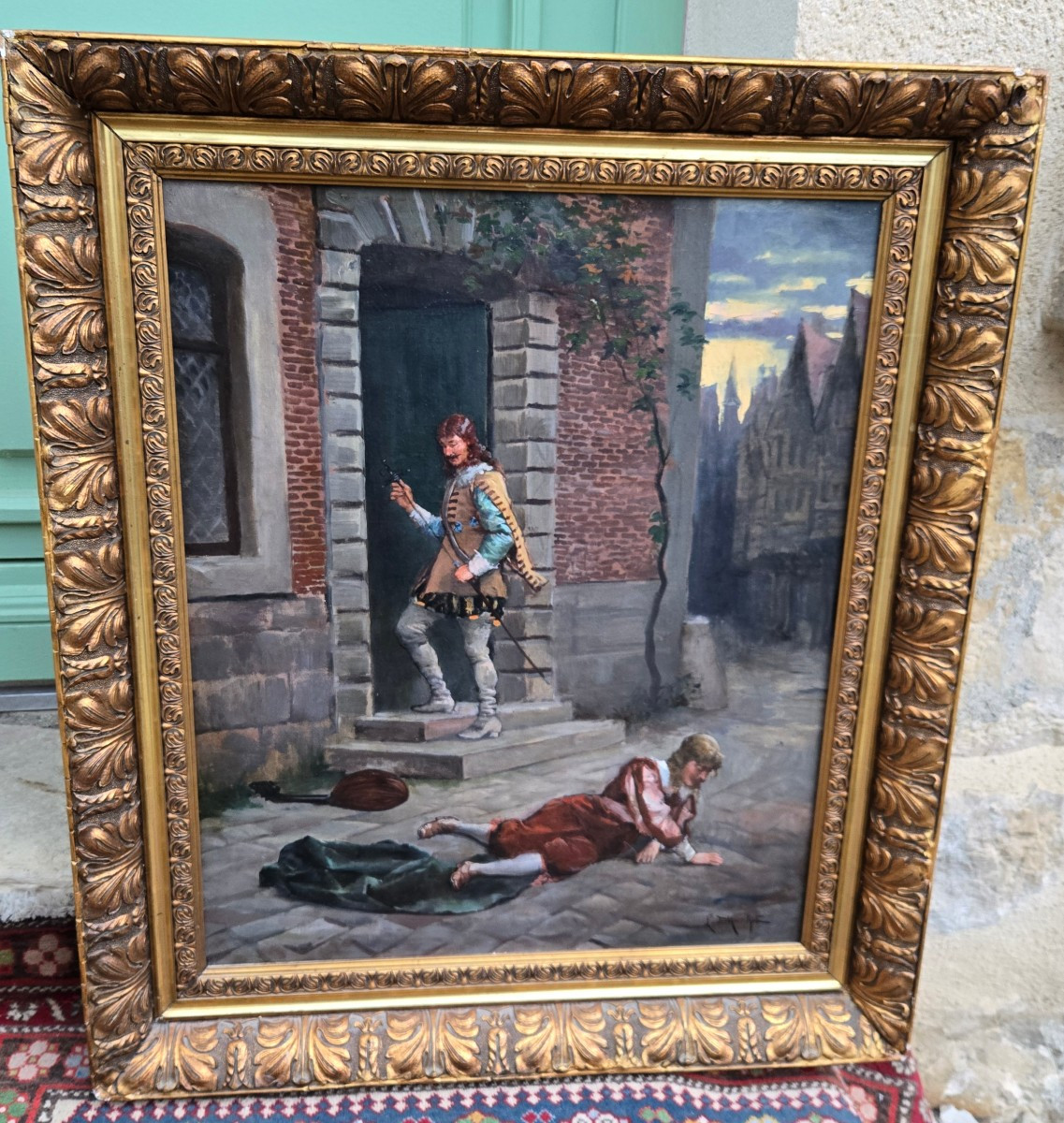
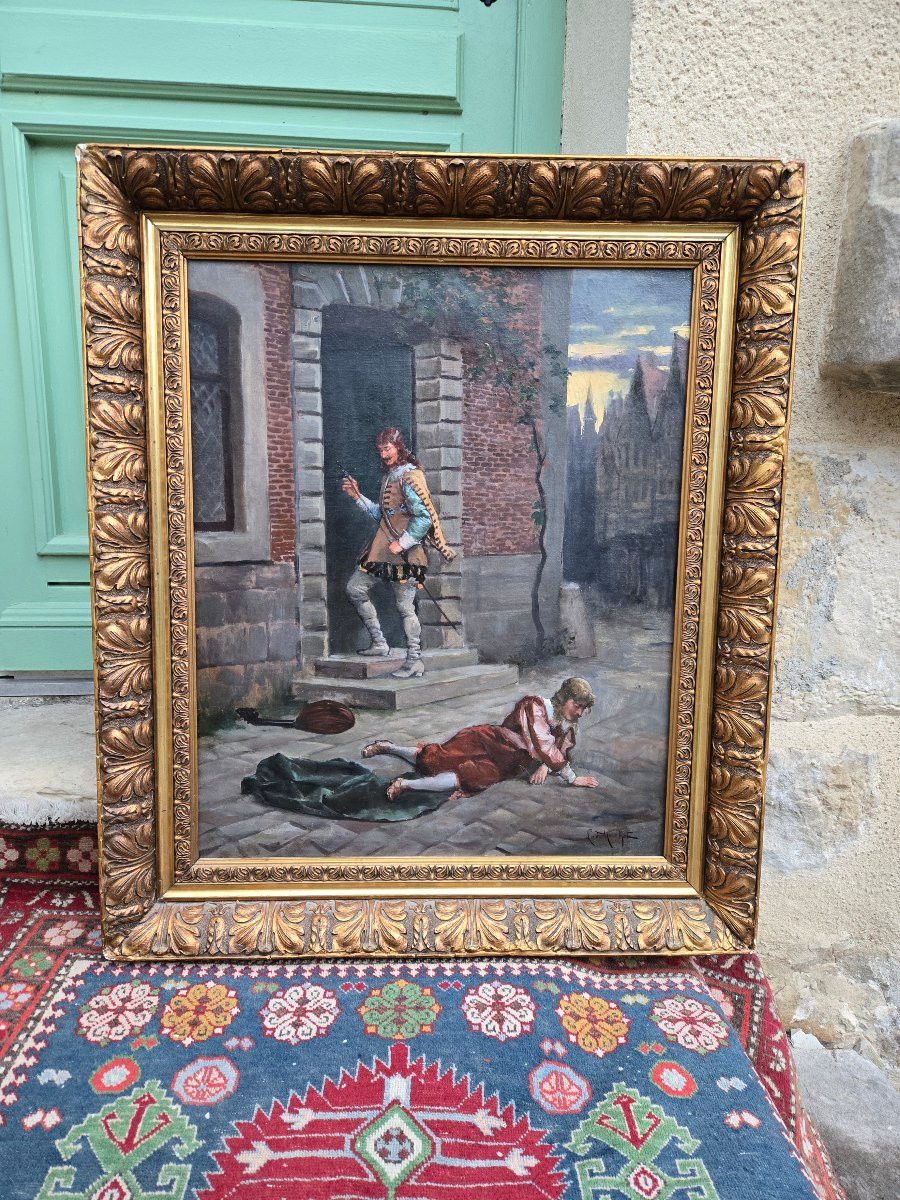
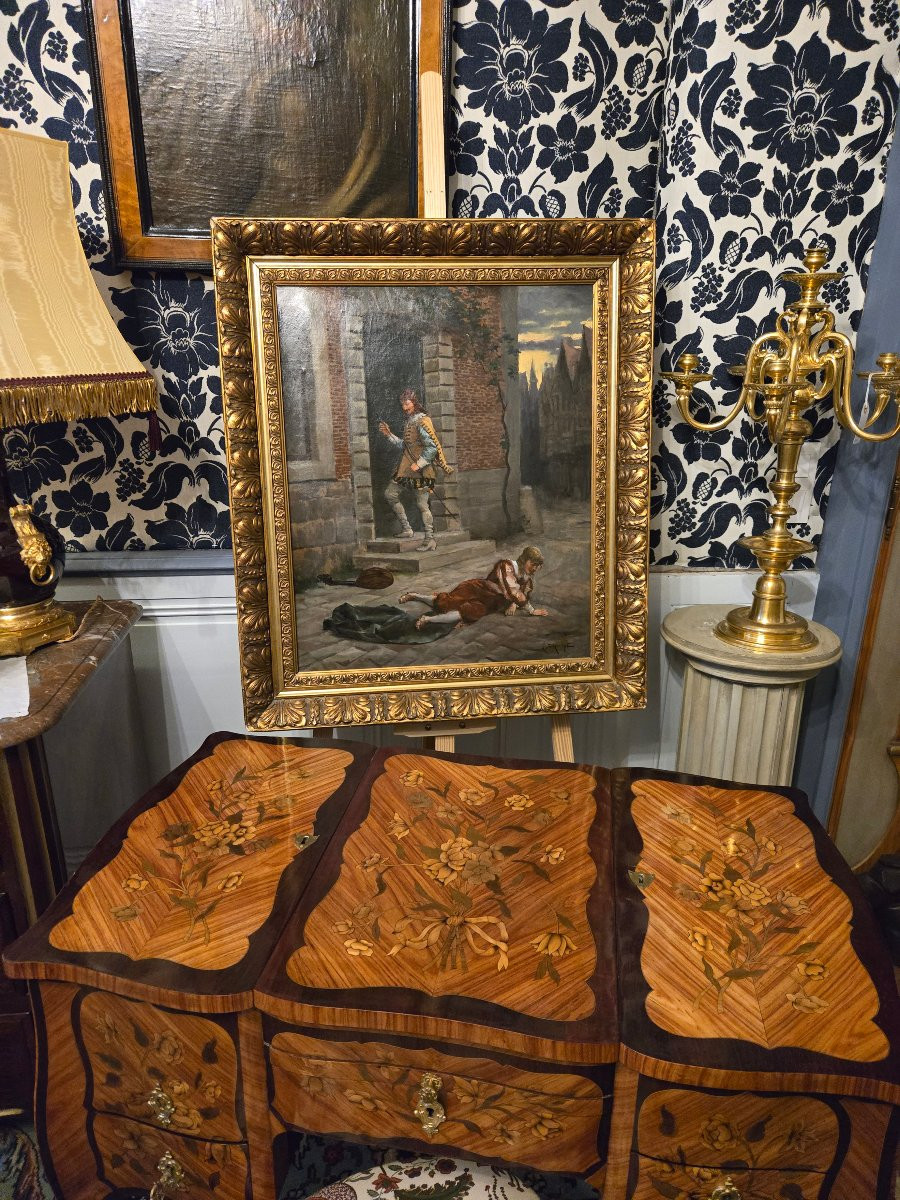
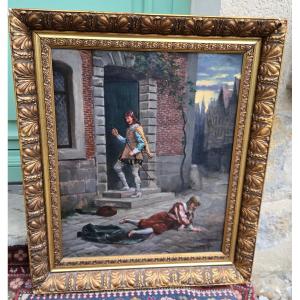


Ludovic Mouchot (1847–1893) – Gentleman Correcting A Troubadour – Oil On Canvas.
Artist: Ludovic Mouchot
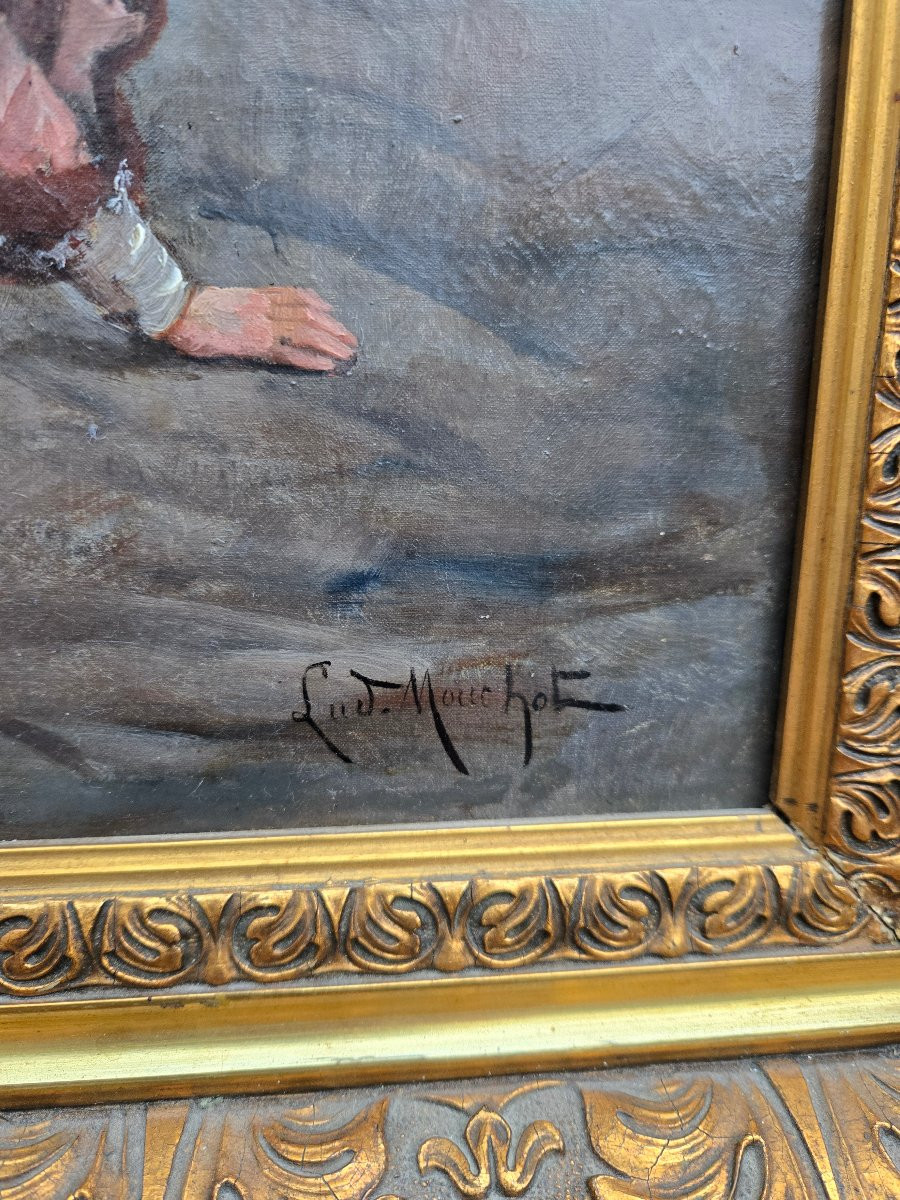
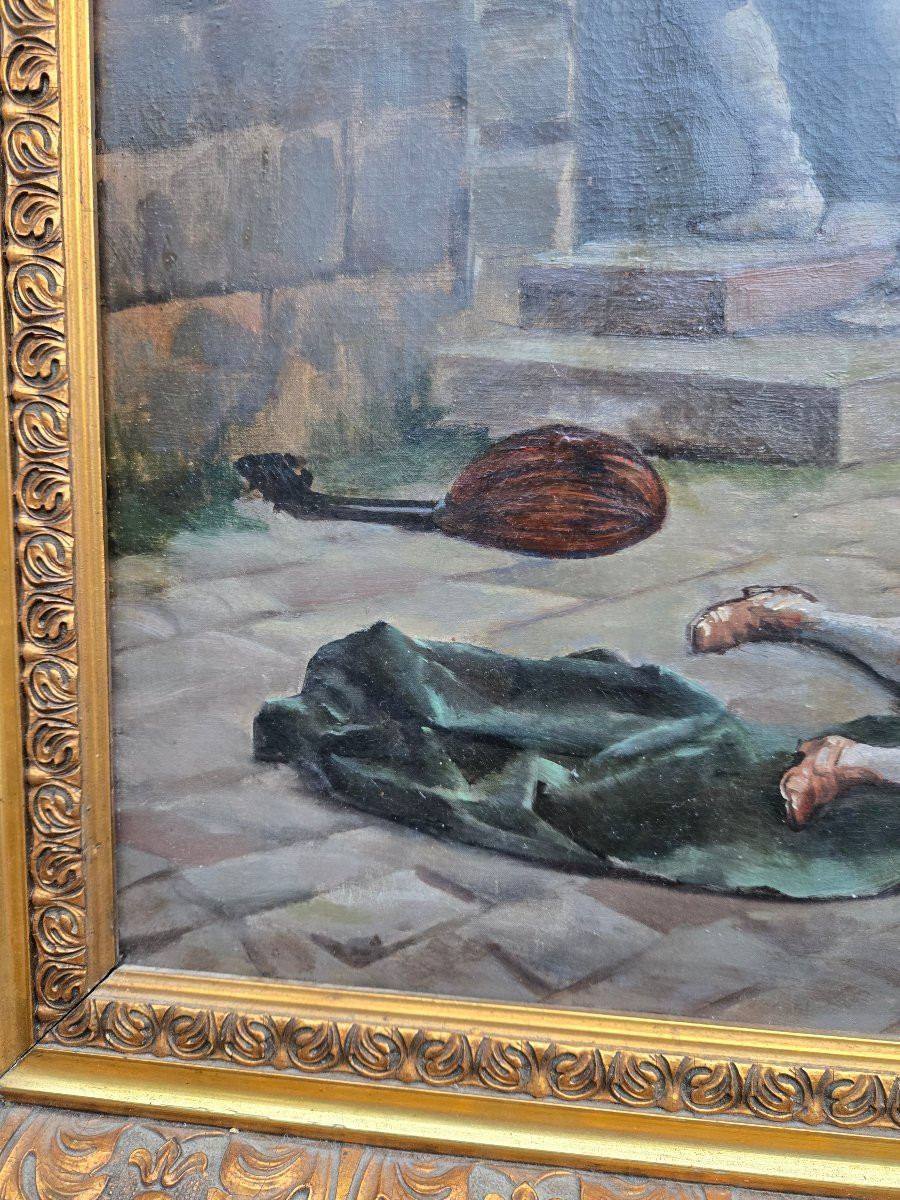
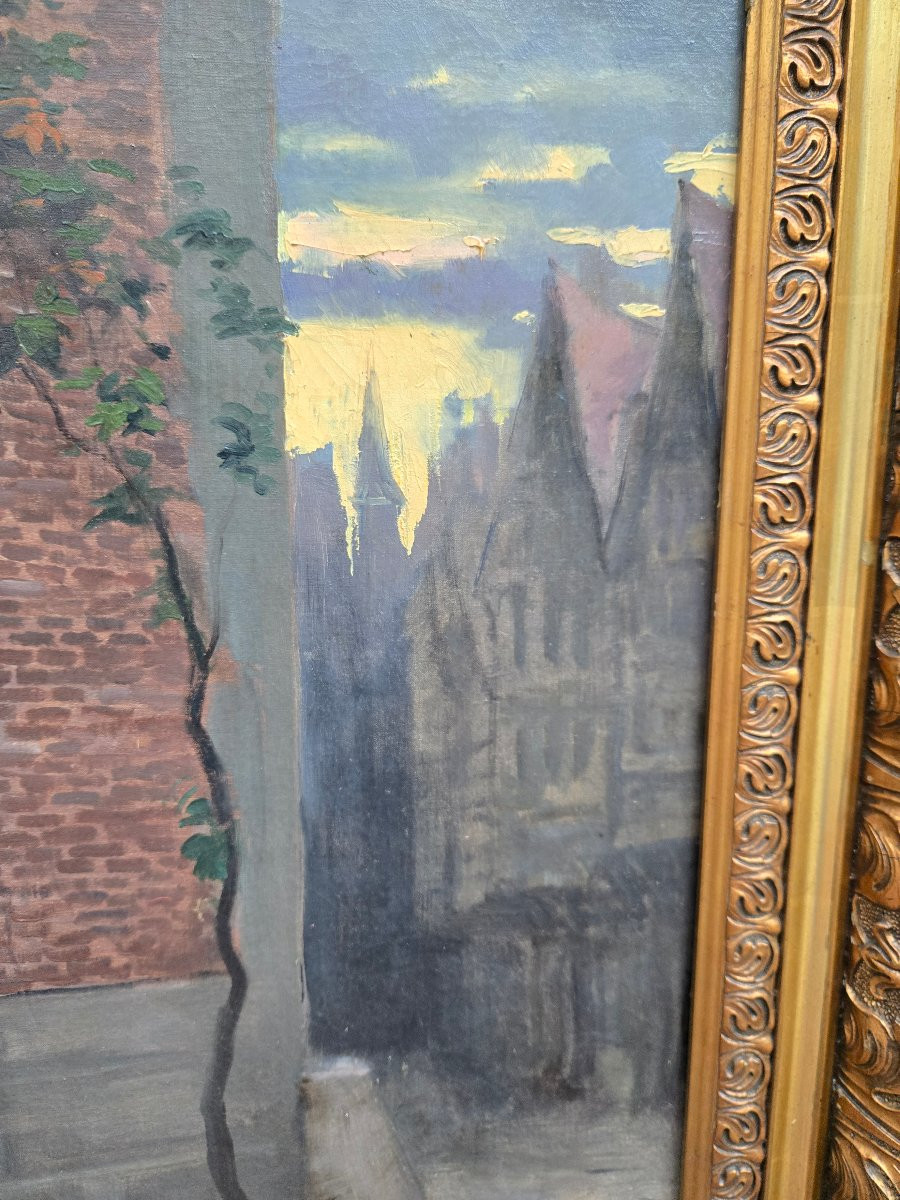
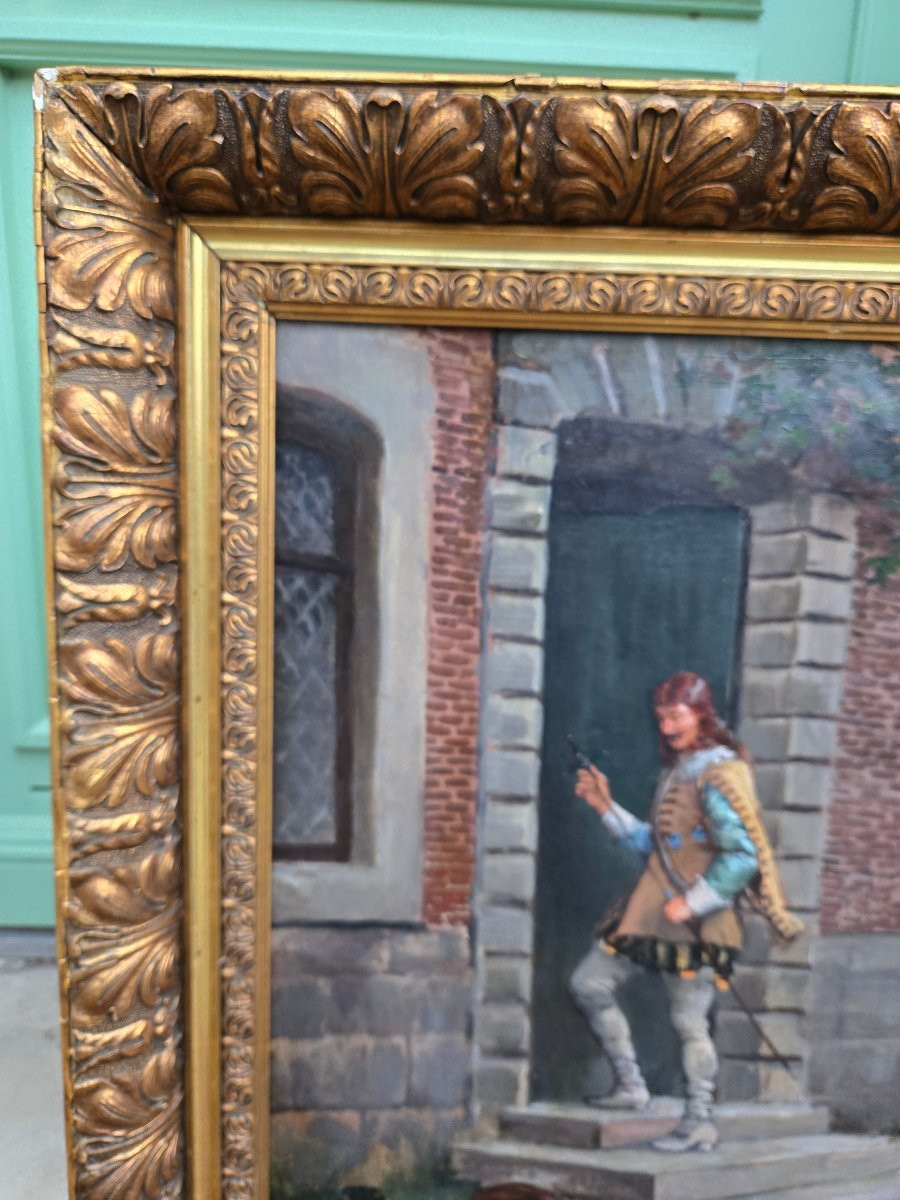
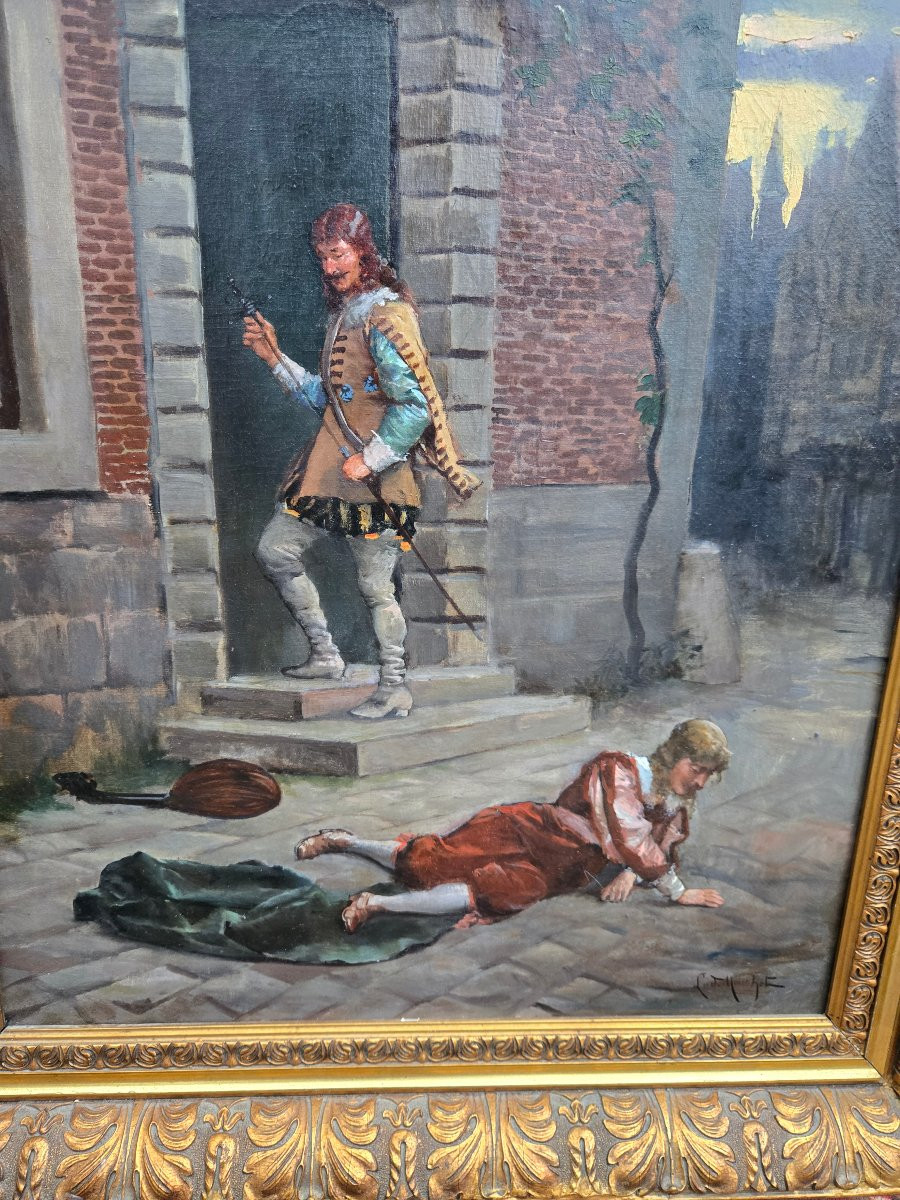
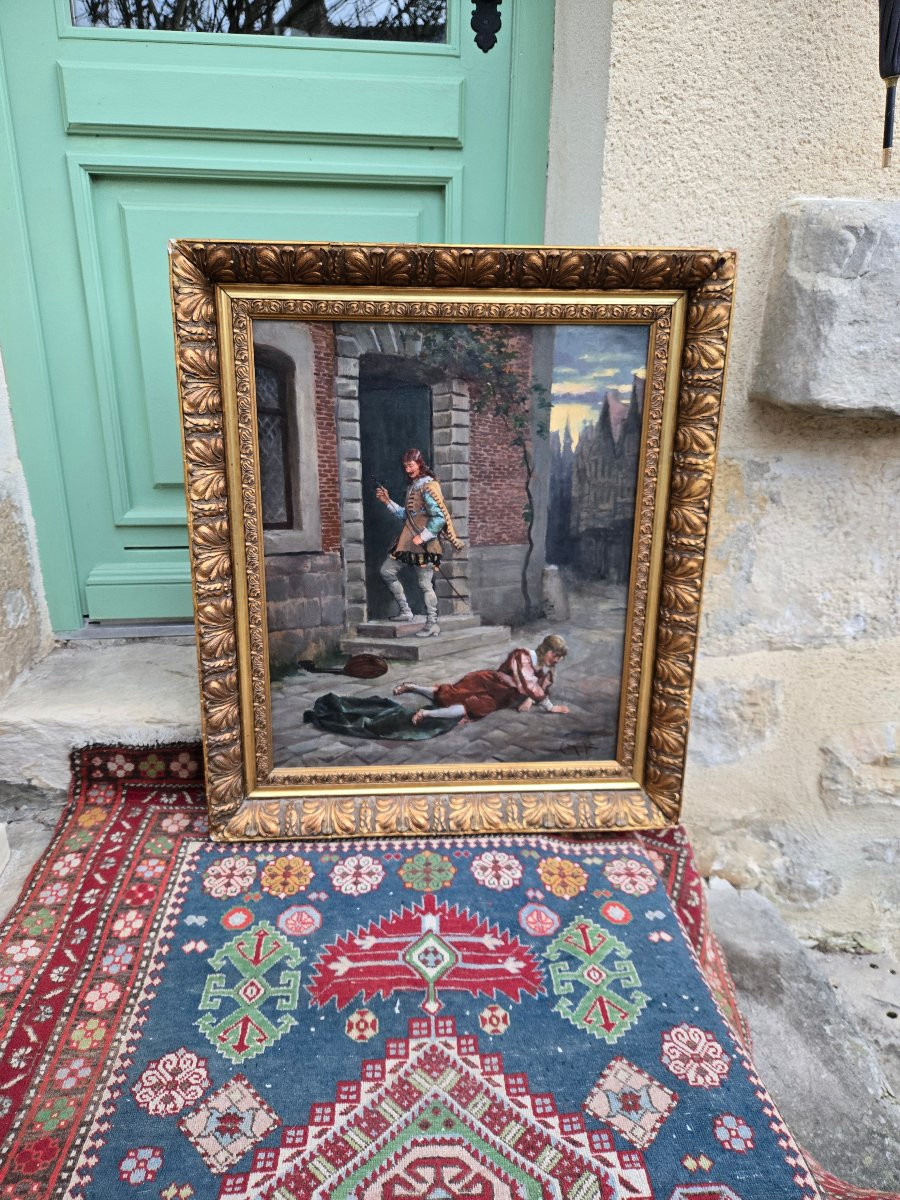
Oil on canvas, signed Lud. Mouchot lower right, depicting a lively and narrative genre scene in the historicist style favored by 19th-century painters. The composition seems to freeze the moment following an altercation: A 17th-century gentleman, dressed in a short doublet adorned with ribbons and high boots, calmly sheathes his shell-hilted sword as he ascends the steps of a porch. At his feet, a troubadour or minstrel lies sprawled to the ground, still dazed, his lute overturned further away on the pavement. Everything indicates that the gentleman has just inflicted a beating, not fatal but humiliating: a quarrel settled in a few seconds, in the spirit of swashbuckling scenes. The man's discreet smile, the nonchalance of his gesture, and the musician's surrender reinforce this narrative interpretation, typical of the moral drama of the 17th century as revisited by 19th-century artists. In the background, the Gothic steeples of a town stand out against the golden light of late afternoon, adding to the romantic and dramatic atmosphere. The delicacy of the lines, the rendering of the fabrics, the stone, and the accessories all testify to Mouchot's academic training. The work is enhanced by a period frame of wood and patinated gilt stucco, richly decorated with large acanthus leaves alternating with sculpted corbels. The antique frame shows slight wear, all consistent with its age, and is highly decorative. Biography of Ludovic Mouchot (1847–1893): Born in Poligny, Louis Hippolyte “Ludovic” Mouchot revealed artistic talents at a very young age, which were noticed by Jules-César Ballandrin. He then studied at the École des Beaux-Arts in Paris under two prestigious masters: Alexandre Cabanel, a central figure of the academic movement; and Adolphe Yvon, a specialist in large historical scenes. Mouchot exhibited at the Salon as early as 1865, at only 18 years old. He distinguished himself with his portraits and genre scenes, particularly those inspired by the 17th century: duelists, tavern scenes, card players, and gentlemen in action. An illustrator and engraver, he contributed to a major illustrated edition of Victor Hugo's works. He died in 1893 in Paris. Several of his works are held at the Poligny Museum. Commentary: A lively, theatrical, and subtly humorous scene, in which Mouchot depicts the beating given by an elegant gentleman to an overly impertinent minstrel. A recently restored work, superbly framed, and very representative of the late 19th-century taste for swashbuckling tales.
950 €
Period: 19th century
Style: Napoleon 3rd
Condition: Good condition
Material: Oil painting
Reference (ID): 1664609
Availability: In stock
Print