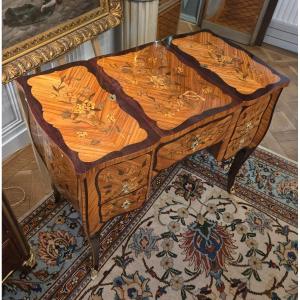
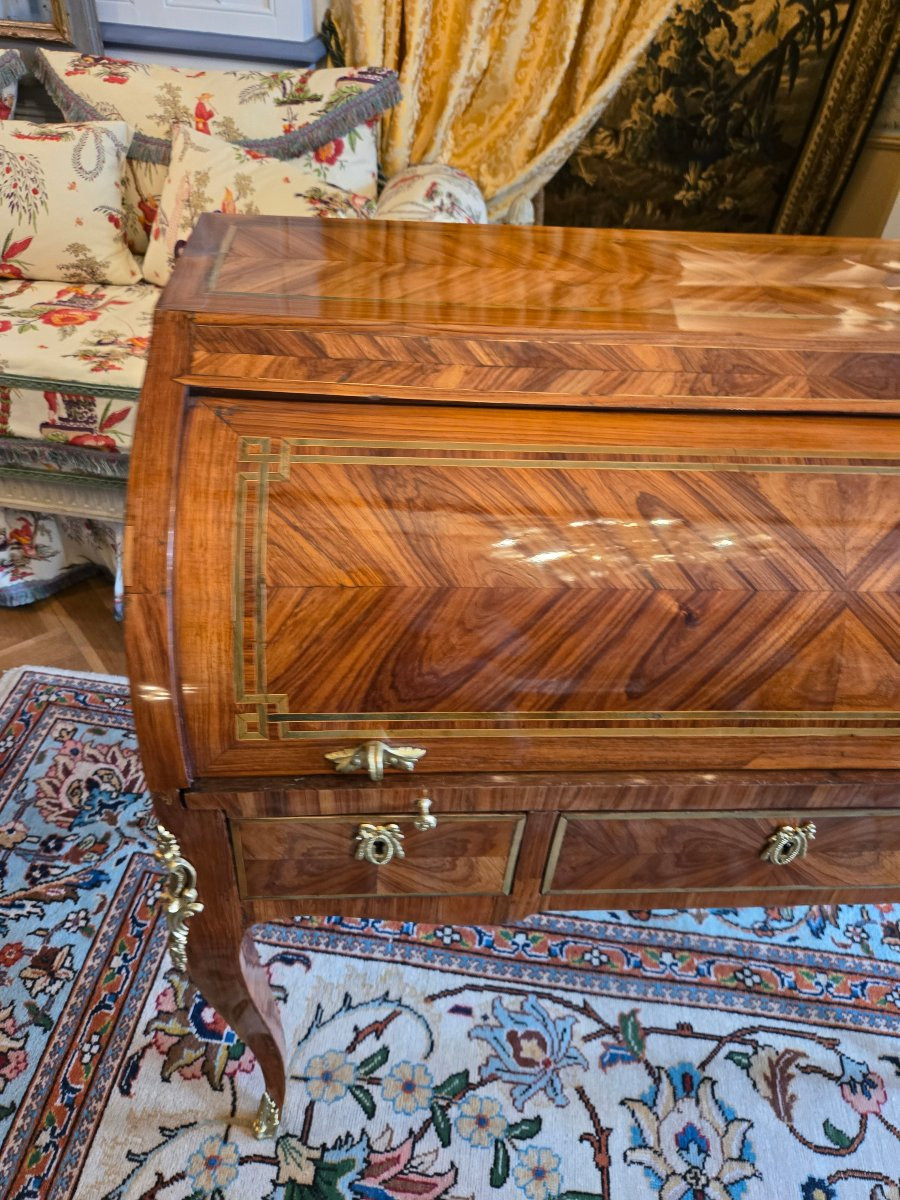

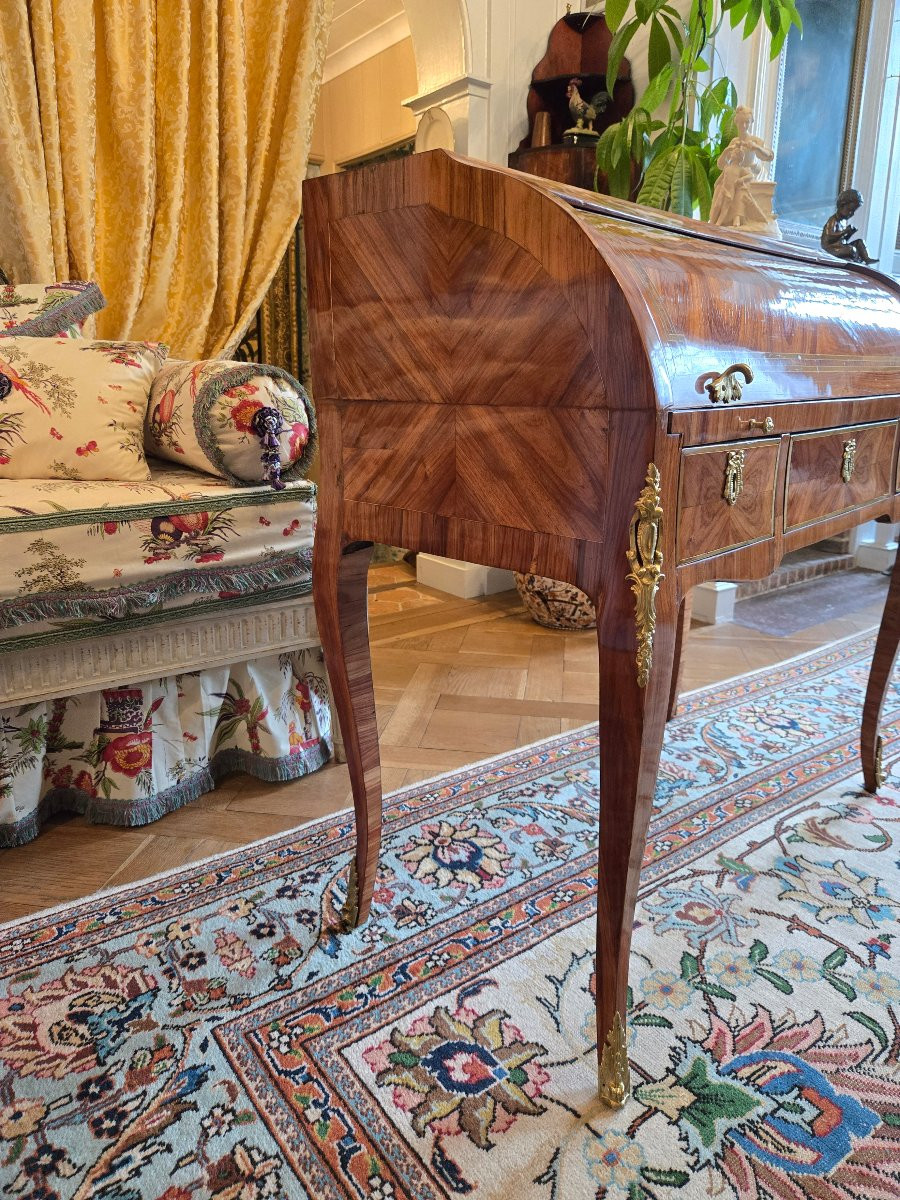


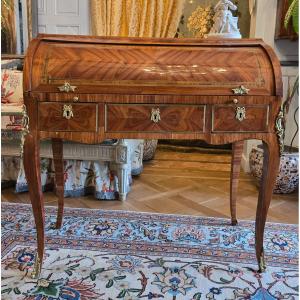


Central Roll-top Desk – Louis XV/louis XVI Transition, Parisian Work, Circa 1770
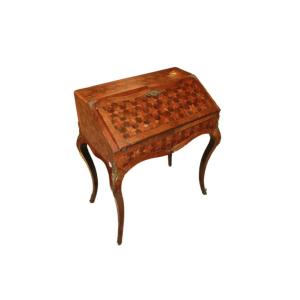
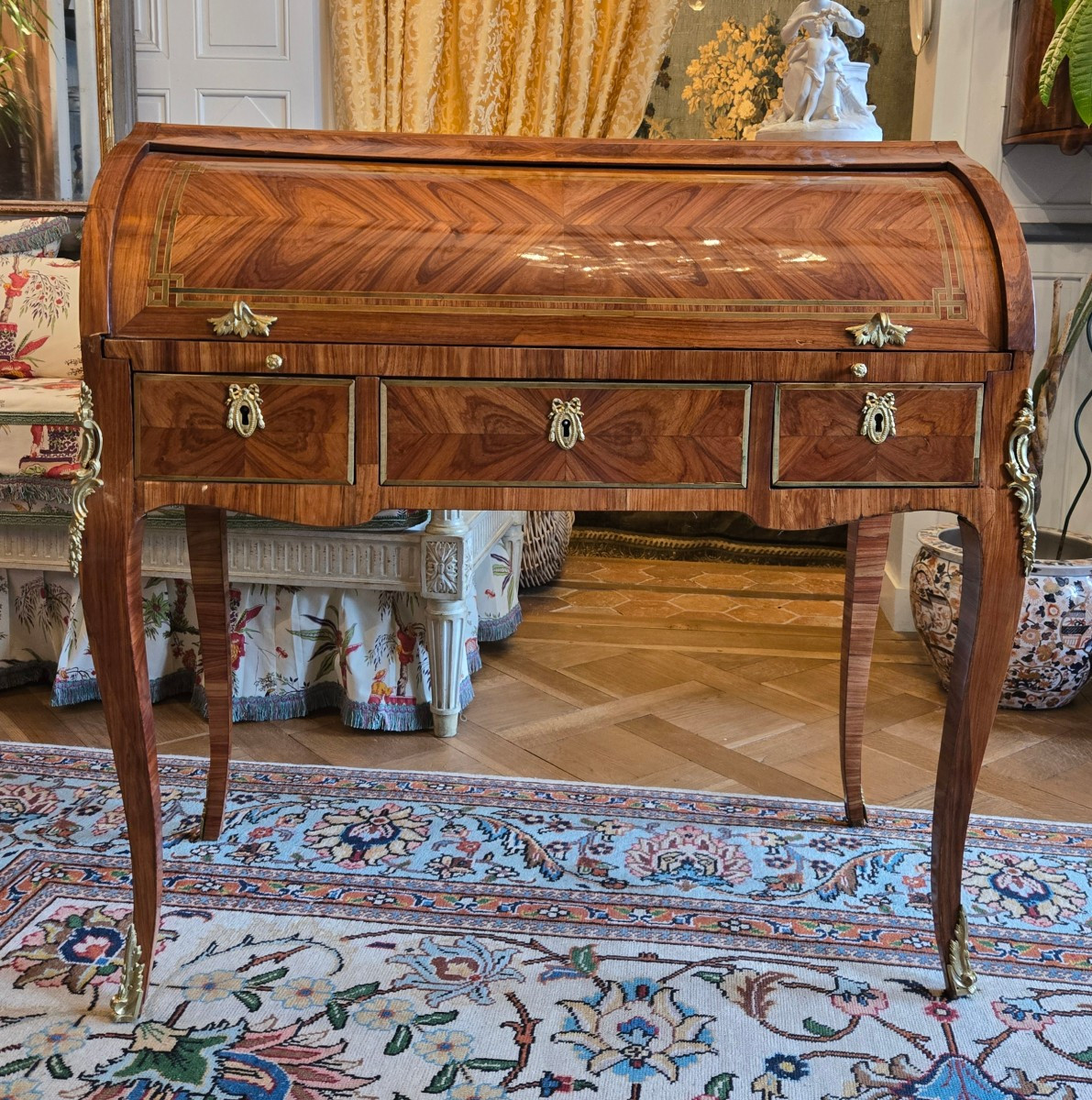
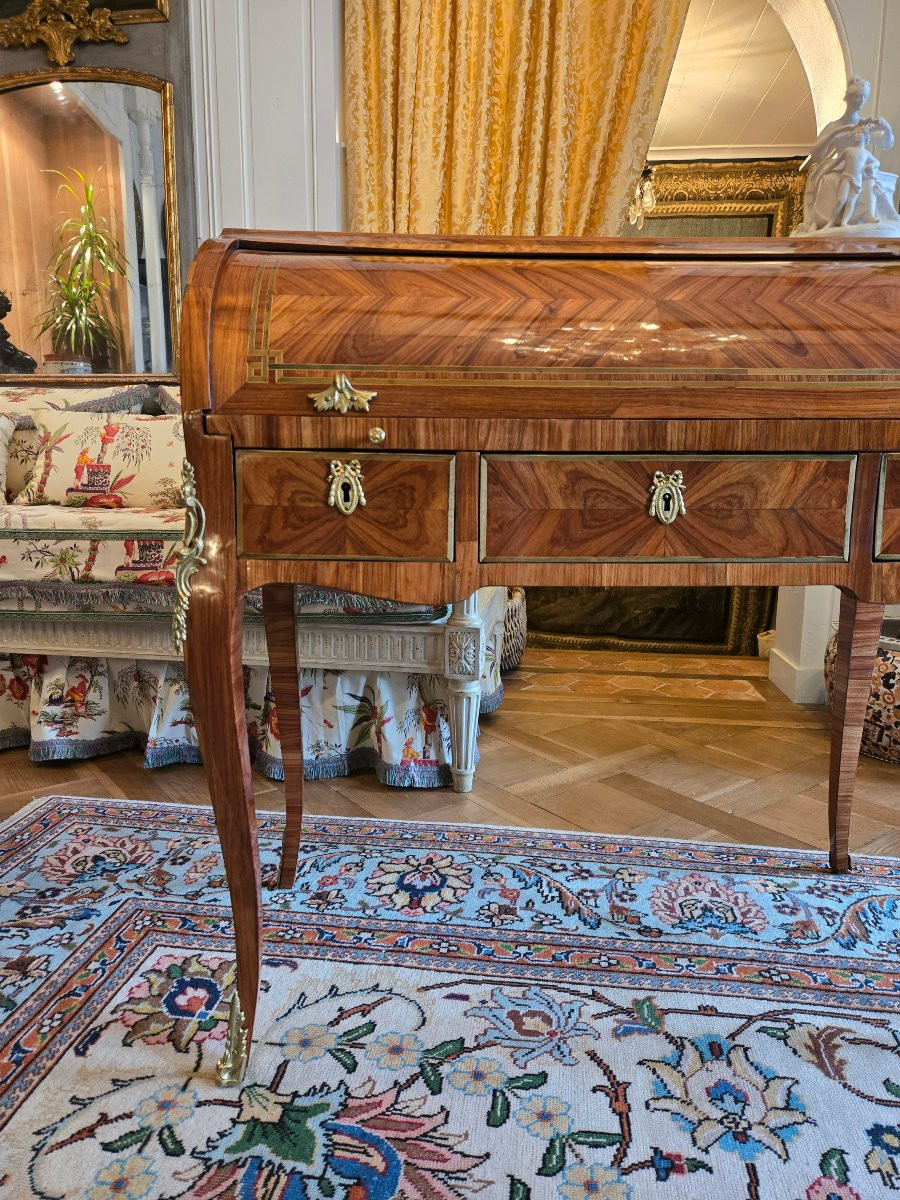
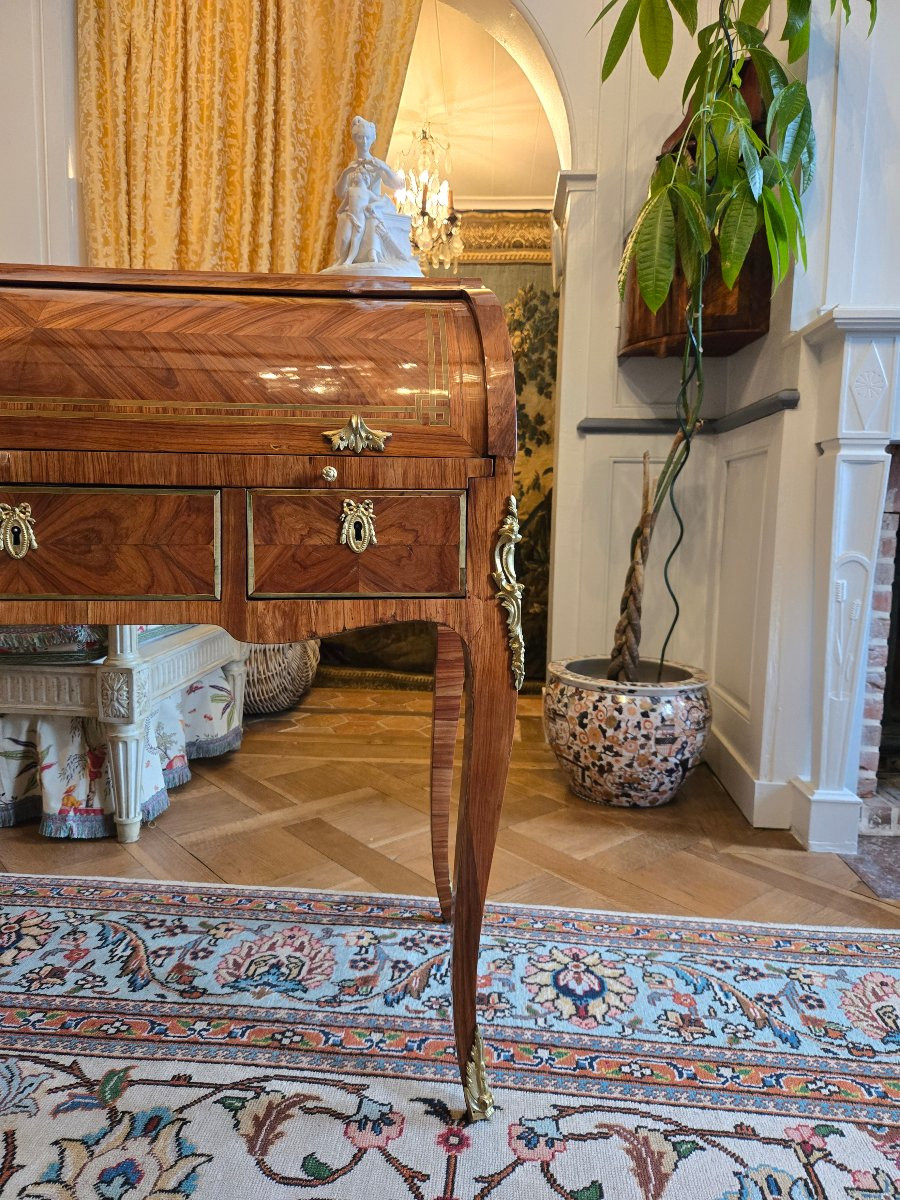
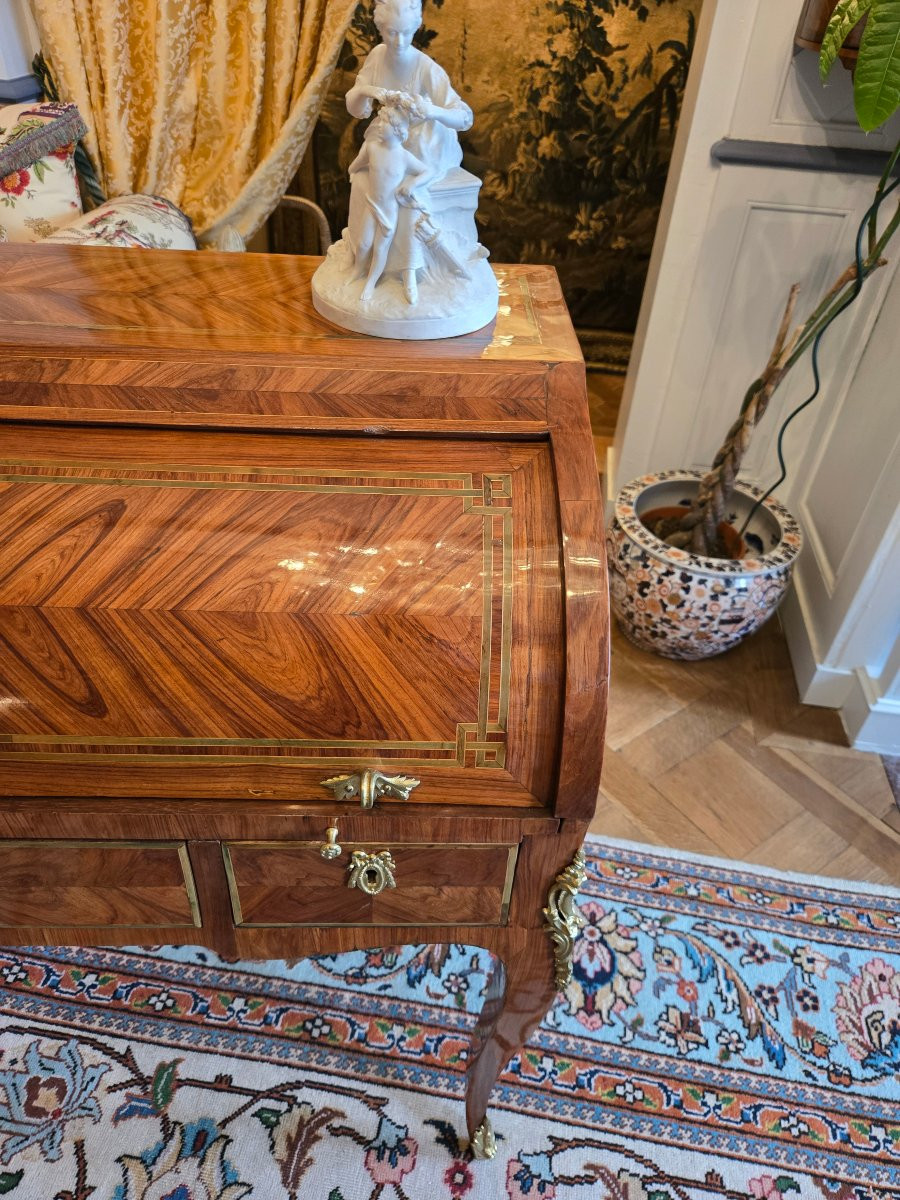
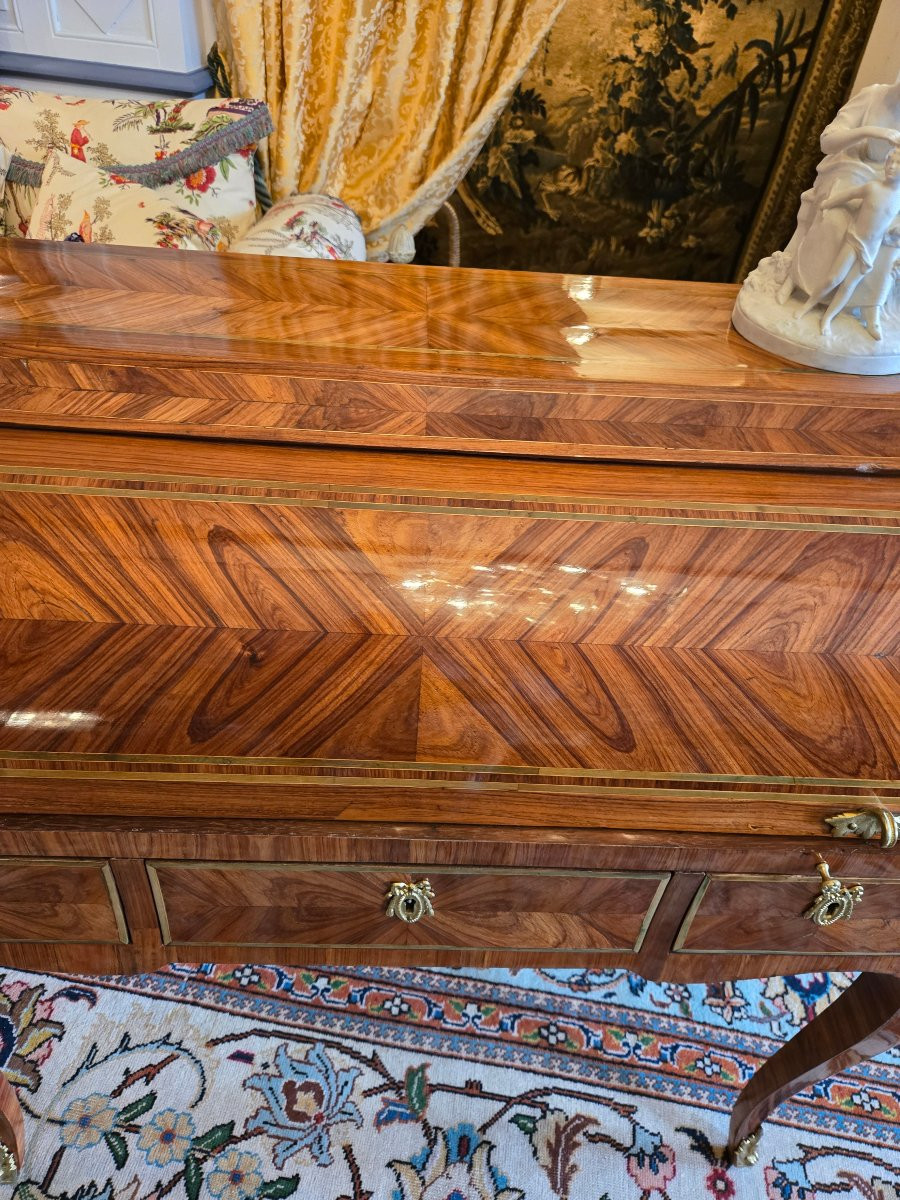
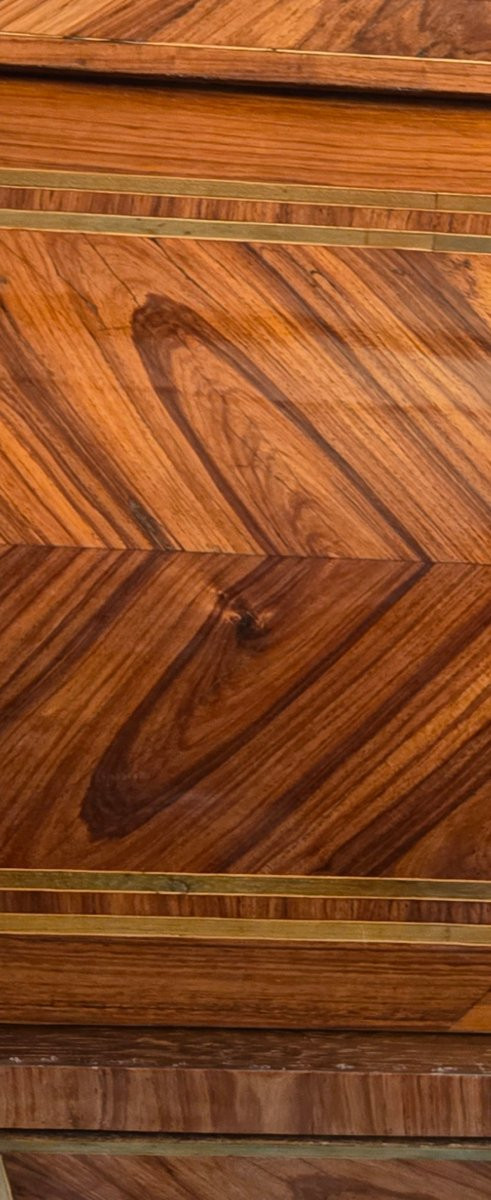
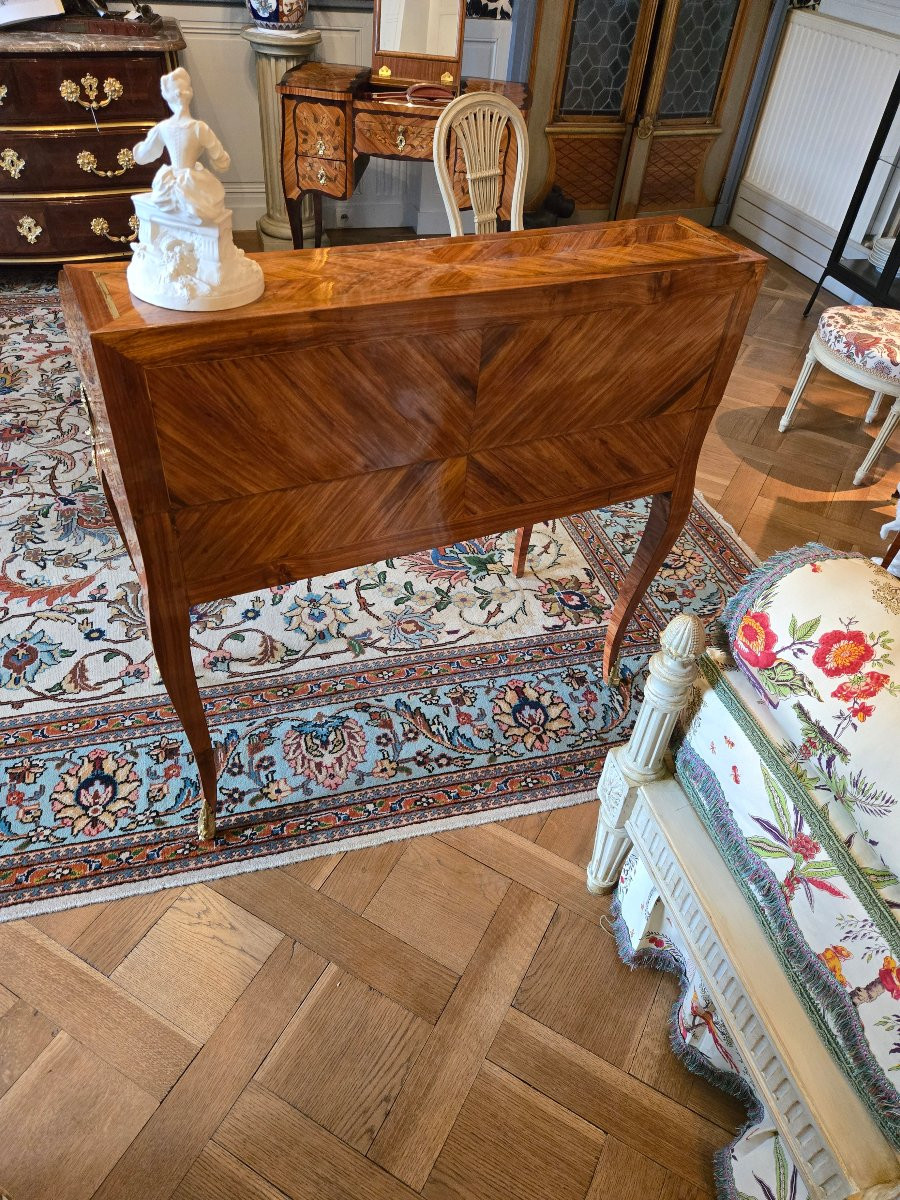
A highly decorative and remarkable roll-top desk, made in Paris around 1770, at the cusp of the Louis XV and Louis XVI styles, perfectly illustrating this period of stylistic transition where certain forms inherited from Louis XV still coexisted with a decorative vocabulary already fully oriented towards Neoclassicism. The piece retains a four-legged cabriole base, characteristic of Louis XV, while the overall arrangement, the more rectilinear forms, the rigor of the framing, and the use of geometric motifs clearly announce the Louis XVI style. This balanced synthesis of styles is entirely consistent with Parisian production of the 1770s. It is veneered with very fine rosewood, the oblique cutting of which allowed for a particularly spectacular frieze, especially on the roll. The veneer sheets are joined with great precision to create a butterfly wing motif, perfectly symmetrical and with a remarkably controlled display of the grain. This type of decoration, technically demanding, demonstrates exceptional workshop virtuosity and is found only on furniture of the finest cabinetmaking. This decorative technique is part of the Parisian tradition initiated and widely disseminated by Pierre IV Migeon, considered one of the forerunners of butterfly-wing veneer, which he particularly favored and used as a veritable decorative language. Although later than Migeon IV's career, this desk testifies to the enduring influence of this tradition, still perfectly mastered in the 1770s. The marquetry surfaces are elegantly structured by green-stained wood stringing, finely joined in the Greek key pattern, an emblematic motif of the emerging Louis XVI decorative vocabulary. These borders lend great graphic refinement and reinforce the architectural character of the piece. The desk opens at the front with three drawers in the frieze. The fully functional sliding cylinder reveals a writing surface and a carefully fitted interior with four drawers, including a compartmentalized drawer for inkwells. A key and rare feature is that this desk is entirely veneered on all sides, including the back. It is therefore a true center-mounted cylinder desk, designed to be placed in the center of a room, rather than against a wall—an uncommon and highly sought-after quality. The frame is made of oak and softwood, in keeping with 18th-century Parisian practices. The drawers are entirely crafted from oak, with finely cut wood and precise joinery, indicative of meticulous workmanship. The locks are original, and an antique key allows the drawers in the frieze to be opened. The finely chased gilt bronze mounts (keyhole escutcheons, handles, corner mounts, and feet) are of high quality and perfectly integrated into the design of the piece. A trace of a stamp, now very faded and illegible over time, is visible beneath the desk. The quality of its craftsmanship, the mastery of the veneer, the refinement of the wood grain, and the decorative vocabulary employed suggest that this desk can be compared to Parisian pieces from the circle of a cabinetmaker such as Nicolas Petit, although no formal attribution can be made. The desk is French polished, with some minor restorations consistent with age and use, respecting its authenticity. It is in excellent condition, with a warm patina and the cylinder and drawer slide in perfect working order. Dimensions: Height: 95 cm Width: 95 cm Depth: 47 cm Drawer slide height: 72.5 cm Drawer slide surface: 86 × 40 cm Total depth with drawer slide open: 67 cm Provenance: private collection
3 800 €
Period: 18th century
Style: Louis 15th - Transition
Condition: Good condition
Material: Wood marquetry
Reference (ID): 1690576
Availability: In stock
Print