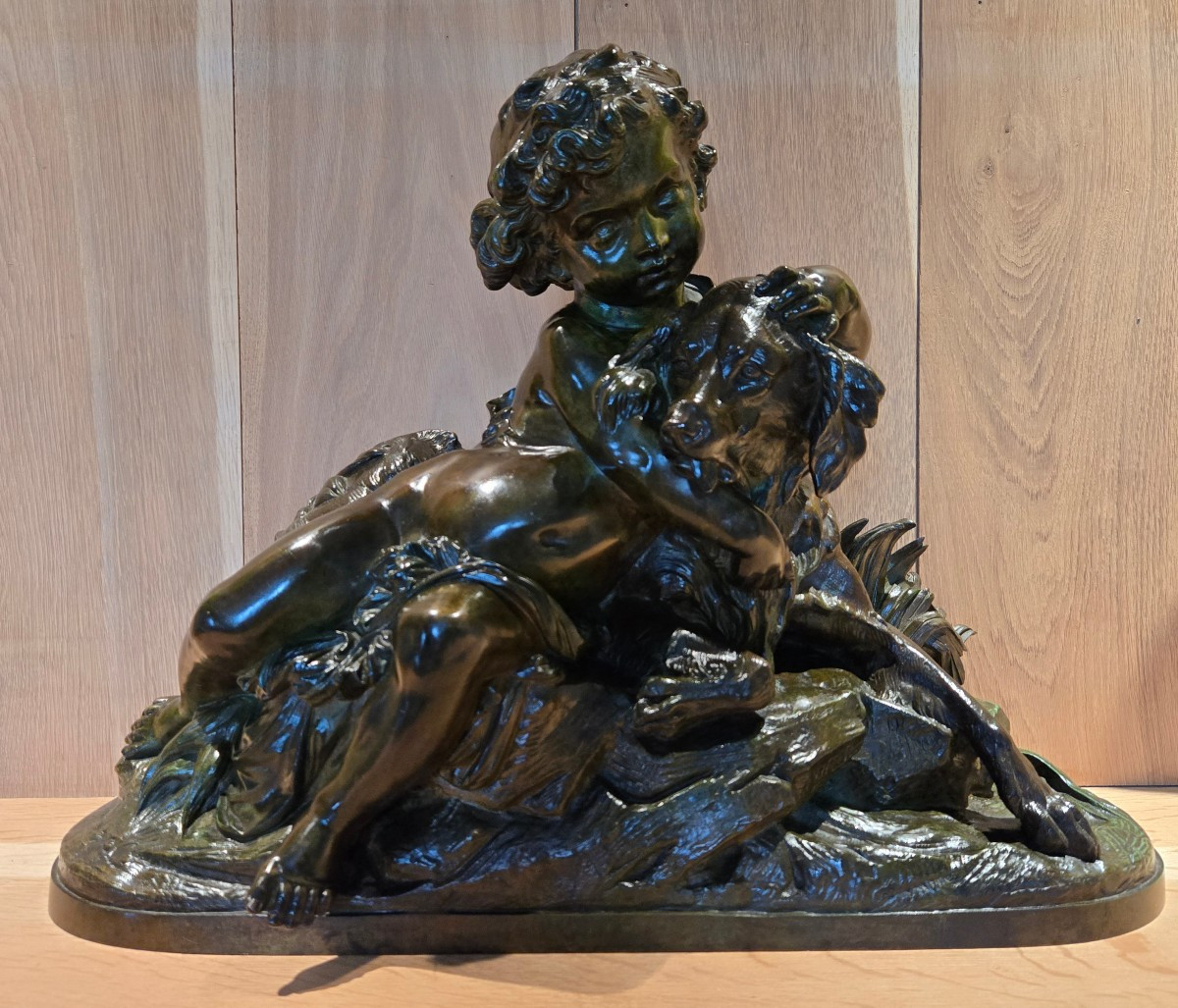



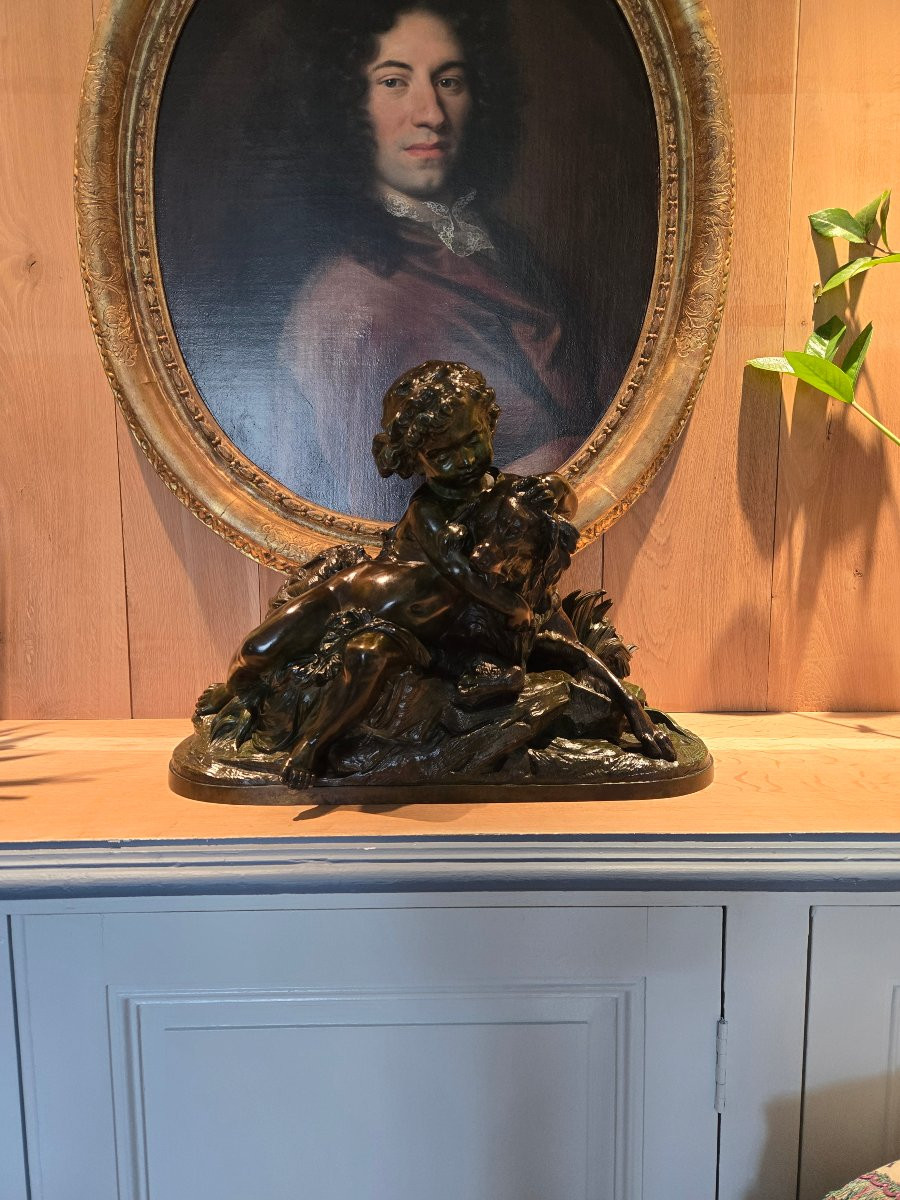


The Embrace – Auguste Joseph Peiffer, Important Bronze, Late 19th Century.
Artist: Peiffer
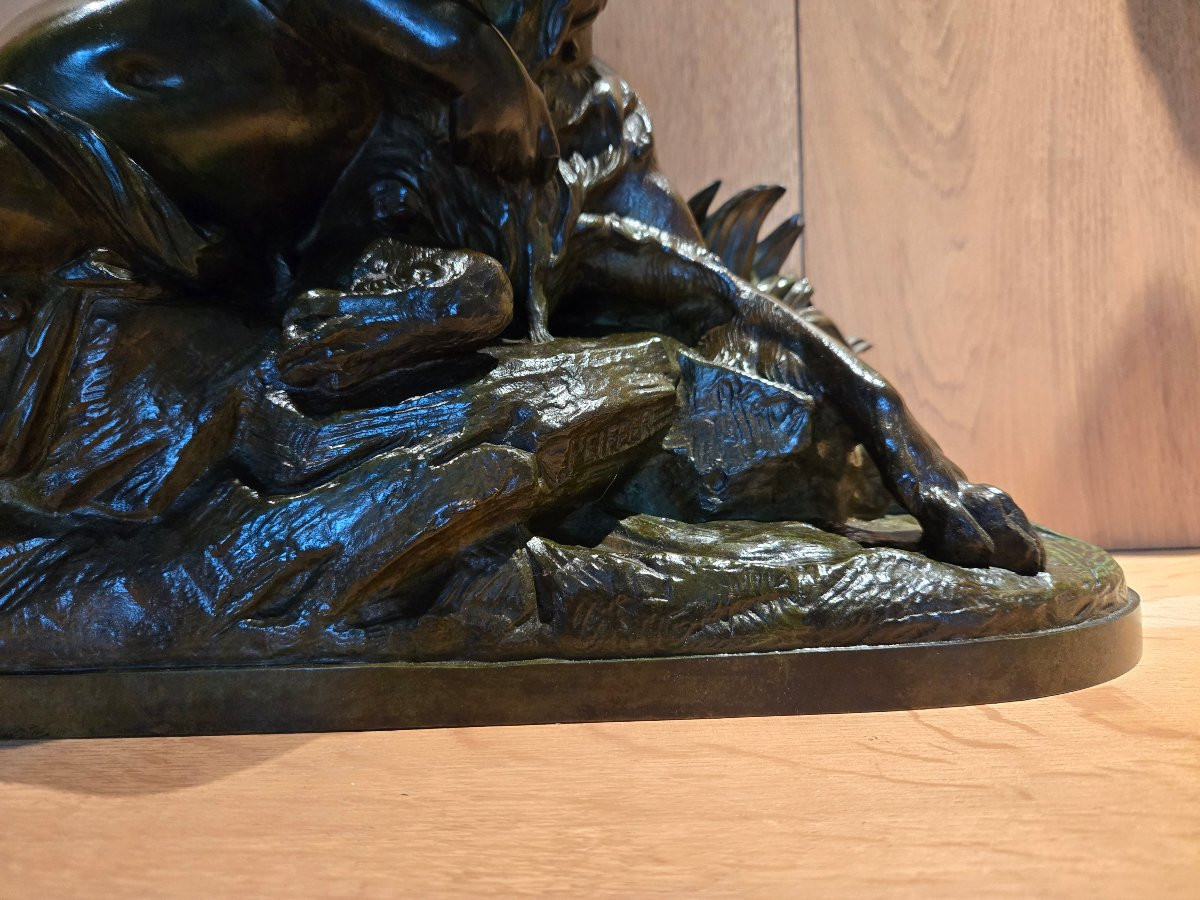
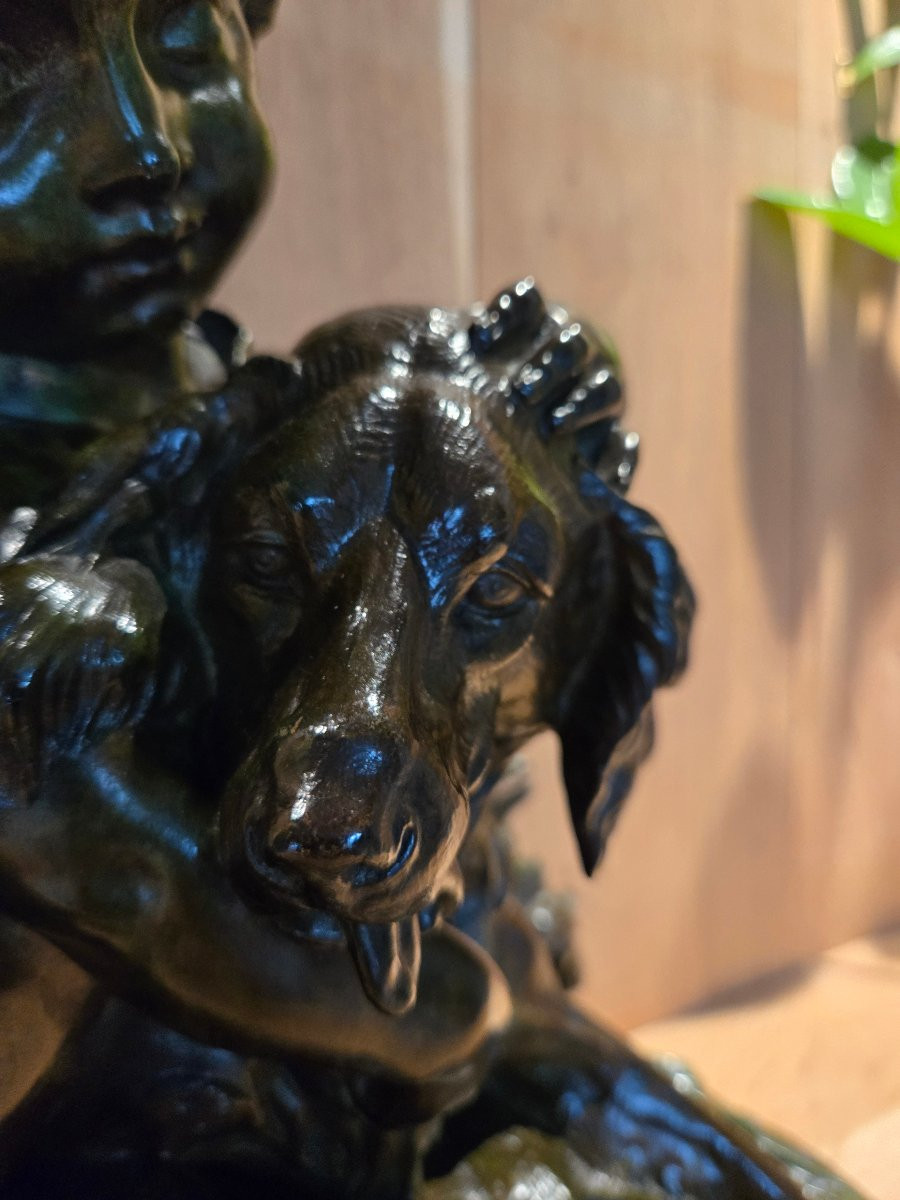
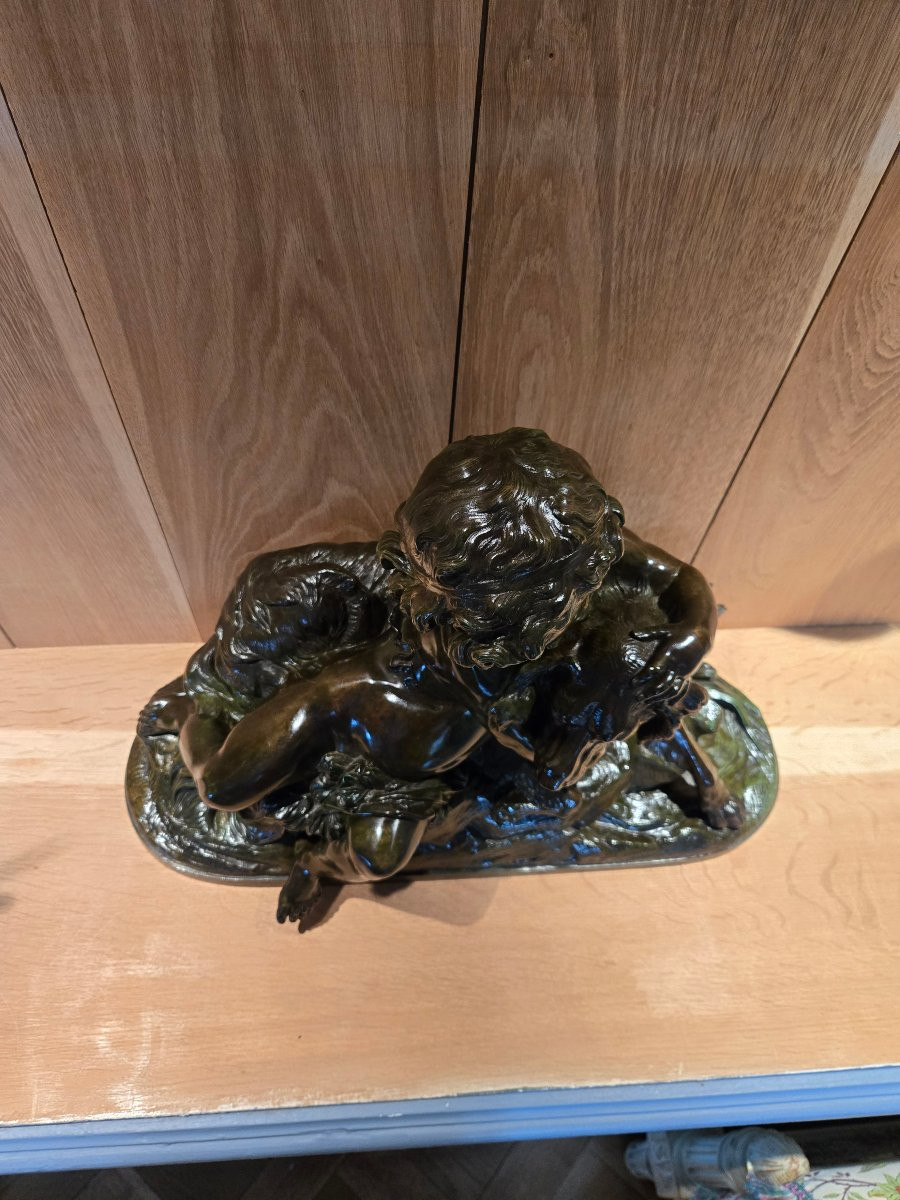
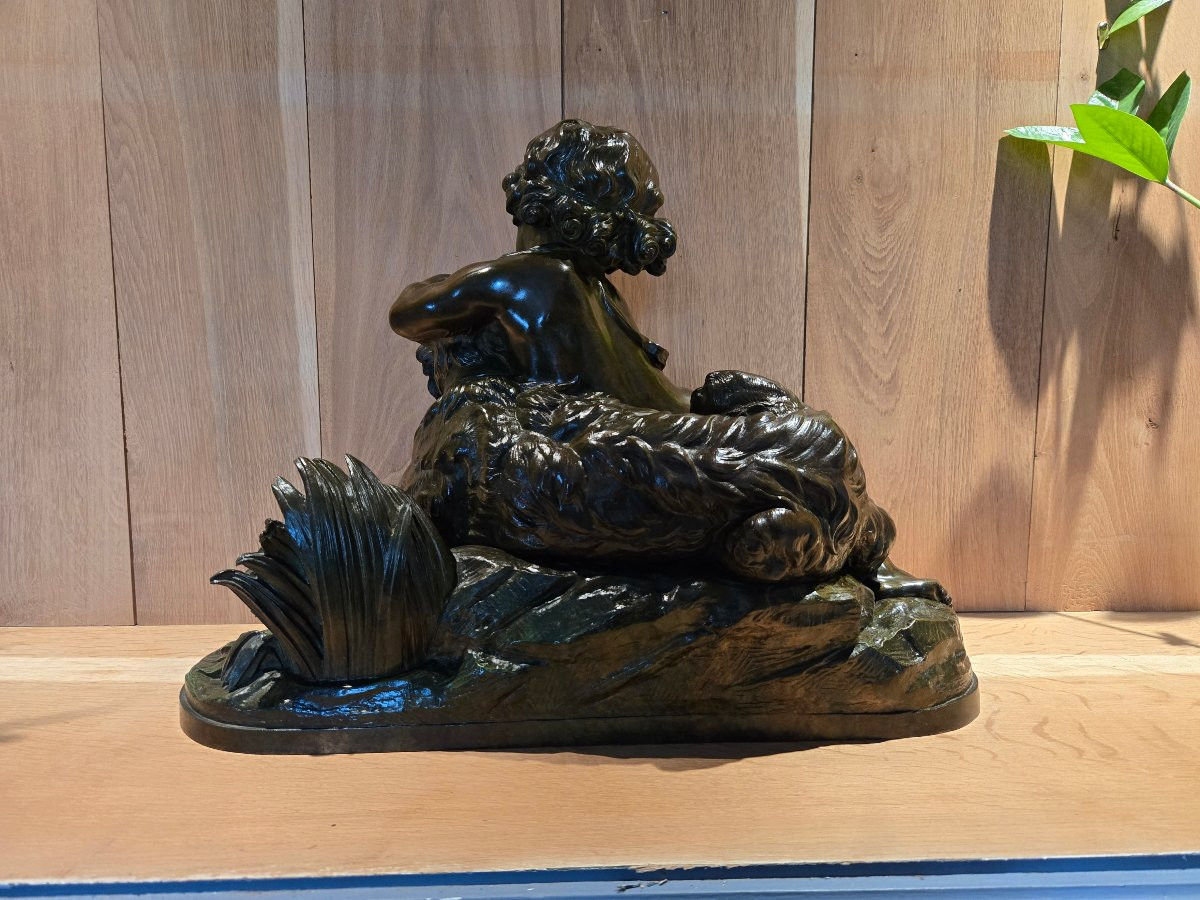
An important decorative bronze sculpture with a nuanced green patina, depicting a young, nude girl lying on a rocky, vegetated mound, tightly and tenderly embracing her dog. The scene, imbued with great emotional intensity, illustrates with rare accuracy the profound bond between child and animal. The girl embraces the dog with an almost excessive hug, a spontaneous and instinctive gesture of childhood. The animal, completely nestled against her, allows it with trust: its head slightly turned, its ears drooping, its tongue lolling out—a touchingly realistic detail that lends the composition an immediate sense of life. The contrast between the strength of the embrace and the dog's peaceful surrender gives the work its narrative power. This is neither an idealized scene nor a mere decorative study, but an intimate moment, captured in the moment, imbued with gentleness, truth, and humanity. Artistic Analysis and Quality of Execution: The girl's body is rendered with supple, fleshy modeling, characteristic of 19th-century academic sculpture. The volumes are full, the transitions perfectly blended, demonstrating great anatomical mastery. The finely sculpted, curly hair frames a face with soft, focused features, turned towards the animal in an almost instinctive gesture of protection. The dog, probably still young, is depicted with remarkable naturalism: finely chiseled fur, supple musculature, and an expression that is both docile and expressive. Its paws extend onto the rocky ground, accentuating the feeling of trusting surrender and affectionate closeness. The composition rests on an integrated oval base, treated as a natural landscape enlivened with foliage and rocks, perfectly in keeping with the subject. The whole is balanced, fluid, and highly decorative, offering multiple perspectives. The sculptor: The sculpture is signed Auguste Joseph Peiffer, a French sculptor born in 1832 and who died prematurely in 1879. A student of Jean-Baptiste-Jules Klagmann, Peiffer belongs to the great academic tradition of the 19th century. He regularly participated in the official Salons between 1865 and 1879, where he primarily exhibited works with allegorical, mythological, and animal subjects. He received a third-class medal at the 1878 Salon, institutional recognition attesting to the quality of his work. His work is distinguished by precise modeling, particular attention to expression, and a genuine narrative sensibility—qualities fully realized in this sculpture, where gesture and emotion take precedence over mere decorative effect. The foundry: The bronze bears an oval plaque on its base from the Compagnie des Bronzes de Bruxelles, one of the most prestigious European art foundries of the 19th and 20th centuries. Founded in Brussels in 1854, the Compagnie des Bronzes quickly established itself as a leading name in the casting of bronze art and monuments, collaborating with numerous sculptors and producing both decorative bronzes and major public commissions. It is renowned for the exceptional quality of its castings, their fidelity to original models, and the richness of their patinas. The presence of this plaque guarantees that this is an antique casting, produced according to the highest standards of 19th-century artistic sculpture. Dimensions: Width: 55 cm Height: 41 cm Depth: 26 cm
3 800 €
Period: 19th century
Style: Napoleon 3rd
Condition: Excellent condition
Material: Bronze
Reference (ID): 1690695
Availability: In stock
Print