

Neo-renaissance Pendant Featuring A Cherub, Made Of Silver, Emerald, Diamond, And Pearls
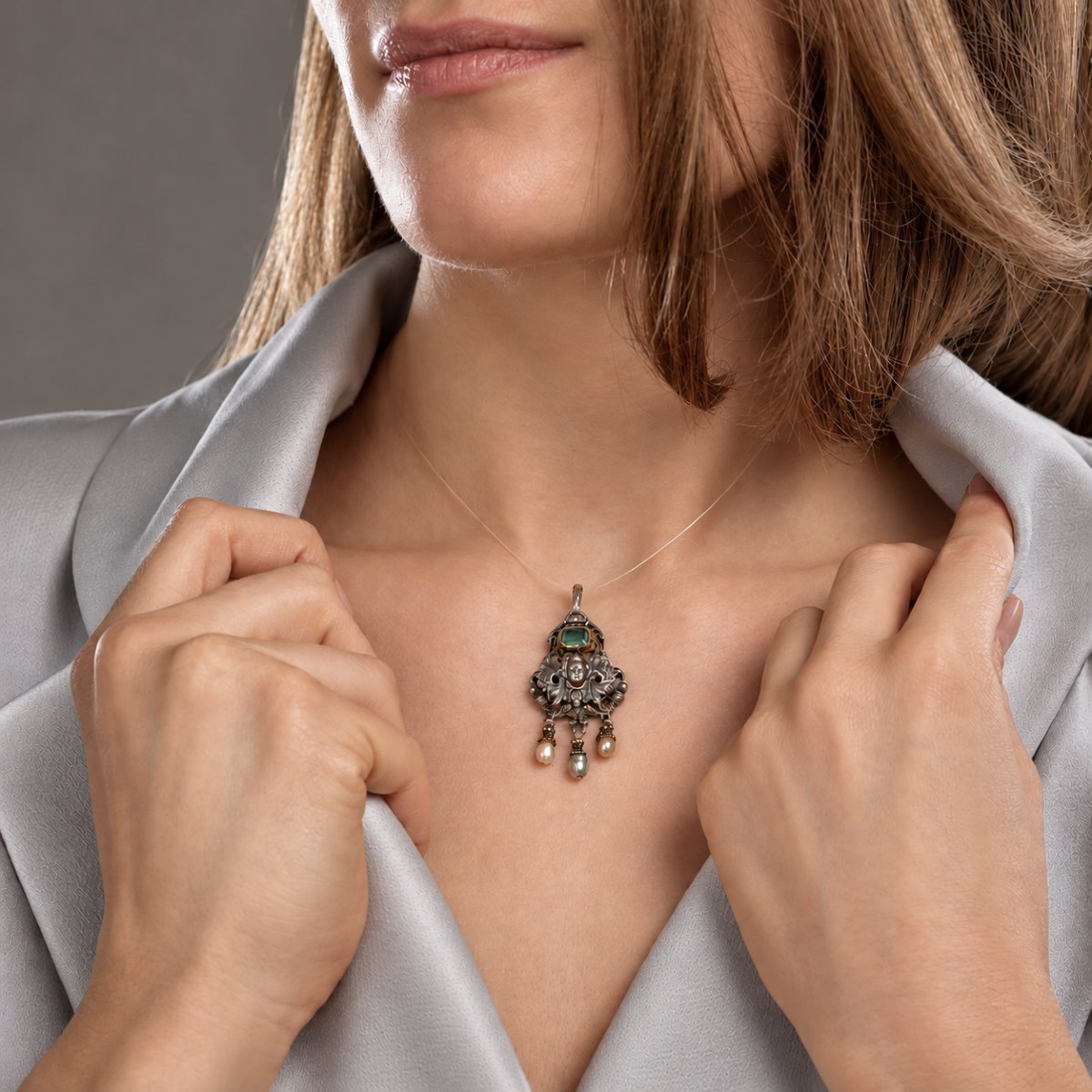
4 x 2.2 cm
Silver and 14-karat gold; emerald on a straw setting, rose-cut diamond, antique baroque pearls; gross weight 11.97 g
France, Neo-Renaissance, circa 1860
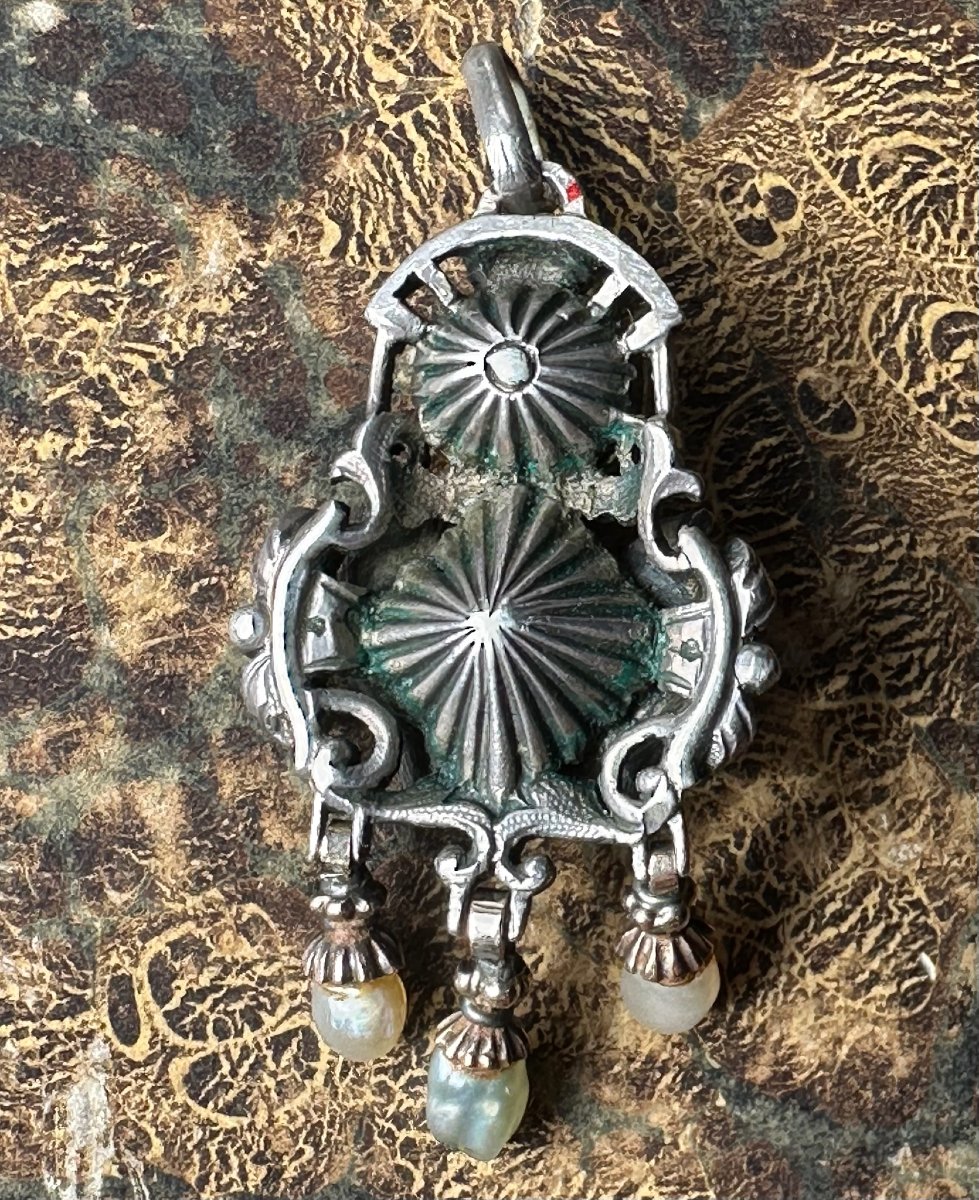
Good condition, normal wear and tear. Hallmarks
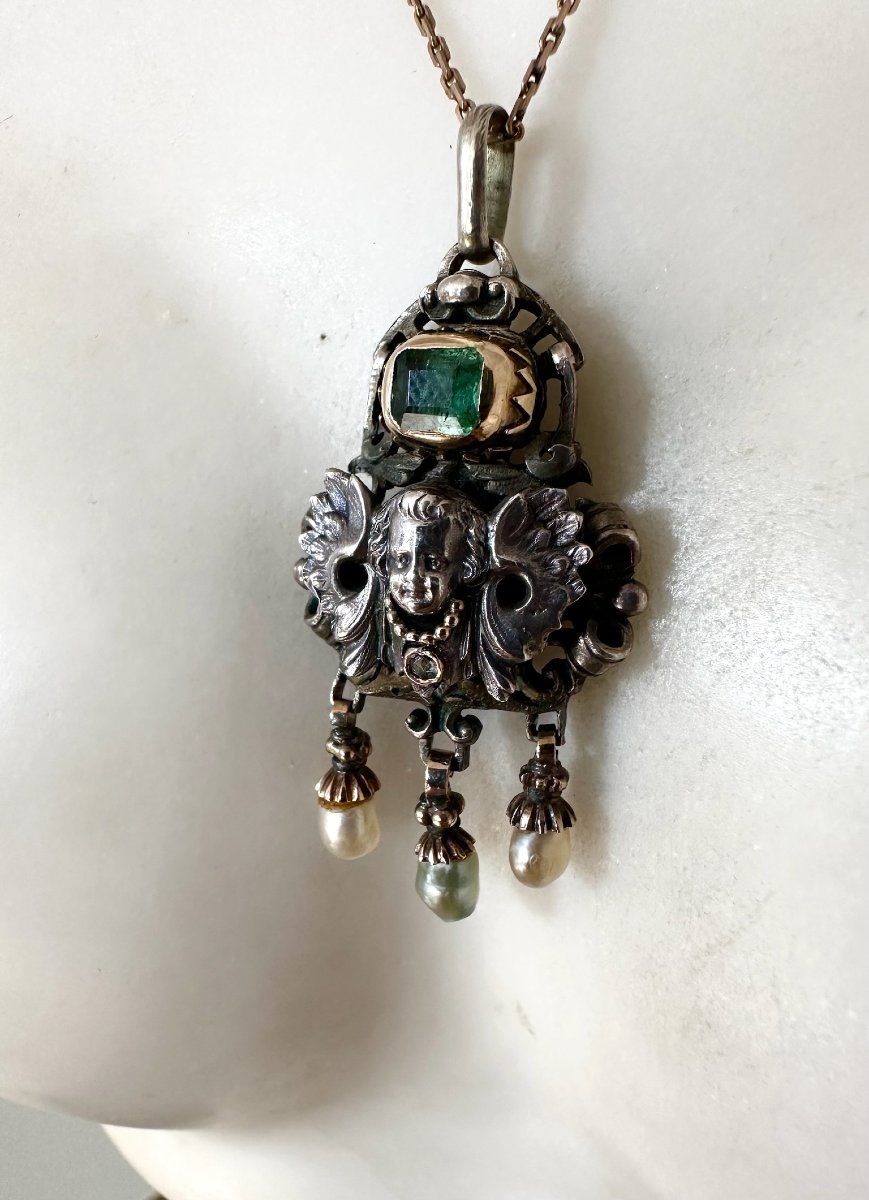
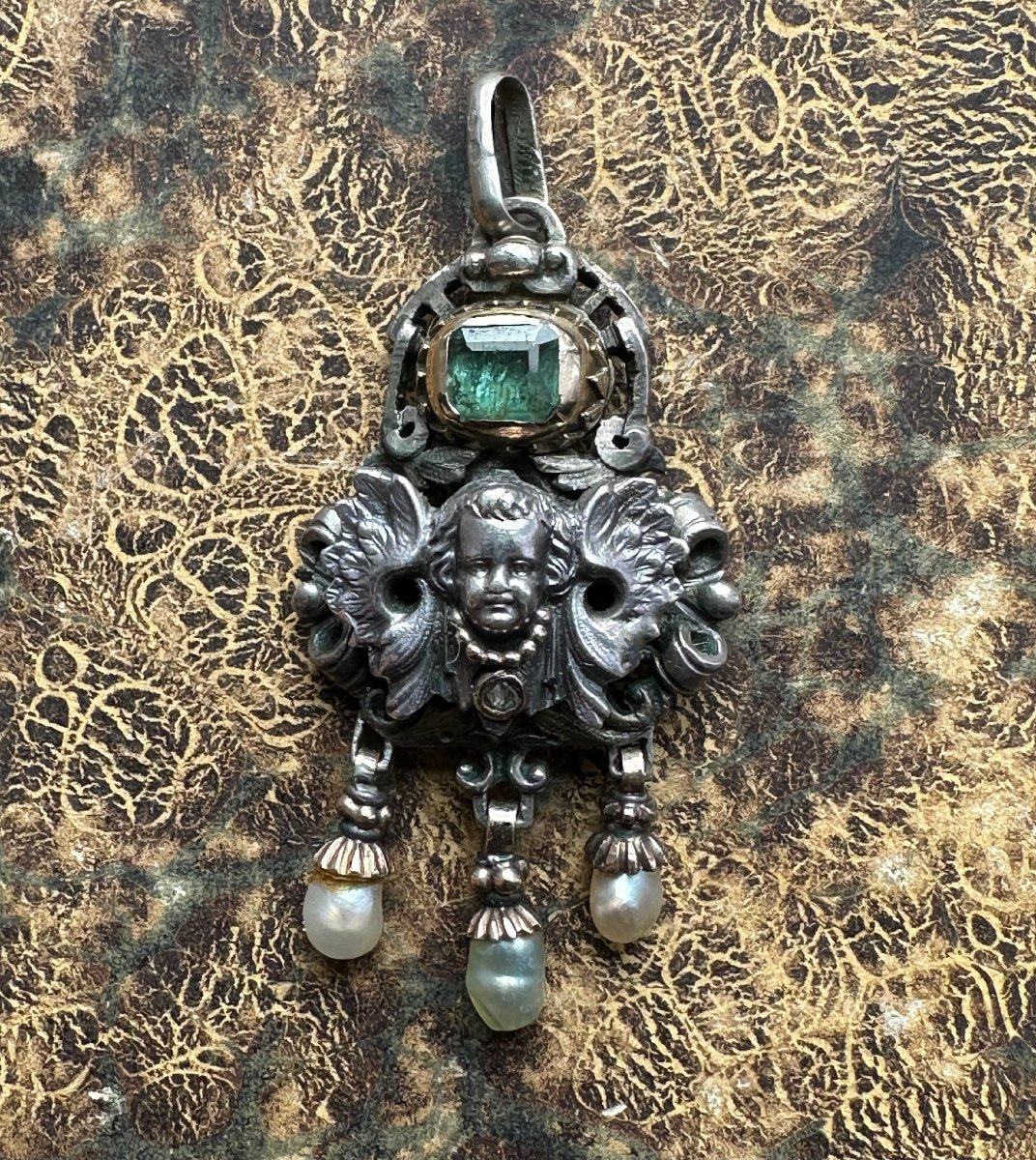
A Renaissance-style pendant featuring a winged cherub’s head at its center. The chased silver and gold-set stones are characteristic of the historicist goldsmithing of the Second Empire.
A step-cut emerald, mounted on a gold setting with a scalloped border, crowns an openwork silver scrollwork arch beneath a ribbon bow. The cherub’s head emerges from beneath feathered wings and acanthus scrolls. A beaded necklace around its neck holds a small rose-cut diamond. Three articulated pendants terminate in baroque pearls beneath gadrooned gold caps.
Historical Context – 19th-Century Jewelry
As early as the 1840s, Parisian goldsmiths revived the sculpted jewelry of the 16th century. François-Désiré Froment-Meurice and Jules Wièse, who trained in his workshop, made chased silver, colored gemstones, and pearl pendants the hallmarks of this style. The emerald set on a closed bezel deliberately evokes Spanish jewelry from the Golden Age.
Iconography and Symbolism
The winged child is a dual heir: the ancient Eros and the cherub of Christian angelology. Plato portrays Eros as a daimon, an intermediary between the gods and mortals. Pseudo-Dionysius sees in the cherubim the “fullness of knowledge.” Pliny maintains that no color is as soothing to the eye as the emerald, and that pearls are born from the dew of the heavens.
Silver and 14-karat gold; emerald on a straw setting, rose-cut diamond, antique baroque pearls; gross weight 11.97 g
France, Neo-Renaissance, circa 1860
Good condition, normal wear and tear. Hallmarks
A Renaissance-style pendant featuring a winged cherub’s head at its center. The chased silver and gold-set stones are characteristic of the historicist goldsmithing of the Second Empire.
A step-cut emerald, mounted on a gold setting with a scalloped border, crowns an openwork silver scrollwork arch beneath a ribbon bow. The cherub’s head emerges from beneath feathered wings and acanthus scrolls. A beaded necklace around its neck holds a small rose-cut diamond. Three articulated pendants terminate in baroque pearls beneath gadrooned gold caps.
Historical Context – 19th-Century Jewelry
As early as the 1840s, Parisian goldsmiths revived the sculpted jewelry of the 16th century. François-Désiré Froment-Meurice and Jules Wièse, who trained in his workshop, made chased silver, colored gemstones, and pearl pendants the hallmarks of this style. The emerald set on a closed bezel deliberately evokes Spanish jewelry from the Golden Age.
Iconography and Symbolism
The winged child is a dual heir: the ancient Eros and the cherub of Christian angelology. Plato portrays Eros as a daimon, an intermediary between the gods and mortals. Pseudo-Dionysius sees in the cherubim the “fullness of knowledge.” Pliny maintains that no color is as soothing to the eye as the emerald, and that pearls are born from the dew of the heavens.
1 700 €
Period: 19th century
Style: Other Style
Condition: Excellent condition
Material: Sterling silver
Reference (ID): 1836670
Availability: In stock
Print