

Roman Bronze Knife Handle – Lion Attacking A Wild Boar – Roman Gaul, Archaeology
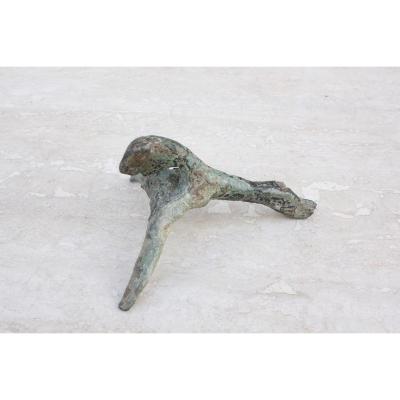
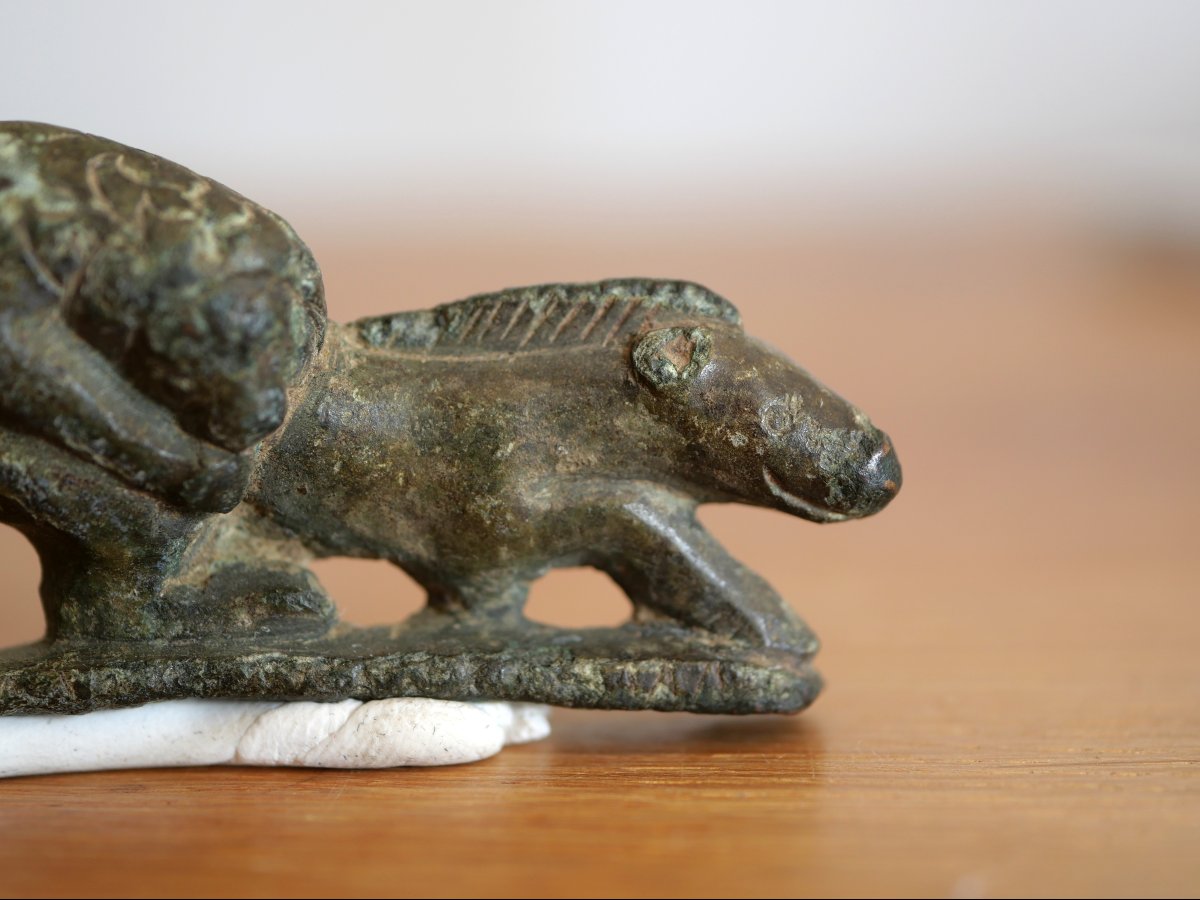
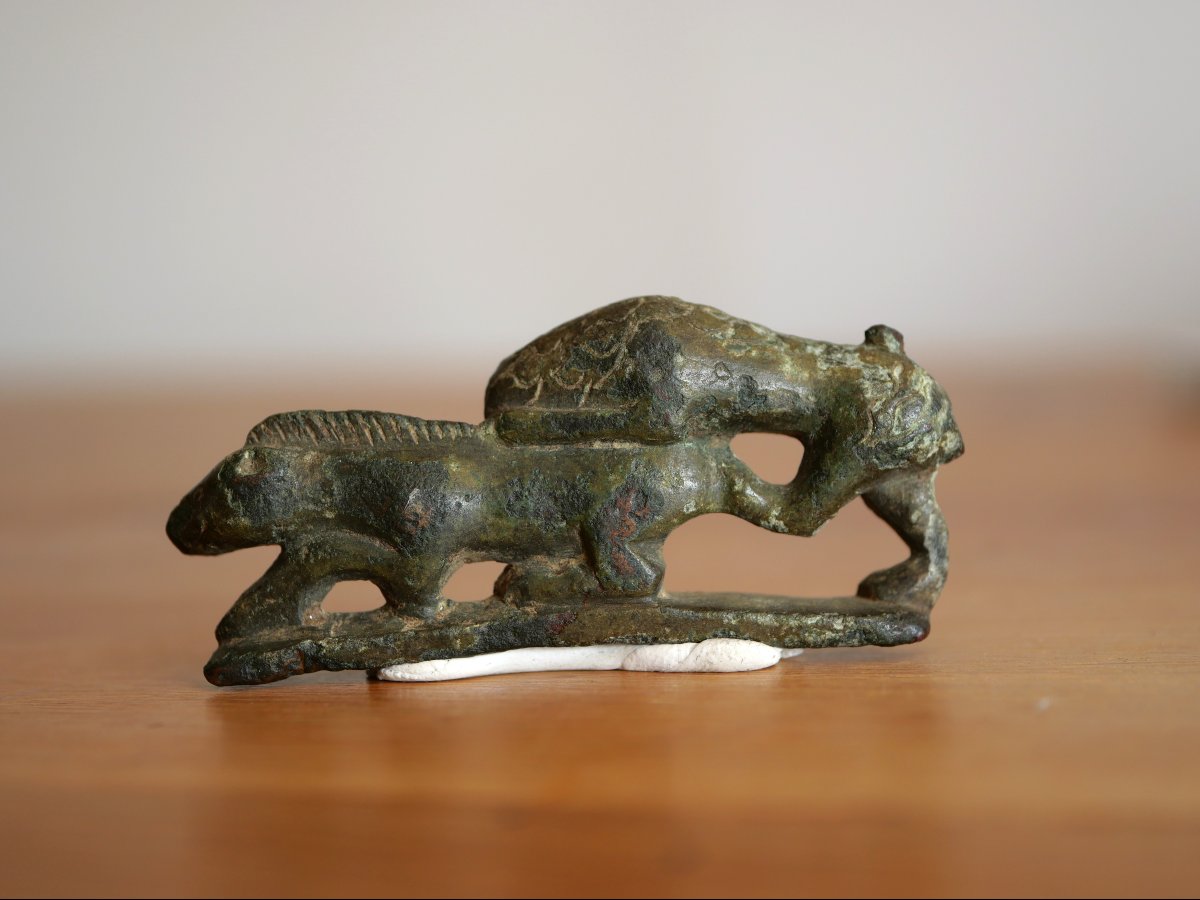
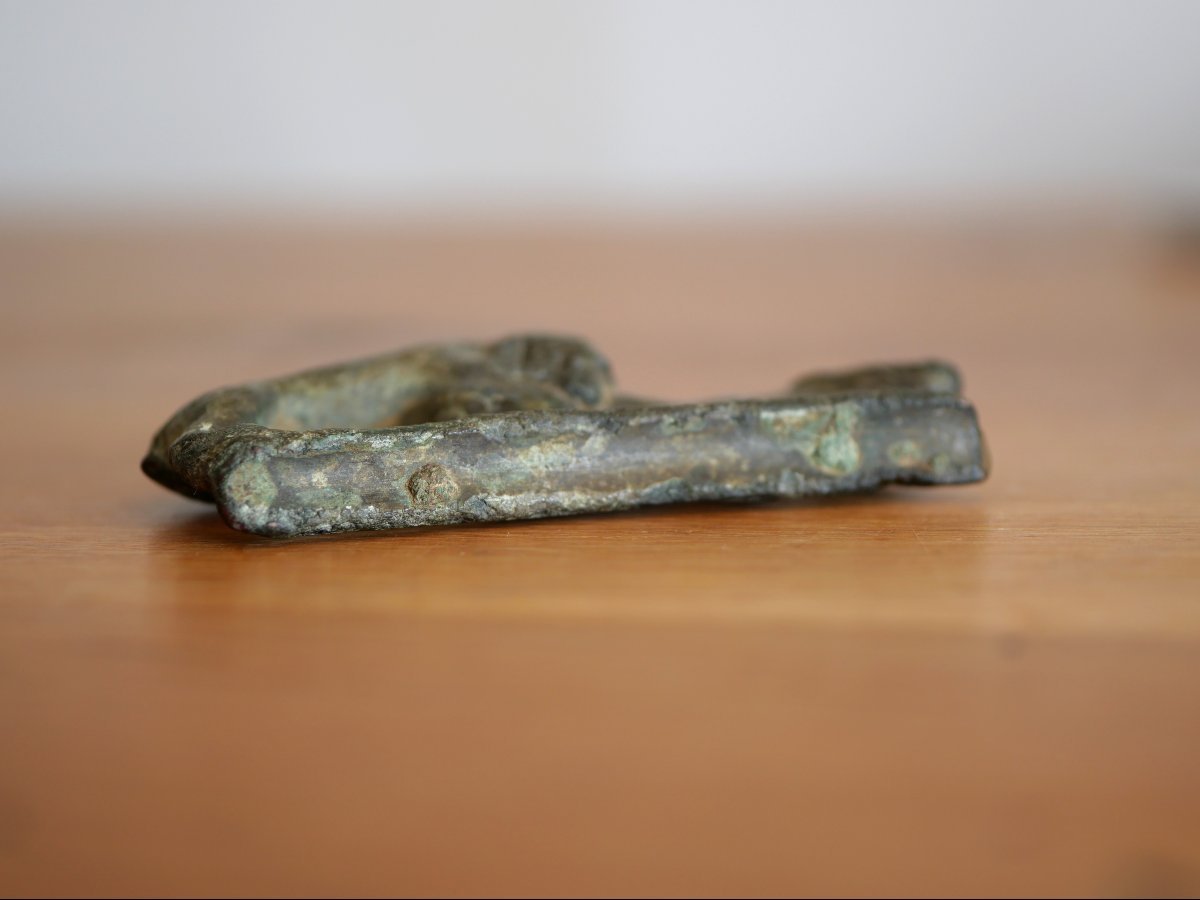
A rare decorative element from the handle of a Roman knife, made of cast bronze and entirely carved in the round.
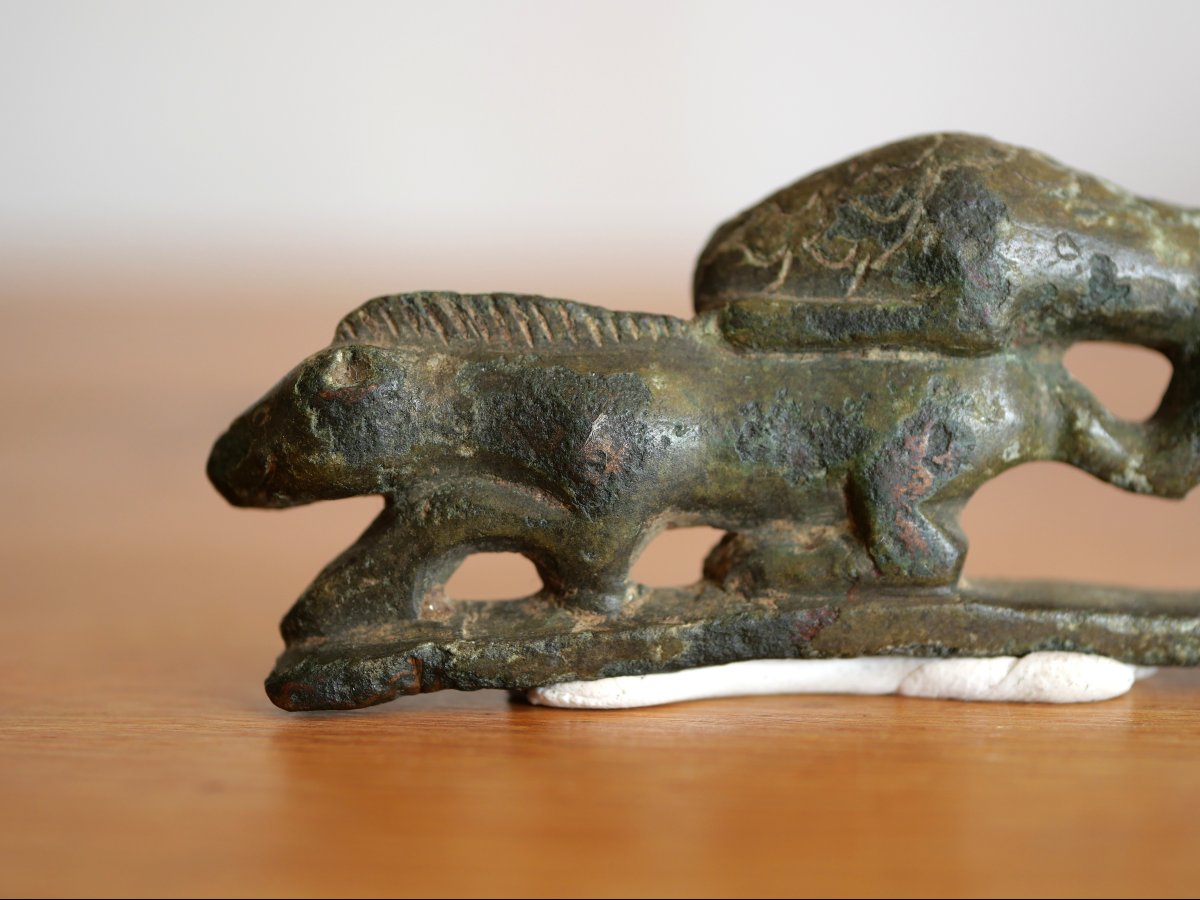
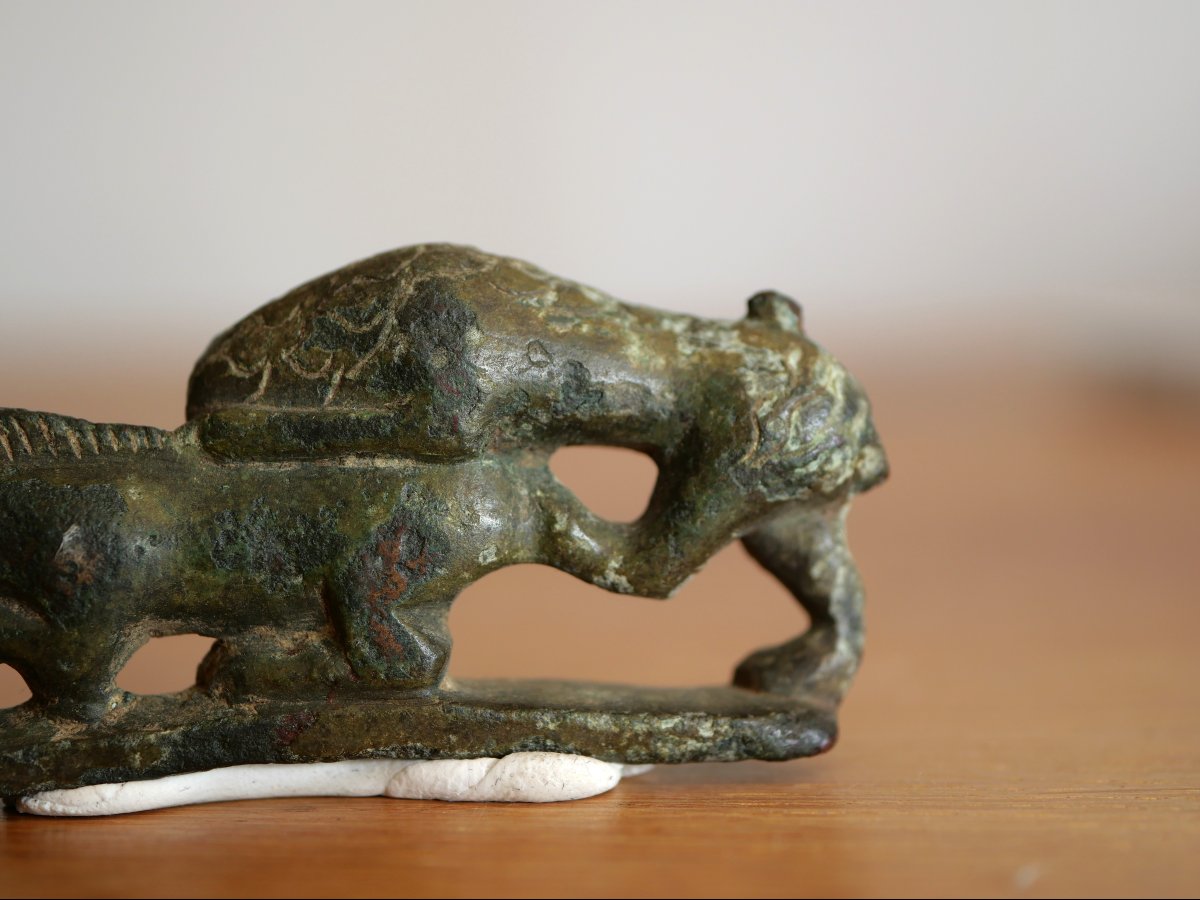
This remarkable small sculpture depicts a lion pouncing on a wild boar in a highly dynamic hunting scene. Despite its small size, the group possesses a truly sculptural quality, with volumes clearly defined on all sides and a composition designed to be appreciated in the round.
Hunting scenes are a well-documented motif on Roman knives from the 1st and 2nd centuries CE, particularly in the context of Roman Gaul. Depictions related to venatio—a spectacular form of hunting that held an important place in the Roman imagination—feature various animals and combinations. The panther-and-deer pairing is particularly common. We also encounter the motif of a dog chasing or confronting a hare, as illustrated by several examples preserved in museum collections, notably at the Sens Museum and the Winchester Museum.
The confrontation between a lion and a wild boar, on the other hand, seems much less common on this type of object. The wild boar may, for example, be depicted alongside a dog, as on an example held at the British Museum (inv. 2975). This group, therefore, stands out for its particularly original combination of these two animals.
Beyond its decorative nature, this pairing may have had a symbolic dimension, particularly in the context of the early Roman presence in Gaul. The lion, an animal strongly associated with Roman power and authority, could be contrasted with the wild boar, an animal particularly prevalent in Gallic iconography and often considered to carry strong symbolic significance in the Celtic world.
This interpretation must, however, be approached with caution: the existence of a political or symbolic message cannot be asserted with certainty based on this single element alone. It nevertheless constitutes a particularly interesting hypothesis given the nature of the object, its iconography, and its presumed chronological context.
The lion also occupies an important place in Roman military imagery, with some soldiers depicted wearing a lion’s pelt or a lion’s head—an attribute associated with strength and virtus.
This object is particularly captivating due to its extreme iconographic rarity, the quality of its modeling, and its miniature size. It offers a unique insight into Roman material culture and imagery in Gaul.
Dimensions: 3 cm high; 7 cm long.
Price excludes shipping costs
Police Registry Ref.: A227
Professional Antique Dealer – Guarantee & peace of mind when purchasing
As a professional antique dealer, I am committed to offering only authentic items that have been carefully selected and are legally marketable. Each piece is chosen for its historical, aesthetic, or collectible value and undergoes a rigorous verification of its provenance.
Invoice and Traceability. Each purchase comes with a detailed invoice and a certificate of authenticity, guaranteeing the item’s provenance and ensuring complete transparency.
Legal Compliance. All items comply with current French and European legislation. Any archaeological items are offered in accordance with the Heritage Code (Articles L.542-1 et seq.). Items that may be subject to specific regulations (cultural artifacts, antiques, items made of specific materials) are sold strictly in accordance with the law.
International Buyers. Buyers outside of France are advised to verify the regulations applicable in their country regarding the importation of cultural artifacts or antiques.
Right of Withdrawal.In accordance with the law (Article L.221-18 of the Consumer Code), you have 14 days after receipt to return an item. Return shipping costs are the responsibility of the buyer. The item must be returned in its original condition.
Quality Commitment. Buying from a professional ensures security, transparency, and reliability. I am available to answer any additional questions you may have before making a purchase.
Period: Before 16th century
Style: Rome and Antic Greece
Condition: Good condition
Material: Bronze
Length: 7 cm
Height: 3 cm
Reference (ID): 1832863
Availability: In stock