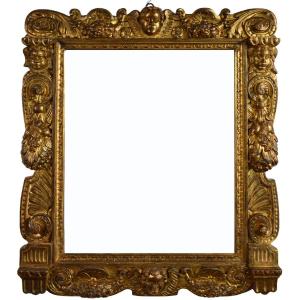


Sansovino-style Venetian Frieze, 16th Century
Venice, second half of the 16th century (ca. 1550–1600)
Frame, Sansovino style
Carved and gilded wood
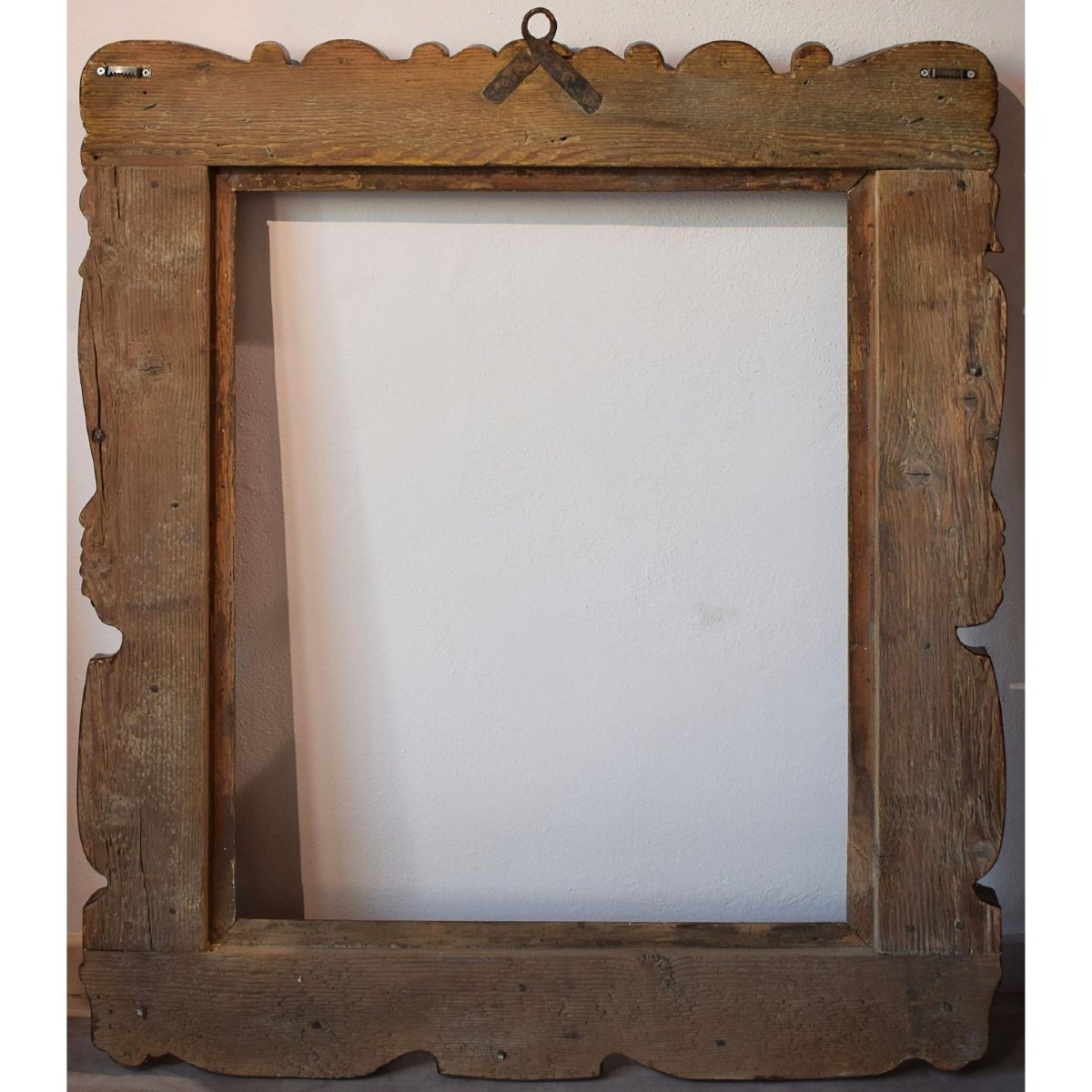
External dimensions: 112 × 101 cm
Inner dimensions: 79.5 × 66.5 cm
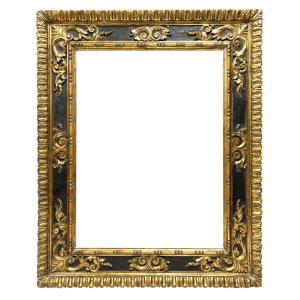
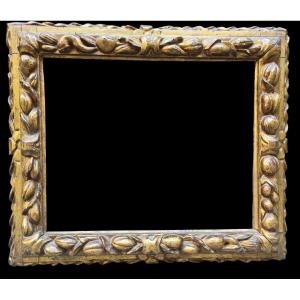
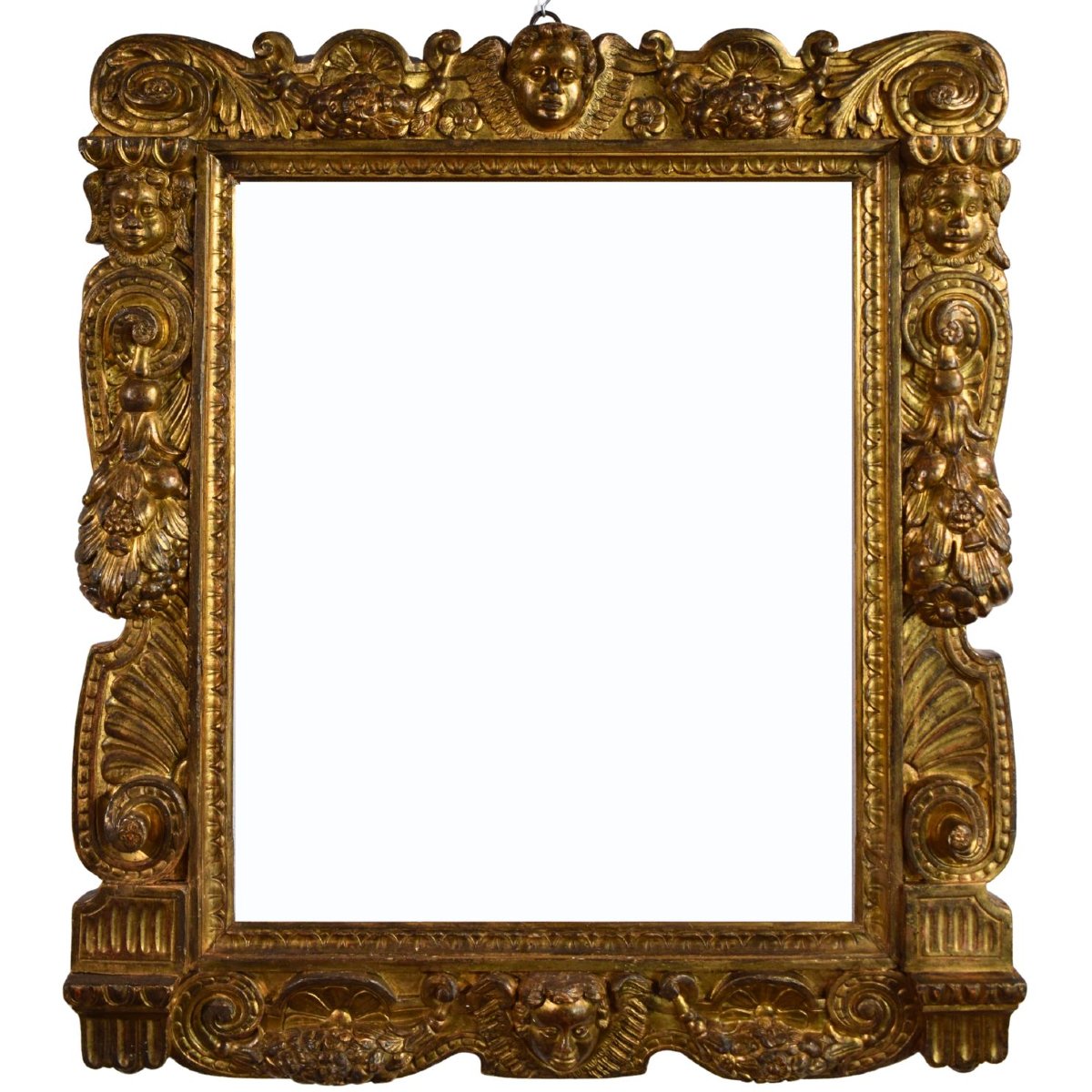
An important Venetian frame from the second half of the 16th century, belonging to the refined and spectacular category of Sansovino-style frames, one of the most characteristic expressions of Venetian Renaissance woodcarving.
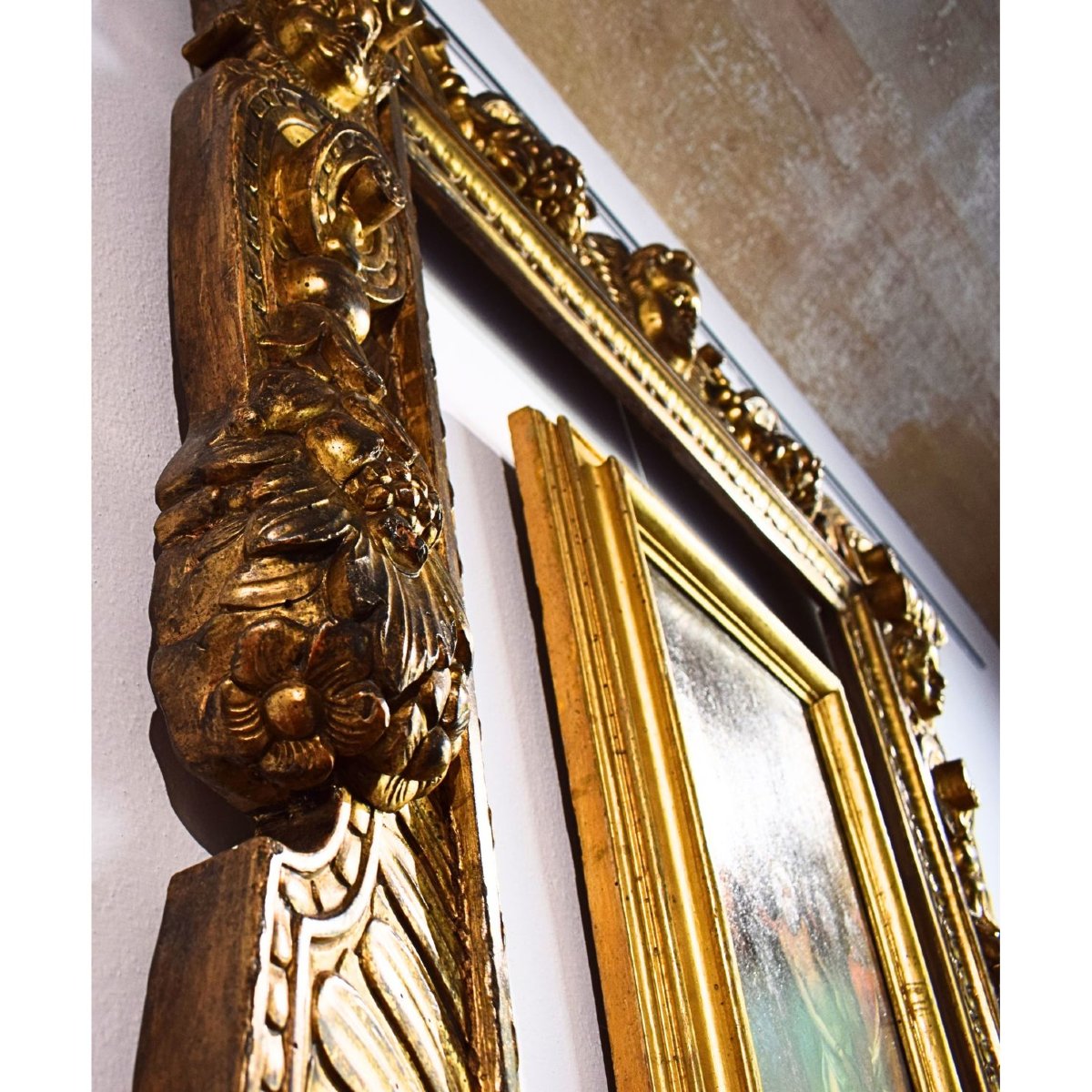
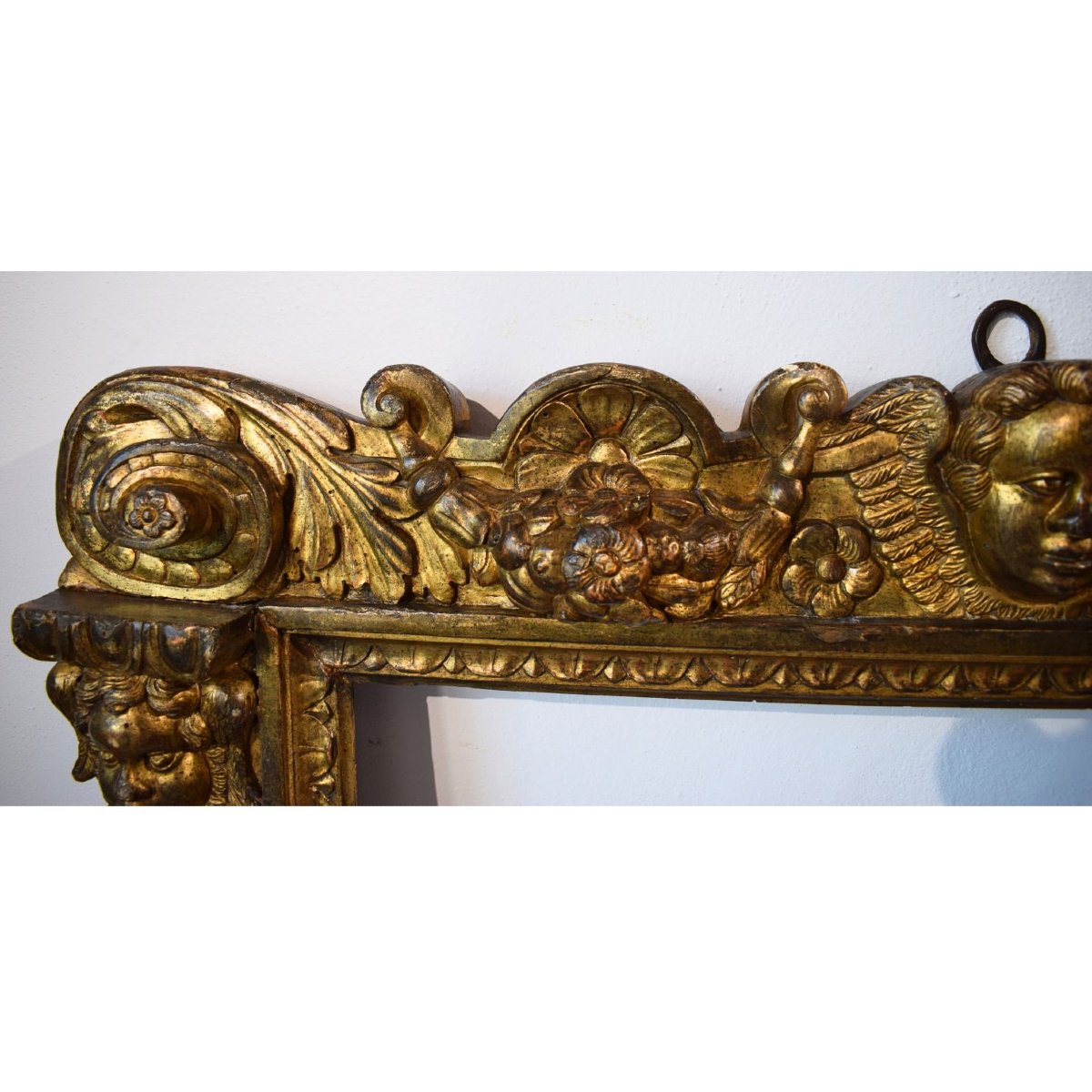
The frame features a rectangular structure of remarkable monumental presence, articulated through rich carved and gilded decoration, in which the Renaissance ornamental repertoire is rendered with striking three-dimensional effect.
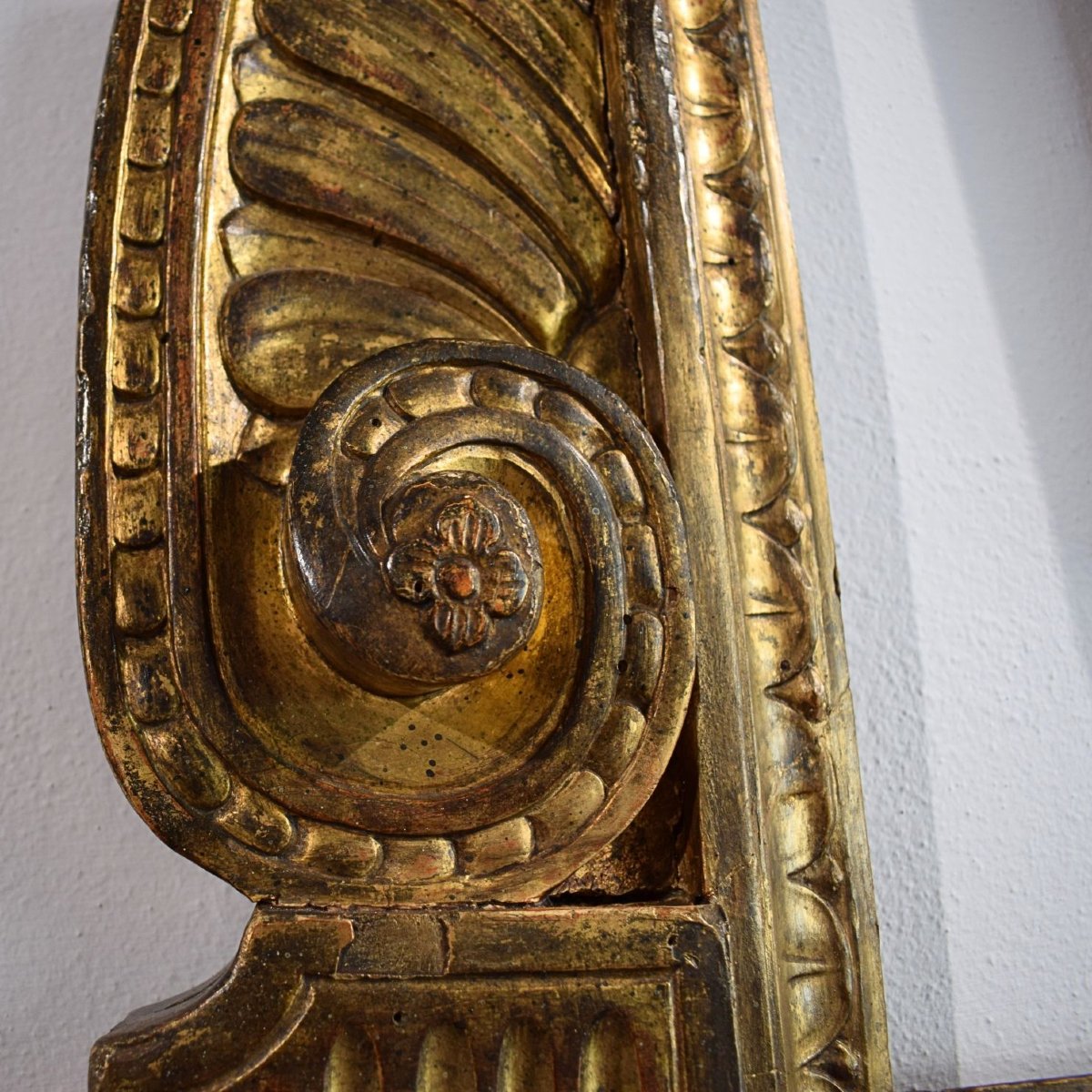
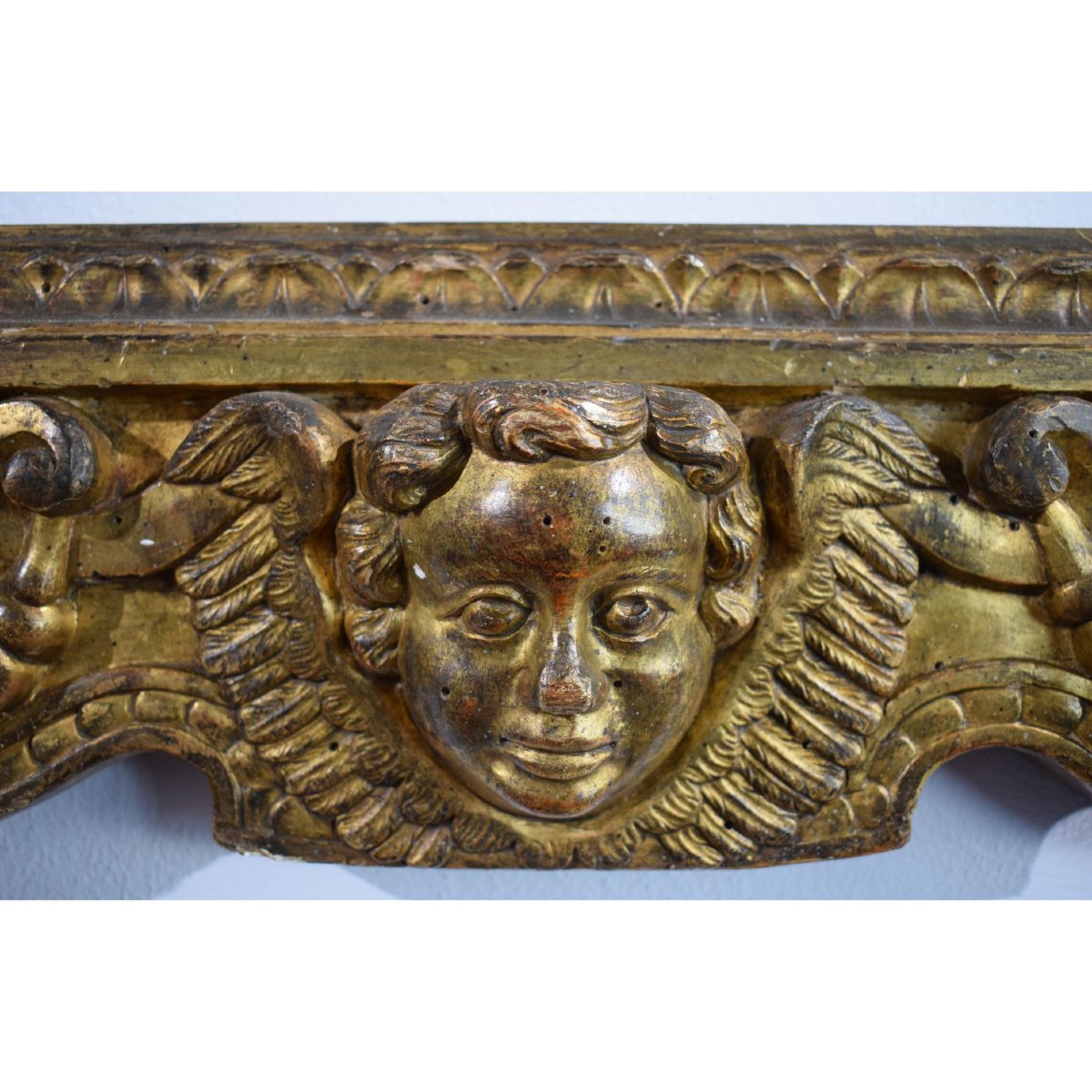
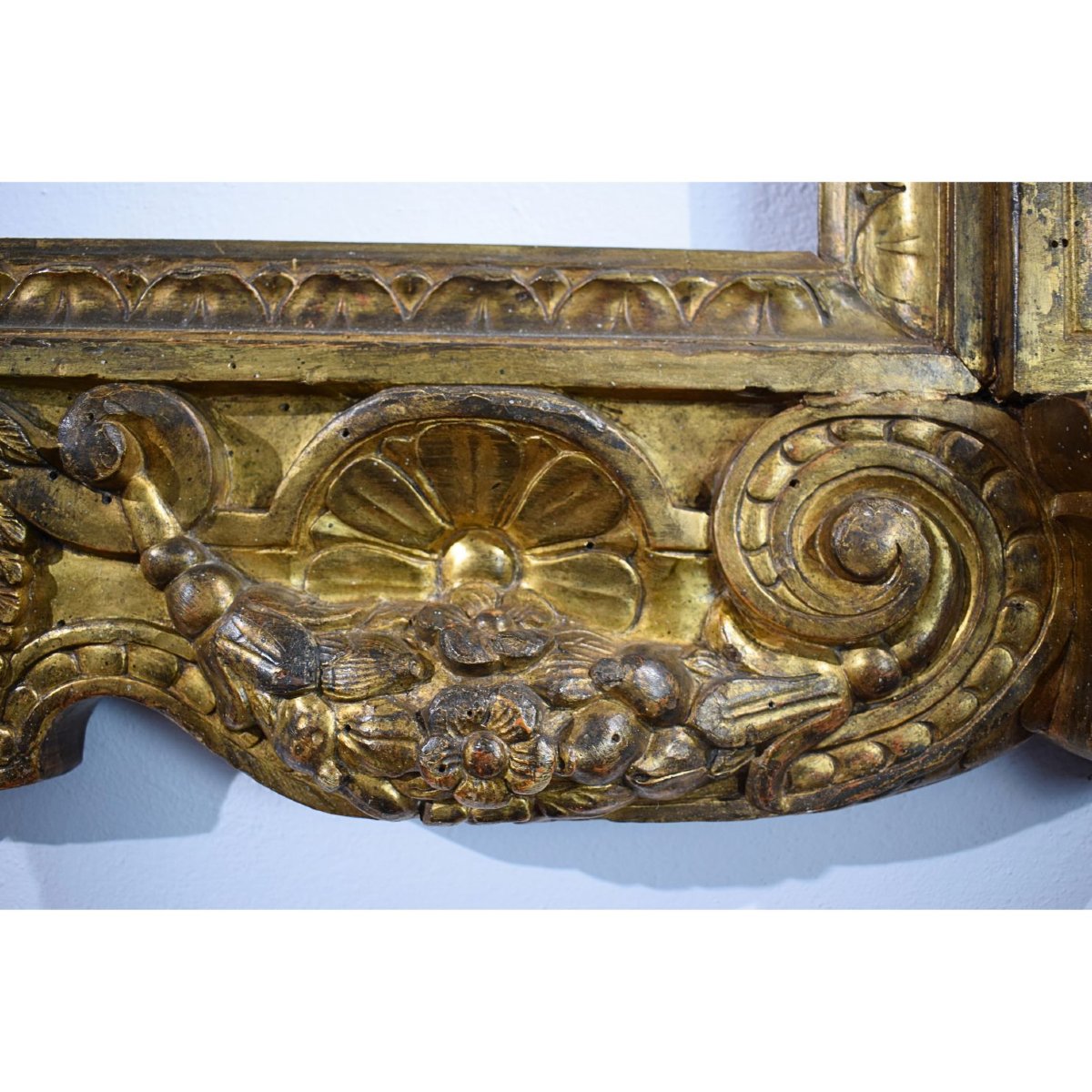
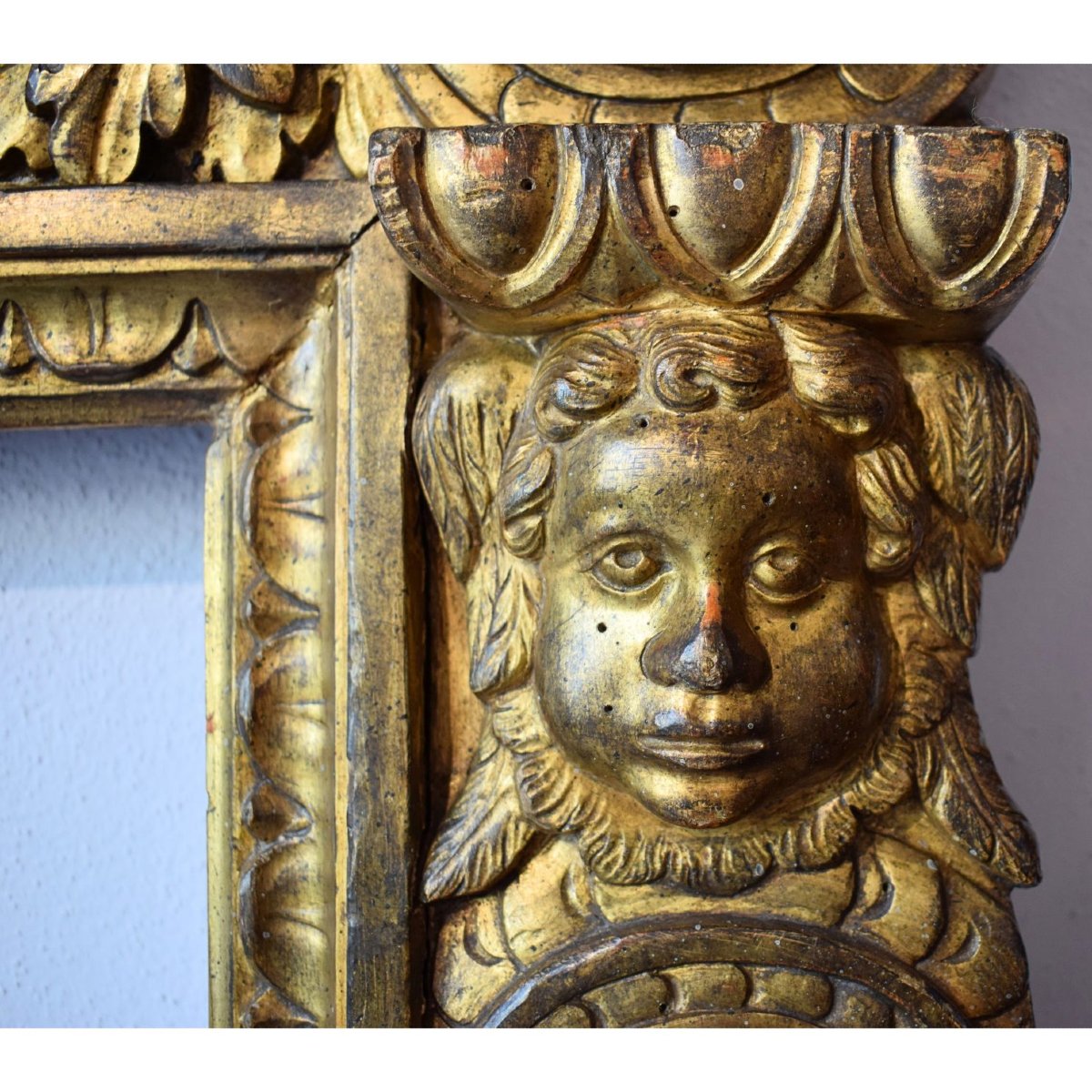
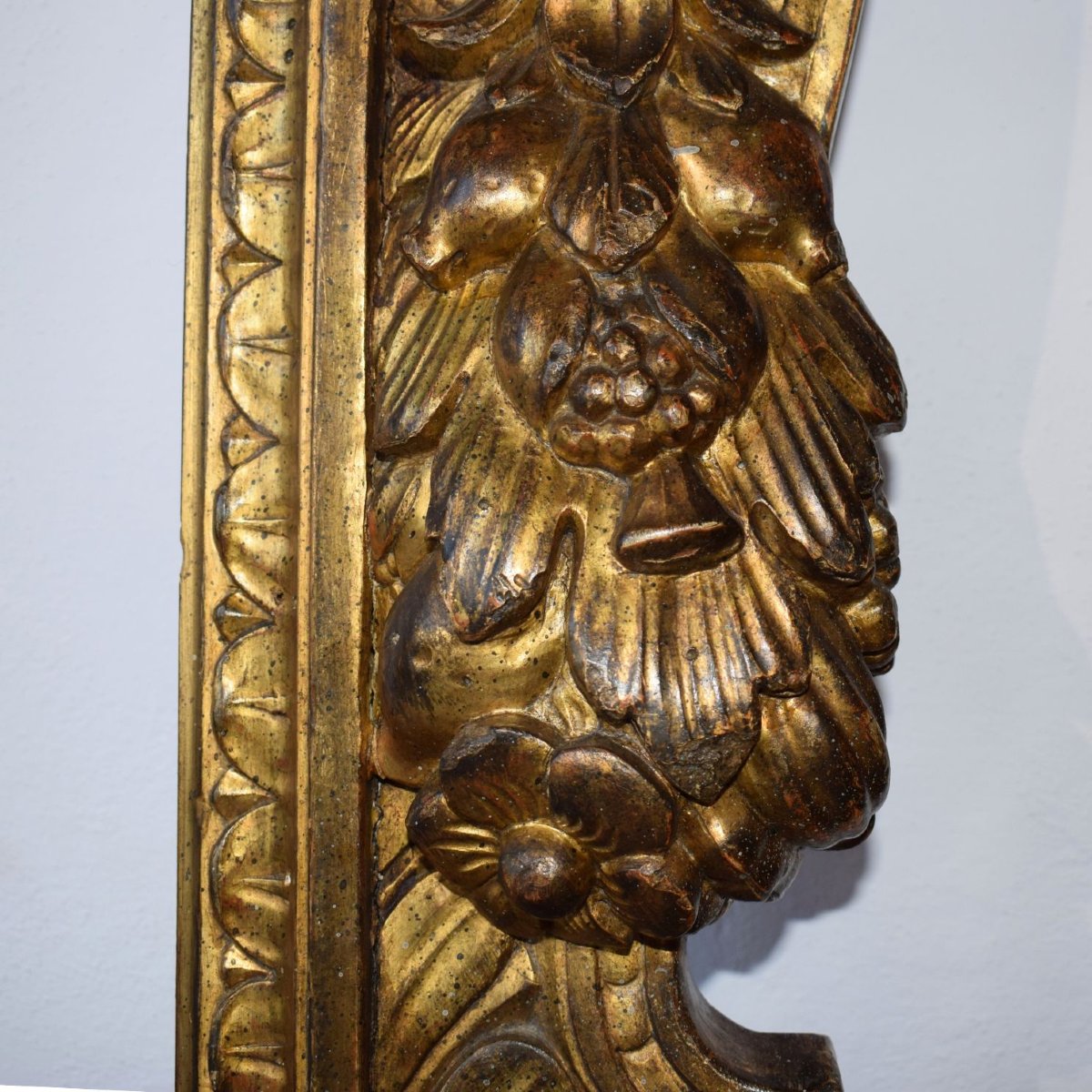
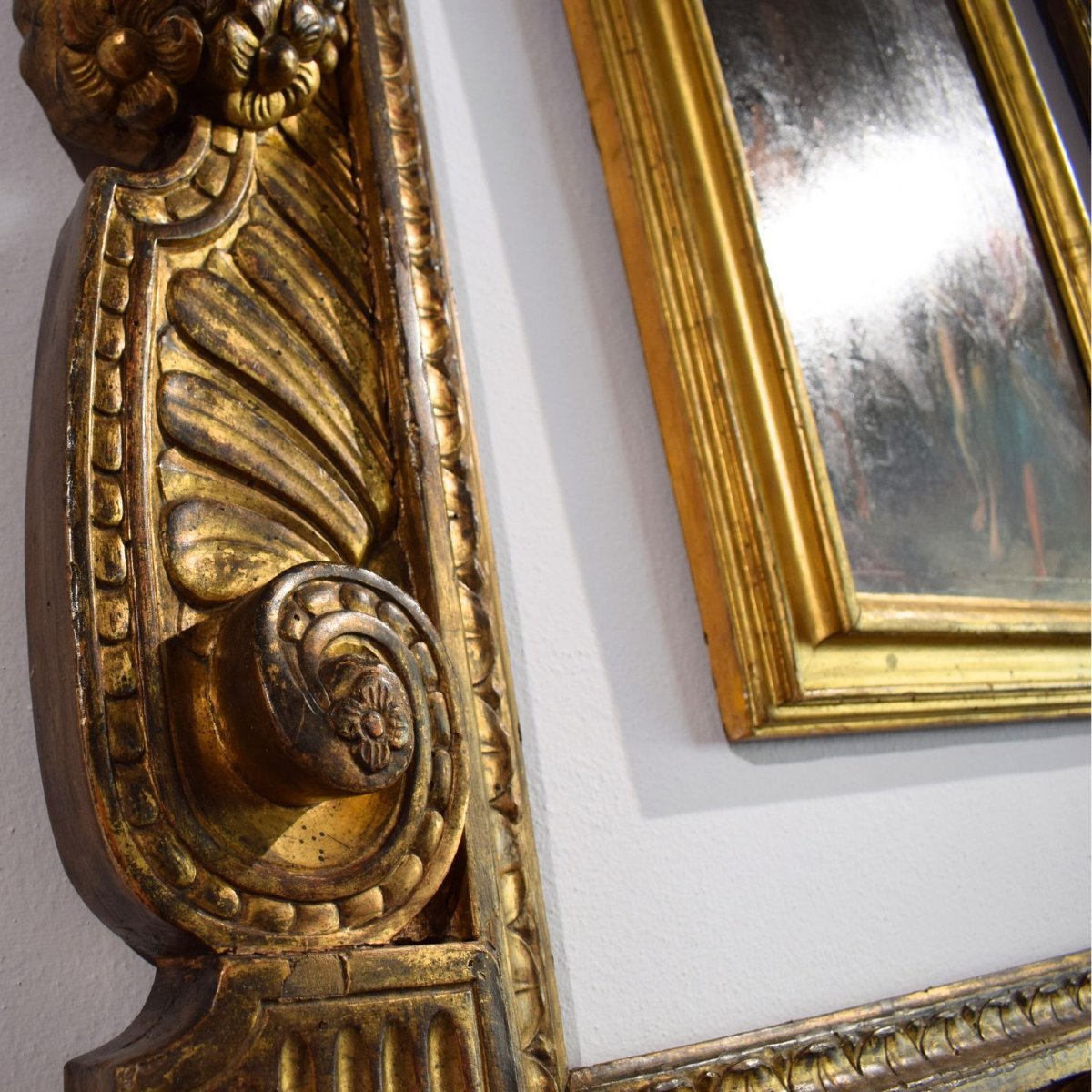
Along the side posts are large, opposing volutes, from which plant motifs, leaves, flowers, and garlands emerge. At the center of the two side posts are the heads of winged cherubs, while the top is dominated by a winged putto, set among volutes, floral elements, and phytomorphic motifs.
In the center of the lower side, on the other hand, is a large mask—also winged—from which rich plant and floral elements branch out symmetrically.
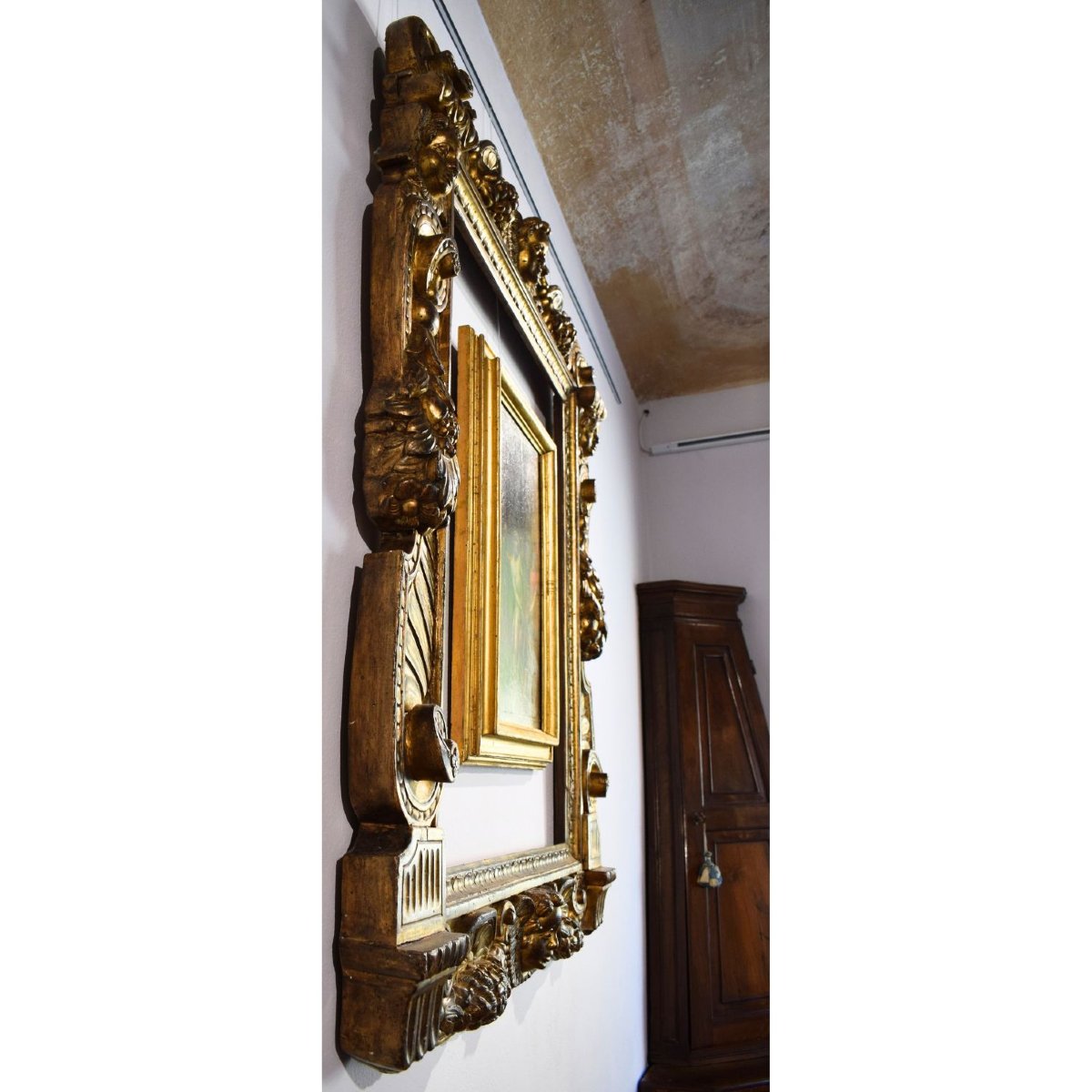
Particularly interesting is the construction of the ornamentation, in which the volutes are not merely a decoration applied to the structure but contribute to defining the very silhouette of the frame, creating an alternation of reliefs, projections, and recesses.
The gilding further enhances the complexity of the carving, highlighting—through the play of light—the varying depths of the ornamental motifs.
The inner dimensions of 79.5 × 66.5 cm, relative to the overall dimensions of 112 × 101 cm, make the frame suitable for housing a large-scale painting, particularly an altarpiece or a work originally intended for a ceremonial setting.
The so-called Sansovino-style frame is one of the most recognizable types of Italian Renaissance frame design.
This style developed primarily in Venice and the Veneto region beginning in the mid-16th century, at a time when the Renaissance style was enriched by increasingly three-dimensional and spectacular decoration.
The name derives from Jacopo Sansovino (Florence, 1486 – Venice, 1570), an architect and sculptor who played a fundamental role in transforming Venice’s monumental image in the 16th century.
After moving to Venice, Sansovino introduced a Renaissance style with a strong sculptural character into the city’s visual culture, in which architecture, sculpture, and decoration interacted closely.
This cornice is particularly interesting precisely because of the concentration of elements belonging to Sansovino’s artistic vocabulary. The large volutes constitute the dominant structural and decorative element. The motif derives from the ornamental repertoire of Renaissance architecture and allows the carver to transform the frame into a dynamic, almost sculptural composition. The central figure at the top accentuates the symmetry of the composition and introduces a figurative element within the complex system of volutes and plant motifs, as does the sculpted face at the center of the lower crossbar. Leaves, flowers, fruits, and garlands complete the ornamentation and form a direct link to the tradition of classical ornamentation.
The combination of these elements is particularly significant, creating a true miniature ornamental architecture within the structure.
One of the most interesting aspects of collecting antique frames is the opportunity to view them as standalone works of art, not merely as accessories intended to hold a painting.
During the Renaissance, the frame in fact took on an increasingly important role in the presentation of the artwork: it helped separate the painting from its surroundings, while simultaneously establishing a visual relationship with the room’s architecture and furnishings.
- All our works are accompanied by a detailed certificate of authenticity.
- Professional packaging and insured shipping to ensure maximum safety during transport.
- For further information, please do not hesitate to contact us +39 329 319 4887 – info@dequart.com
- Option for VIDEO CALLS and in-person viewings by appointment in MILAN and OMEGNA (VB).
- Additional information and photos: www.dequart.com IG - FB @dequ.art
Period: 17th century
Style: Renaissance, Louis 13th
Condition: Good condition
Material: Gilted wood
Width: 101
Height: 112
Reference (ID): 1828961
Availability: In stock