


Monumental Bohemian Jewish Masonic Engraved Glass Beaker, Circa 1850, Museum Quality
Massive Bohemian Jewish Masonic Ceremonial Engraved Glass Beaker, c.1850–1860
An exceptionally rare and monumental nineteenth-century ceremonial glass beaker produced in Bohemia, circa 1850–1860. Hand-blown from remarkably heavy clear glass with thick walls (approximately 9 mm), the vessel is richly decorated with superb wheel engraving combining Masonic symbolism with traditional Jewish religious imagery.
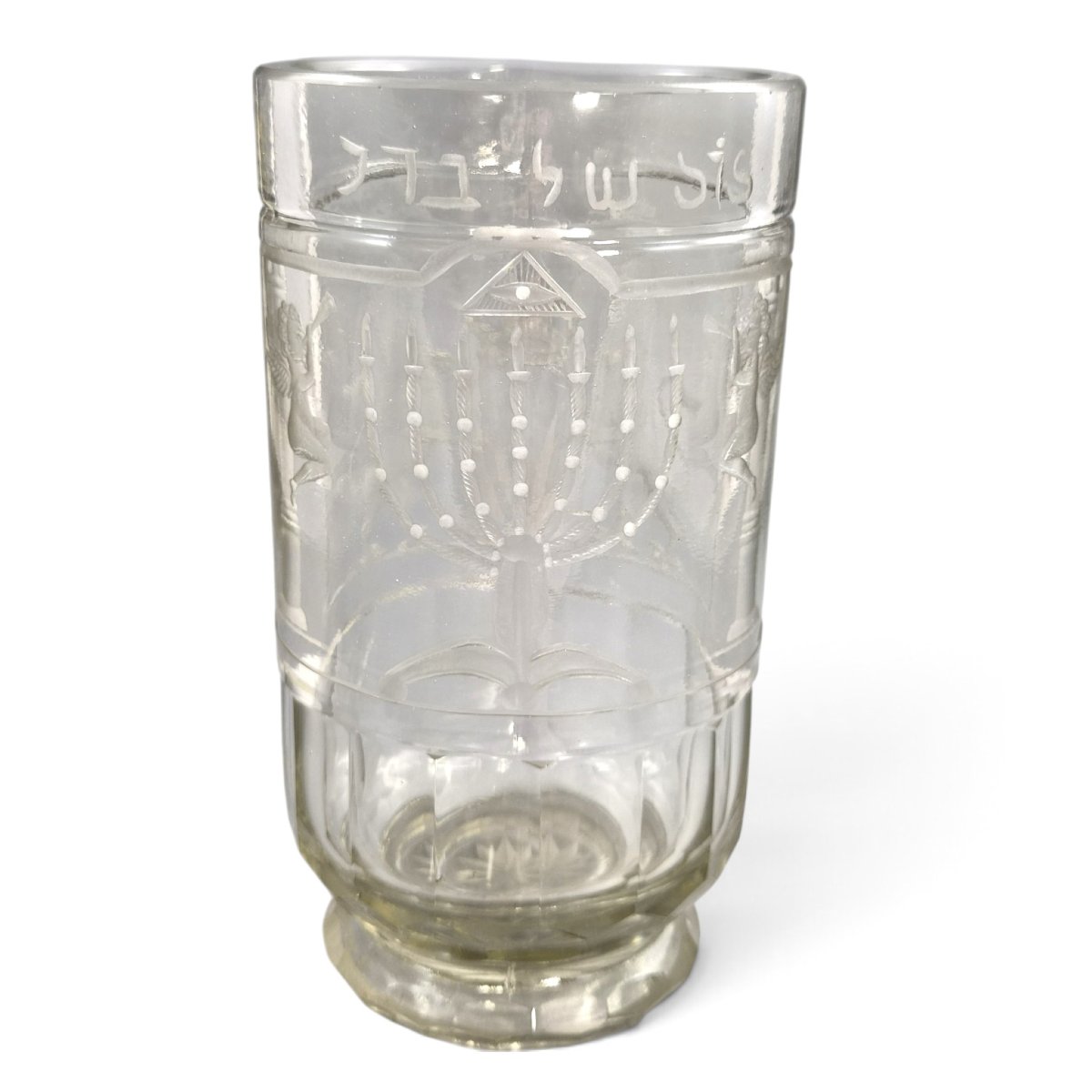
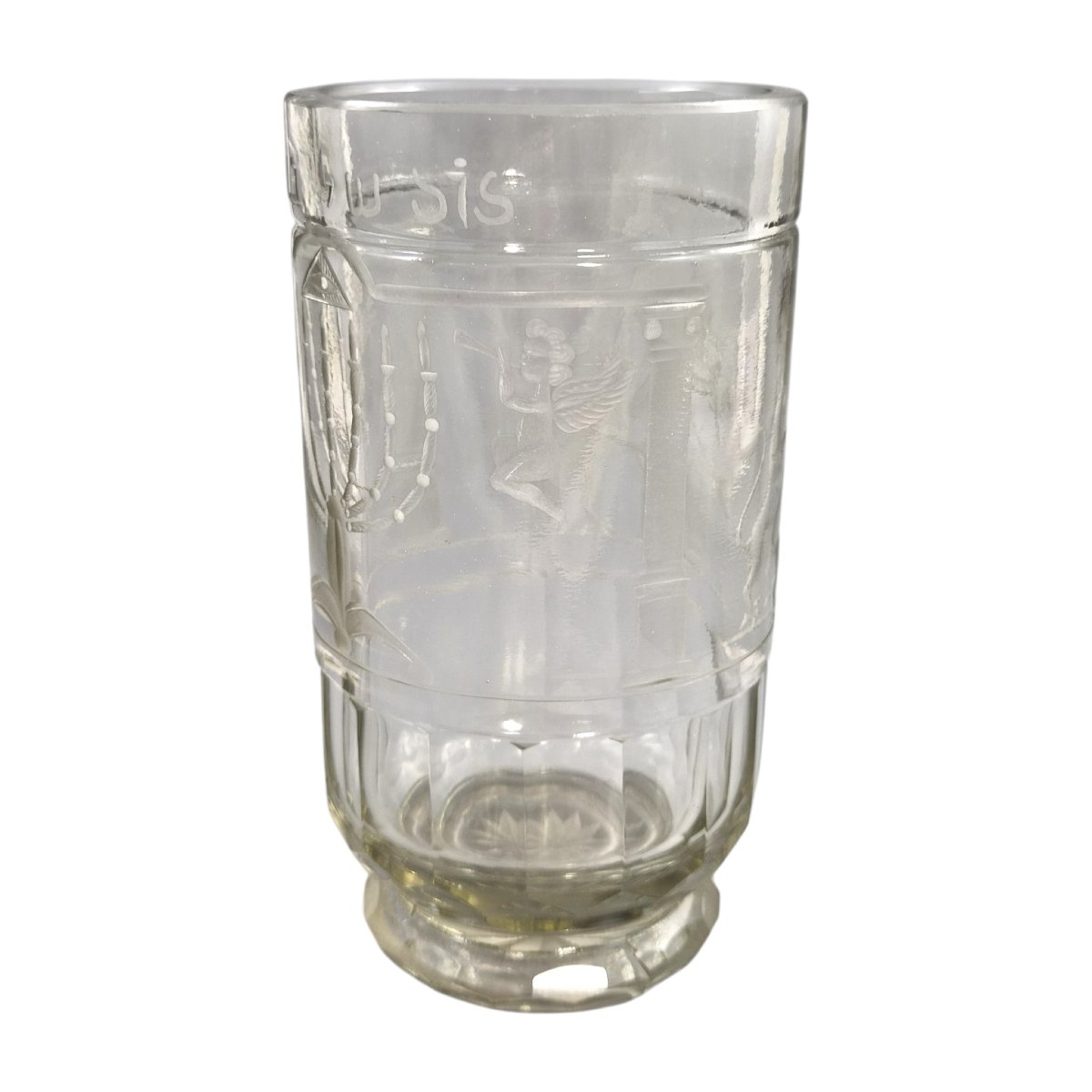
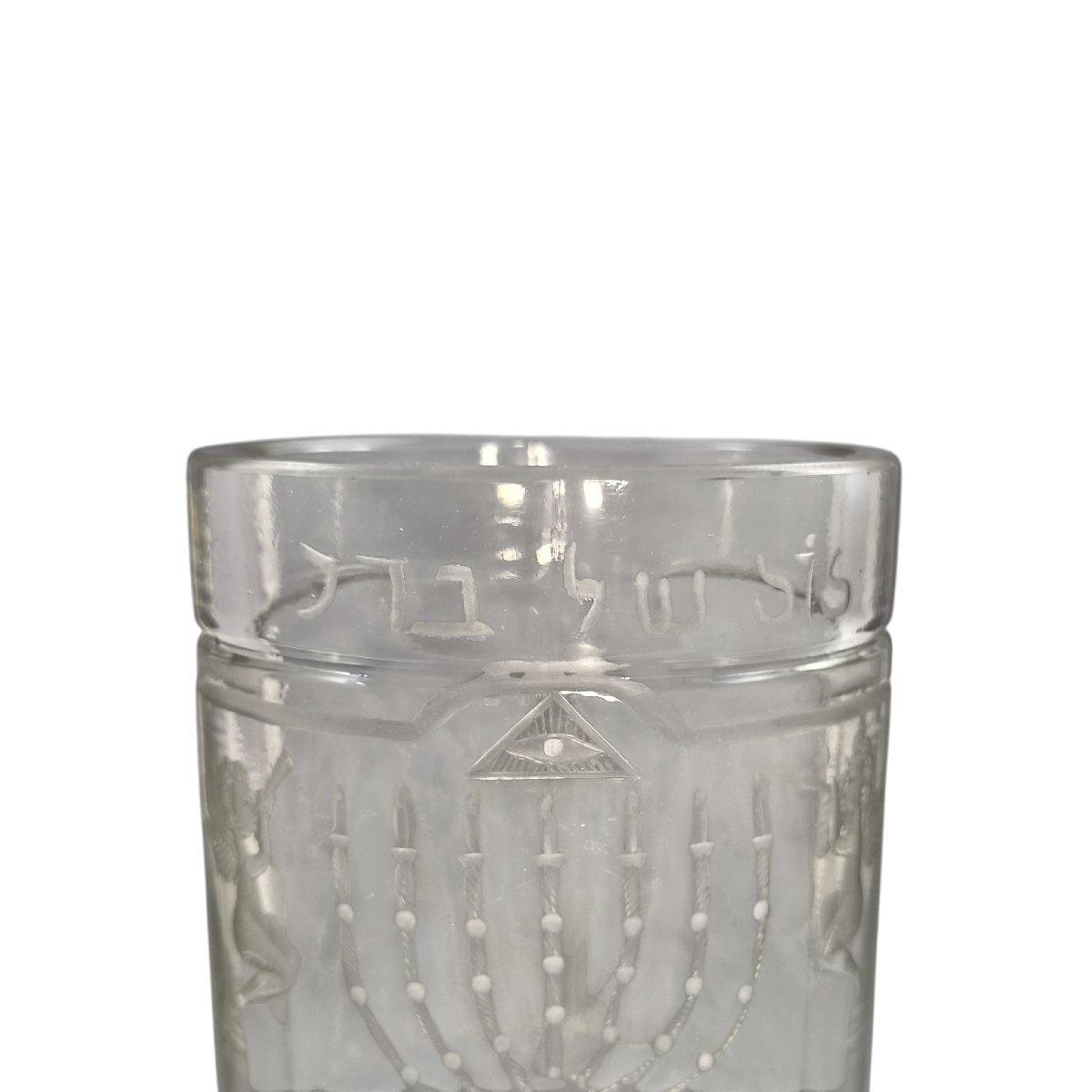
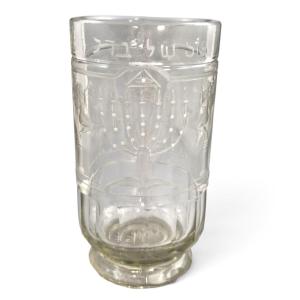
The engraved Hebrew inscription around the rim reads כוס של ברכה (Kos shel Berakhah), meaning "Cup of Blessing". The inscription was evidently copied from a supplied model by an engraver not fully familiar with Hebrew script, resulting in the irregular execution of the first word.
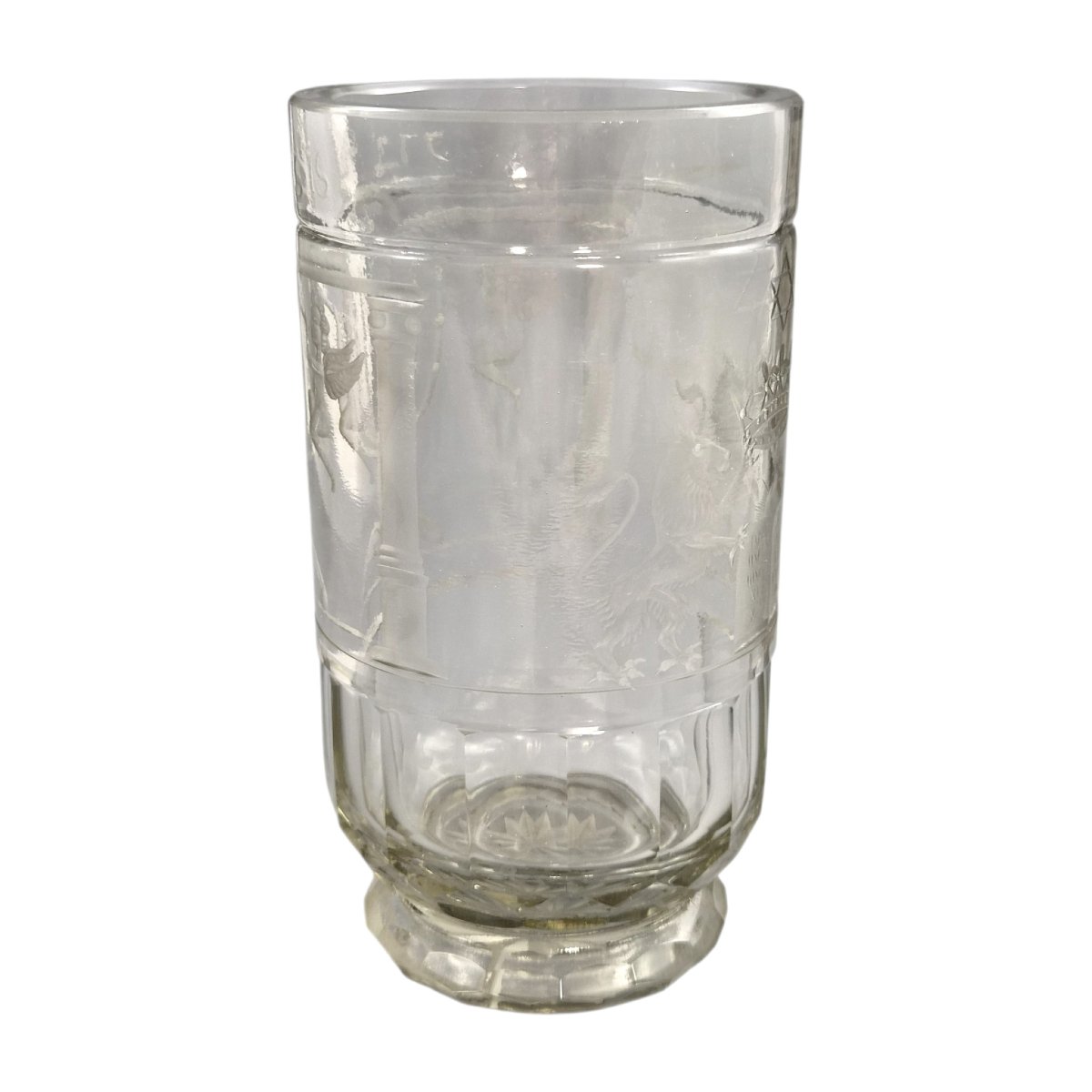
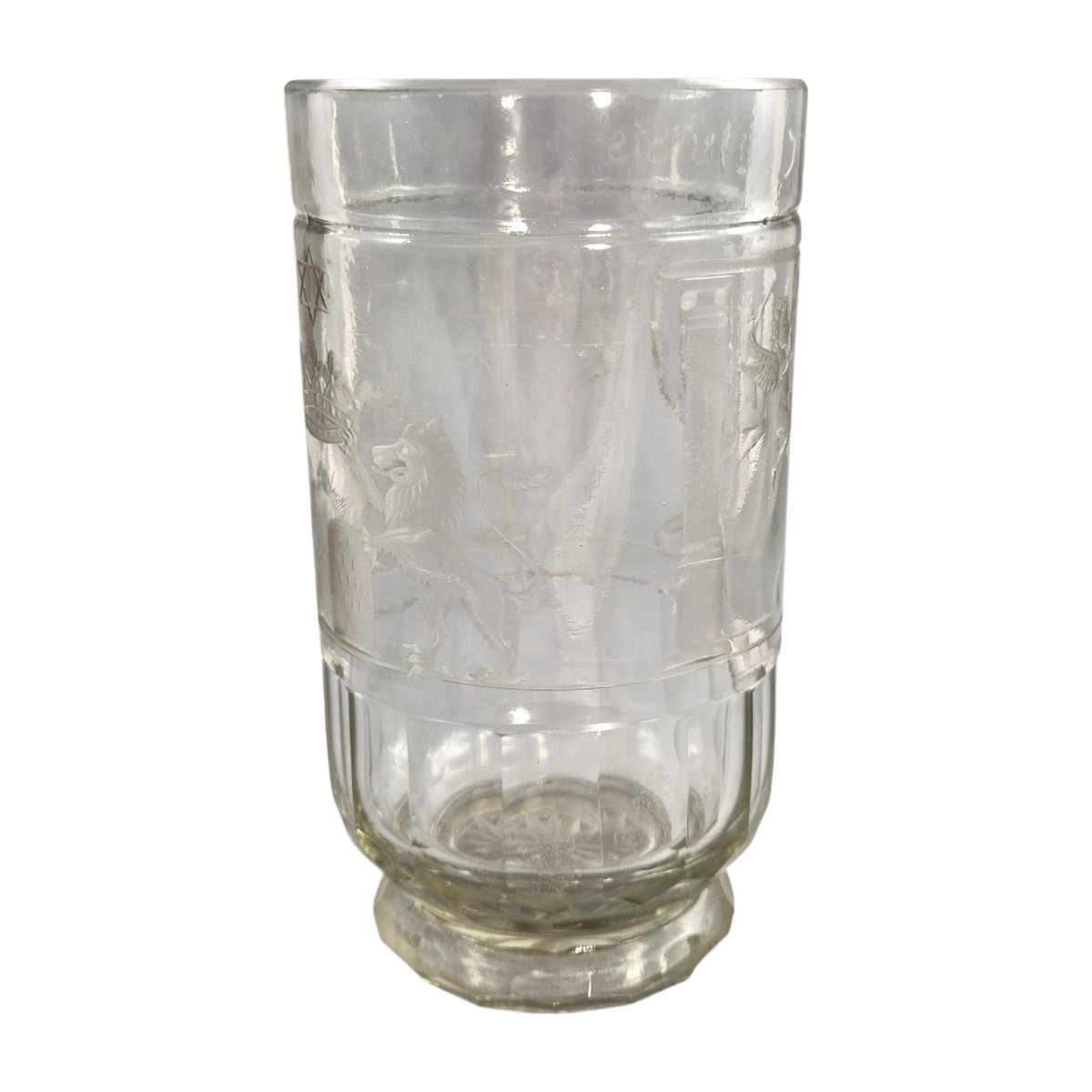
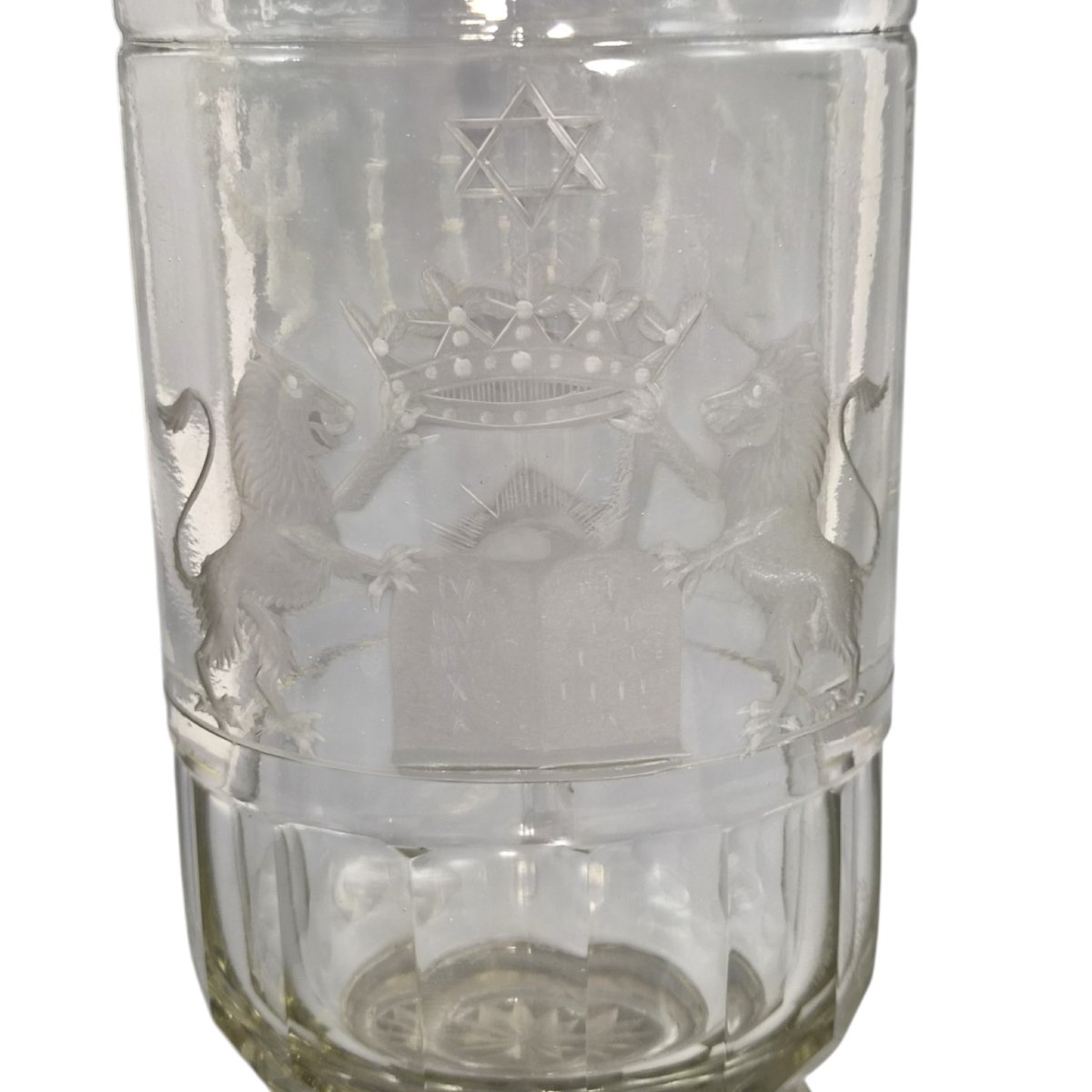
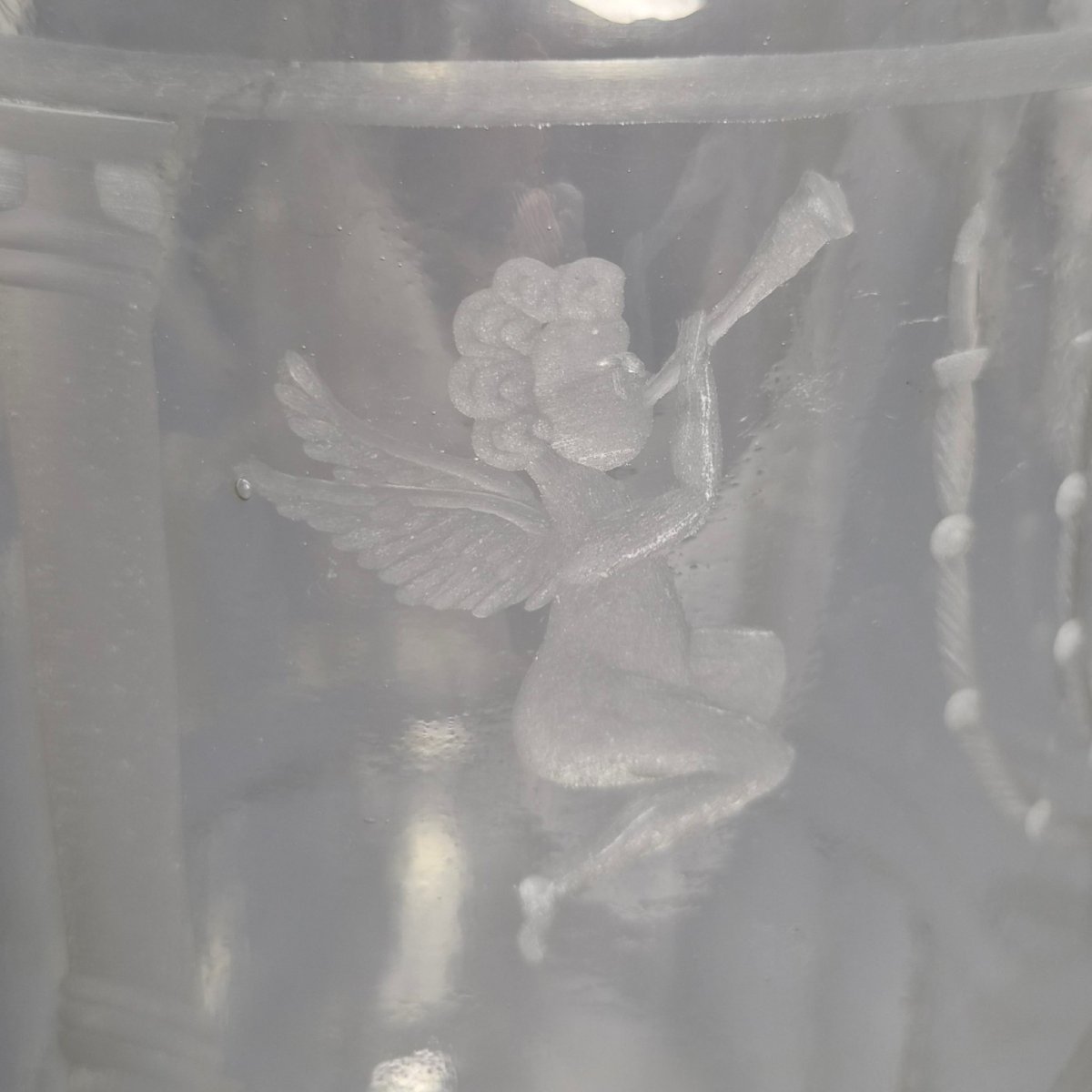
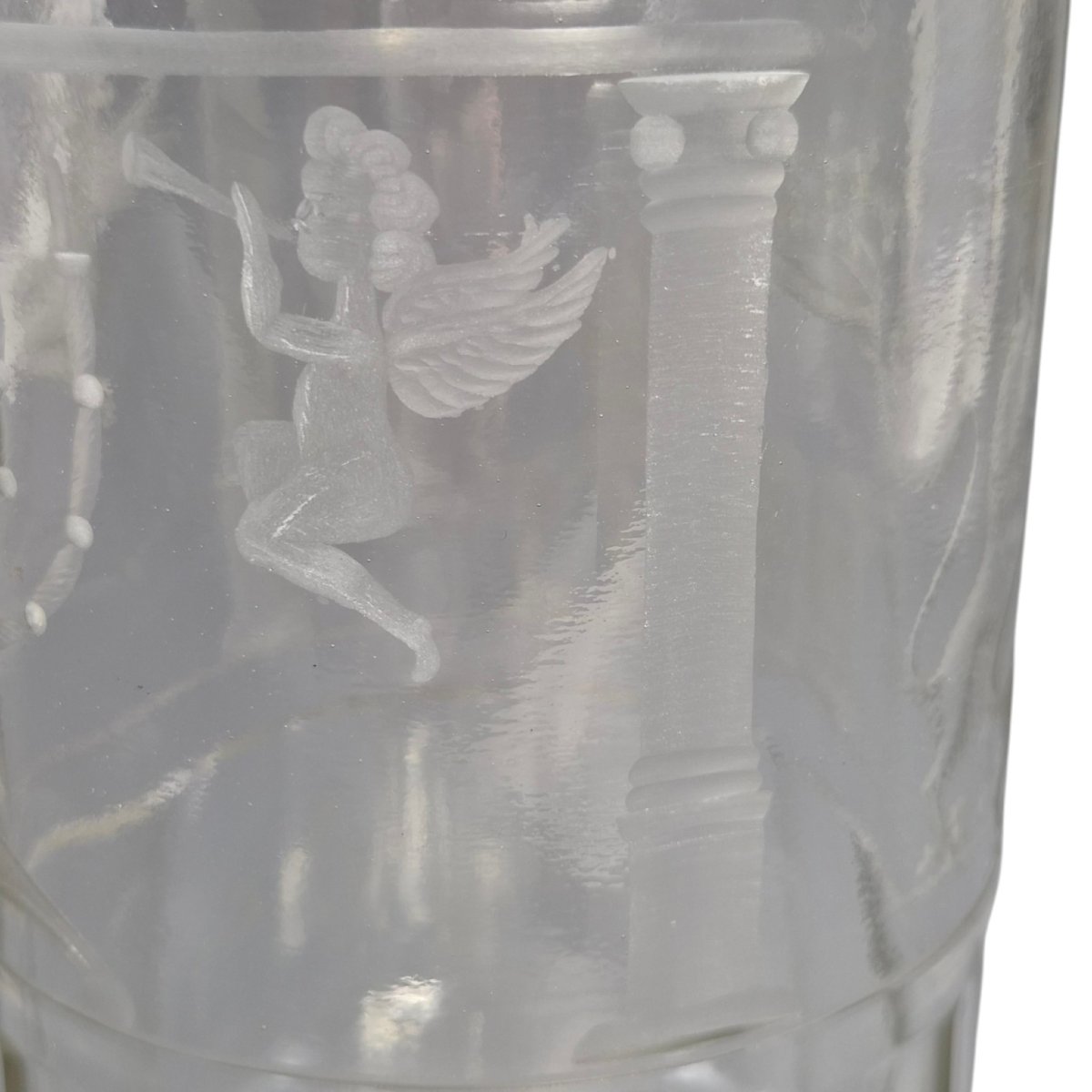
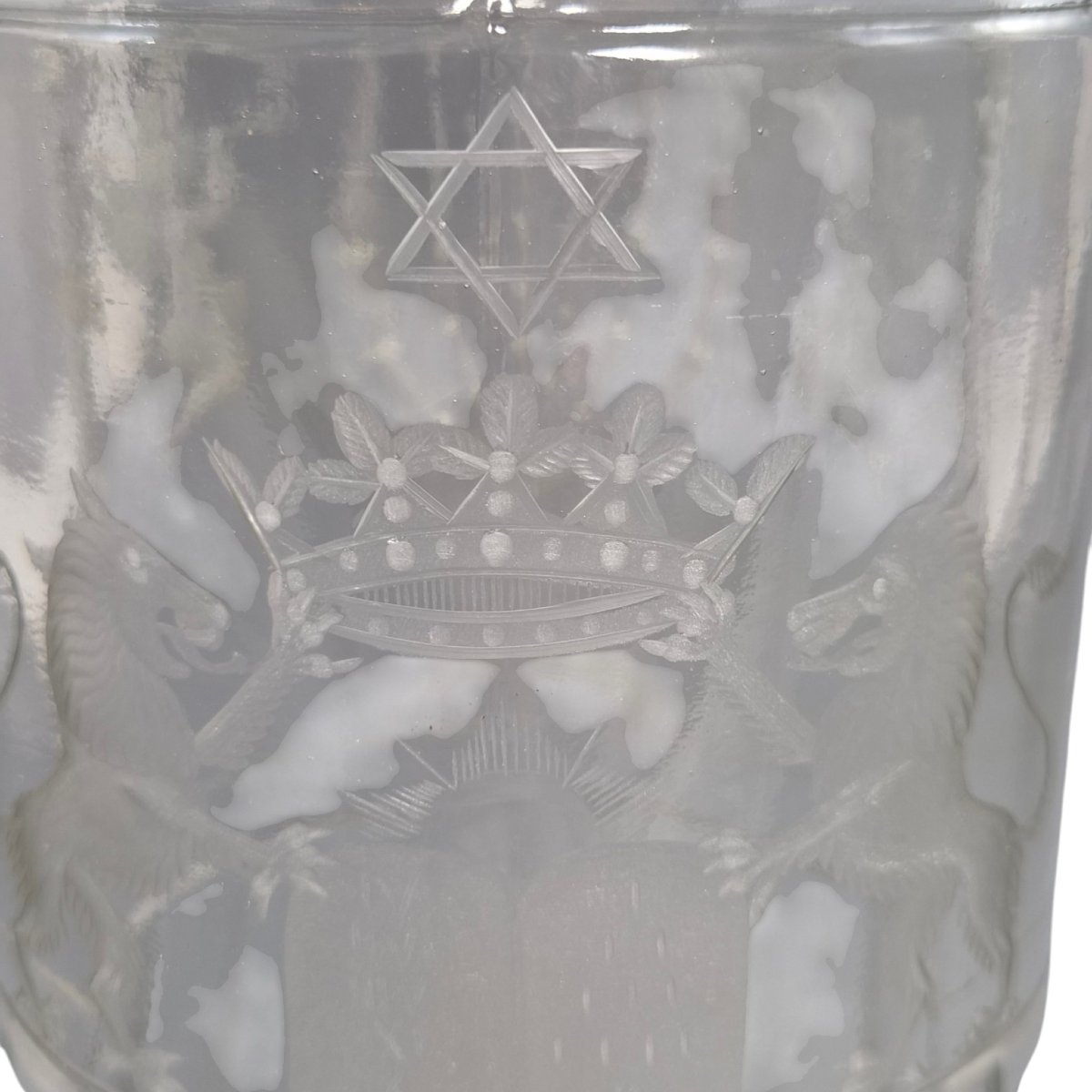
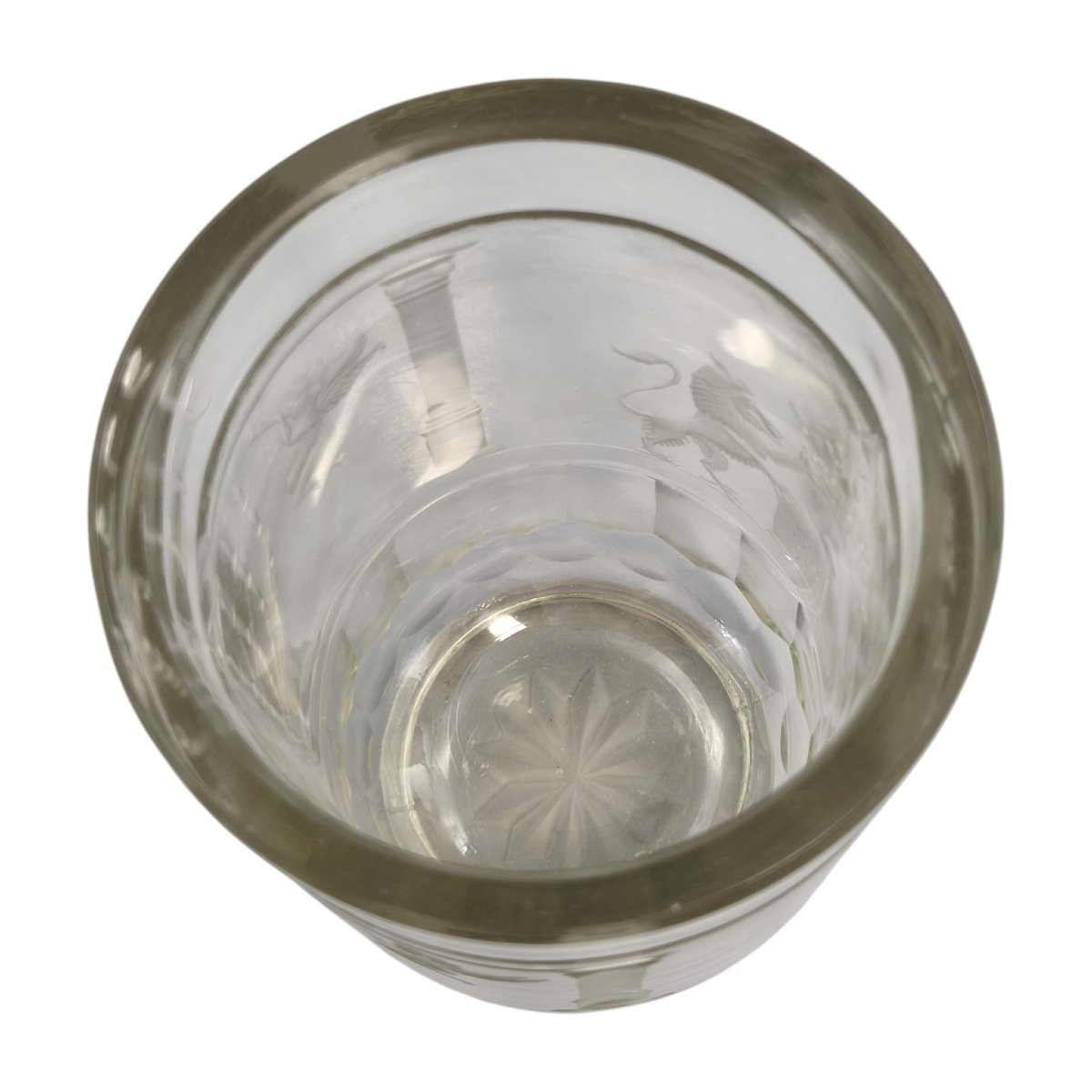
The principal composition centres on the Temple Menorah beneath the radiant All-Seeing Eye enclosed within a triangle, flanked by the Columns of Solomon's Temple, Jachin and Boaz. Above are two winged trumpeting heralds, while the reverse depicts the Tablets of the Law beneath the Star of David and the Crown of the Torah, supported by a magnificent pair of Lions of Judah. A radiant burst behind the Tablets symbolises Divine Revelation. The quality of the engraving is evident in the detailed manes and claws of the lions, the finely cut feathers of the winged figures, the engraved flames of the Menorah and the crisp architectural details.
The iconographic programme strongly suggests that the beaker was commissioned for a Jewish Masonic lodge or related Jewish Masonic fraternity. The combination of the Hebrew inscription with the Menorah, Star of David, Tablets of the Law, Lions of Judah, winged heralds, the All-Seeing Eye and the Temple columns reflects the synthesis of Jewish and Masonic traditions that emerged within certain Central European Jewish Masonic circles during the mid-nineteenth century.
Comparable Masonic engraved beakers dating to approximately 1855 are known, although the published examples are considerably smaller and less elaborate.
Its exceptional weight (1,658 grams) and remarkably thick walls (approximately 9 mm) are entirely consistent with the monumental ceremonial beakers produced by Central European glasshouses for ritual and fraternal use rather than ordinary individual drinking. During the Agape banquet following the closing of a lodge, such vessels were traditionally passed from brother to brother as the Loving Cup, each participant taking a sip of wine as a symbol of fraternity, equality, unity and fidelity to Masonic ideals.
During the nineteenth century, the position of Jews within European Freemasonry varied significantly between countries. While Jews were generally admitted to regular lodges in England and France from the eighteenth century onwards, many German and Prussian Grand Lodges continued to restrict membership to Christians well into the second half of the nineteenth century. In response, Jewish intellectuals and professionals established their own lodges under more liberal Masonic jurisdictions.
One of the best-known examples was L'Aurore Naissante, founded in Frankfurt am Main in 1807 under the authority of the Grand Orient de France, which became one of the leading Jewish Masonic lodges in the German-speaking world.
Confronted by continued exclusion from traditional Freemasonry, German Jewish communities also established the Order of B'nai B'rith in New York in 1843. Organised along Masonic lines, with comparable ceremonial structure, symbolism and ritual, it was created specifically for Jews and expanded into Europe from 1882, beginning with its first lodge in Berlin. Like the Jewish Masonic lodges established in Germany during the nineteenth century, these organisations promoted philanthropy, education and civic equality while providing Jewish communities with a fraternal environment unavailable within conservative social institutions and traditional Christian Freemasonry.
Against this historical background, the exceptional combination of Jewish religious imagery and established Masonic symbolism strongly suggests that the present beaker was commissioned for use within one of these Jewish Masonic circles. Despite extensive research, no closely comparable engraved beaker combining this specific Hebrew inscription with such a comprehensive Jewish-Masonic iconographic programme has been identified. The present beaker therefore represents an exceptionally rare and historically important survival of nineteenth-century Jewish ceremonial and Masonic art.
This extraordinary vessel is an exceptionally rare object, executed by special commission as a unique, single-edition piece. It holds immense historical value for both researchers and collectors of Judaica and Masonic artifacts alike. Characterised by its undeniable historical significance and superb state of preservation, this is unequivocally a museum-quality work of art.
Dimensions:
Weight: 1658 g
Height: 20.5 cm
Diameter: 11 cm
Wall thickness: approximately 0.9 cm
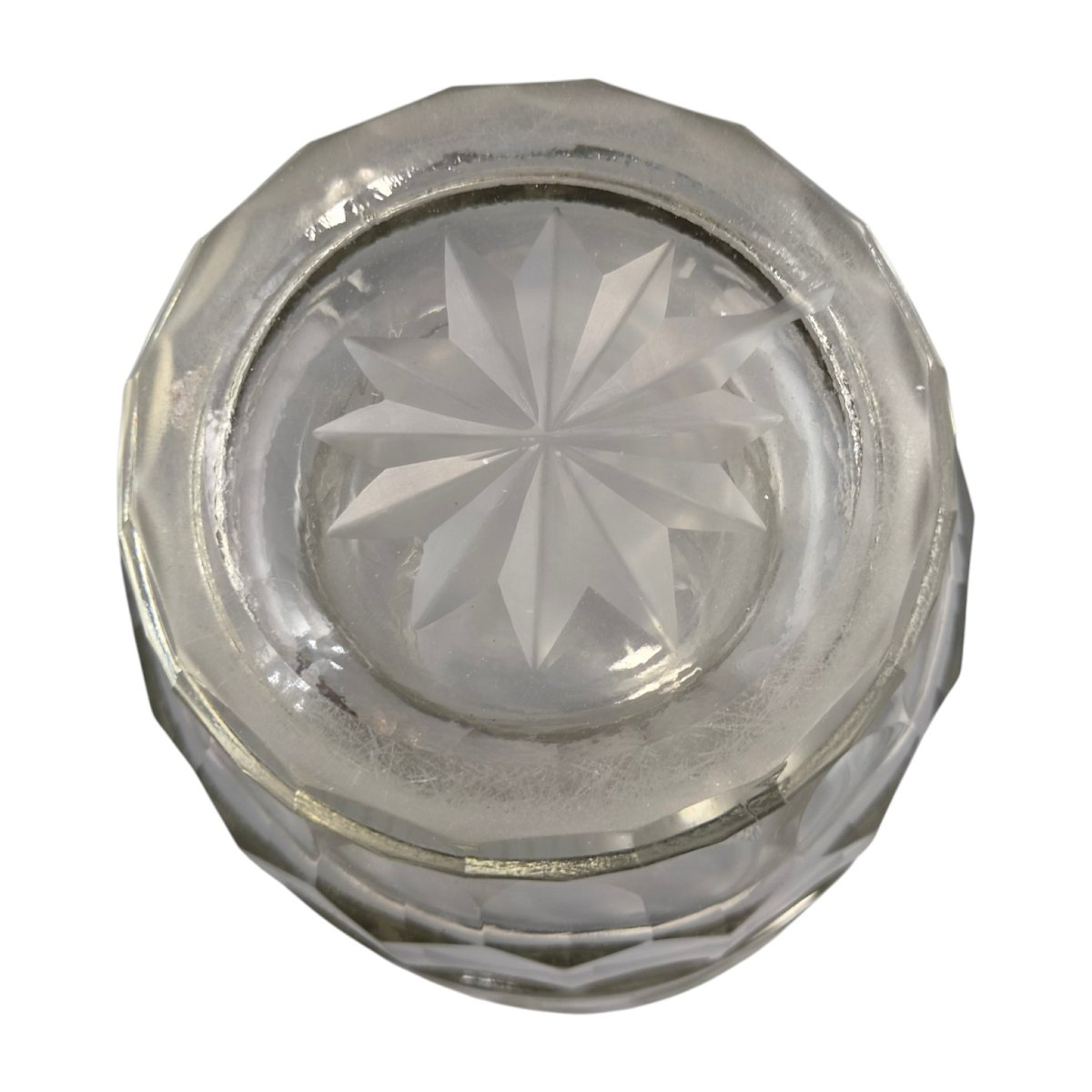
Technique: Wheel engraving on hand-blown, remarkably thick clear glass.
Condition:
Excellent antique condition with no chips, cracks, or restorations.
Provenance: Bohemia, 1850-1860; Masonic Jewish lodge commission.
Rarity: Completely unique, custom-made artifact of museum quality.
Analogies: Smaller Masonic equivalents exist from c. 1855, but no identical beaker with this specific Jewish-Masonic design is known.
Please study the accompanying photographs carefully as they form an integral part of this description. If you have any questions, we will be happy to answer them. The item will be shipped with full tracking and insurance. It is important to note that shipping costs include labour, packaging and postage.
Period: 19th century
Style: Other Style
Condition: Perfect condition
Material: Glass
Diameter: 11 cm
Height: 20.5 cm
Reference (ID): 1806070
Availability: In stock