




Large Japanese Archaistic Bronze Hu Vase, Takaoka Circle, Meiji–taishō
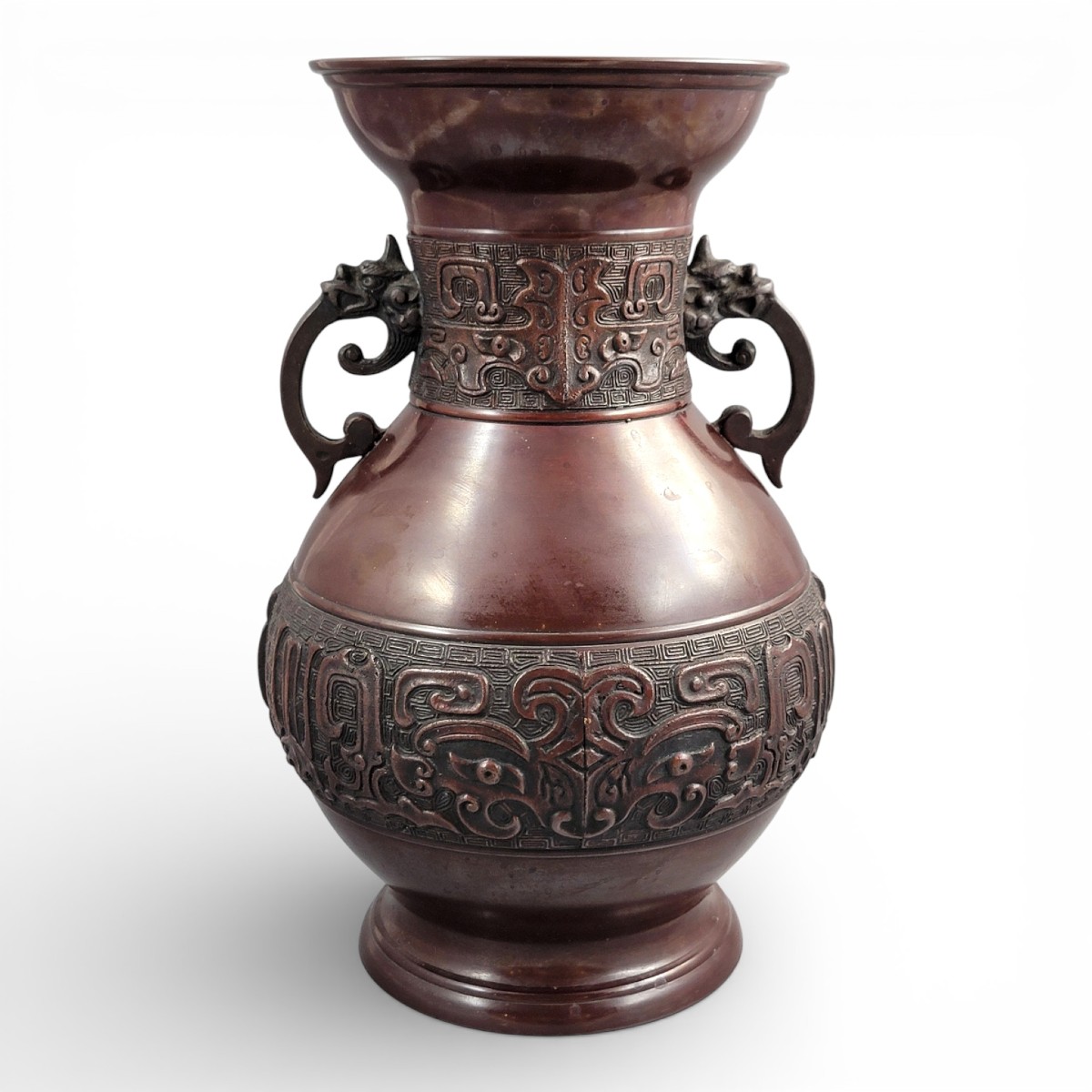
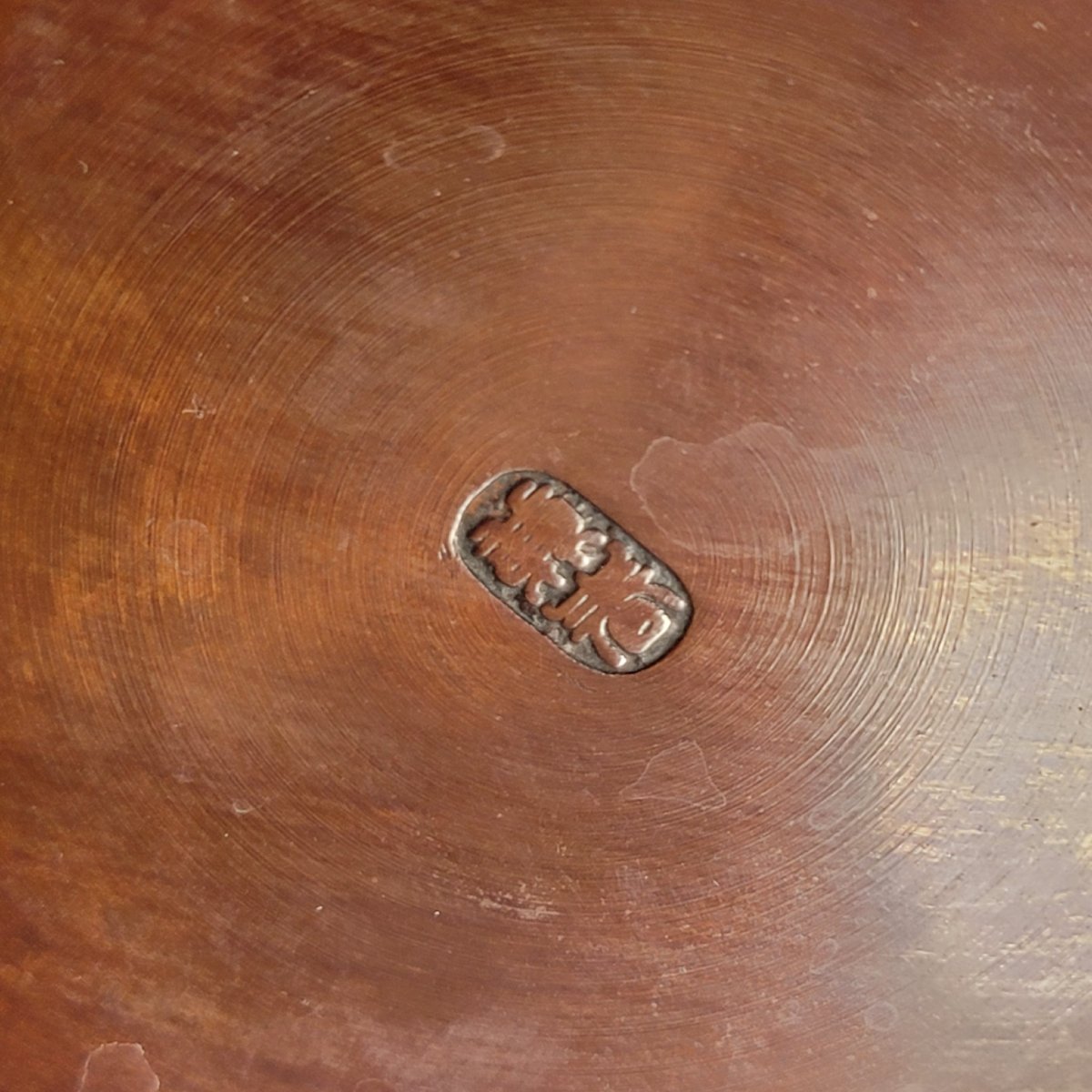
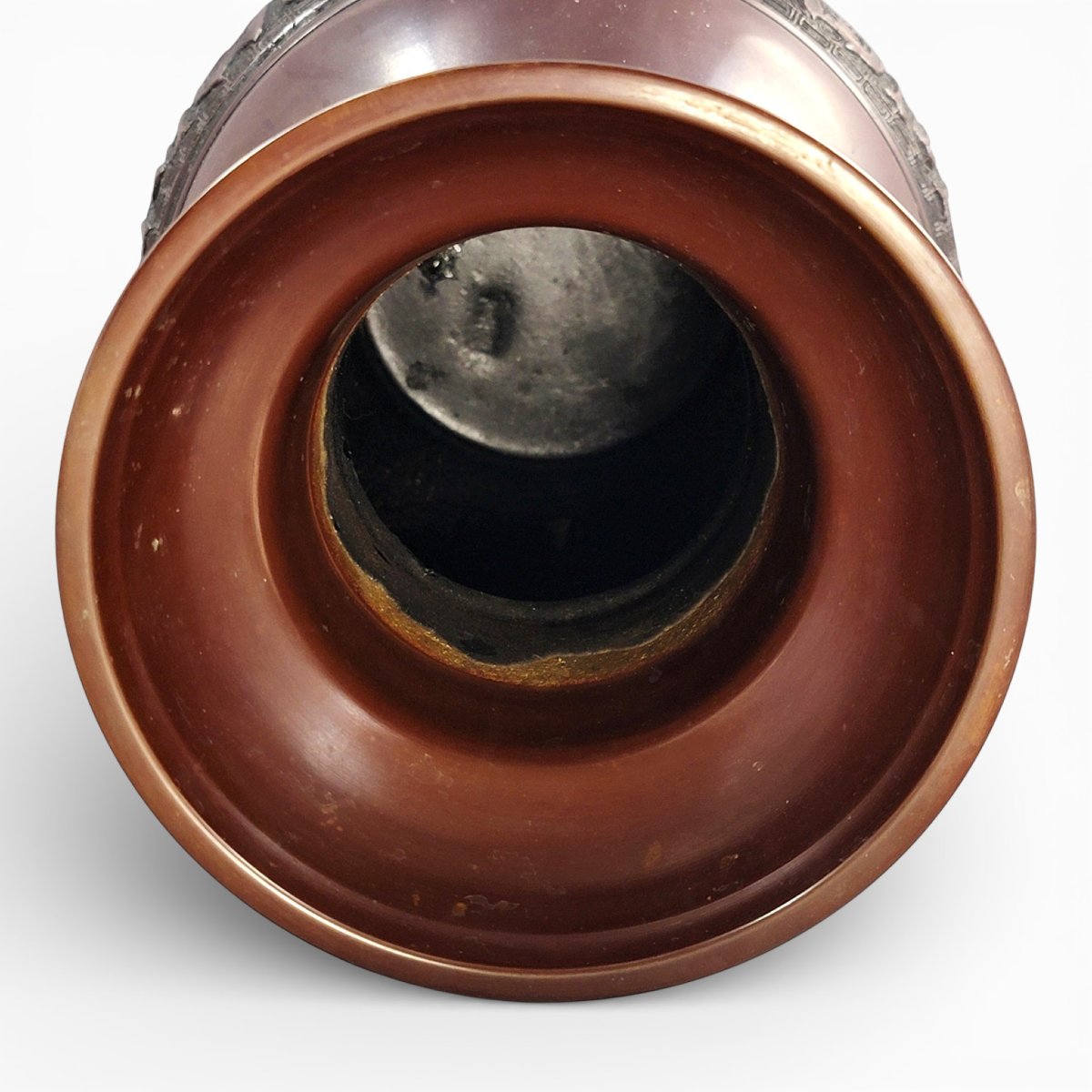
A large Japanese archaistic bronze hu vase from the Meiji–Taishō period, cast in bronze and finished with mechanical working and natural patination. The vase is directly associated with the Takaoka bronze-working circle of Toyama Prefecture, an important centre of Japanese bronze production at the turn of the 20th century. The workshop seal applied to the base supports this association.
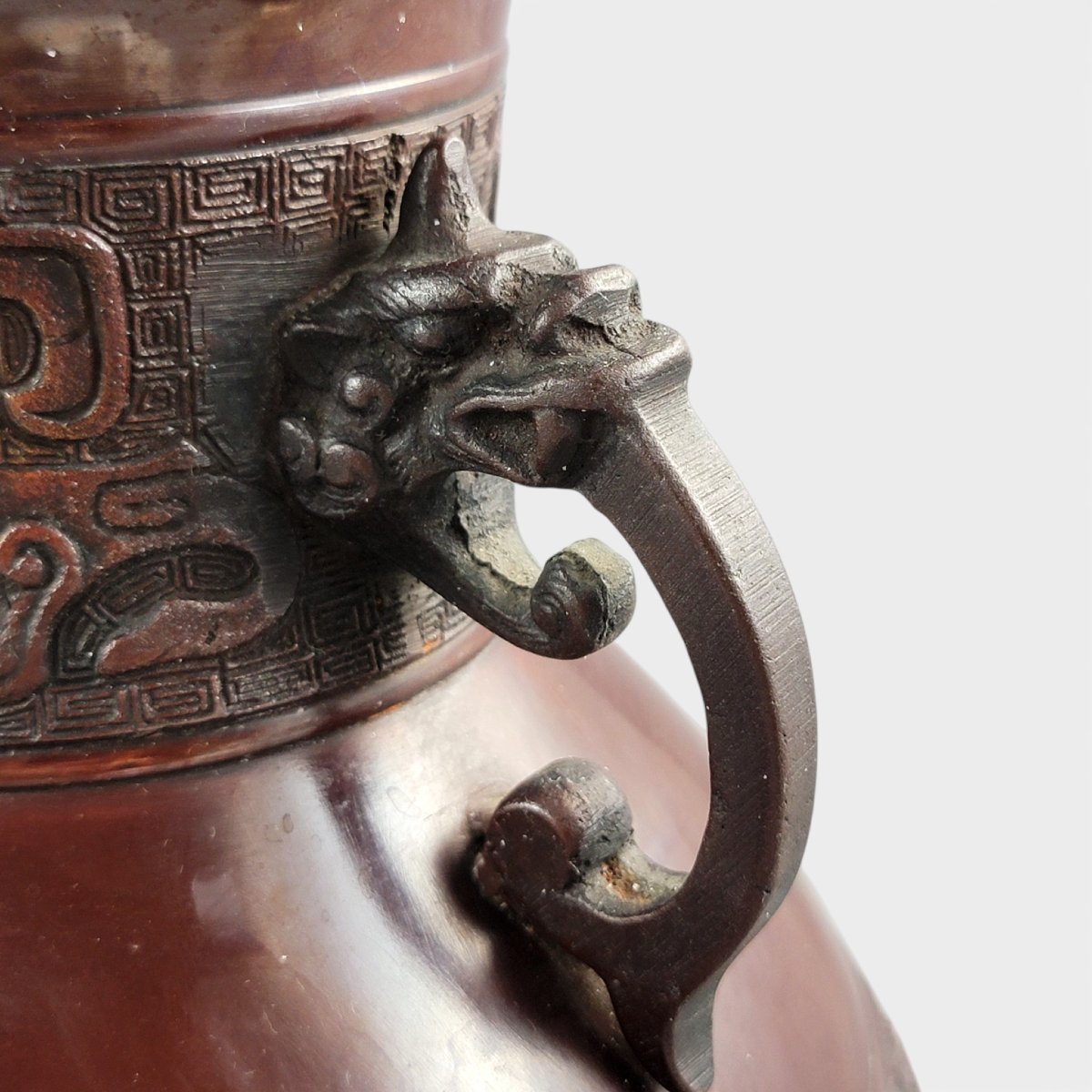
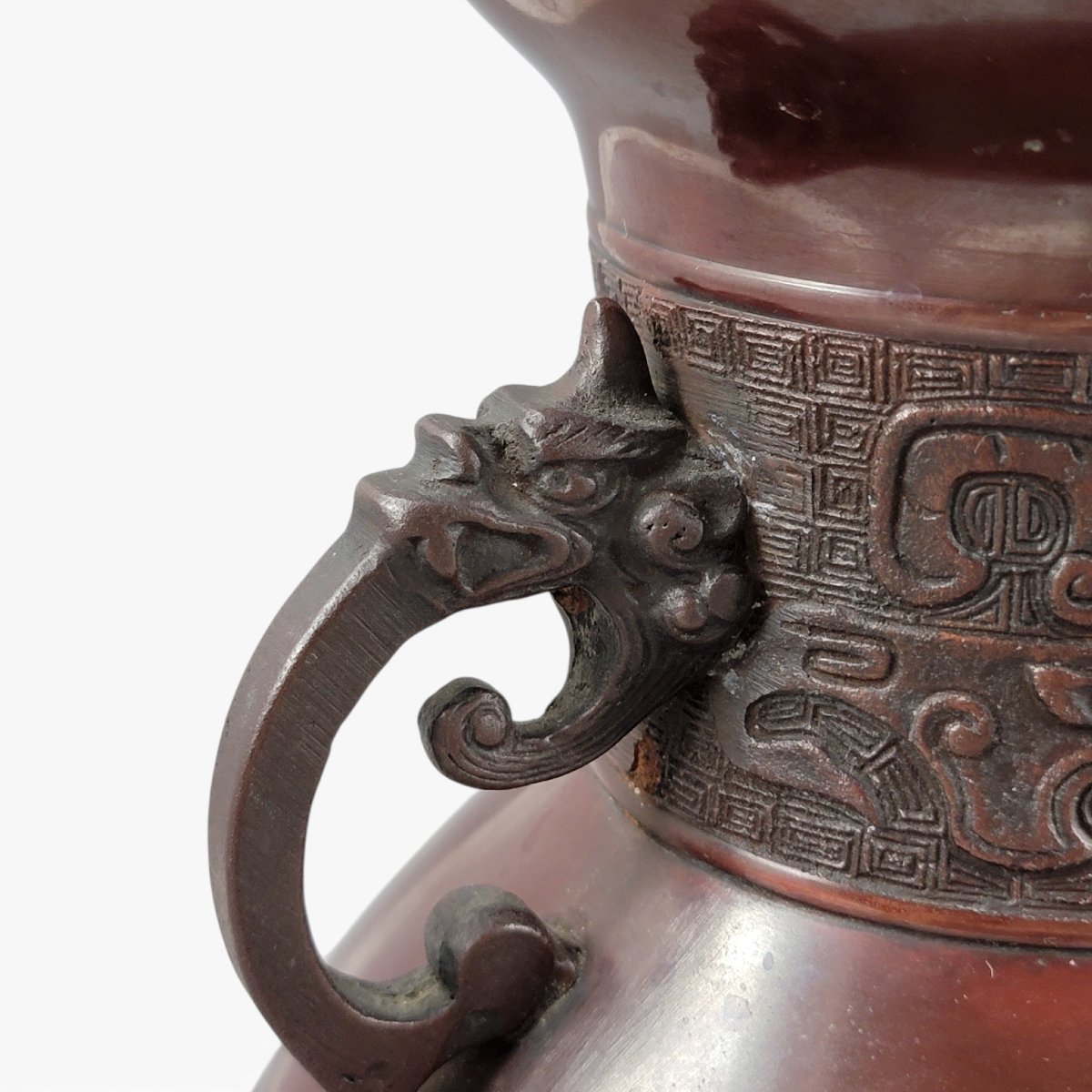
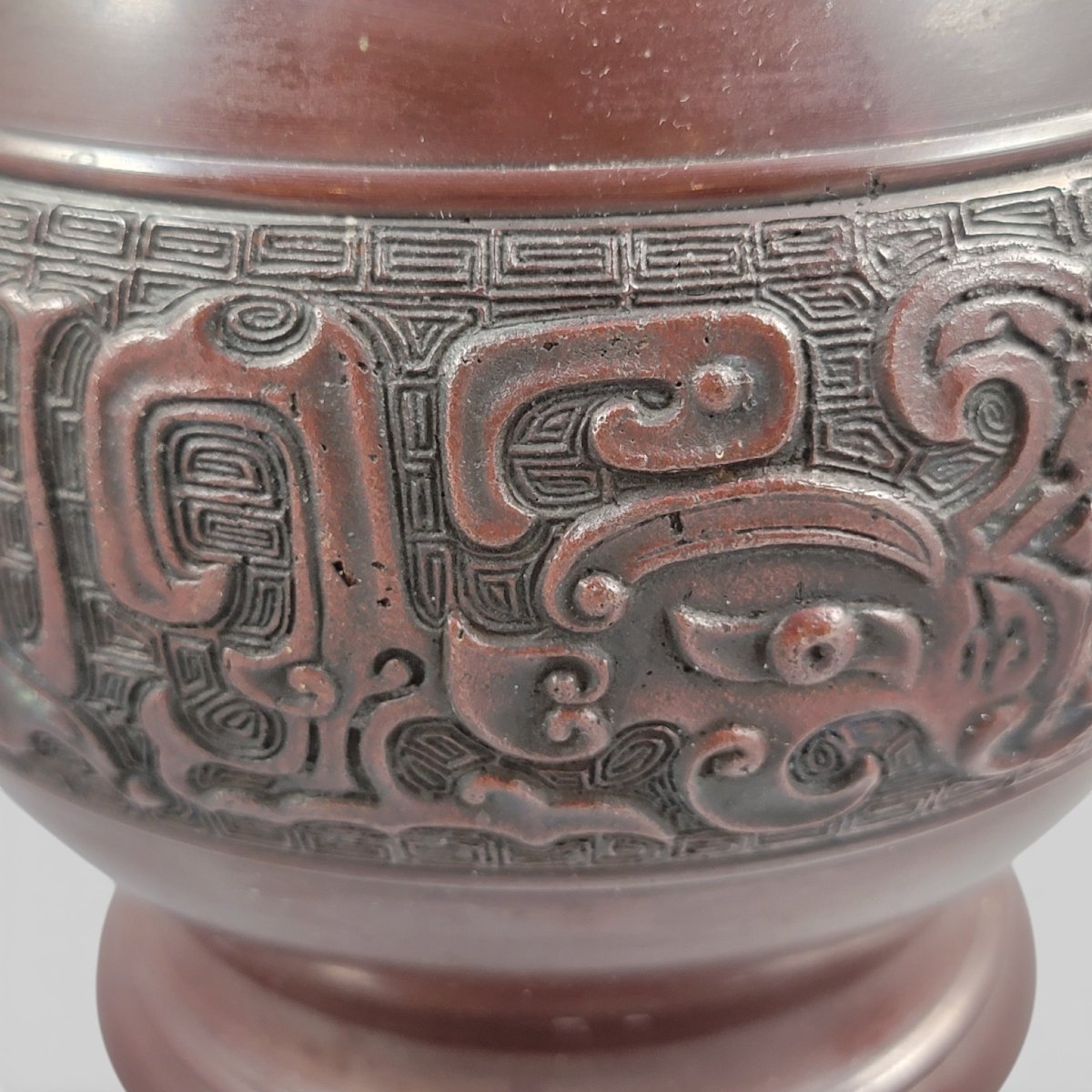
The vessel follows the classical hu form derived from ancient Chinese ritual bronzes, later adapted by Japanese workshops for decorative and interior use. Mask-form handles, archaistic detailing and a calm red-brown patina typify Japanese bronzes influenced by Chinese models.
The casting is heavy and thick-walled, with a dark interior coating characteristic of Japanese bronzes of the period. The oval workshop seal is worn and partially obscured by patination, allowing for more than one possible reading, though its position is consistent with Takaoka workshop practice.
Dimensions:
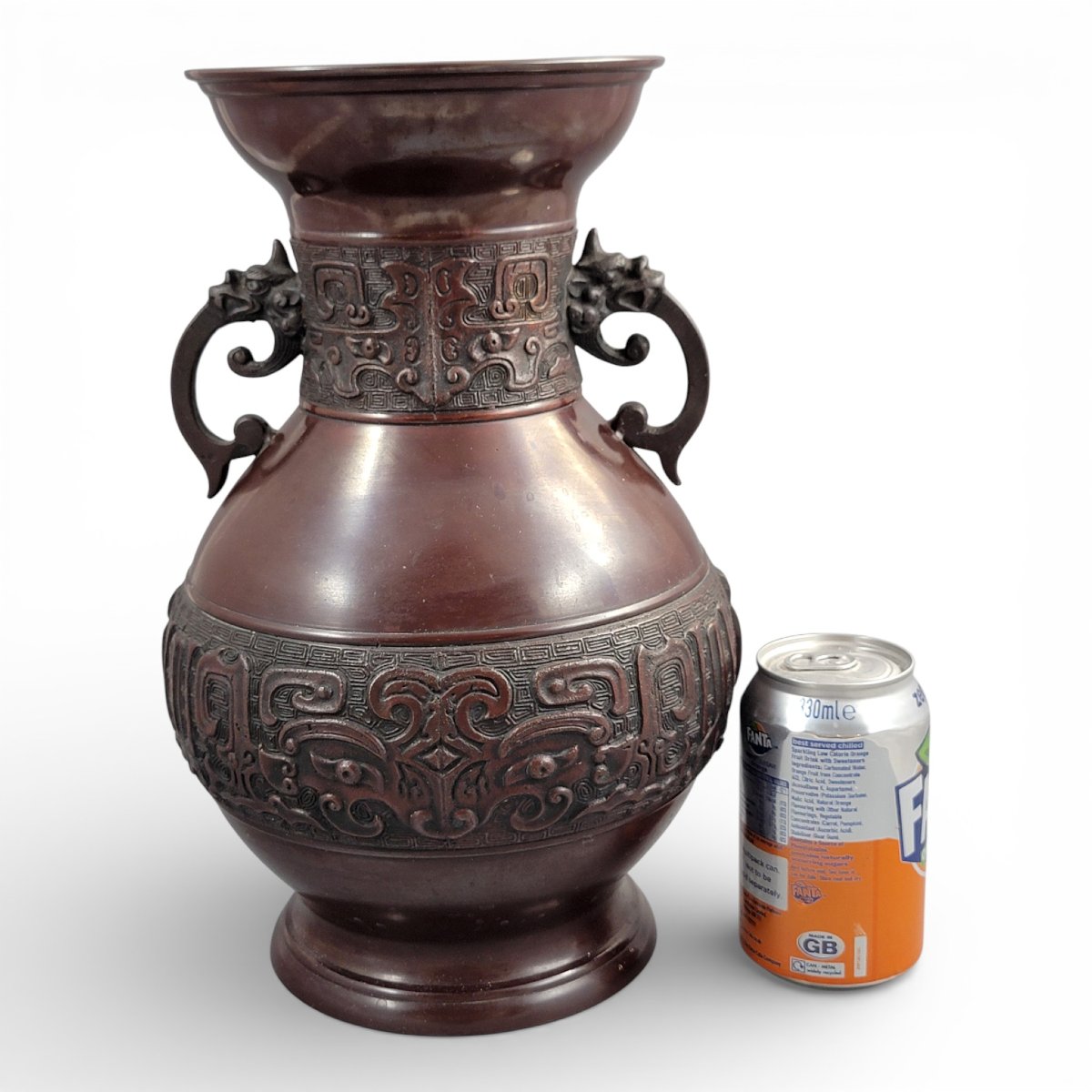
Height: 32 cm
Maximum diameter: 20.7 cm
Weight: 3887 g
Condition:
Good antique condition. The bronze shows an even, stable patina consistent with age and prolonged use. Minor surface wear and small casting irregularities typical of period bronze work. The workshop seal on the base is worn and partially illegible due to age and patination. No cracks, repairs or structural damage observed.
Period: 19th century
Style: Asian art
Condition: Excellent condition
Material: Bronze
Diameter: 20.7 cm
Height: 32 cm
Reference (ID): 1698650
Availability: In stock