

Armenian-caucasian Rug. Dated 1916. 255 X 170 Cm
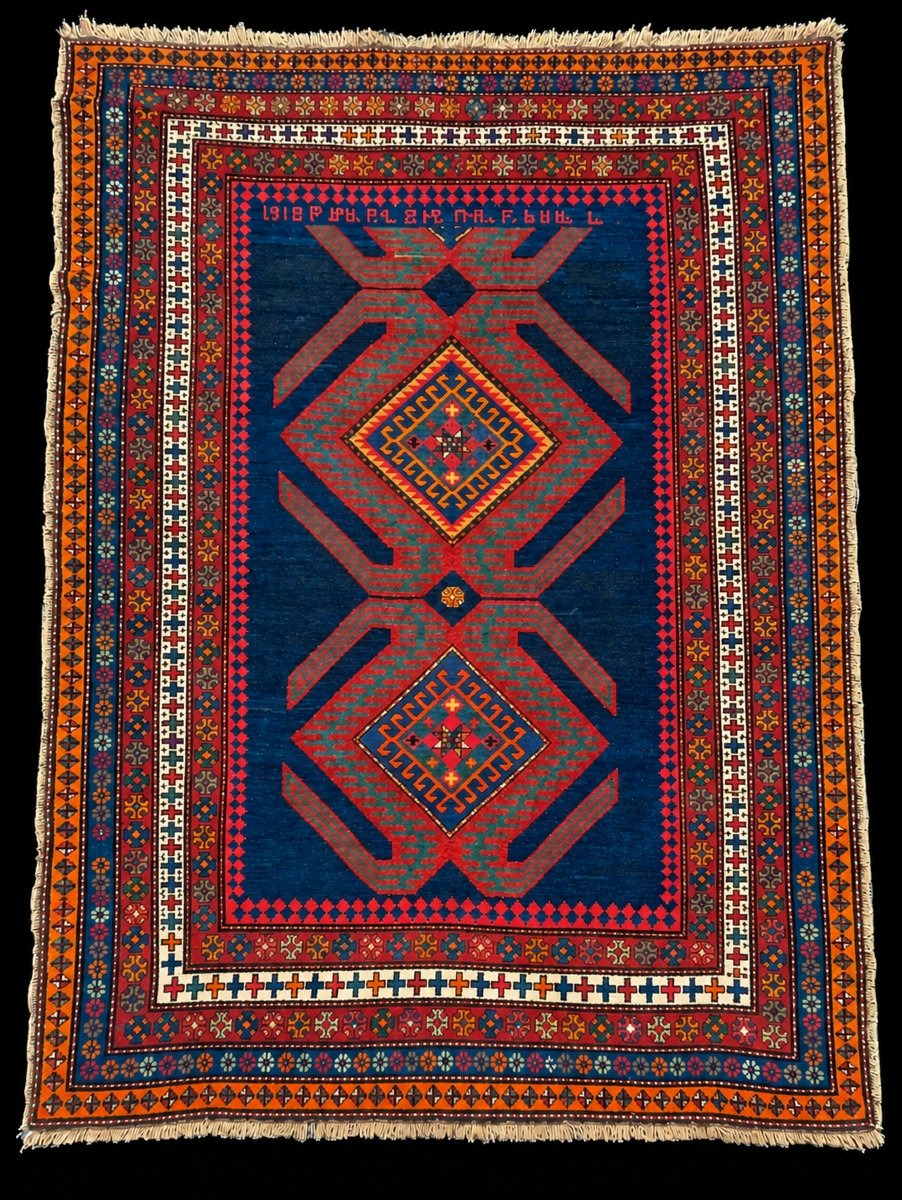
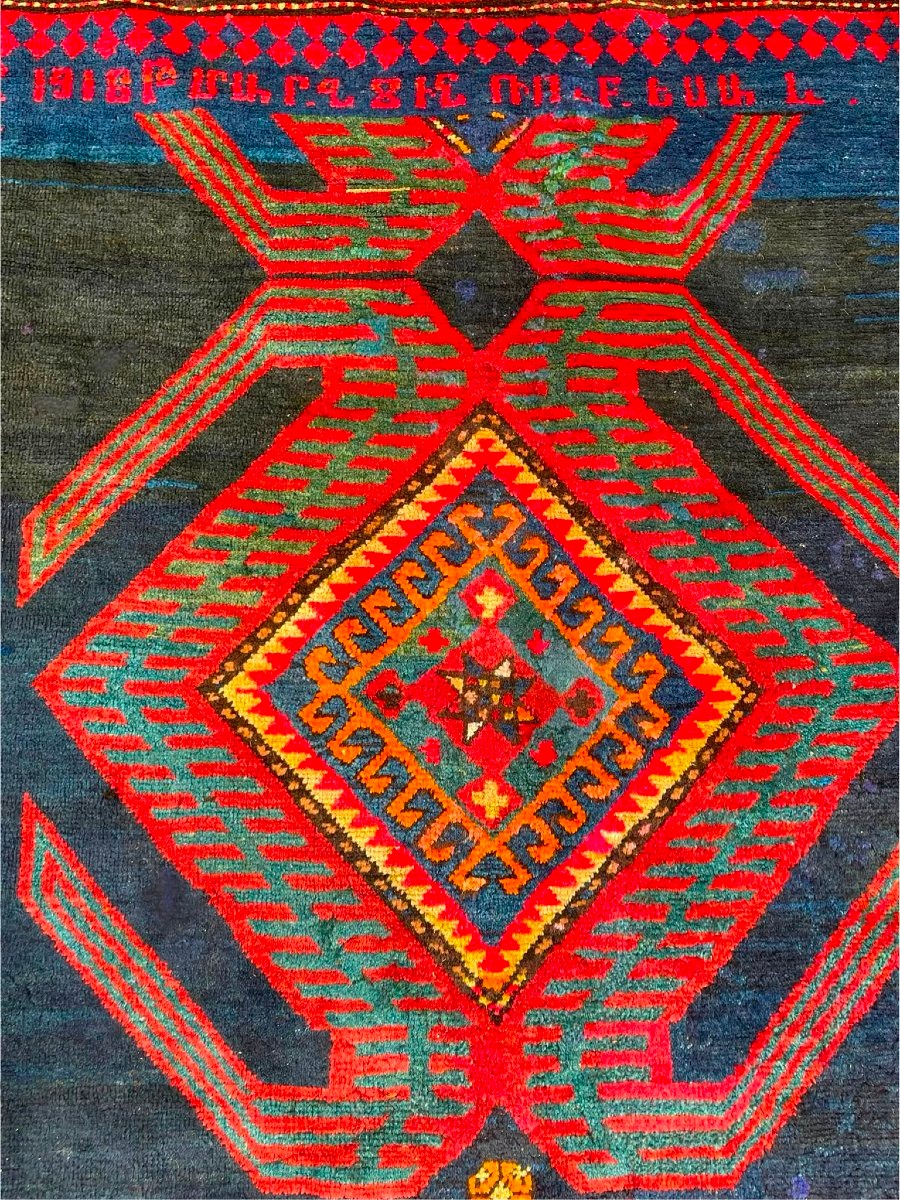
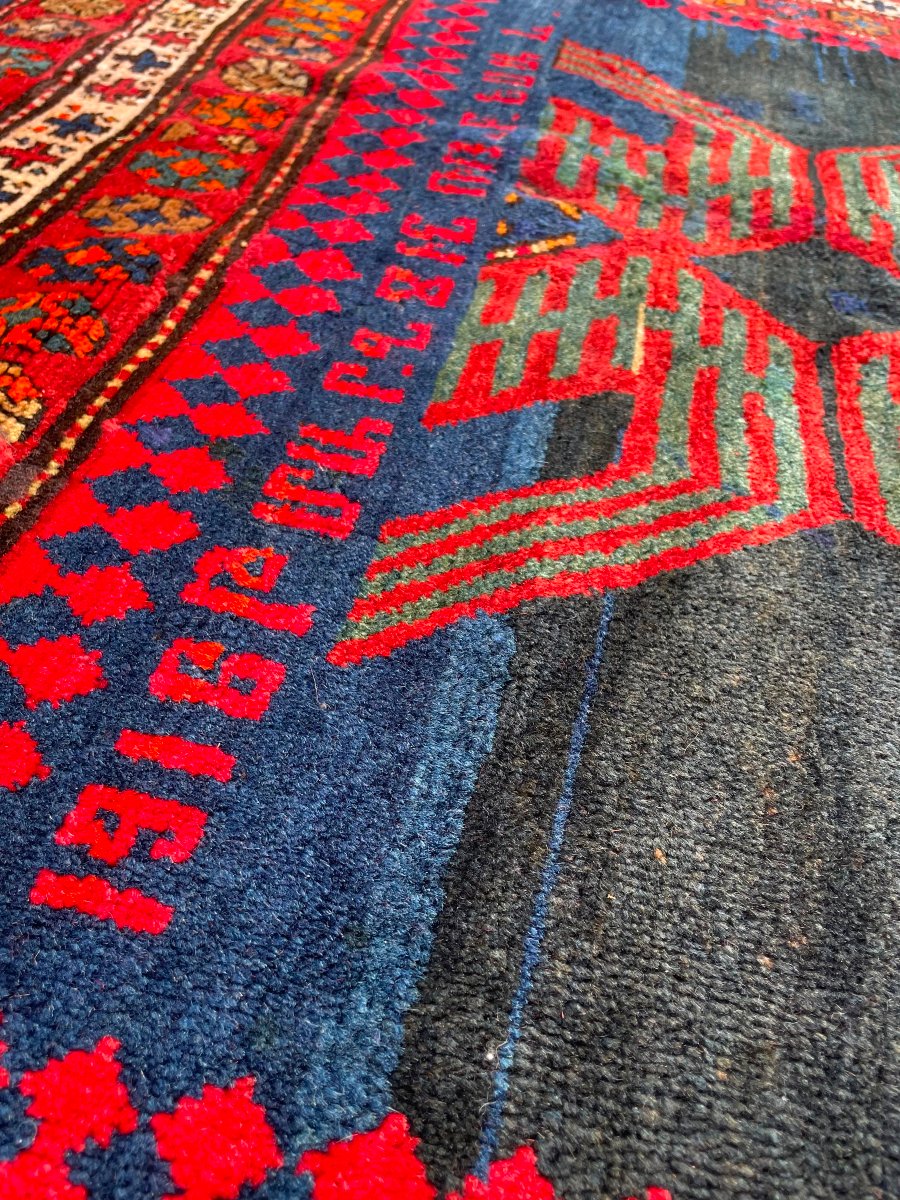
A superb hand-knotted Armenian rug, featuring an inscription in Armenian characters in the upper part of the field, along with the date 1916.
The inscription can be interpreted as: “Woven—or made—in the year 1916 by…”.
I have not yet been able to decipher the name that follows.
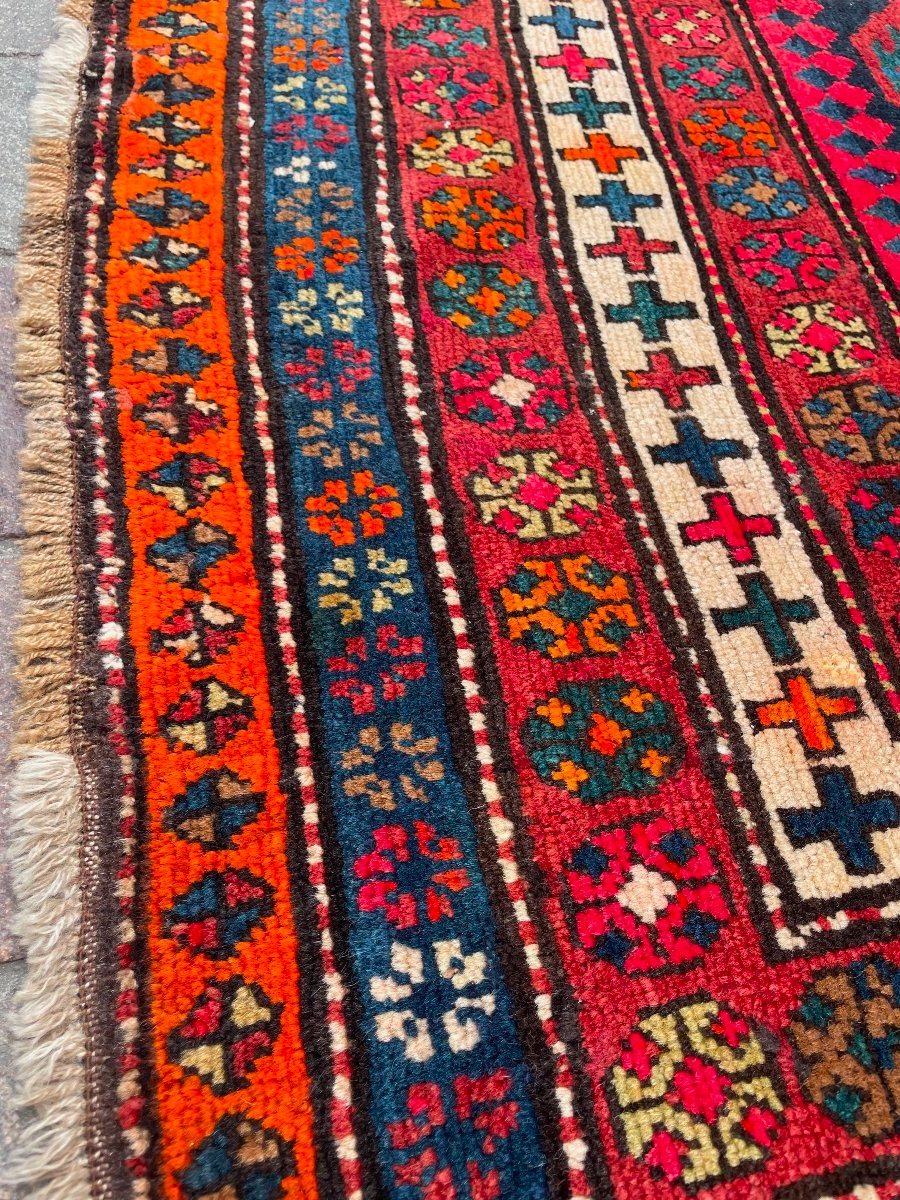
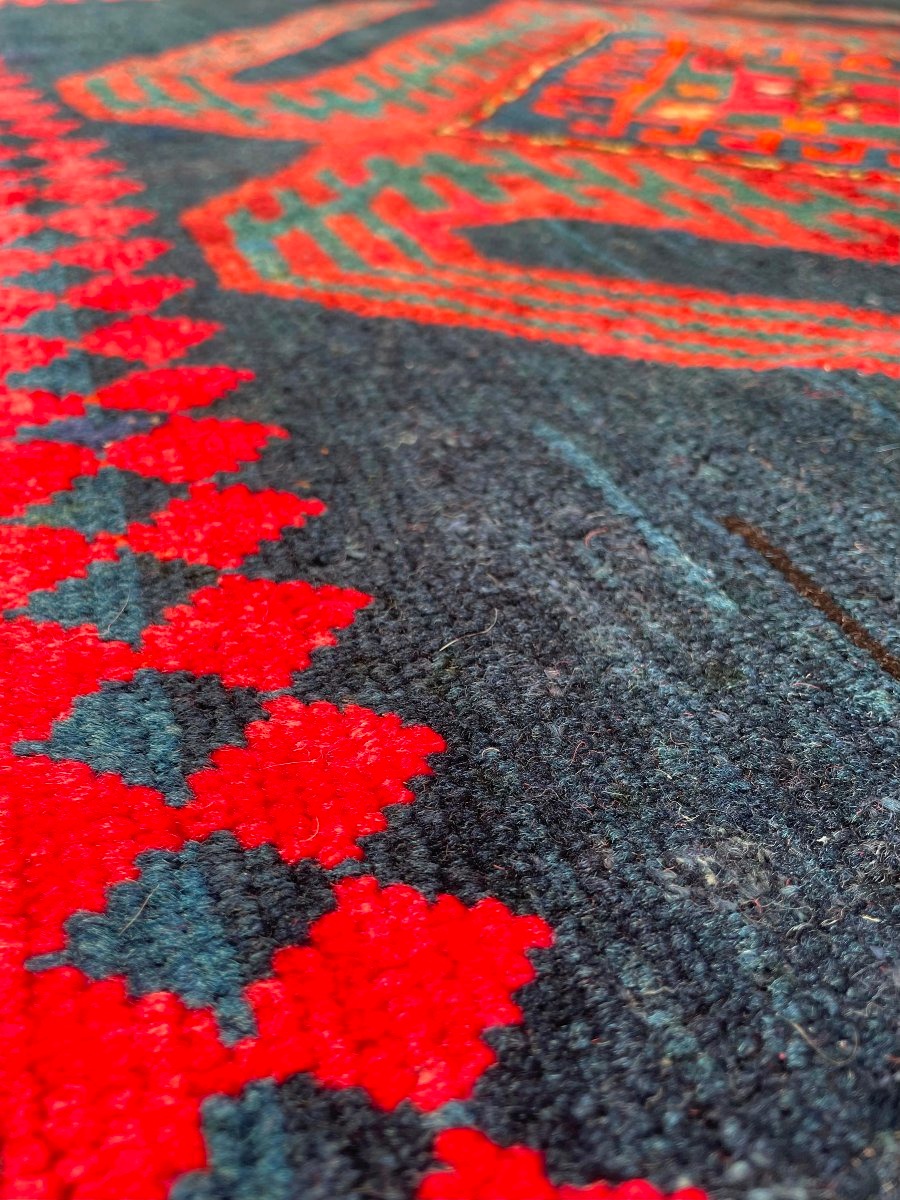
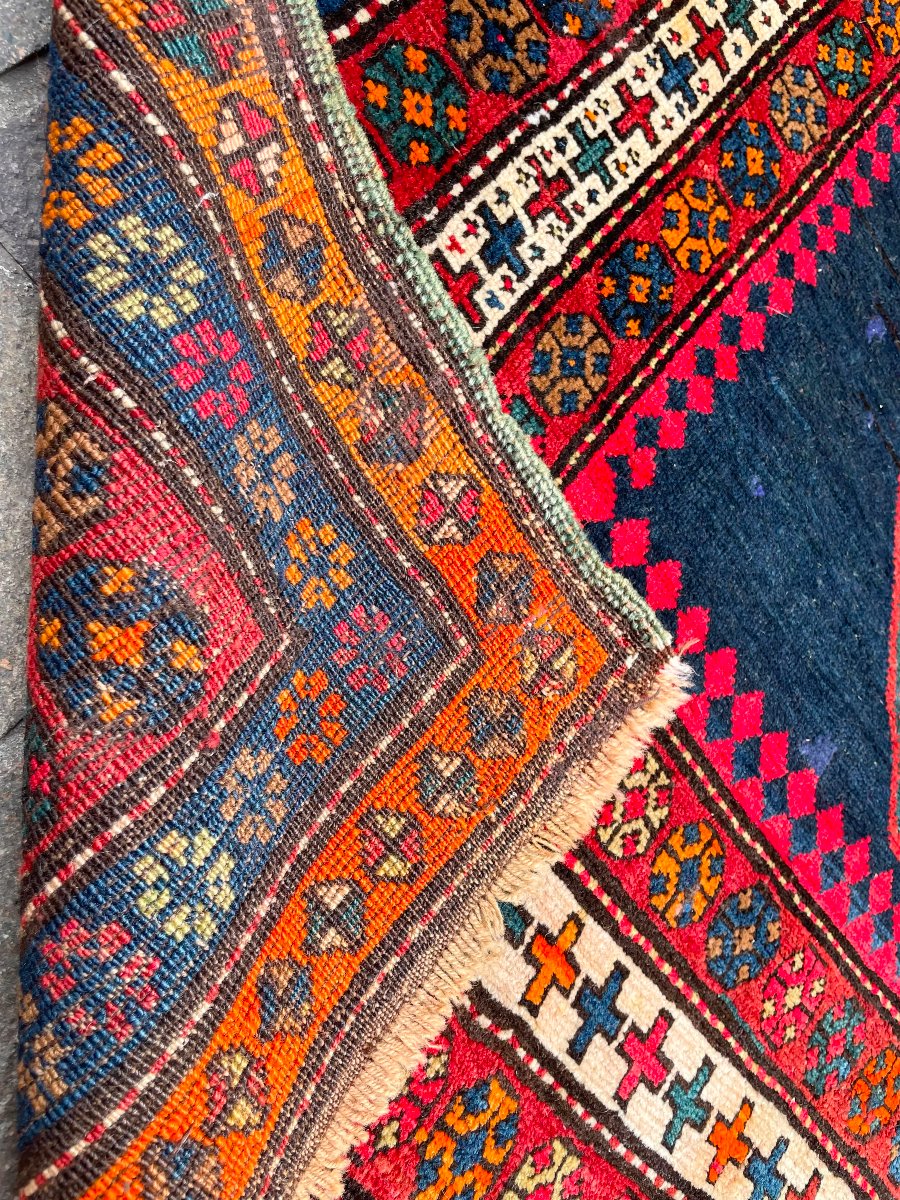
The rug is made of wool on wool, using traditional Caucasian techniques. The relatively short pile reveals great precision in the design as well as numerous variations in tone, characteristic of ancient vegetable dyes.
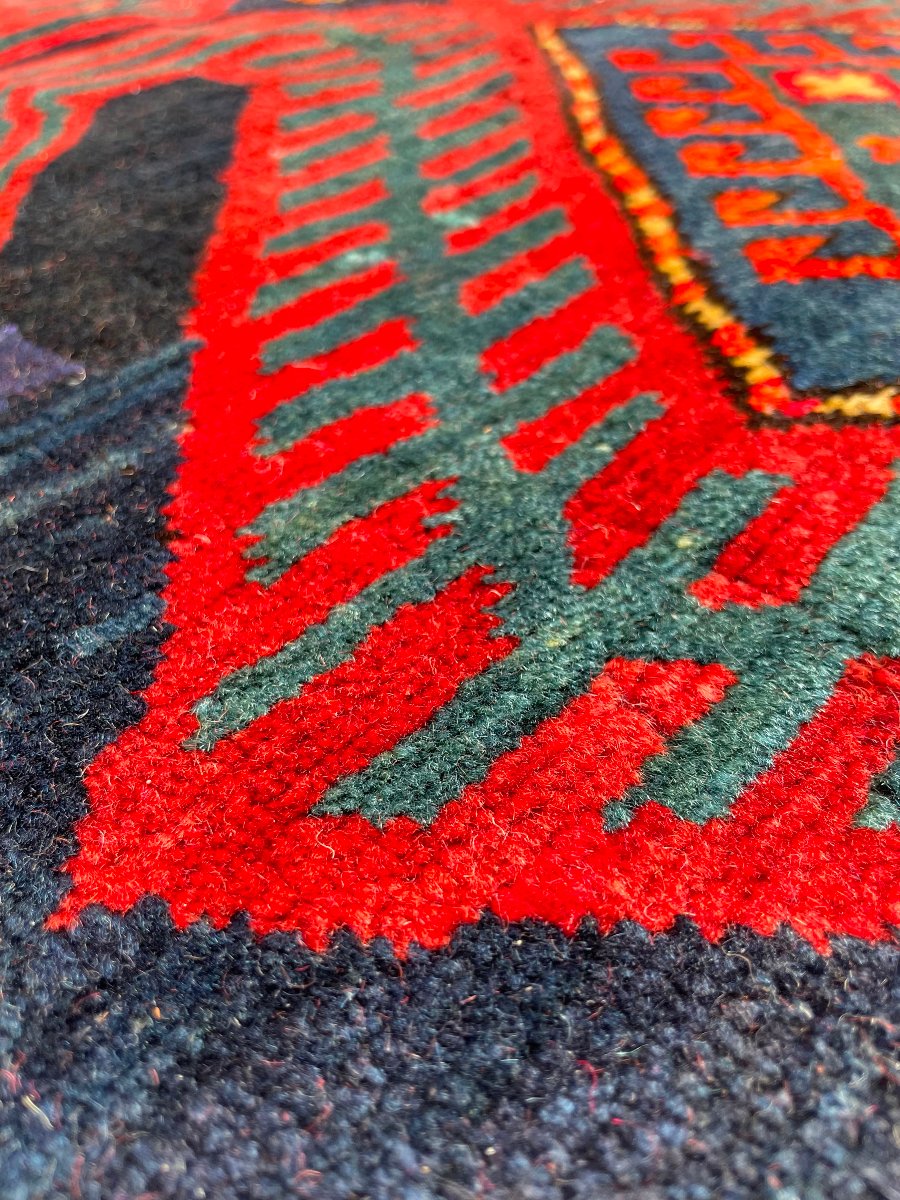
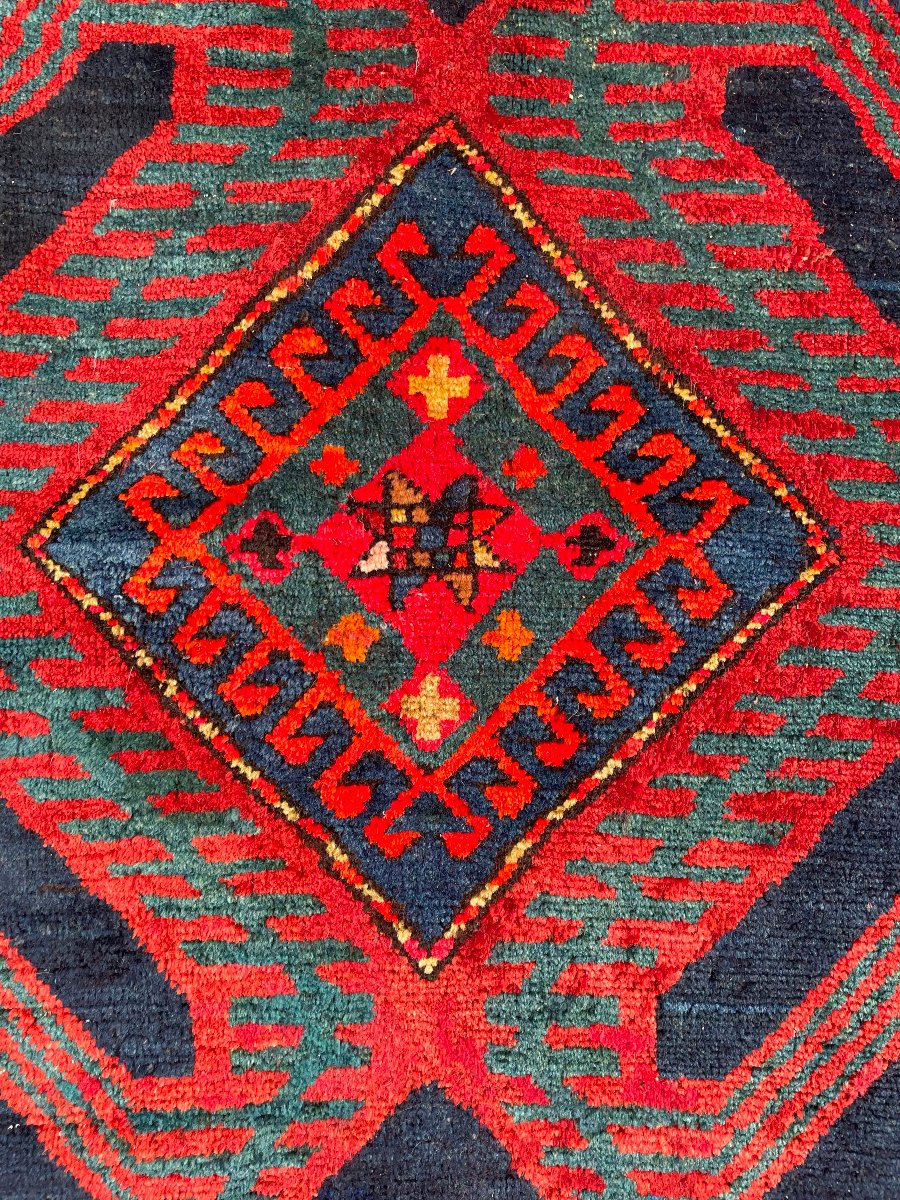
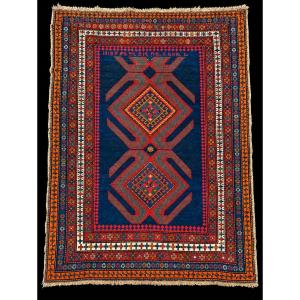
The central field, a deep indigo blue, is enlivened by two large geometric compositions arranged one above the other. Each is organized around a polychrome diamond-shaped medallion, surrounded by large, highly stylized zoomorphic motifs. With their symmetrical structure, hooked contours, and angular extensions, these figures evoke facing dragons, an ancient motif associated with the Armenian and Caucasian decorative repertoire.
In the textile traditions of the Caucasus, the dragon is not necessarily depicted figuratively. Its body is gradually transformed into broken lines, hooks, combs, and branches. It is generally interpreted as a symbol of protection, power, and mastery over natural forces.
The two central medallions, composed of interlocking diamonds, hooks, and small cross-shaped motifs, reinforce this protective dimension.
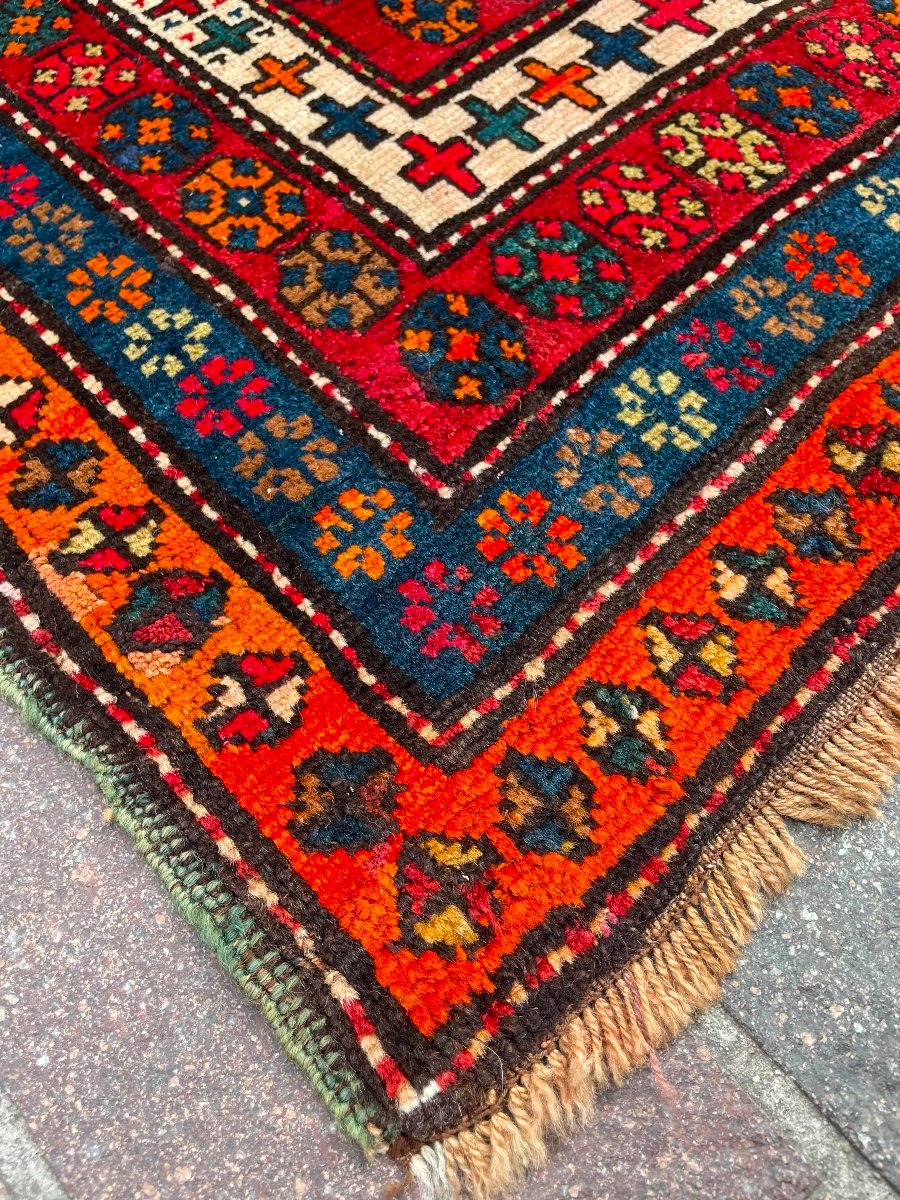
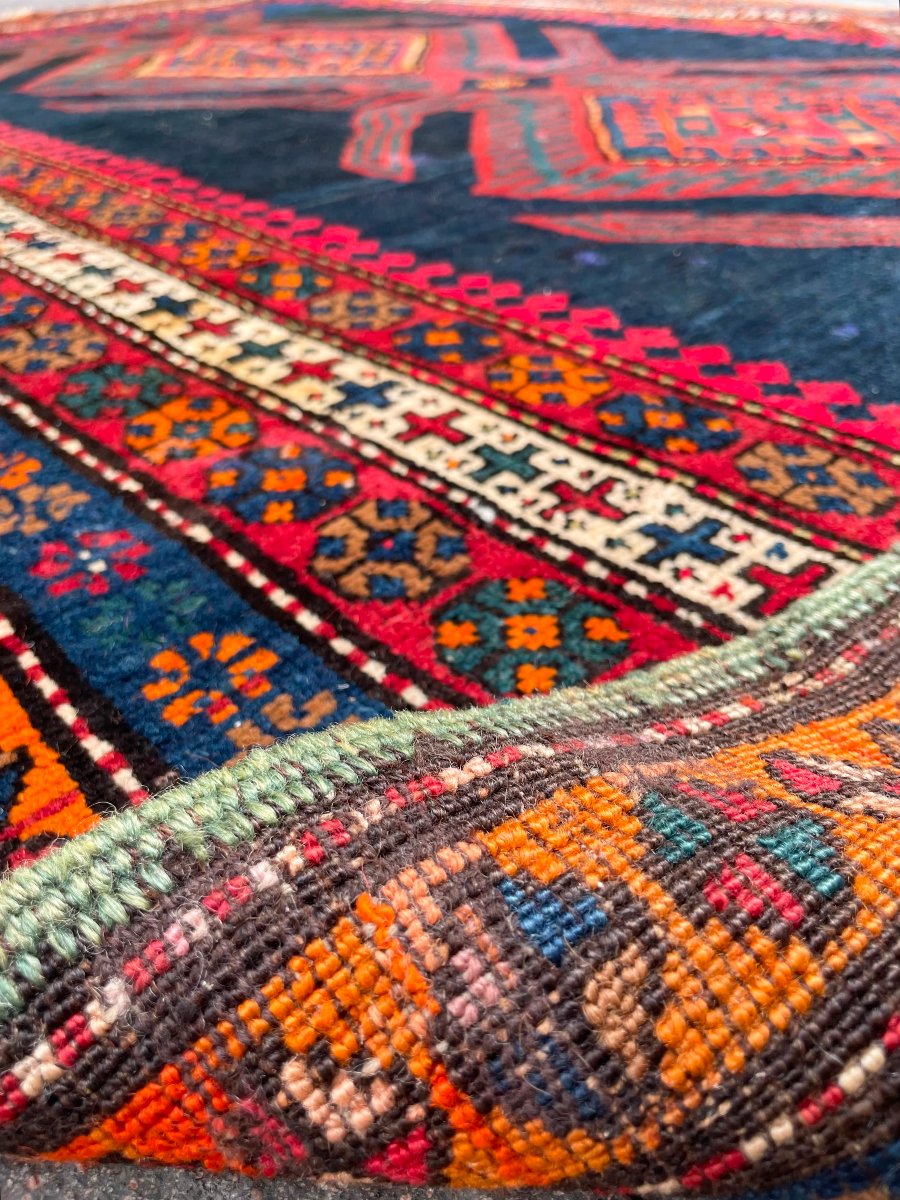
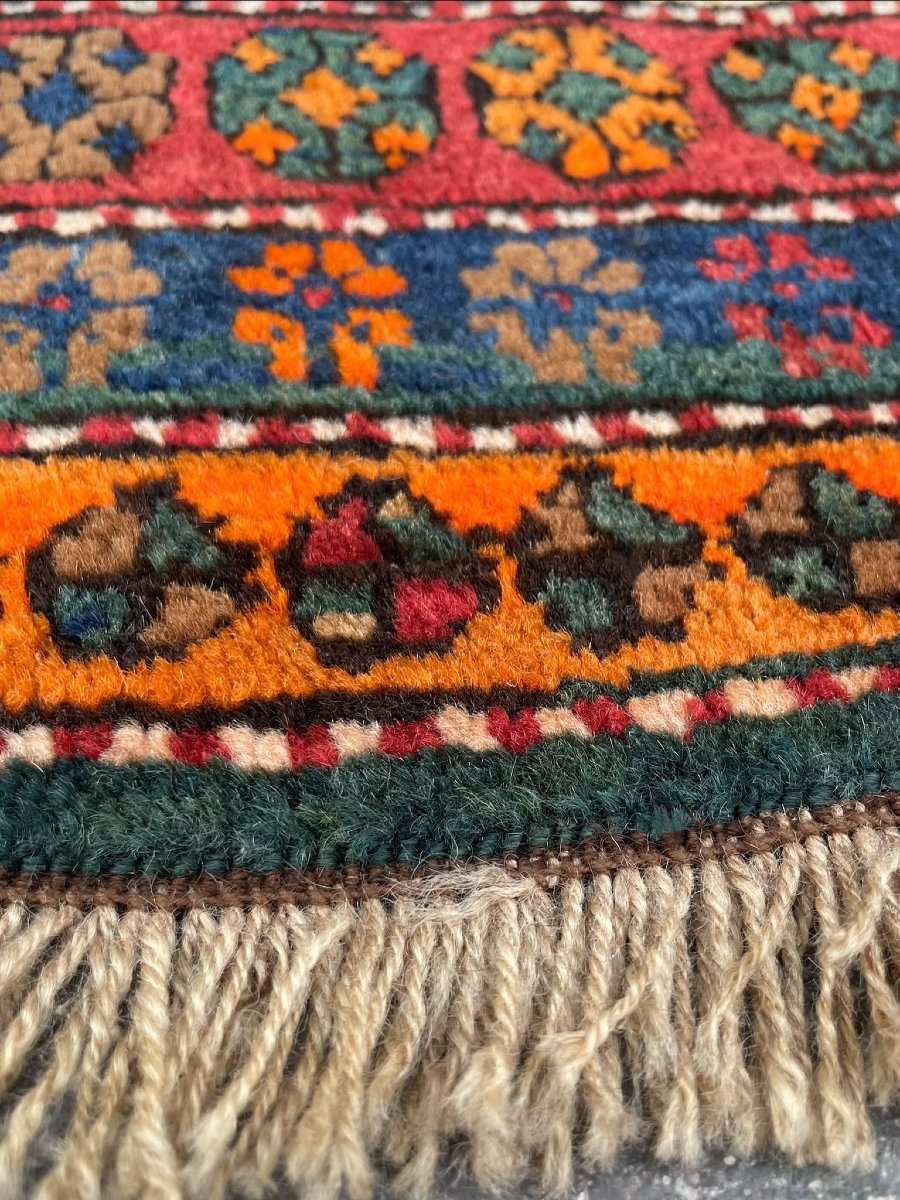
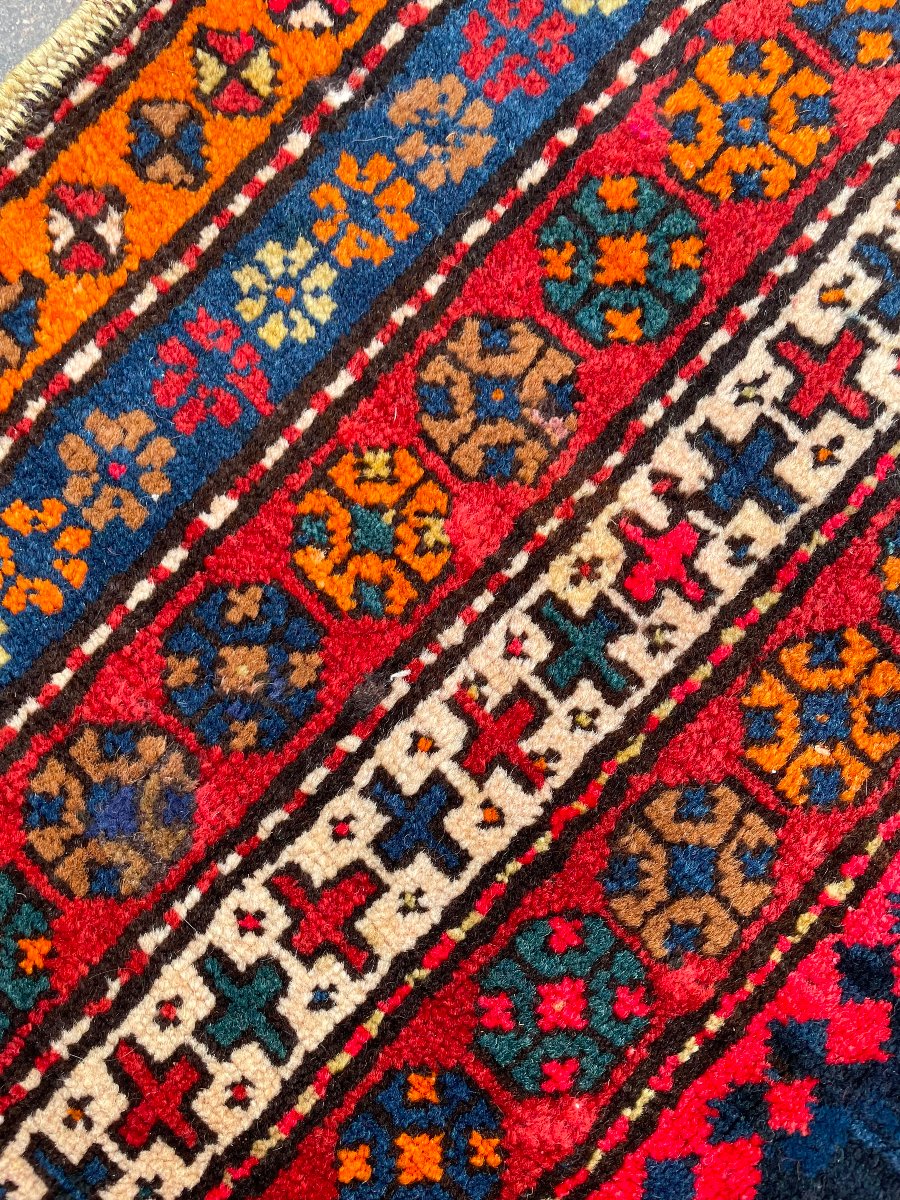
The central field is framed by a particularly rich succession of narrow borders. These include geometricized flowers, rosettes, small crosses, stylized leaves, as well as
hook-shaped motifs. A light-colored border adorned with polychrome crosses creates a striking contrast between the red and blue registers.
The color palette is remarkable for its richness: indigo blue, midnight blue, madder red, vermilion red, verdigris, dark green, saffron yellow, orange, brown, and ivory. The slight variations in shade visible in the blues and greens, known as abrash, are evidence of successive dye baths and contribute to the piece’s lively character.
With its inscription, date, and zoomorphic motifs, this rug is a particularly interesting textile artifact. It combines a decorative function with a more intimate and commemorative dimension, as the inscription likely links its creation to a specific person or event.
Armenia
Dated 1916
Superb condition.
A true museum-quality piece
Dimensions: 255 x 170 cm
Laurent
Beauty of Kilims
The inscription can be interpreted as: “Woven—or made—in the year 1916 by…”.
I have not yet been able to decipher the name that follows.
The rug is made of wool on wool, using traditional Caucasian techniques. The relatively short pile reveals great precision in the design as well as numerous variations in tone, characteristic of ancient vegetable dyes.
The central field, a deep indigo blue, is enlivened by two large geometric compositions arranged one above the other. Each is organized around a polychrome diamond-shaped medallion, surrounded by large, highly stylized zoomorphic motifs. With their symmetrical structure, hooked contours, and angular extensions, these figures evoke facing dragons, an ancient motif associated with the Armenian and Caucasian decorative repertoire.
In the textile traditions of the Caucasus, the dragon is not necessarily depicted figuratively. Its body is gradually transformed into broken lines, hooks, combs, and branches. It is generally interpreted as a symbol of protection, power, and mastery over natural forces.
The two central medallions, composed of interlocking diamonds, hooks, and small cross-shaped motifs, reinforce this protective dimension.
The central field is framed by a particularly rich succession of narrow borders. These include geometricized flowers, rosettes, small crosses, stylized leaves, as well as
hook-shaped motifs. A light-colored border adorned with polychrome crosses creates a striking contrast between the red and blue registers.
The color palette is remarkable for its richness: indigo blue, midnight blue, madder red, vermilion red, verdigris, dark green, saffron yellow, orange, brown, and ivory. The slight variations in shade visible in the blues and greens, known as abrash, are evidence of successive dye baths and contribute to the piece’s lively character.
With its inscription, date, and zoomorphic motifs, this rug is a particularly interesting textile artifact. It combines a decorative function with a more intimate and commemorative dimension, as the inscription likely links its creation to a specific person or event.
Armenia
Dated 1916
Superb condition.
A true museum-quality piece
Dimensions: 255 x 170 cm
Laurent
Beauty of Kilims
5 800 €
Period: 20th century
Style: Orientalism
Condition: Excellent condition
Material: Wool
Length: 255 cm
Width: 170 cm
Reference (ID): 1802928
Availability: In stock
Print