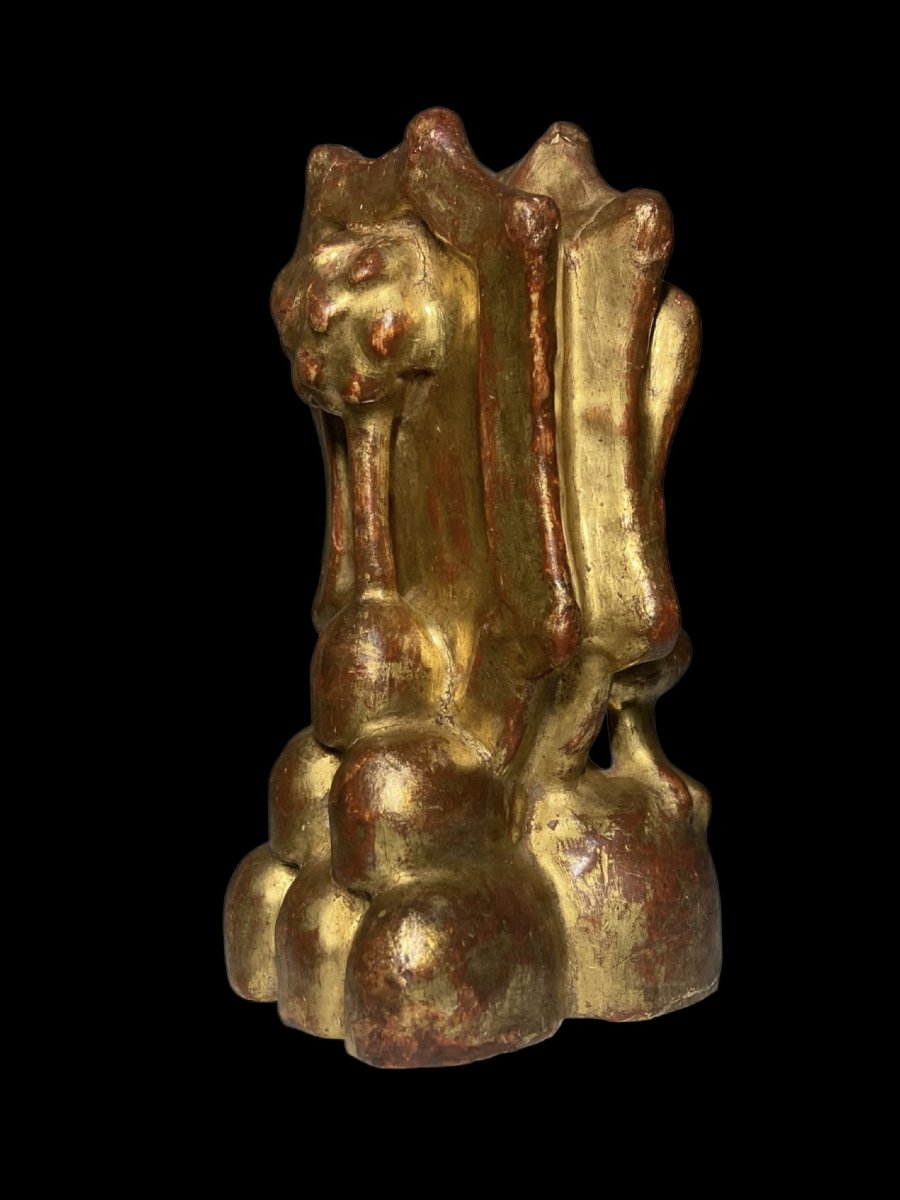
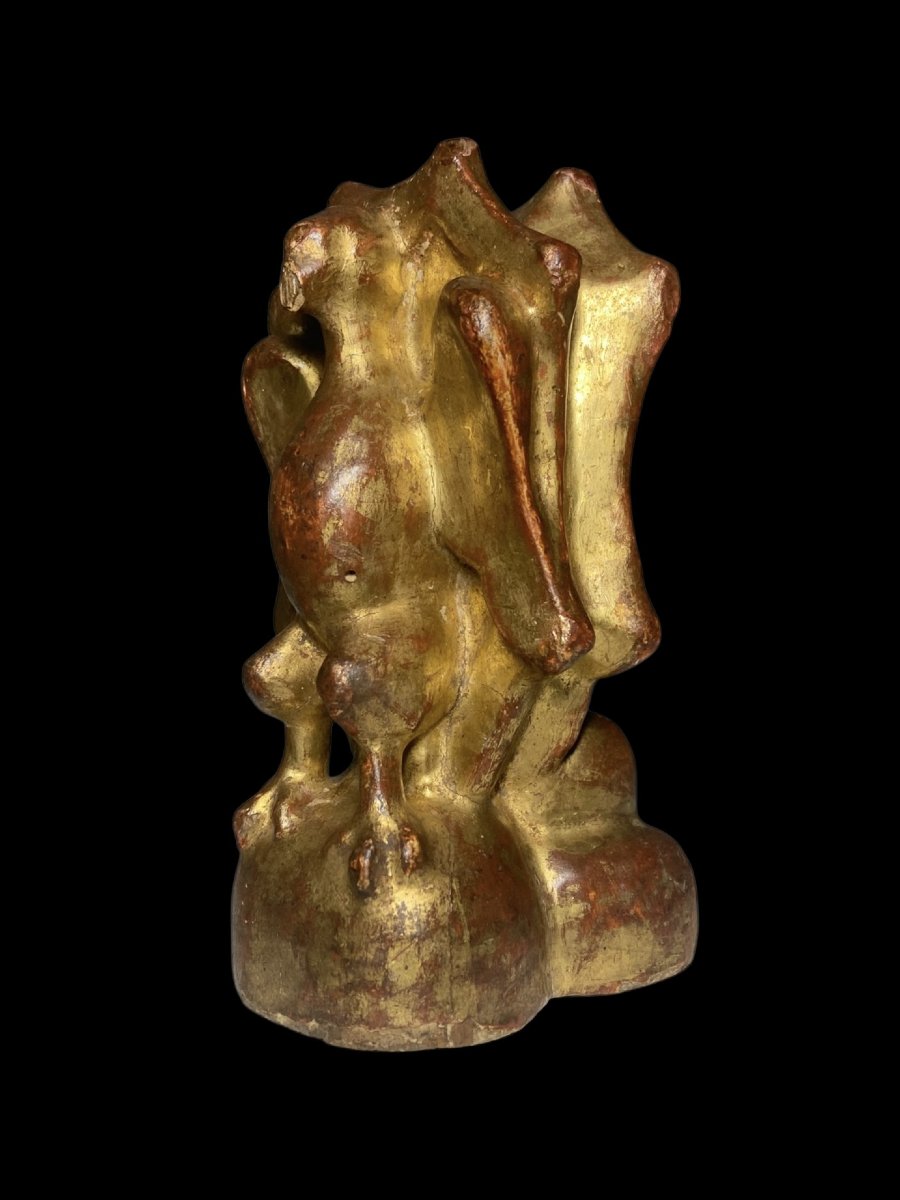
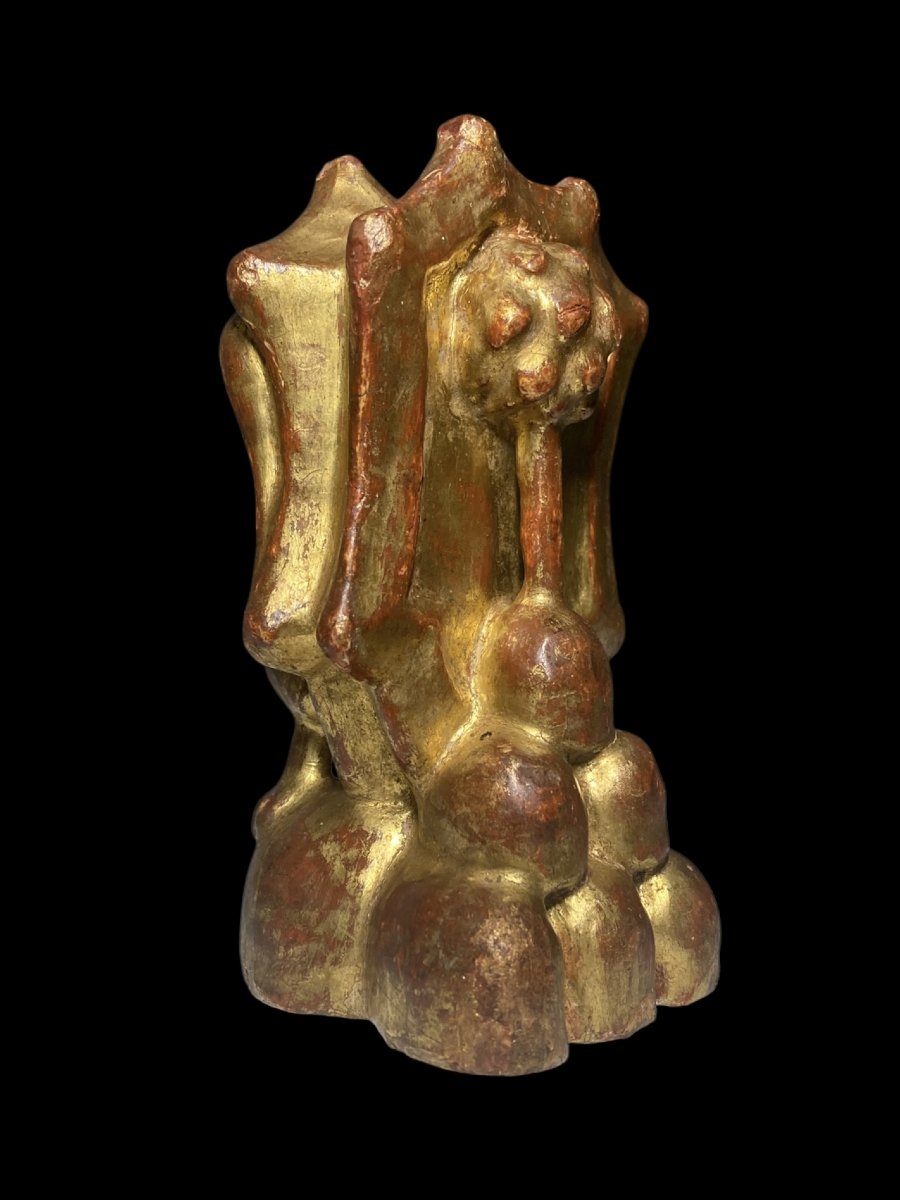
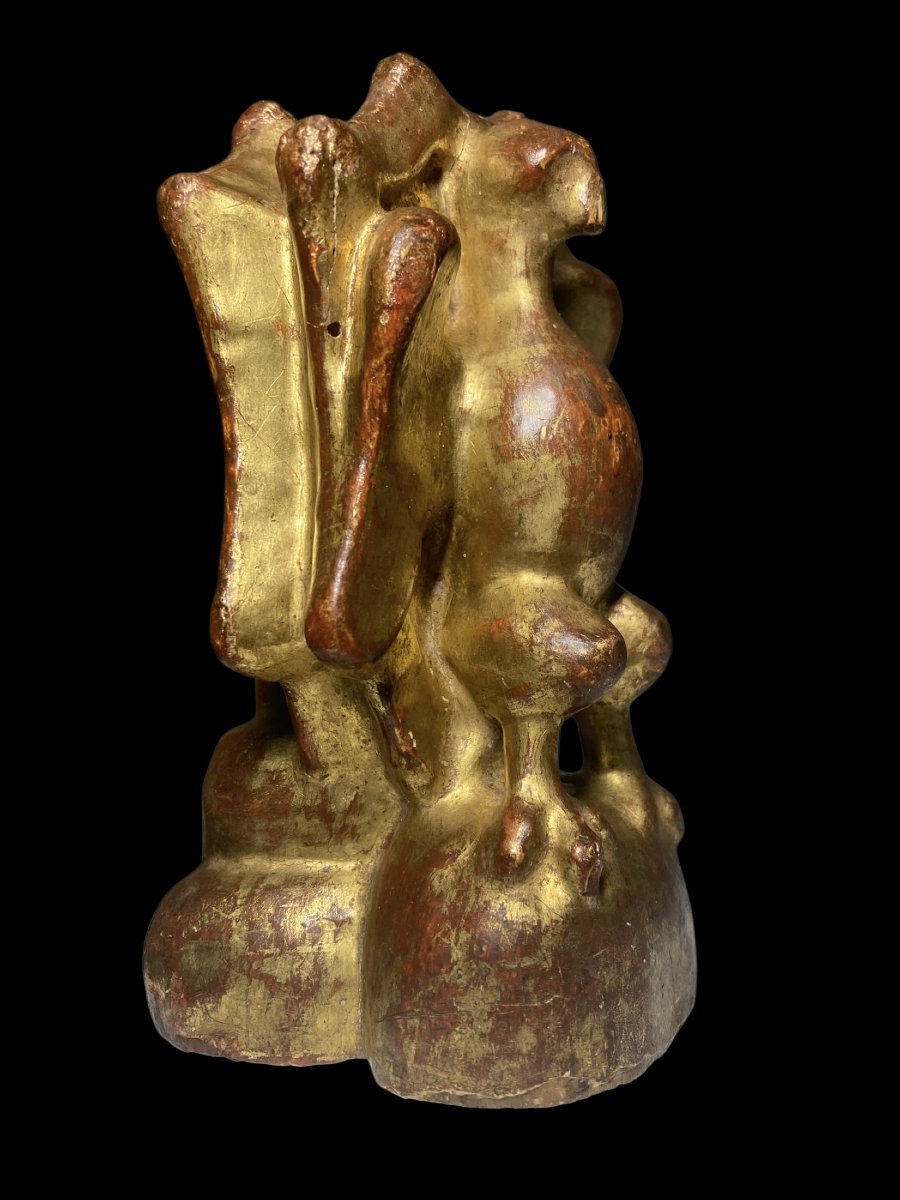


Municipality Of Montalcino - Mid-16th Century - Institutional Civic Emblem In Gilded Wood
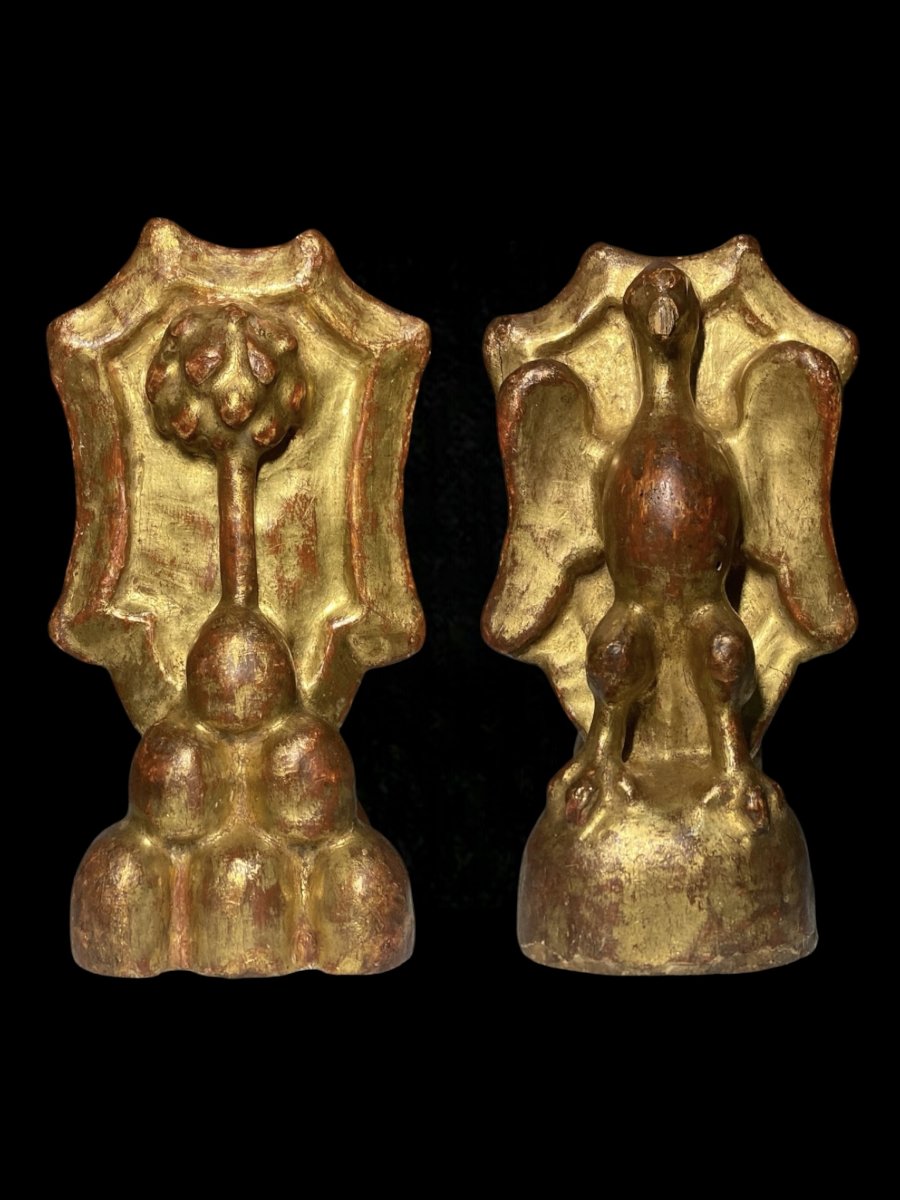
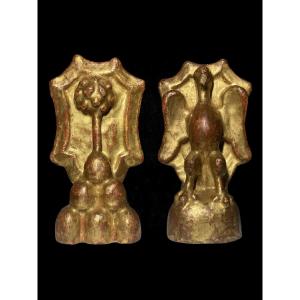
An extraordinary and unique double-sided tabletop emblem of the Municipality of Montalcino, consisting of two opposing sides:
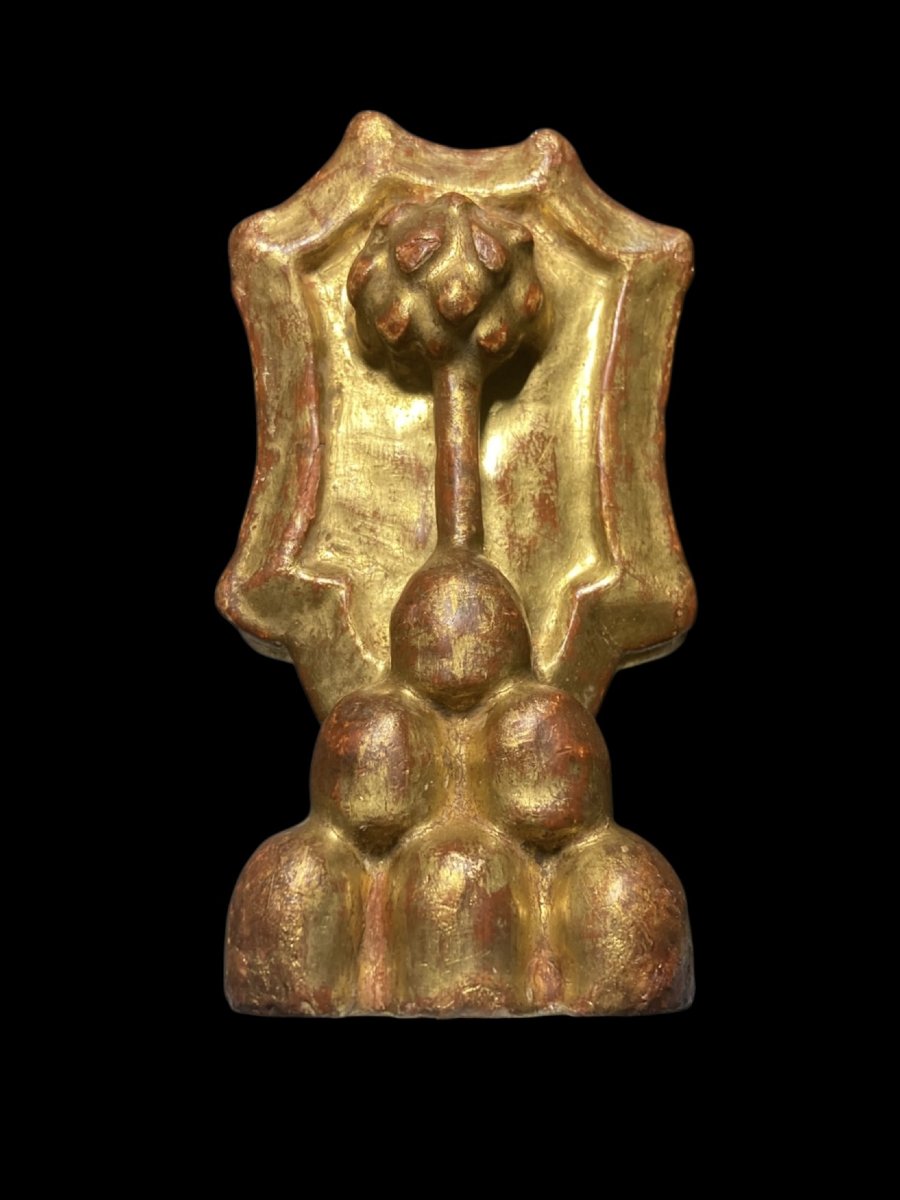
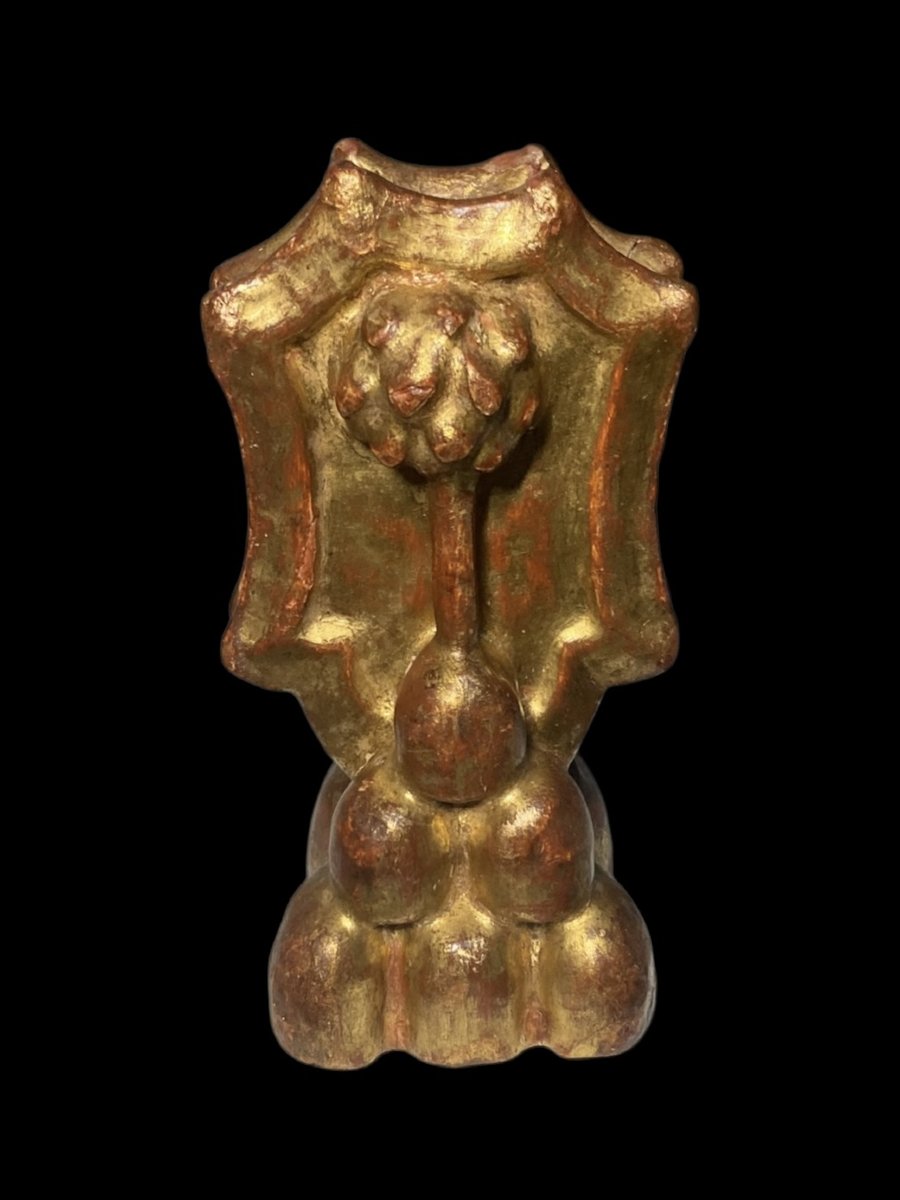
On the first side, the holm oak on the six hills, the symbol of Montalcino (Mons Ilcinus, meaning “Hill of the Holm Oak”). The civic emblem is carved in high relief, clearly set against the shield before which it is placed, which, however, lends it symbolic significance, sculptural power, and legitimacy.
The holm oak emerges and extends beyond the shield, which remains smooth and bare, making it possible to create a symbol that is visible from various angles, showcasing its elegance and authority.
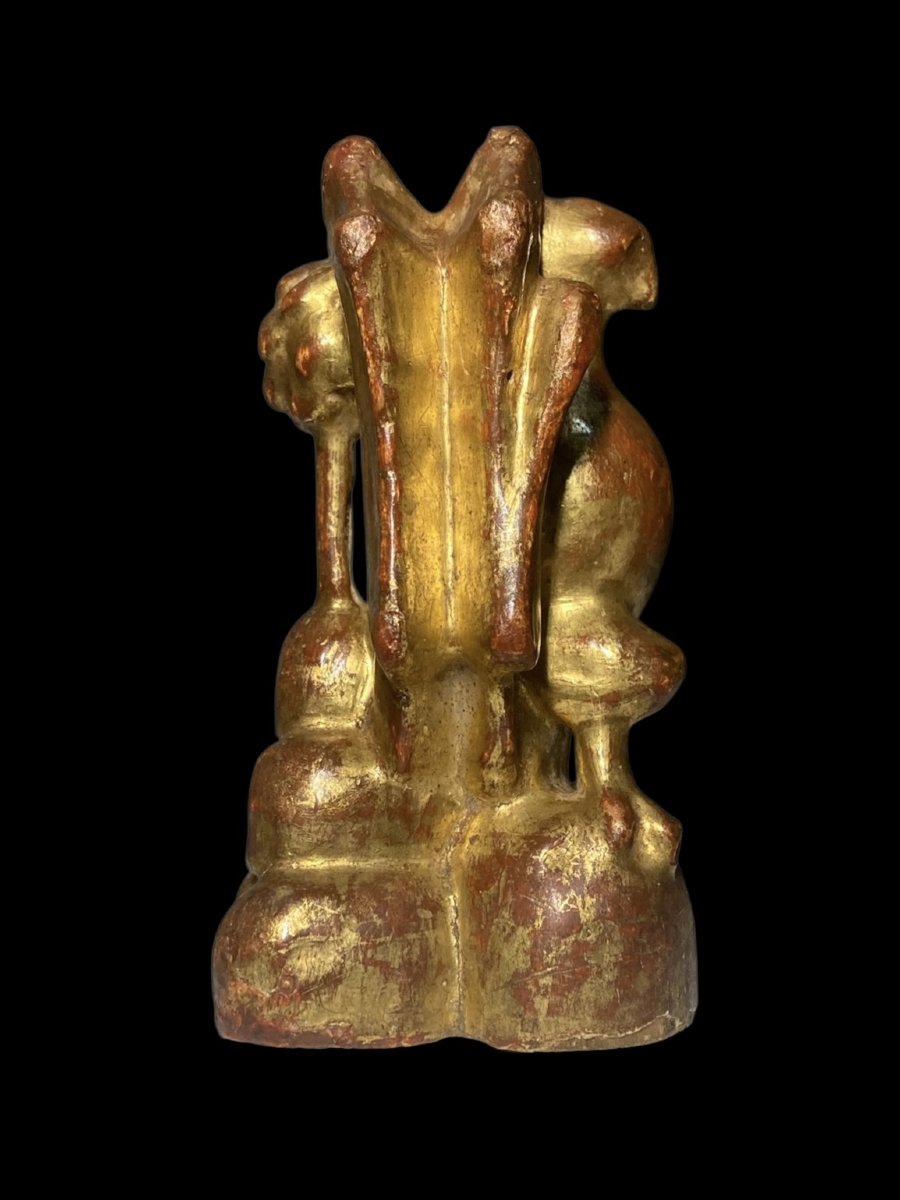
It is noteworthy that the area between the tree trunk and the shield is executed using openwork, demonstrating great technical skill—especially considering that even the hidden rear portion of the trunk is perfectly crafted.
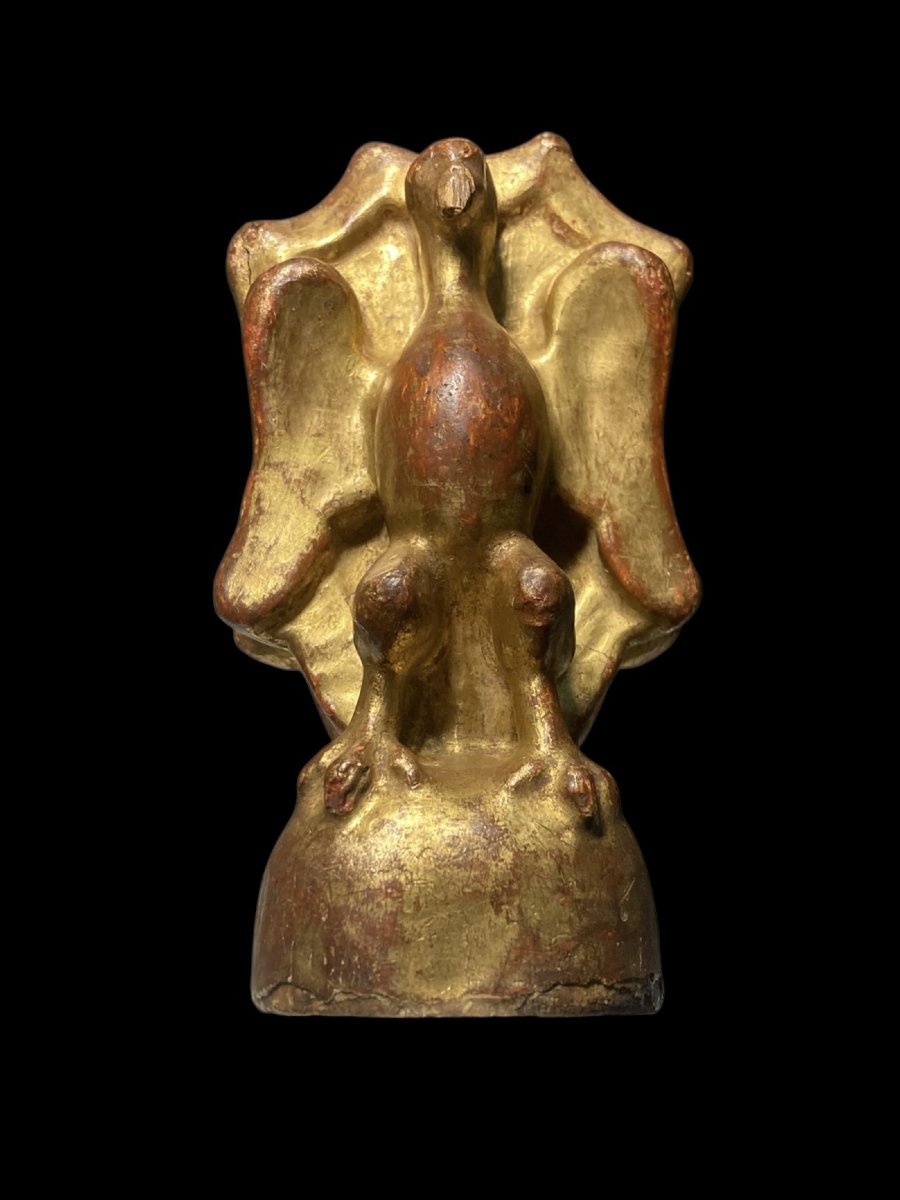
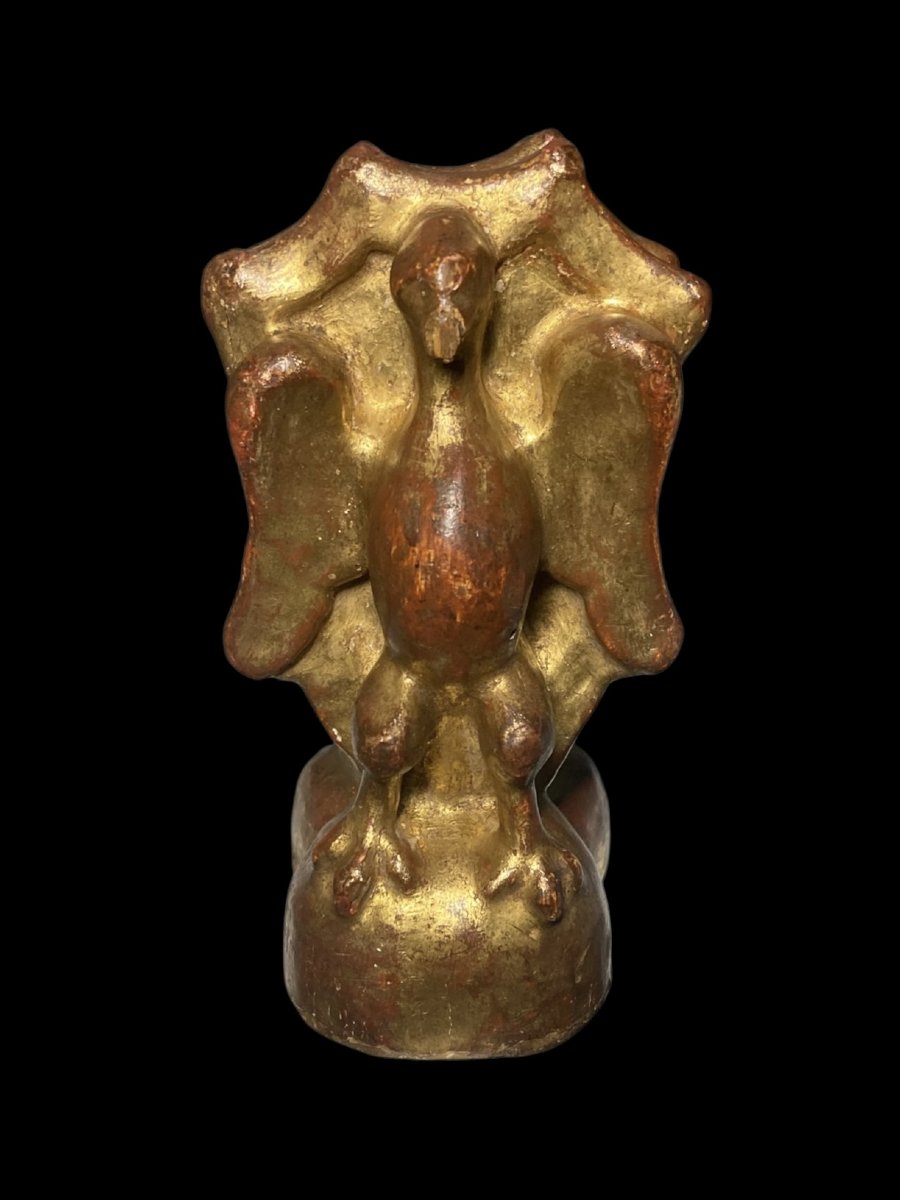
On the second side, following the same design principle as the first, a single-headed eagle with outstretched and lowered wings emerges from the shield.
This iconography, already present in the Middle Ages on legal seals, family crests, and institutional emblems, might lead one to believe that it is a symbol linked to the empire.
While it is true that this possibility cannot be ruled out a priori, it is even more true that the eagle, placed on the same hierarchical level as the holm oak, serves more as a qualification than as an attribute of the latter.
Its nature as a civic and institutional artifact indicates that the eagle signifies the legitimization and qualification of “auctoritas,” just as it had qualified the magistracies and institutions with which it was associated since the Middle Ages.
It should be recalled that around the time our object was made, Montalcino was resisting imperial pressure and, from 1555 to 1559, served as a refuge for the Republic of Siena.
Montalcino, a free commune under the Republic of Siena, enjoyed great pride and dignity: it is a suggestion—though by no means unfounded—that this object may have been created precisely during the period when the Sienese institutions were sheltered in Montalcino, which thus assumed considerable importance as the last bastion of resistance for the Republic to which it belonged.
Chronologically, based on style, technique, iconography, and function, a minimum date of 1559 can be established, leaving open the suggestion—which, unfortunately, cannot be confirmed at this time unless archival discoveries are made—that it was part of the civic and institutional furnishings from the period of the Republic of Siena in Montalcino (1555–1559).
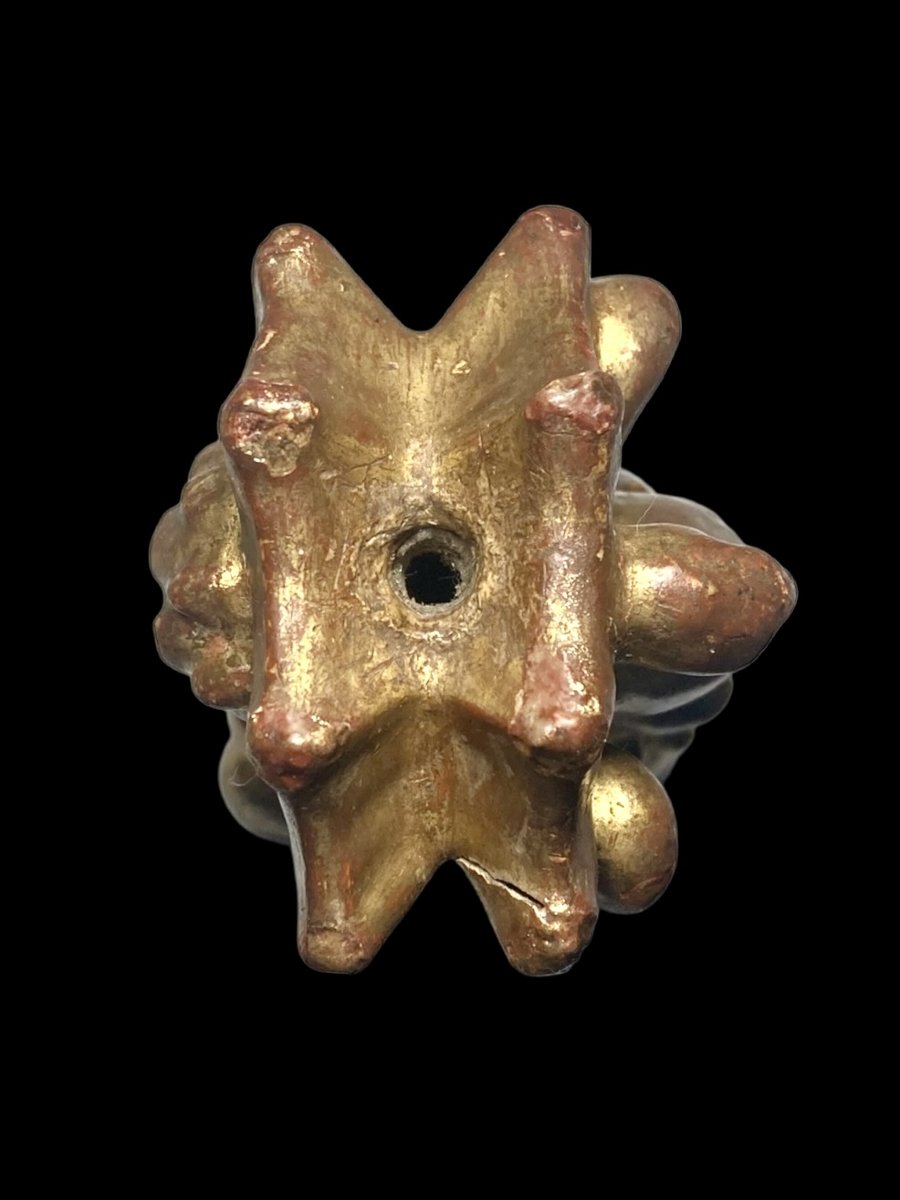
From a typological perspective, although rare, certain elements can be observed to determine the object’s function and placement: in the upper part there is a well-finished hole that undoubtedly housed the pin of a cross, an essential element even in civil artifacts (as a spiritual legitimization of temporal power).
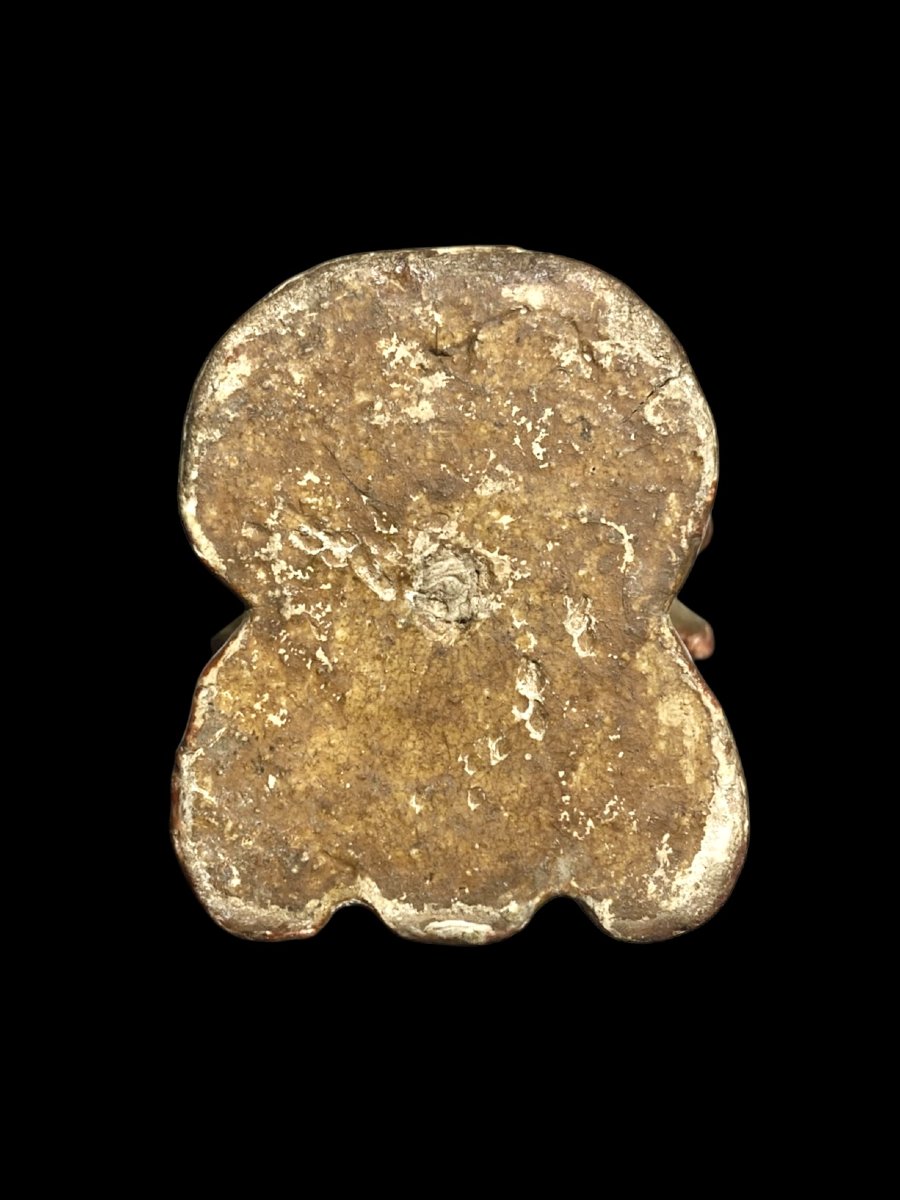
In the lower base, another small (closed) hole housed the pin that secured the piece during the carving process; therefore, it did not serve any function after the carving was completed.
This base is solid, tall, and irregular, following the shapes of the two figures depicted on its two sides: this rules out the possibility that the object was pivoted or attached to a larger piece of furniture via that hole (which is too small), serving as its terminal part.
Its dimensions, structure, and base indicate that the object was independent in both form and function.
Government offices, council chambers, and public offices might have acquired, either through commission or as gifts, small objects to display on tables, sideboards, or inside display cabinets.
Such objects legitimized, embellished, and celebrated the public institution.
A unique and extremely rare object of incredible historical and artistic charm, given the extraordinary quality of the carving and gilding—features that reasonably suggest the work of a highly specialized Sienese workshop from the early to mid-16th century.
The condition is excellent, with very minor chips that have been repaired. The absence of the cross—which is presumed but cannot be confirmed—does not compromise the object’s legibility.
Dimensions: 6.5 x 6.5 x 12H cm
Period: 16th century
Style: Other Style
Condition: Good condition
Material: Gilted wood
Width: 6,5
Height: 12
Depth: 6,5
Reference (ID): 1797380
Availability: In stock