





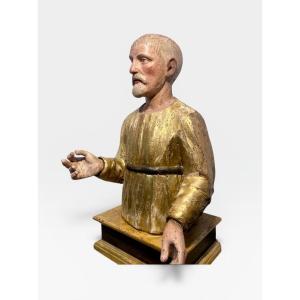


Brescia (bottega Degli Olivieri?) - First Quarter Of The 16th Century - Wooden Bust Of St. Joseph
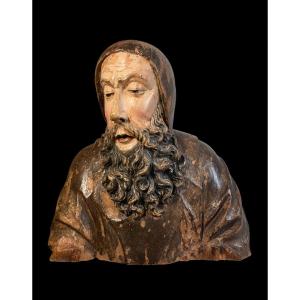
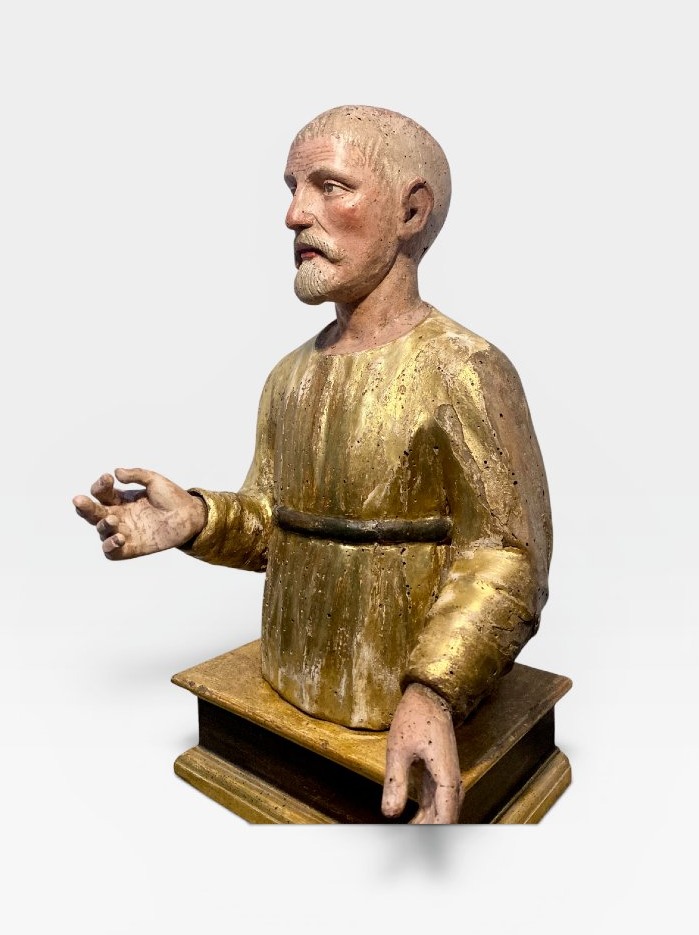
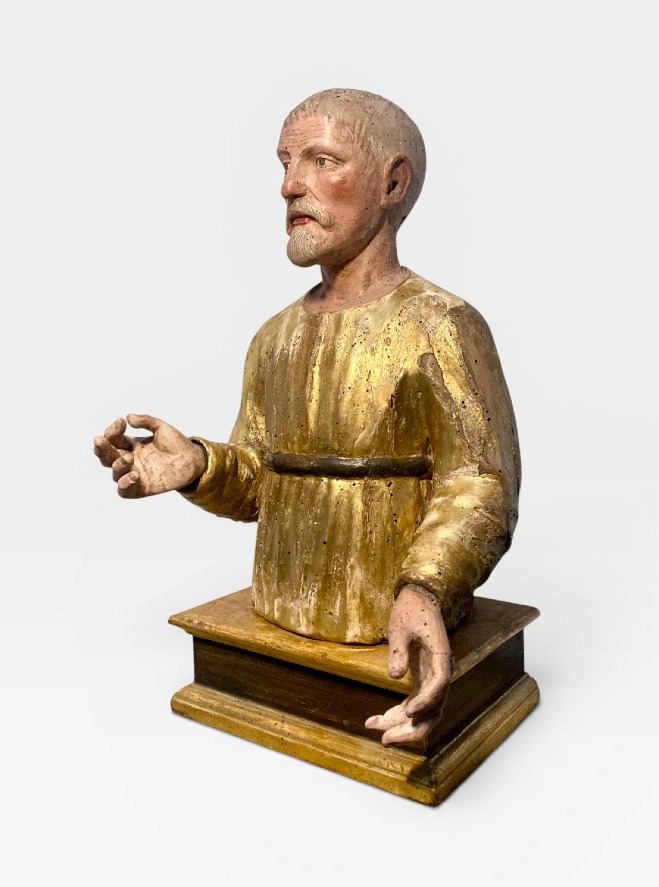
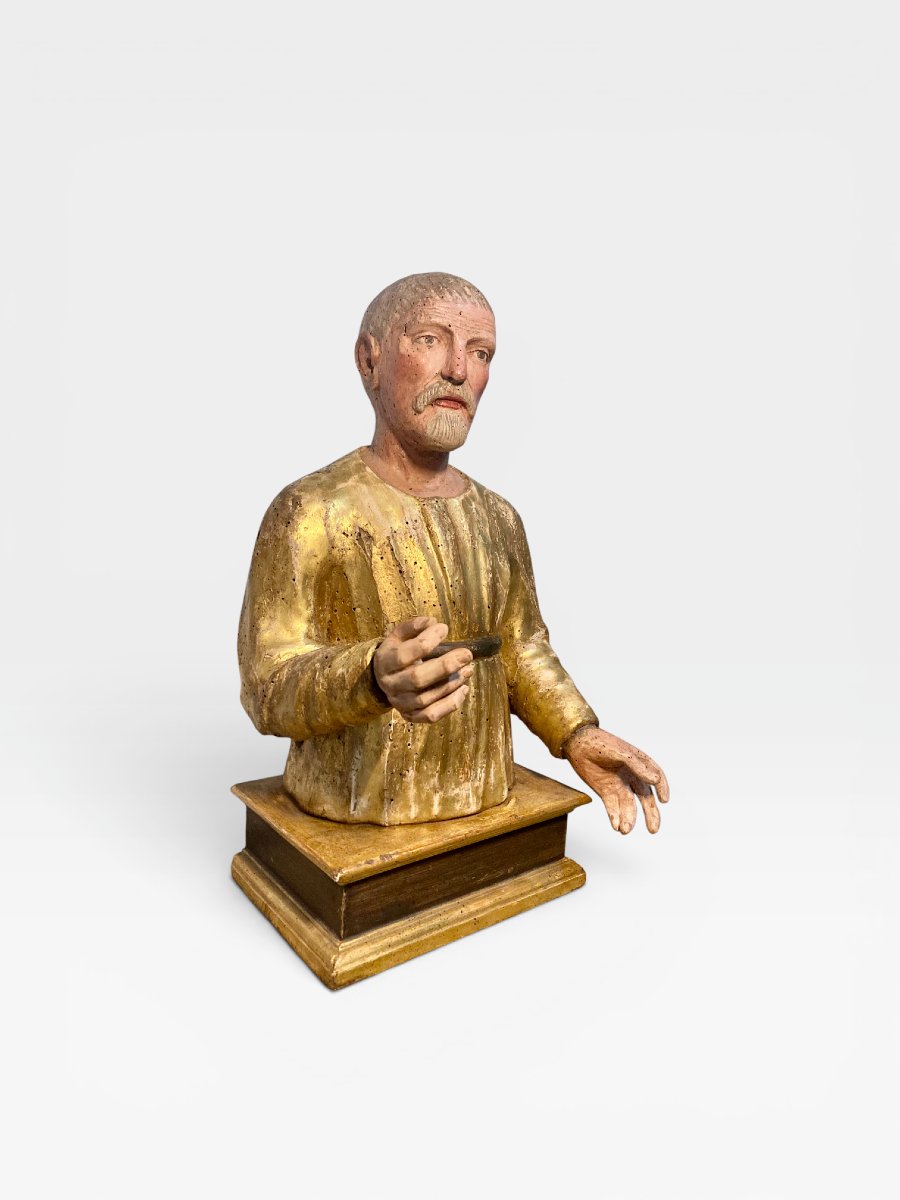
An extraordinary wooden bust depicting Saint Joseph, with great expressive power.
Attributable to the Brescia school of the early 16th century and, in particular, to the Olivieri workshop, we can identify this bust as Saint Joseph based on his hair and robe: the robe is rendered in a minimalist style to signify the saint’s status and is gilded to accentuate its spiritual significance and preciousness.
The drapery is simple yet refined and realistic, with the neckline outlining an elegant contour at the base of the neck.
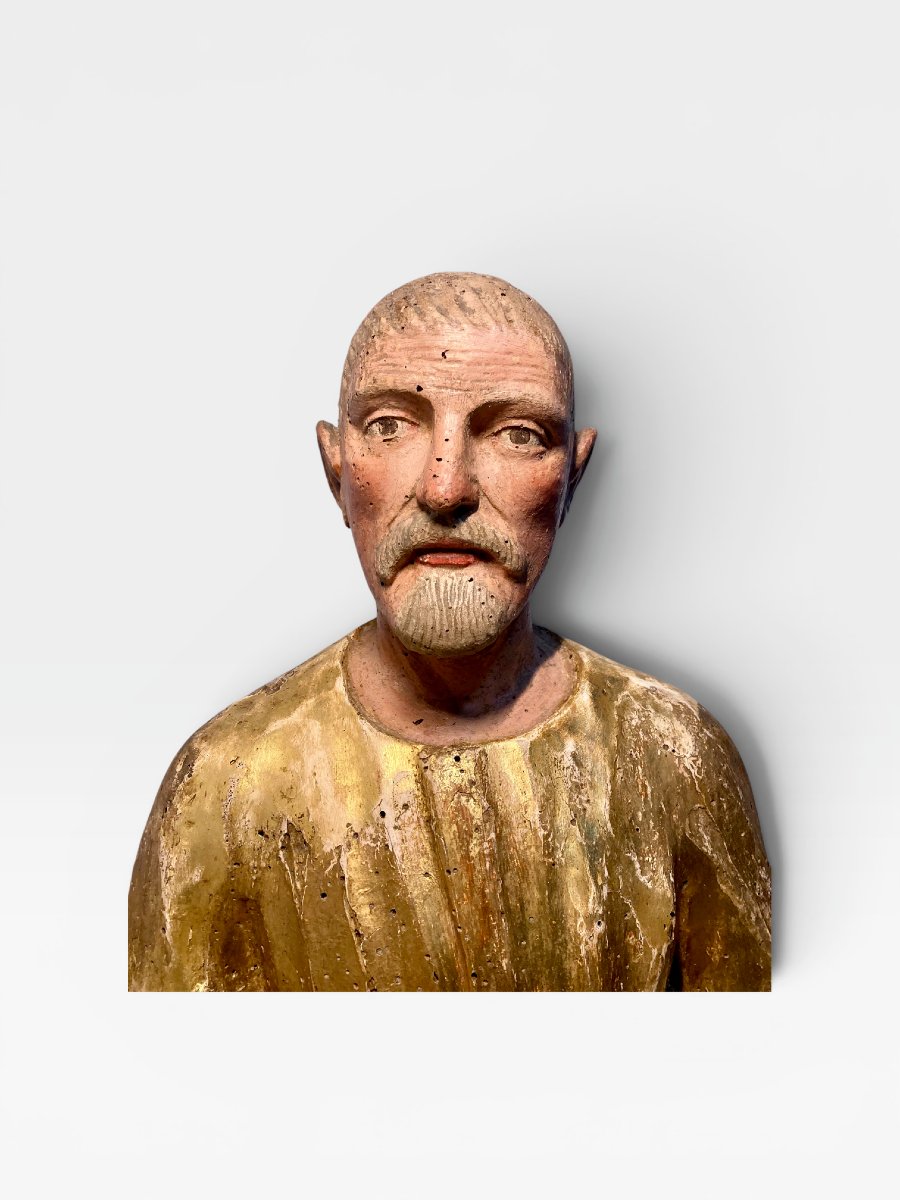
The face is rendered with great expressiveness: from the proportionate and slender neck, one can observe a well-defined, realistic, and perfect oval of the face.
The beard and mustache are rendered with concise gouges, in full accordance with the Lombard-Venetian technique.
The expression lines are remarkable, as are the ears and mouth, which display such naturalism that they could almost be described as idealized.
The eyes and the gaze are the focal point of the work: while observing the most skillfully rendered sections might lead one to think of a work by a pedantic sculptor highly attentive to proportions and the realism of forms, the eyes and the gaze serve a specific purpose: to imbue the sculpture with soul, personality, character, and meaning, within the context of the work’s spatial placement.
In light of the above, one almost gets the impression that the figure has a portrait-like quality (whether intentional or not), with the result that our sculpture would have had a specific place within a sculptural group.
Looking at the typology of northern Italian sculptural groups from the 15th to the 16th centuries, the figure of Saint Joseph—set slightly apart yet at the same time reflective, profound, and engaged—fits perfectly into this context.
The Olivieri workshop specialized in wood sculpture, applying the same attention to the sharp naturalism of forms and expressions as our hitherto anonymous sculptor.
It is therefore believed that this sculptor was part of the Olivieri workshop and created this bust as part of a Nativity sculpture group.
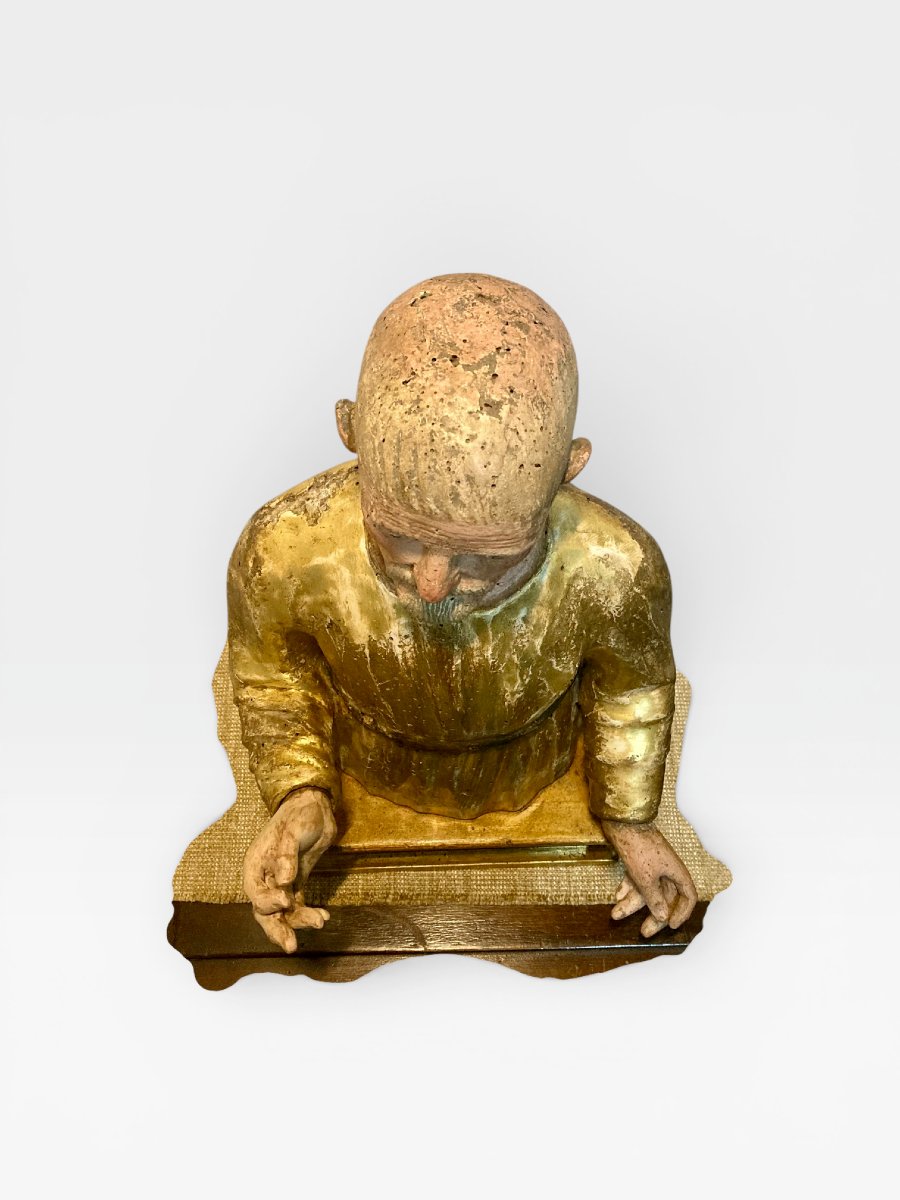
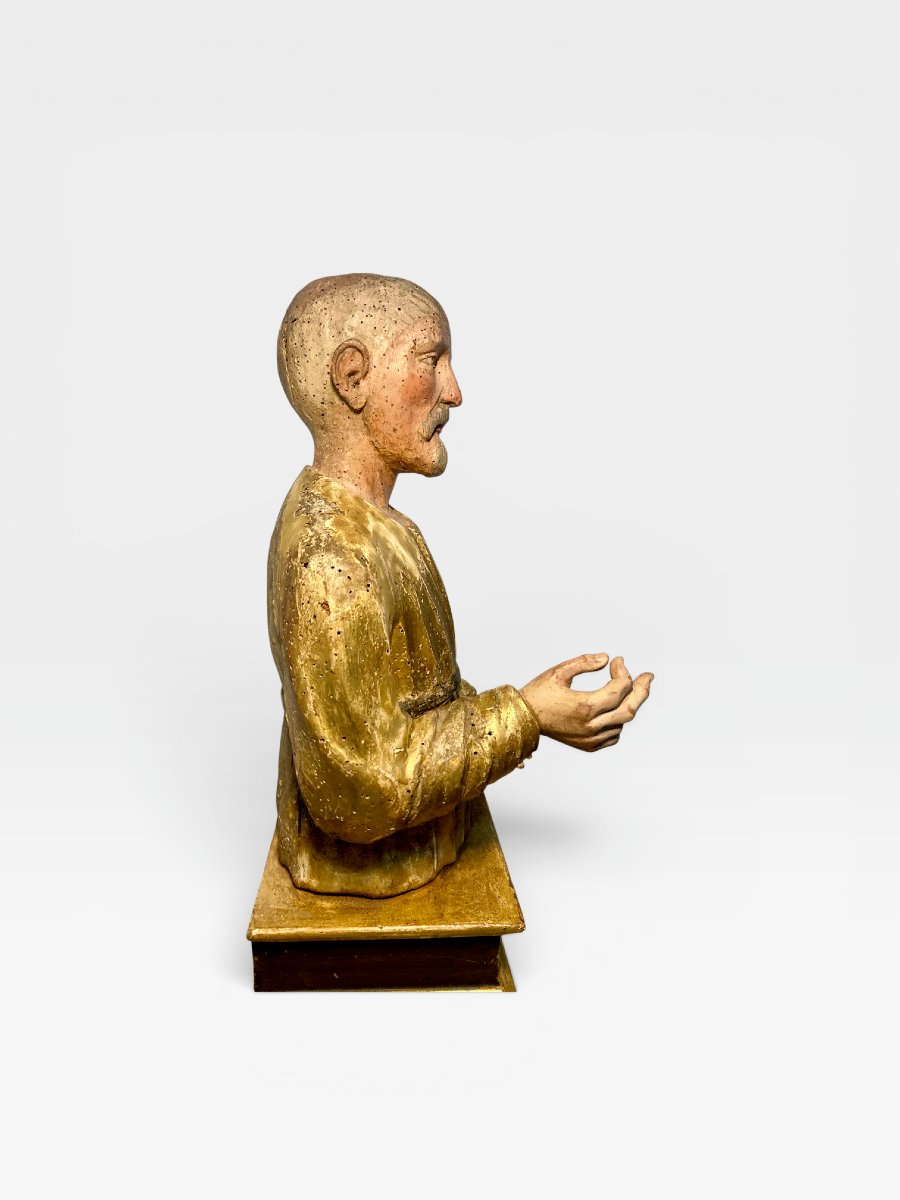
Technically, the back is hollowed out to lighten the weight and reduce stress, but it has been filled in to lend dignity to the piece.
Furthermore, the back is not gilded, indicating that it was not intended to be visible from all angles.
This points to the high standing of both the patron and the artist.
The condition is good, with several areas of gilding loss that have been partially regilded at the shoulders and the lower edge of the robe, as well as minor paint retouching on the face.
The right hand has been replaced, and the numerous woodworm holes—which have not structurally compromised the rest of the sculpture—have, however, necessitated consolidation work on the left hand.
Modern base in antique style.
Dimensions: 32 x 27 x 46H cm
Period: 16th century
Style: Other Style
Condition: Some scratches and chips
Material: Gilted wood
Width: 32
Height: 46
Depth: 27
Reference (ID): 1783623
Availability: In stock