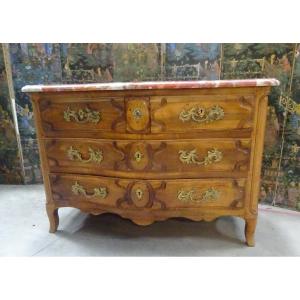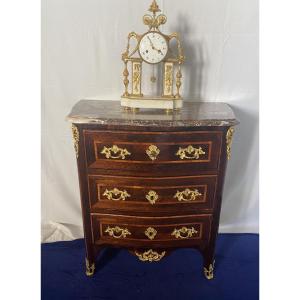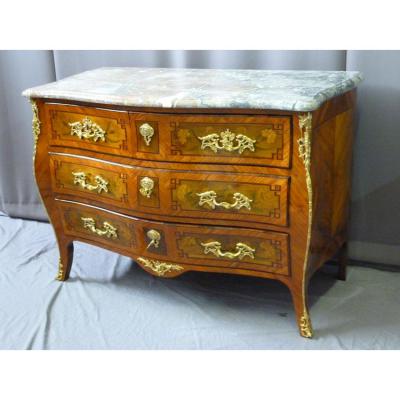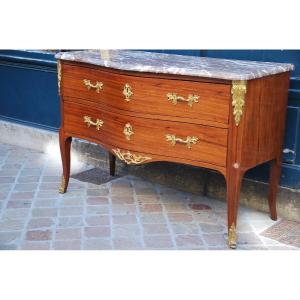

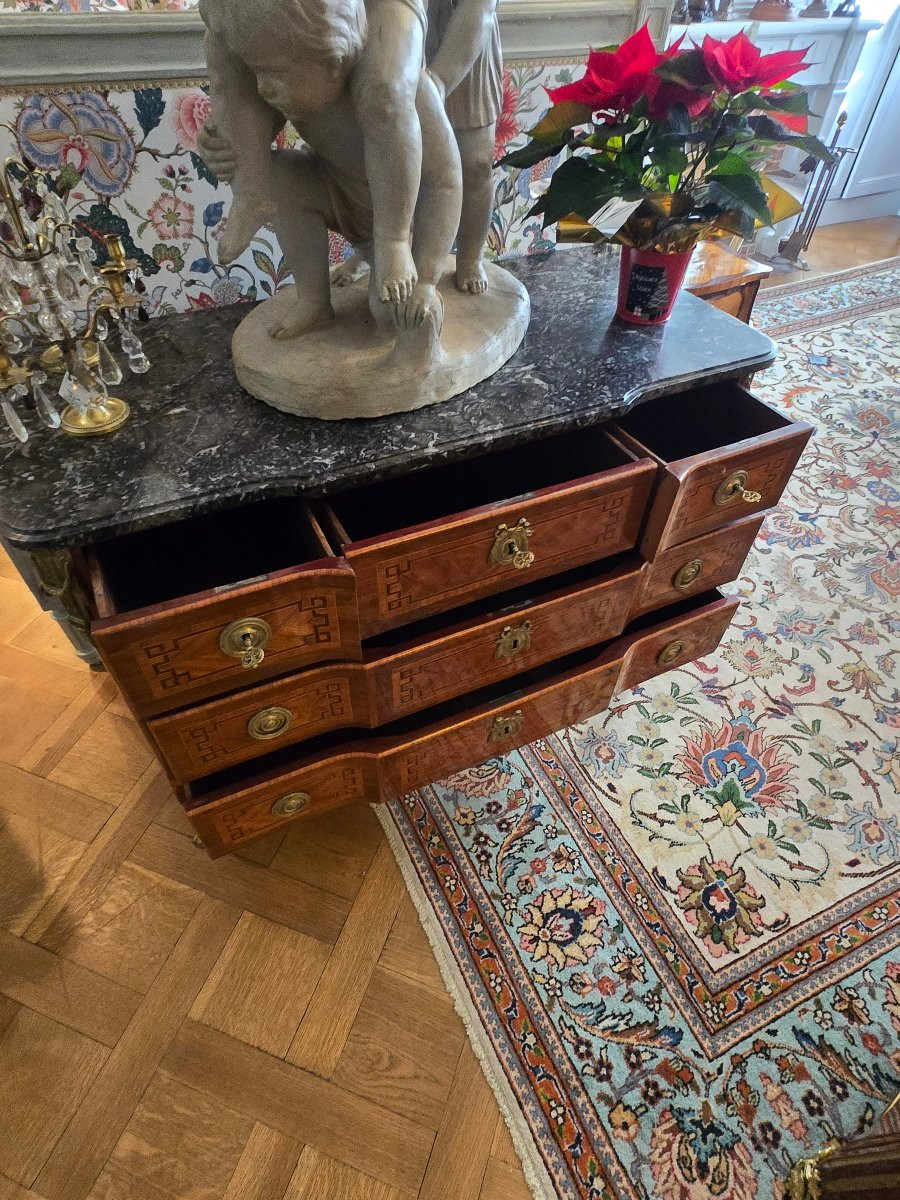


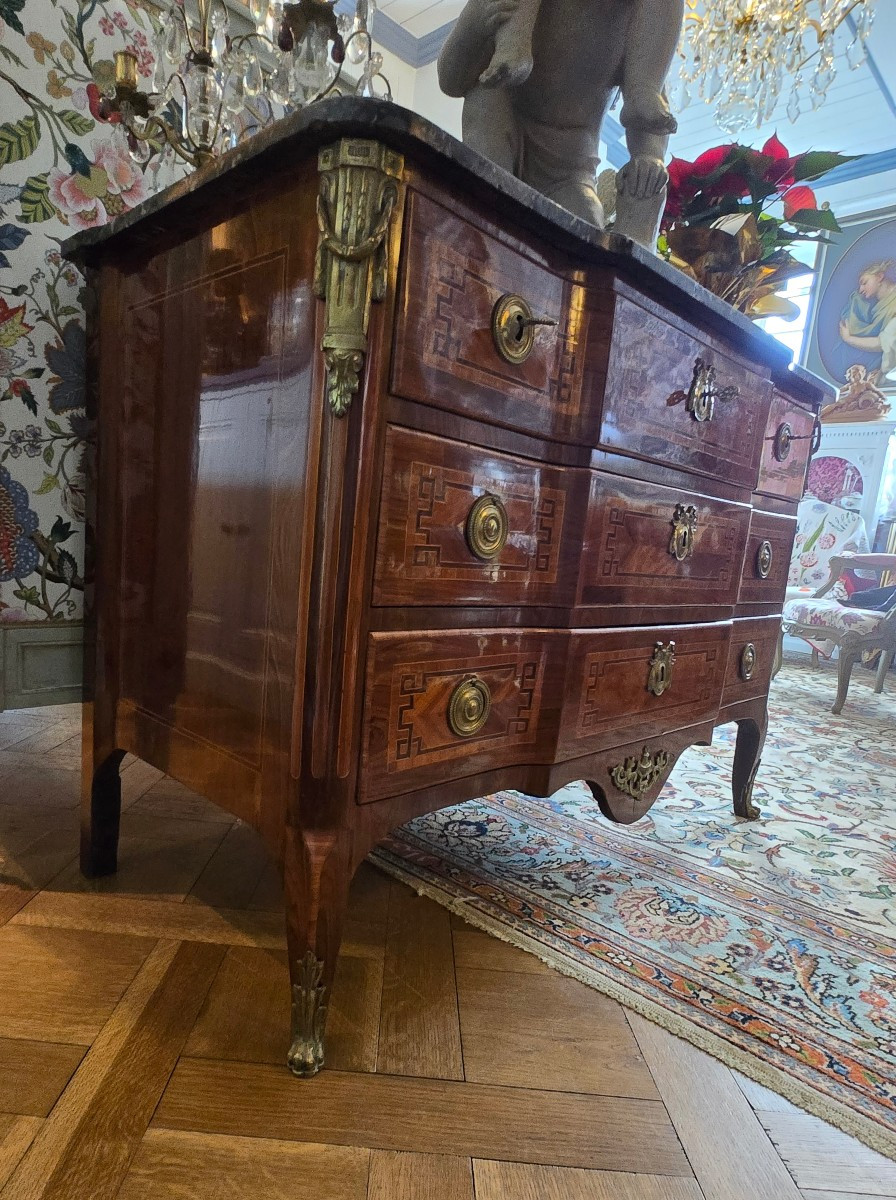



Transitional Commode With Double Projection And Greek-style Decoration, Paris Circa 1770.
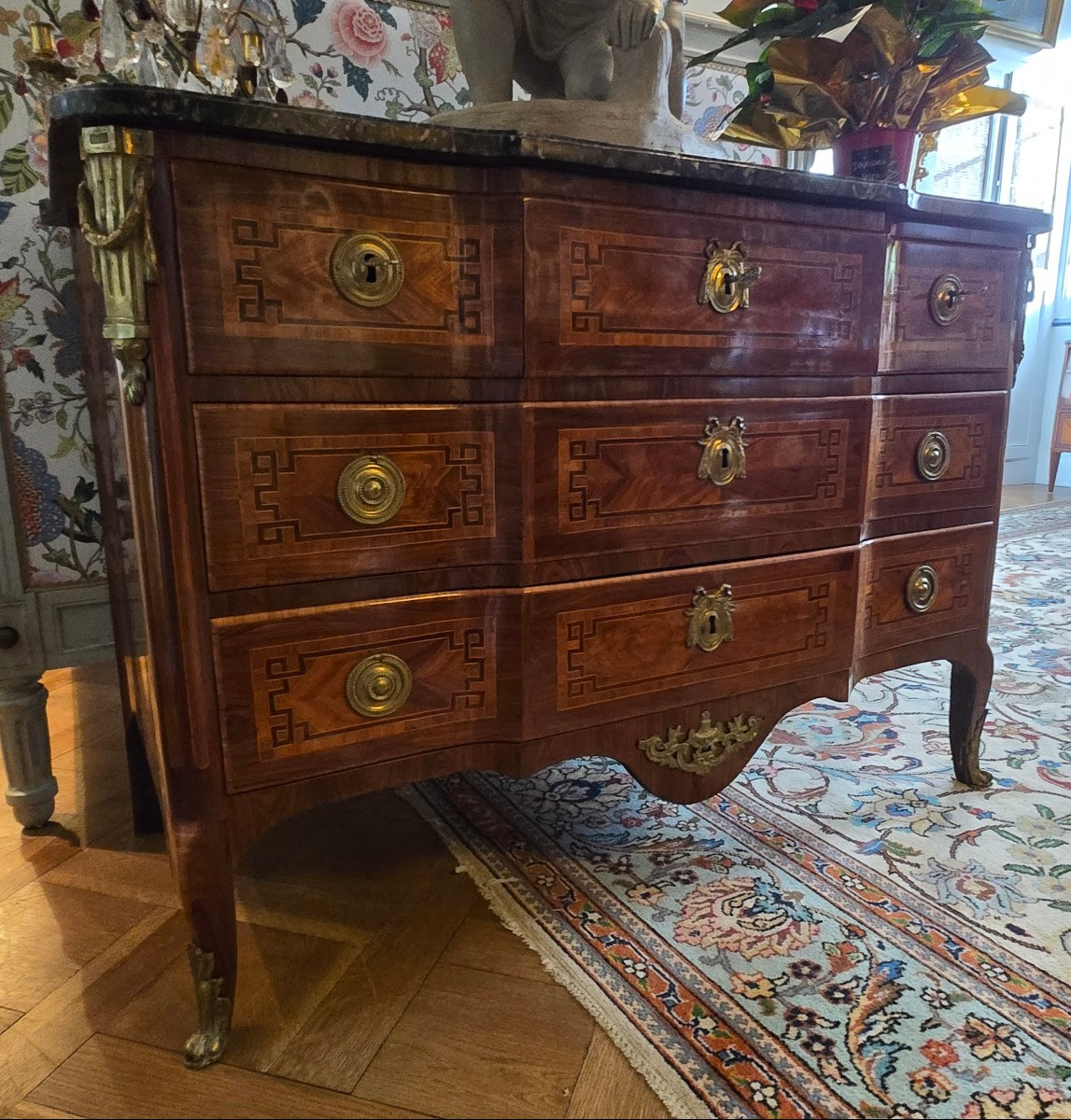
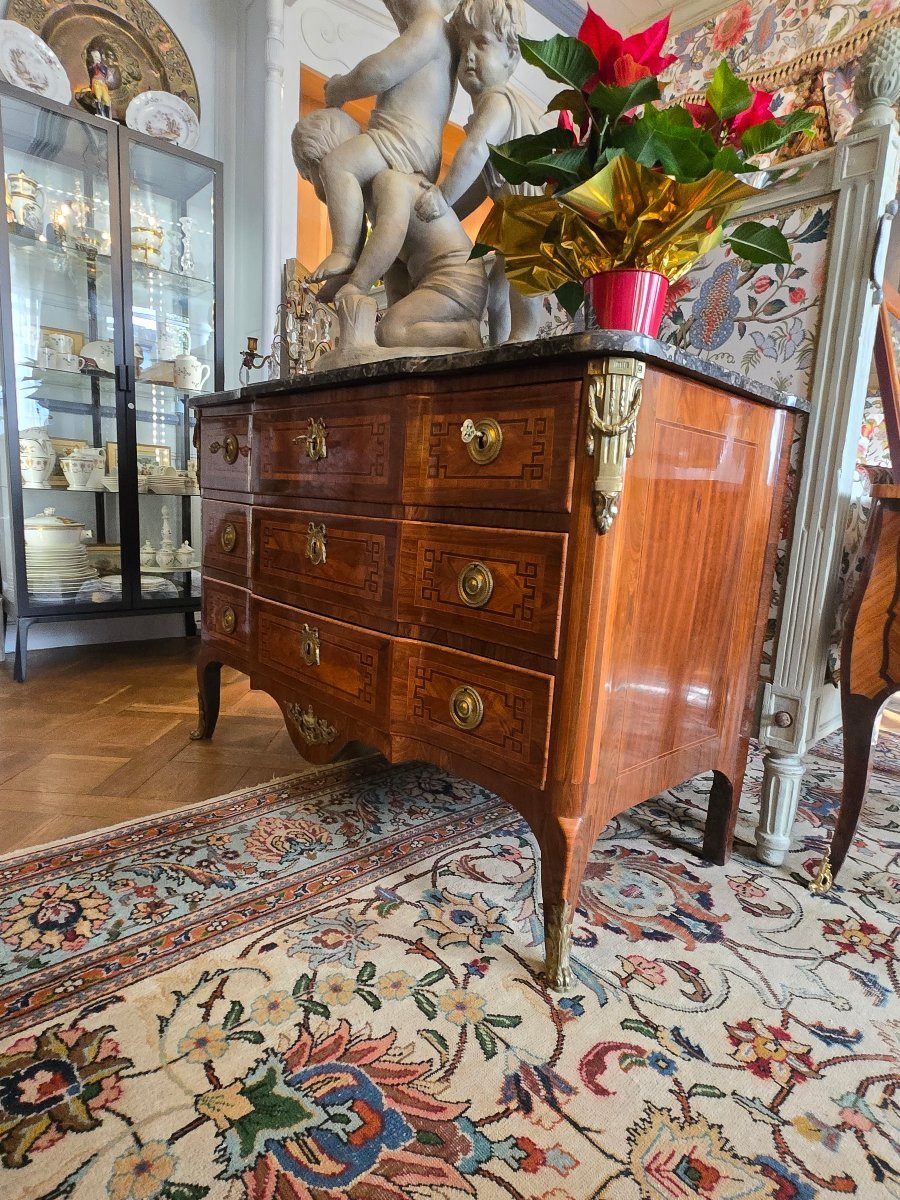
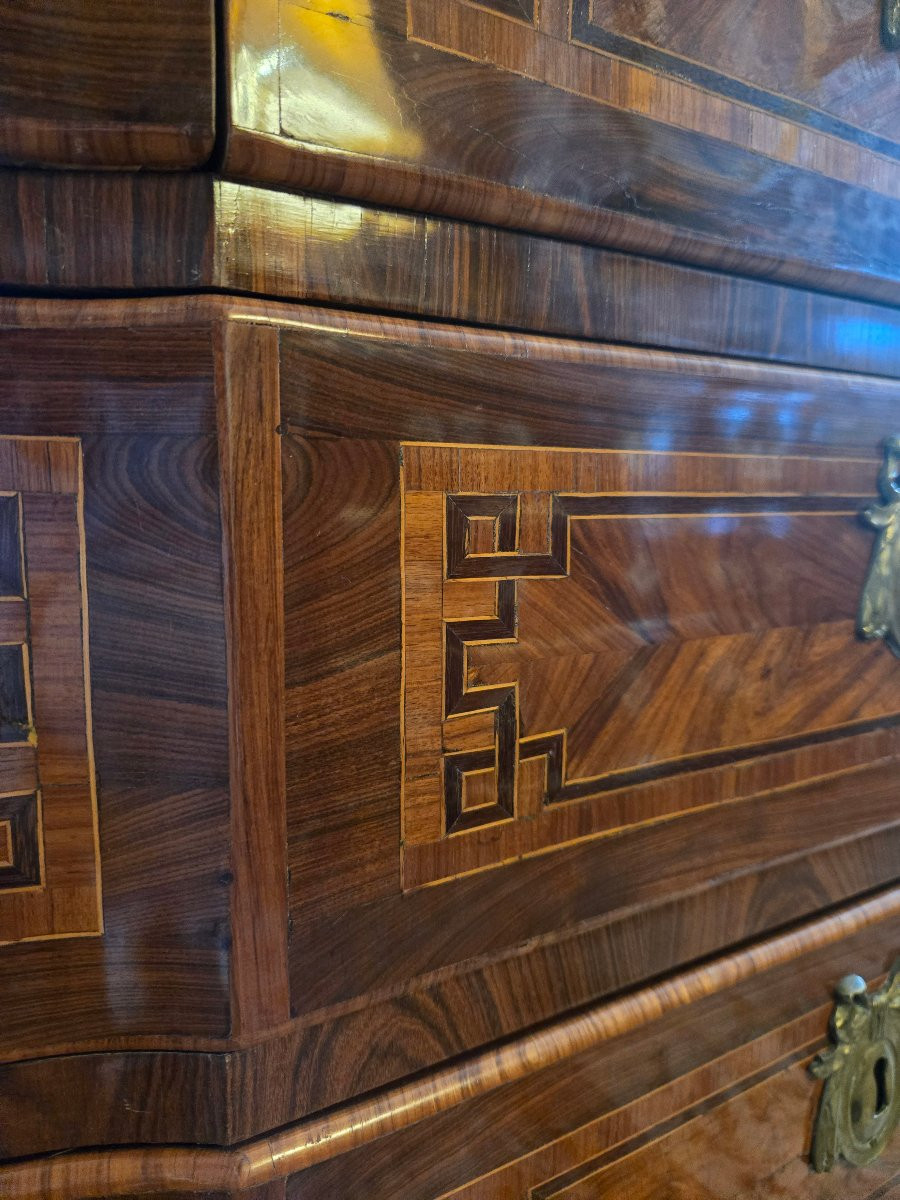
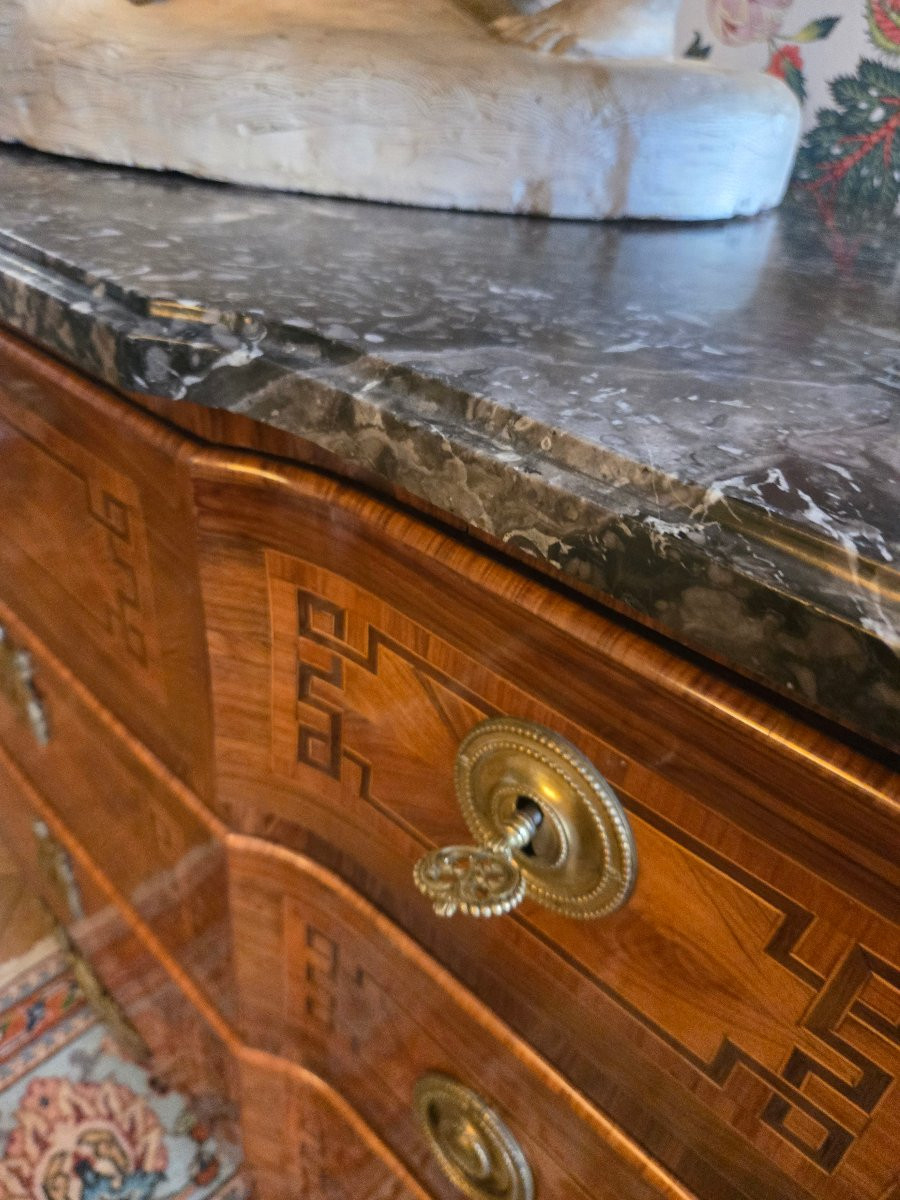
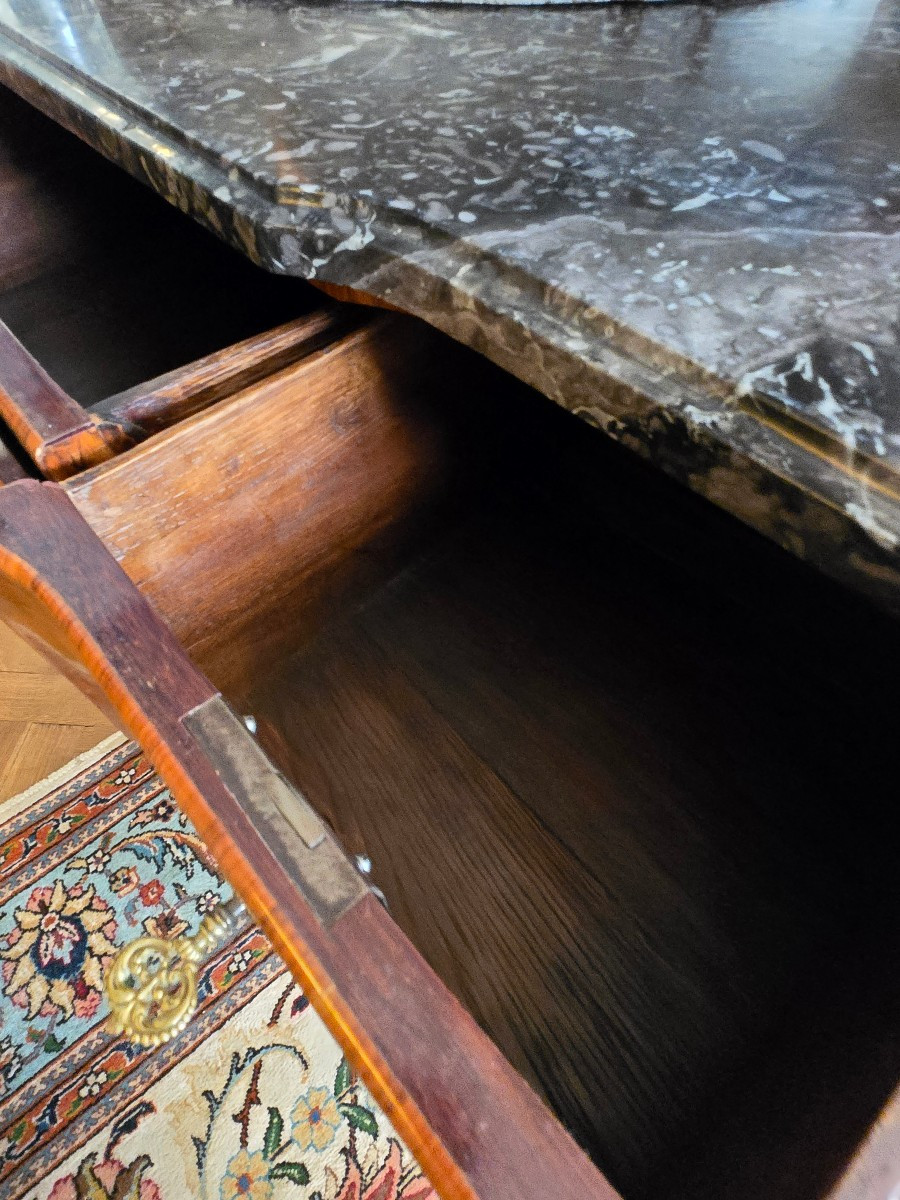
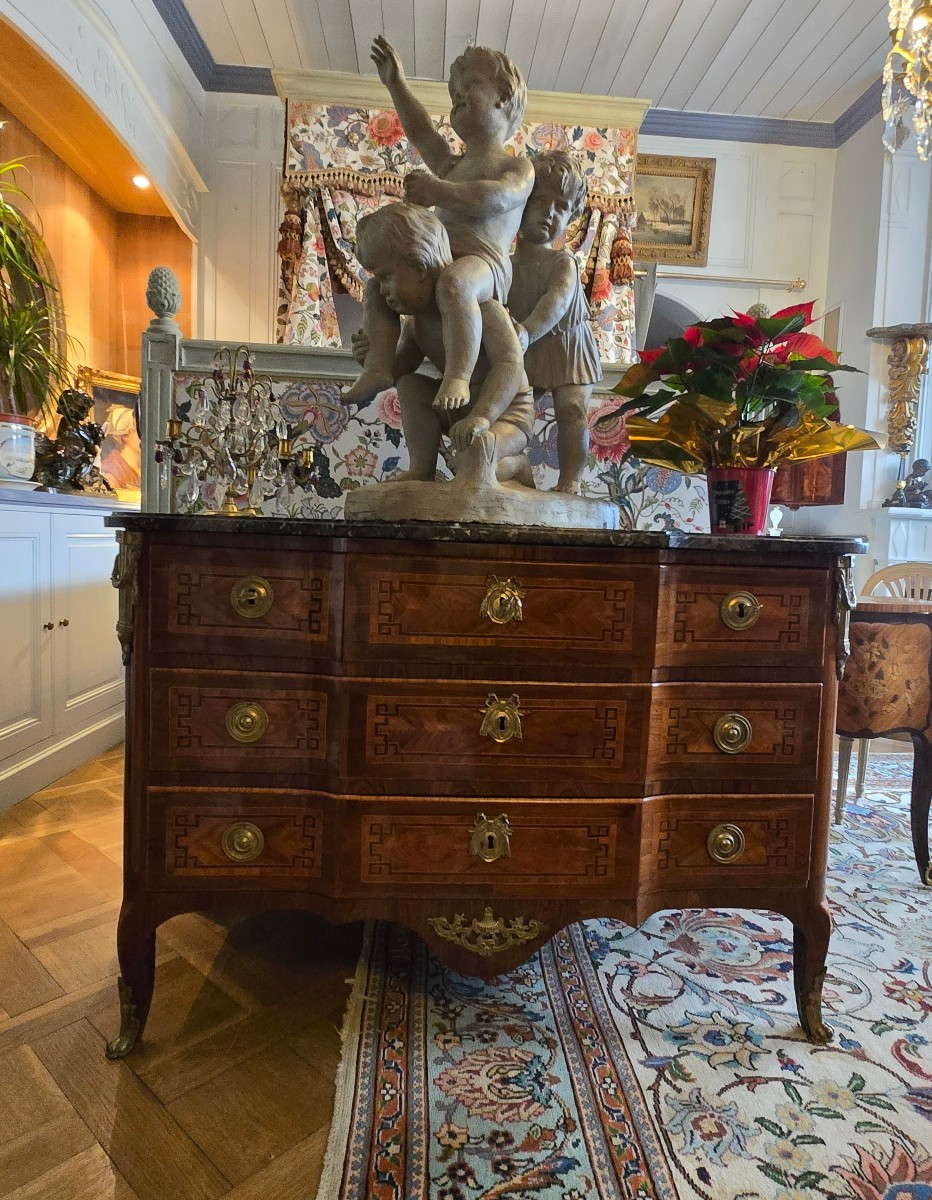
A beautiful and elegant Parisian commode from the end of Louis XV's reign, made around 1770, perfectly illustrating the Transition style, a key period in French cabinetmaking during which forms inherited from the Louis XV style coexisted with a fully Neoclassical decoration, foreshadowing the Louis XVI style. The commode opens at the front with five drawers: three in the frieze on the first row and two large drawers on the lower rows. It features a projecting edge, both at the front and the back, a more elaborate feature than flat commodes, widening the silhouette of the piece towards the rear and giving it a particularly elegant architectural presence. This more complex construction is characteristic of high-quality Parisian pieces from the Transition period. The structure still retains some Louis XV elements, notably the elegantly cabriole legs, fitted with gilt-bronze sabots decorated with lion's paws. In contrast, the decoration already reflects a decidedly neoclassical style: the commode is adorned with a remarkable Greek key pattern, emblematic of the taste for antiquity that took hold in Paris from the 1760s onward. The Greek key stringing is composed of amaranth, forming the dark motif, framed by two boxwood stringings, offering a contrast of great subtlety and revealing a perfect mastery of veneer work. The front uprights and rails are veneered in kingwood, while the false fluting adorning the corners—a clear indication of the Louis XVI style—is veneered in rosewood. The sides are veneered in kingwood, with wide central panels in satinwood, a typical choice for Parisian production, which favored plain or geometric veneers with a homogeneous decorative balance. The front is primarily veneered in rosewood, harmoniously combined with the kingwood and amaranth, offering beautiful chromatic contrasts. The chest of drawers rests on an oak and softwood frame, conforming to 18th-century Parisian practices. The drawers are entirely made of oak, with fine grain, demonstrating exceptional cabinetmaking skill, both in the frame's construction and the execution of the veneer. The chased and gilded bronze ornamentation is original and perfectly in keeping with the neoclassical style: keyhole escutcheons, drawer pulls on rosettes, and the ornamentation of the lower apron emphasize the geometric rigor and understated elegance of the whole. The chest is topped with its original thick, high-quality marble slab, molded with a groove that follows the contours of both the front and back. The marble is in perfect condition, without any damage, and contributes fully to the piece's noble character. Condition: The chest of drawers is presented in very good condition. The frame is entirely original, without any significant or invasive alterations or restoration. The piece retains a remarkable authenticity, with a well-preserved antique varnish that highlights the veneers and their contrasts. There are no missing parts. The commode has all its original, functional locks, along with later keys. The bronze mounts are original and in excellent condition. The entire piece testifies to meticulous care and respectful preservation, and comes from a very fine collection. Stylistic Attribution: The quality of its construction, the richness and precision of the veneering, the balance of its proportions, and the refined simplicity of its decoration place this commode squarely within the style of the great Parisian cabinetmakers of the Transition period, in the circle of masters such as Nicolas Petit, Claude-Charles Saunier, and Roussel, although it cannot be formally attributed to any one of them due to the absence of a maker's mark. This is a Parisian piece of exceptional quality, representative of the finest production from the end of Louis XV's reign, intended for a discerning clientele. Dimensions (to the marble top): Height: 88.5 cm; Back width: 129 cm; Depth: 60.5 cm
4 500 €
Period: 18th century
Style: Louis 15th - Transition
Condition: Excellent condition
Material: Wood marquetry
Reference (ID): 1694020
Availability: In stock
Print