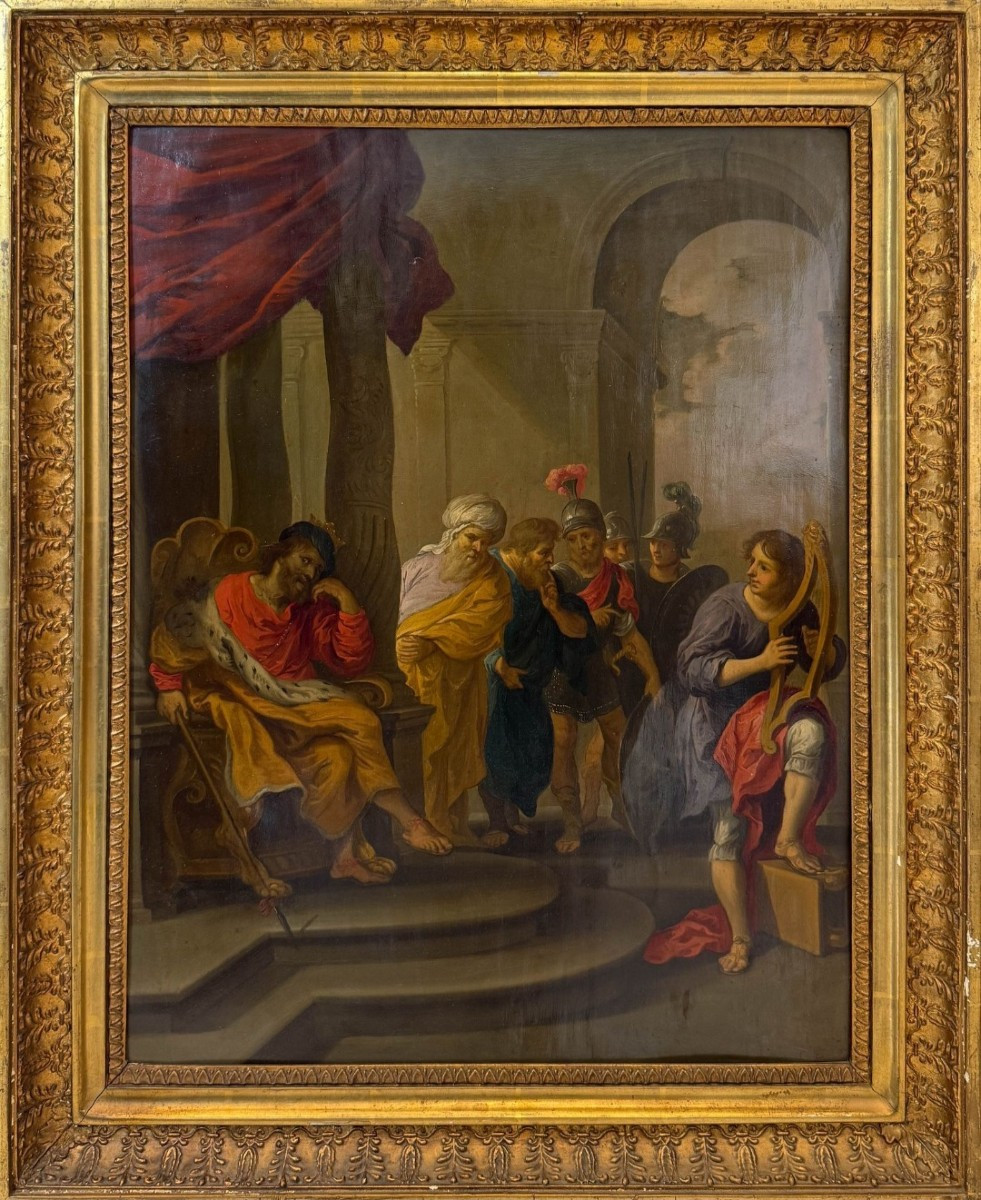
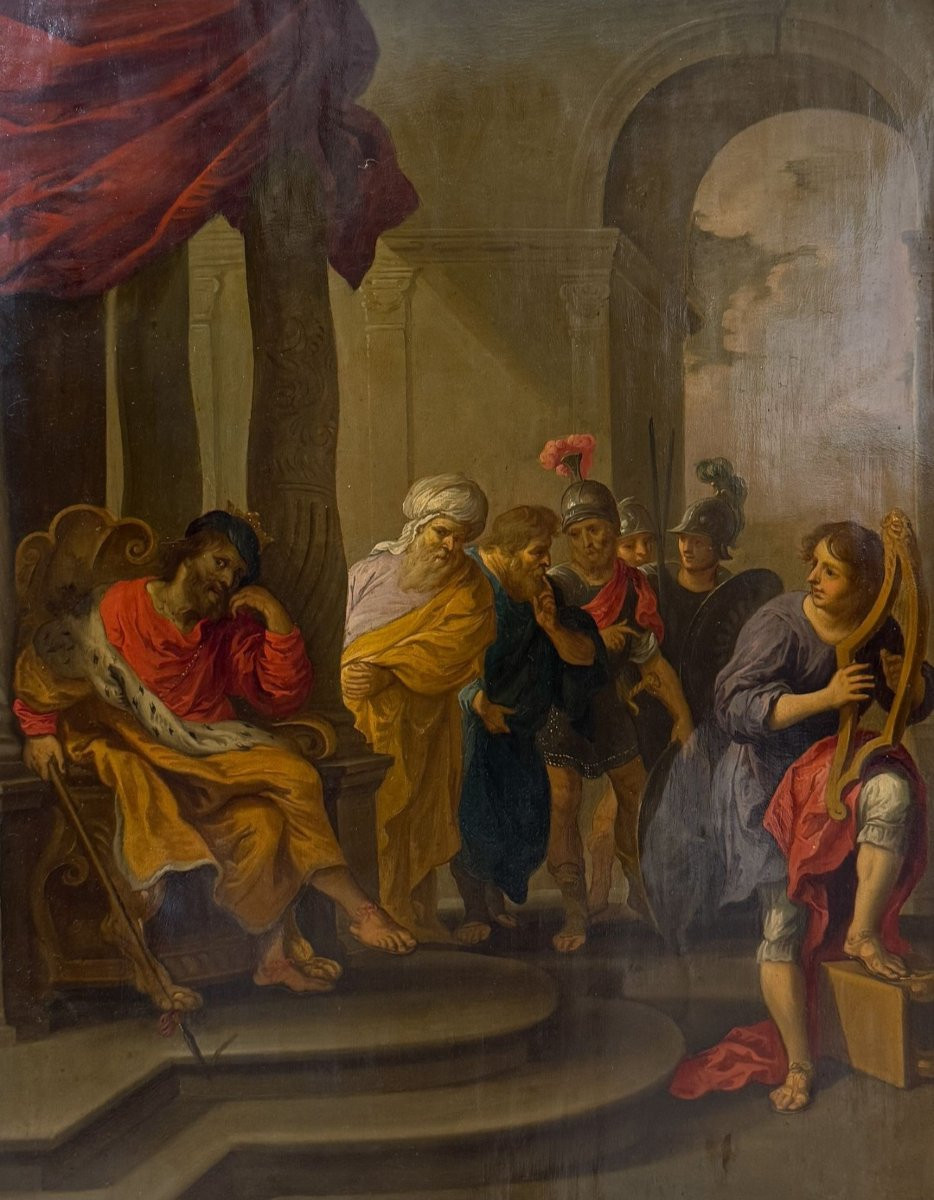
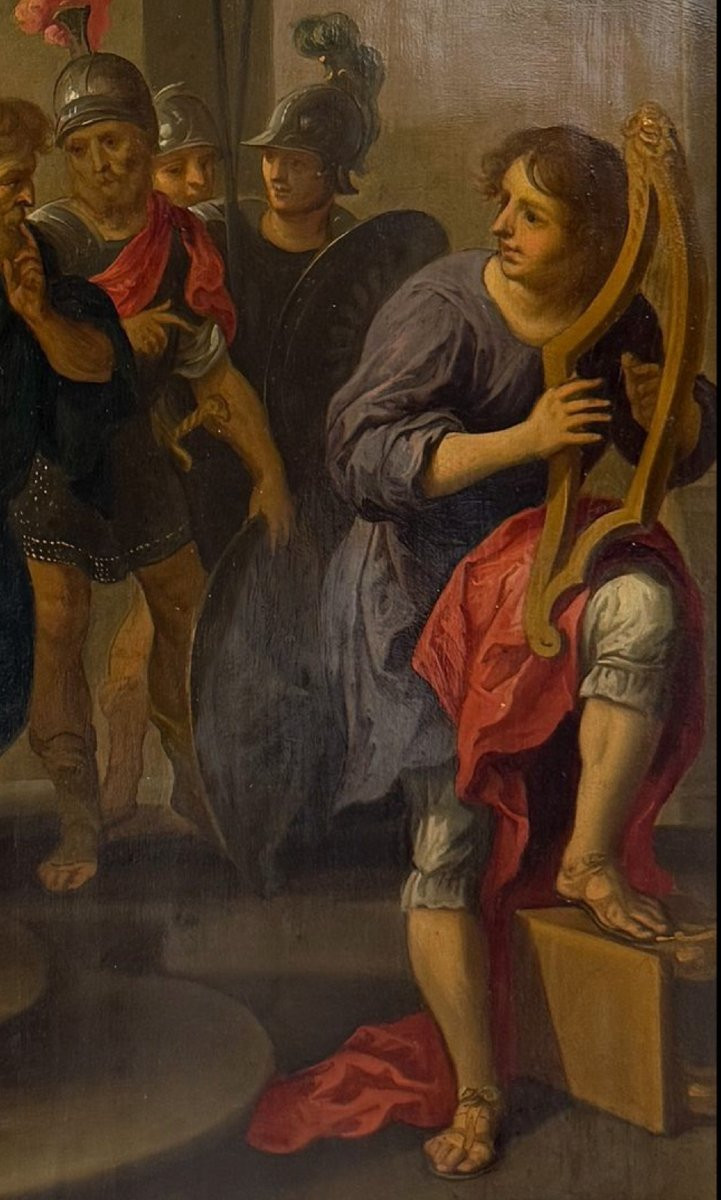
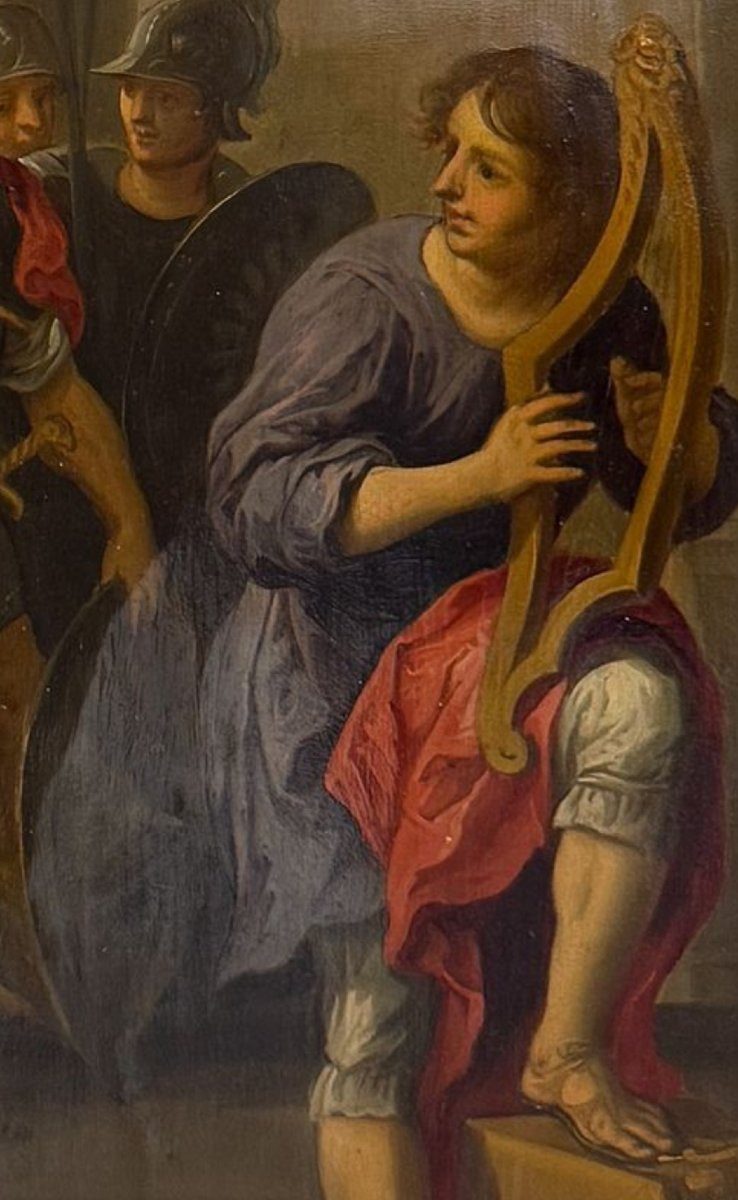
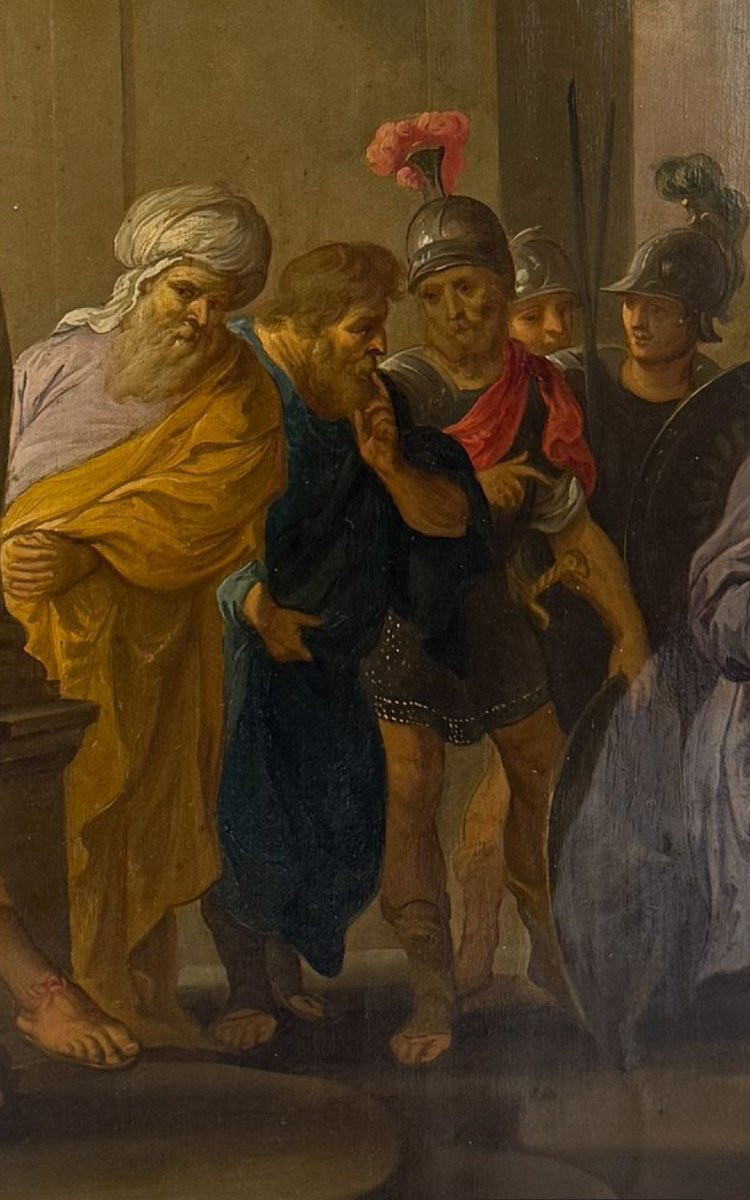
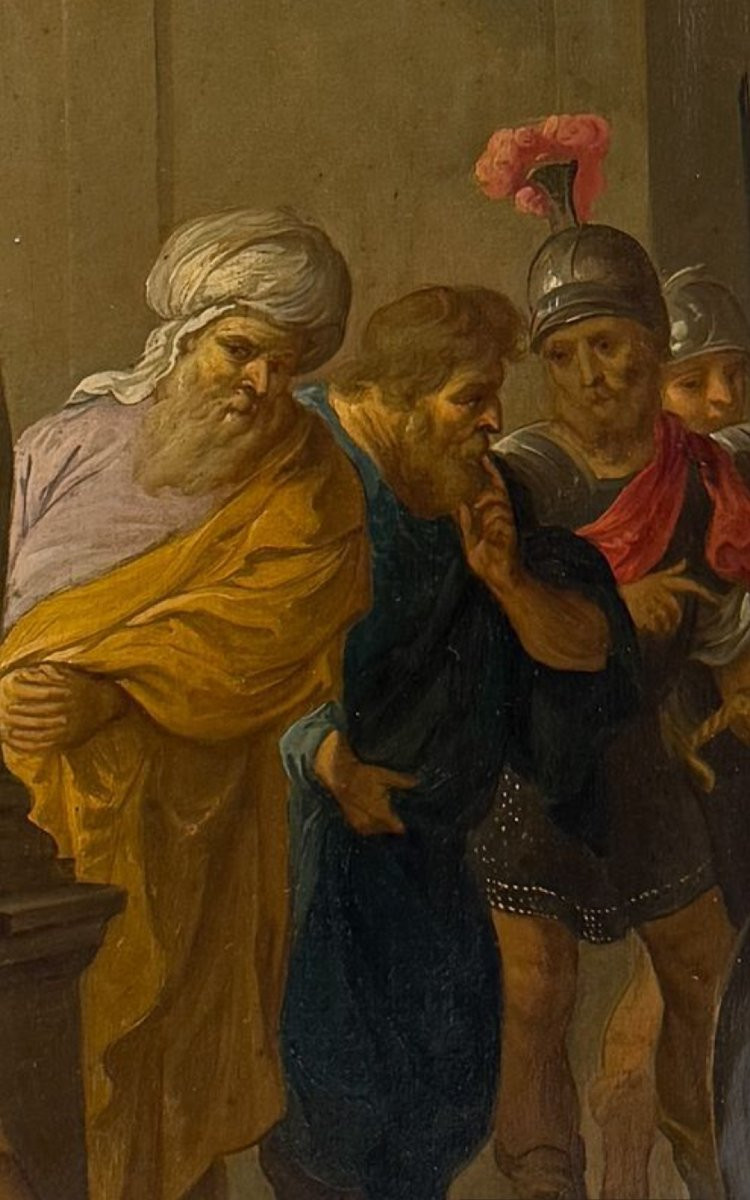
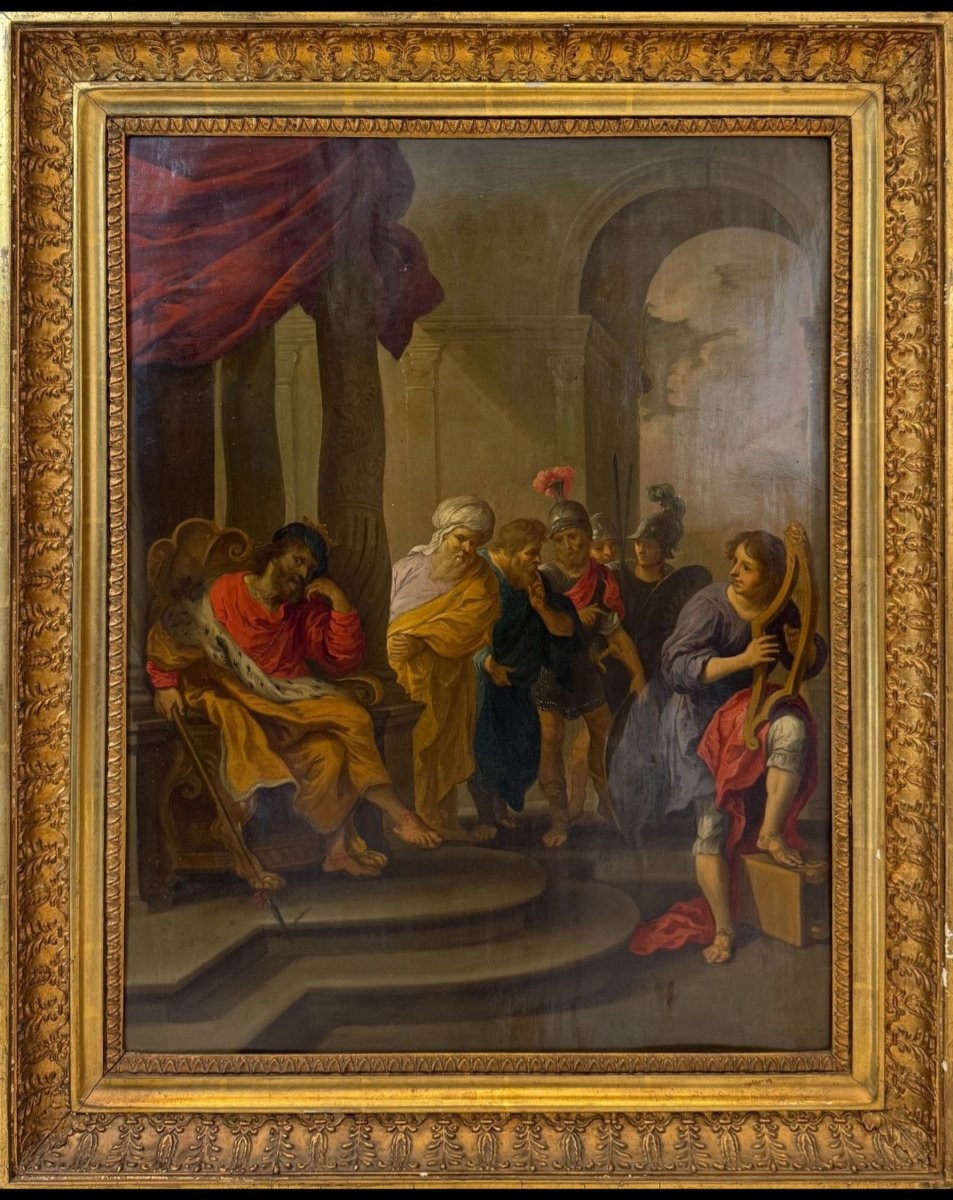


Erasmus Quellinus Ii, David Playing The Harp Before Saul, 17th Century Oil On Copper.
Artist: Erasmus Quellinus Ii(érasme Quellin Le Jeune,1607-1678)
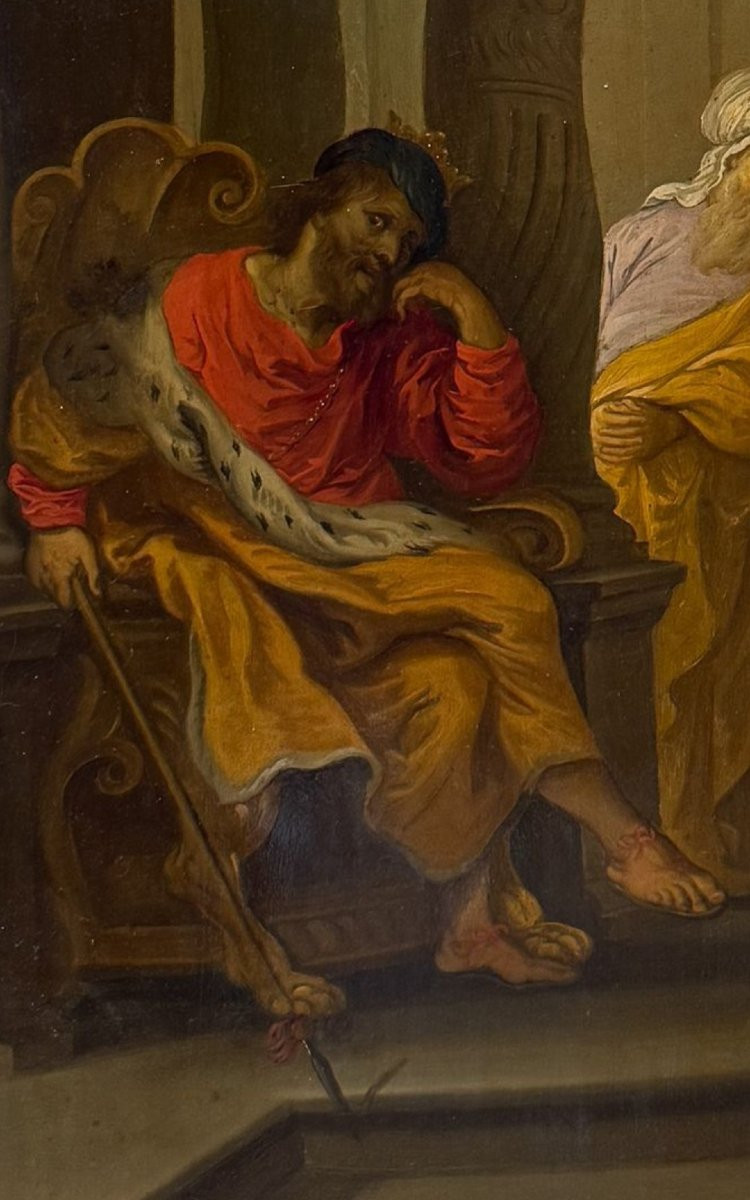
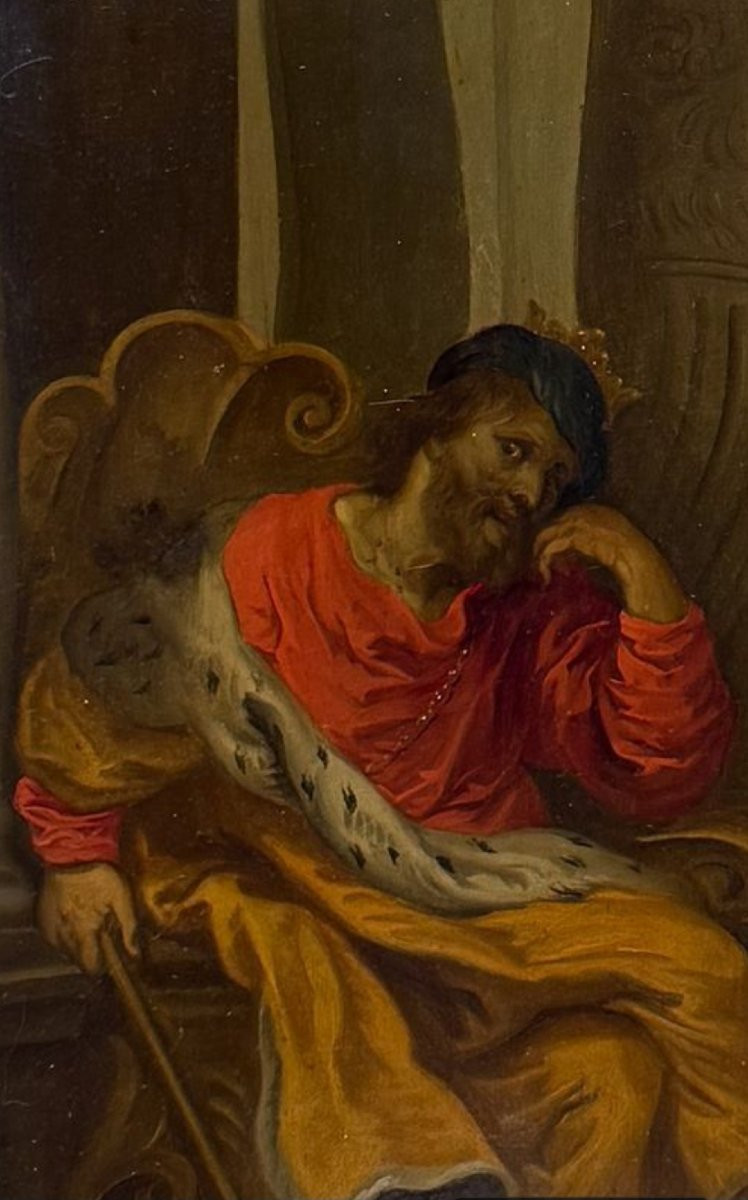
A superb 17th-century oil on copper, attributed to Erasmus Quellinus II (Erasmus Quellinus the Younger, 1607-1678), immortalizing the scene where David plays his harp to free King Saul from the evil spirit.
"Saul sent word to Jesse, 'Please let David remain in my service, for he has found favor in my sight.' Whenever the evil spirit was upon Saul, David would take the harp and play it with his hand. Then Saul, with his spear in his hand, would breathe easier and be relieved, and the evil spirit would depart from him." 1 Samuel 16.
In very fine condition for a 17th-century work.
Giltwood frame, carved with anthemions and an egg-and-dart frieze.
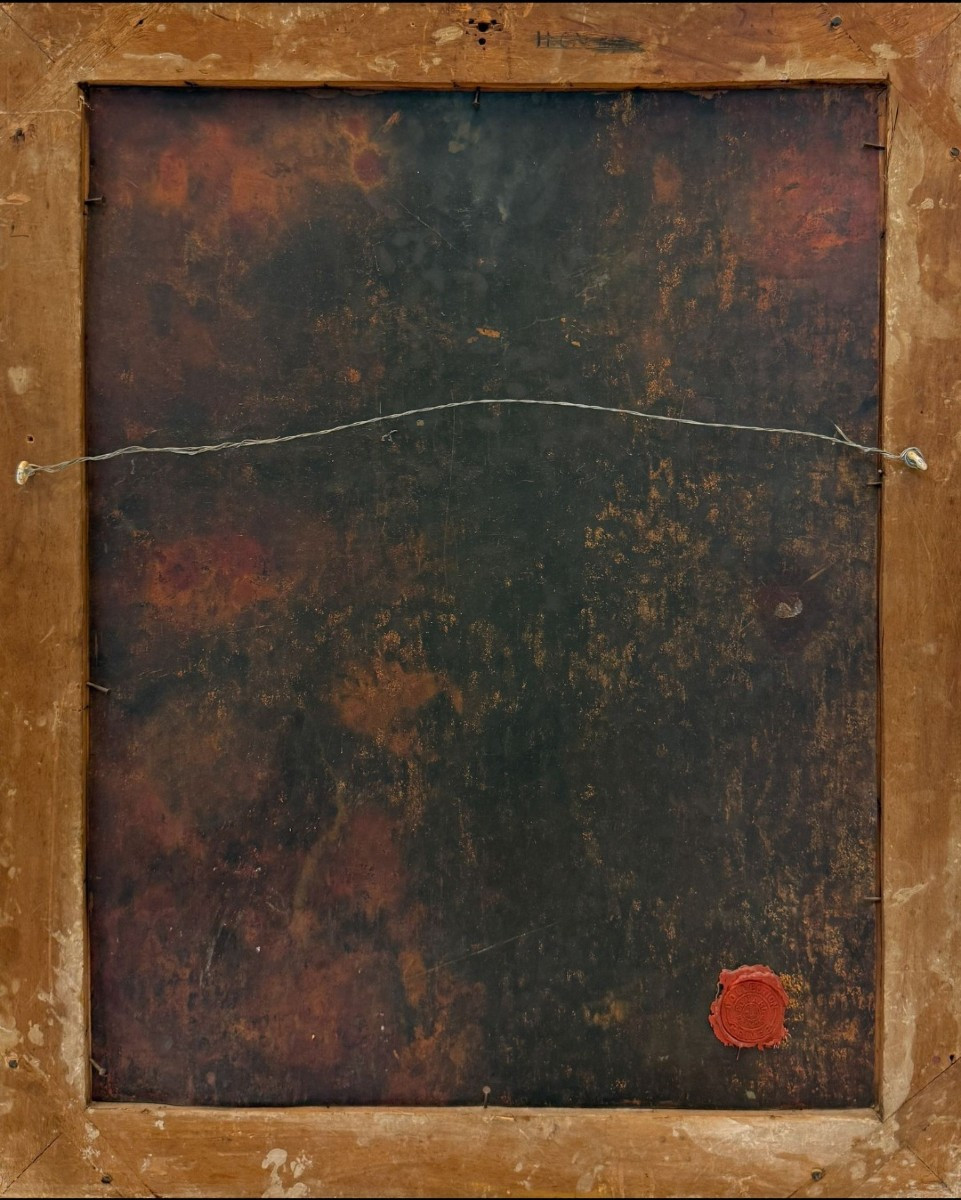
Wax seal: "Private Collection St. Trond."
Dimensions:
Excluding frame: 51 cm x 39.5 cm.
Framed: 65 cm × 55 cm.
Erasmus Quellinus II, or Erasmus Quellinus the Younger, belonged to a family of artists. Born in Antwerp and baptized in the cathedral church on November 22, 1607, his parents were the sculptor Erasmus Quellinus the Elder and Elisabeth van Uden. The Quellinus family had become one of Antwerp's leading artistic families, producing sculptors, painters, and engravers who developed careers in Flanders and abroad.
His father, Erasmus Quellinus the Elder, had left Sint-Truiden to settle in Antwerp. Both of Erasmus Quellinus the Younger's brothers were artists: Artus (1609–1668) was one of the leading Baroque sculptors in Flanders, and Hubertus (1619–1687) was an engraver.
In 1635, under Rubens' direction, Erasmus Quellinus II participated in the decoration of the streets of Antwerp for the solemn entry of the Cardinal-Infante. In 1636–1637, he decorated the pavilion of the Torre de la Parada in Madrid, based on Rubens' sketches, for King Philip IV of Spain.
In 1637, Rubens entrusted him with all his illustration projects for the Plantin printing house.
Among other works, he created the frontispiece for Marie de Medici's *Diverses pièces pour la défense de la royne mère du roy très chrestien Louis XIII*, a voluminous collection written by her chaplain, Mathieu de Morgues, and directed against Richelieu's policies.
Independently imitating Rubens, and achieving similar success in both history and portraiture, he succeeded him, after his death in 1640, as painter and decorator of the city of Antwerp.
He also worked for the municipalities of Ghent in 1653 and Amsterdam in 1656, where he decorated the ceiling of the Moses Room in the town hall.
Upon request, I can arrange delivery for you within France and internationally. Shipping arrangements depend on your location. Contact me to find out the cost and to arrange your delivery.
I ensure that particular care is taken to package and protect your purchases appropriately.
INSTAGRAM: @references.d.art
"Saul sent word to Jesse, 'Please let David remain in my service, for he has found favor in my sight.' Whenever the evil spirit was upon Saul, David would take the harp and play it with his hand. Then Saul, with his spear in his hand, would breathe easier and be relieved, and the evil spirit would depart from him." 1 Samuel 16.
In very fine condition for a 17th-century work.
Giltwood frame, carved with anthemions and an egg-and-dart frieze.
Wax seal: "Private Collection St. Trond."
Dimensions:
Excluding frame: 51 cm x 39.5 cm.
Framed: 65 cm × 55 cm.
Erasmus Quellinus II, or Erasmus Quellinus the Younger, belonged to a family of artists. Born in Antwerp and baptized in the cathedral church on November 22, 1607, his parents were the sculptor Erasmus Quellinus the Elder and Elisabeth van Uden. The Quellinus family had become one of Antwerp's leading artistic families, producing sculptors, painters, and engravers who developed careers in Flanders and abroad.
His father, Erasmus Quellinus the Elder, had left Sint-Truiden to settle in Antwerp. Both of Erasmus Quellinus the Younger's brothers were artists: Artus (1609–1668) was one of the leading Baroque sculptors in Flanders, and Hubertus (1619–1687) was an engraver.
In 1635, under Rubens' direction, Erasmus Quellinus II participated in the decoration of the streets of Antwerp for the solemn entry of the Cardinal-Infante. In 1636–1637, he decorated the pavilion of the Torre de la Parada in Madrid, based on Rubens' sketches, for King Philip IV of Spain.
In 1637, Rubens entrusted him with all his illustration projects for the Plantin printing house.
Among other works, he created the frontispiece for Marie de Medici's *Diverses pièces pour la défense de la royne mère du roy très chrestien Louis XIII*, a voluminous collection written by her chaplain, Mathieu de Morgues, and directed against Richelieu's policies.
Independently imitating Rubens, and achieving similar success in both history and portraiture, he succeeded him, after his death in 1640, as painter and decorator of the city of Antwerp.
He also worked for the municipalities of Ghent in 1653 and Amsterdam in 1656, where he decorated the ceiling of the Moses Room in the town hall.
Upon request, I can arrange delivery for you within France and internationally. Shipping arrangements depend on your location. Contact me to find out the cost and to arrange your delivery.
I ensure that particular care is taken to package and protect your purchases appropriately.
INSTAGRAM: @references.d.art
9 500 €
Period: 17th century
Style: Renaissance, Louis 13th
Condition: Good condition
Material: Oil painting on copper
Width: 55 cm
Height: 65 cm
Reference (ID): 1657772
Availability: In stock
Print