

Royal Sèvres Manufactory, Collection Of The Marquise De Pompadour, 1759.
Artist: Pierre-antoine Mérault, Dit L'aîné (actif à La Manufacture De 1754-1791)
Exceptional Lot: From the Personal Collection of the Marquise de PompadourROYAL MANUFACTURE OF SÈVRES, YEAR 1759.
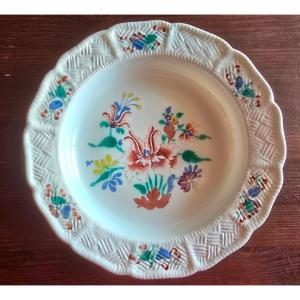
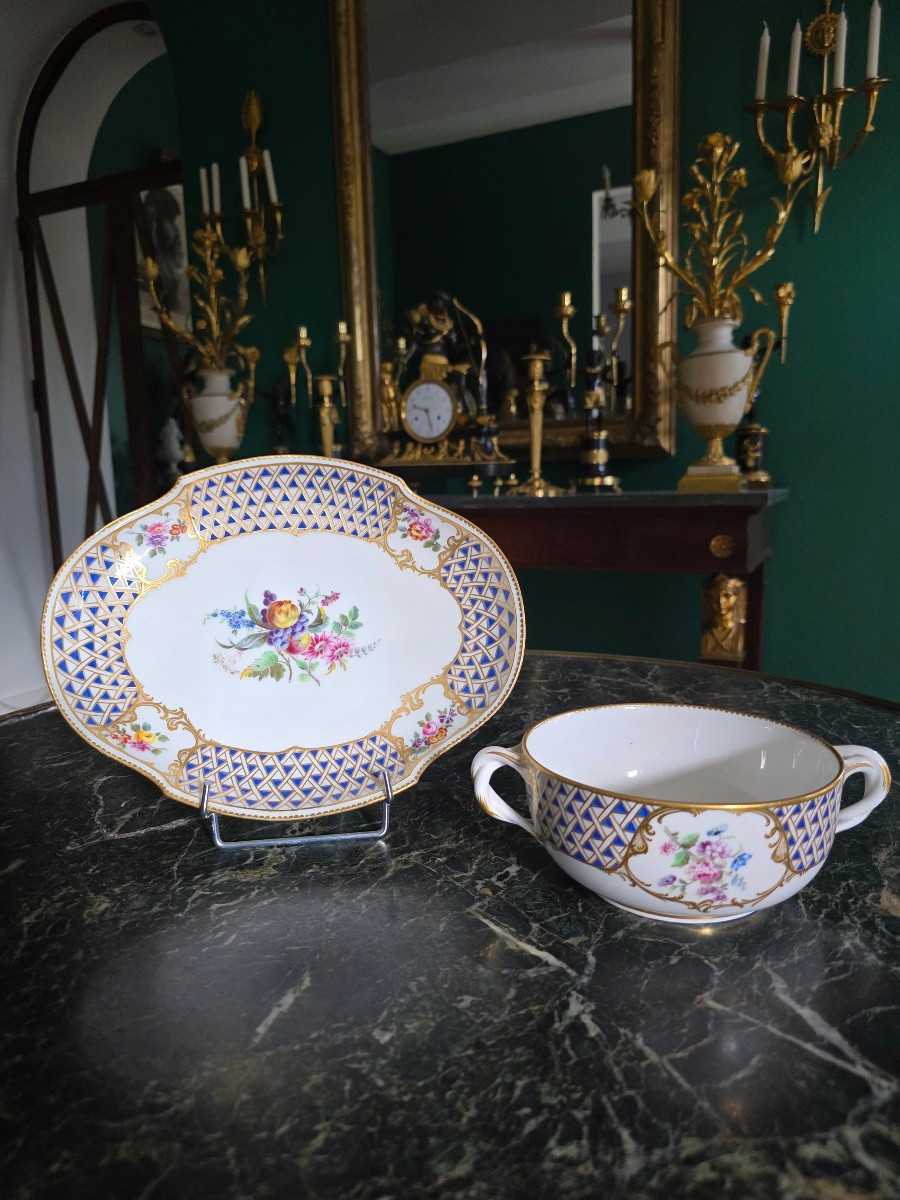
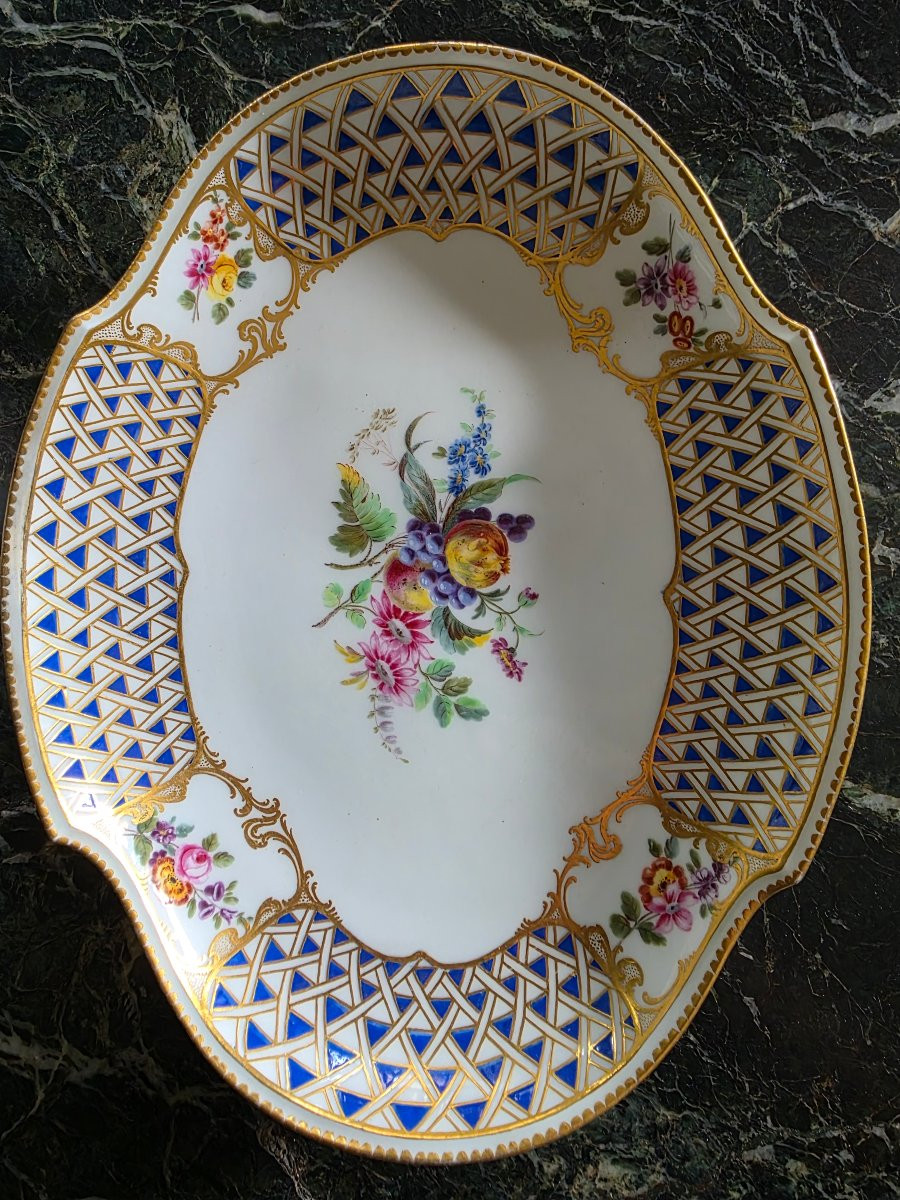
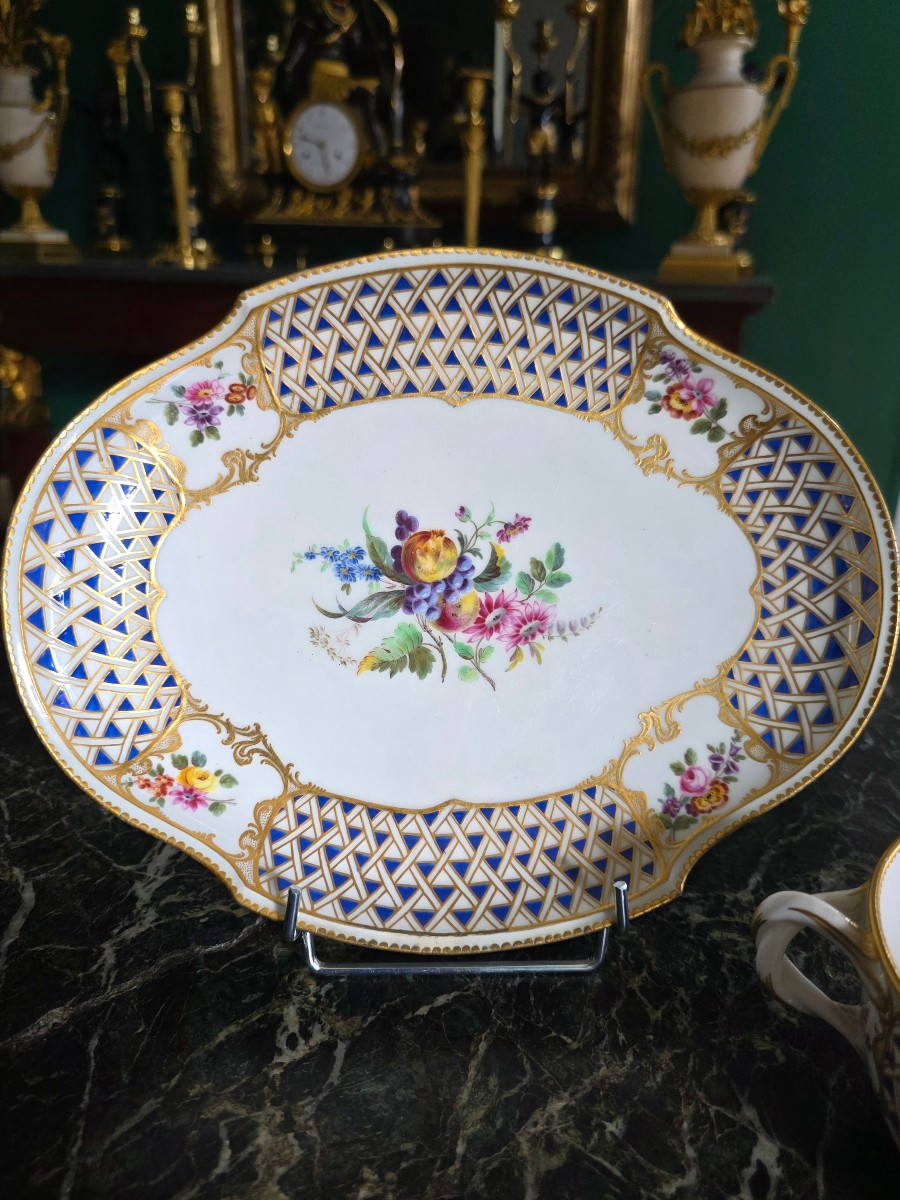
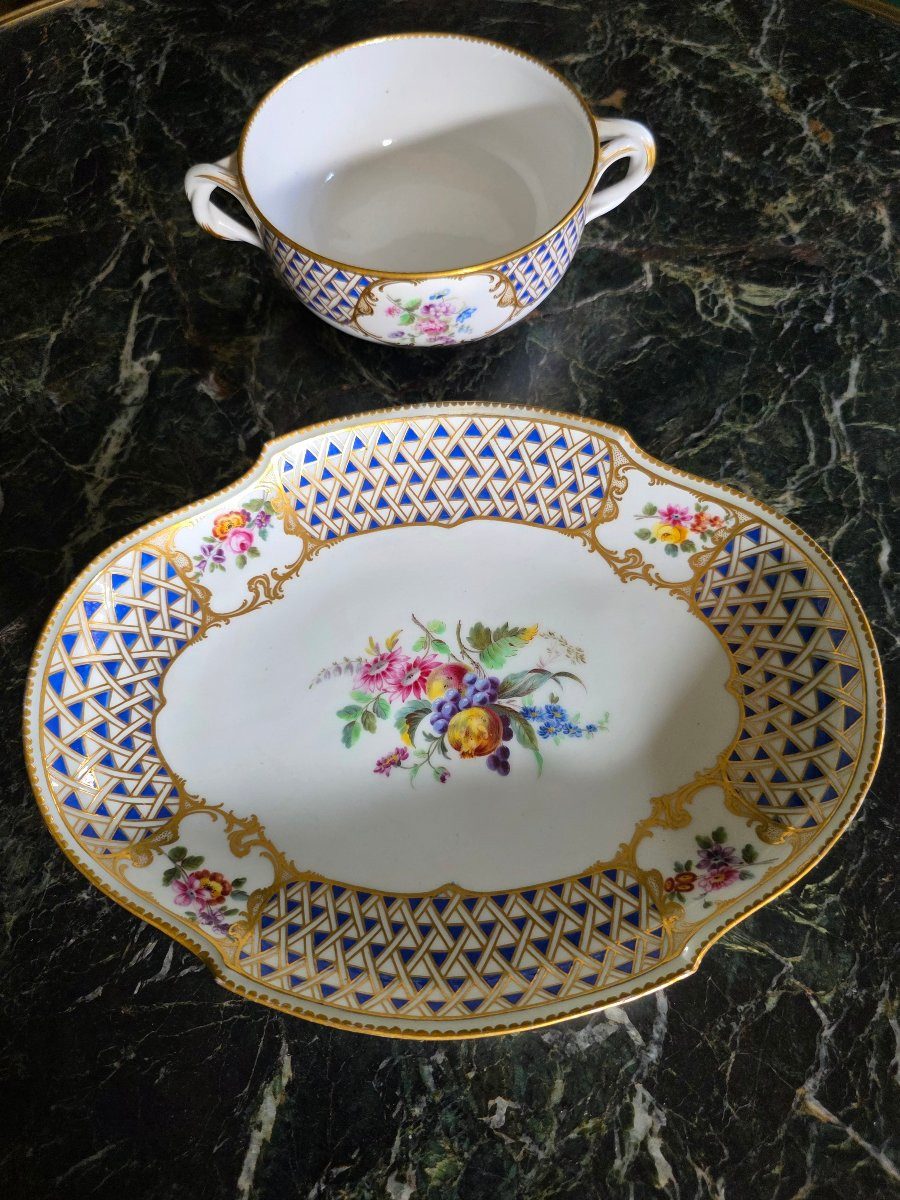
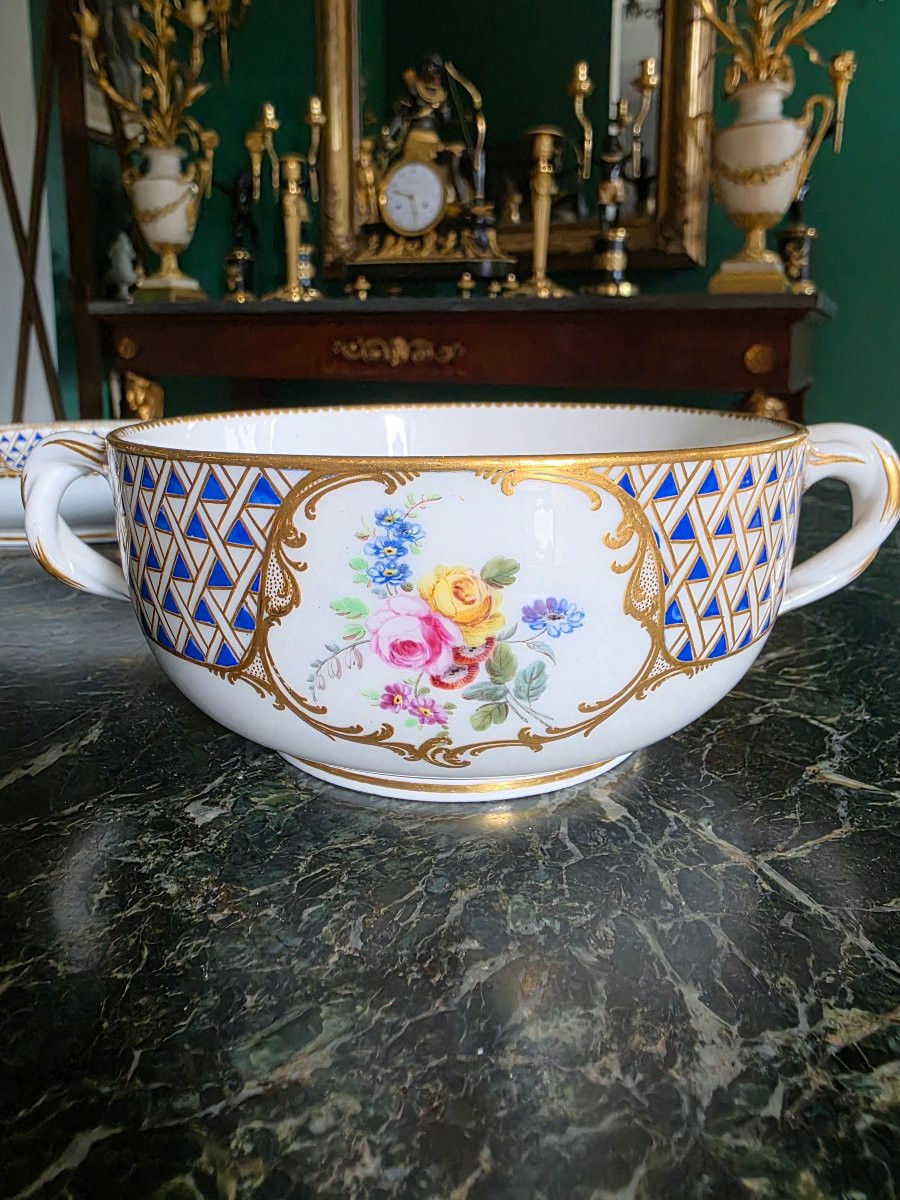
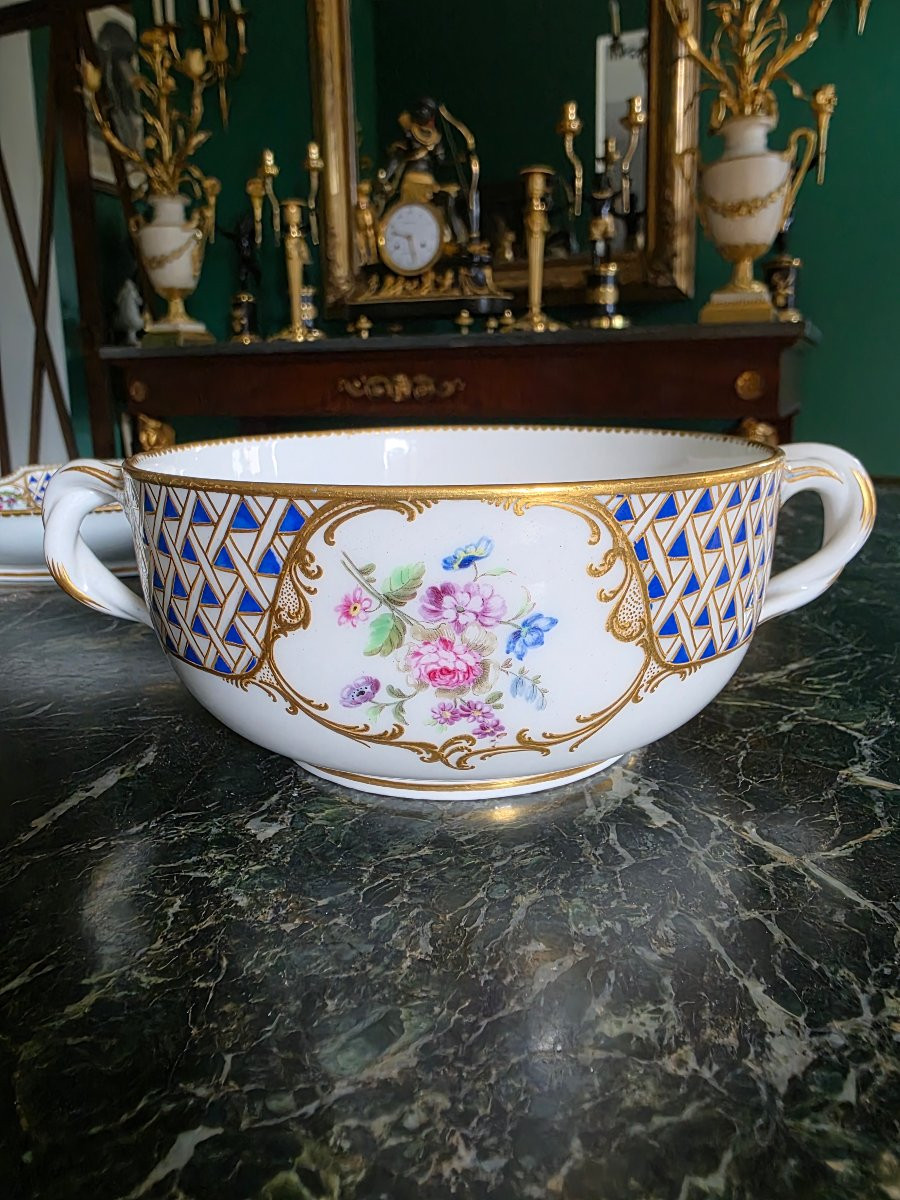
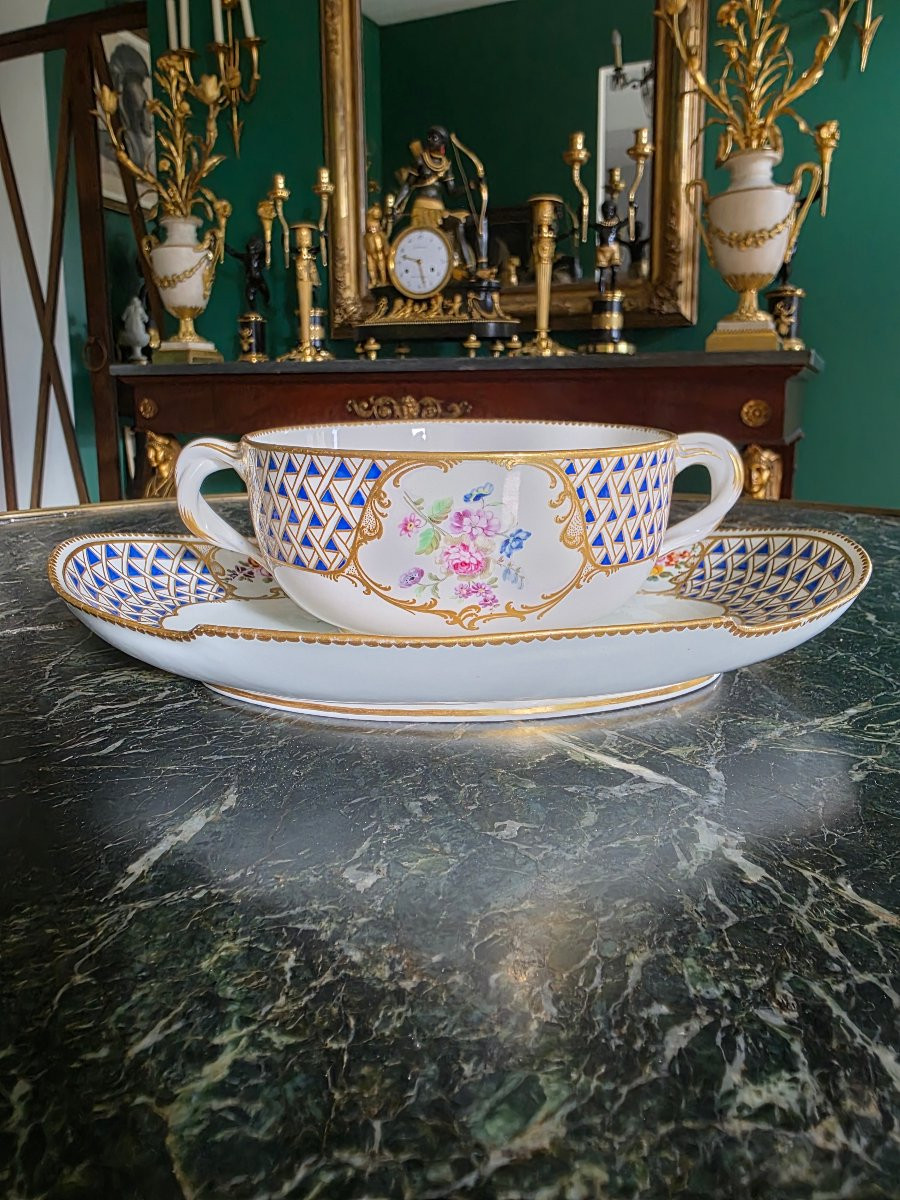
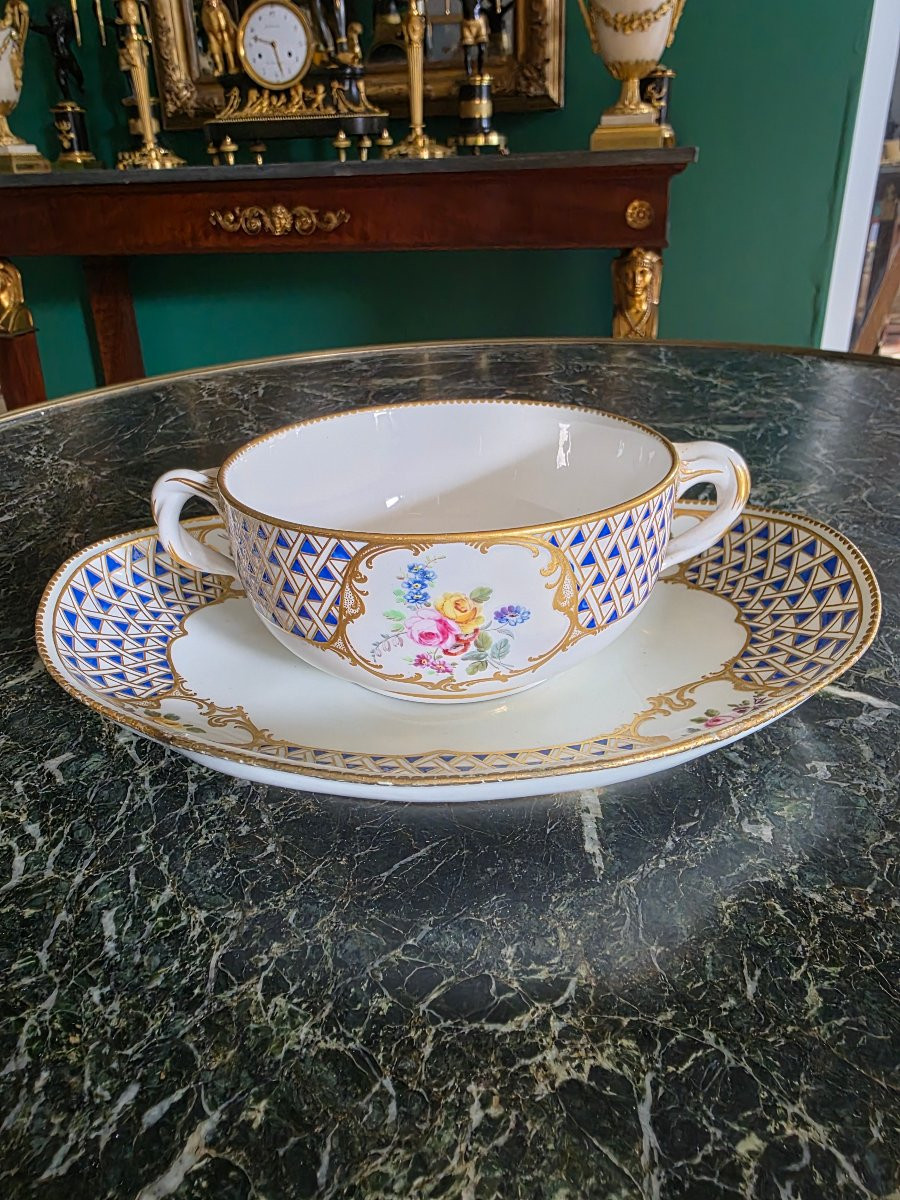
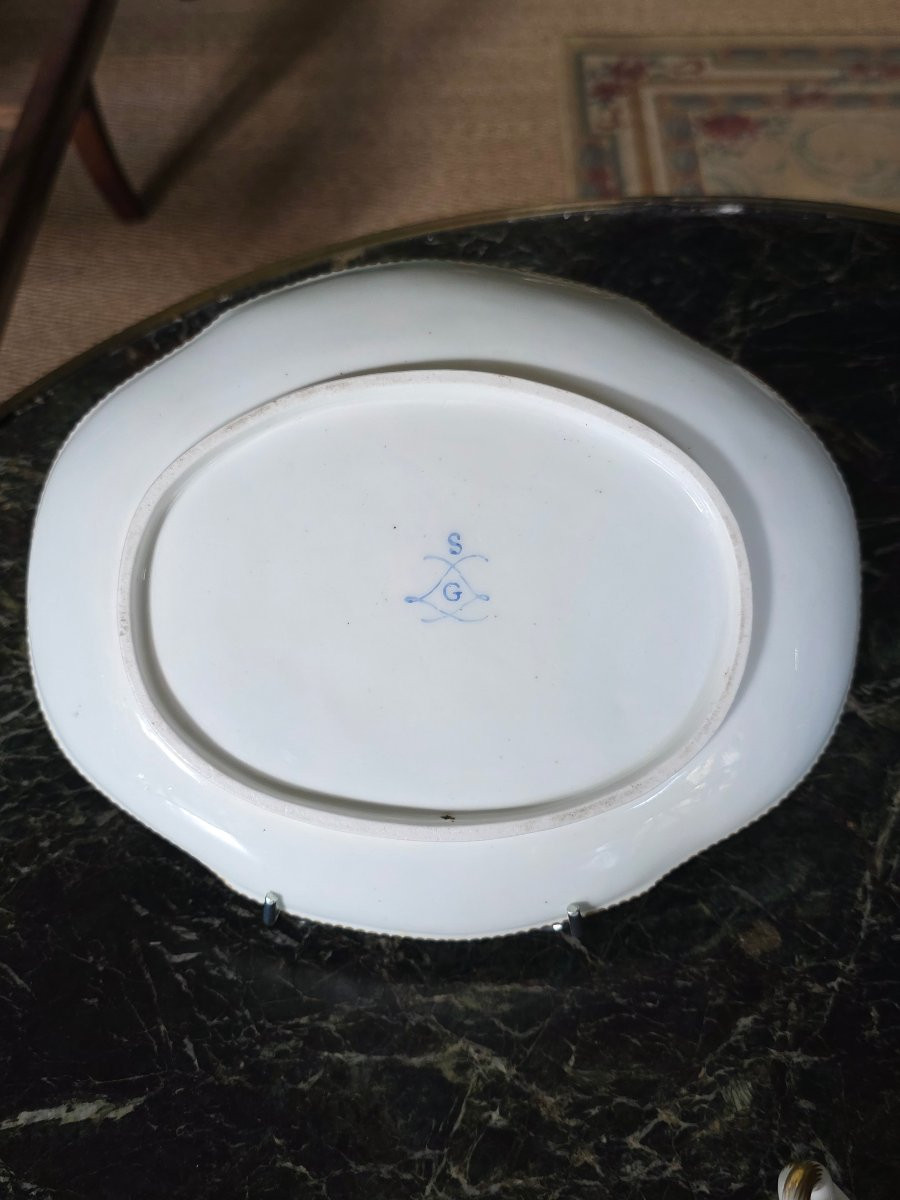
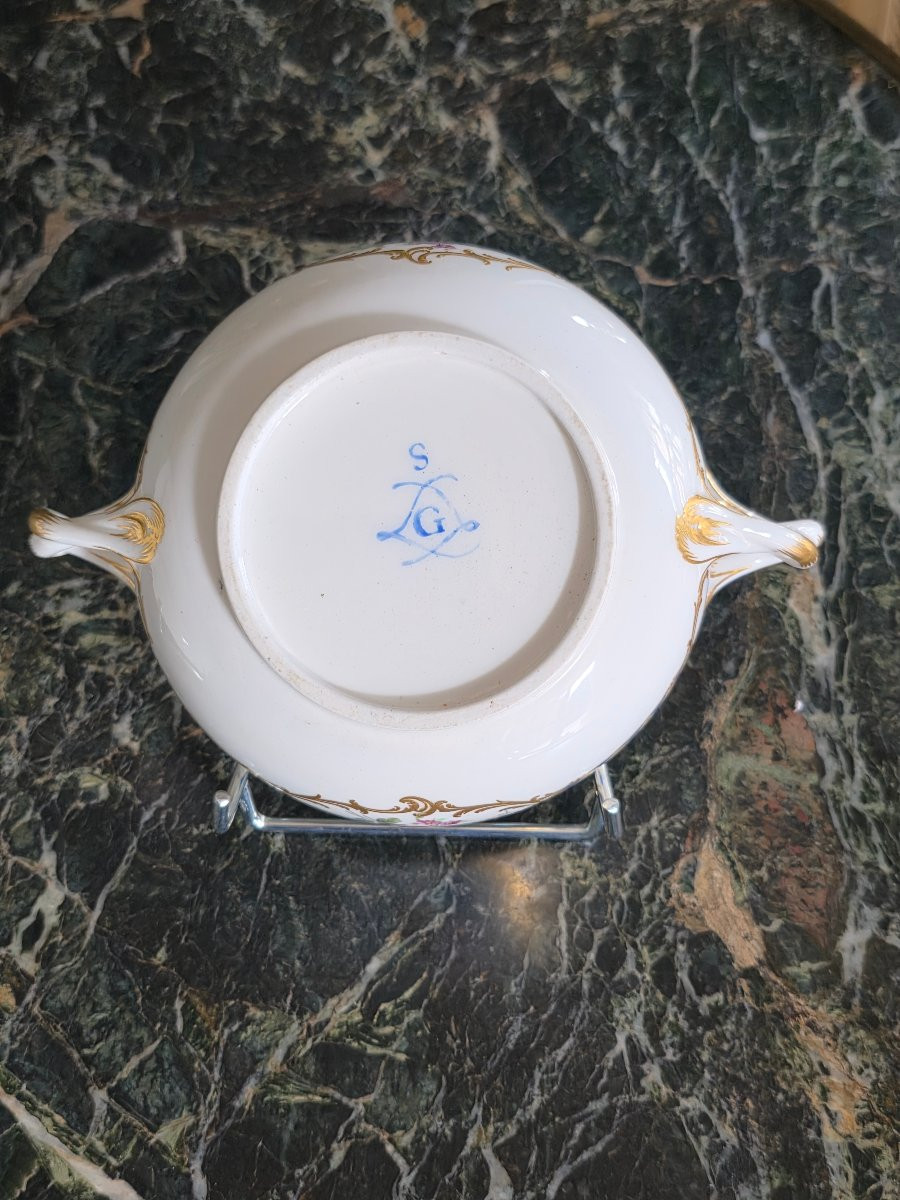
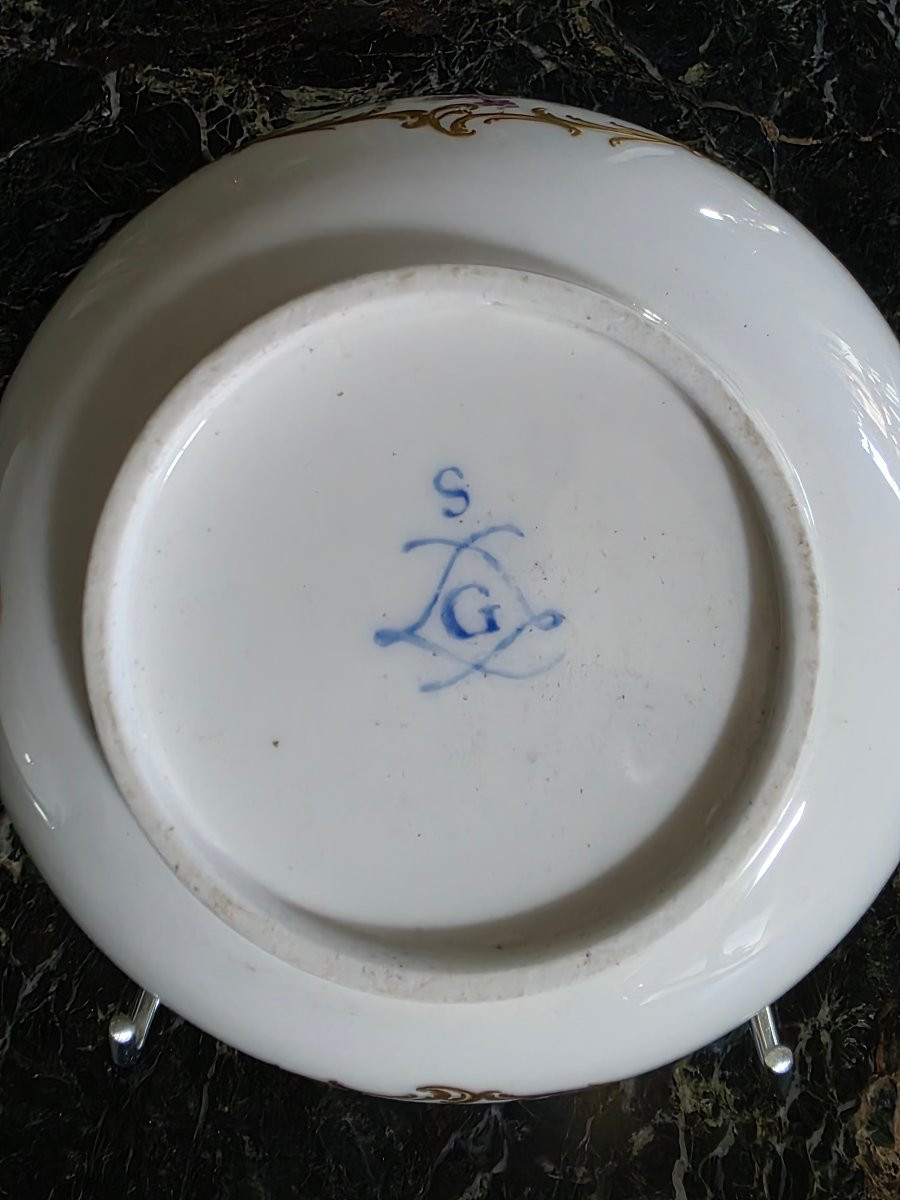
An ensemble comprising a circular broth bowl (écuelle à bouillon), featuring two lateral scroll handles with acanthus leaves, and its matching oval lobed stand in Sèvres soft-paste porcelain (characterized by its milky whiteness and the depth of its enamels).Marks: Located under the base of each piece: the interlaced "L"s of the Royal Manufacture, the date-letter "G" for the year 1759, and the painter's mark "S" for Pierre-Antoine Mérault l’Aîné.
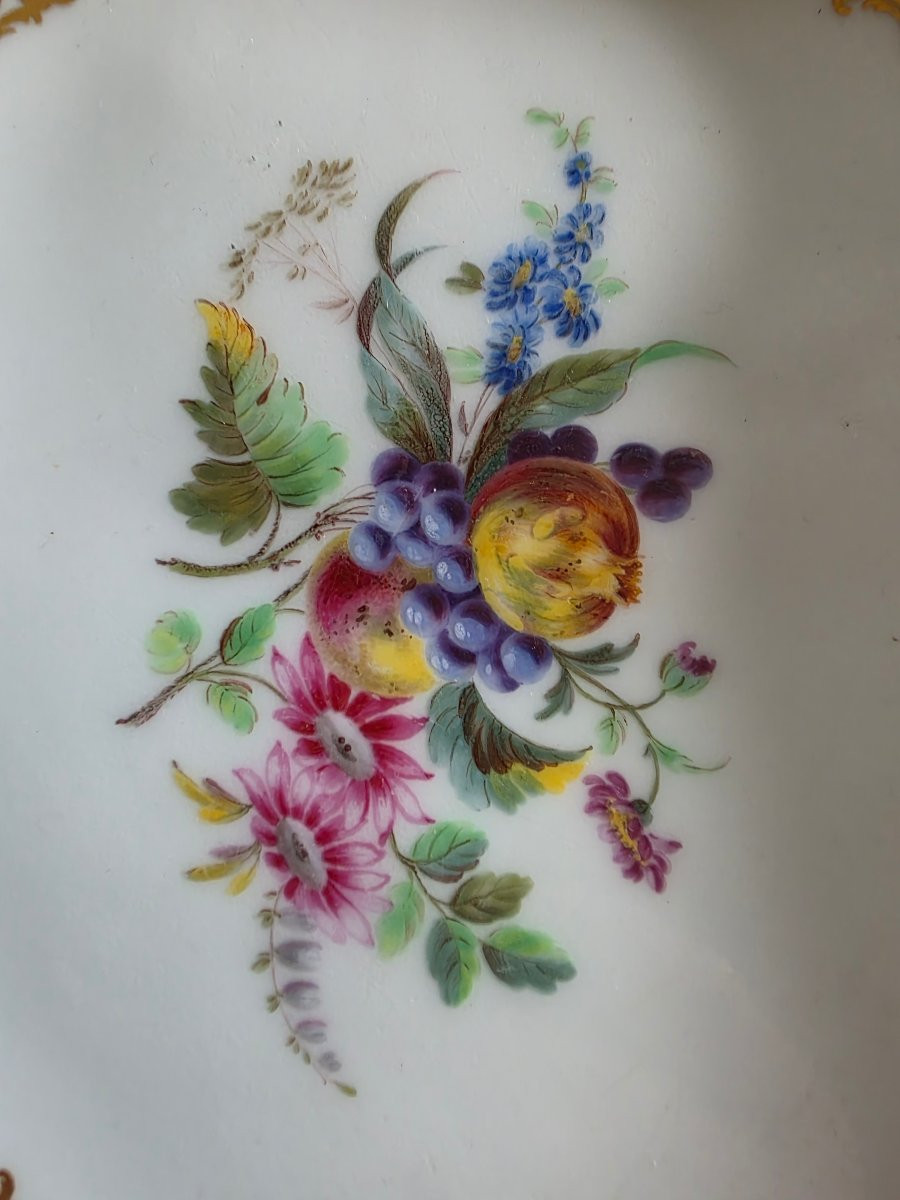
Decoration and ArtistryThe decoration is of extreme refinement, belonging to the highly sought-after category of "mosaïque" or "trellis" patterns.The Network: A geometric structure of blue fillets crossing to form diamonds, each intersection punctuated by a burnished gold dot in relief.The Reserves: Large polylobed cartouches, outlined by gold scrolls, house bouquets of flowers painted "au naturel." One can distinguish heirloom roses, tulips, anemones, and cornflowers, painted with the virtuosity unique to Mérault l’Aîné, one of Sèvres' most illustrious flower painters.The Gilding: Richly applied to the handles, the "dent de loup" (wolf-tooth) borders, and the frames of the reserves, reflecting the splendor of productions intended for the Royal Court.
Historical SignificanceThis piece is not merely a masterpiece of ceramic art; it is a privileged witness to French history. Thanks to research conducted in the Sèvres Manufacture Archives (Sales Register Vy 3, folio 45v), this set is identified as part of the personal purchases of Jeanne-Antoinette Poisson, Marquise de POMPADOUR.The bowl and its stand were acquired by Louis XV's favorite in December 1760 for the sum of 108 livres. The Marquise, the true patron of the Sèvres manufacture (which she had transferred near her Château de Bellevue), paid particular attention to these intimate objects that accompanied her daily life at Versailles or the Château de Ménars.
A Provenance of DistinctionIt is rare to link an object so intimately to the "Godmother" of French porcelain. The Marquise de Pompadour was not a mere client; she is the reason Sèvres became the most prestigious manufacture in the world.The écuelle was a very personal object in the 18th century, used for morning broth or light refreshments in the petits appartements. Knowing this piece was purchased in December 1760 allows us to envision it in the favorite's daily life during a period when she was fighting to maintain her political influence while cultivating her taste for the arts.
The traceability in the cash sales registers (Vy 3, f° 45v) proves this was either a direct commission or an immediate "heart-choice" during an exhibition. At this time, she was spending fortunes to encourage the Manufacture to surpass the productions of Meissen (Germany).
The Master Painter: Pierre-Antoine MÉRAULT l'AînéThe choice of Mérault (active 1754–1791) for this piece was no coincidence. He was a pillar of the Manufacture for nearly forty years and the preferred painter for the Marquise’s commissions.The Rococo Style: Unlike more stylized later designs, Mérault excelled in the "Rocaille" style—asymmetrical, vivid bouquets with subtle color gradients.
Technical Precision: The blue trellis required an absolutely steady hand; the slightest error in applying the blue before firing was irreparable.Legacy: His works are held in the world's greatest collections, including the Louvre, the Metropolitan Museum of Art (New York), and the Victoria & Albert Museum (London).
Condition: Very fine overall condition, with original gilding of remarkable freshness. Presented without its cover, the set nonetheless retains all its splendor and historical value.
Dimensions: This is the "1st size" (1ère grandeur) model.Oval Stand: Length 26 cm / Width 21 cm.Bowl: Rim diameter 14 cm / Width including handles 19.5 cm.
Acknowledgments:Our thanks to Mrs. Véronique GUASCO, Head of Archives and Documentary Collections, and to Mr. Cyrille Froissart, expert in porcelain and earthenware.
Shipping & DeliveryUpon request, we manage delivery both within France and internationally.
Shipping terms depend on your location. Please contact us for a quote and to organize delivery.
We ensure specialized packaging and protection adapted to your purchases.
Manuel Keepfer & Géraldine Buisson
INSTAGRAM: @references.d.art
An ensemble comprising a circular broth bowl (écuelle à bouillon), featuring two lateral scroll handles with acanthus leaves, and its matching oval lobed stand in Sèvres soft-paste porcelain (characterized by its milky whiteness and the depth of its enamels).Marks: Located under the base of each piece: the interlaced "L"s of the Royal Manufacture, the date-letter "G" for the year 1759, and the painter's mark "S" for Pierre-Antoine Mérault l’Aîné.
Decoration and ArtistryThe decoration is of extreme refinement, belonging to the highly sought-after category of "mosaïque" or "trellis" patterns.The Network: A geometric structure of blue fillets crossing to form diamonds, each intersection punctuated by a burnished gold dot in relief.The Reserves: Large polylobed cartouches, outlined by gold scrolls, house bouquets of flowers painted "au naturel." One can distinguish heirloom roses, tulips, anemones, and cornflowers, painted with the virtuosity unique to Mérault l’Aîné, one of Sèvres' most illustrious flower painters.The Gilding: Richly applied to the handles, the "dent de loup" (wolf-tooth) borders, and the frames of the reserves, reflecting the splendor of productions intended for the Royal Court.
Historical SignificanceThis piece is not merely a masterpiece of ceramic art; it is a privileged witness to French history. Thanks to research conducted in the Sèvres Manufacture Archives (Sales Register Vy 3, folio 45v), this set is identified as part of the personal purchases of Jeanne-Antoinette Poisson, Marquise de POMPADOUR.The bowl and its stand were acquired by Louis XV's favorite in December 1760 for the sum of 108 livres. The Marquise, the true patron of the Sèvres manufacture (which she had transferred near her Château de Bellevue), paid particular attention to these intimate objects that accompanied her daily life at Versailles or the Château de Ménars.
A Provenance of DistinctionIt is rare to link an object so intimately to the "Godmother" of French porcelain. The Marquise de Pompadour was not a mere client; she is the reason Sèvres became the most prestigious manufacture in the world.The écuelle was a very personal object in the 18th century, used for morning broth or light refreshments in the petits appartements. Knowing this piece was purchased in December 1760 allows us to envision it in the favorite's daily life during a period when she was fighting to maintain her political influence while cultivating her taste for the arts.
The traceability in the cash sales registers (Vy 3, f° 45v) proves this was either a direct commission or an immediate "heart-choice" during an exhibition. At this time, she was spending fortunes to encourage the Manufacture to surpass the productions of Meissen (Germany).
The Master Painter: Pierre-Antoine MÉRAULT l'AînéThe choice of Mérault (active 1754–1791) for this piece was no coincidence. He was a pillar of the Manufacture for nearly forty years and the preferred painter for the Marquise’s commissions.The Rococo Style: Unlike more stylized later designs, Mérault excelled in the "Rocaille" style—asymmetrical, vivid bouquets with subtle color gradients.
Technical Precision: The blue trellis required an absolutely steady hand; the slightest error in applying the blue before firing was irreparable.Legacy: His works are held in the world's greatest collections, including the Louvre, the Metropolitan Museum of Art (New York), and the Victoria & Albert Museum (London).
Condition: Very fine overall condition, with original gilding of remarkable freshness. Presented without its cover, the set nonetheless retains all its splendor and historical value.
Dimensions: This is the "1st size" (1ère grandeur) model.Oval Stand: Length 26 cm / Width 21 cm.Bowl: Rim diameter 14 cm / Width including handles 19.5 cm.
Acknowledgments:Our thanks to Mrs. Véronique GUASCO, Head of Archives and Documentary Collections, and to Mr. Cyrille Froissart, expert in porcelain and earthenware.
Shipping & DeliveryUpon request, we manage delivery both within France and internationally.
Shipping terms depend on your location. Please contact us for a quote and to organize delivery.
We ensure specialized packaging and protection adapted to your purchases.
Manuel Keepfer & Géraldine Buisson
INSTAGRAM: @references.d.art
8 500 €
Period: 18th century
Style: Louis 15th - Transition
Condition: Excellent condition
Material: Porcelain
Width: 26 cm
Depth: 21 cm
Reference (ID): 1715946
Availability: In stock
Print