



1910–1930 — Sculptor From Northern Italy — Pietà Group In Limestone
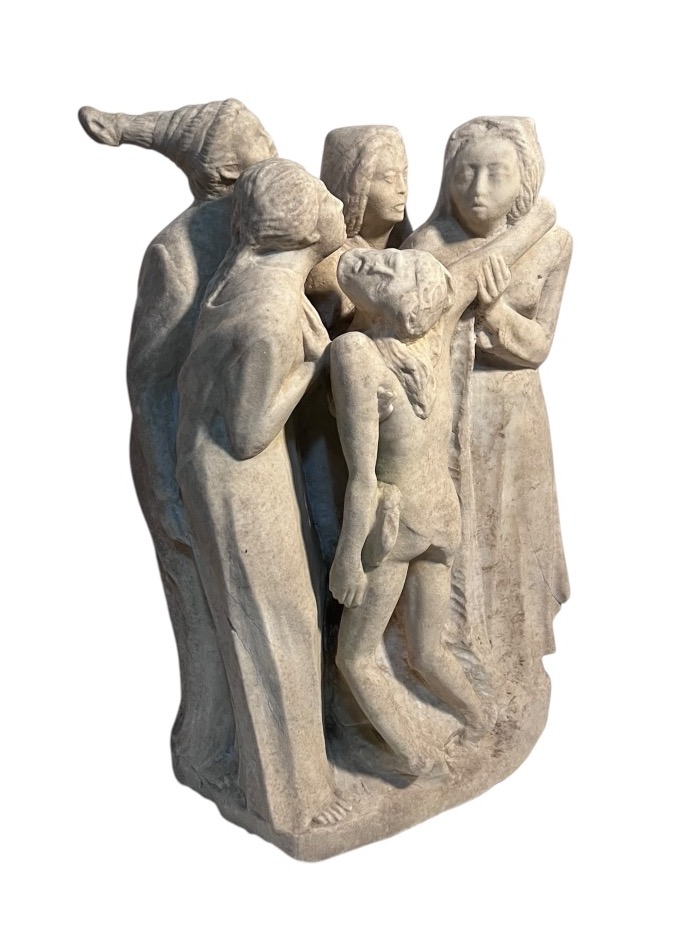
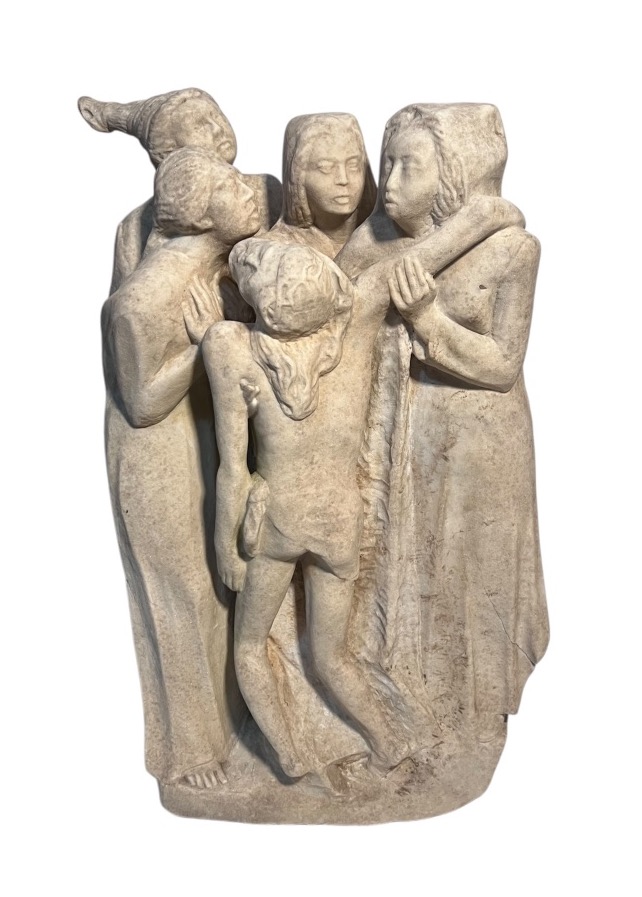
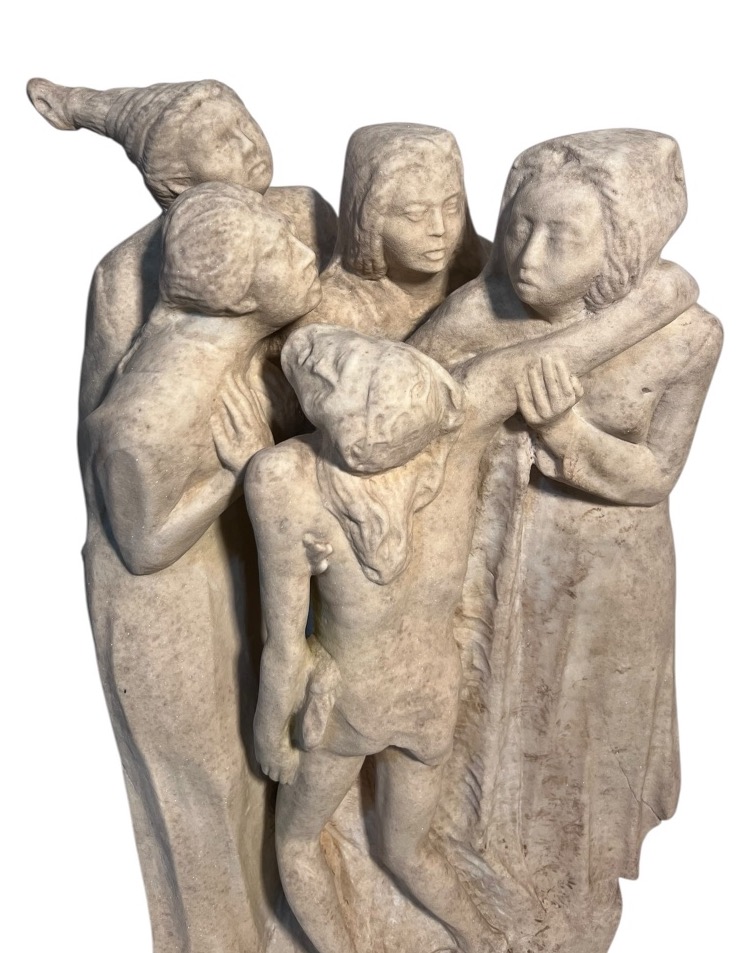
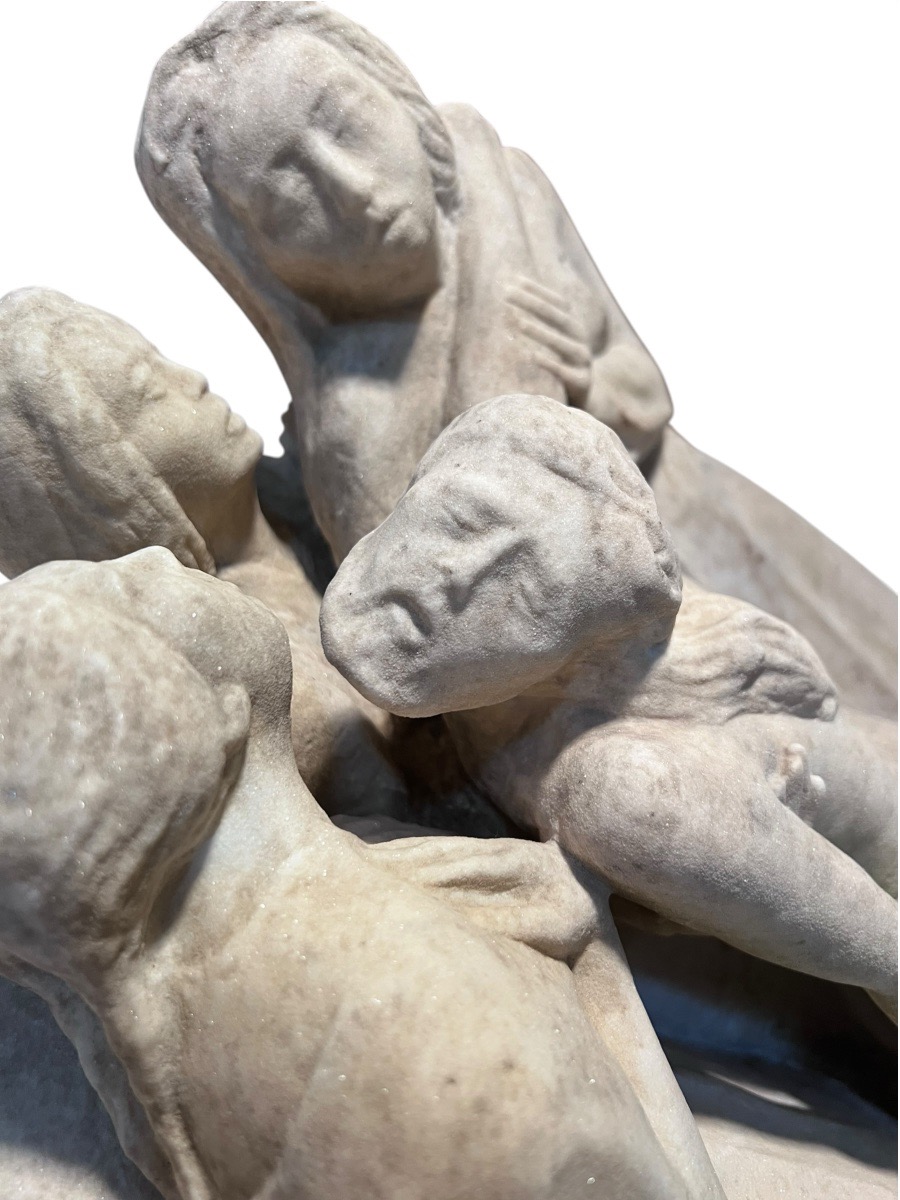
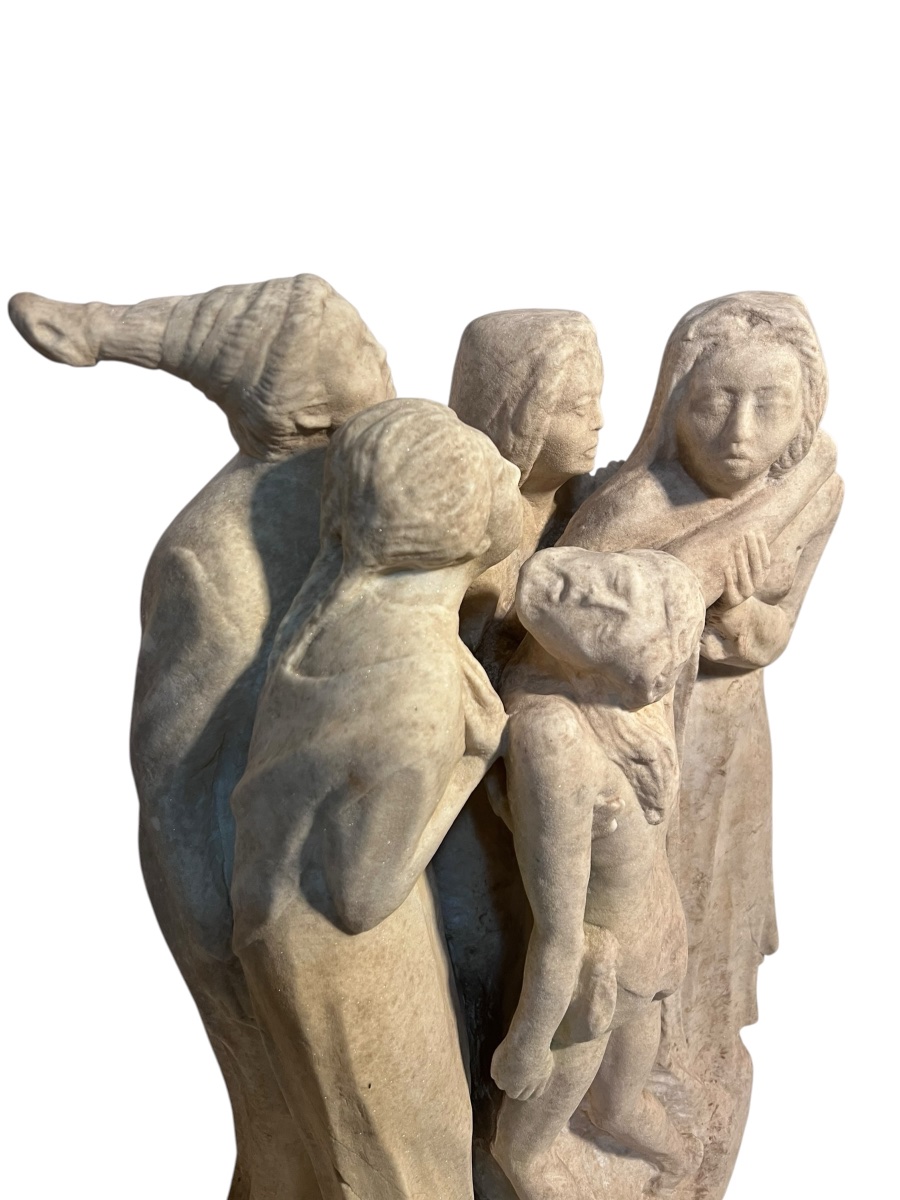
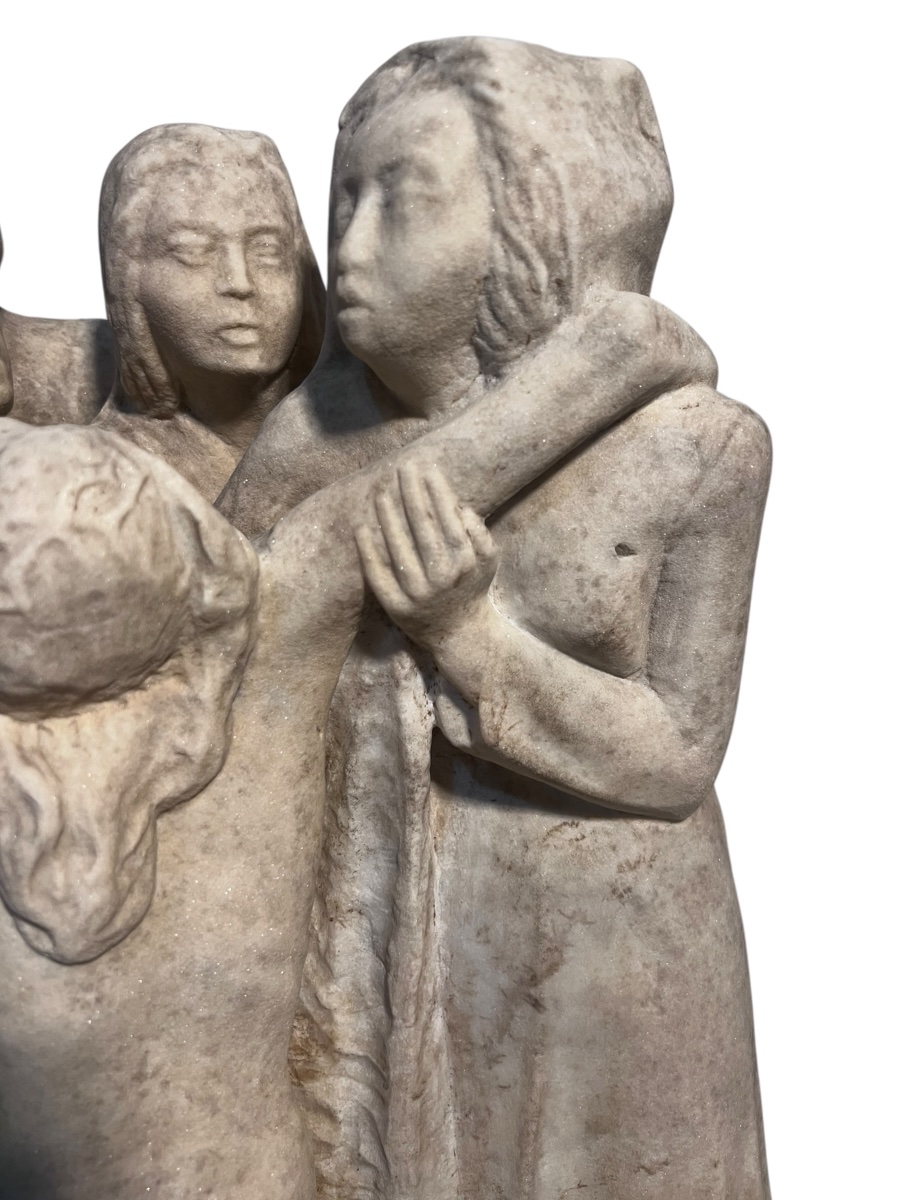
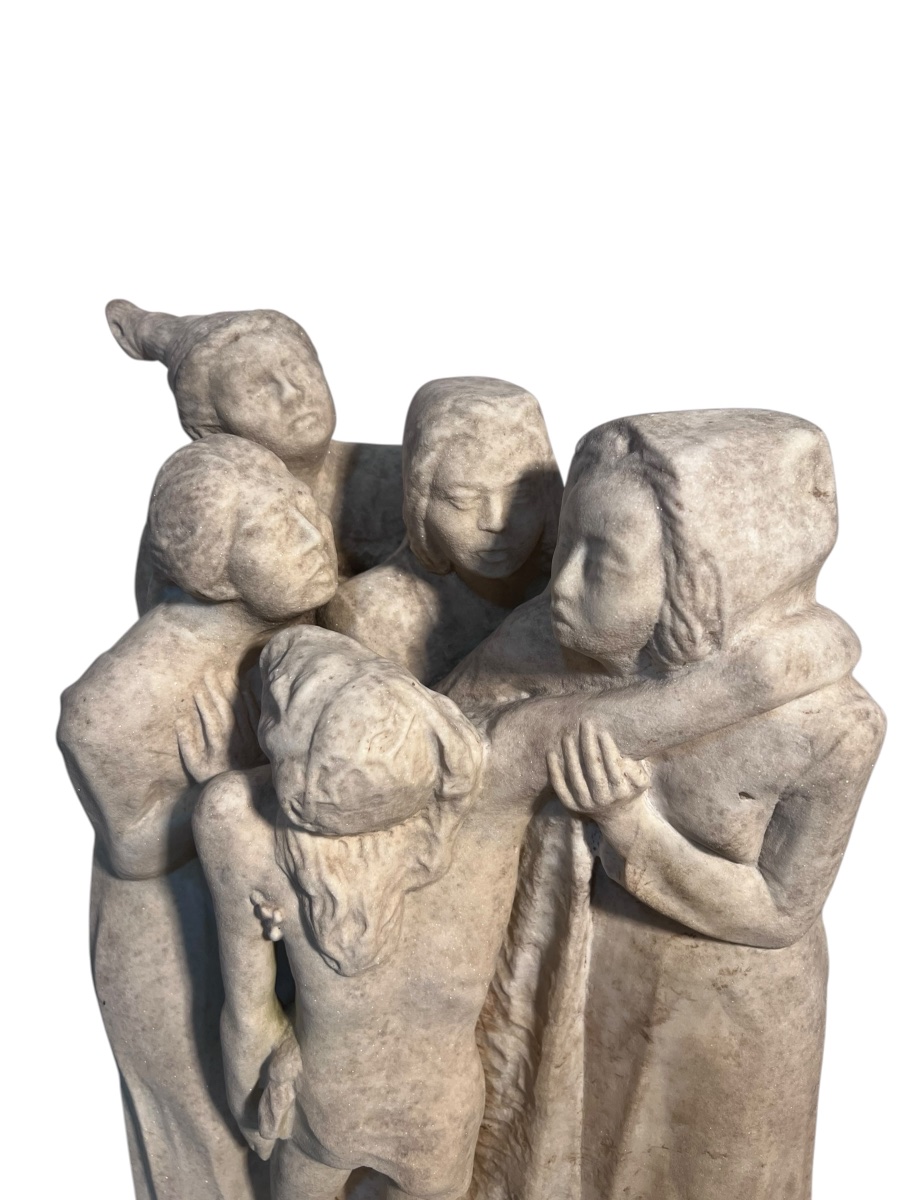
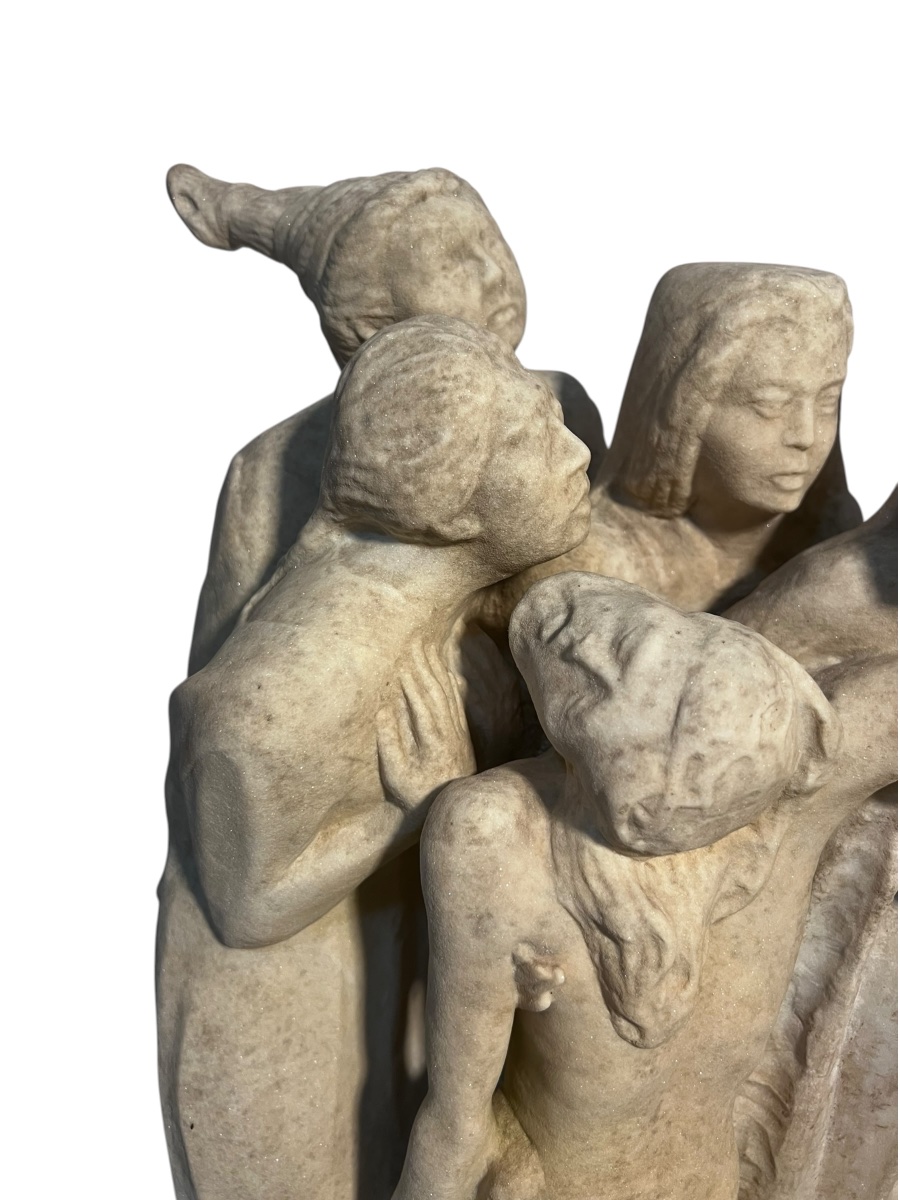
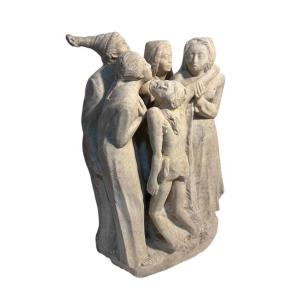
An extraordinary sculptural group depicting the Deposition from the Cross, with the Pious Women and Nicodemus supporting and mourning over the lifeless body of Christ. The composition is compact and intense, with the figures appearing almost fused together: Mary holds her Son’s body with both hands, her gaze directed forward, toward something beyond the scene; Mary Magdalene, her hands pressed to her chest in a gesture of grief and despair, also leans forward, her eyes fixed on a point outside the composition; Mary of Clopas simply gazes at the face of Mary of Nazareth, yet her own expression remains detached. Finally, Nicodemus—positioned outside the circle of the main figures—observes the scene with an air of indifference and detachment. Christ is the only figure whose facial features reveal human emotion—in this instance, pain. His body appears frail, devoid of any vital force. Yet his face—rendered with a simple, transverse incision for the eyes and an open mouth—vividly conveys the suffering and tragedy of his death. In terms of volume, while the bodies seem to merge into a single mass, the faces exhibit a sense of detachment that leaves each figure suspended in time and space, existing as an isolated entity. The faces are rendered in an anonymous fashion, lacking specific anatomical detail. The same applies to the drapery, with the notable exception of Nicodemus’s headdress, which is exotic—in keeping with the scriptural accounts. Mary is the only figure wearing a veil, while Mary Magdalene is distinguished by two long braids falling behind her head. Although the features of the eyes, nose, and mouth are simplified, there are passages of excellent sculptural quality: from the hands and feet to Nicodemus’s splendid headdress, and finally to the plasticity of Christ’s body—where the flesh appears to sink in where the Mother’s hands support Him, as well as in the buttocks, which are revealed beneath the loincloth. While the general composition looks back to the Late Gothic tradition, the sculptural execution of this group is to be attributed squarely to that "primitivist-exotic" phase which, beginning with Gauguin, started to influence the minds of artists throughout Europe.
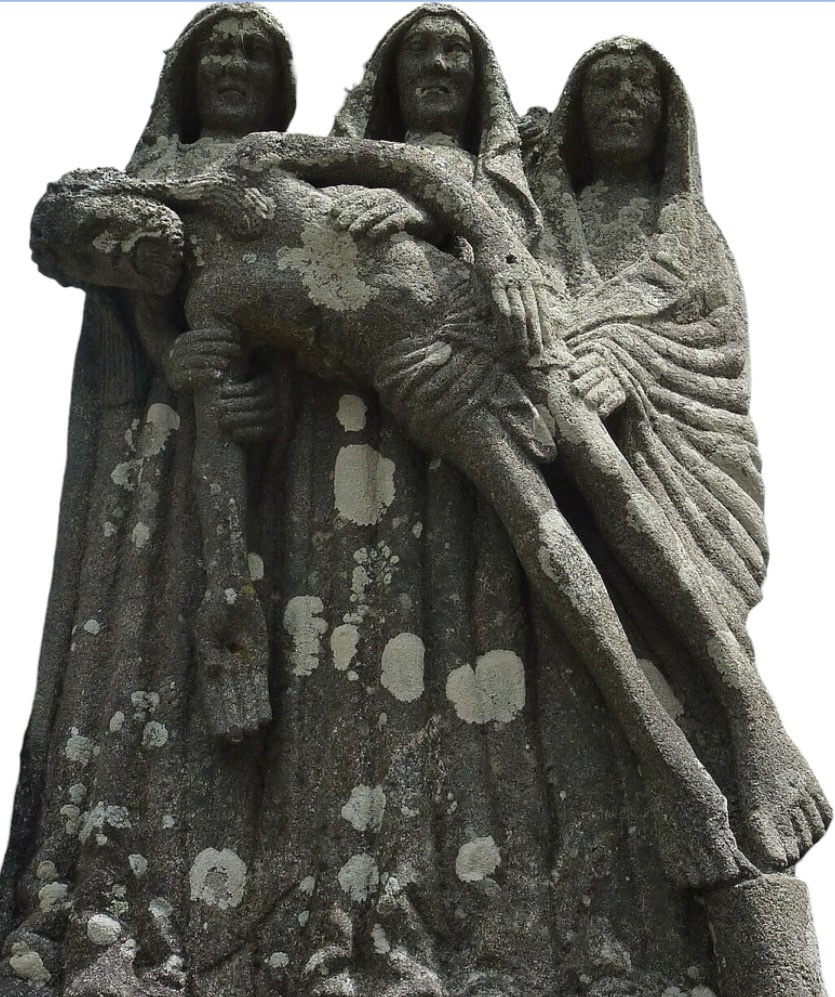
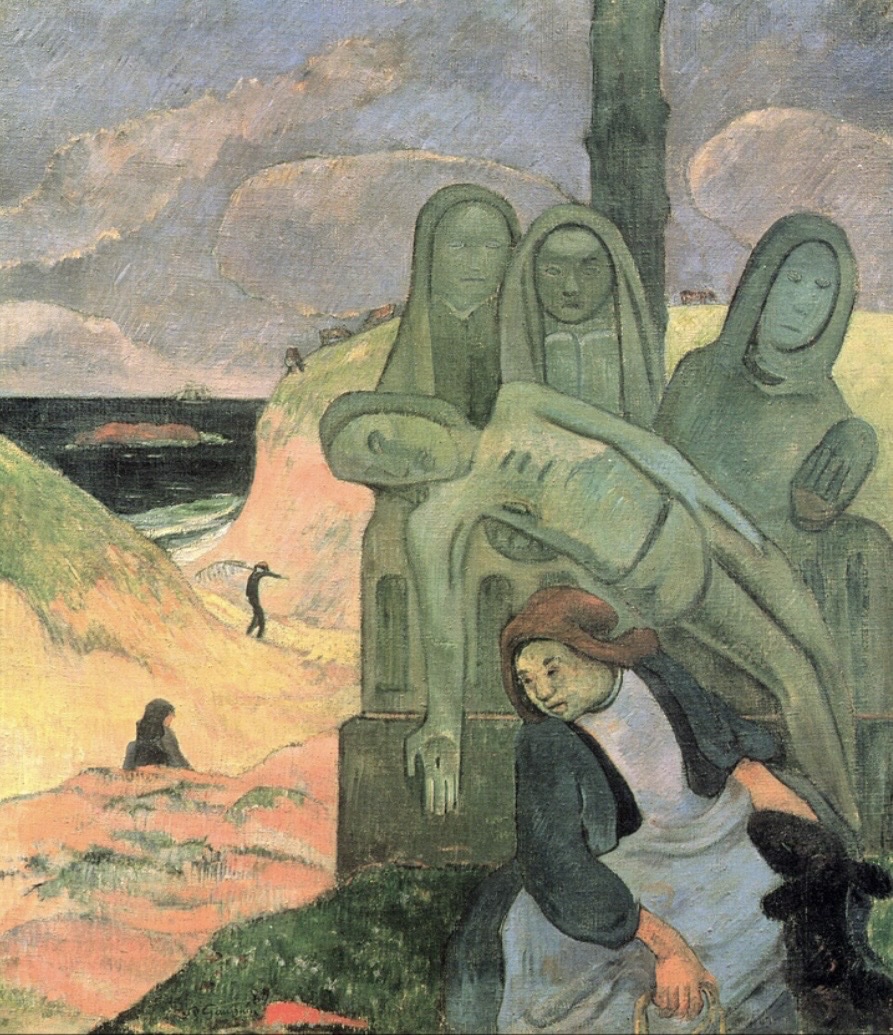
Indeed, by observing the faces, one can almost discern the artist’s archetypal intention in rendering the most expressive features—eyes, nose, and mouth—identical across all figures. This not only negates the human dimension of the figures—for, psychologically, the nullification of sight, smell, and speech amounts to the erasure of the human being—but also focuses attention exclusively upon the scene itself. The journey toward the archetype must necessarily draw as much from our own ancestral past as it does from distant, unknown origins—realms that share in humanity’s inherent drive to seek out its own roots in places beyond the reach of sight. From a symbolic perspective, despite the stripping away of individual characterization, each figure remains capable of conveying its own distinct message: Mary, aware of Christ’s mission, simply supports Him, as a Mother would; Mary Magdalene, in her humanity, expresses her grief solely through the gestures of her hands; Mary of Clopas—the first witness mentioned in the Gospels—simply bears witness to the scene; Nicodemus, appearing almost detached from the event, communicates through his headdress, which signifies an archetypal quest rooted in the exotic. All share the same absence of expression—with the exception of Christ (who is dead), whose final expression, frozen upon His face, is one of sorrow. It is no easy task to find parallels for works that are simultaneously so avant-garde yet archaic, and, at the same time, so deeply inspired by a religious spirit. In this instance, we are presented with a stone *Pietà* sculpture from the Calvary at Brasparts, in Brittany, which itself draws inspiration from Gauguin’s *Calvary*—an oil-on-canvas work from 1889. In both compositions—which share poses, volumes, anatomical forms, and style—the figures’ individual identities are effaced, serving solely to convey the message through an essential, archetypal language.
As in our specific case—and in a truly similar manner and style—the eyes are reduced to empty ellipses, the mouths to horizontal lines, and the volumes of the bodies to hollow, uniform masses. This exploration of origins—across time (seeking certain late-Gothic canons to satisfy a religious requirement) and across space (driven by the need to discover a new mode of communication elsewhere)—unites these three points of comparison within a single, broader category: that of the "primitivism" and "exoticism" first sparked by Romanticism and later brought to prominence by Gauguin. Thus, this form of primitivism—inherently anti-classical in its drive to dismantle established aesthetic canons—finds its perfect expression in the quintessential anti-classical style: the Gothic tradition of the German *Vesperbild* (Pietà), to which our own *Pietà* bears a distinct, if not immediate, resemblance. Looking at the work from a more surface-level perspective, we can situate it in Northern Italy, sometime between the 1910s and the 1930s. Clearly influenced by Gauguin, the piece is rendered in an intensely personal and evocative language by an artist whose style aligns closely with that of Arturo Martini. Notably, however, the artist’s ego does not assert itself within the sculpture—there are no elaborate technical flourishes, nor any visible signatures. Consequently, the devotional nature of the work—almost certainly commissioned for a religious setting, such as a niche or a *Via Crucis* (Stations of the Cross)—remains its defining quality, expressed through a highly distinct artistic language.
12 000 €
Period: 20th century
Style: Other Style
Condition: Good condition
Material: Stone
Width: 35
Height: 52
Depth: 22
Reference (ID): 1843544
Availability: In stock
Print