


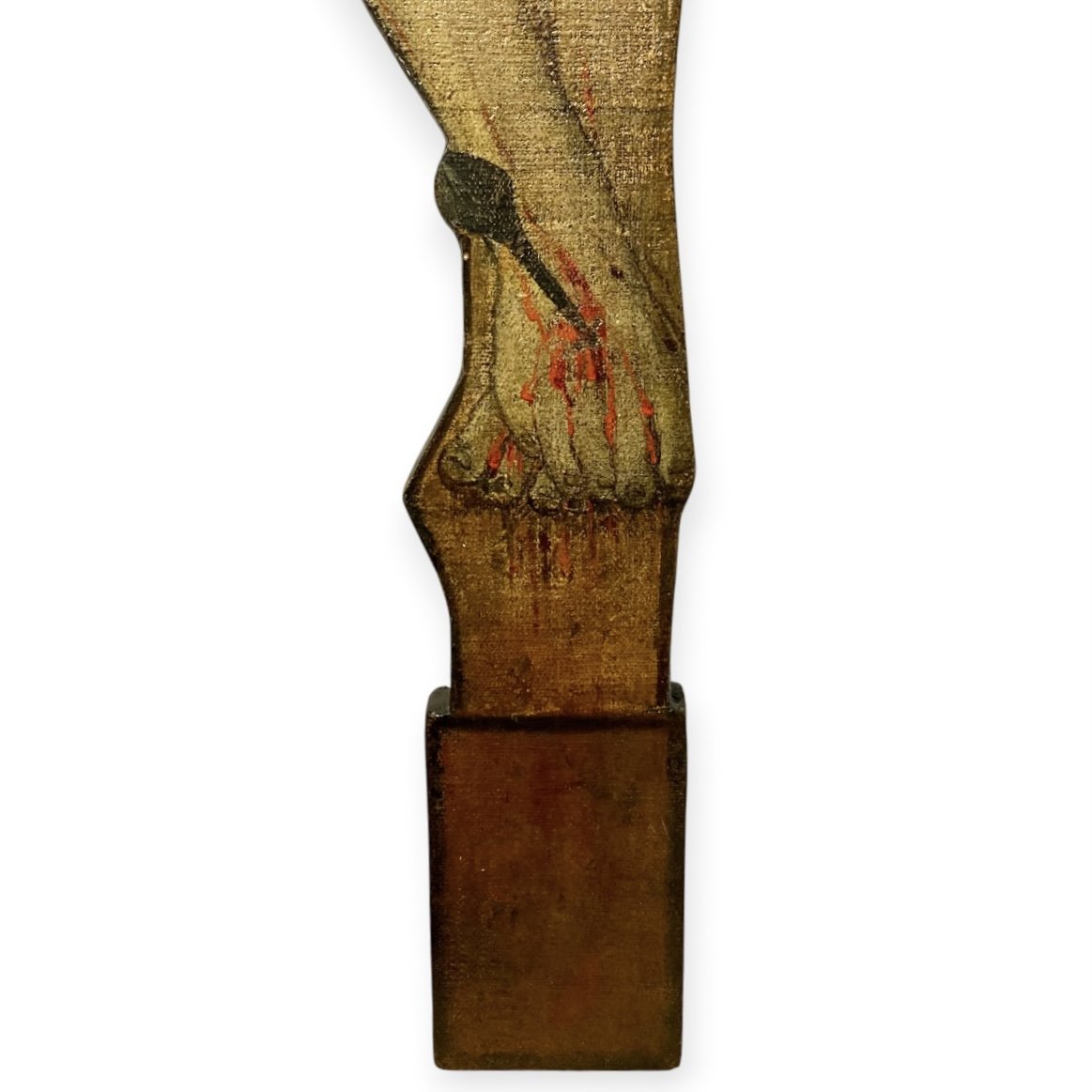


Master Of Marradi - Florence - Last Quarter Of The 15th Century - Painted Sculpted Cross
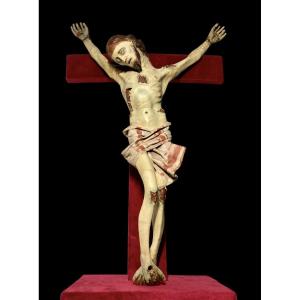
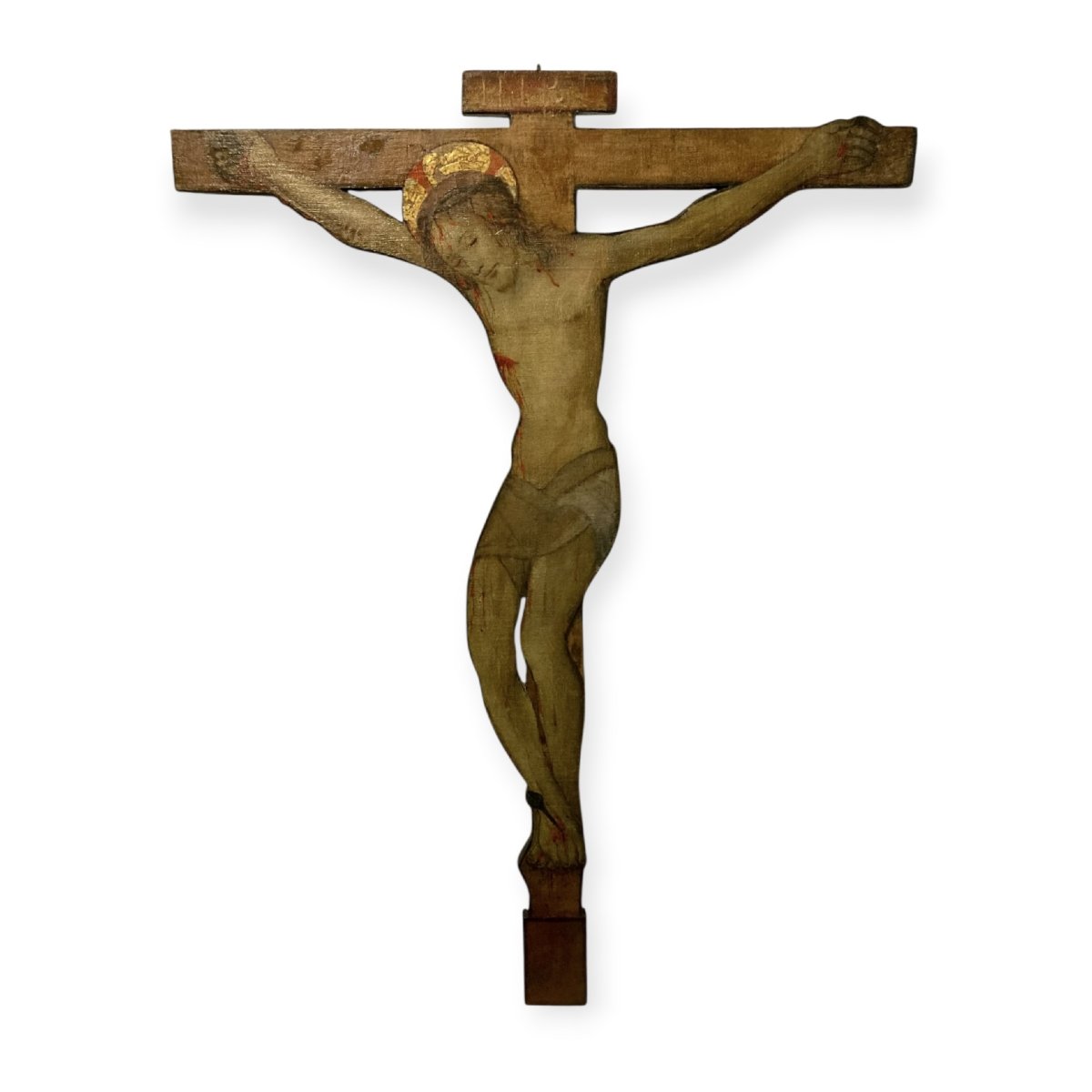
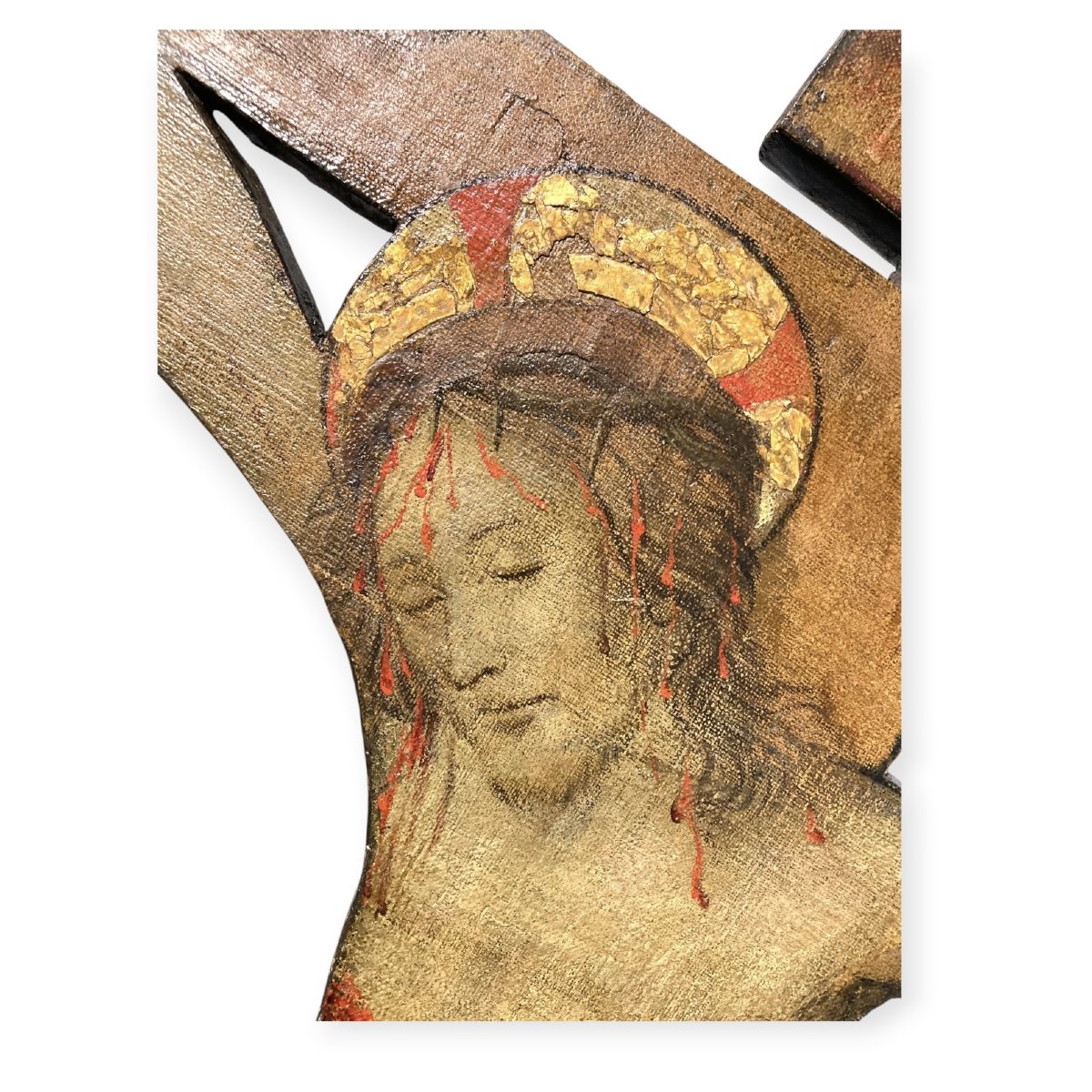
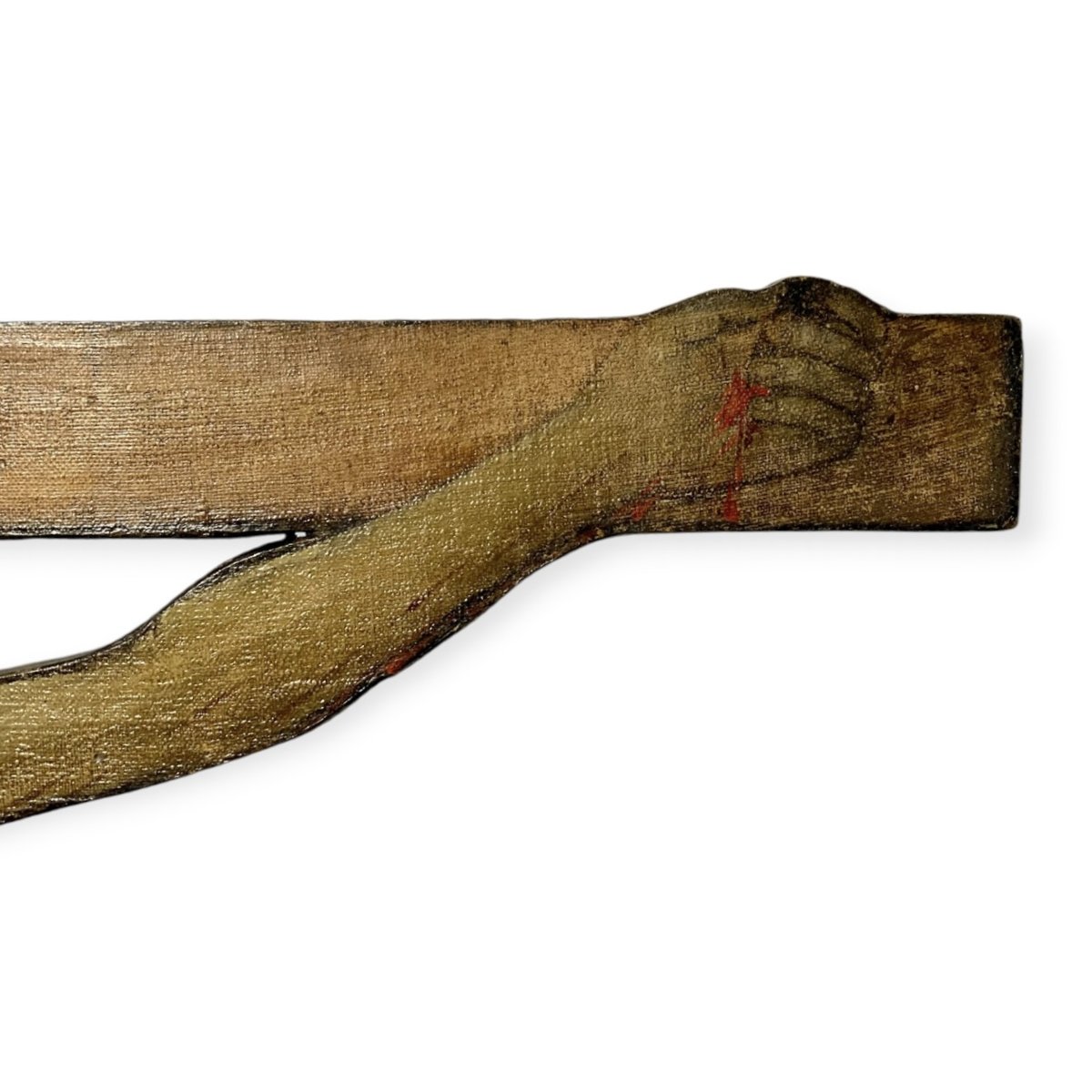
This extraordinary Crucifixion is painted in tempera on canvas mounted on a shaped panel. The work is cataloged in the Zeri Archive as a work by the Master of Marradi, a pupil of Domenico Ghirlandaio (inv. 13631).
In fact, it is not difficult to see the logic behind this, as the Master of Marradi—who was artistically trained in the Renaissance styles of Ghirlandaio’s workshop—displays a sensibility in his works that is still distinctly late Gothic.
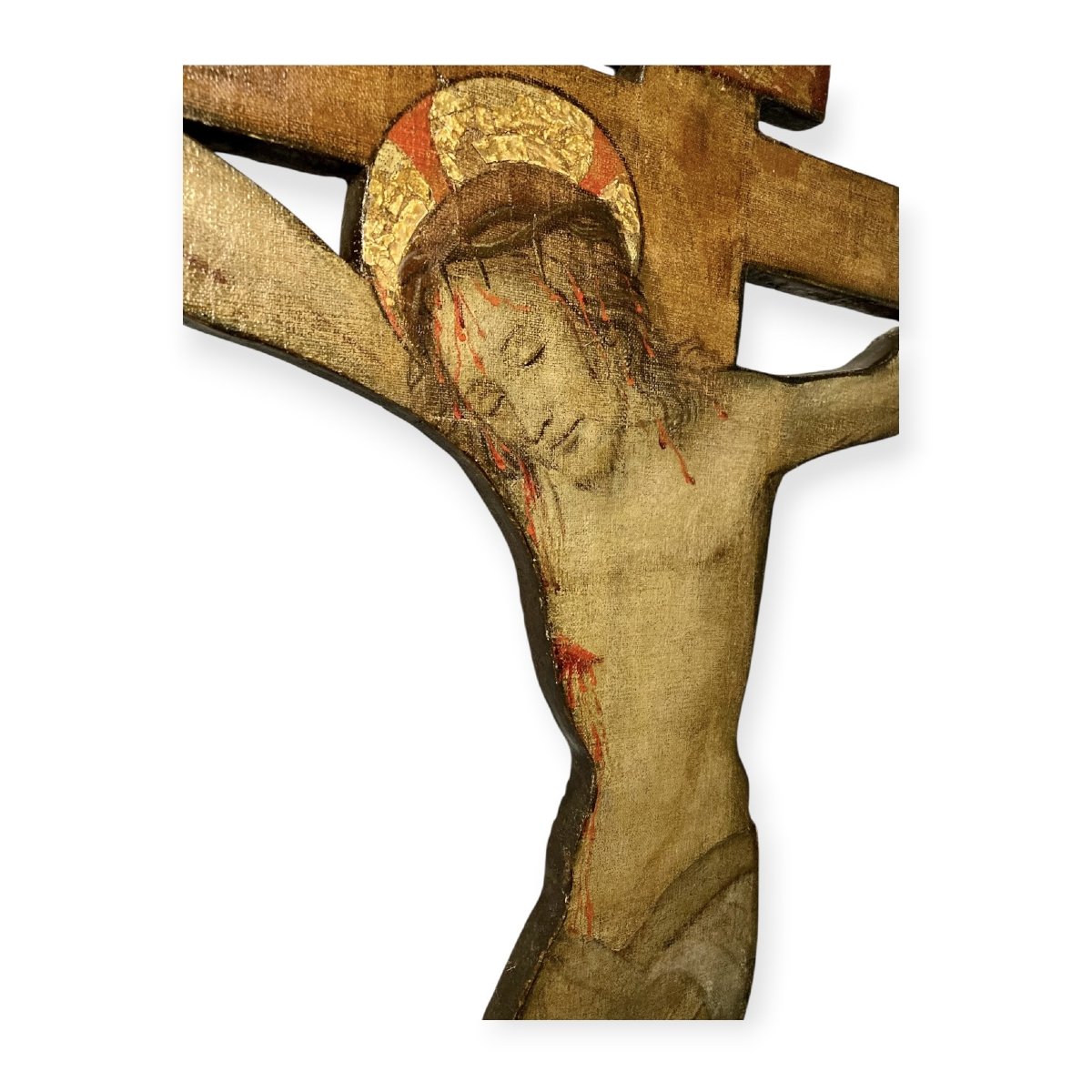
The face, with an almost melancholic sweetness, reveals the skill of the artist’s hand. It is a painting in which the line, the outline, and the sinuousness of the figure are the protagonists of the composition. The eyelids, eyebrows, nose, and mouth are rendered with fine, sinuous, and unique brushstrokes. The strands of beard and hair are also practically miniature in detail, even though the size of the work—nearly a meter tall and certainly hung high on the wall—would not have required it.
But we are, in fact, speaking of a painter who works with an archaic, sentimental, and lyrical sensibility. He also made a conscious choice to preserve certain stylistic elements, as the references for our Crucifixion include the crosses by Lorenzo Monaco, to name just one.
Different contexts, different patrons: when creating this work, the Master of Marradi must have been commissioned by a provincial patron, likely in the northern province of Florence. The choice of canvas mounted on wood—which replaces the traditional preparation of plaster and glue, the priming, and the numerous preparatory stages of painting on panel— as well as the absence of grandeur—in favor of gentleness and sentiment—suggest a patron who was religiously educated but not interested in the splendor of traditional late-Gothic crosses.
We can therefore hypothesize that it was intended for an oratory or convent of a mendicant order located in the area between Florence and the Apennines.
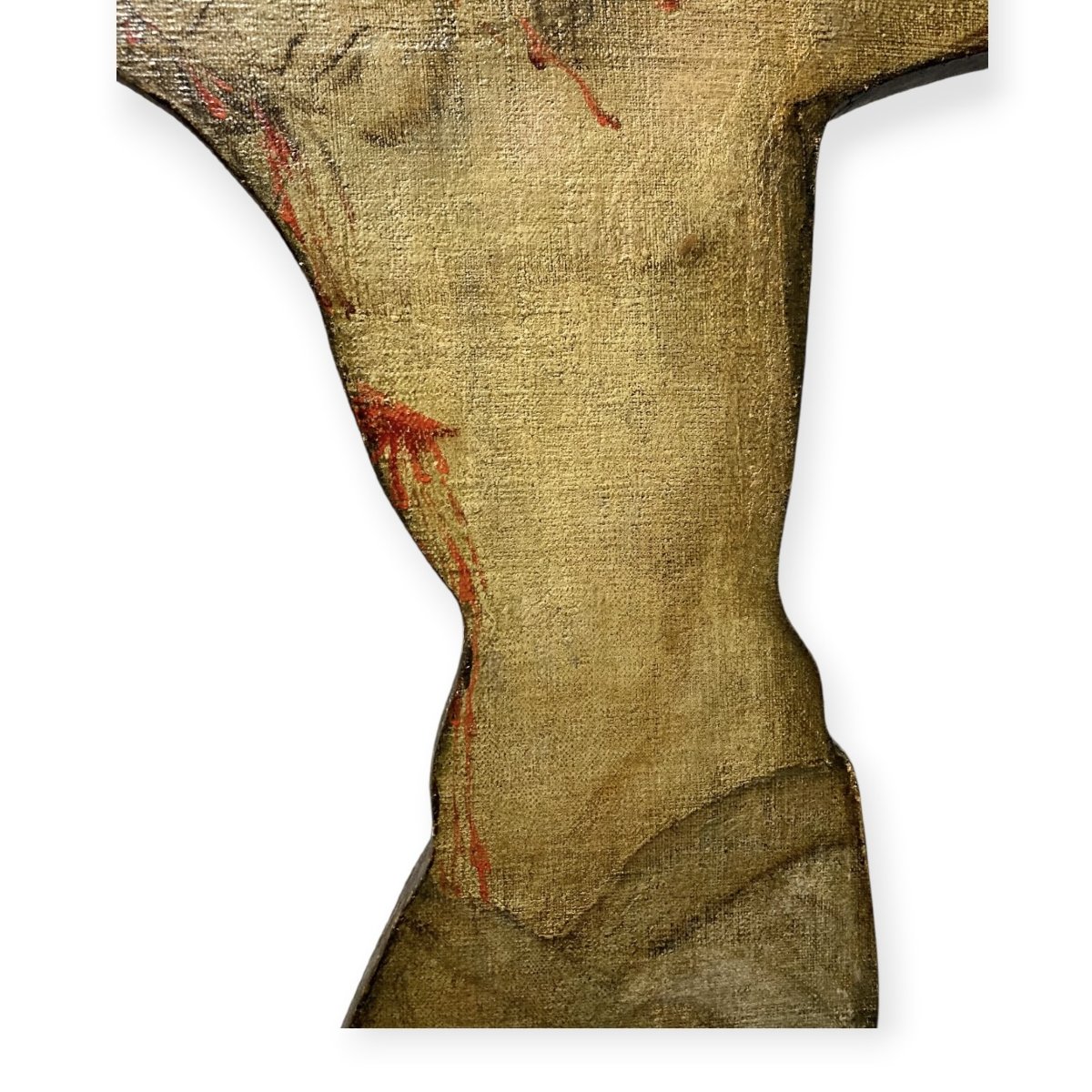
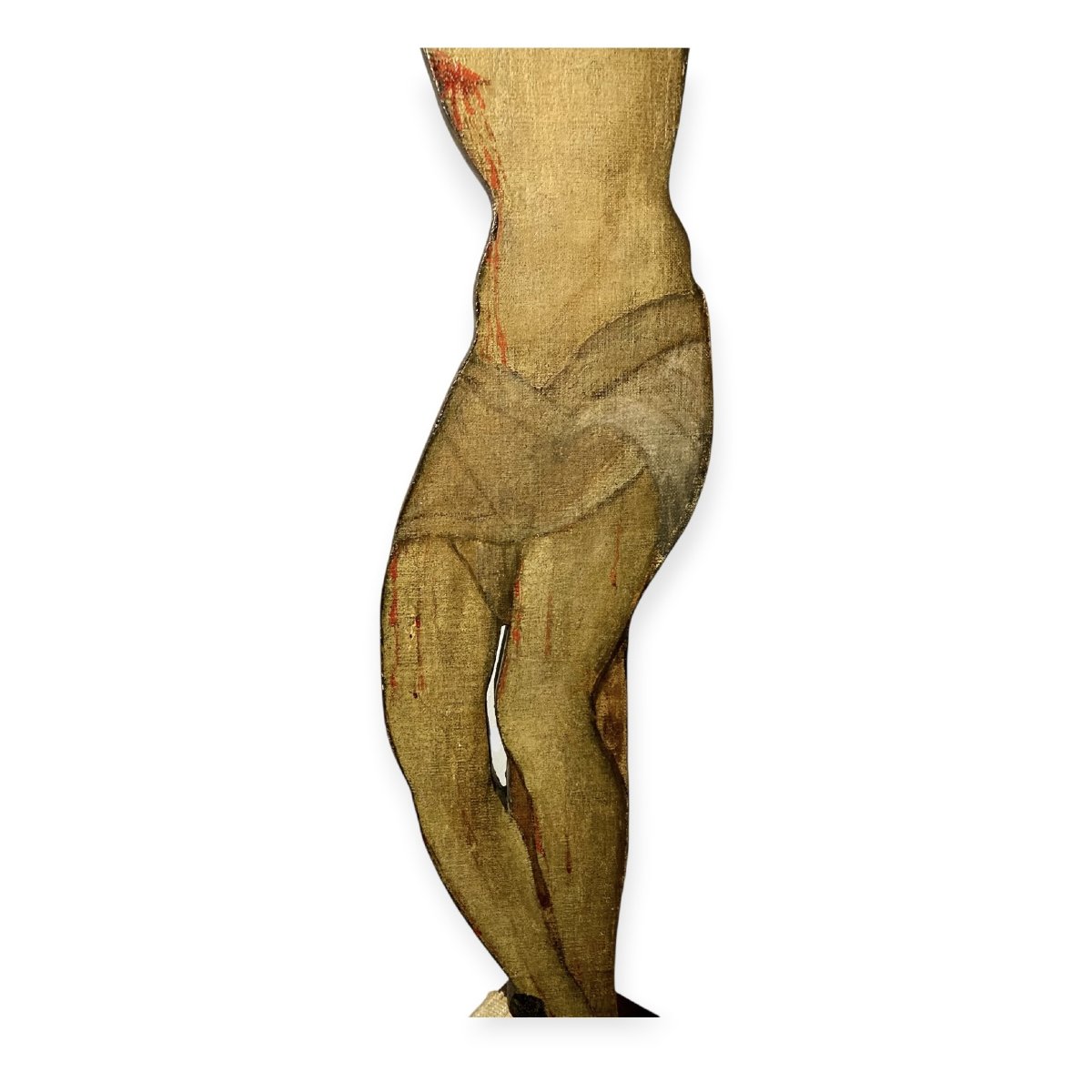
Observing the depiction of the blood, we can see how the focus always returns there: to the lyrical quality. The blood is copious and brilliant; it seeps between the toes, as if simulating a stream that draws attention through its line and the brilliant monochromatic color of the red lacquer.
The loincloth is simple, and the shape of the cross constricts at the waist, almost as if to strangle her.
There is nothing here of the muscular, triumphant, Renaissance Christs.
He is a Christ victorious in defeat, who speaks not through gestures, but through the emotion he manages to convey.
Undoubtedly a life lesson painted on wood for the religious of the convent or oratory for which it was intended: the example of an ordinary person, without any particular physical attributes, whose Word is read in his face and in the simple, stripped-down features of his slender body. An exhortation to face evil and life—the Passion—with the strength of the soul, faith, and emotion.
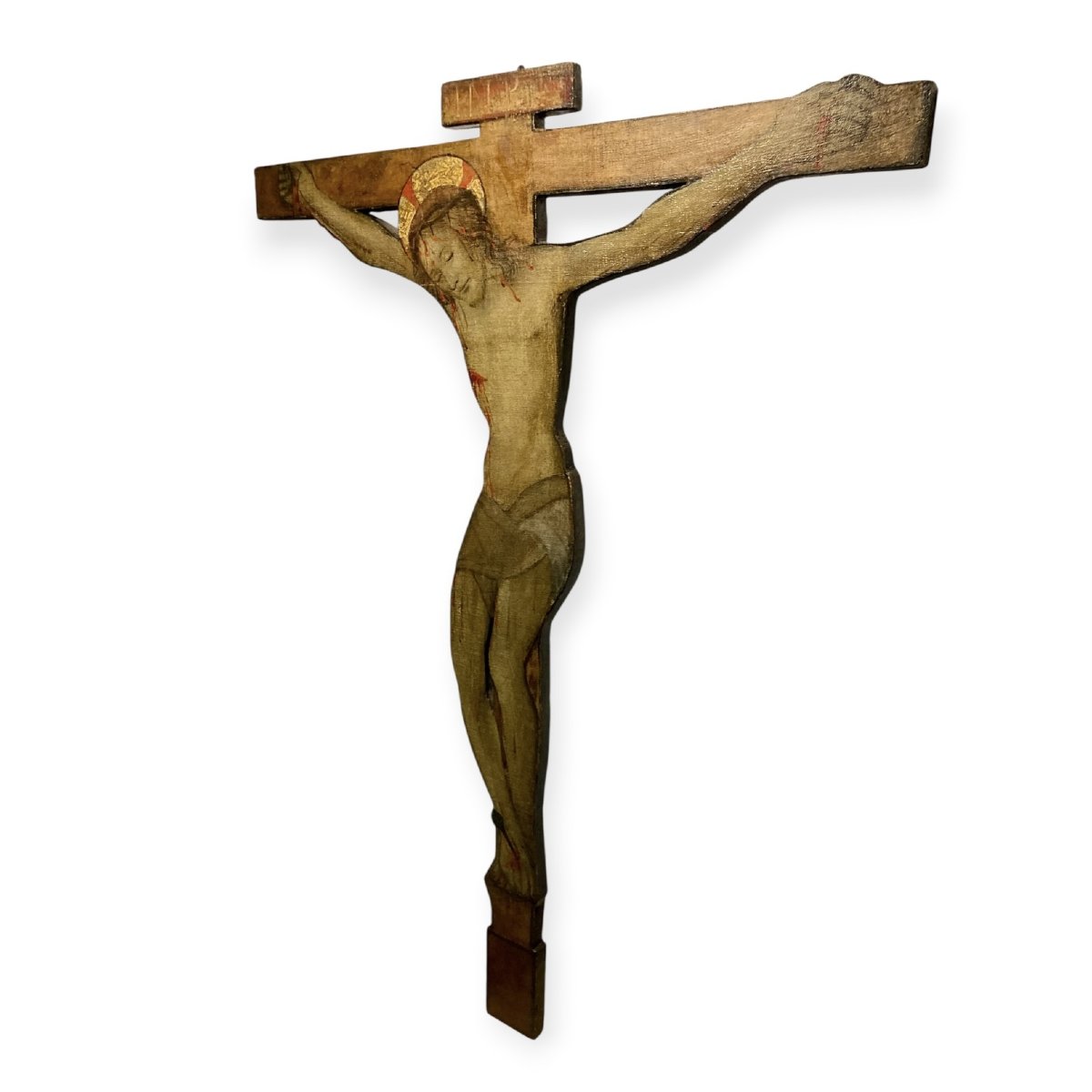
Although technically different from Lorenzo Monaco’s clearly extraordinary examples, this work is typologically reminiscent of them: it was likely part of a larger scene, with mourners on either side.
In fact, the thickness and the back of the cross are painted with brown paint (over a traditional plaster base), indicating that the object was part of a group positioned at a height no greater than 3 meters, leaning against the wall and visible from the side.
An object of extraordinary emotional and visual impact, worthy of the most important art collections.
In good condition, with some restoration.
Dimensions: 73 x 100H cm
Period: Before 16th century
Style: Other Style
Condition: Good condition
Material: Painted wood
Width: 73
Height: 100
Depth: 3
Reference (ID): 1784029
Availability: In stock