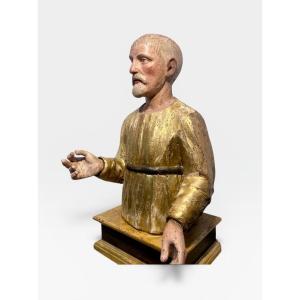

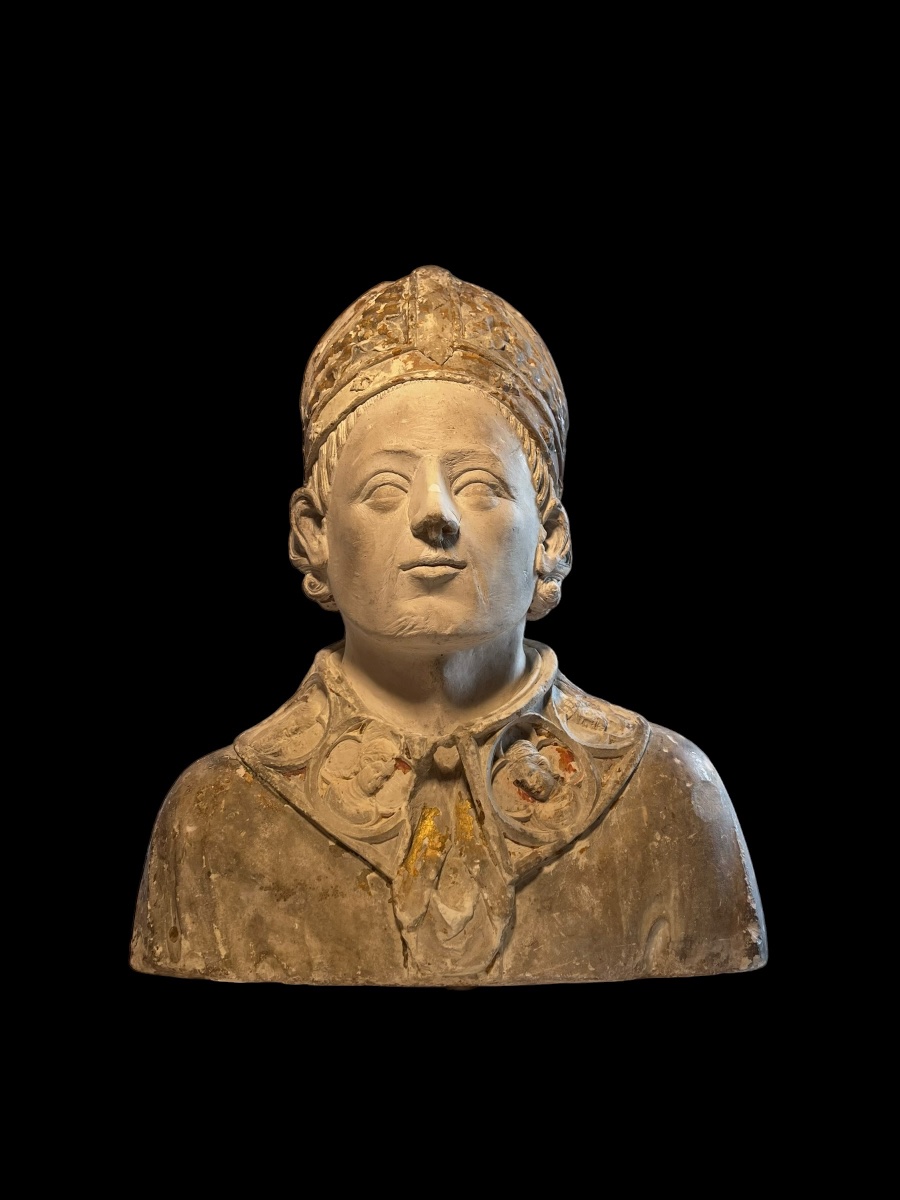
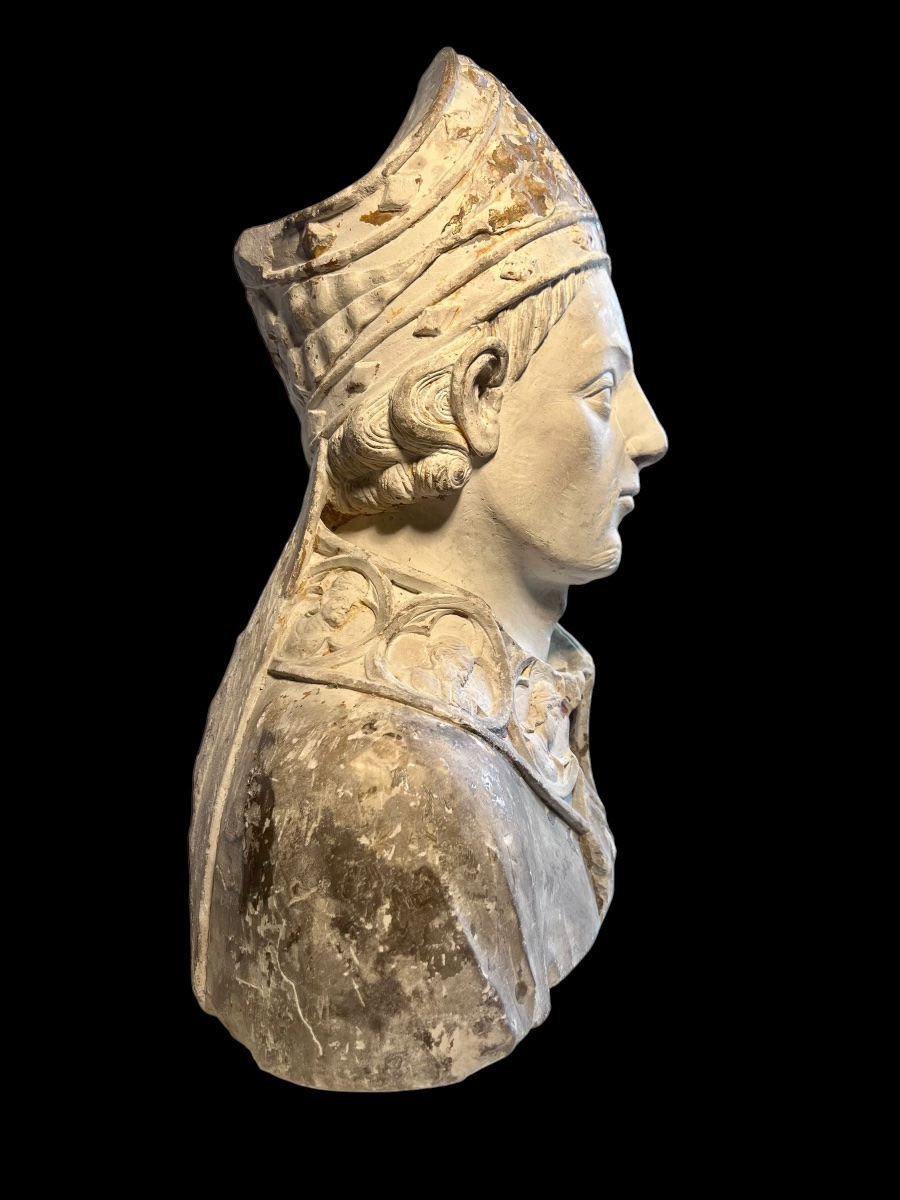




France (champagne) — Second Half Of The 14th Century — Bust Of A Holy Bishop In Limestone
During the Gothic period, the Champagne region was at the forefront of the creation of
sculptural works of the highest quality, the finest examples of which can be found in the cathedrals of Reims and Troyes.
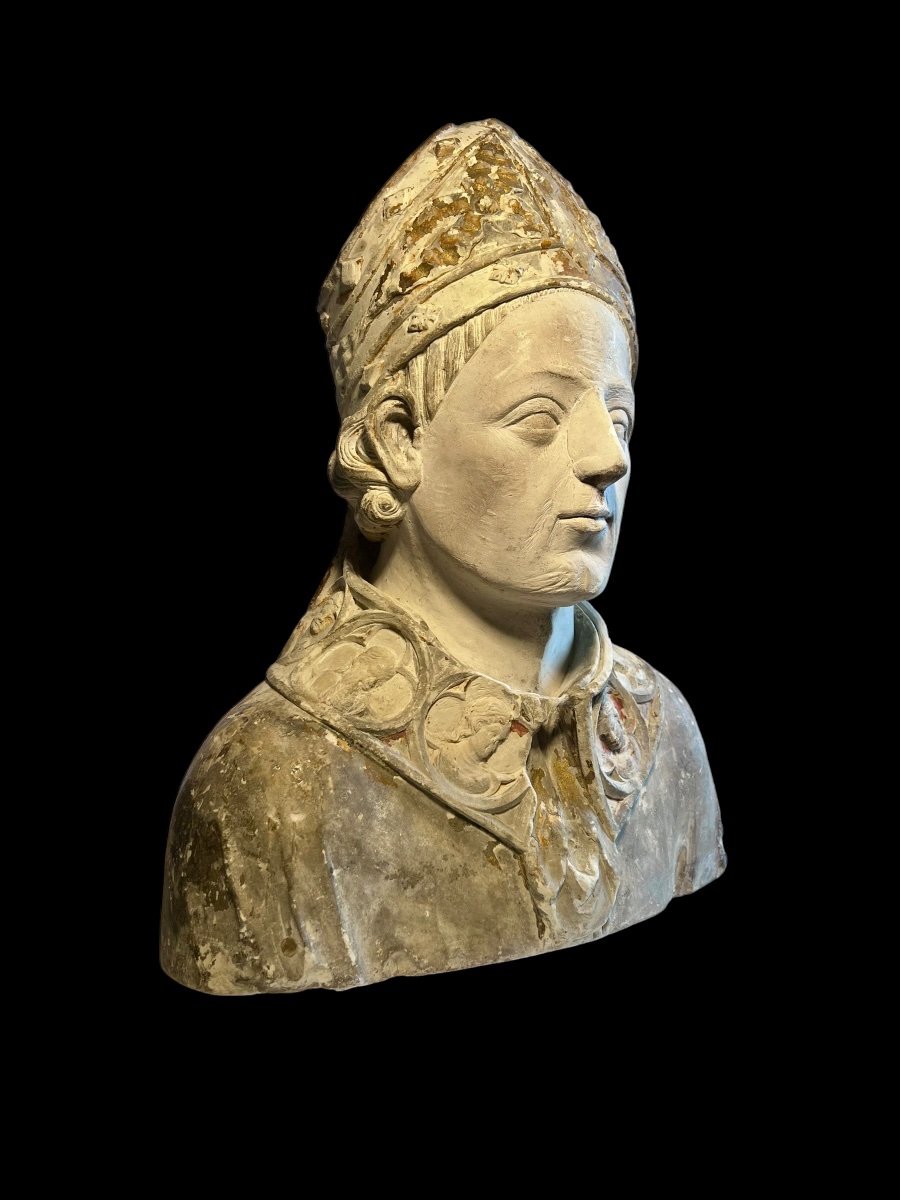
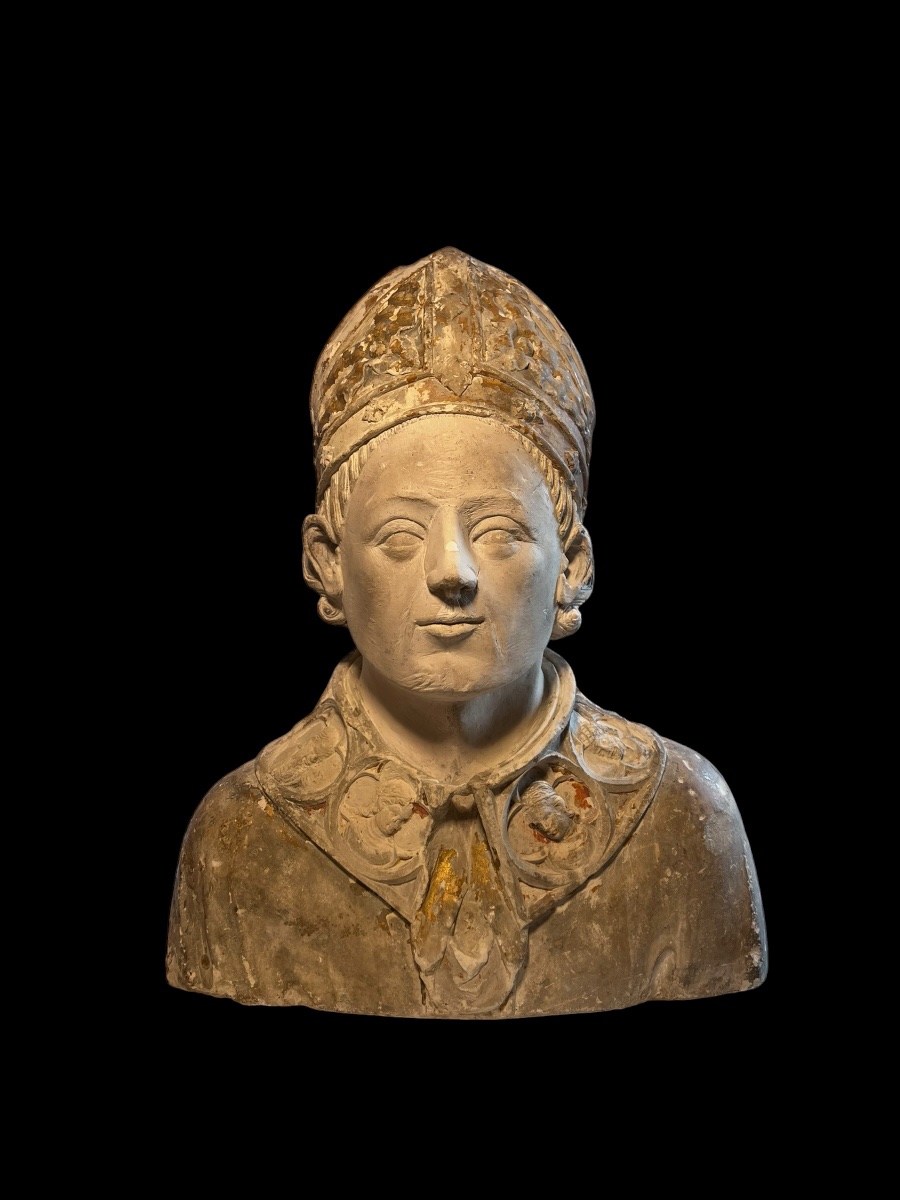
This exceptional limestone bust, which retains traces of its original polychromy and
gilding, dates to a mature phase of Gothic sculpture in that region, unrelated to the major cathedral construction sites but certainly part of the interior decoration of an important
cathedral: likely part of a funerary monument, as evidenced by traces of candle wax, the piece must depict an important ecclesiastical figure: among all comparable works in terms of subject and period, in fact, the present work stands out for the
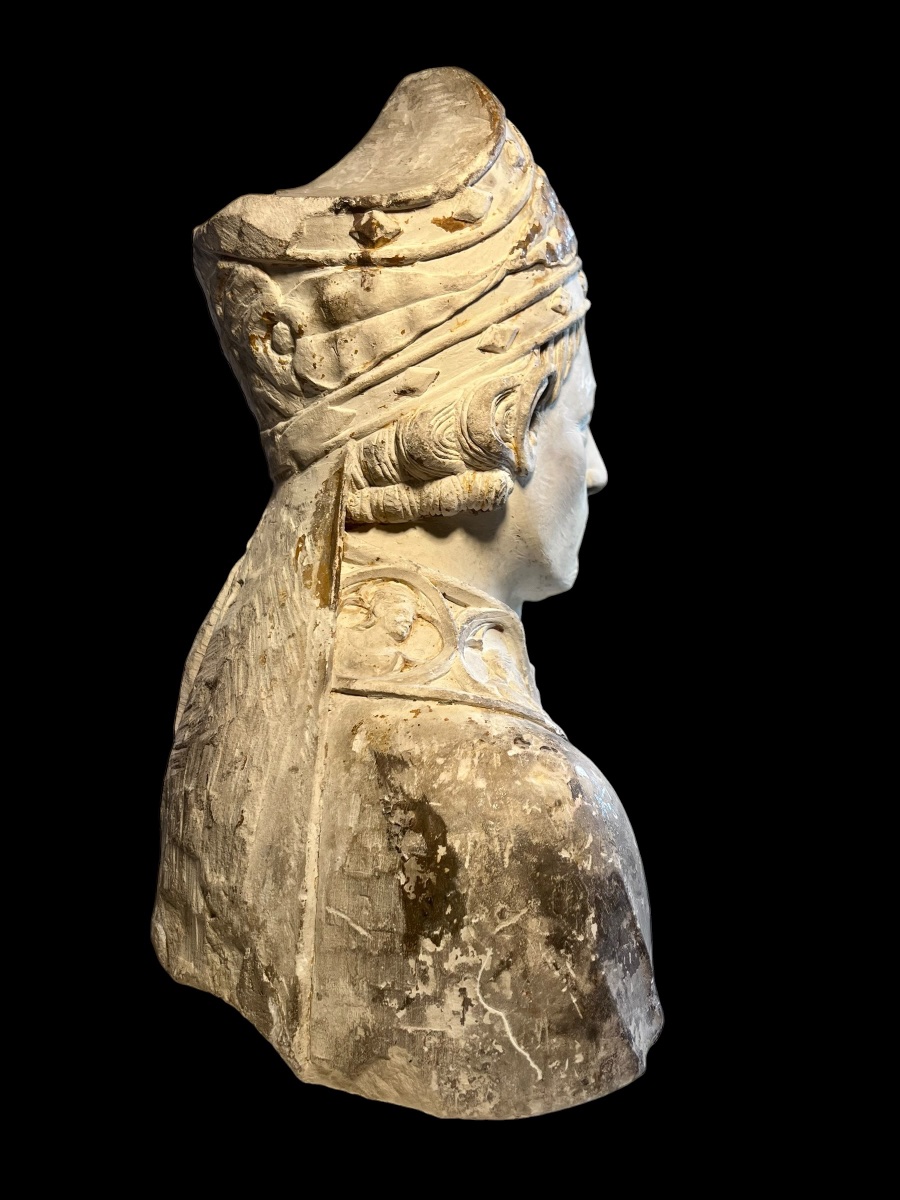
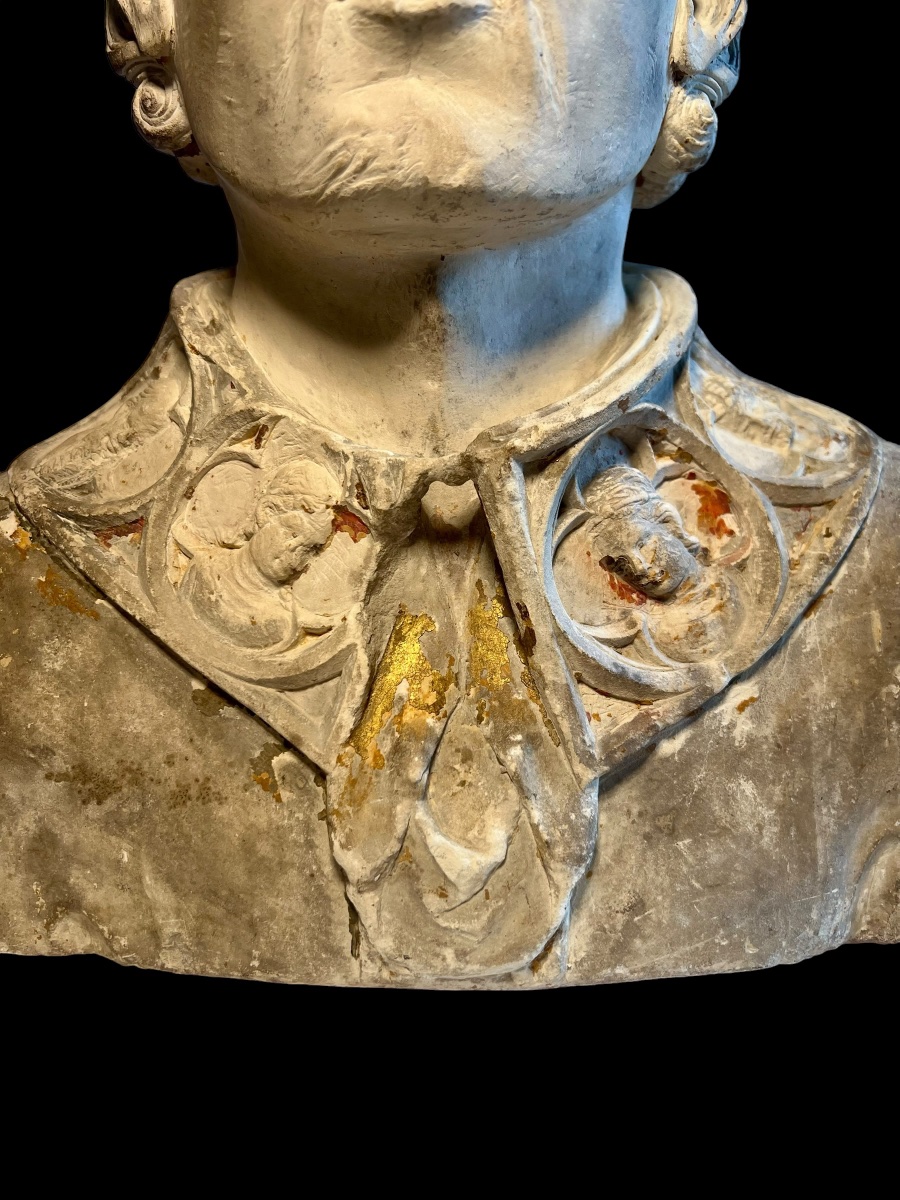
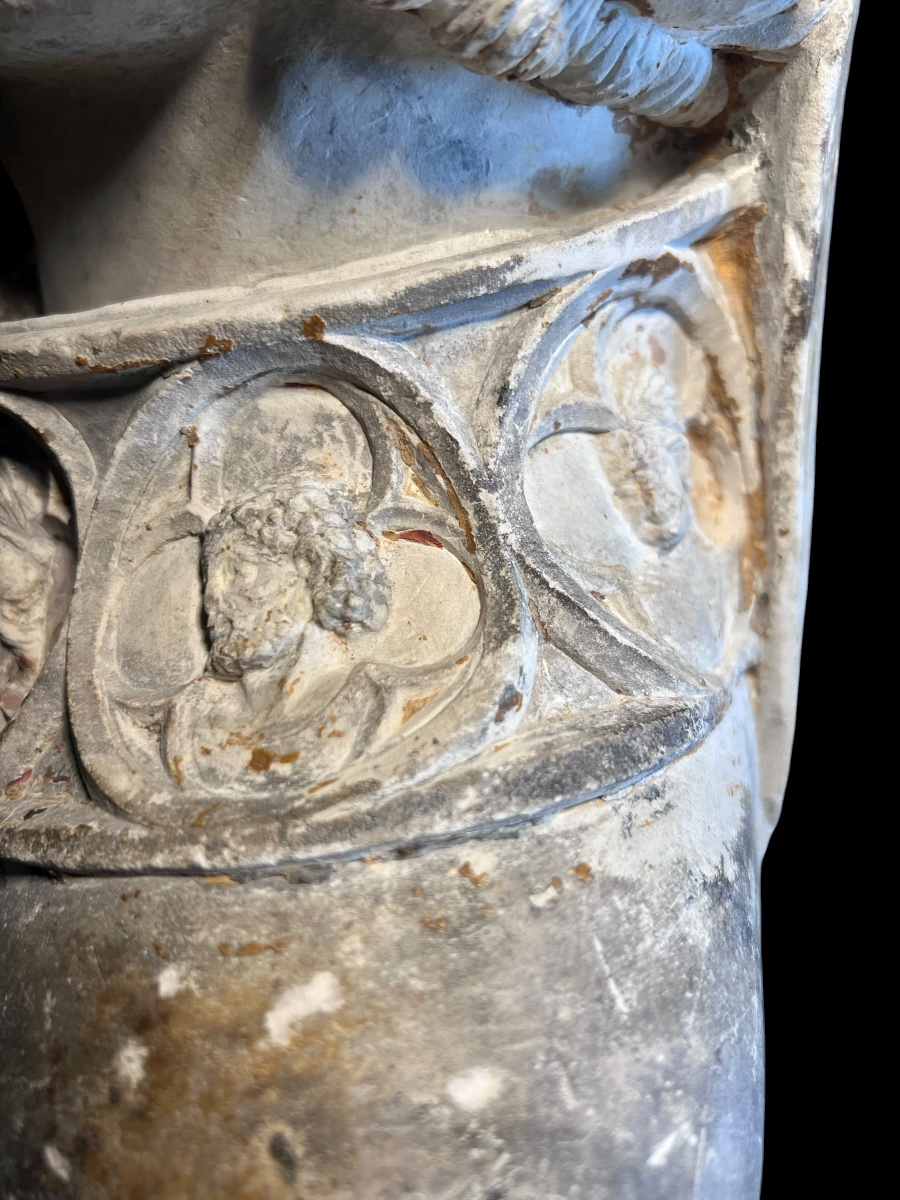
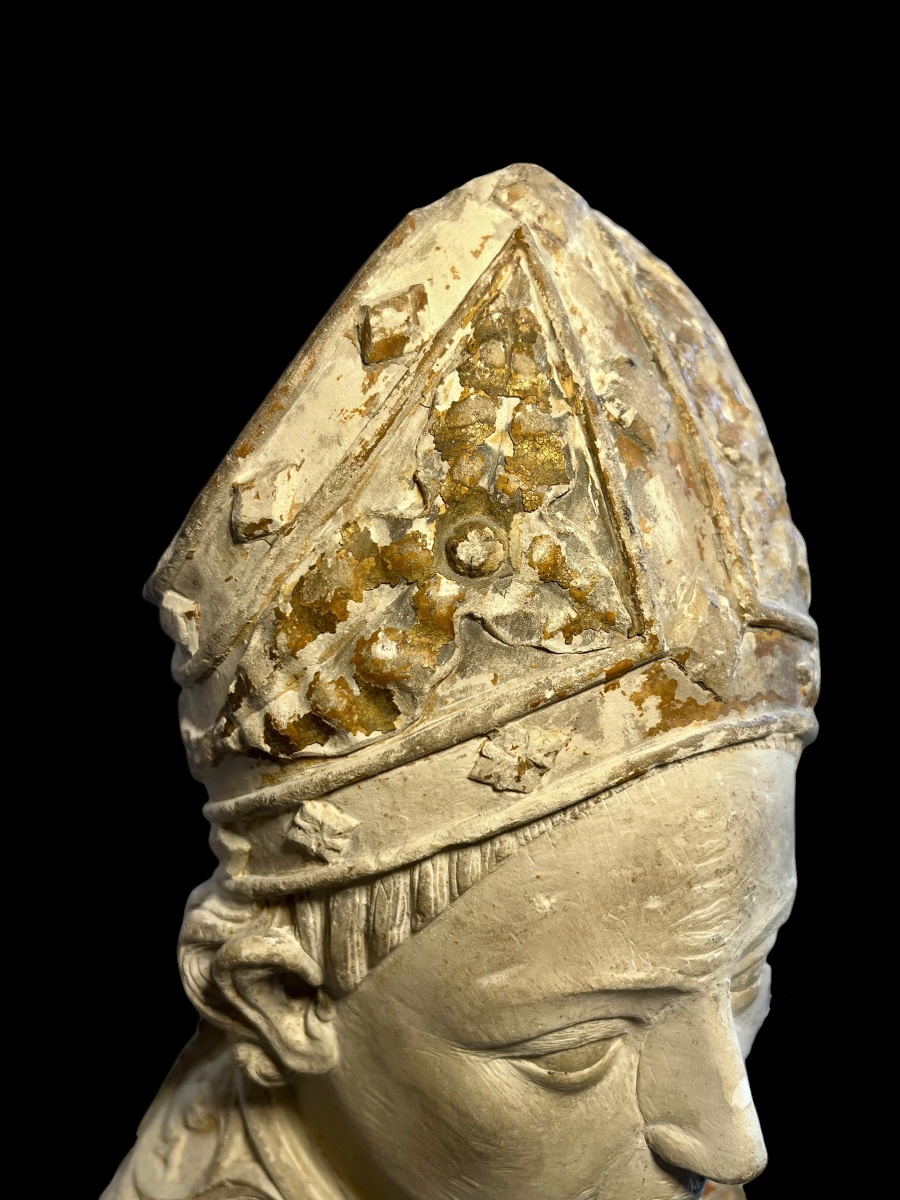
quality of the facial rendering and the highly refined decoration of the vestments: the miter and
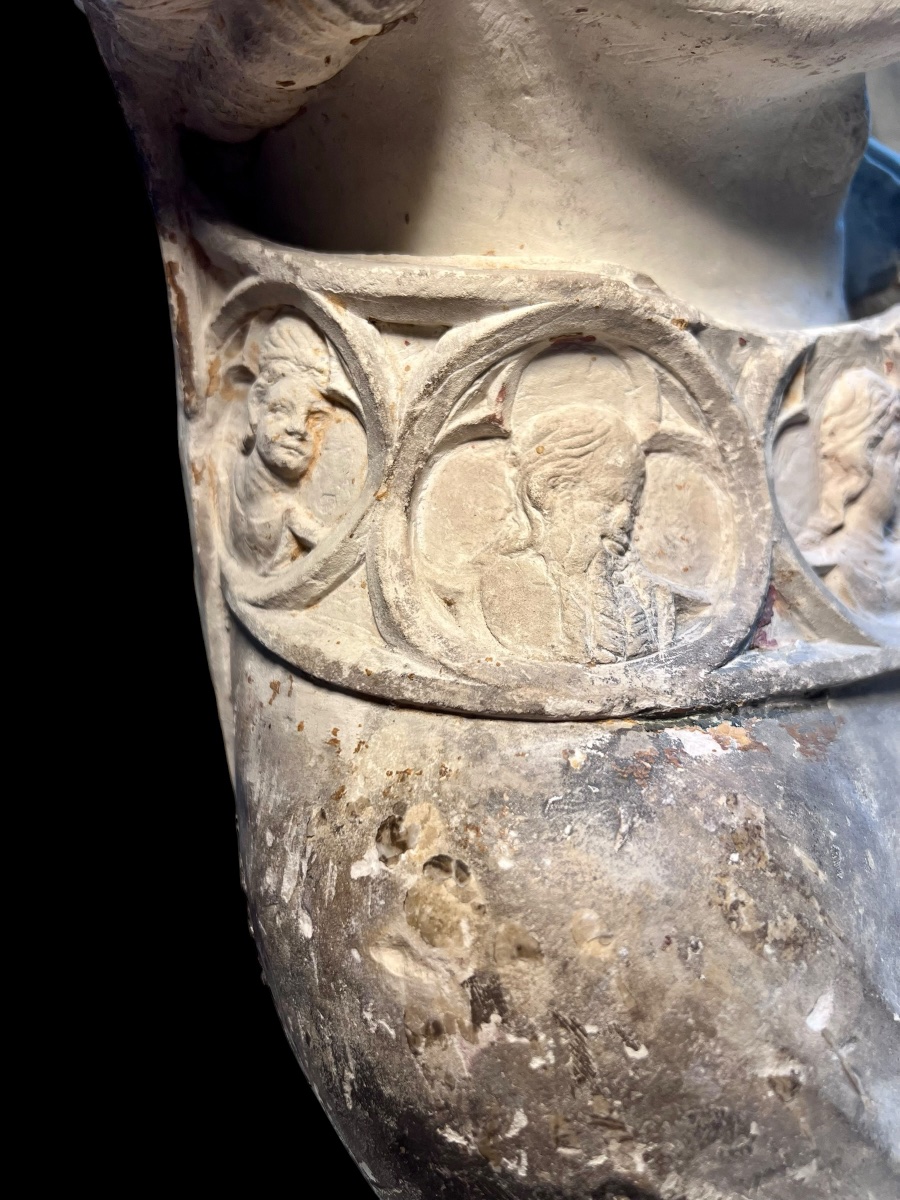
pallium, particularly the collar decorated with six quatrefoil medallions containing figures
of saints, are rendered with the utmost sculptural finesse.
Upon analyzing the flowers on the miter—which mimic the embossed metal flowers that were
attached to royal miters of the period using gold threads— these can undoubtedly be said to be of
the highest quality and almost unprecedented in similar sculptural models. The petals are rendered with
idealized and virtuosic naturalism, creating a sinuous movement in the
petal that demonstrates particular technical skill. The transition from goldsmithing to sculpture—always
extremely complex—can be said to have been executed superbly here.
This final observation (idealized and virtuosic naturalism), though seemingly
paradoxical, is entirely in keeping with the work’s overall style: in fact, the face and
the serious, austere expression point to a phase not yet fully mature, straddling
the 1300s and 1400s, though (in this period) there was a lesser tendency toward decorative
preciosity. The richness and opulence found in the decorations of the vestments
, on the other hand, point to a mature phase, though one not yet extending into the 15th century,
where, on the other hand, Renaissance impulses were already tending to accentuate a naturalism that
translated into a greater emphasis on portraiture, especially for monuments or sculptures intended for
high-ranking figures.
The general treatment of anatomy (eyes, nose, mouth, hair) is the analytical basis that
places us firmly within the 14th century, possibly in the first half.
The artist’s intention, while not straying from reality (the portrait is lifelike), is to
convey the subject’s dignity and spiritual authority, rendered through the fixed and otherworldly nature of the
gaze, but also through the richness of his vestments.
The portraiture emphasis can also be seen within the medallions, where the shape of
the attribute allows the artist to break away from the standard model and thus create more realistic portraits,
which appear almost “more classical” in style.
This combination confirms the dating to the second half of the 14th century, in our opinion from
1340 to 1360, when—far from the classical echoes of the Italian Renaissance—artists began to
"rework" the stylistic elements of Gothic art, sometimes imperceptibly straying from the canonical patterns,
while remaining firmly anchored to them.
A courtly Gothic style, influenced by the splendor emanating from the great centers of power—both spiritual
and temporal. It refines, transcends, and replicates with excellence what was already excellent.
This piece embodies a deep rootedness in the Gothic tradition and
simultaneously expresses the evolutionary tension inherent in the artists of the era, which is not
expressed in the main subject but rather in its accessories.
An object of the highest quality, perfect in its adherence to the Gothic canons of the face—a representative example,
yet one that goes beyond that.
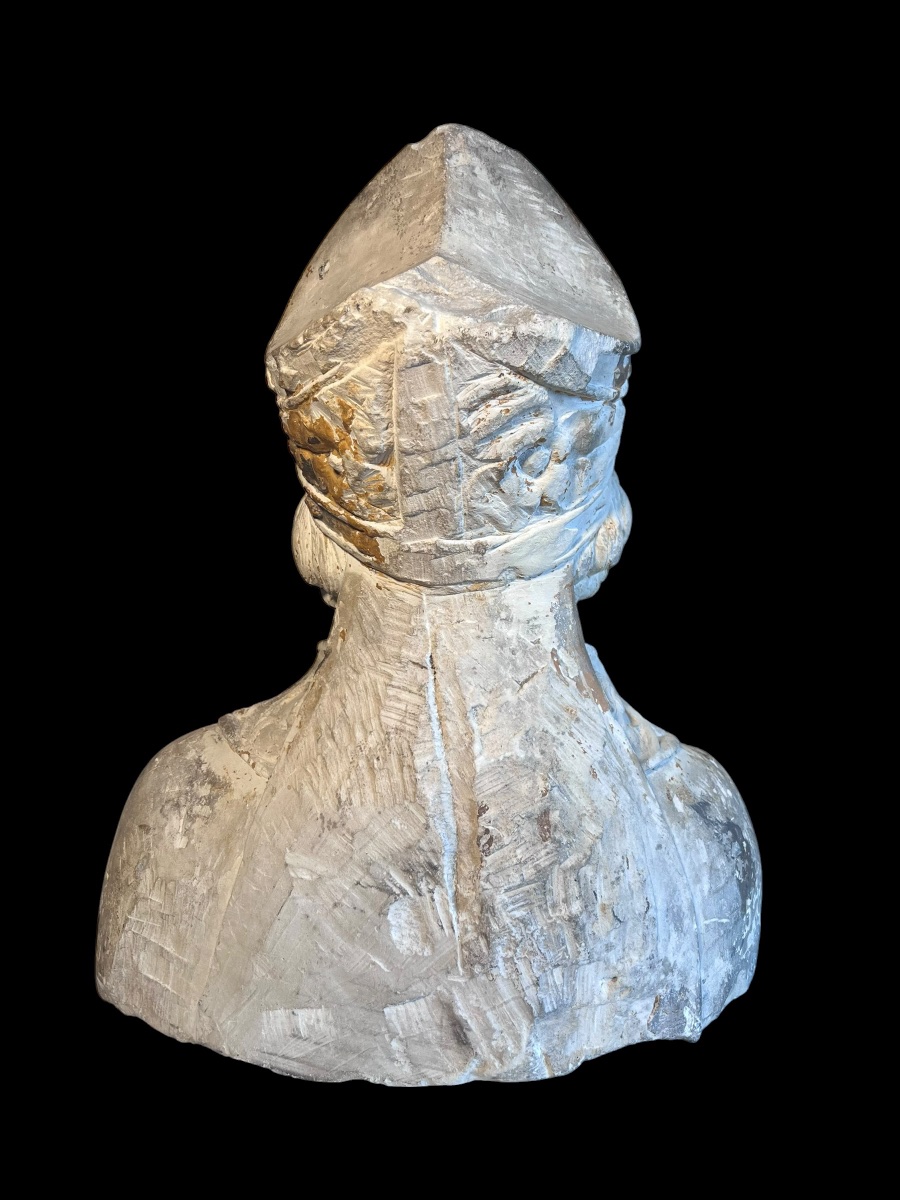
In terms of conservation, aside from a few superficial abrasions, it is in good
condition.
The original gilding and polychromy, testifying to the work’s exceptional value, are
preserved in small traces.
Provenance: formerly in the collection of Winfried and Gisela Schönberger
Authenticity and lawful provenance are guaranteed
Period: Before 16th century
Style: Other Style
Condition: En l'etat
Material: Stone
Width: 37
Height: 44
Depth: 22
Reference (ID): 1841680
Availability: In stock