


Double Satchel (heybe). Anatolia. Mid-20th Century. 147 X 48 Cm. Carpet
Here, it is the empty space that creates the pattern...
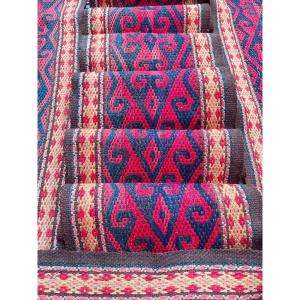
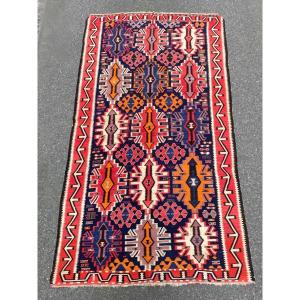
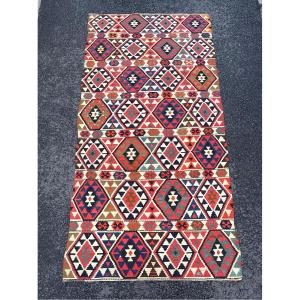
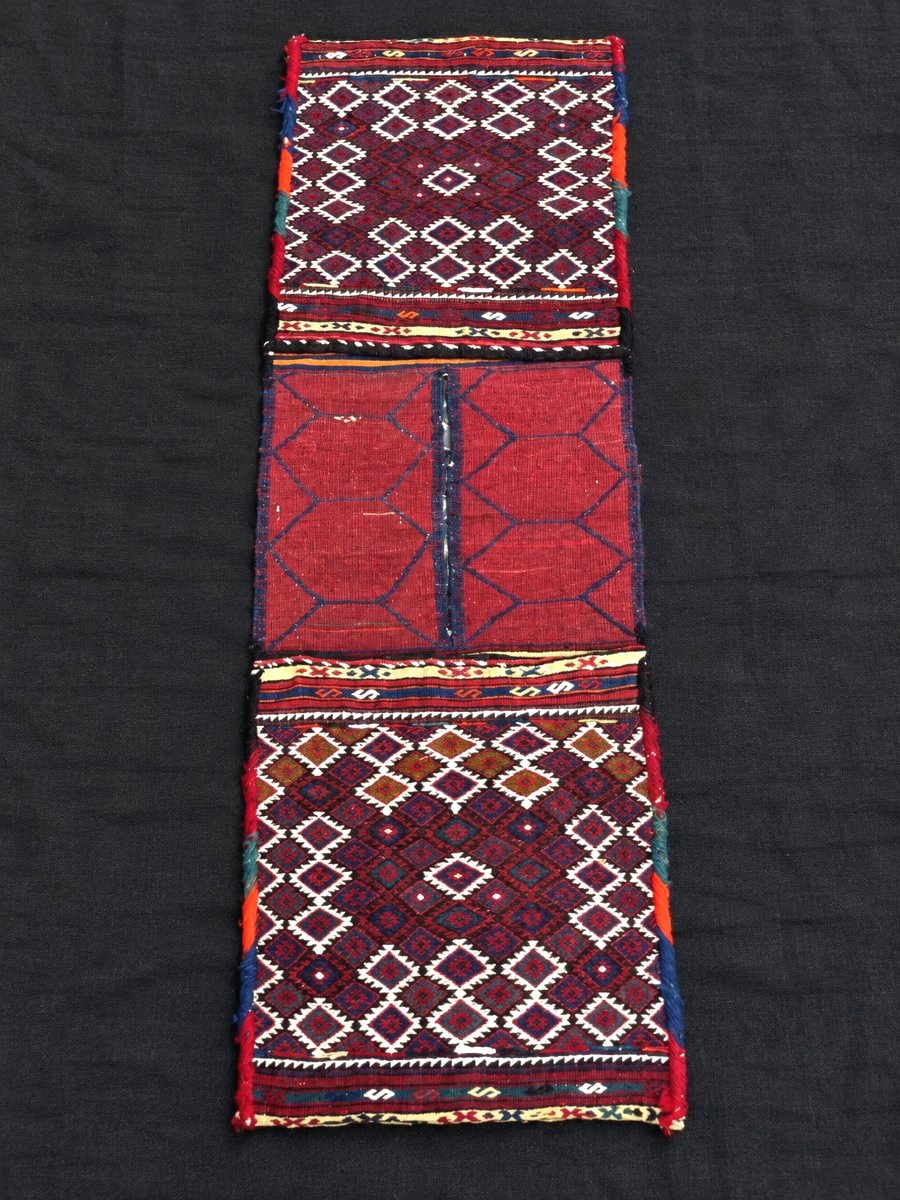
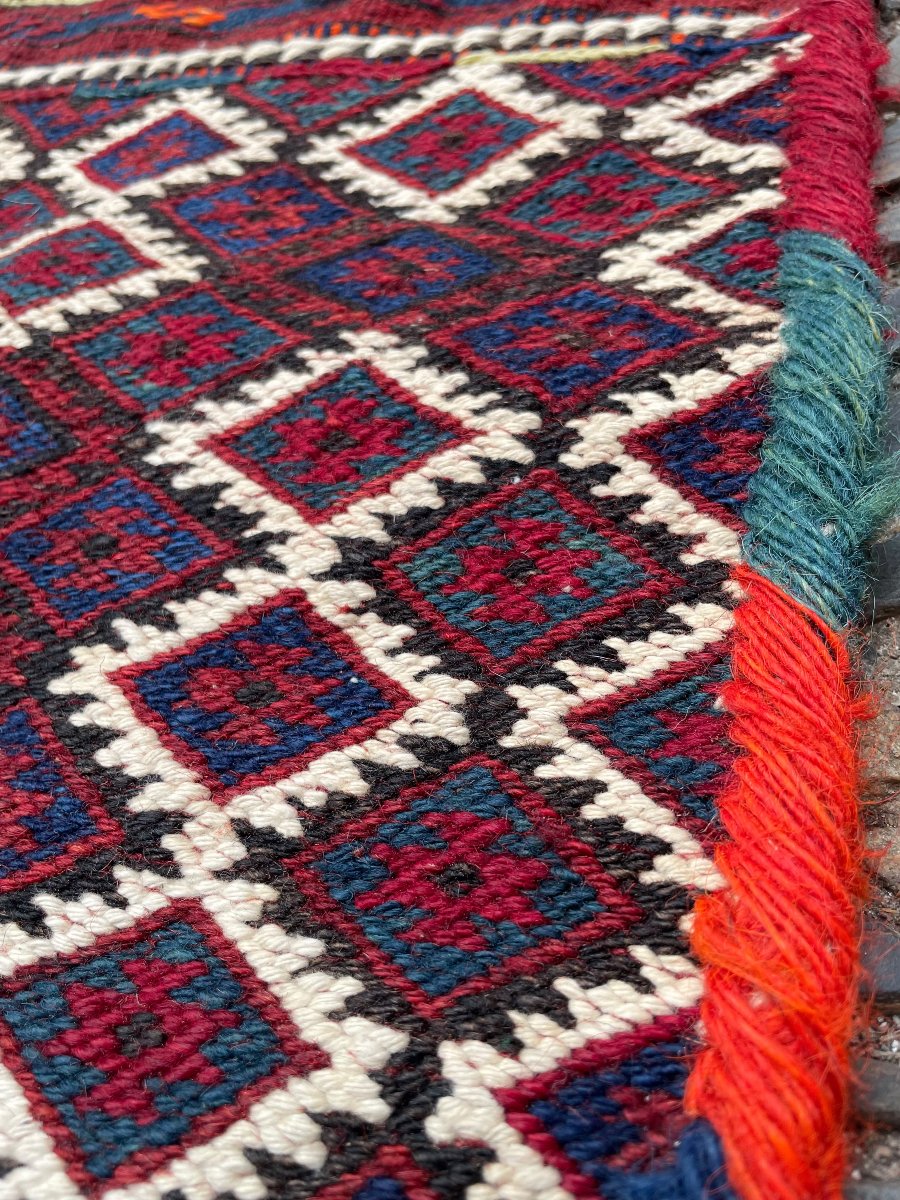
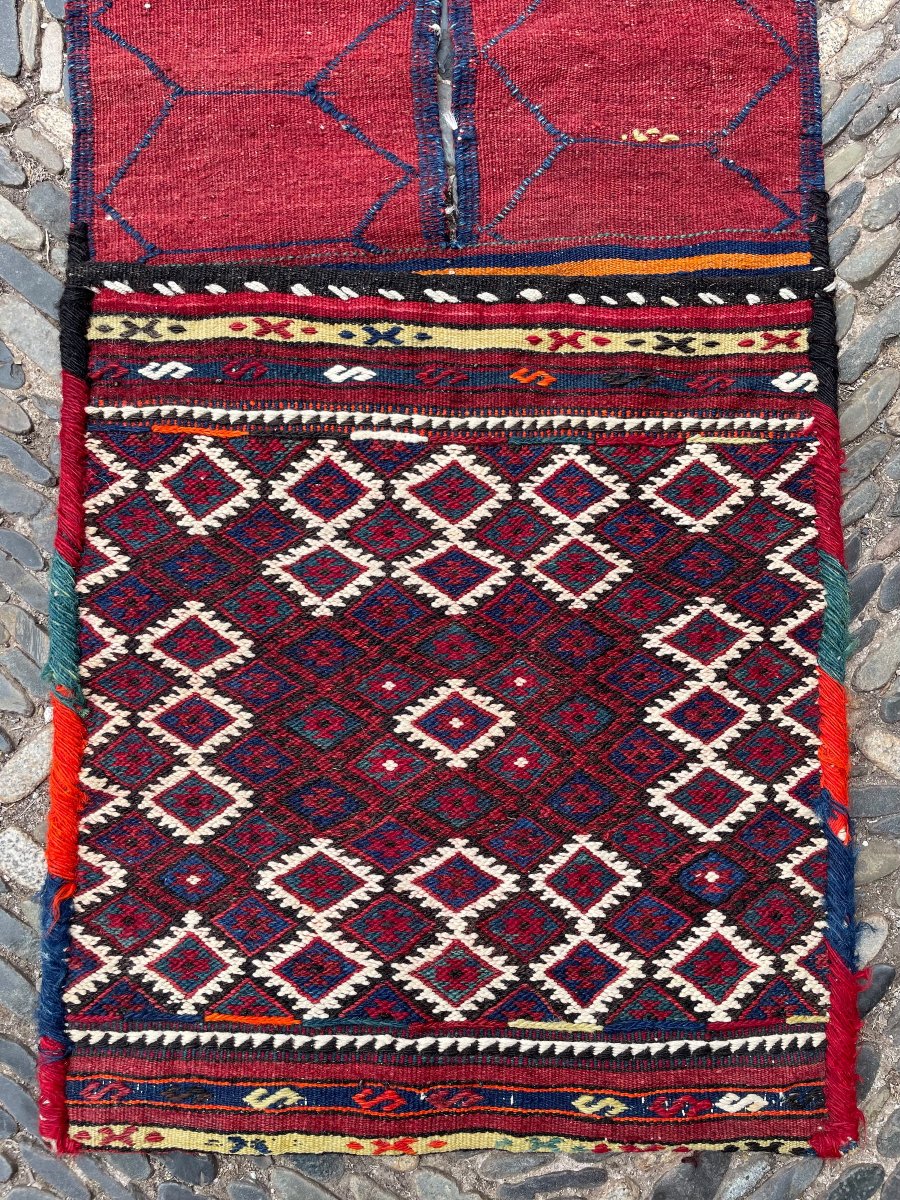
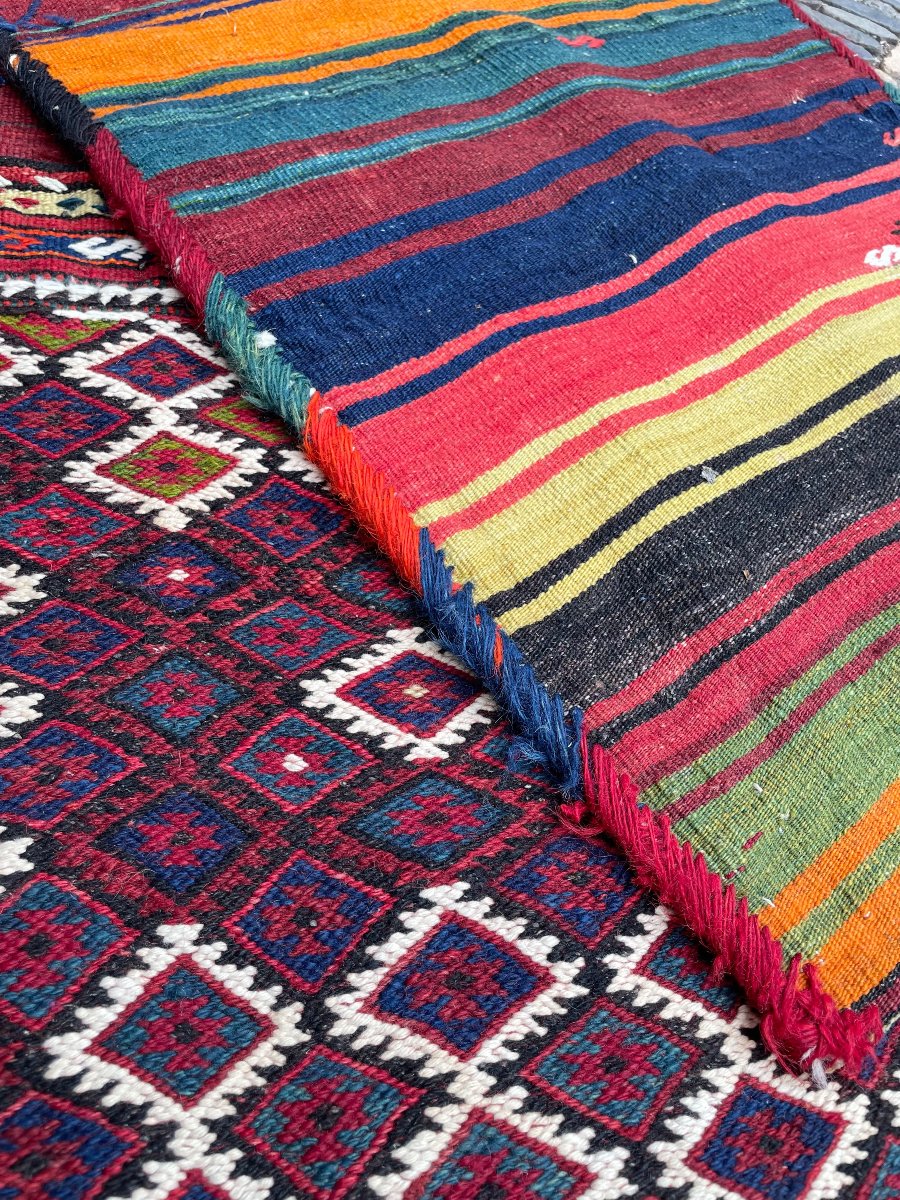
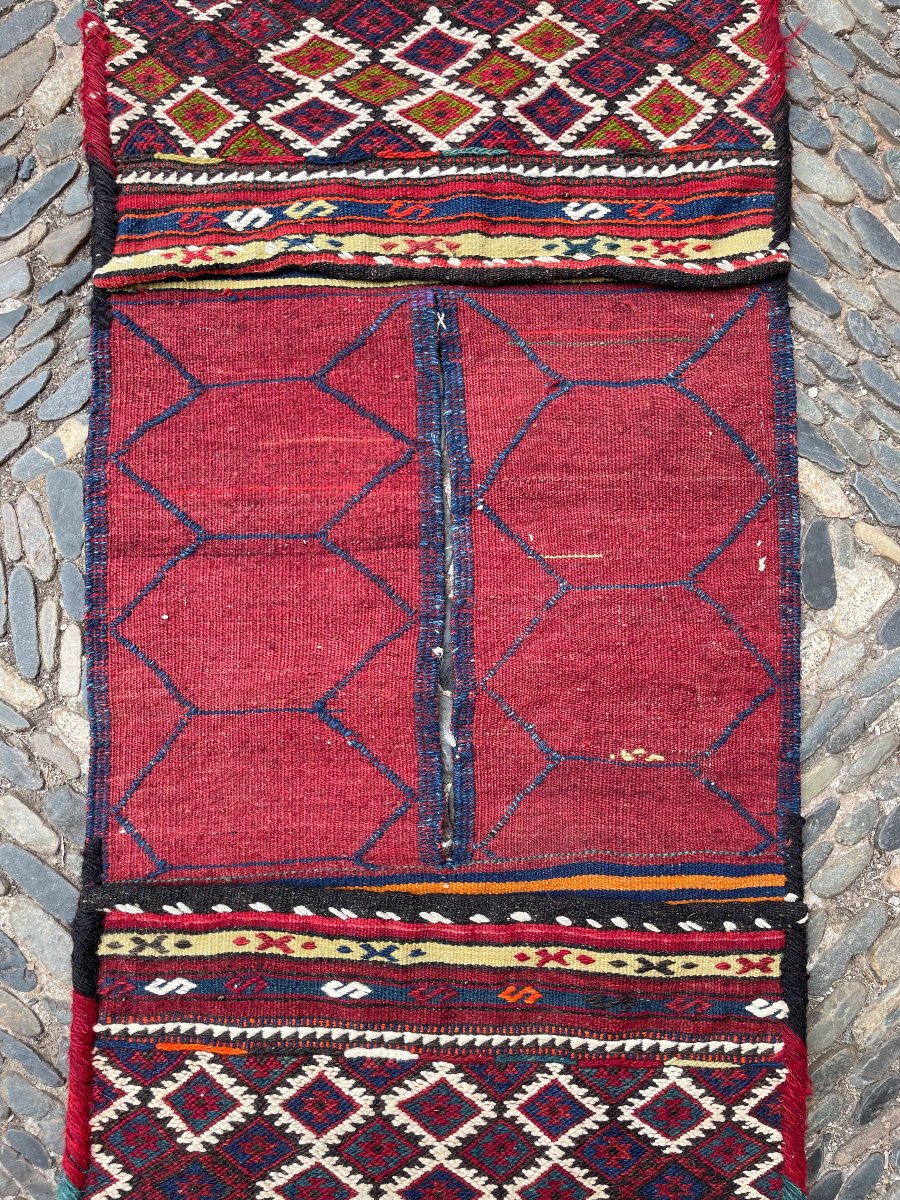
On each of the two fully embroidered sides of this antique heybe, the ivory-colored areas define the design as much as they separate it. Stepping back a bit, they reveal a large cross-like shape, each of whose four ends is itself terminated by a cross-like shape.
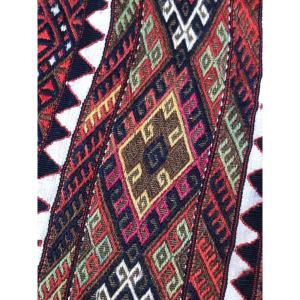
All around, the diamonds interlock and structure the field, revealing by contrast a second design in the dark red and indigo blue sections. Depending on where the eye rests, the filled areas become the pattern, then the empty spaces take their place: a particularly subtle, almost abstract graphic composition.
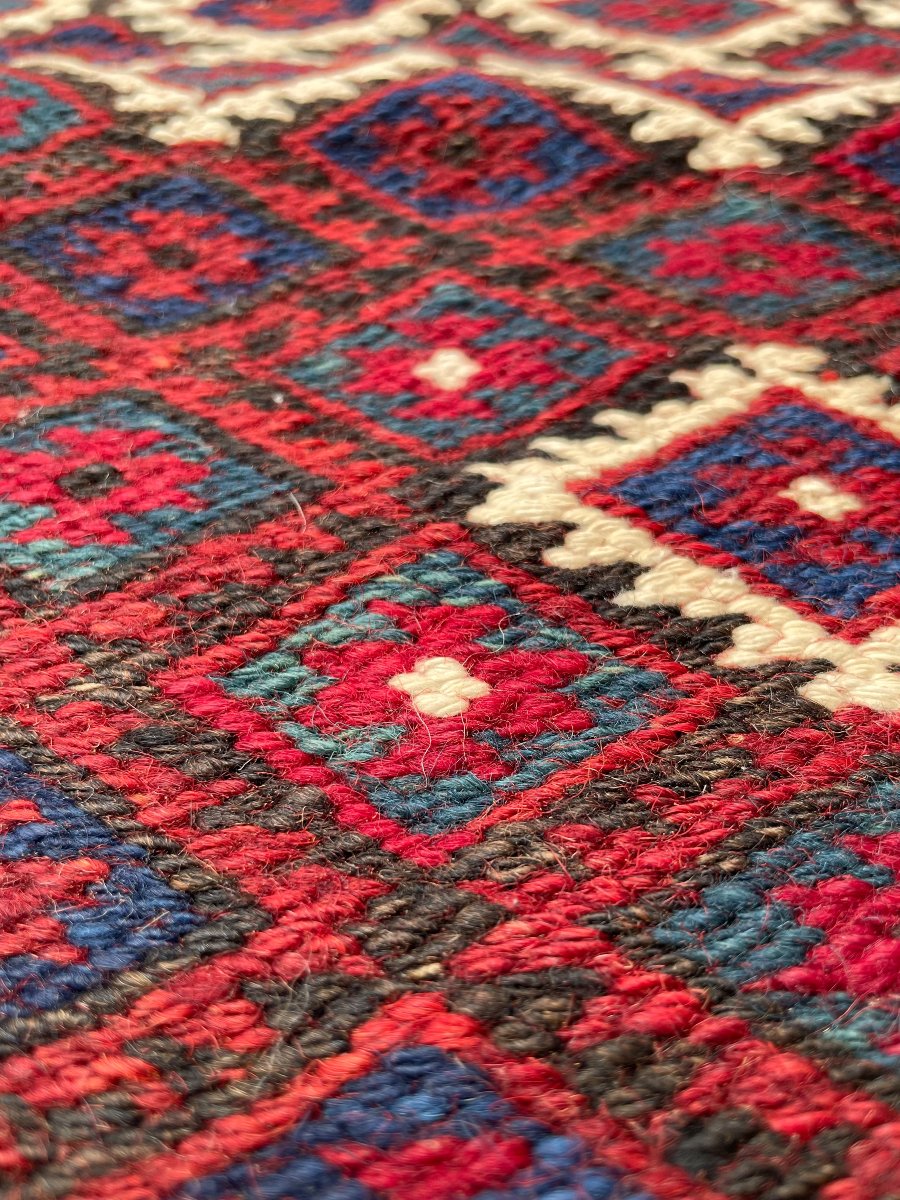
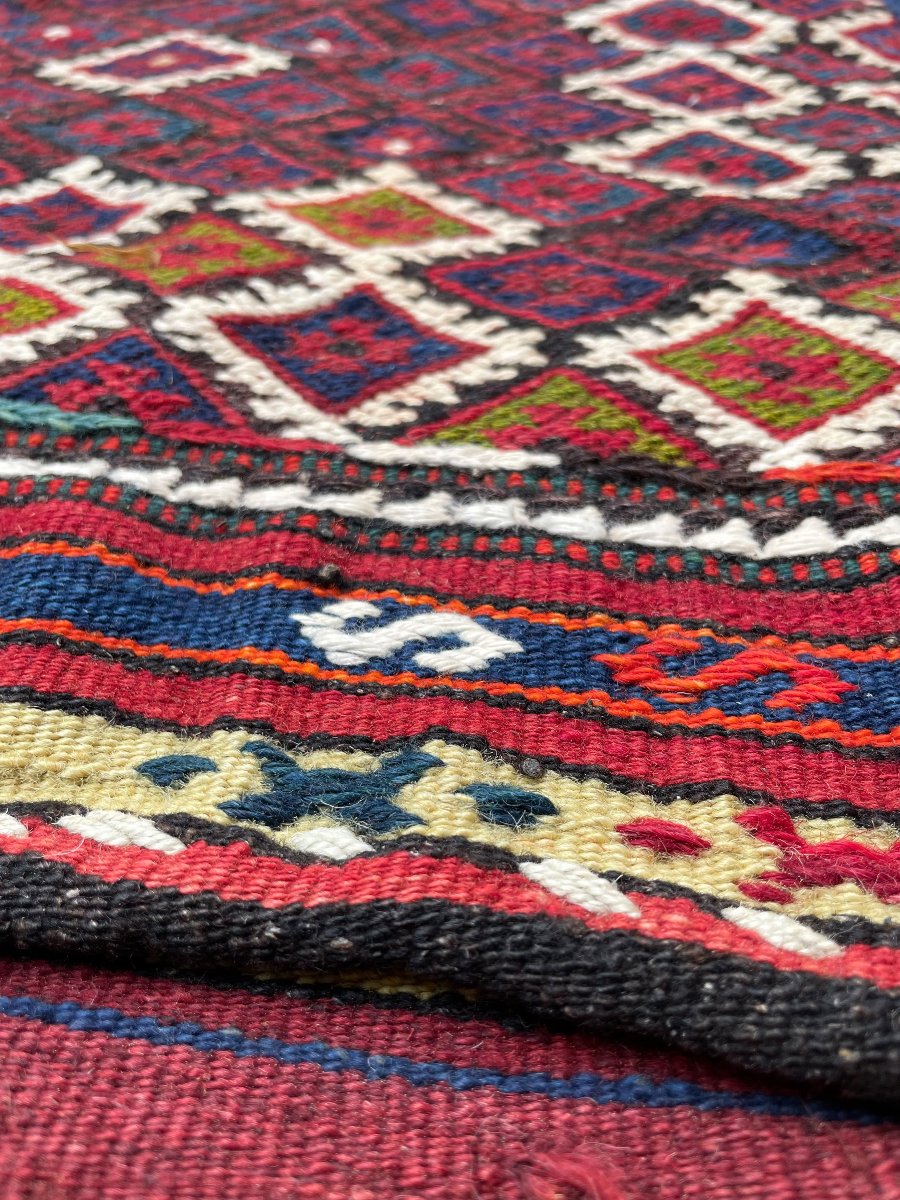
This impression is reinforced by the extreme density of the design. The diamonds interlock and echo one another with great regularity, while in the center a tighter composition seems to develop through small, successive variations. The white (cotton) brings light; the deep reds and indigo give the design its strength, and the whole is complemented by touches of pistachio green and orange.
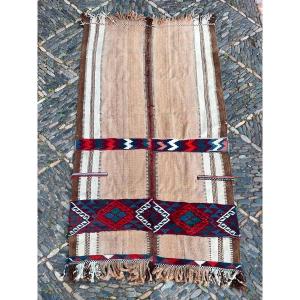
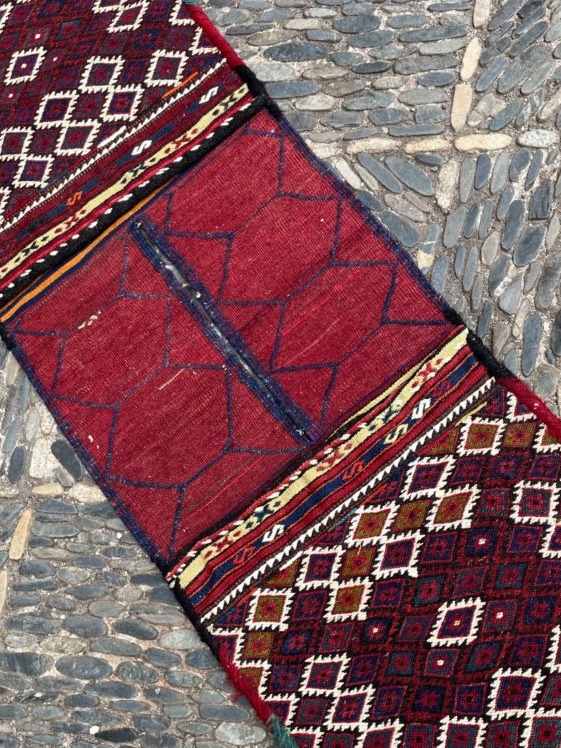
Originating from the Antalya region in southwestern Turkey, this double-sided bag, called a heybe, dates from the mid-20th century. Its construction perfectly illustrates the dual purpose of these objects: both sides, intended to be seen, are entirely embroidered, while the central section and the rest of the bag are woven, prioritizing durability, flexibility, and functionality.
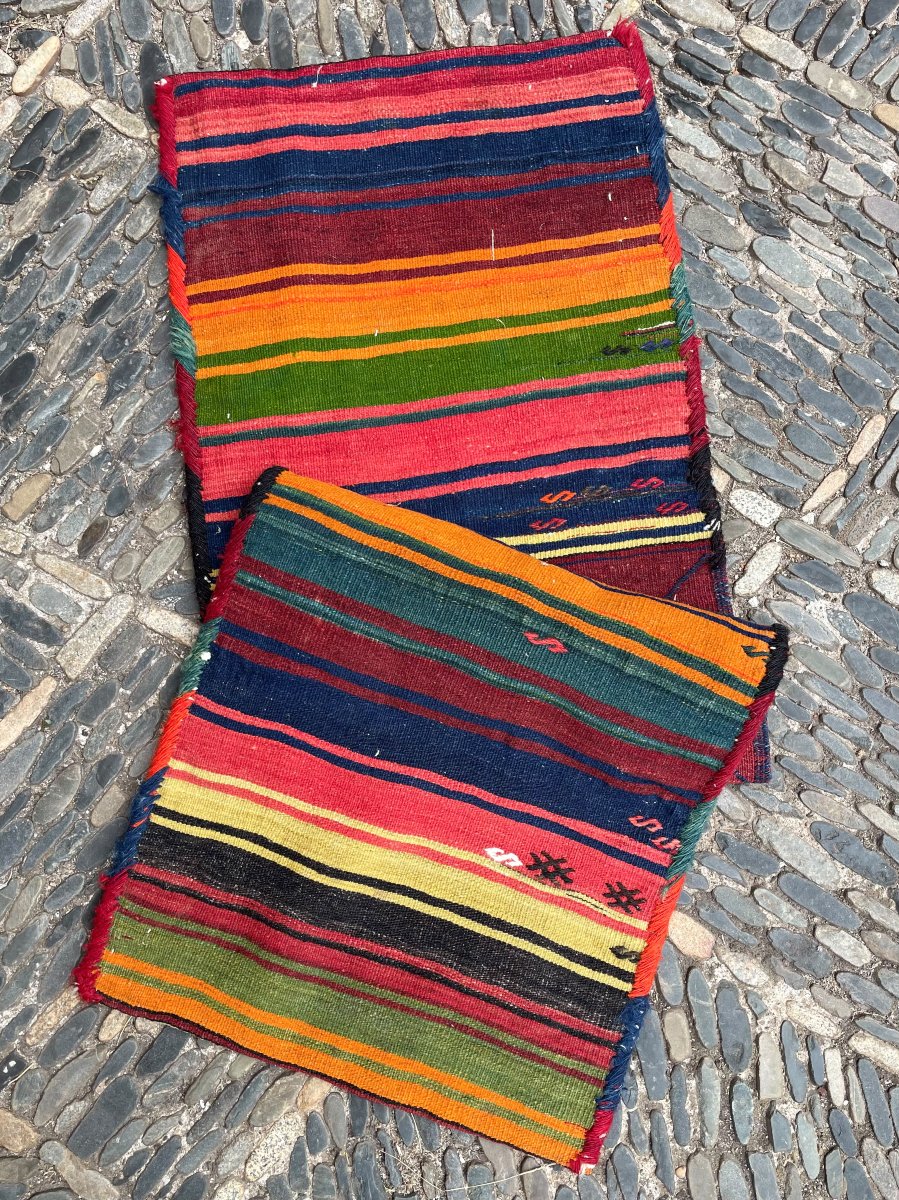
The back is also worth admiring. The color palette seems to form a rainbow.
An everyday object before it became a decorative one, the heybe accompanied travelers and allowed them to carry various belongings on either side of a pack animal or over the shoulder. Here, the attention to detail on the two embroidered panels serves as a reminder that a utilitarian object could become, in the hands of its weaver, a true canvas for graphic expression.
Woven and embroidered
Wool on wool
Mid-20th century
Perfect condition
Dimensions: 147 x 48 cm
Choosing an antique rug or textile is often a serendipitous encounter.
If one of our pieces catches your eye, or if you’d like more information or photos, I’d be happy to discuss it with you.
Laurent Consul
Beauty of Kilims
06 42 61 73 4
6
Period: 20th century
Style: Orientalism
Condition: Excellent condition
Material: Wool
Length: 147 cm
Width: 48 cm
Reference (ID): 1831099
Availability: In stock