

War Ax Featuring Two Depictions Of The Cross Of St. John Of Jerusalem, 13th Century
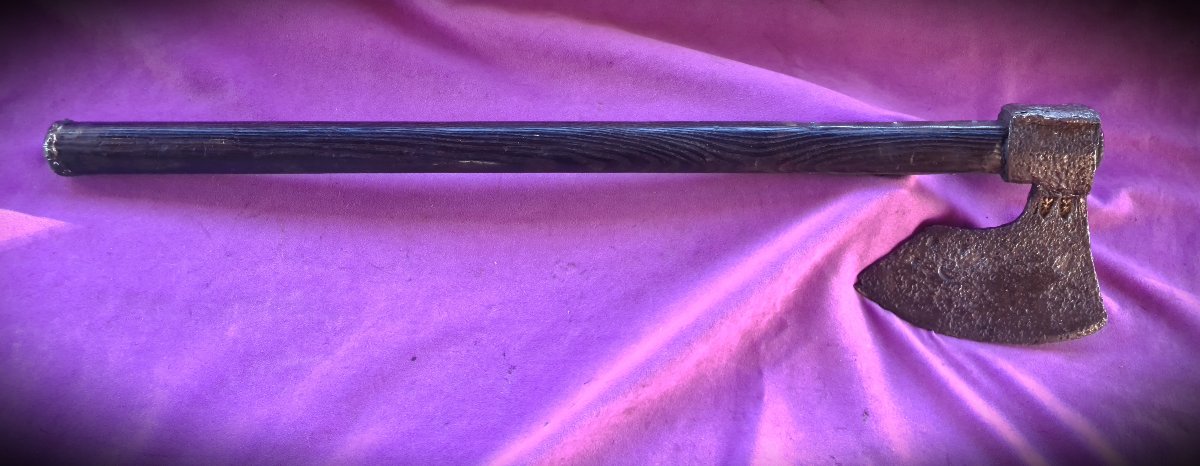
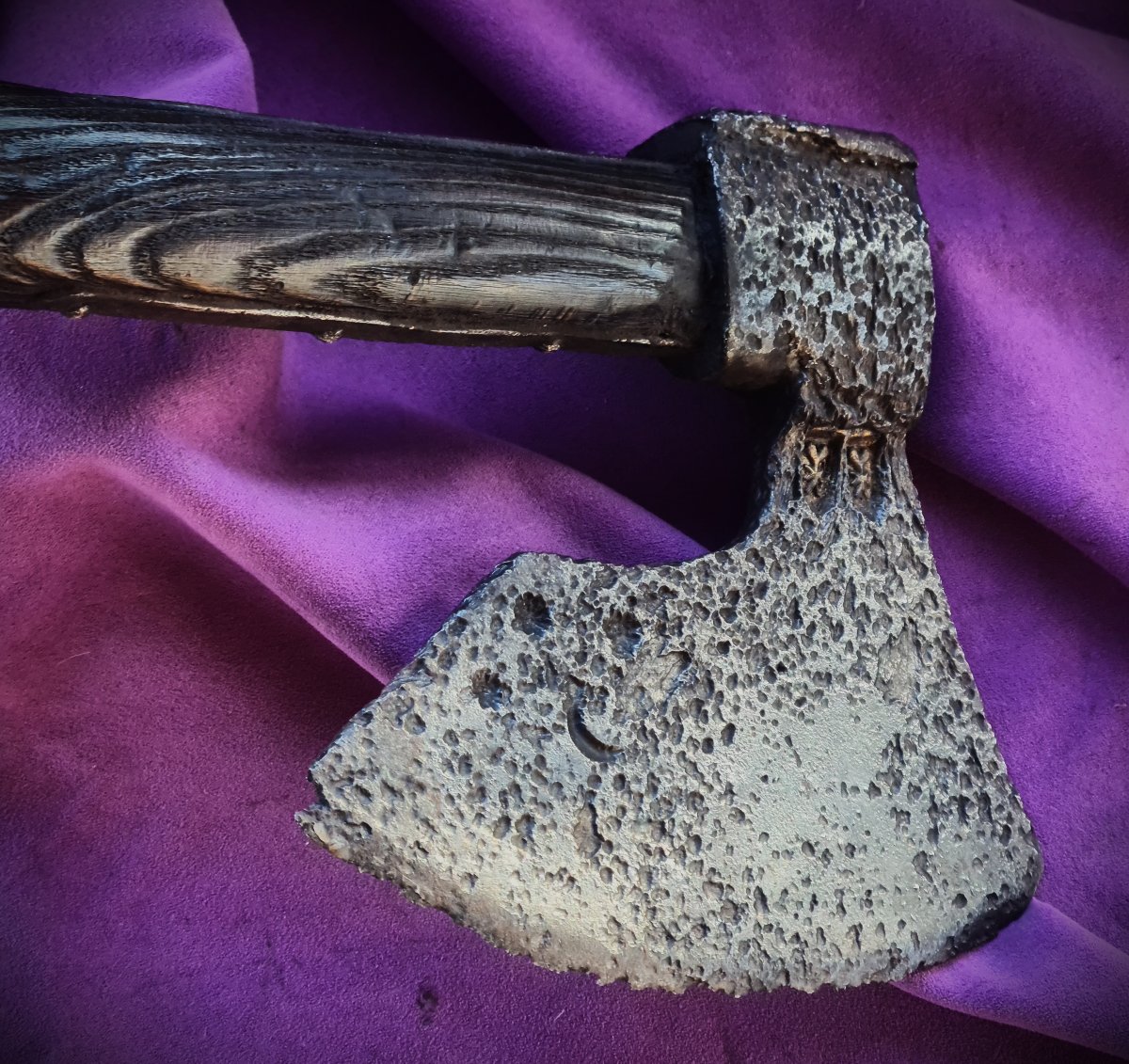
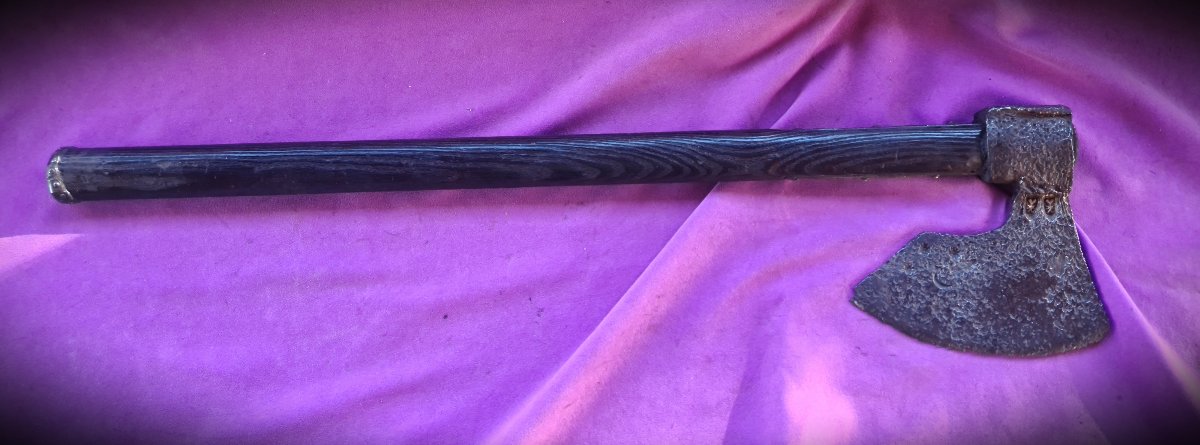
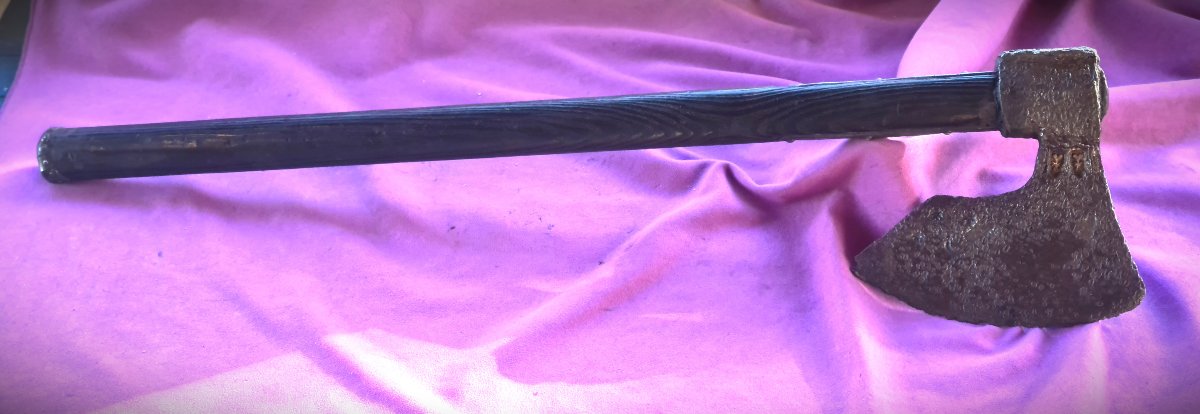
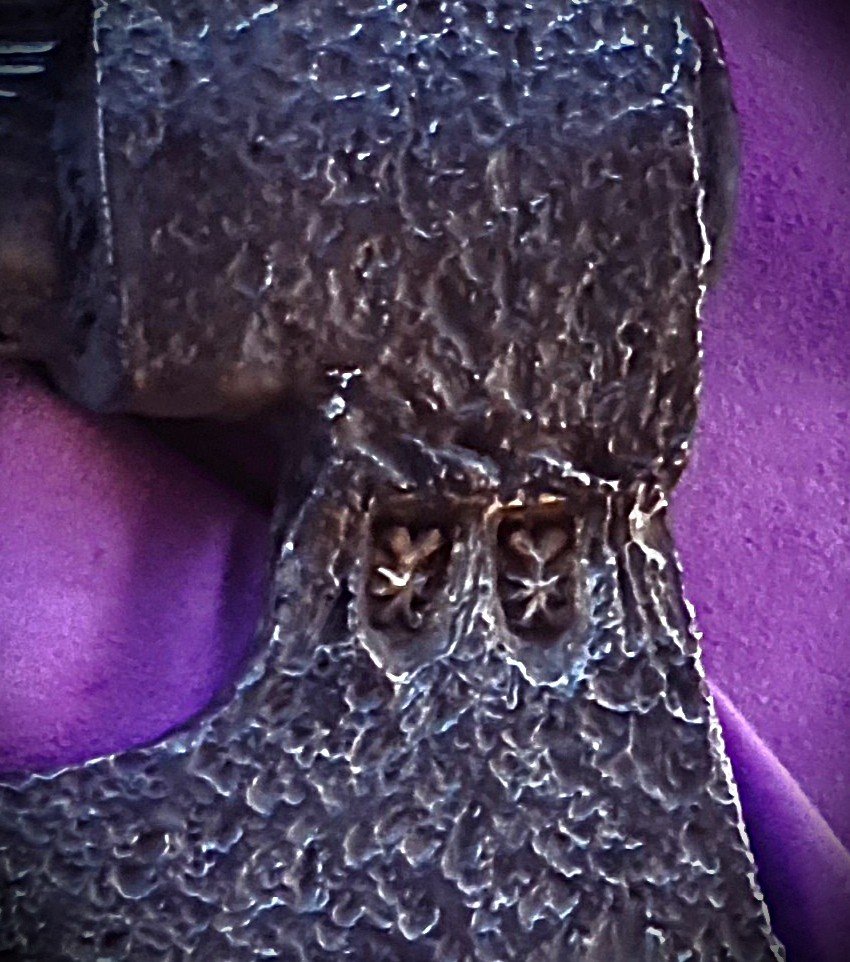
This battleaxe or war axe is from Germanic origin. It can be dated to the 13th or 14th century based on its overall shape and characteristics. The presence on the blade of a double mark of the Cross of St. John suggests a connection to the Hospitaller Order of St. John of Jerusalem, which later became the Order of Rhodes and then the Order of Malta. In addition, there is also a manufacturer’s mark, hot-stamped, consisting of a crescent moon accompanied by three stars. This type of mark appears with variations on other axes or polearms between the 11th andthe 14th centuries.
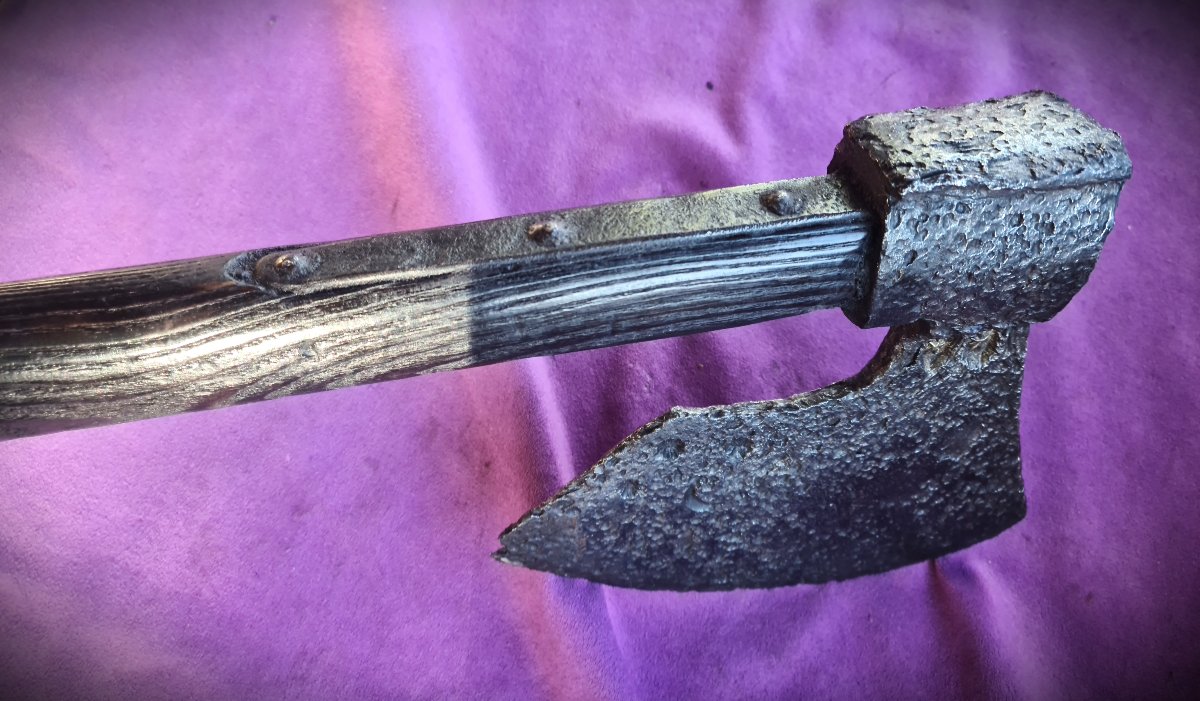
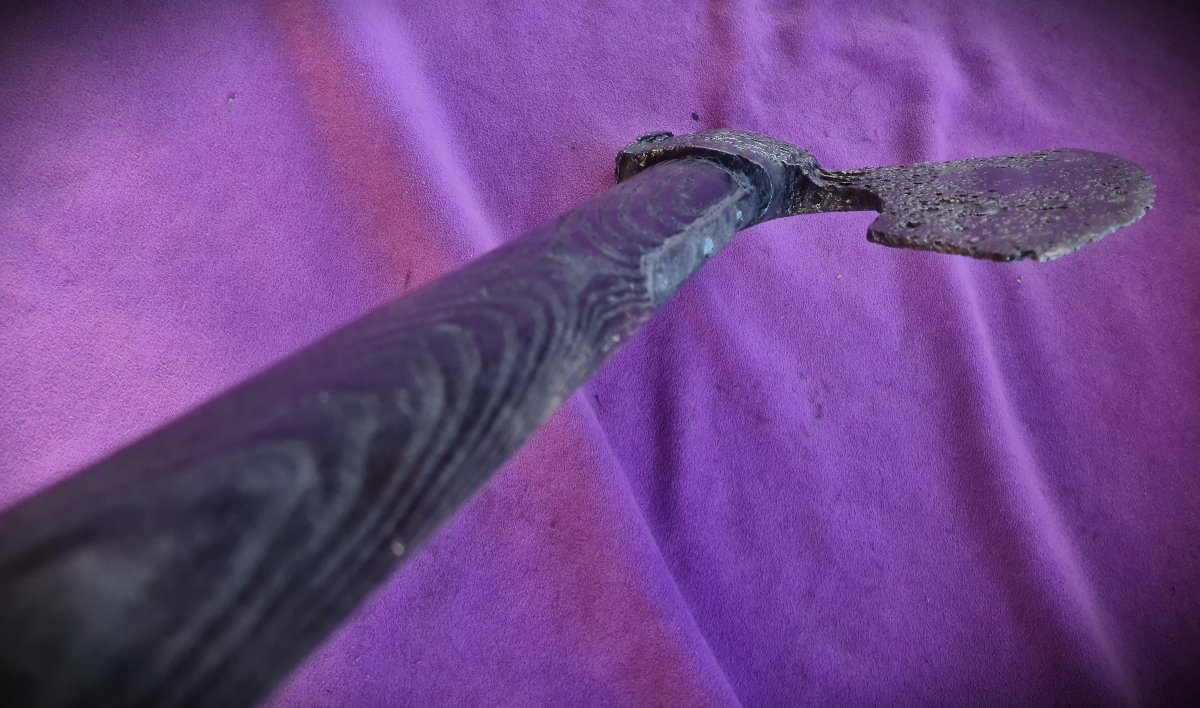
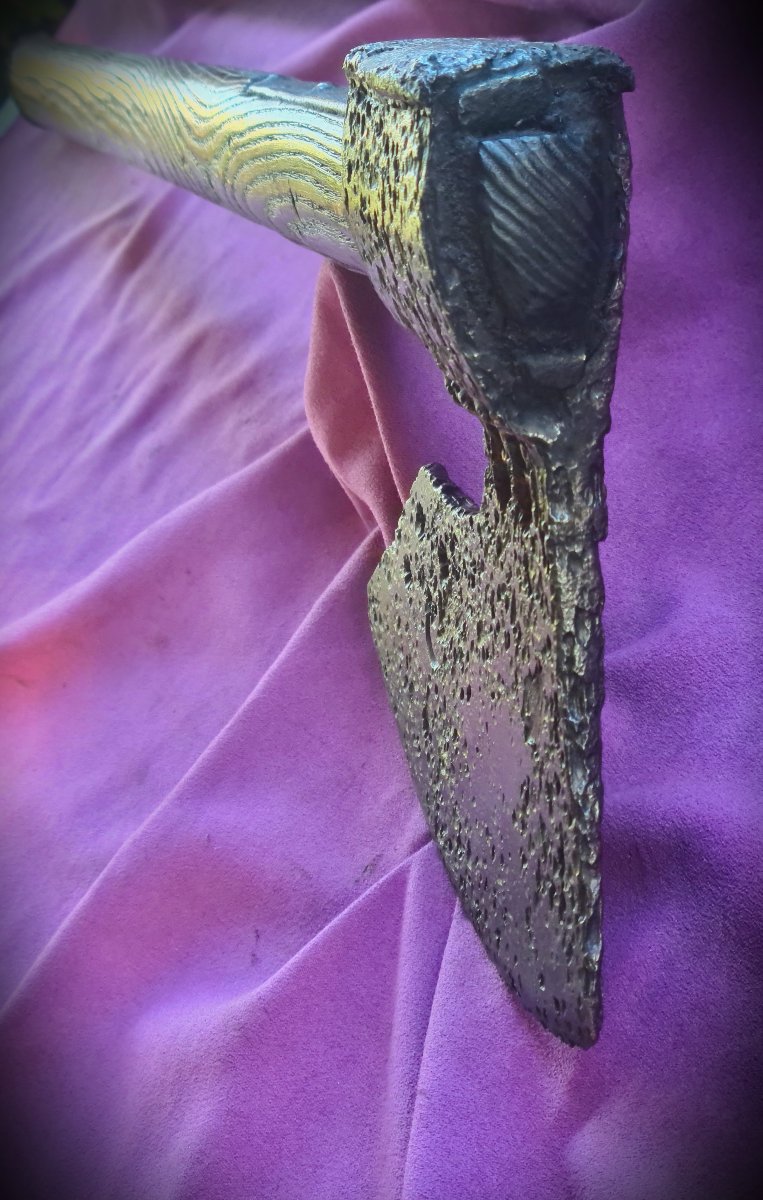
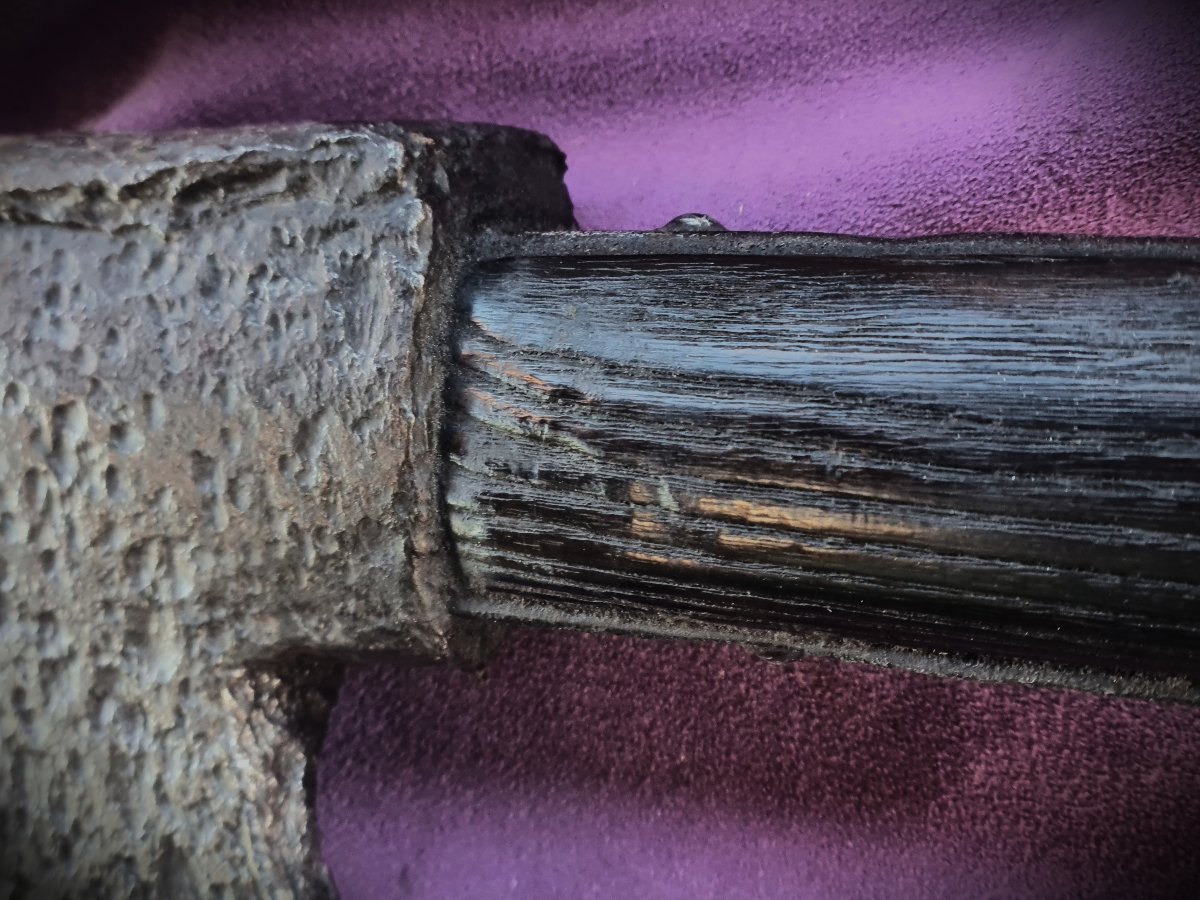
Axe head: It is mounted on the handle via a pointed eye and extends into a very short socket. The part opposite the cutting edge is flattened, which classifies this weapon in th e“hammer axes” category. This flat part was intended to strike the smooth surfaces of armor.
On one side, a double engraved mark depicting the Cross of St. John, highlighted with gilding (later), and on the back of this same side, a hallmark clearly marked with a crescent moon and three stars. Significant signs of oxidation.
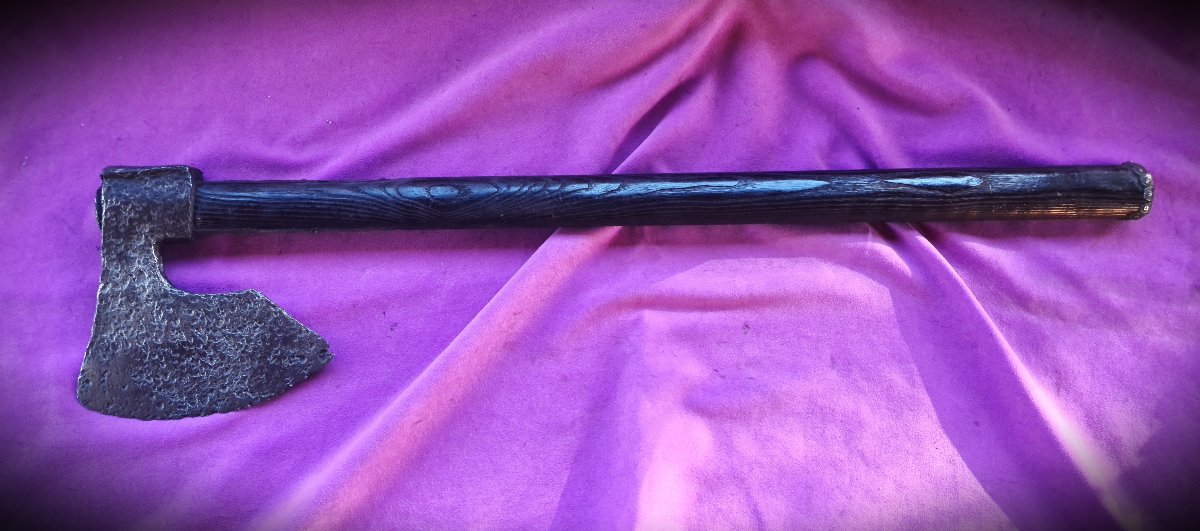
Length of the cutting edge: 19 cm; height from the cutting edge to the back edge of the axe = 18 cm
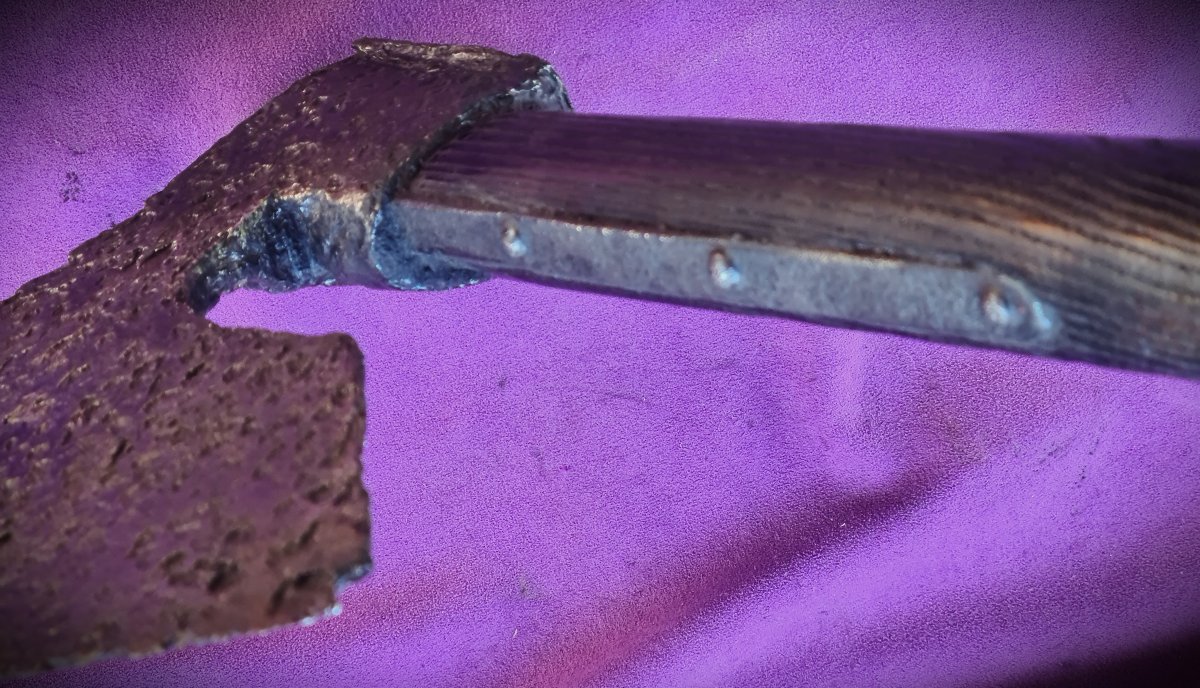
The blade is secured to the handle by two iron braces, which are fastened to the wood with nails.
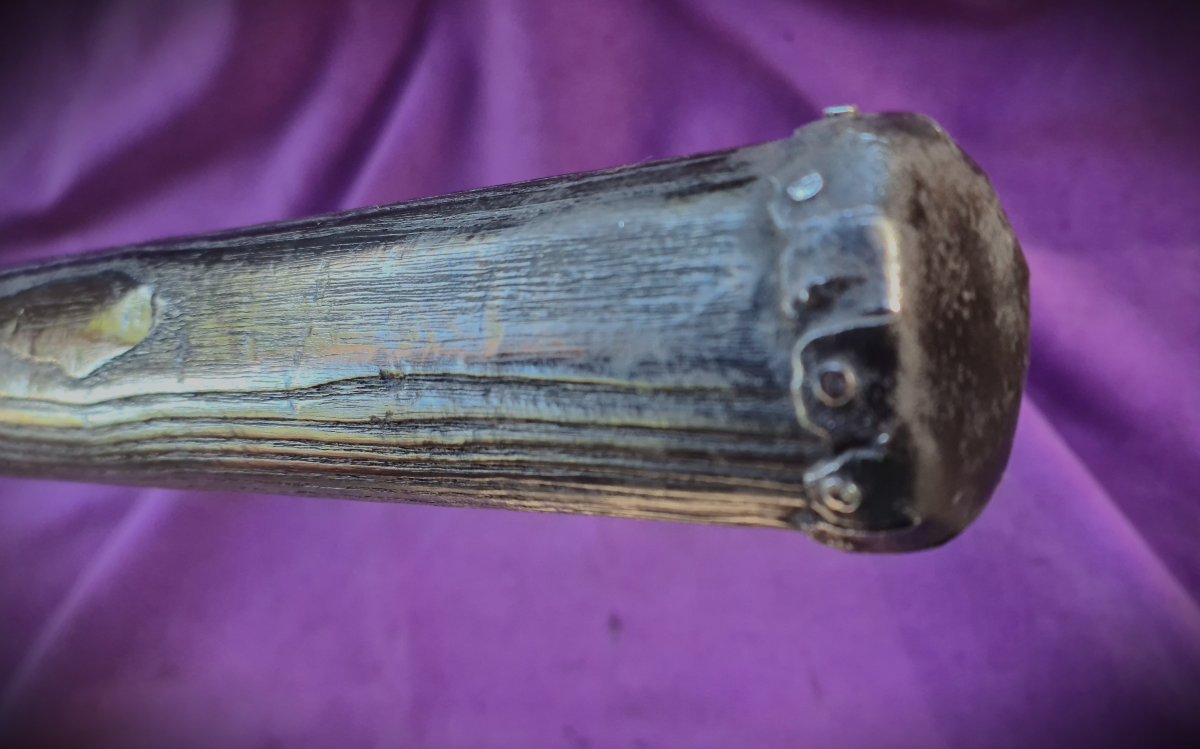
Handle: Obviously, this is no longer the original wood, but a later replacement. It is made of ash and has a nice patina. At the end opposite the axe head, the handle is covered with a cap made of thick sheet metal cut into petal shapes. This type of construction is typically Germanic and is quite common on axe handles from these periods.
A weapon of indisputable age, which the photos describe better than I could everdo
Ref BX-10XXShipping costs: France €30, Europe €40
Axe head: It is mounted on the handle via a pointed eye and extends into a very short socket. The part opposite the cutting edge is flattened, which classifies this weapon in th e“hammer axes” category. This flat part was intended to strike the smooth surfaces of armor.
On one side, a double engraved mark depicting the Cross of St. John, highlighted with gilding (later), and on the back of this same side, a hallmark clearly marked with a crescent moon and three stars. Significant signs of oxidation.
Length of the cutting edge: 19 cm; height from the cutting edge to the back edge of the axe = 18 cm
The blade is secured to the handle by two iron braces, which are fastened to the wood with nails.
Handle: Obviously, this is no longer the original wood, but a later replacement. It is made of ash and has a nice patina. At the end opposite the axe head, the handle is covered with a cap made of thick sheet metal cut into petal shapes. This type of construction is typically Germanic and is quite common on axe handles from these periods.
A weapon of indisputable age, which the photos describe better than I could everdo
Ref BX-10XXShipping costs: France €30, Europe €40
1 250 €
Period: Before 16th century
Style: Renaissance, Louis 13th
Condition: Condition of use
Material: Other
Length: 76 cm
Reference (ID): 1826713
Availability: In stock
Print