



Extra-large Double Wheellock Mechanism 16th Century, For A Fortress Musket
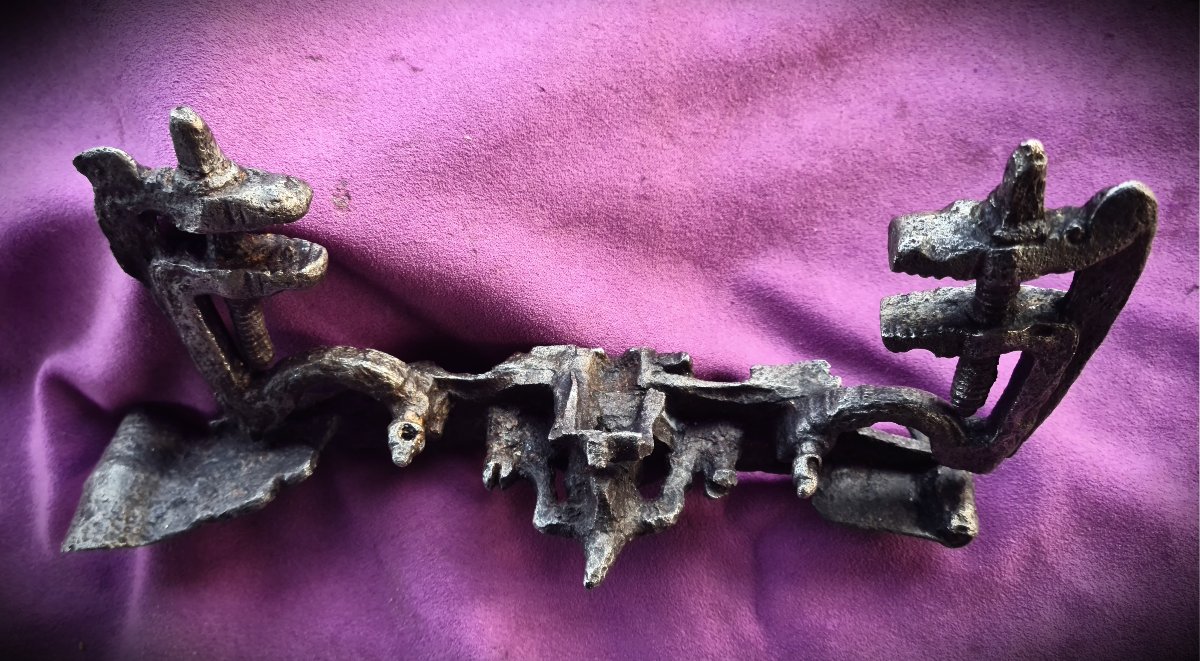
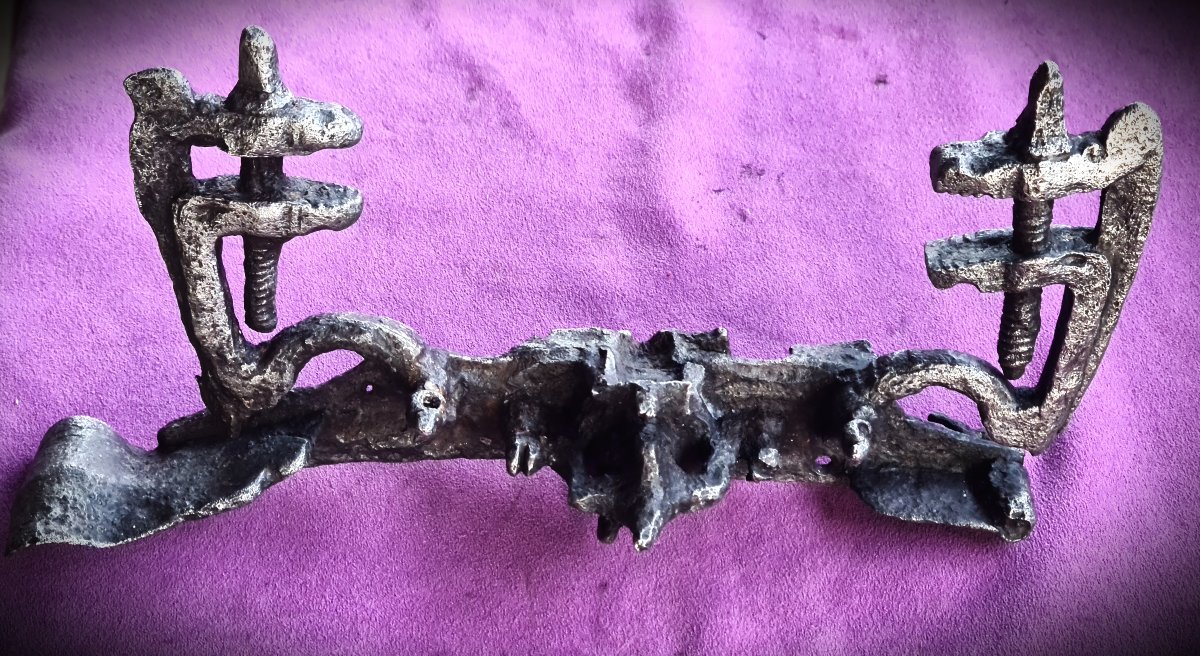
This wheellock mechanism is quite exceptional. In fact, itis a very large wheel lock dating from the 16th century, intended for a verylarge-caliber musket, sometimes incorrectly referred to as a siege arquebuse or a rampart arquebuse.
Strictly speaking, muskets are larger, heavier, and of larger caliber than arquebuses, but the two terms are often used interchangeably.
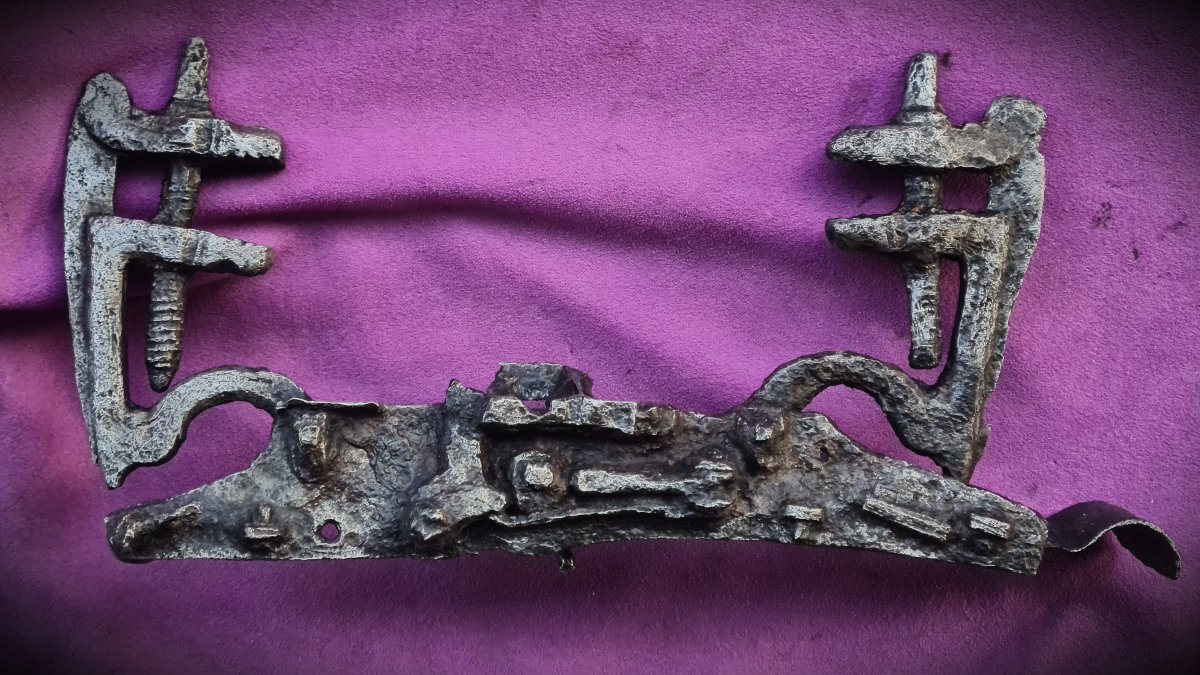
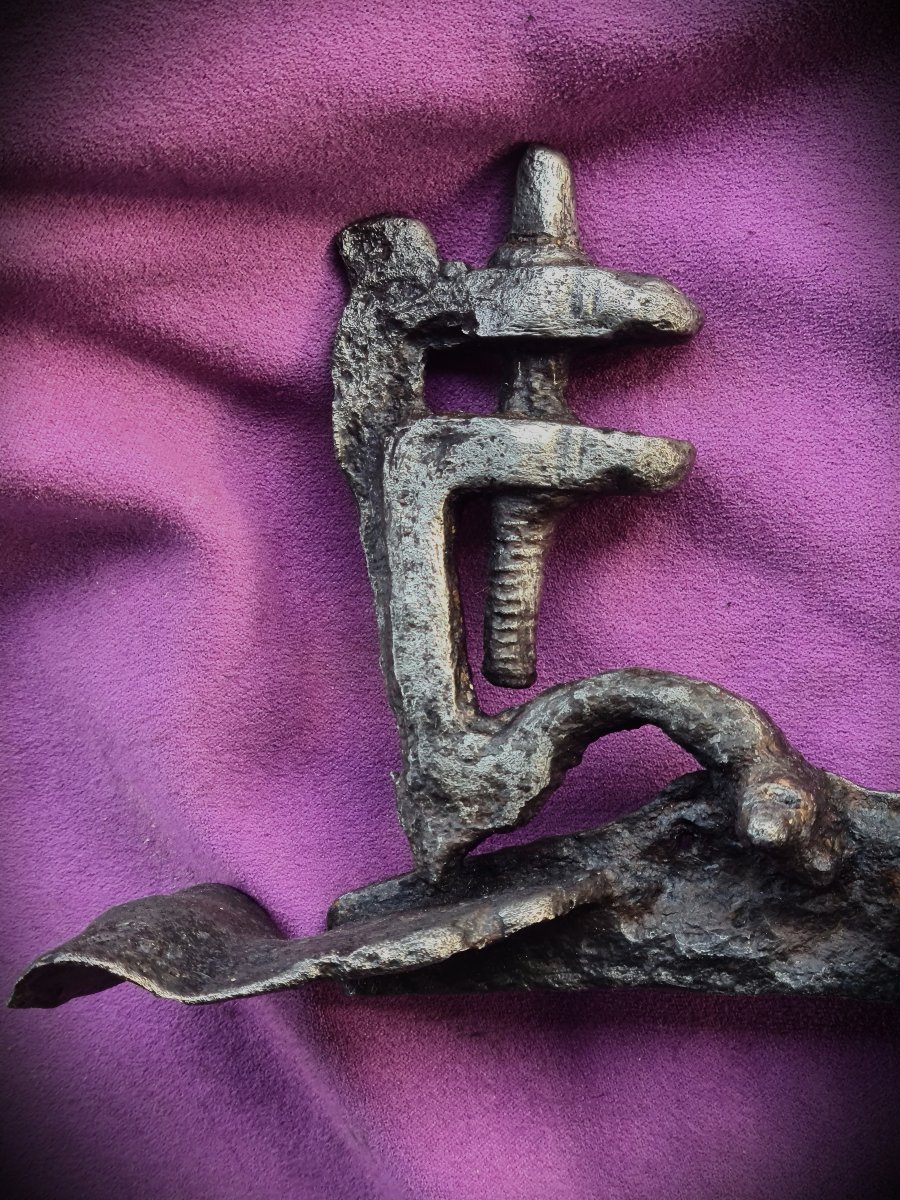
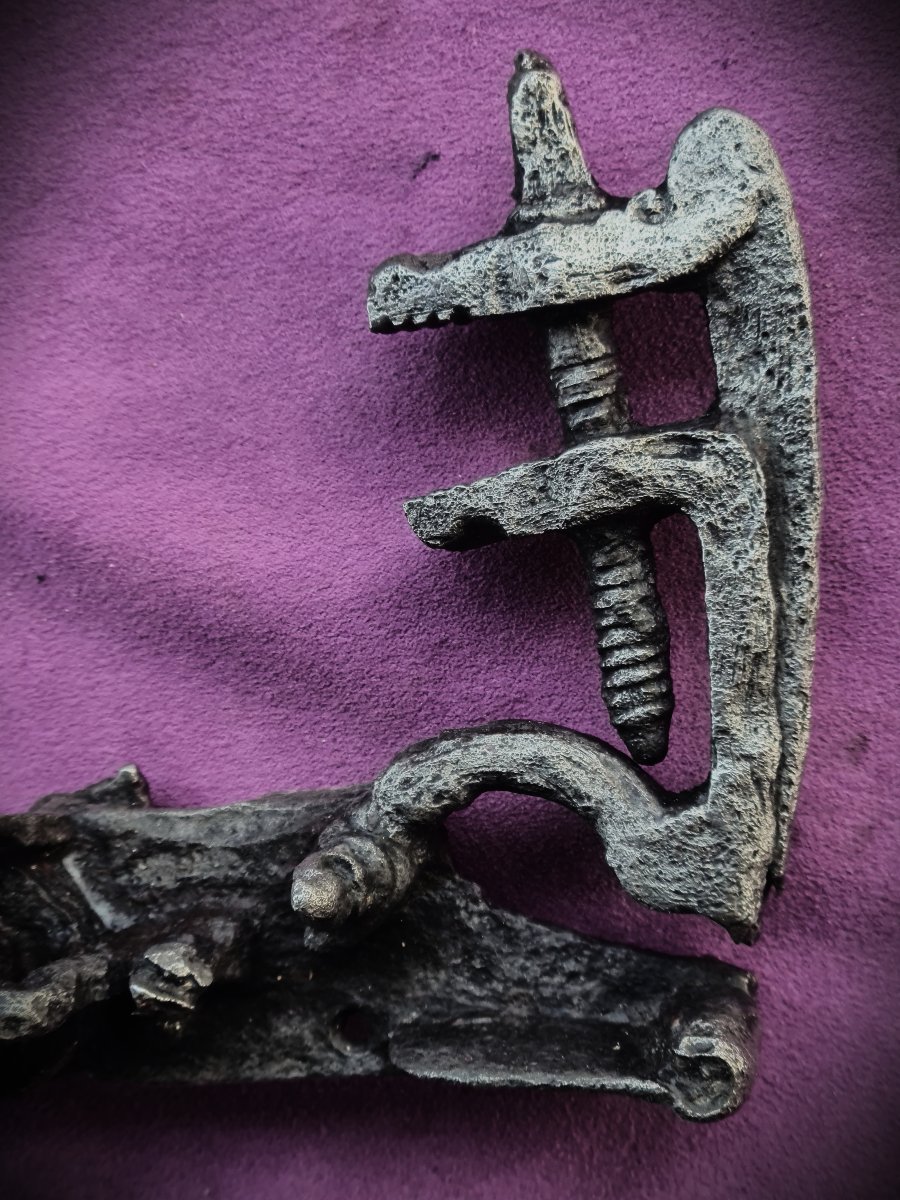
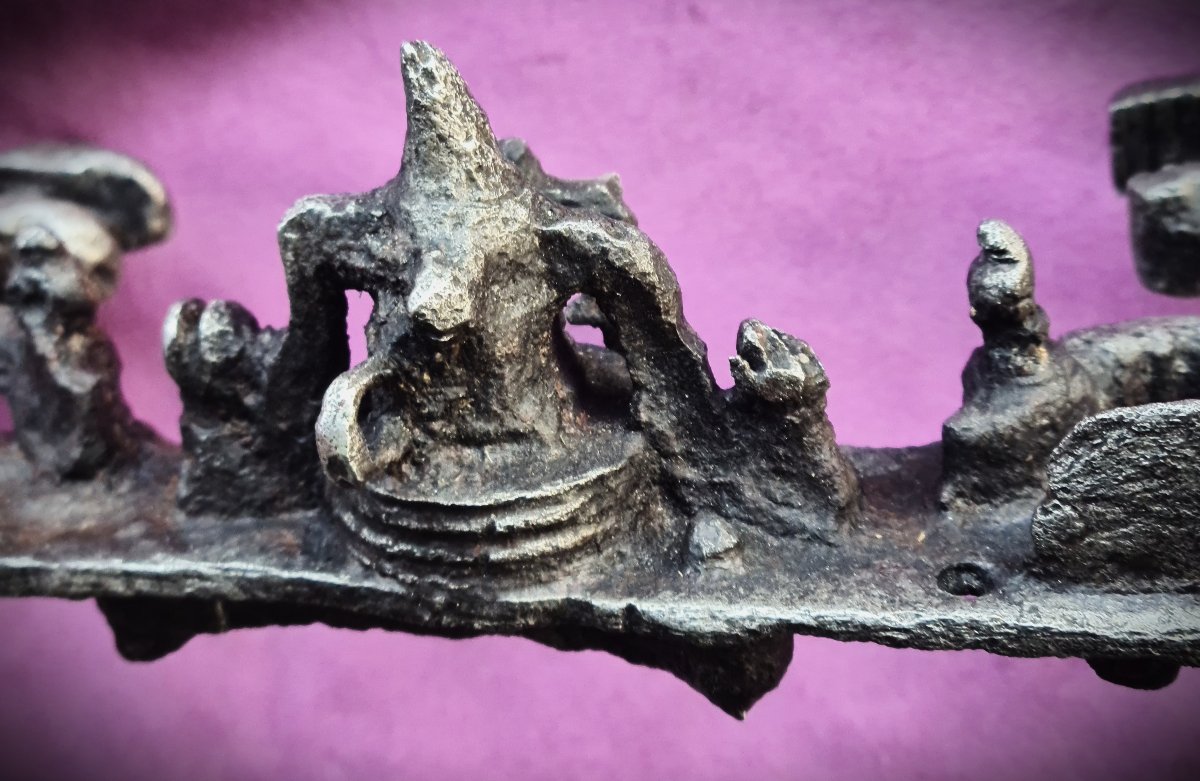
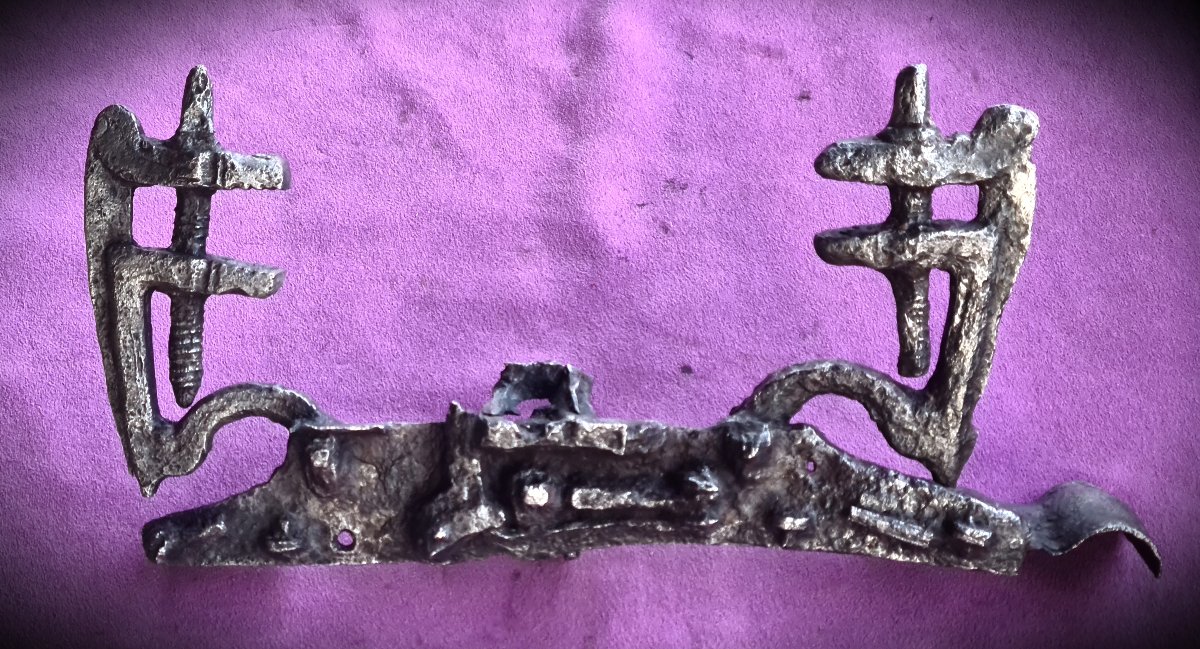
This model has two hammers. The iron pyrite used to ignite these weapons in place of flint tended to break, and having a second hammer loaded with fresh pyrite ensured the weapon was always ready to fire, even if one of the two pyrite stones were to break. The entire object is in what is known as “excavation” condition, and the mechanism is currently jammed due to corrosion, but this type of lock is so rare that it must be accepted as it is.
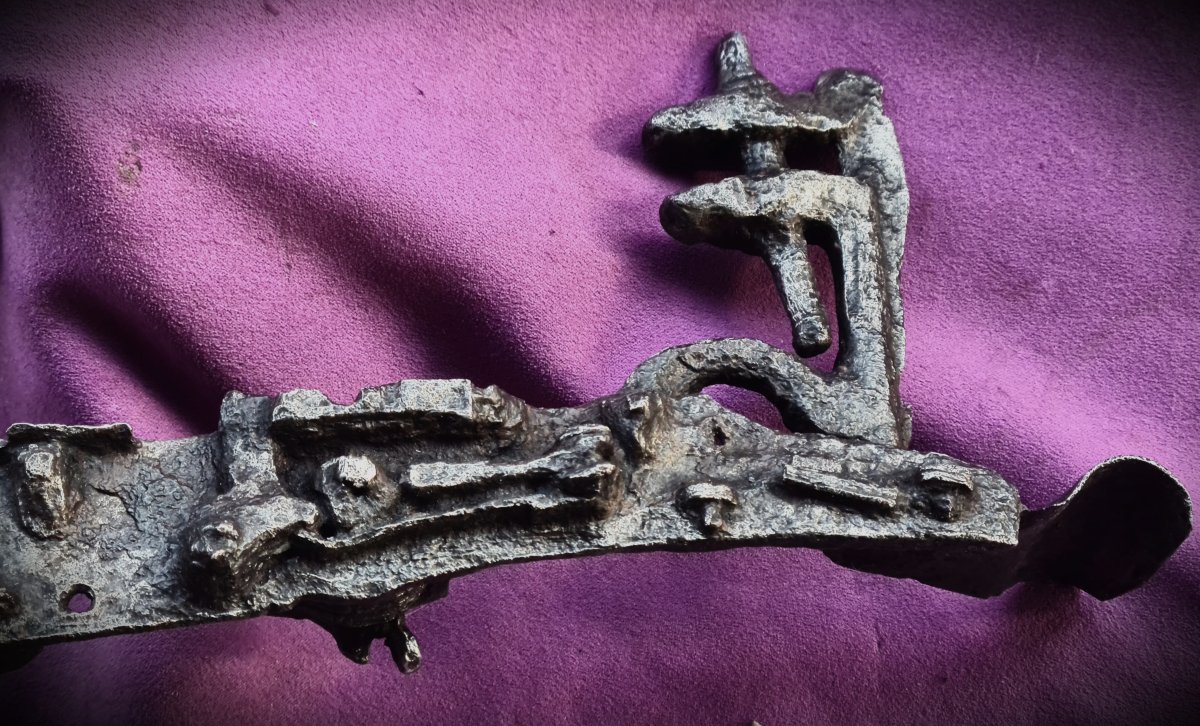
EXTERNAL SIDE: Both hammers are in the raised position; the stone holders and clamping screws are present.The outer wheel isvery easily recognizable, held in place by two screws and a clamp. The pan is resent but is pitted by corrosion, which was common during he use of these weapons, as black powder is particularly corrosive.
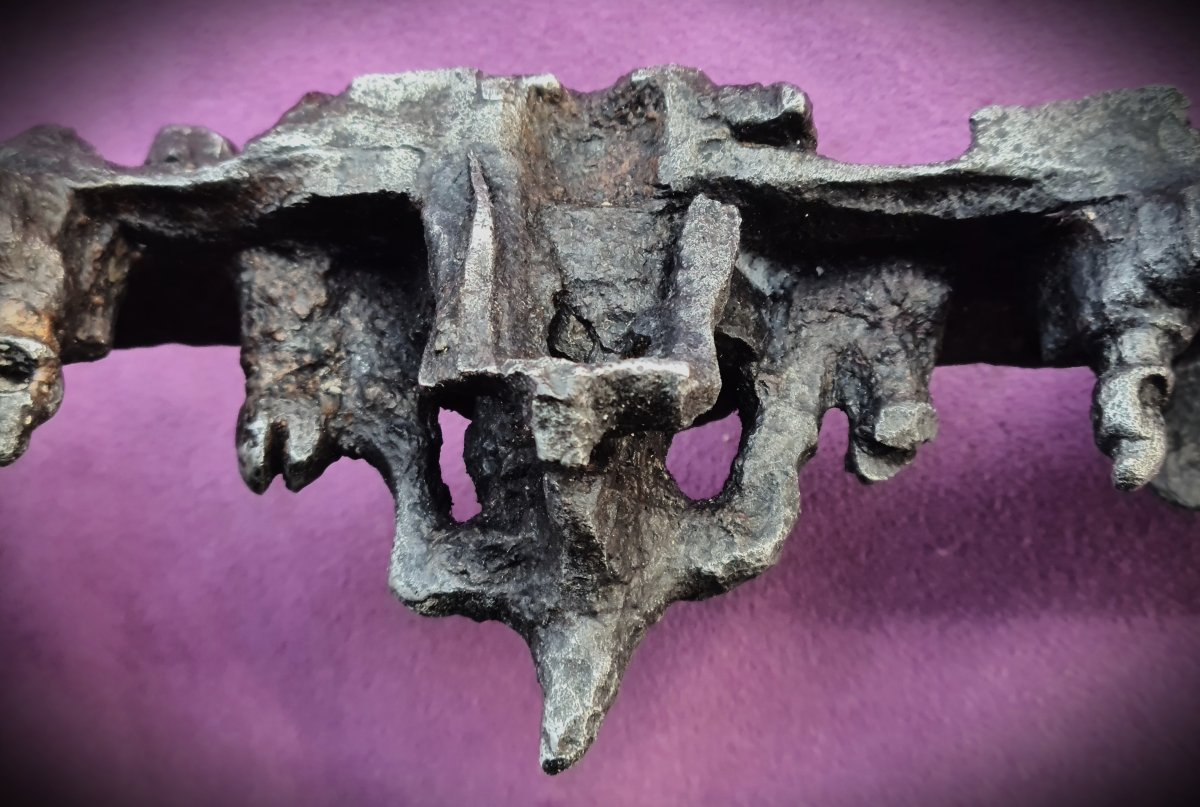
INTERNAL SIDE: It shows a general view of the mechanism, which retains a good portion of its original components.
The firearm for which this lockplate was intended musthave been of an impressive size, weighing around ten kilograms, and with a caliber close to 20 mm.
With patient work—perhaps using penetrating oil and a blowtorch—it might be possible to restore mobility to the hammers, of the stone holders screws, and perhaps even the wheel, but I prefer to leave the object in the condition in which it was found.
Ref B-2652
Shipping costs: France €20, Europe €30
Strictly speaking, muskets are larger, heavier, and of larger caliber than arquebuses, but the two terms are often used interchangeably.
This model has two hammers. The iron pyrite used to ignite these weapons in place of flint tended to break, and having a second hammer loaded with fresh pyrite ensured the weapon was always ready to fire, even if one of the two pyrite stones were to break. The entire object is in what is known as “excavation” condition, and the mechanism is currently jammed due to corrosion, but this type of lock is so rare that it must be accepted as it is.
EXTERNAL SIDE: Both hammers are in the raised position; the stone holders and clamping screws are present.The outer wheel isvery easily recognizable, held in place by two screws and a clamp. The pan is resent but is pitted by corrosion, which was common during he use of these weapons, as black powder is particularly corrosive.
INTERNAL SIDE: It shows a general view of the mechanism, which retains a good portion of its original components.
The firearm for which this lockplate was intended musthave been of an impressive size, weighing around ten kilograms, and with a caliber close to 20 mm.
With patient work—perhaps using penetrating oil and a blowtorch—it might be possible to restore mobility to the hammers, of the stone holders screws, and perhaps even the wheel, but I prefer to leave the object in the condition in which it was found.
Ref B-2652
Shipping costs: France €20, Europe €30
680 €
Period: 16th century
Style: Renaissance, Louis 13th
Condition: Condition of use
Material: Other
Length: 25 cm
Height: 13 cm
Reference (ID): 1829823
Availability: In stock
Print