




Strong Cavalry Sword, Dragoons, Swedish Or German Circa 1640
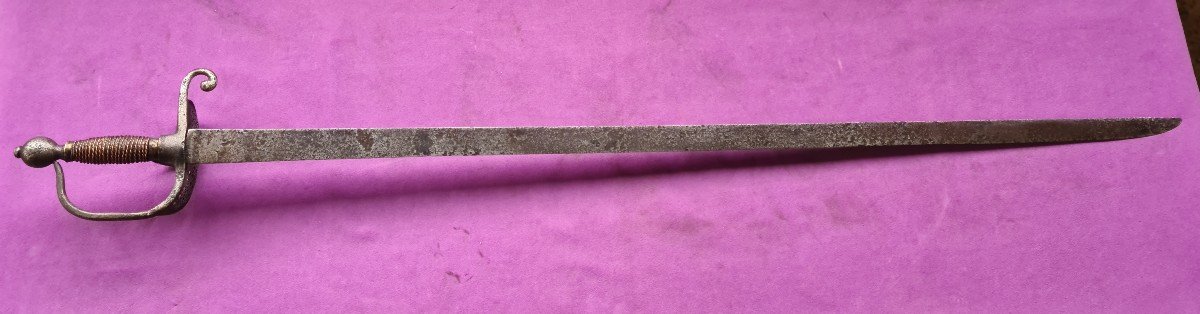
Although Walloons from the end of the 17th century and the beginning of the 18th century are encountered from time to time, earlier cavalry swords are much rarer. This weapon is a dragon sword, which can be Germanic or Swedish.
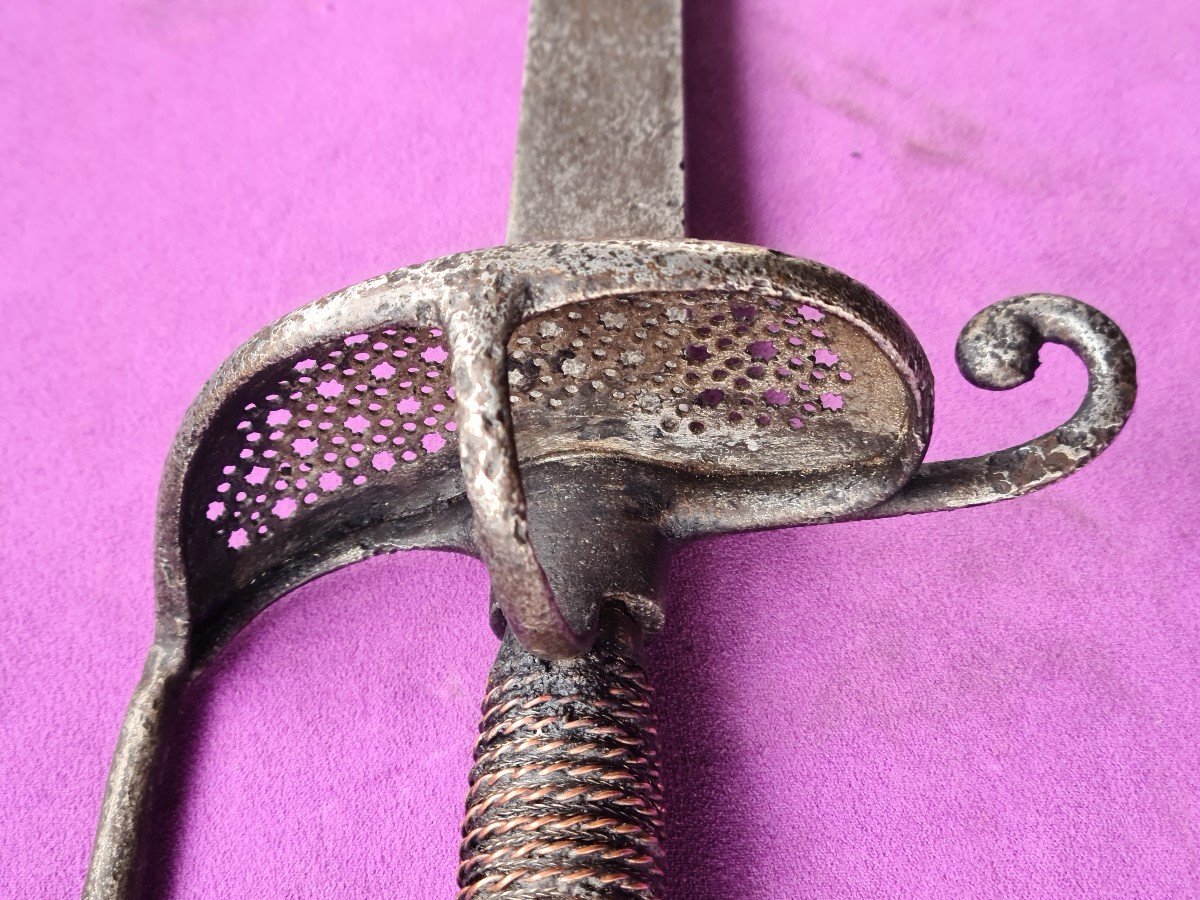
its characteristic is to have only one guard shell, and the guard shows no trace of another shell which would have been removed. These single-plated swords prefigure the Walloons who would succeed them a few years later.
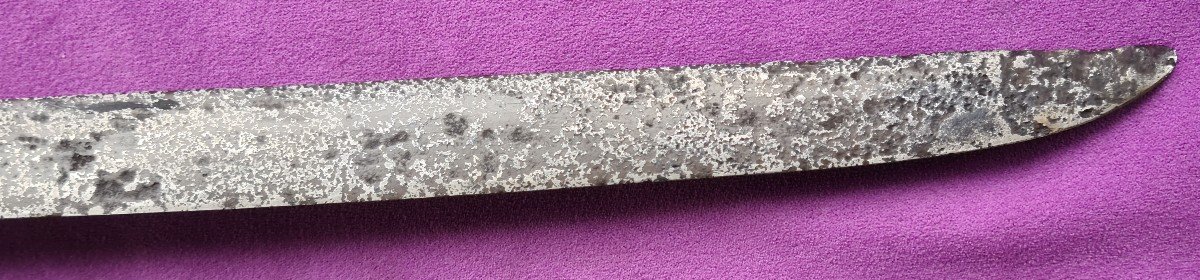
BLADE: it is perfectly straight, with a single edge which begins after a very short ricasso of 7 mm. It is probably a Solingen manufacture. We note a counter-sharp edge over the last 19 cm near the tip. What is exceptional is that this blade, although heavily oxidized, has retained its entire length, since it measures 88.5 cm. Although oxidized, the blade has no defects and has retained its flexibility.
Length of the blade = 88.5 cm, width at the ricasso = 3.1 cm, thickness at the ricasso = 7.7 mmm.
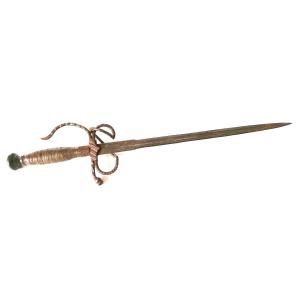
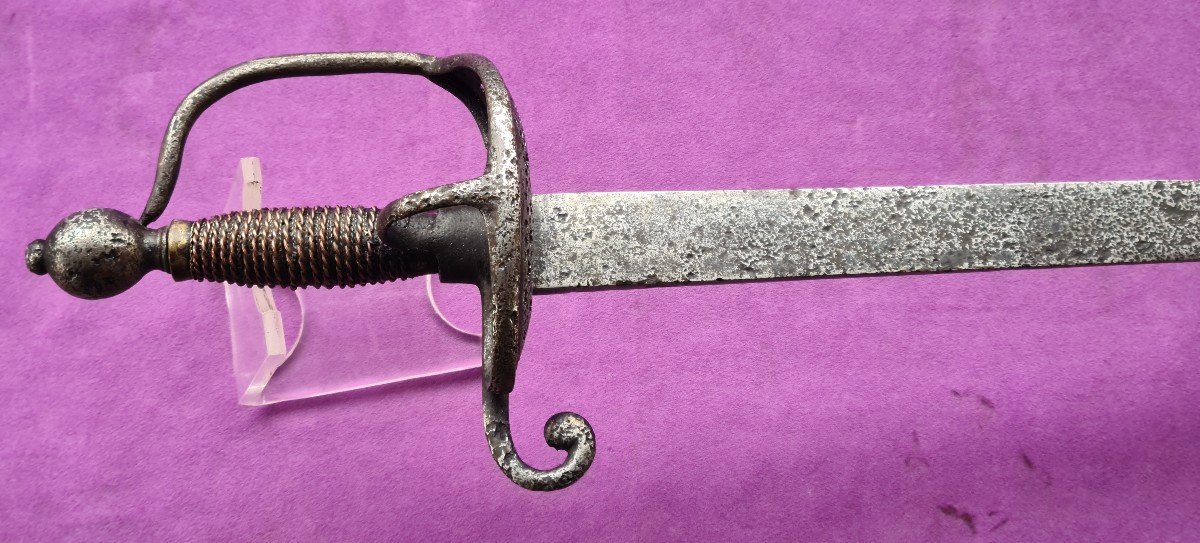
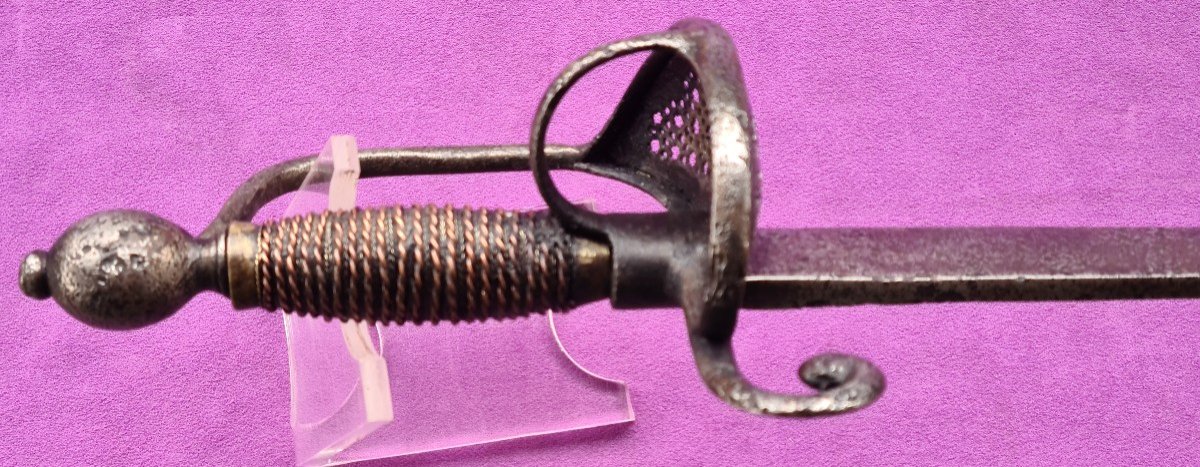
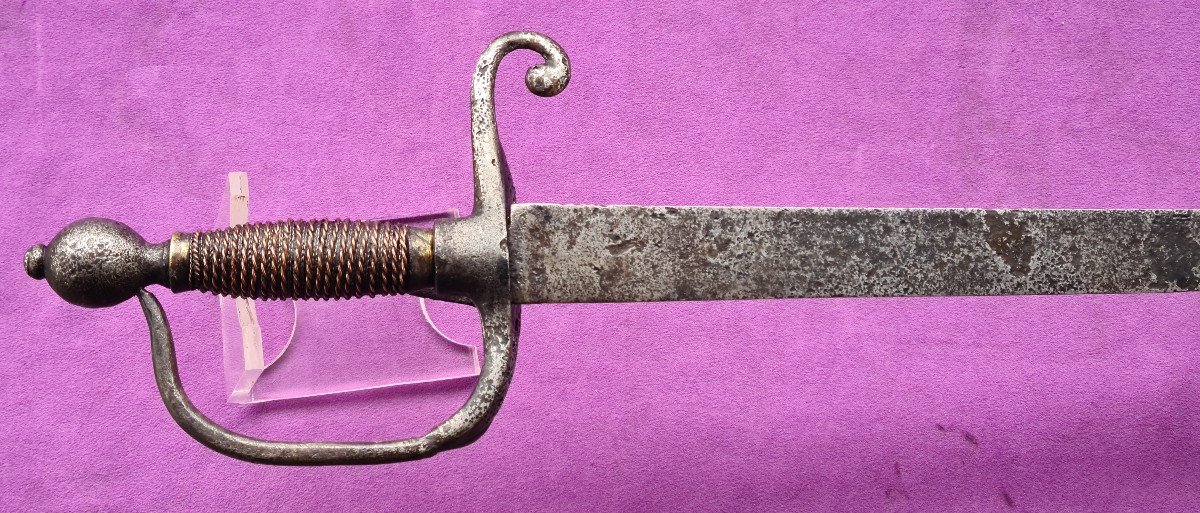
GUARD: It is a guard with a single plate. This one is the original one and is pierced with a decoration of numerous star-shaped holes, alternating with smaller circular holes.
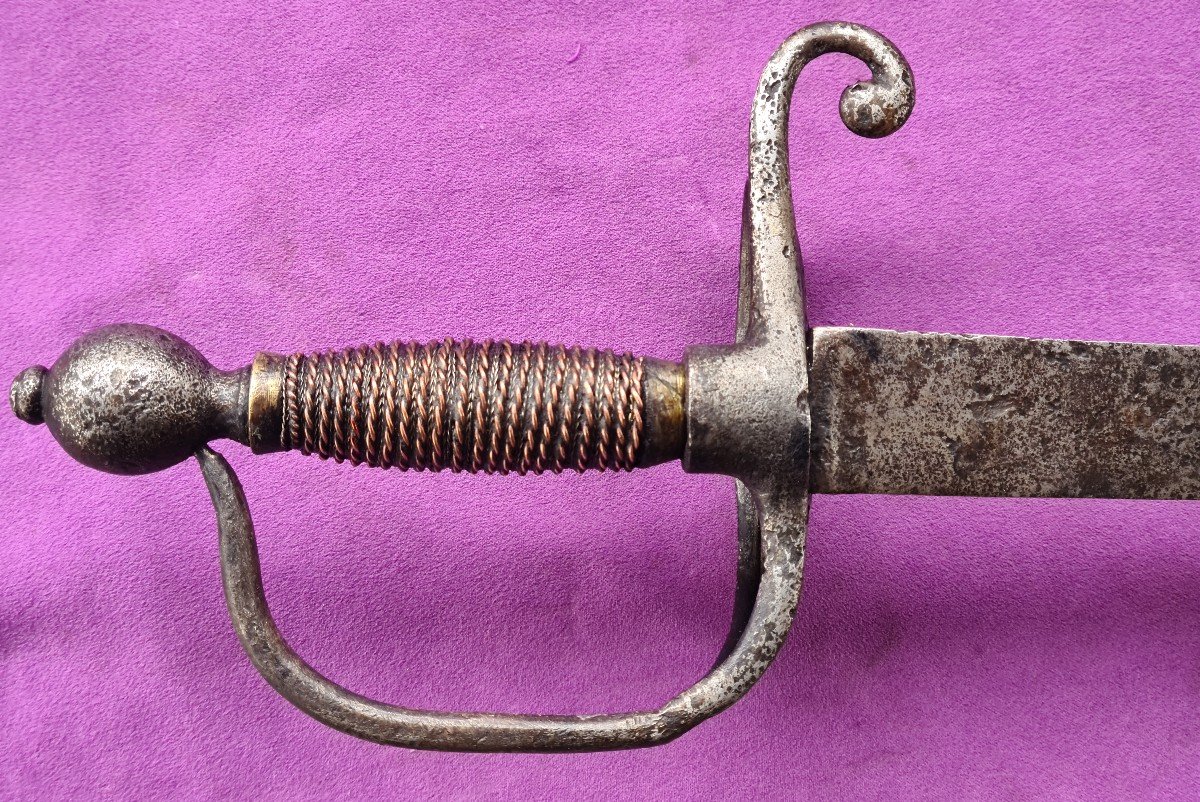
A thumb ring connects the edge of the shell to the cross.
A volute quillon is wound towards the blade.
The knuckle bow guard branch is attached to the pommel by a hook, not by a screw. This indicates early manufacture and confirms the dating.
It is possible that this guard branch was the subject of an old restoration because it shows a very slight angulation at its base which joins the cross guard.
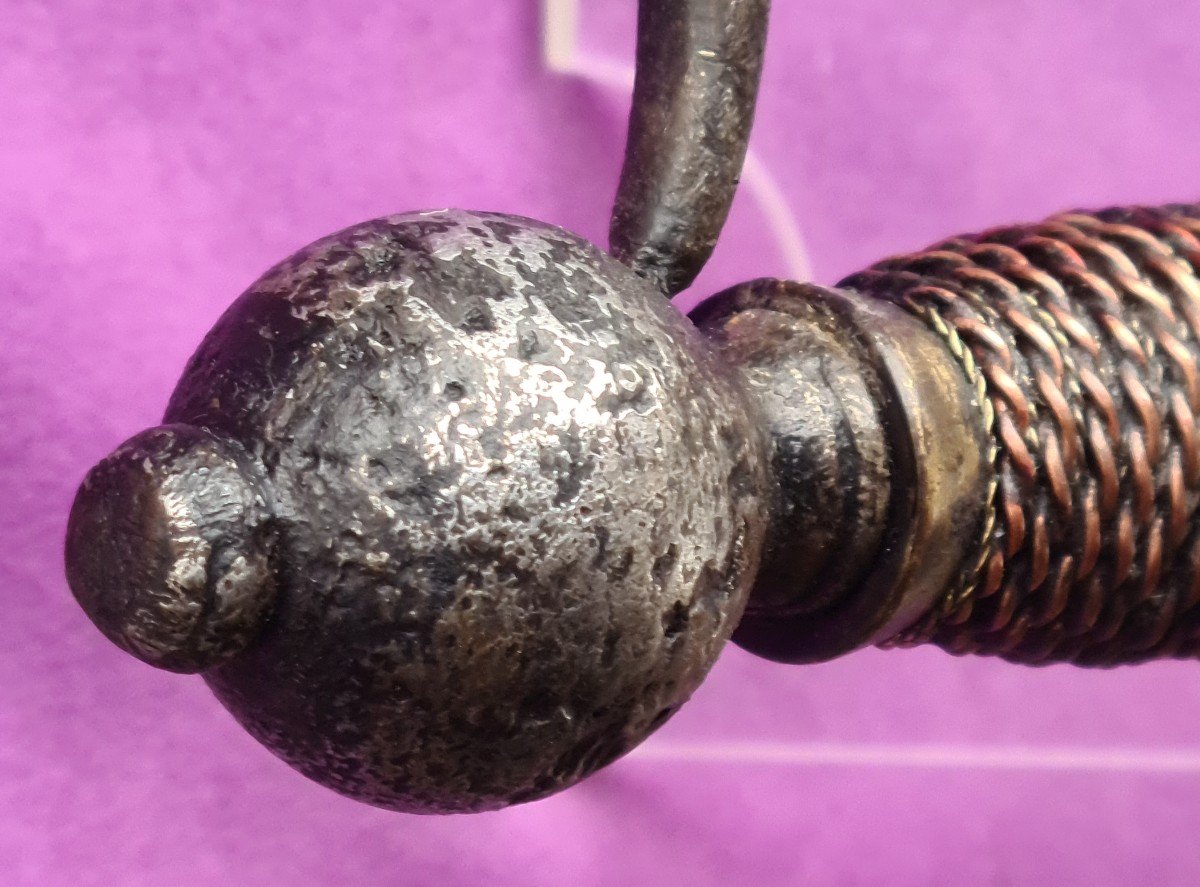
POMMEL: It is an ovoid iron pommel, finished with a riveting button to which the tang is riveted.
HANDLE: It is in the shape of a spool, and is covered with a double brass wire binding twisted in chevrons, alternating with a red copper wire binding of larger diameter. This type of mount is typical of its time. This is most likely the original wire binding .
Brass ferrules finish each end of the handle.
In conclusion, it is therefore a historical piece which must have seen many battles. The choice of a single shell-guard mount may be explained by a desire to avoid snagging on the rider's clothing. The weapon is oxidized, but complete; without anything loose, and of an unusual model. The price takes into account its condition
Shipping costs France 30€, Europe 40€
Ref C-2436
its characteristic is to have only one guard shell, and the guard shows no trace of another shell which would have been removed. These single-plated swords prefigure the Walloons who would succeed them a few years later.
BLADE: it is perfectly straight, with a single edge which begins after a very short ricasso of 7 mm. It is probably a Solingen manufacture. We note a counter-sharp edge over the last 19 cm near the tip. What is exceptional is that this blade, although heavily oxidized, has retained its entire length, since it measures 88.5 cm. Although oxidized, the blade has no defects and has retained its flexibility.
Length of the blade = 88.5 cm, width at the ricasso = 3.1 cm, thickness at the ricasso = 7.7 mmm.
GUARD: It is a guard with a single plate. This one is the original one and is pierced with a decoration of numerous star-shaped holes, alternating with smaller circular holes.
A thumb ring connects the edge of the shell to the cross.
A volute quillon is wound towards the blade.
The knuckle bow guard branch is attached to the pommel by a hook, not by a screw. This indicates early manufacture and confirms the dating.
It is possible that this guard branch was the subject of an old restoration because it shows a very slight angulation at its base which joins the cross guard.
POMMEL: It is an ovoid iron pommel, finished with a riveting button to which the tang is riveted.
HANDLE: It is in the shape of a spool, and is covered with a double brass wire binding twisted in chevrons, alternating with a red copper wire binding of larger diameter. This type of mount is typical of its time. This is most likely the original wire binding .
Brass ferrules finish each end of the handle.
In conclusion, it is therefore a historical piece which must have seen many battles. The choice of a single shell-guard mount may be explained by a desire to avoid snagging on the rider's clothing. The weapon is oxidized, but complete; without anything loose, and of an unusual model. The price takes into account its condition
Shipping costs France 30€, Europe 40€
Ref C-2436
1 350 €
Period: 17th century
Style: Renaissance, Louis 13th
Condition: Condition of use
Material: Other
Length: 102.7 cm
Reference (ID): 1314757
Availability: In stock
Print