
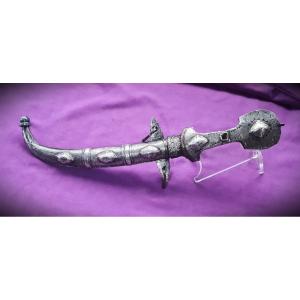


Antique Koummya Dagger Signed, Morocco, 19th Century
Artist: Hussein
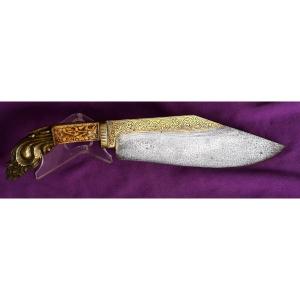
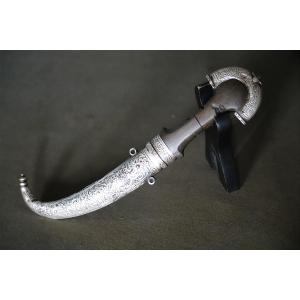
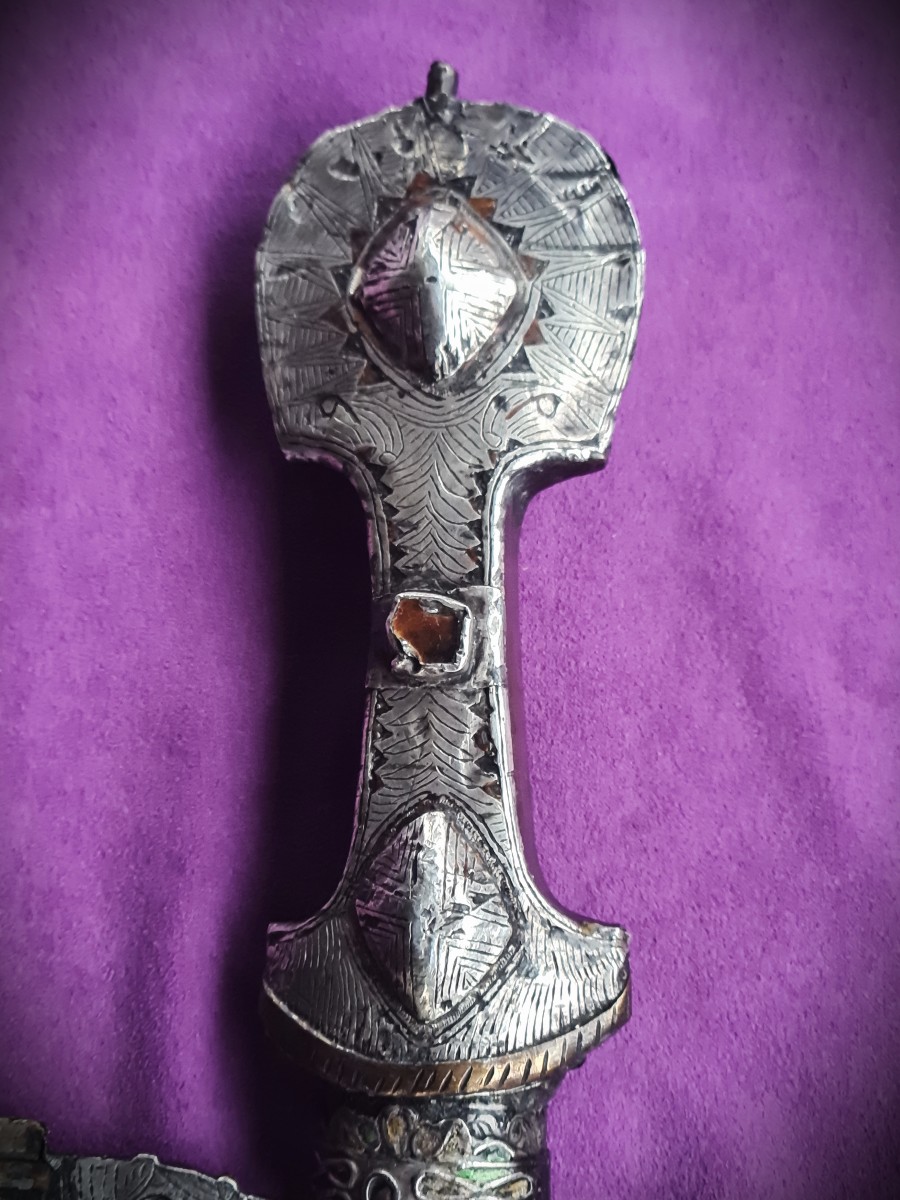
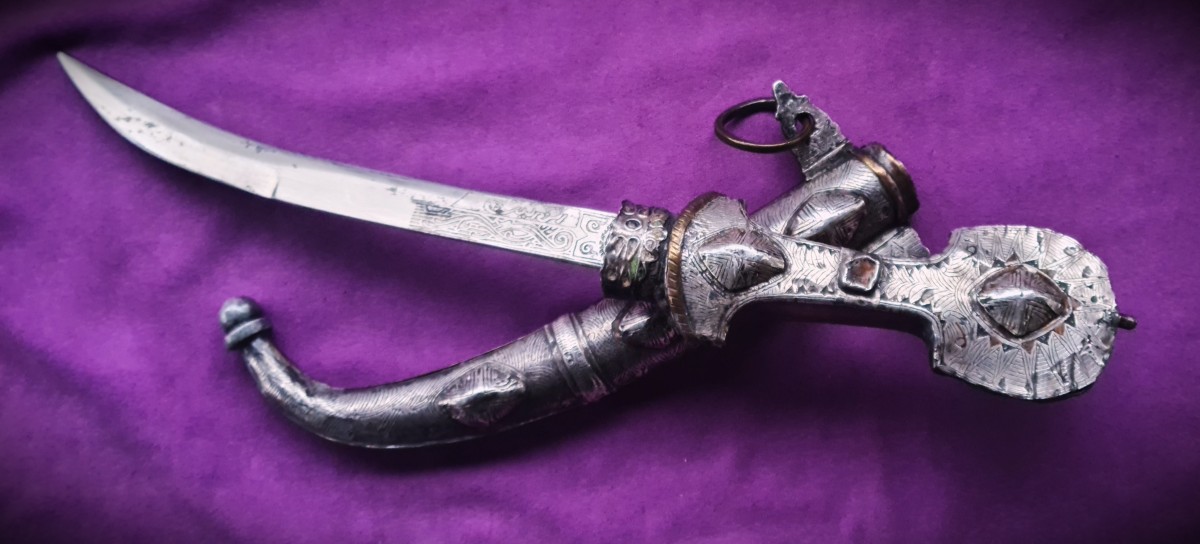
The Koummya is the emblematic weapon of Morocco. This particular model is especially interesting because of its style and age. The craftsmanship evokes the work of southern Morocco. The Tiznit region is a likely example, due to the very similar enamel work, but the shape of the pommel could also suggest the Rissani region.
The hilt is typical of the last third of the 19th century. The blade is perhaps more recent. This wouldn't be inaccurate, as it was quite common for older Koummyas to be fitted with new blades over time.
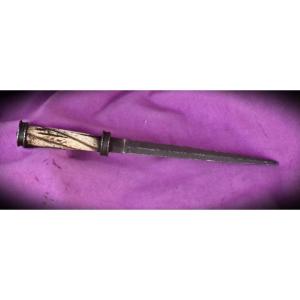
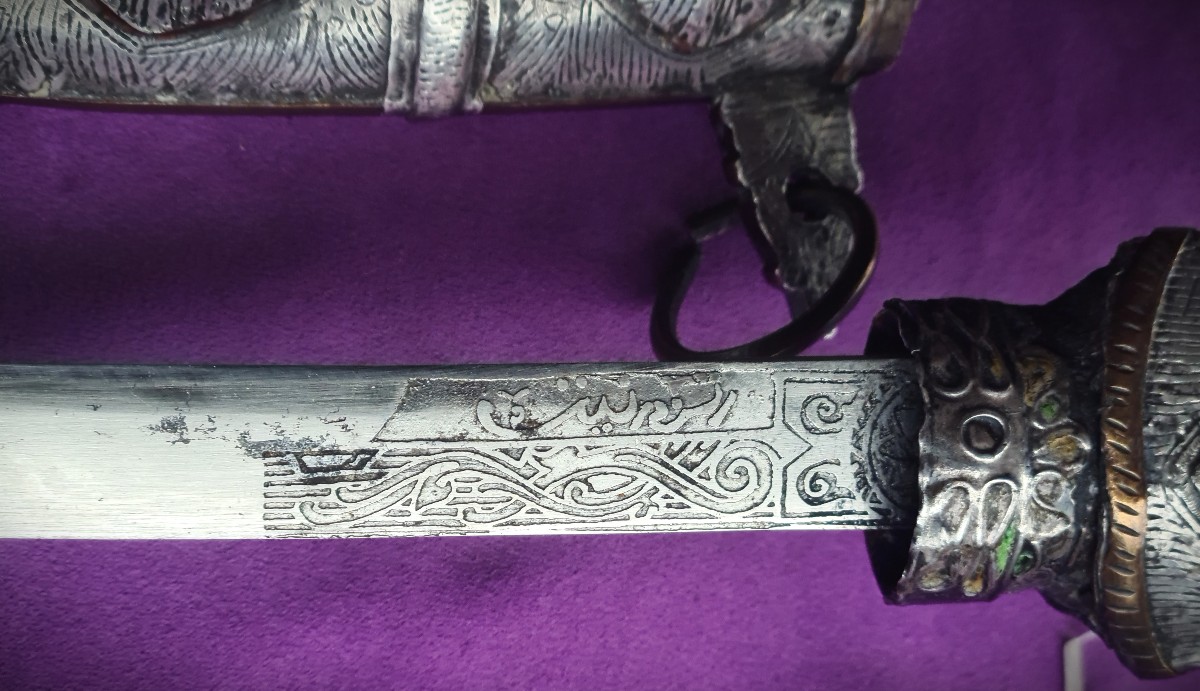
BLADE: It is a true forged and sharp blade of considerable quality. It displays the staggered edges typical of Moroccan weapons, and they are particularly sharp.
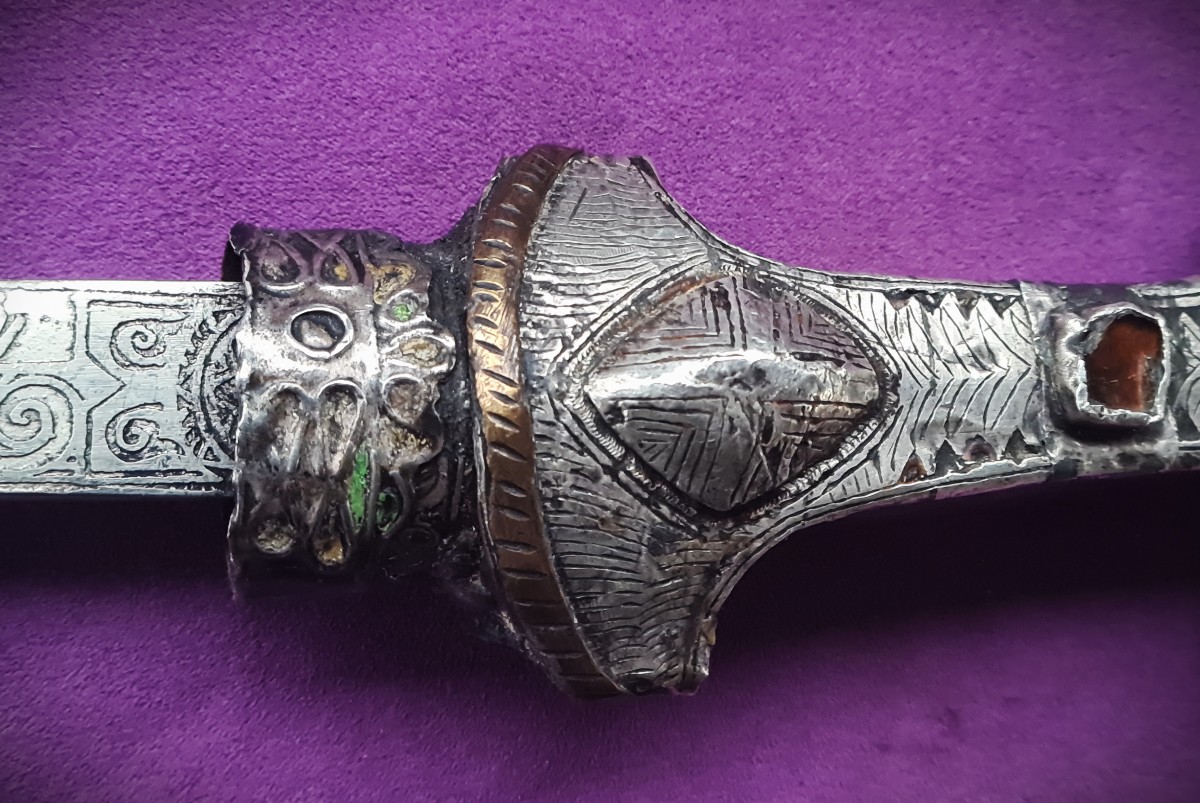
The first third of the outer face is decorated with etched plant motifs and the inscription "Amel Hussein" = "made by Hussein," which is the artist's signature.
On the other side is the Sharifian star, whose five points symbolize the five pillars of Islam.
Blade length: 24 cm, width near the handle: 2.1 cm, thickness near the handle: 3.2 mm.
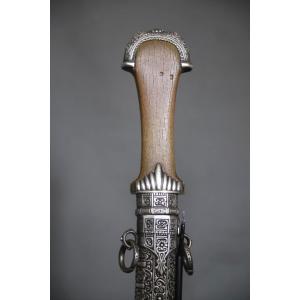
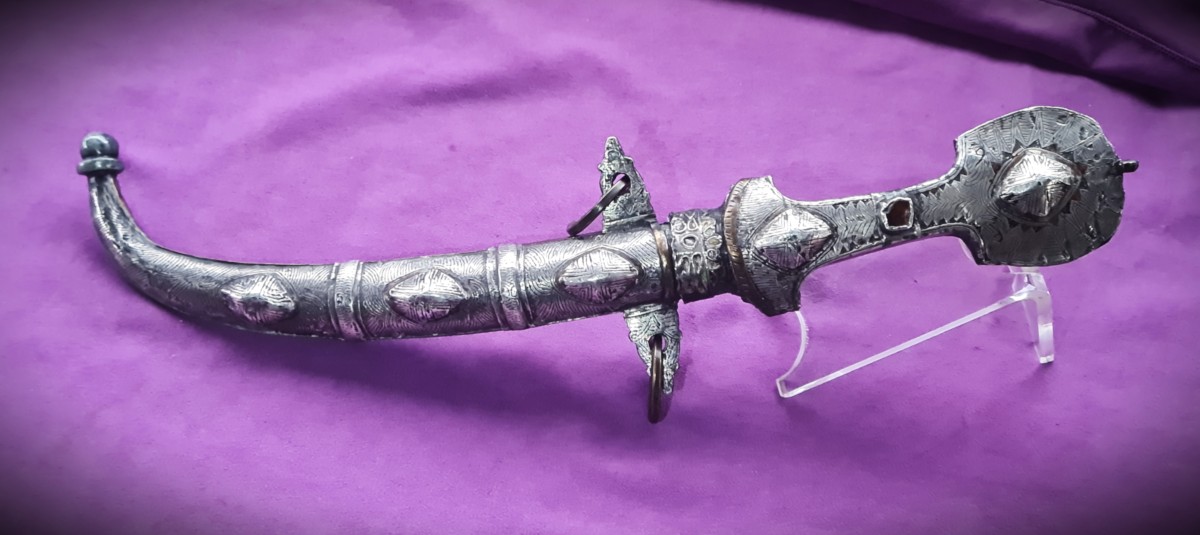
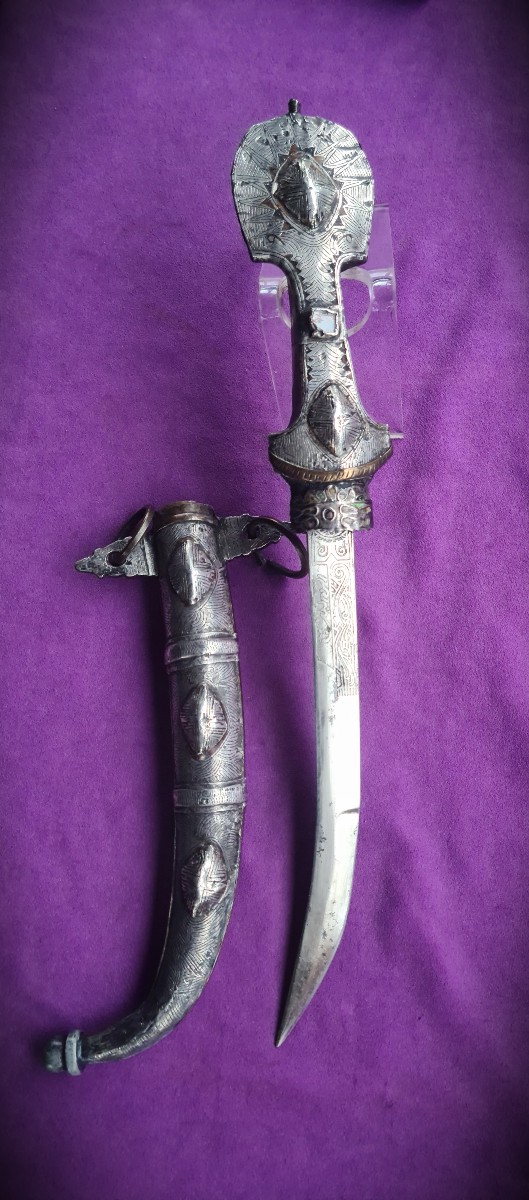
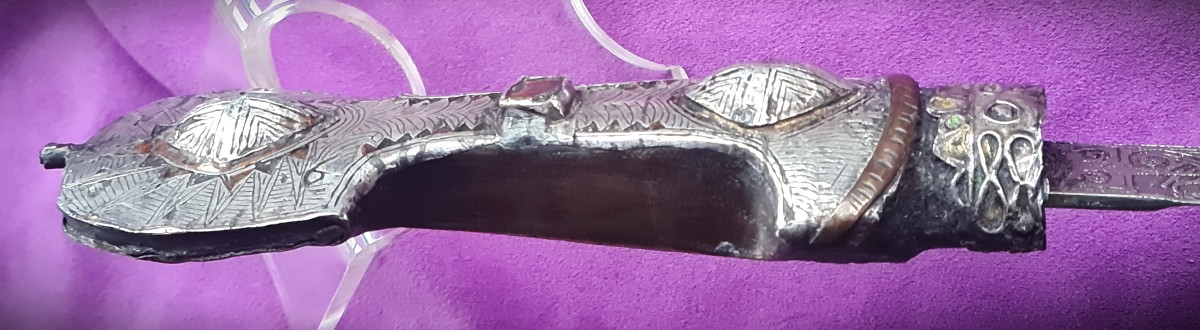
HILT : This is a beautiful hilt with two losangics cabochons. Its outer face is entirely chiseled, with traces of enamel in many places. There are two cabochons in relief, between which a red stone is set. The top of the handle is a narrower version of the classic "peacock tail." This distinctive shape is found in certain southern regions, notably, as already mentioned, in the Rissani region, but also in the Anti-Atlas Mountains. The part of the handle that covers the top of the scabbard is decorated with geometric elements, between which there are traces of enamel.
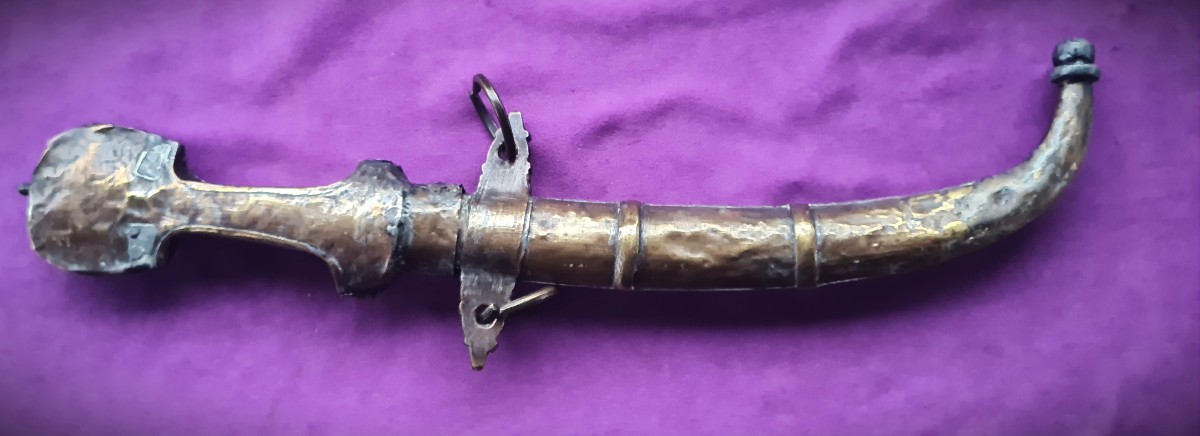
The back of the handle is made of brass with a simple line decoration.
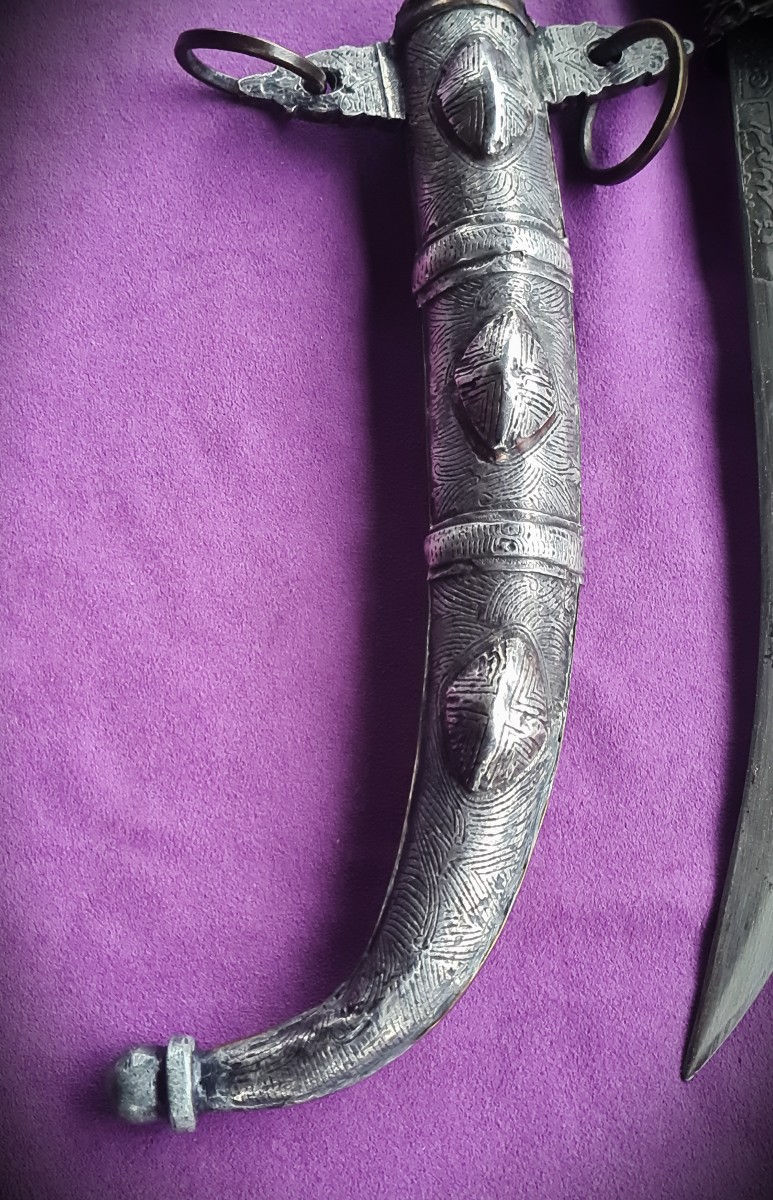
SCABBARD : It is made of silver on the outer face and brass on the inner face. Three large lozenge-shaped cabochons, matching those on the hilt.
The dart at the end of the sheath is made of pewter and is ball-shaped. It is probably an early replacement for the original silver model.
It is interesting to find an antique Koummya in its original form, so different from the countless tourist models sold in the souks…
Ref4Y 13-XX
Shipping to France and Europe: €20
The hilt is typical of the last third of the 19th century. The blade is perhaps more recent. This wouldn't be inaccurate, as it was quite common for older Koummyas to be fitted with new blades over time.
BLADE: It is a true forged and sharp blade of considerable quality. It displays the staggered edges typical of Moroccan weapons, and they are particularly sharp.
The first third of the outer face is decorated with etched plant motifs and the inscription "Amel Hussein" = "made by Hussein," which is the artist's signature.
On the other side is the Sharifian star, whose five points symbolize the five pillars of Islam.
Blade length: 24 cm, width near the handle: 2.1 cm, thickness near the handle: 3.2 mm.
HILT : This is a beautiful hilt with two losangics cabochons. Its outer face is entirely chiseled, with traces of enamel in many places. There are two cabochons in relief, between which a red stone is set. The top of the handle is a narrower version of the classic "peacock tail." This distinctive shape is found in certain southern regions, notably, as already mentioned, in the Rissani region, but also in the Anti-Atlas Mountains. The part of the handle that covers the top of the scabbard is decorated with geometric elements, between which there are traces of enamel.
The back of the handle is made of brass with a simple line decoration.
SCABBARD : It is made of silver on the outer face and brass on the inner face. Three large lozenge-shaped cabochons, matching those on the hilt.
The dart at the end of the sheath is made of pewter and is ball-shaped. It is probably an early replacement for the original silver model.
It is interesting to find an antique Koummya in its original form, so different from the countless tourist models sold in the souks…
Ref4Y 13-XX
Shipping to France and Europe: €20
250 €
Period: 19th century
Style: Orientalism
Condition: Good condition
Material: Other
Length: 43 cm
Reference (ID): 1705724
Availability: In stock
Print