

Very Long Cavalry Thrusting Rapier" Estoc" Signed By Iohannis Koehl
Artist: Iohannis Kohl Solingen
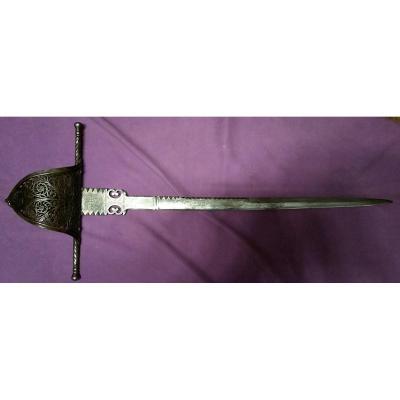
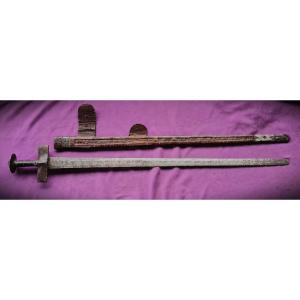
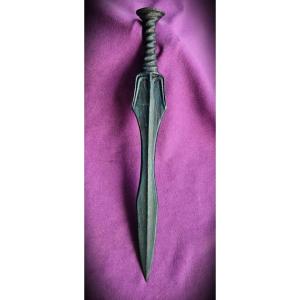
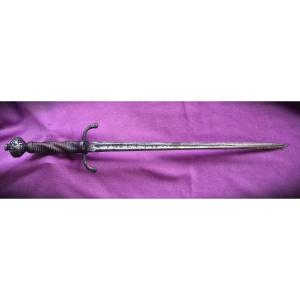
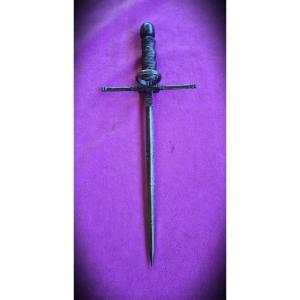
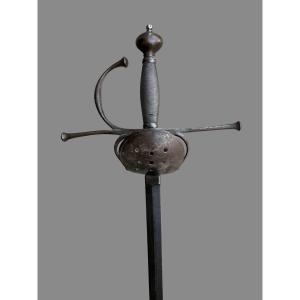
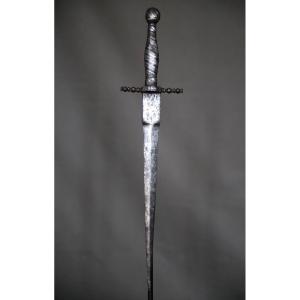
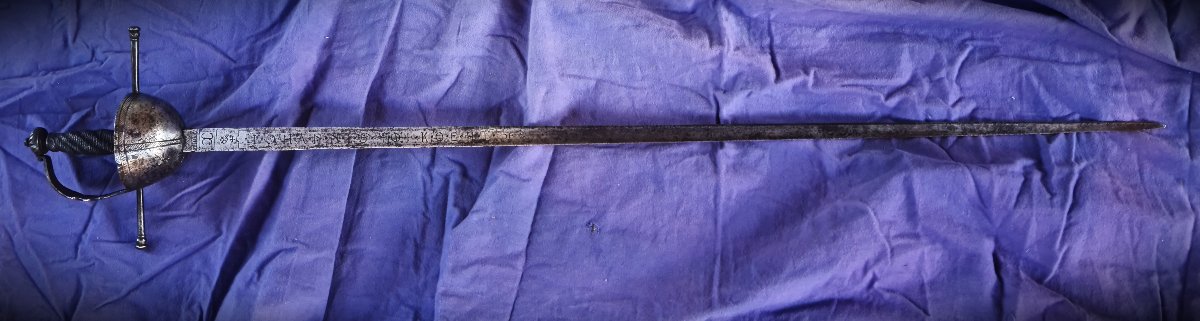
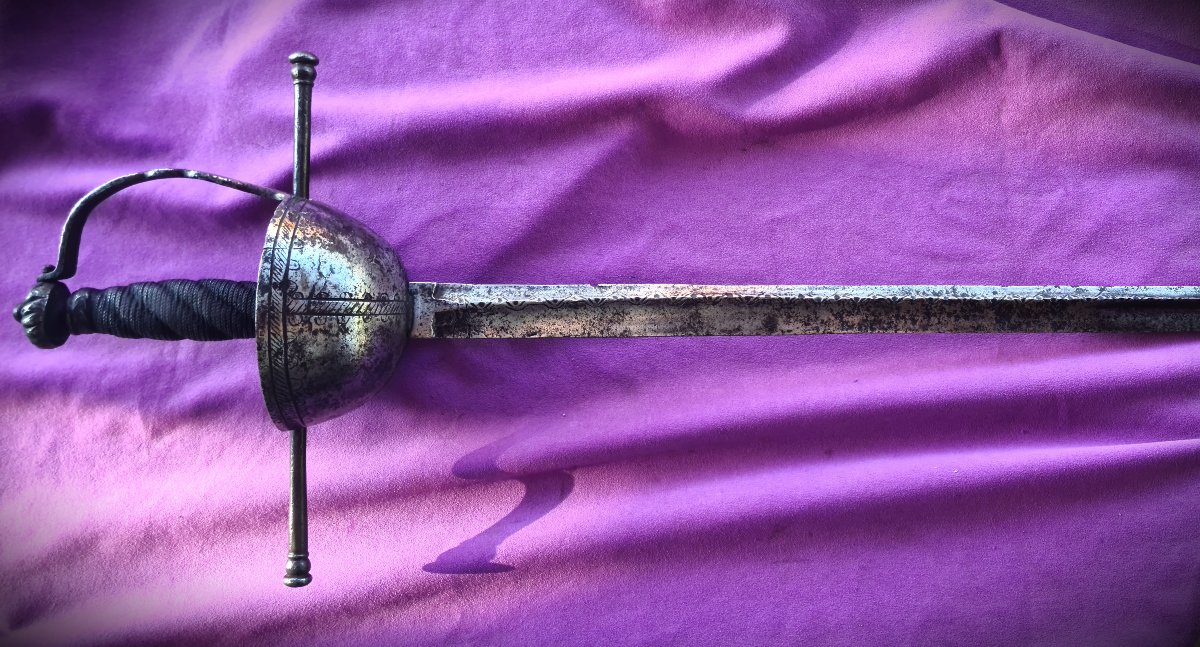
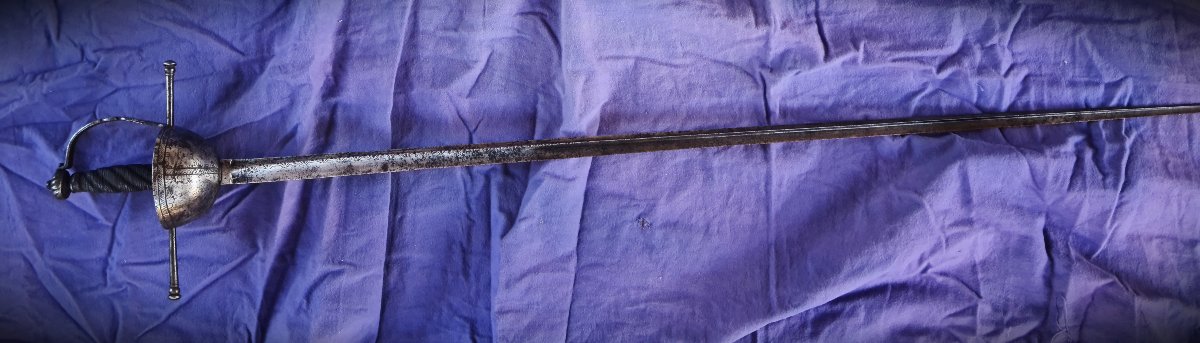
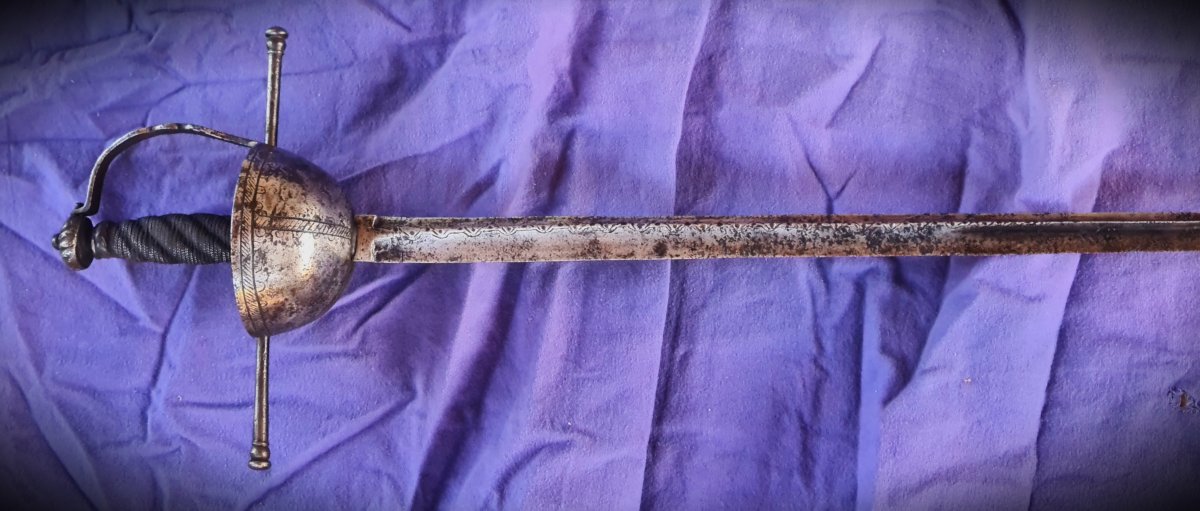
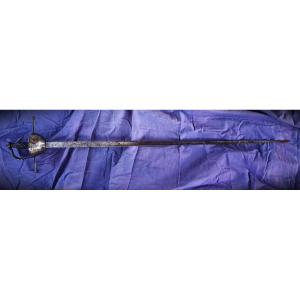
Cavalryestoc rapiers are rarely encountered. This one is of Germanic origin and dates from the last quarter of the 16th century or the very early 17th century. It is a sort of oversized rapier, as its blade measures 122 cm from the quillons to the tip and 116.3 cm from the outer edge of the cup. These rapiers were carried suspended from the saddle, which is why they are sometimes described as “saddle swords”
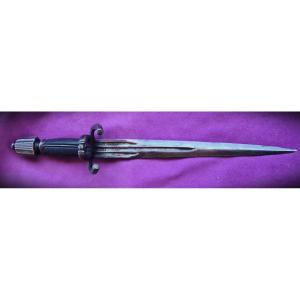
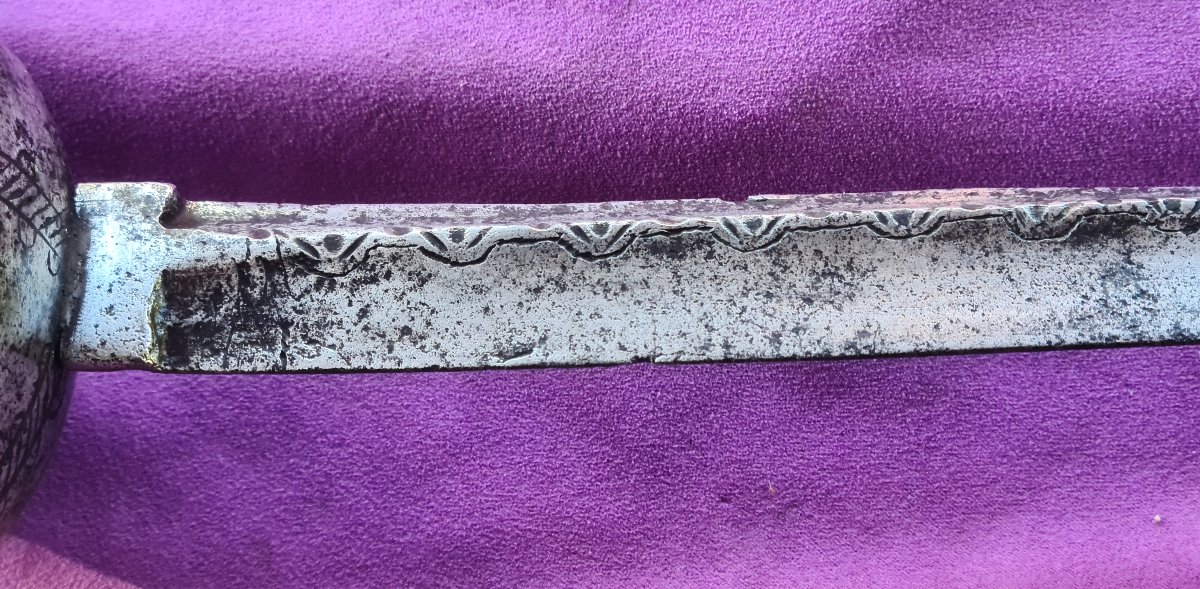
BLADE: This blade was manufactured in Solingen and has a very distinctive shape, as afte ra short 1.5 cm ricasso, it features three asymmetrical faces. A wide outer face with a deep hollow section, and two inner faces of unequal width separated by a thick ridge that is not centered but offset two-thirds of the way across the blade’s width. These asymmetrical profiles are veryrare; they are believed to give the blade greater rigidity.
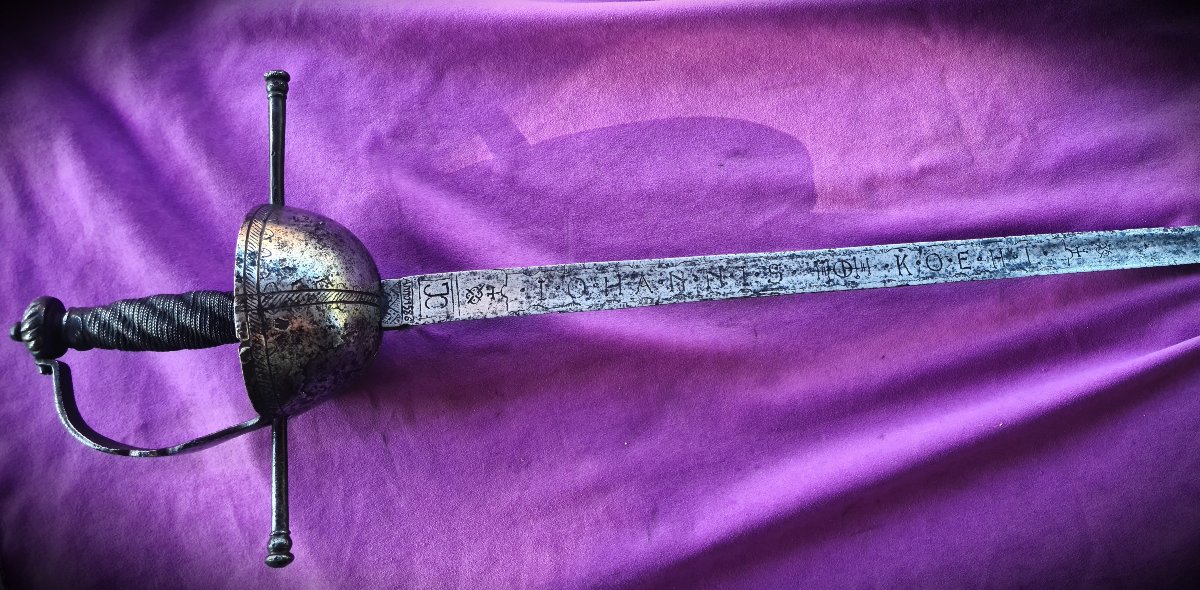
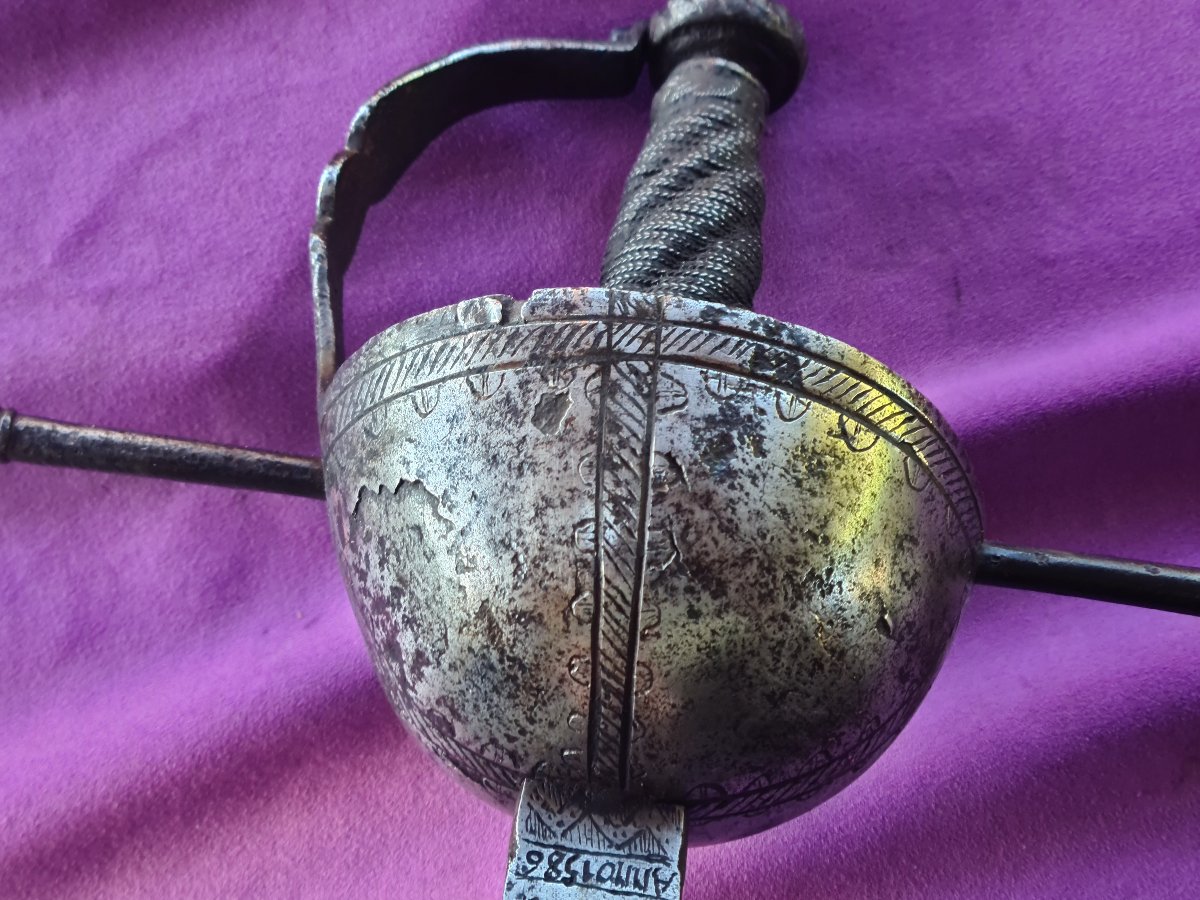
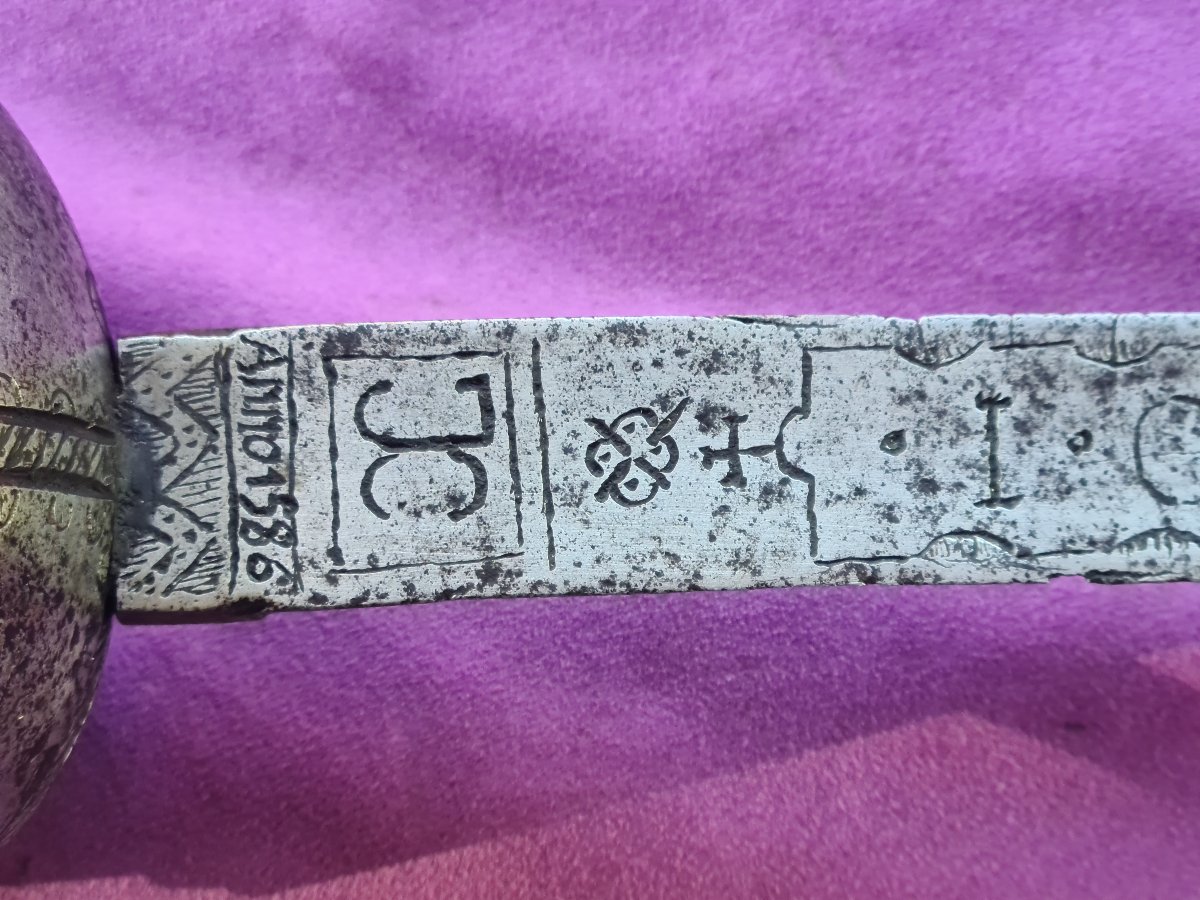
On the outer side, near the ricasso, we find “Anno 1586” followed by a mark depicting the letter K , which is the personal mark of Ihoannis Kohl “the Elder” (Kohl-Koehl-Koll-Coll : several spellings exist), who was active in Solingen between 1580 and 1620. Next, in a cartouche: I - O- H - A - N - N- I - S - ++( I-)++ - K - O - E - H - L -
Between the words “Iohannis” and “Koehl” is the double imperial mark featuring a globe with a cross.
On the inner side, a chiseled geometric decoration along the edge, which continues to the middle of the blade’s length.
Blade length = 122 cm fromthe quillons, 116.3 cm from the outer edge of the cup. Width at the ricasso =2.8 cm, thickness at the ricasso = 7.8 mm
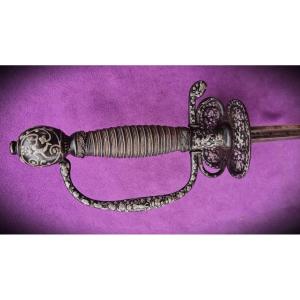
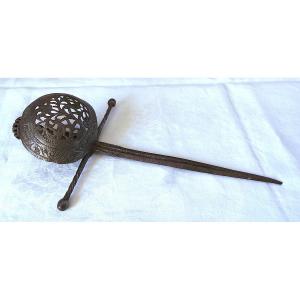
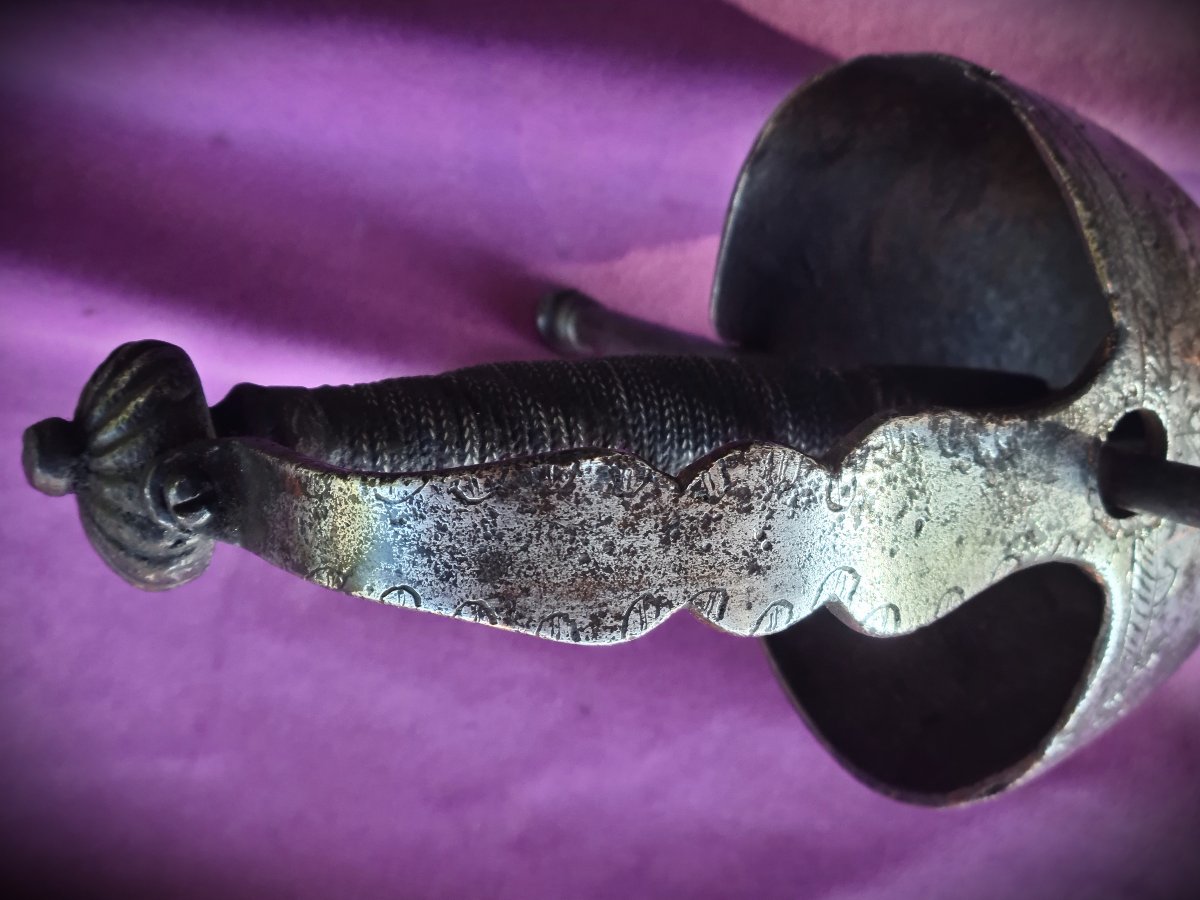
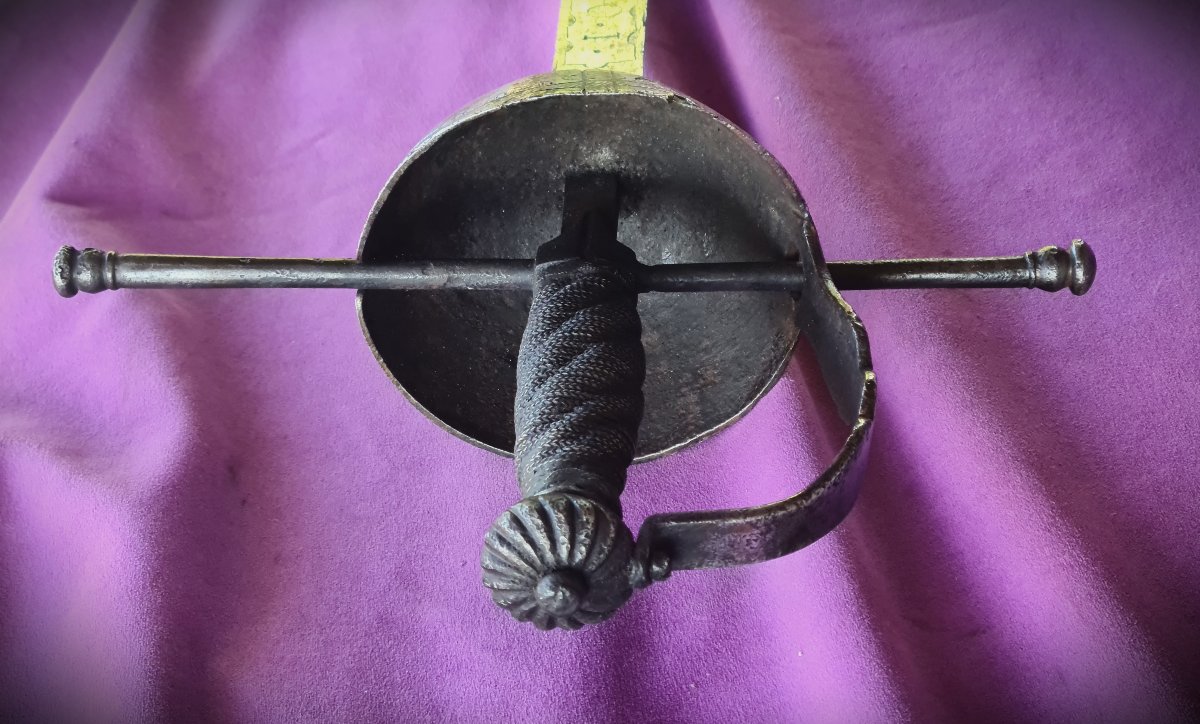
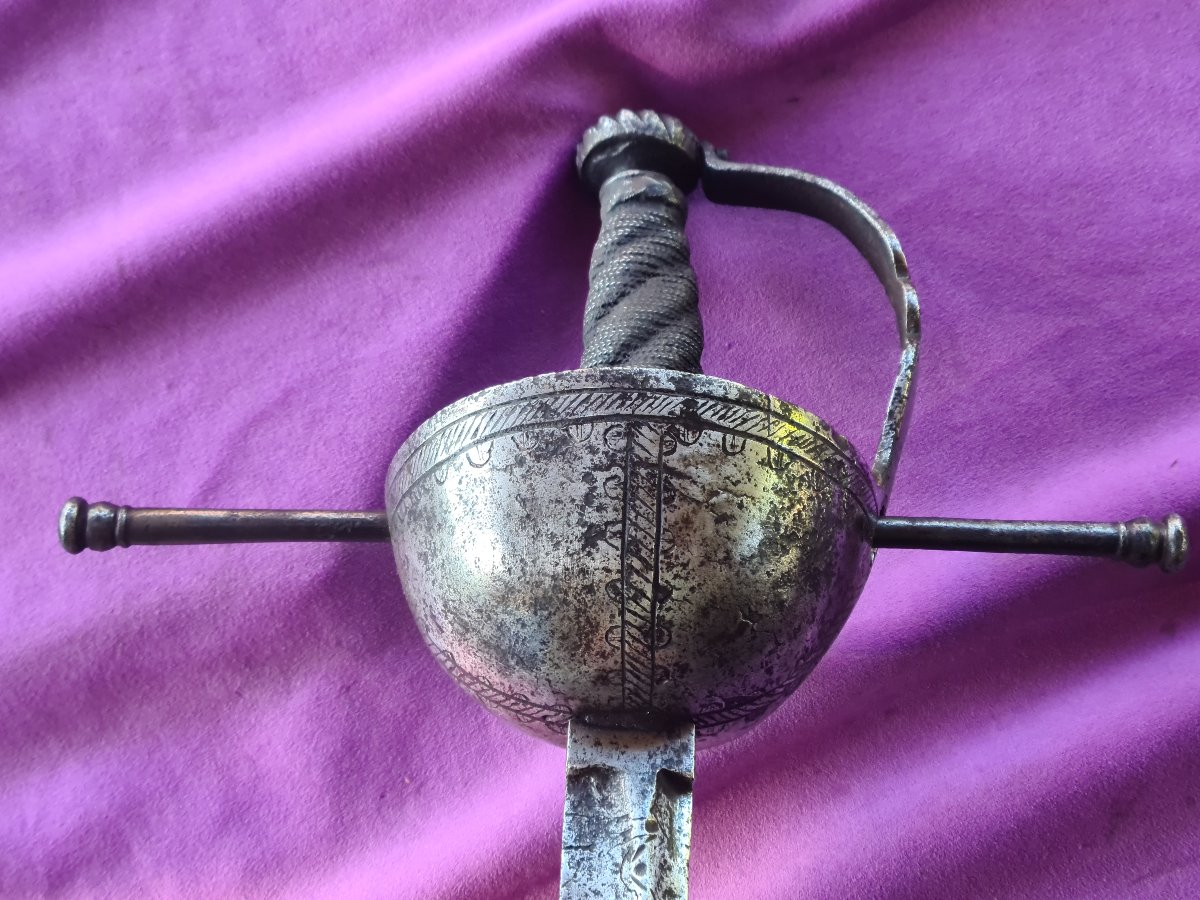
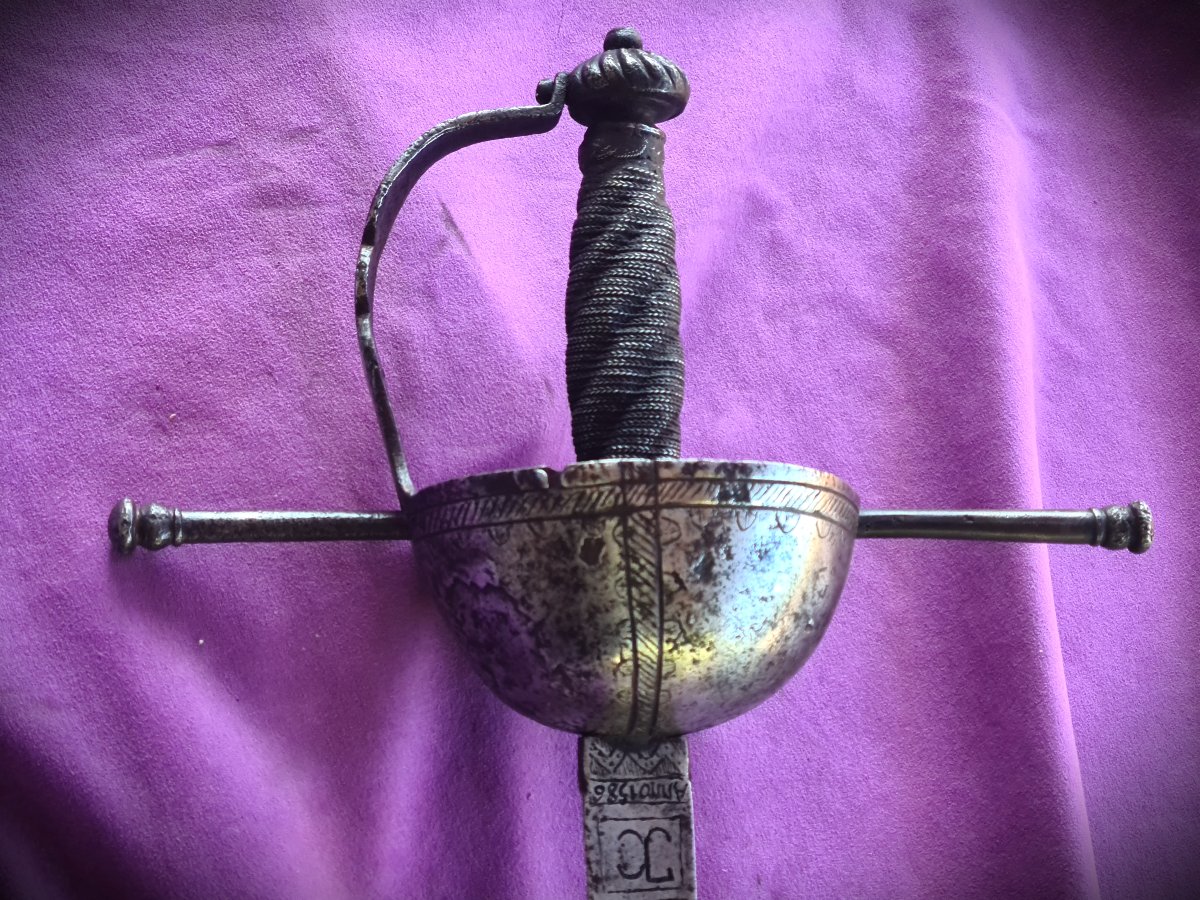
GUARD: This is a bell-shaped guard (Eisenglocke) inspired by Spanish “ taza” models. The cup extends into a knuckle bow that connects to the pommel, to which it is secured by a screw. The distinctive feature of this guard is a hole drilled at the base of the knuckle bow through which the lower quillon passes. The quillons are straight and end in a flattened, baluster-shaped knob.
On the cup at the base of th eknuckle bow, there is an old copper solder joint that is not a repair but rather part of the guard’s design, with the knuckle bow attached to the bowl during manufacturing. A chiseled, fluted geometric pattern divides the bowl into four quarters.
It should be noted that, unlike Spanish rapiers of the same period, the edge of cup does not feature a point-breaking ridge, which makes sense since this is not a rapier intended for dueling, but rather a cavalry sword
POMMEL : It is shaped like a twisted mushroom, surmounted by a small knob to which the blade tan gis riveted.
GRIP : It is twisted and covered with a wire binding of twisted iron in a herring bone pattern. The twisted bindings ferrules known as “Turk's heads” are present and in good condition.
This particularly rare weapon will take pride of place in acollection themed around the High Middle Ages or the cavalry
Ref DX4Y-2640 Shipping fee contribution = France50€, Europe 70€
BLADE: This blade was manufactured in Solingen and has a very distinctive shape, as afte ra short 1.5 cm ricasso, it features three asymmetrical faces. A wide outer face with a deep hollow section, and two inner faces of unequal width separated by a thick ridge that is not centered but offset two-thirds of the way across the blade’s width. These asymmetrical profiles are veryrare; they are believed to give the blade greater rigidity.
On the outer side, near the ricasso, we find “Anno 1586” followed by a mark depicting the letter K , which is the personal mark of Ihoannis Kohl “the Elder” (Kohl-Koehl-Koll-Coll : several spellings exist), who was active in Solingen between 1580 and 1620. Next, in a cartouche: I - O- H - A - N - N- I - S - ++( I-)++ - K - O - E - H - L -
Between the words “Iohannis” and “Koehl” is the double imperial mark featuring a globe with a cross.
On the inner side, a chiseled geometric decoration along the edge, which continues to the middle of the blade’s length.
Blade length = 122 cm fromthe quillons, 116.3 cm from the outer edge of the cup. Width at the ricasso =2.8 cm, thickness at the ricasso = 7.8 mm
GUARD: This is a bell-shaped guard (Eisenglocke) inspired by Spanish “ taza” models. The cup extends into a knuckle bow that connects to the pommel, to which it is secured by a screw. The distinctive feature of this guard is a hole drilled at the base of the knuckle bow through which the lower quillon passes. The quillons are straight and end in a flattened, baluster-shaped knob.
On the cup at the base of th eknuckle bow, there is an old copper solder joint that is not a repair but rather part of the guard’s design, with the knuckle bow attached to the bowl during manufacturing. A chiseled, fluted geometric pattern divides the bowl into four quarters.
It should be noted that, unlike Spanish rapiers of the same period, the edge of cup does not feature a point-breaking ridge, which makes sense since this is not a rapier intended for dueling, but rather a cavalry sword
POMMEL : It is shaped like a twisted mushroom, surmounted by a small knob to which the blade tan gis riveted.
GRIP : It is twisted and covered with a wire binding of twisted iron in a herring bone pattern. The twisted bindings ferrules known as “Turk's heads” are present and in good condition.
This particularly rare weapon will take pride of place in acollection themed around the High Middle Ages or the cavalry
Ref DX4Y-2640 Shipping fee contribution = France50€, Europe 70€
2 800 €
Period: 16th century
Style: Renaissance, Louis 13th
Condition: Good condition
Material: Other
Length: 134 cm
Width: aux quillons 27 cm
Reference (ID): 1789343
Availability: In stock
Print