

Bathiyari Rug—persian. Circa 1900. 155 X 90 Cm
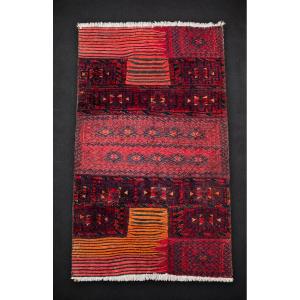
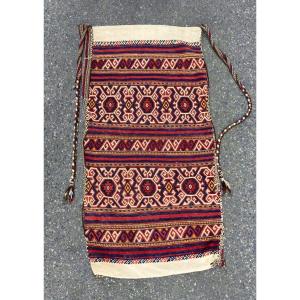
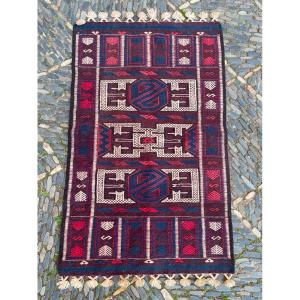
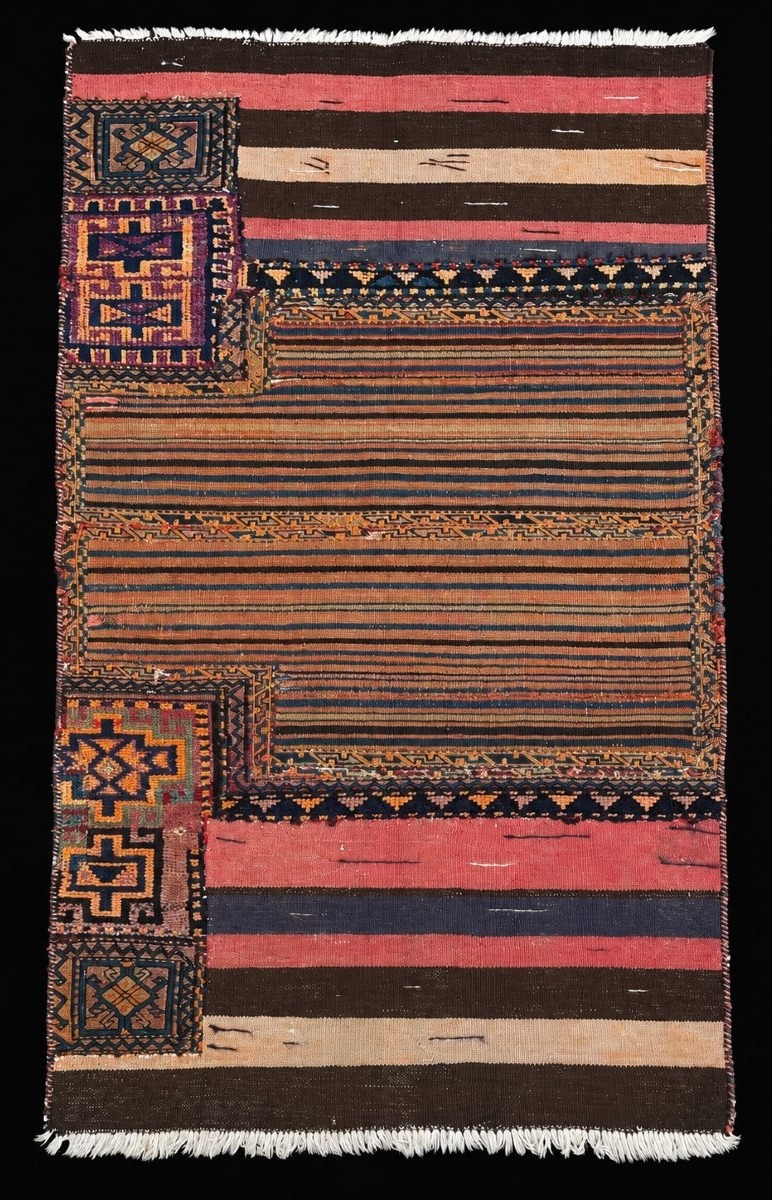
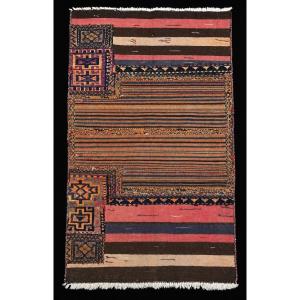
Rare, unusual, and instantly recognizable, this piece is a double open-top Bakhtiari satchel, originally from Persia.
A utilitarian object from the nomadic world, it impresses today with the extraordinary richness of its construction and its almost contemporary design.
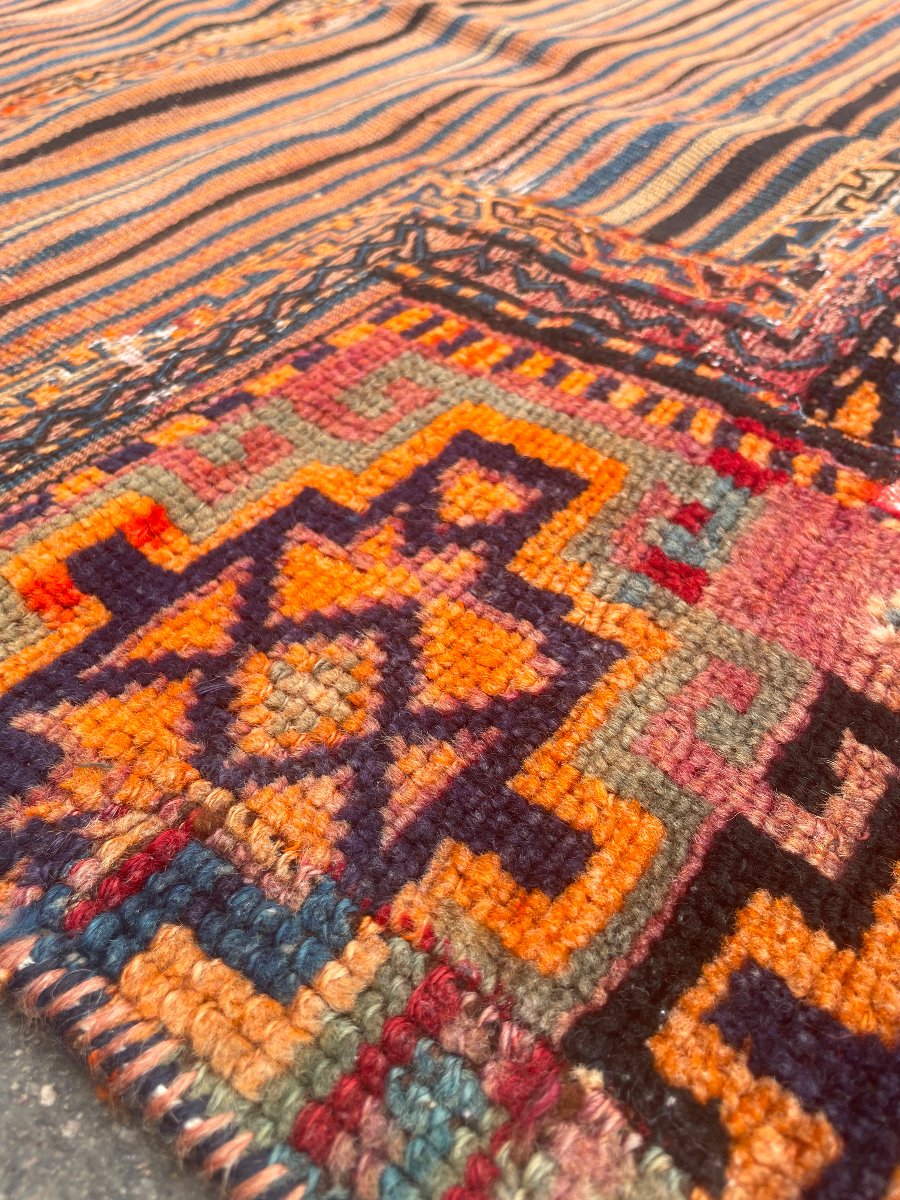
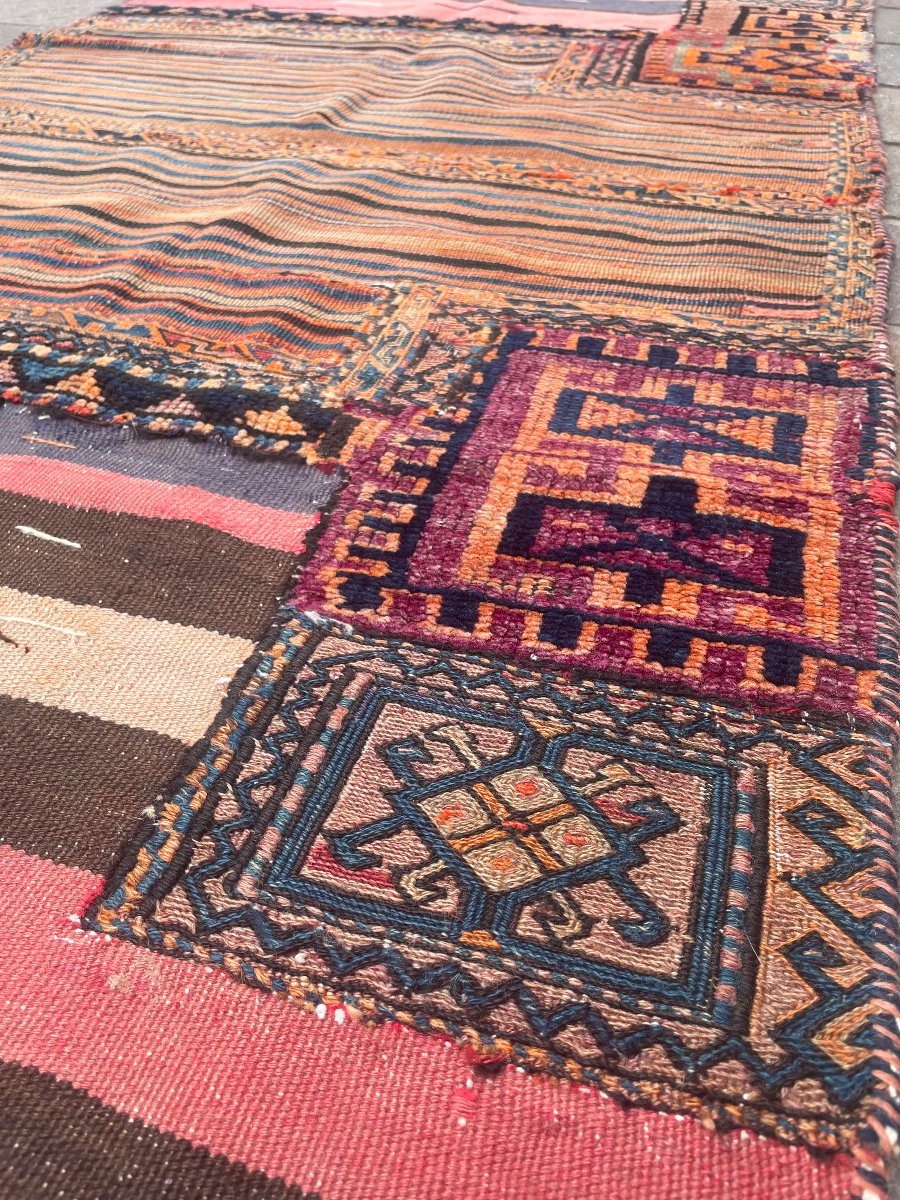
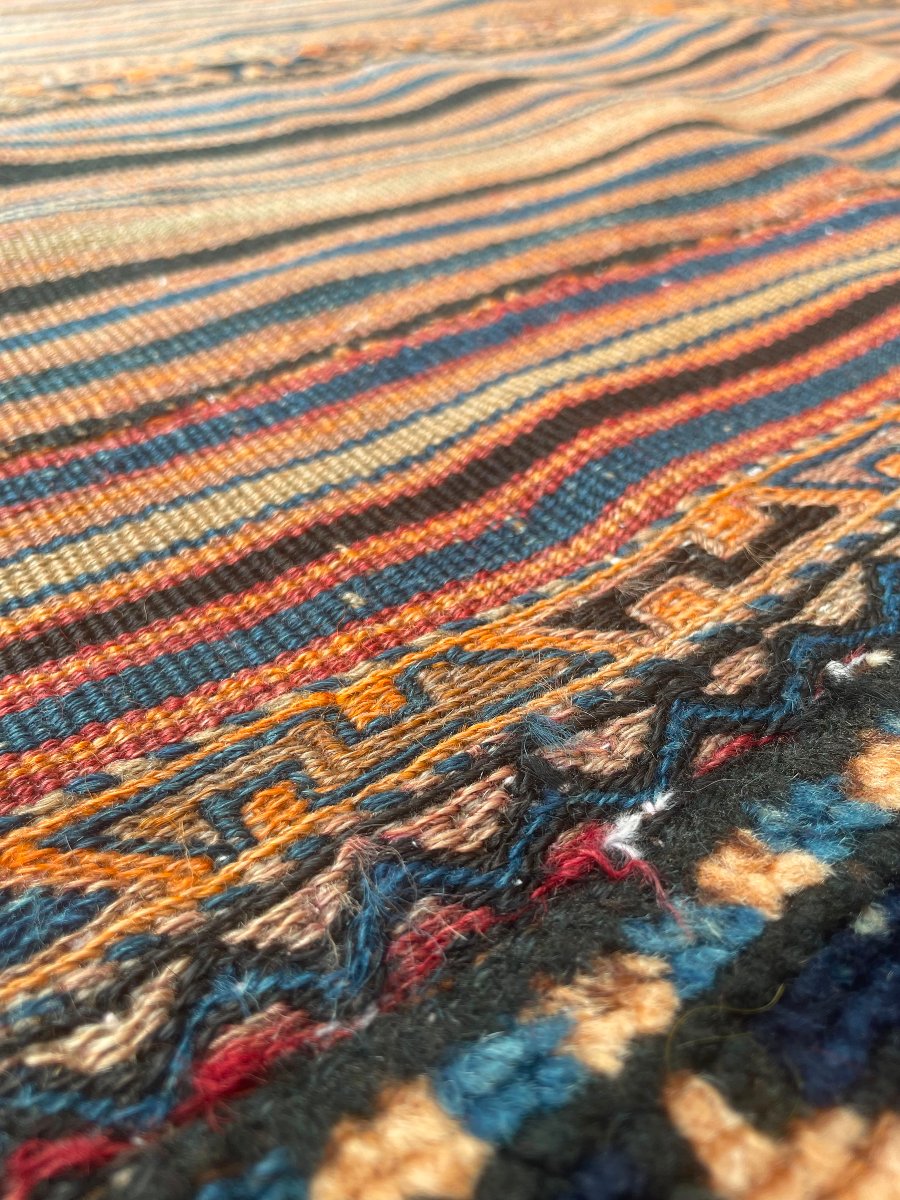
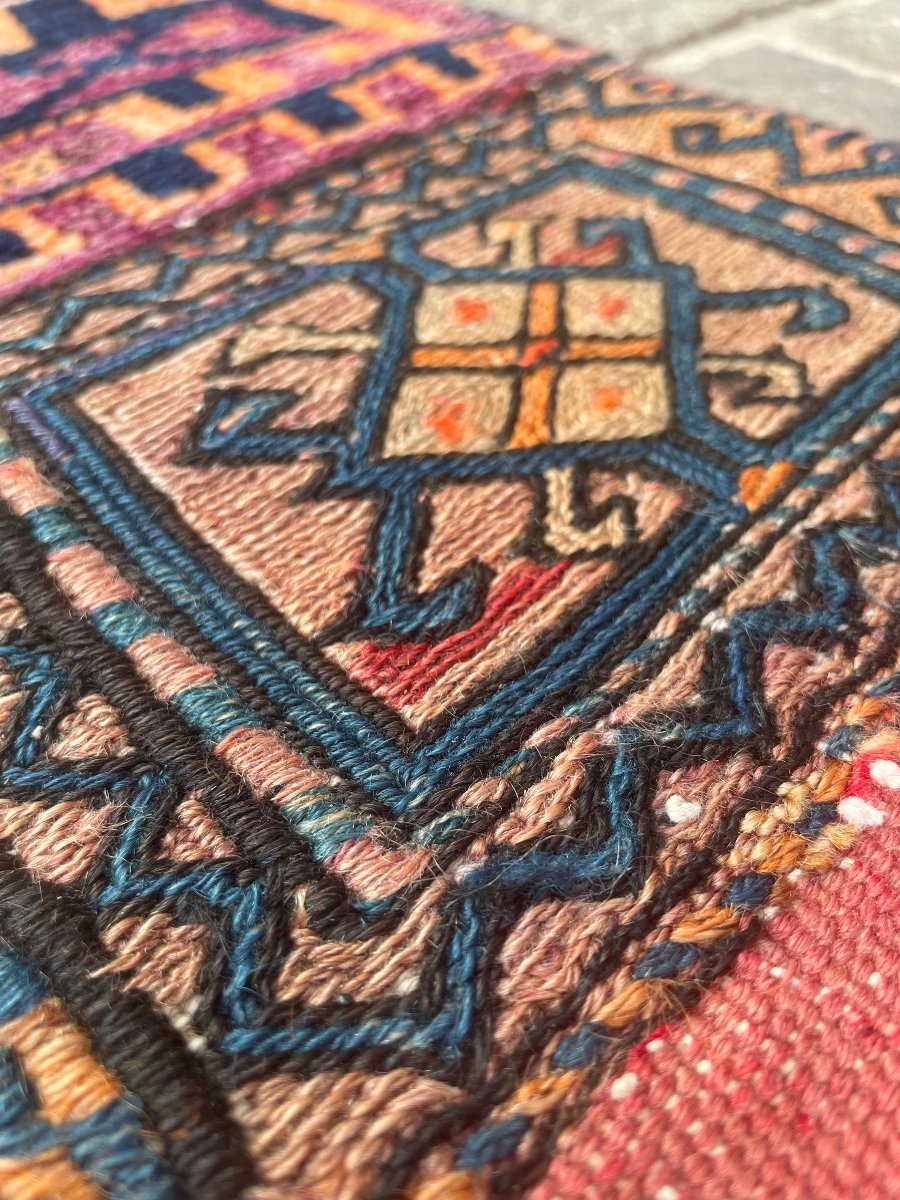
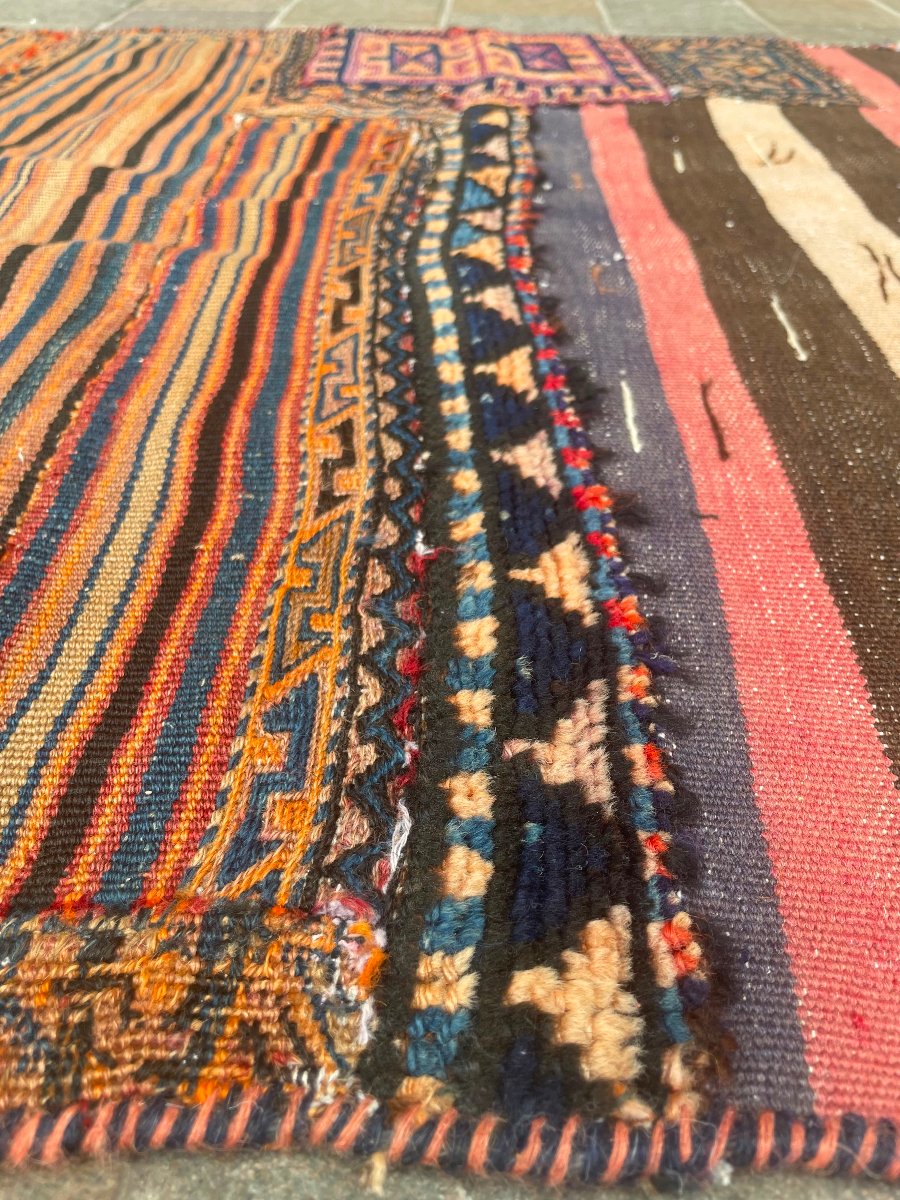
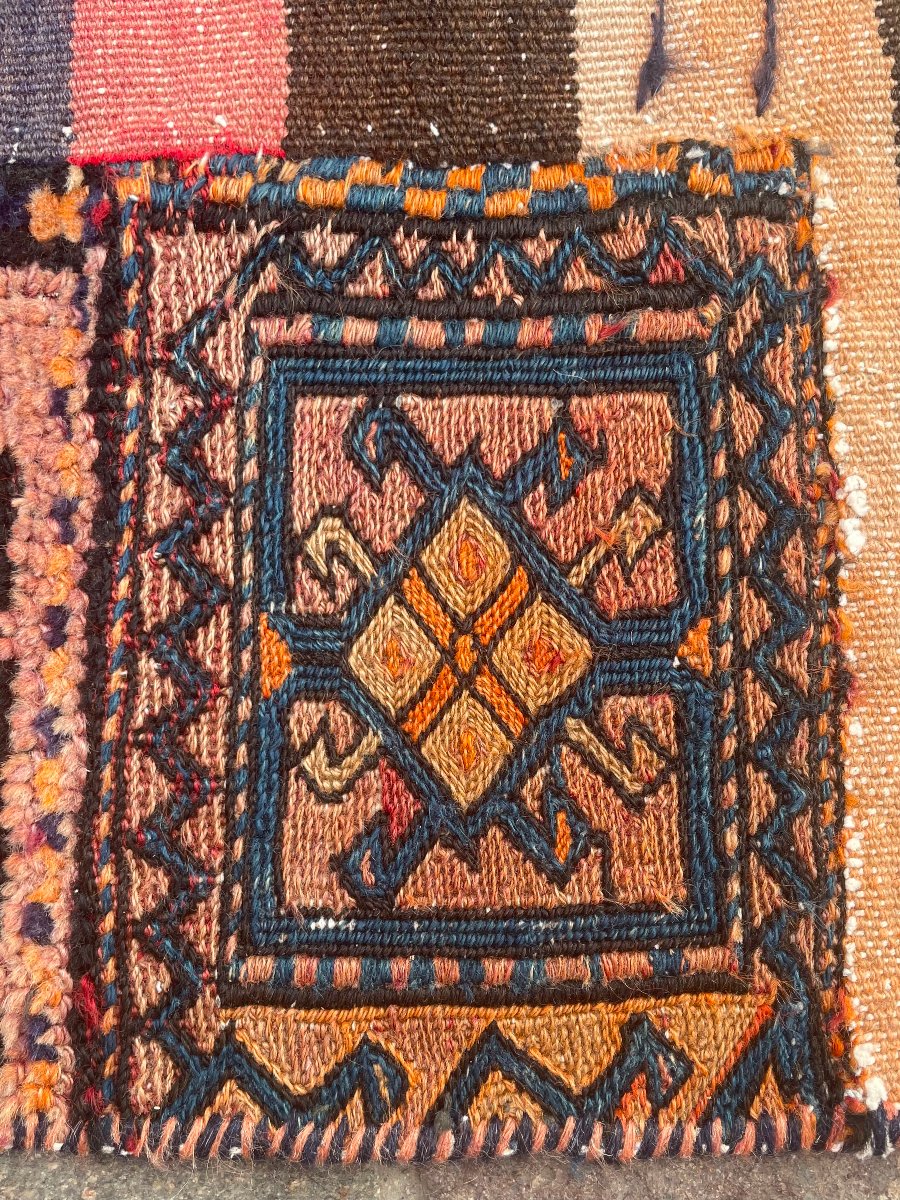
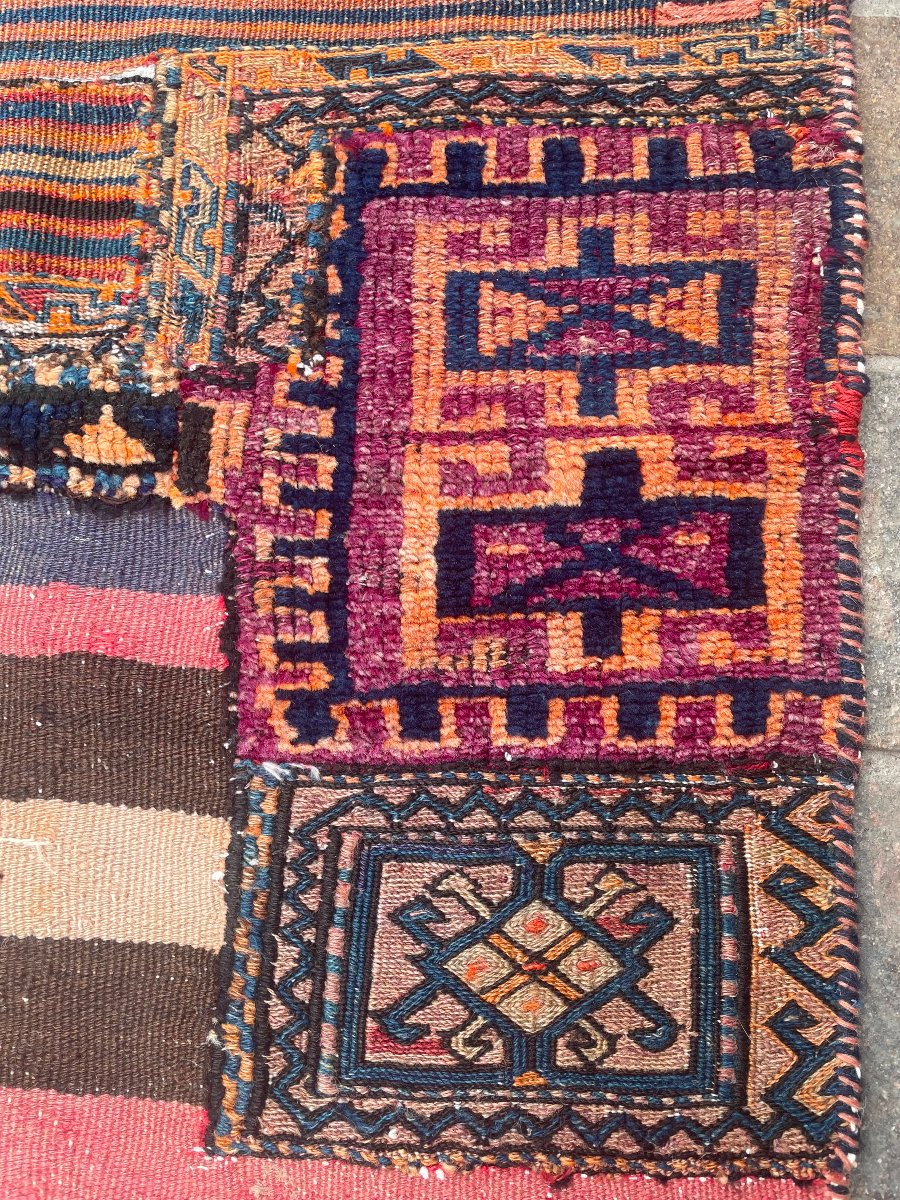
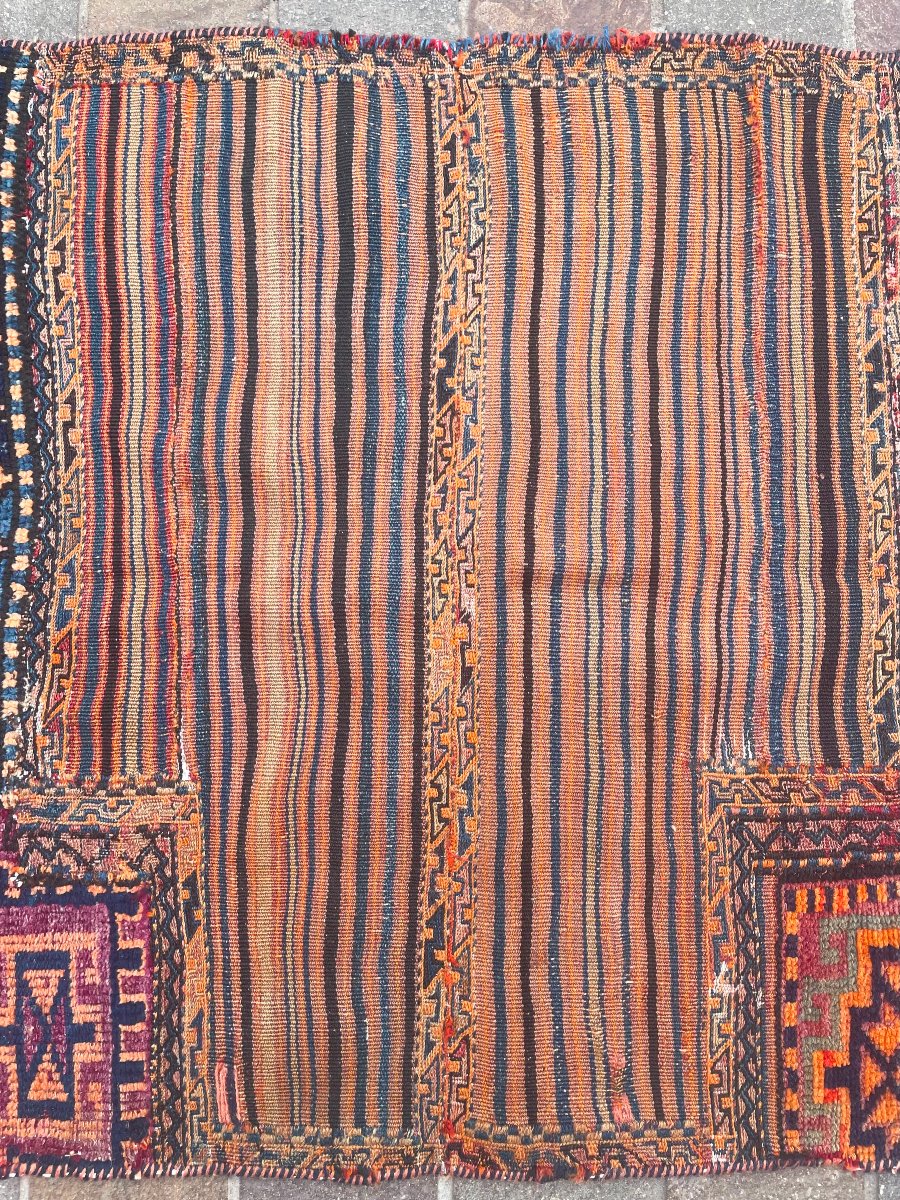
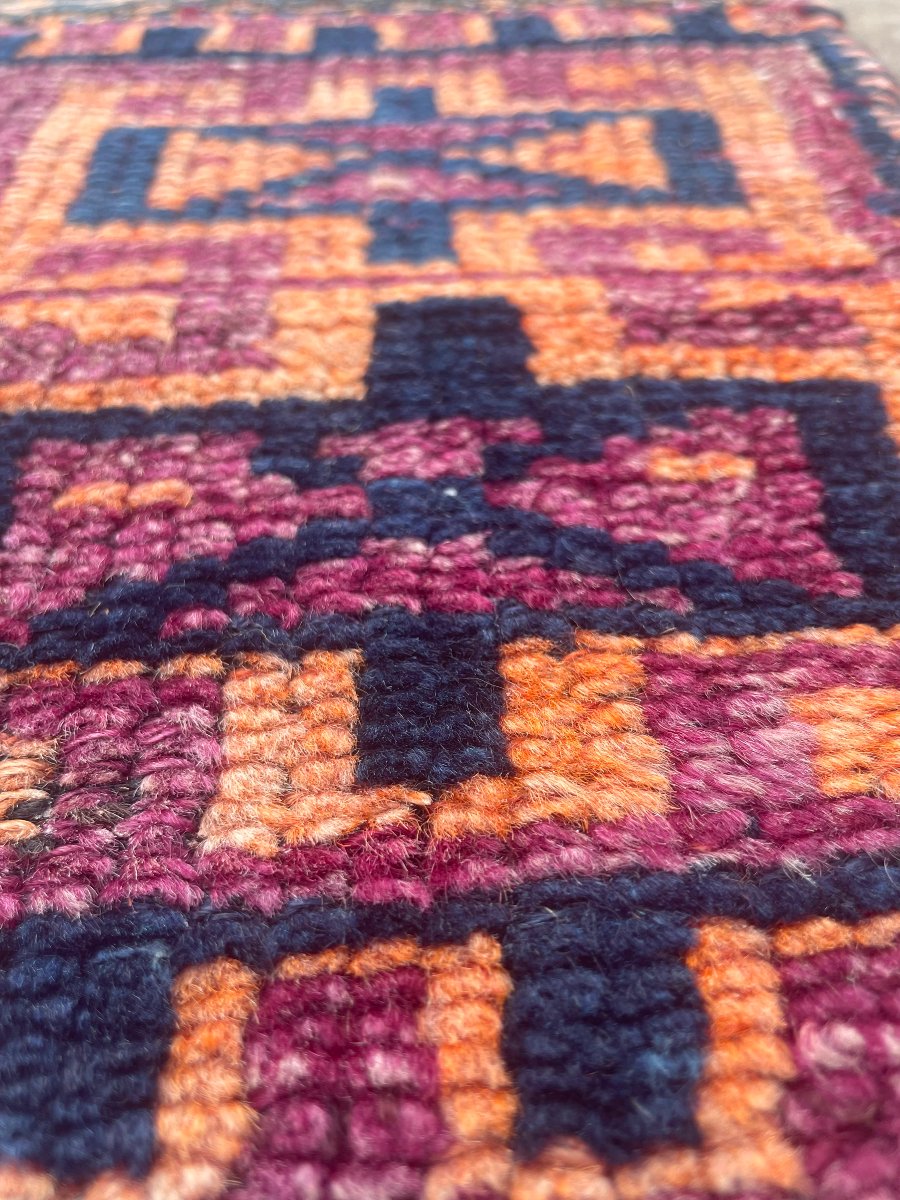
A key point: this is by no means a patchwork made from assembled antique fragments. The different parts belong to a single piece and bring together several techniques—flat weaving, sumak, embroidery, and knotted stitch—on a single item. The velvet sections correspond to the parts of the bag that are subject to the most wear and tear, reflecting a design that is as ingenious as it is aesthetic.
The composition is perfectly balanced.
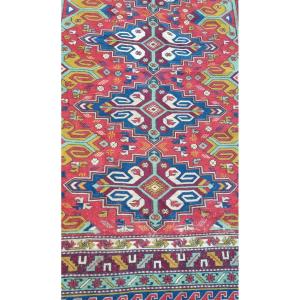
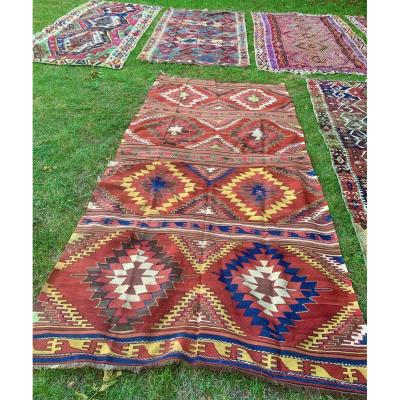
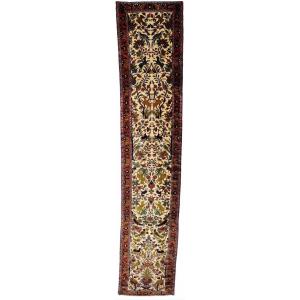
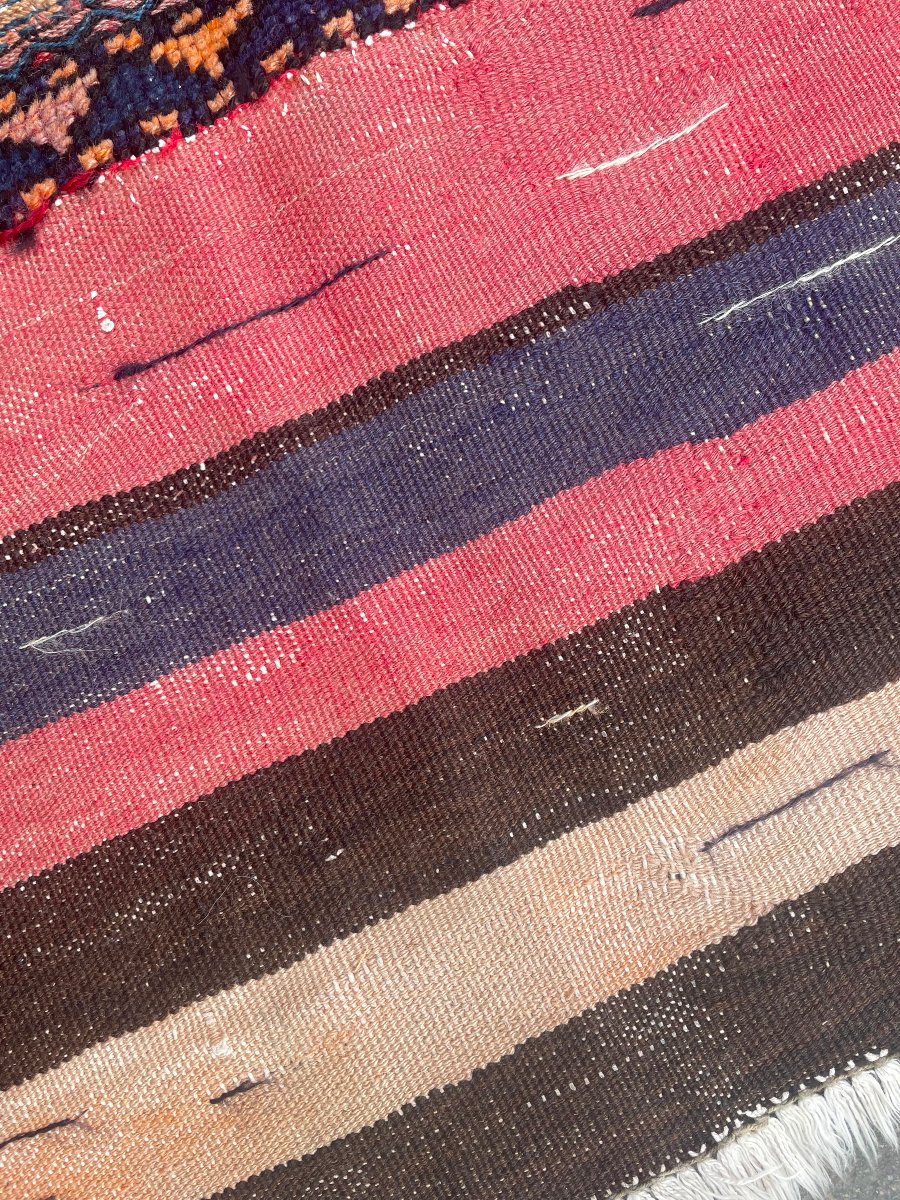
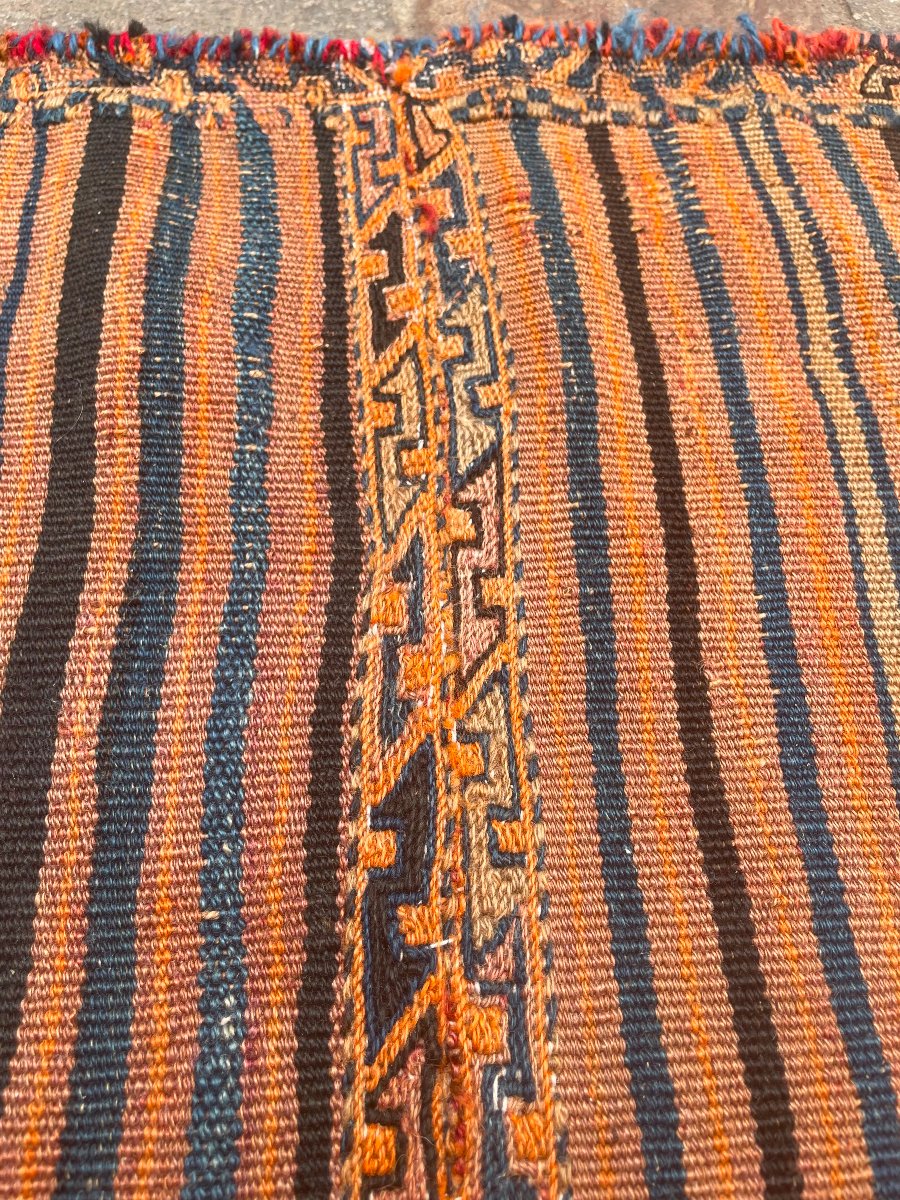
Large, deliberately understated striped areas alternate with finely crafted bands and several geometric panels arranged asymmetrically. This succession of solid areas, lines, and patterns creates a true architectural rhythm. The decorated sections feature the full range of tribal motifs: geometric shapes, hooks, protective elements, and stylized patterns.
The color palette is particularly appealing: deep brown, indigo blue and midnight blue, madder red, dusty pink, terracotta, orange-tinged ochre, natural beige, and ivory, complemented by a few sporadic touches of muted green and yellow. The plant-based dyes have retained beautiful shades, and the natural variations in the wool give the wide bands a depth that time has only accentuated.
Wool on wool—mixed media.
Persia, Bakhtiari.
Circa 1900.
Plant dyes
Dimensions: 155 x 90 cm
Laurent
Beauty of Kilims
A utilitarian object from the nomadic world, it impresses today with the extraordinary richness of its construction and its almost contemporary design.
A key point: this is by no means a patchwork made from assembled antique fragments. The different parts belong to a single piece and bring together several techniques—flat weaving, sumak, embroidery, and knotted stitch—on a single item. The velvet sections correspond to the parts of the bag that are subject to the most wear and tear, reflecting a design that is as ingenious as it is aesthetic.
The composition is perfectly balanced.
Large, deliberately understated striped areas alternate with finely crafted bands and several geometric panels arranged asymmetrically. This succession of solid areas, lines, and patterns creates a true architectural rhythm. The decorated sections feature the full range of tribal motifs: geometric shapes, hooks, protective elements, and stylized patterns.
The color palette is particularly appealing: deep brown, indigo blue and midnight blue, madder red, dusty pink, terracotta, orange-tinged ochre, natural beige, and ivory, complemented by a few sporadic touches of muted green and yellow. The plant-based dyes have retained beautiful shades, and the natural variations in the wool give the wide bands a depth that time has only accentuated.
Wool on wool—mixed media.
Persia, Bakhtiari.
Circa 1900.
Plant dyes
Dimensions: 155 x 90 cm
Laurent
Beauty of Kilims
750 €
Period: 20th century
Style: Orientalism
Condition: Excellent condition
Material: Wool
Length: 155 cm
Width: 90 cm
Reference (ID): 1822039
Availability: In stock
Print