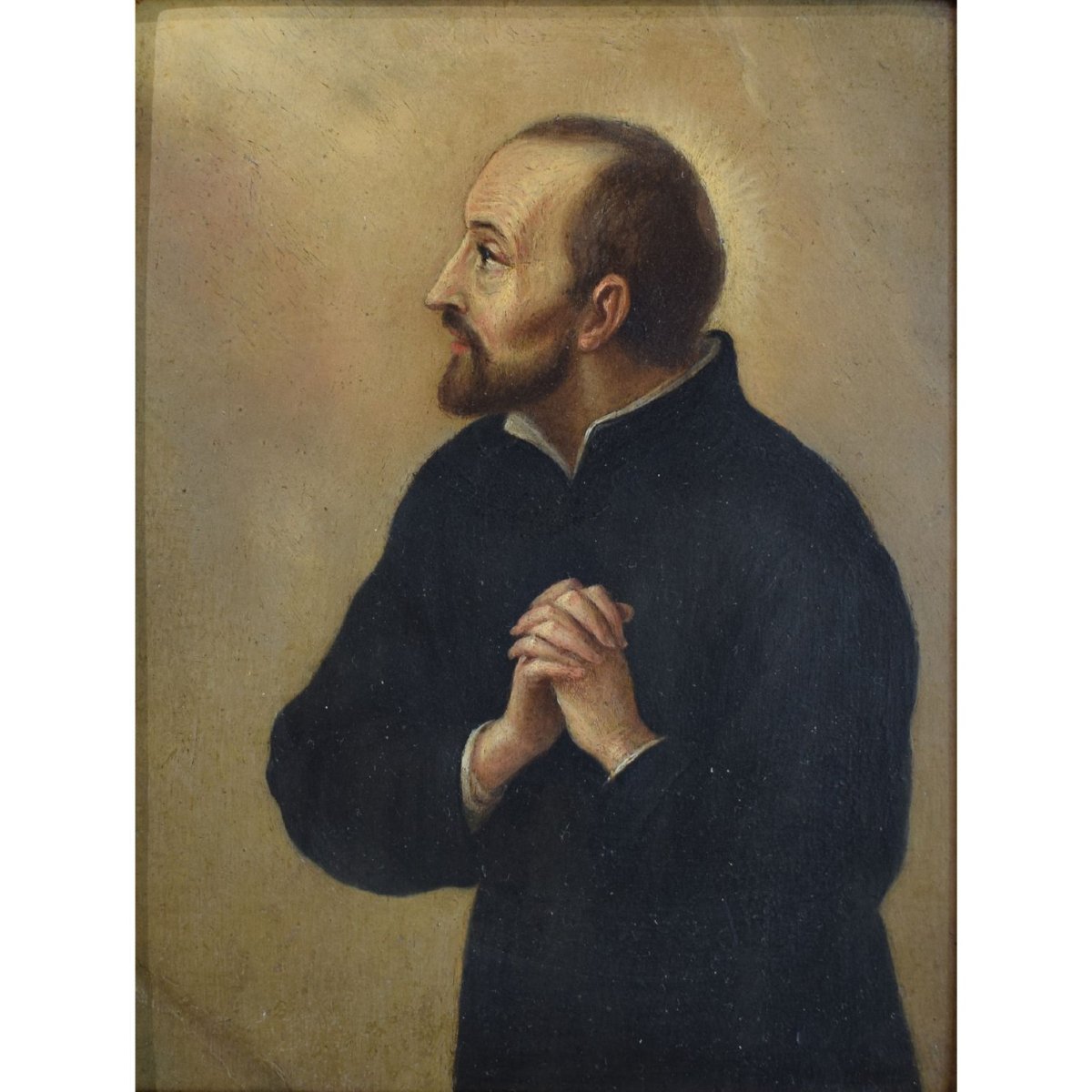


St. Ignatius Of Loyola, Oil On Copper, 17th Century – 16th-century Venetian Frame
17th century
St Ignatius of Loyola
Oil on copper, 18.5 × 14 cm
Frame: Venice, 16th century, 27.5 × 23.5 cm
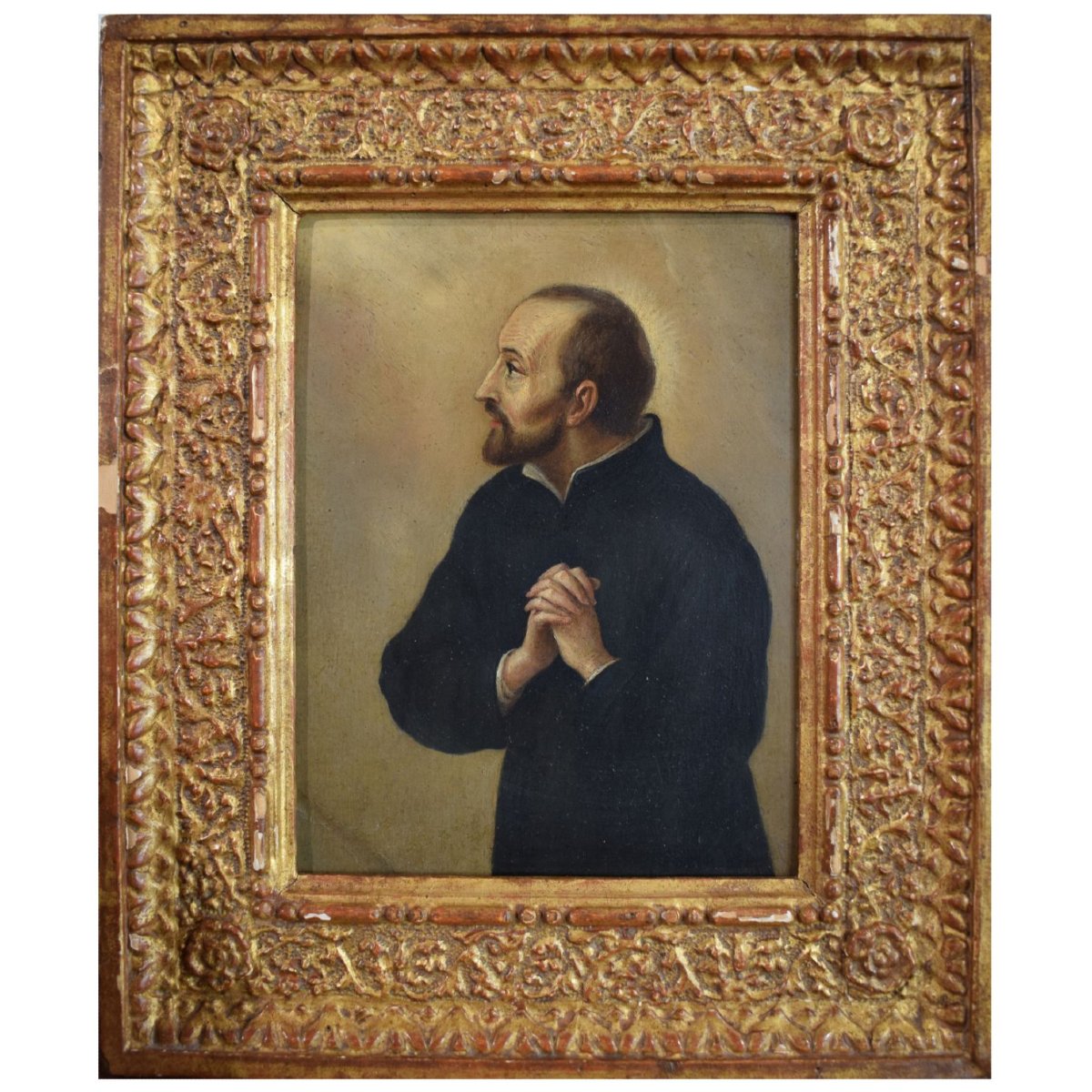
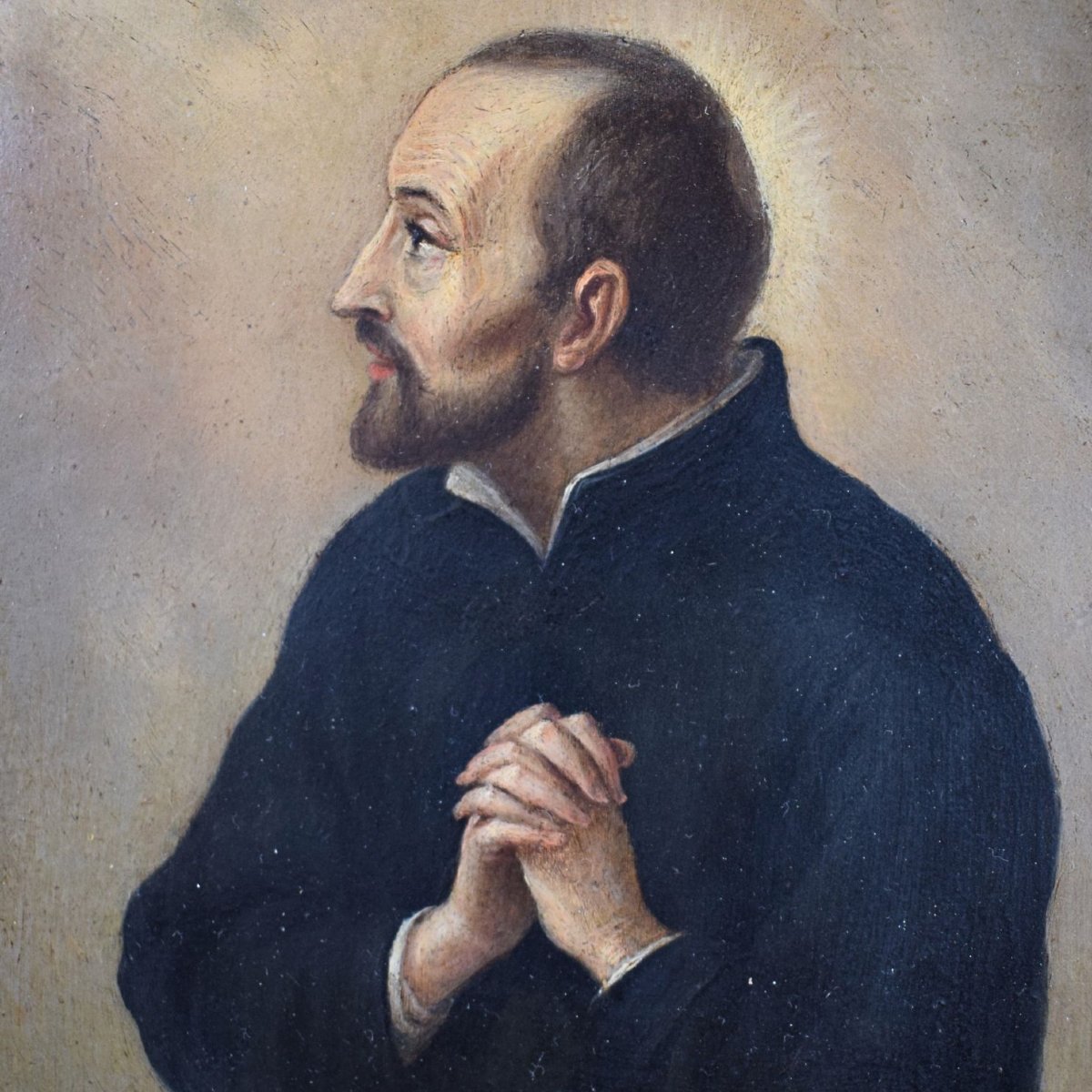
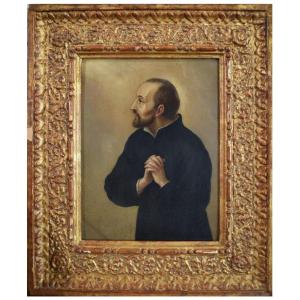
Devotional painting on copper, 17th century, St Ignatius of Loyola, set in an antique 16th-century Venetian frame
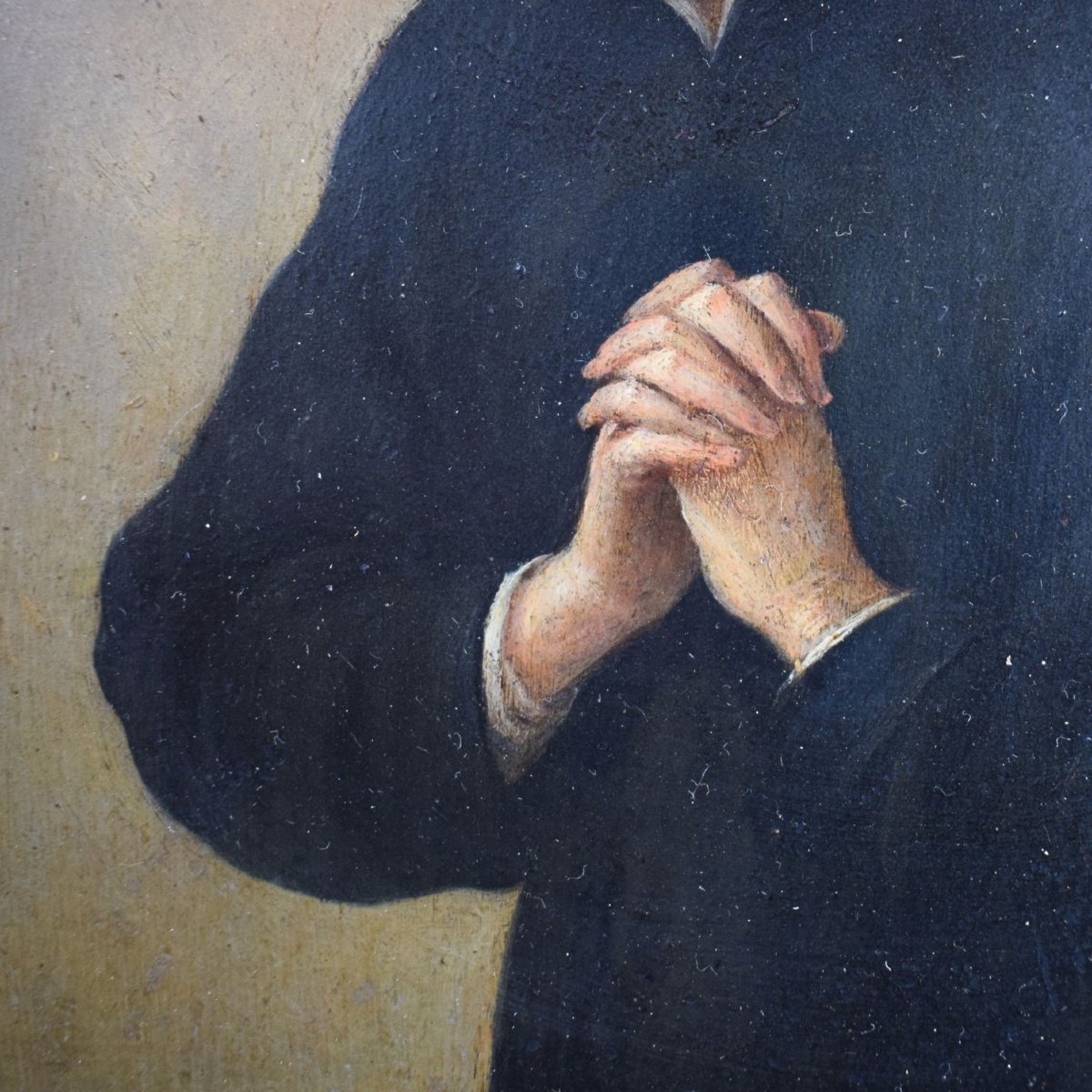
A refined small 17th-century devotional painting depicting Saint Ignatius of Loyola, founder of the Society of Jesus, shown in half-length profile with his hands clasped in prayer, executed in oil on copper and set in a rare 16th-century Venetian frame of carved and gilded wood.
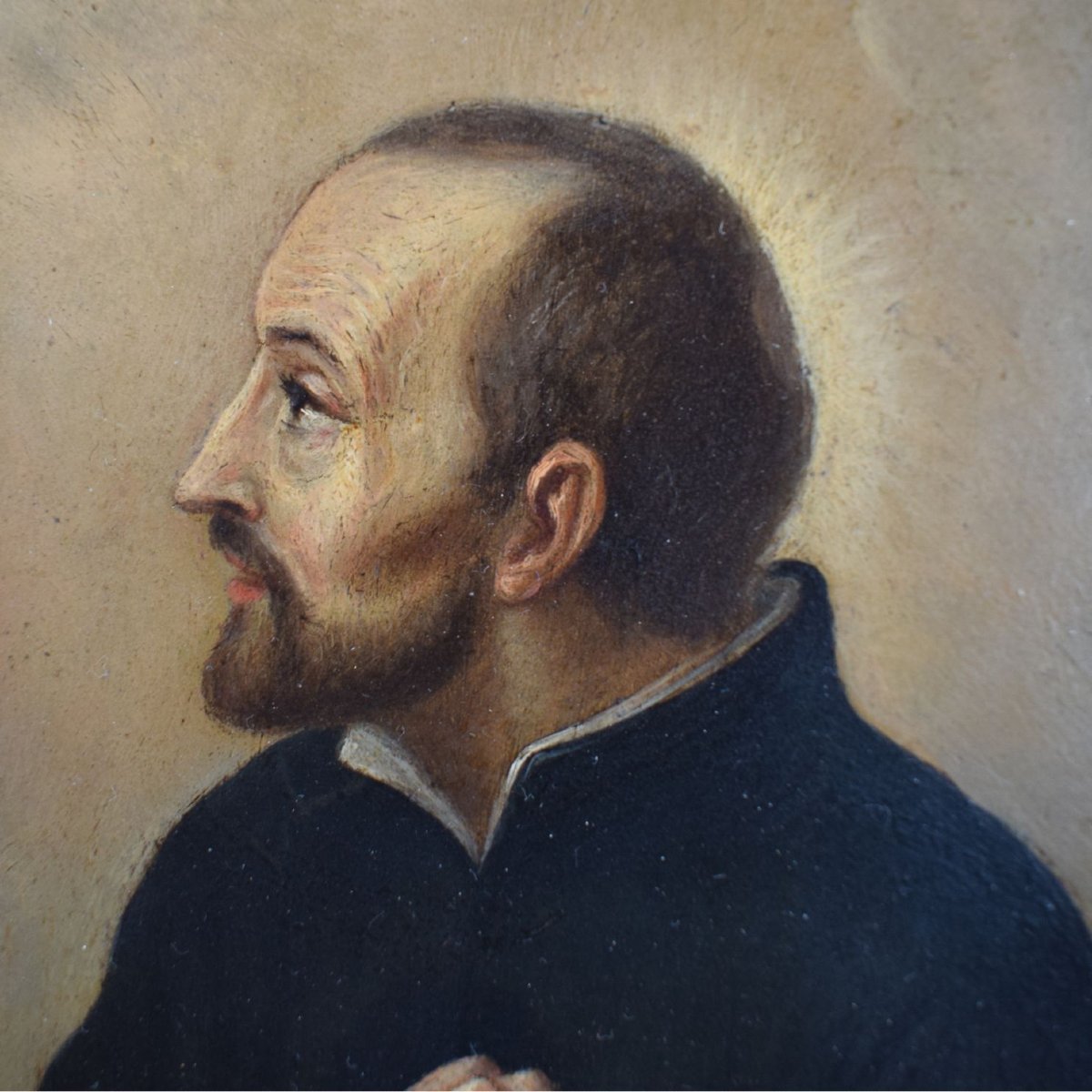
The saint wears a simple black religious habit, which occupies much of the composition and contrasts with the warm, neutral and luminous background. The artist focuses attention on the physiognomic characterisation of the face: the high, receding forehead, the prominent nose, the short beard and the sharp profile constitute the essential elements through which the figure’s identity is constructed.
St Ignatius is one of the saints with the richest and most varied iconography. Despite the richness of his iconography, he is one of the saints whose appearance is very difficult to define; indeed, his likeness varies considerably from one continent to another and even within the same geographical area. The earliest images of Ignatius of Loyola depict the Founder of the Society of Jesus realistically dressed in the Order’s habit, with a black cloak and cassock, sometimes wearing a square cap; when depicted at the altar, however, he wears a chasuble or richly trimmed liturgical vestments.
The diversity in the depictions of Saint Ignatius stems from some of the principal virtues that characterised his personality: humility, discretion and modesty. For these reasons, during his lifetime Ignatius always refused to sit for a portrait.
Shortly after his death on 31 July 1556, Ignatius was portrayed by Jacopino del Conte (1510–1598), a pupil of Andrea del Sarto, who used as his model the death mask that a Jesuit brother had fashioned on the very day of the Founder’s death; this remains the only authentic record of the Saint’s features, with all its merits and flaws. There are, however, two main traditions regarding the portrait of Saint Ignatius: the first is that of Jacopino del Conte, painted after the Founder’s death but considered to depict the saint looking too youthful; the second is the portrait painted in Madrid by Sánchez Coello, which depicts an elderly man with grey hair and, probably, no teeth.
Neither portrait was considered the most lifelike, yet despite this they were reproduced on numerous occasions and served as a guide for subsequent artists, such as Baciccia or Rubens, who based their works on the Madrid portrait, or Andrea Pozzo, who drew on Jacopino del Conte’s portrait.
The composition in the copperplate under consideration derives from Jacopino del Conte’s painting, in the variations and interpretations that followed over the subsequent years. The composition is that of a devotional portrait, a genre particularly widespread during the seventeenth century, when the circulation of images of saints also served a function of private edification and religious meditation. In the case of Ignatius, the circulation of engravings and graphic models contributed decisively to the establishment of a recognisable and reproducible likeness by artists.
The identification with Saint Ignatius of Loyola therefore appears particularly convincing, even in the absence of an inscription, based on the correspondence between the likeness and the iconographic tradition of the saint.
The choice of a copper plate as a painting surface is particularly significant.
Copper, thanks to its smooth, compact and low-absorbent surface, allowed the painter to achieve an extremely controlled application of colour, favouring precision of detail, soft glazes and the brilliance of the flesh tones. Painting on copper enjoyed particular popularity between the late sixteenth and the seventeenth centuries, especially for small-format paintings intended for private devotion, private collections and picture galleries.
The compact size and quality of the surface make the painting particularly well-suited to this type of use: a precious image, easily placed in a study, a private collection or a small devotional space.
The technique of painting on copper also lends the work that particular luminous and precious clarity which is one of the distinctive features of painting on metal.
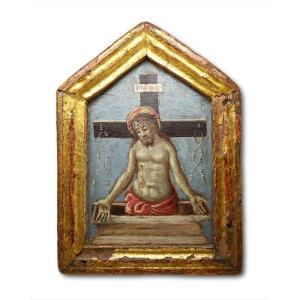
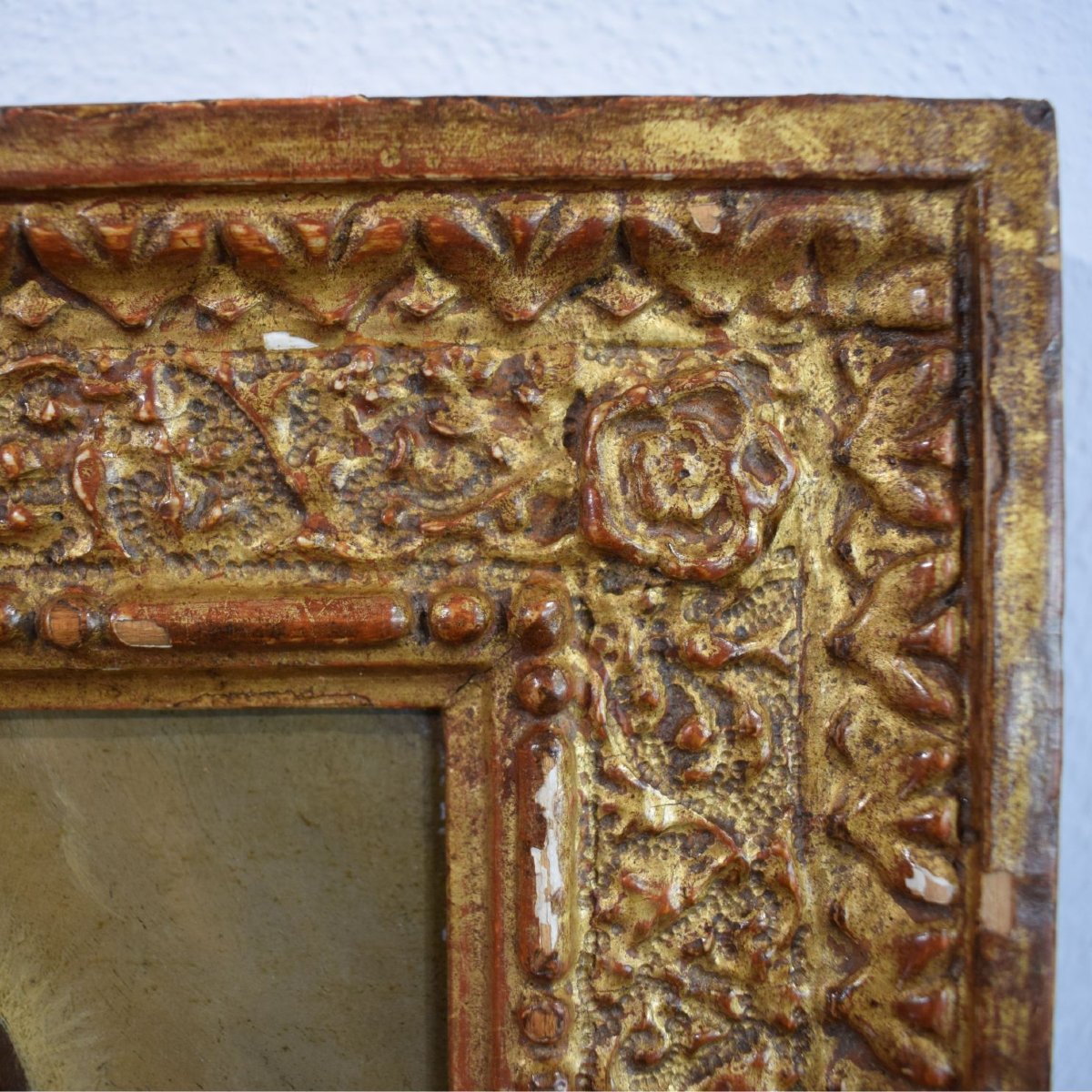
An element of particular interest is the 16th-century Venetian frame, which predates the painting.
Crafted from carved and gilded wood, it features rich relief decoration, with plant motifs, scrolls, foliage, volutes and ornaments, arranged along a broad ornamental band.
The intricately carved surface produces a complex interplay of reliefs and shadows, whilst the gilding lends the whole a particularly evocative appearance.
- All our works are accompanied by a detailed certificate of authenticity.
- Professional packing and insured dispatch to ensure maximum safety during transport.
- For further information, please do not hesitate to contact us on +39 329 319 4887 – info@dequart.com
- Video calls and in-person viewings are available by appointment in MILAN and BORGOMANERO (NO).
- Further information and photographs: www.dequart.com IG - FB @dequ.art
Period: 17th century
Style: Renaissance, Louis 13th
Condition: Good condition
Material: Copper
Width: 14
Height: 18,5
Reference (ID): 1818559
Availability: In stock