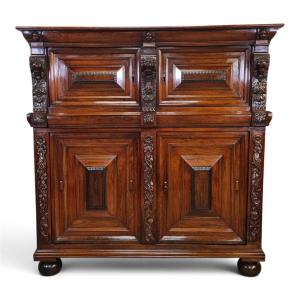


Four-door Cabinet, Dutch Baroque Period, Provence Of Zeeland, Circa 1680–1690,
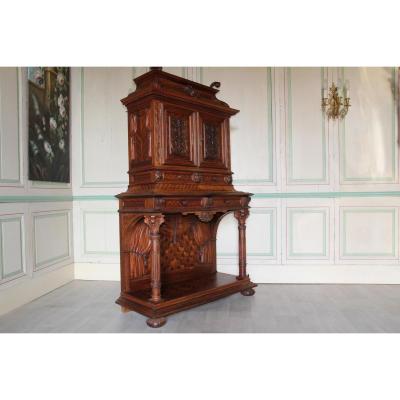
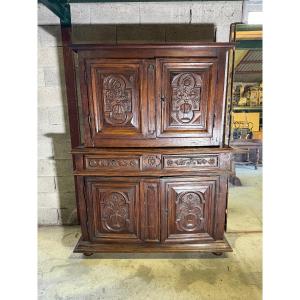
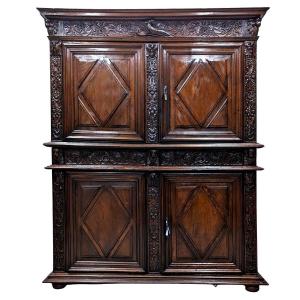
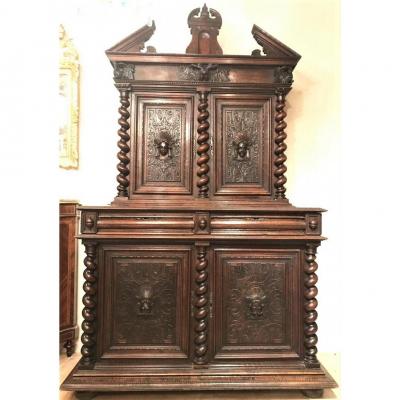
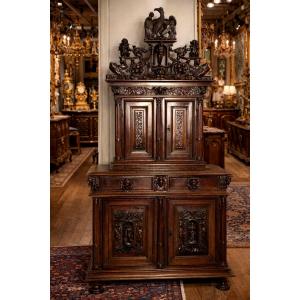
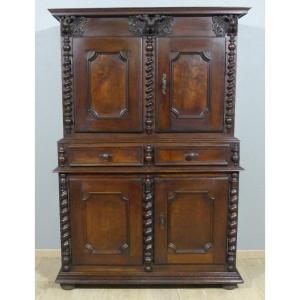
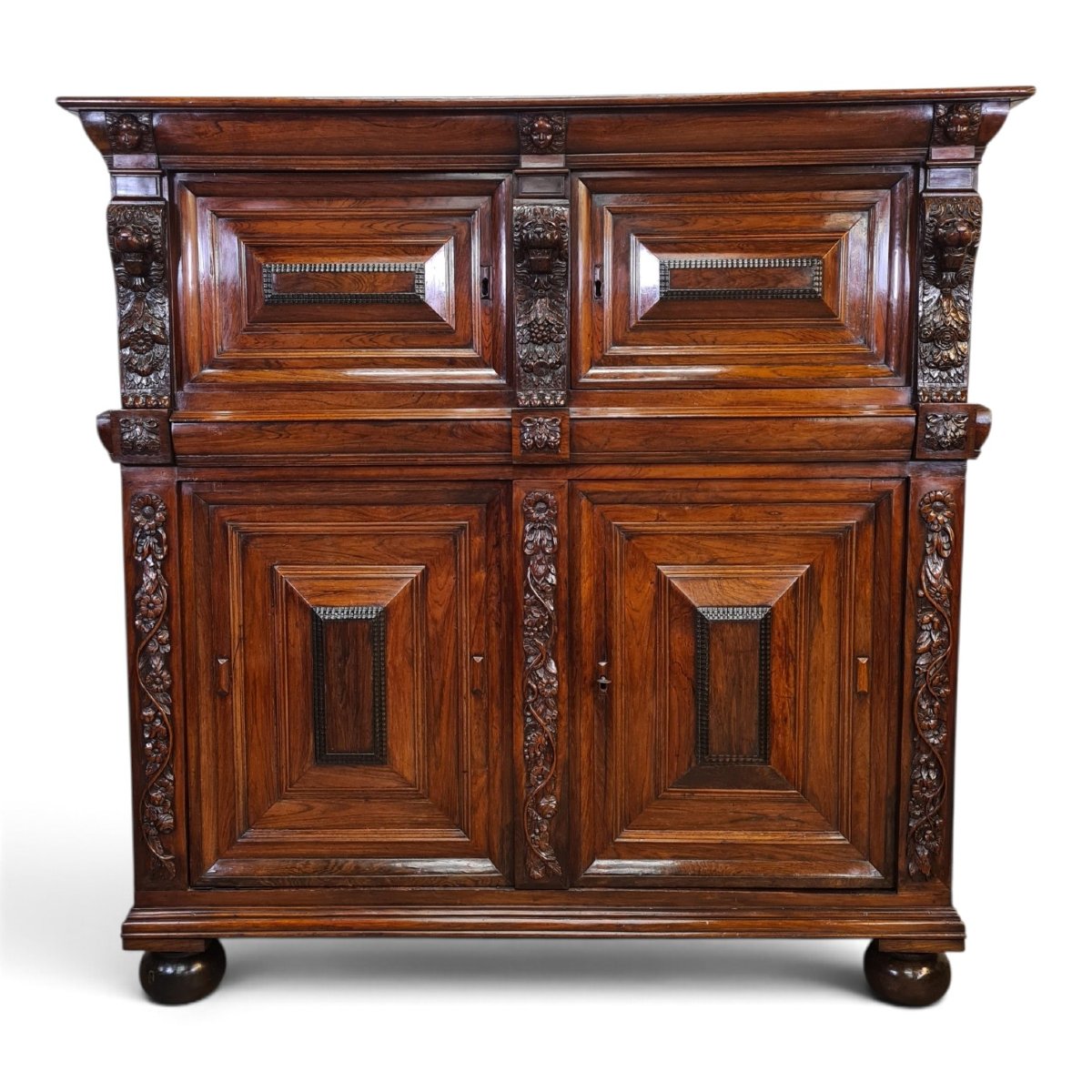
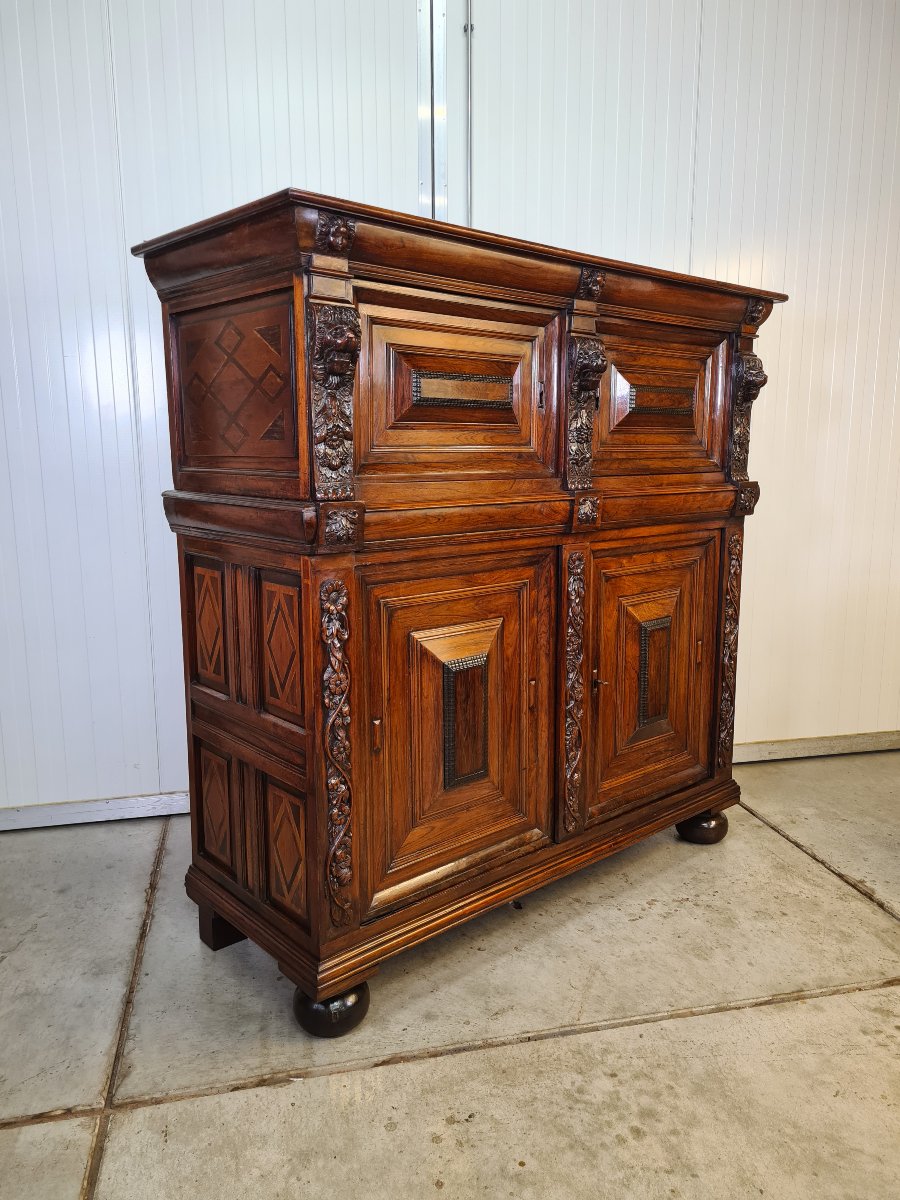
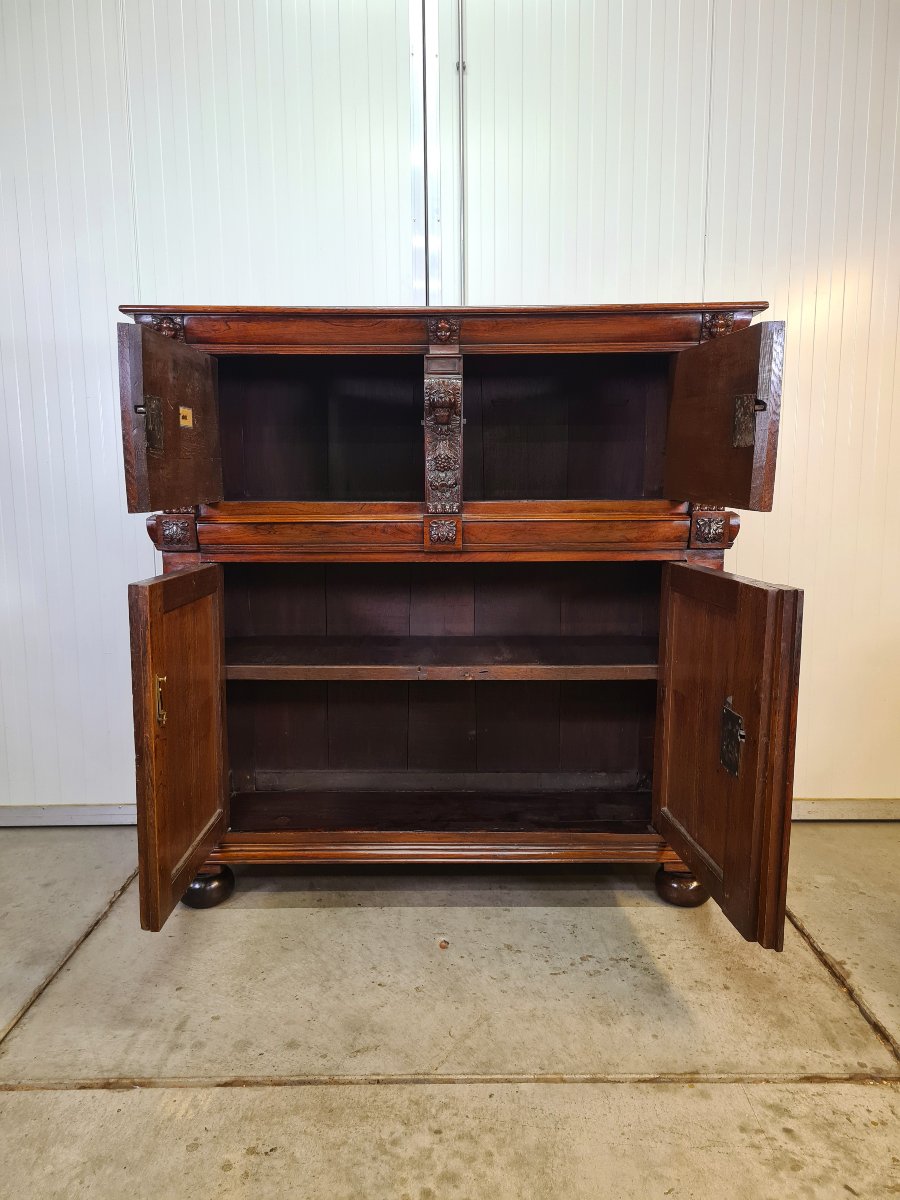
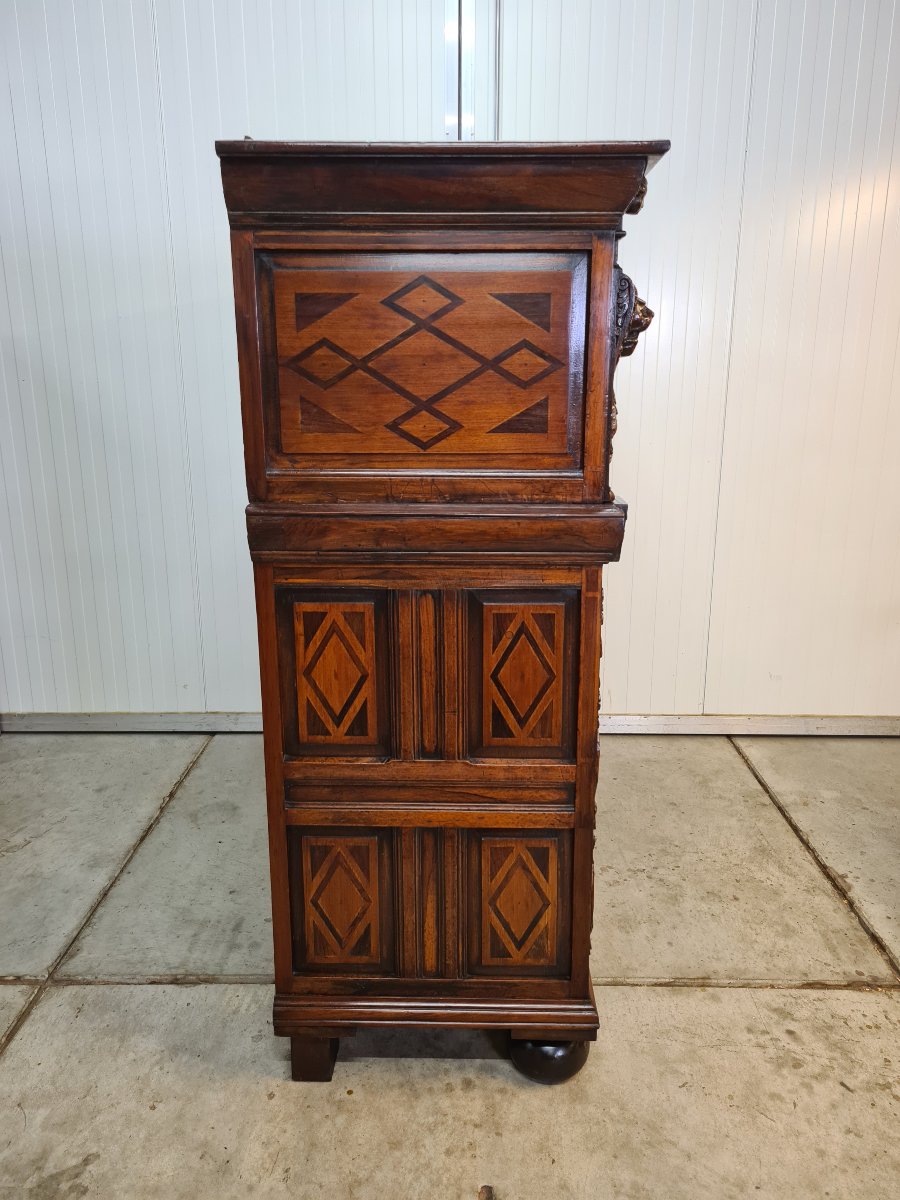
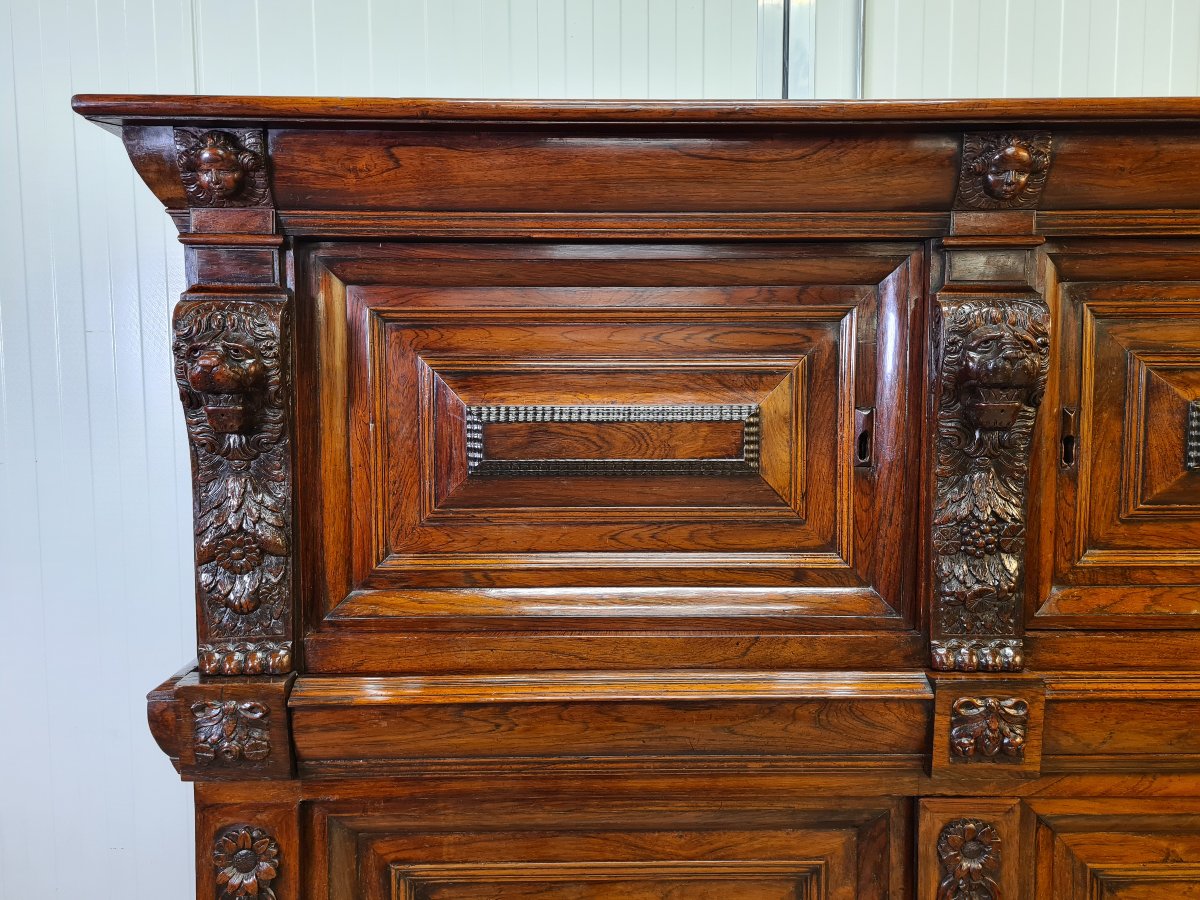
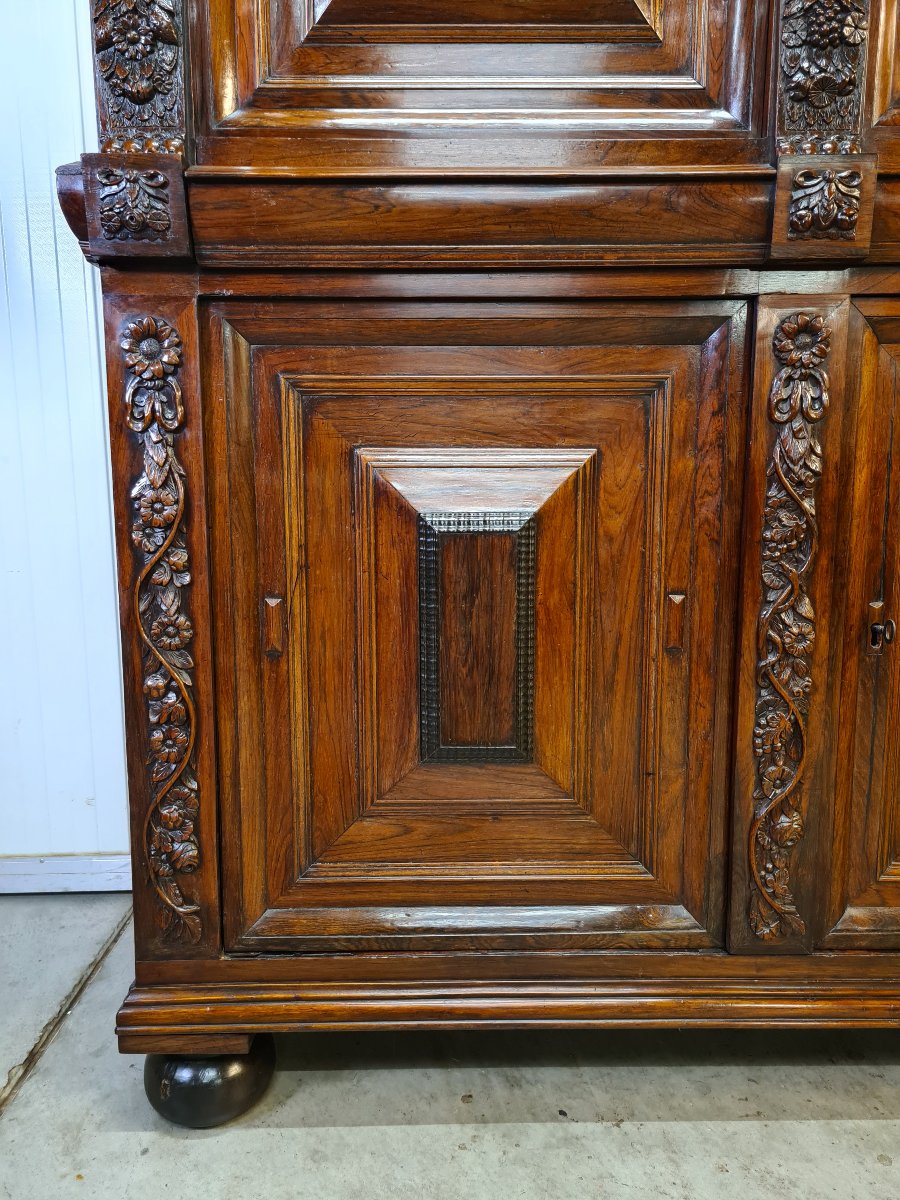
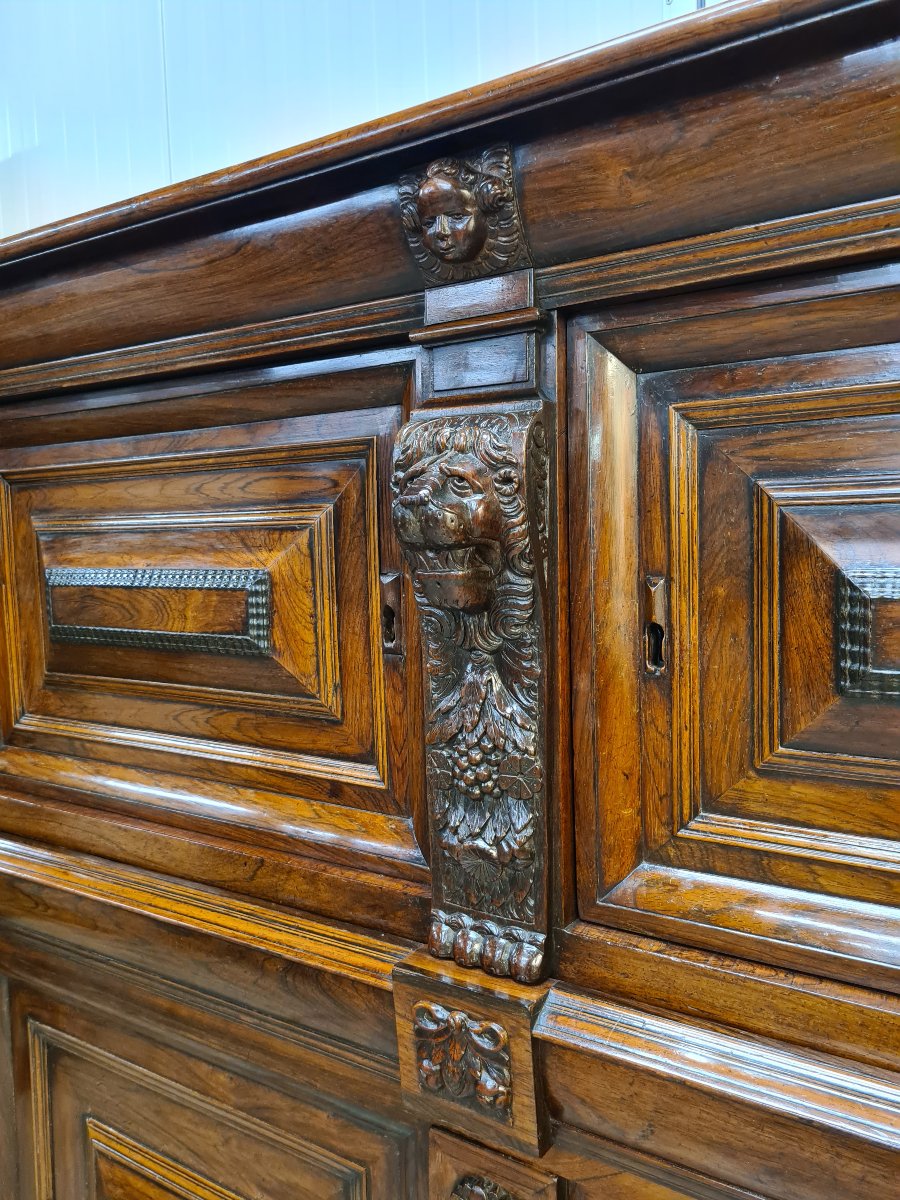
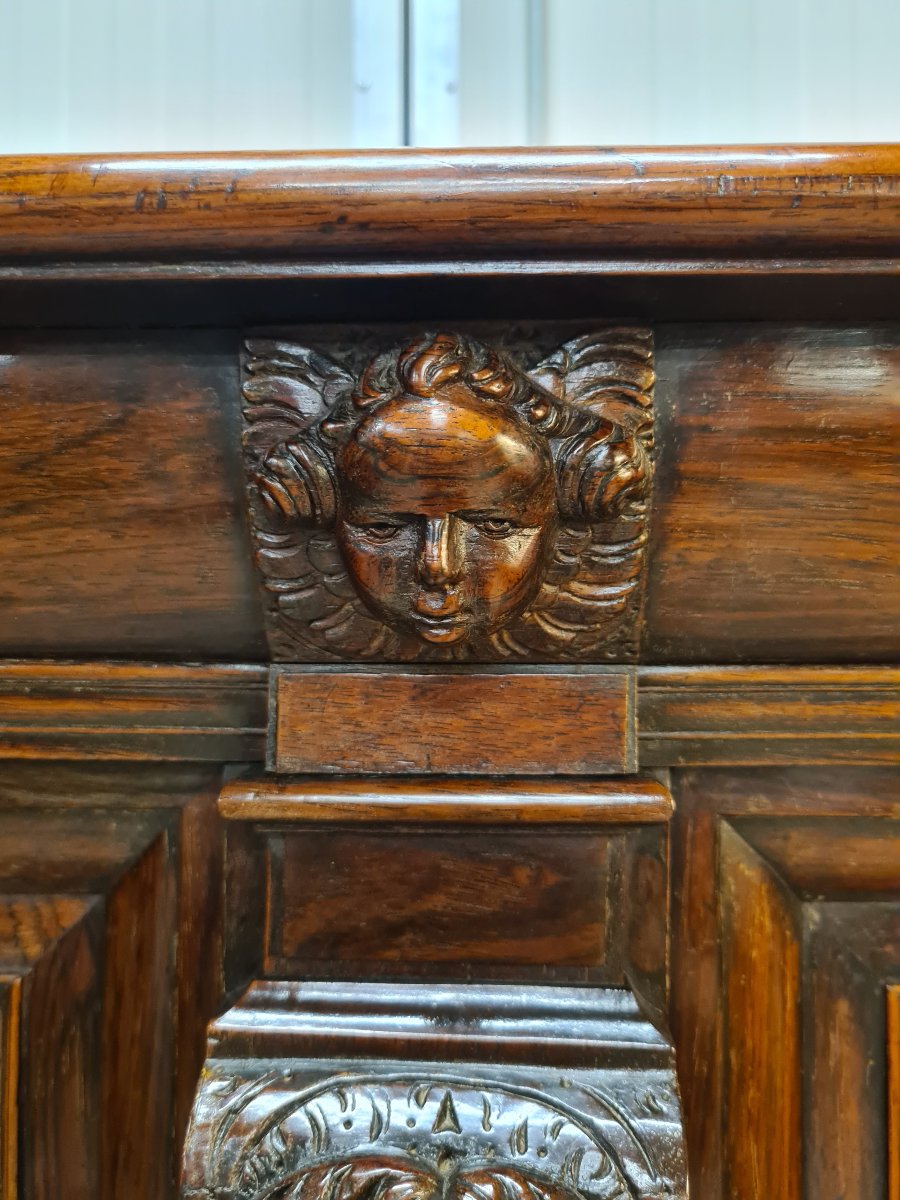
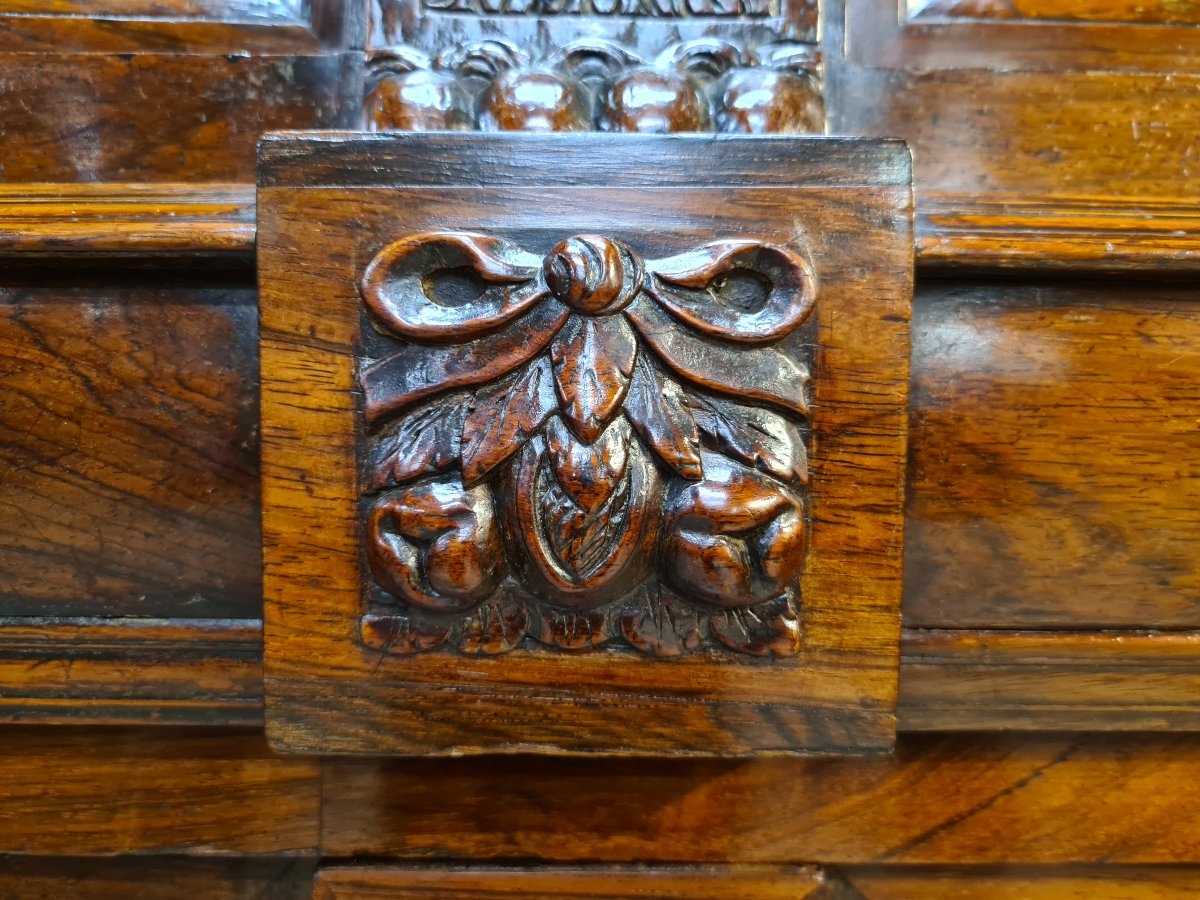
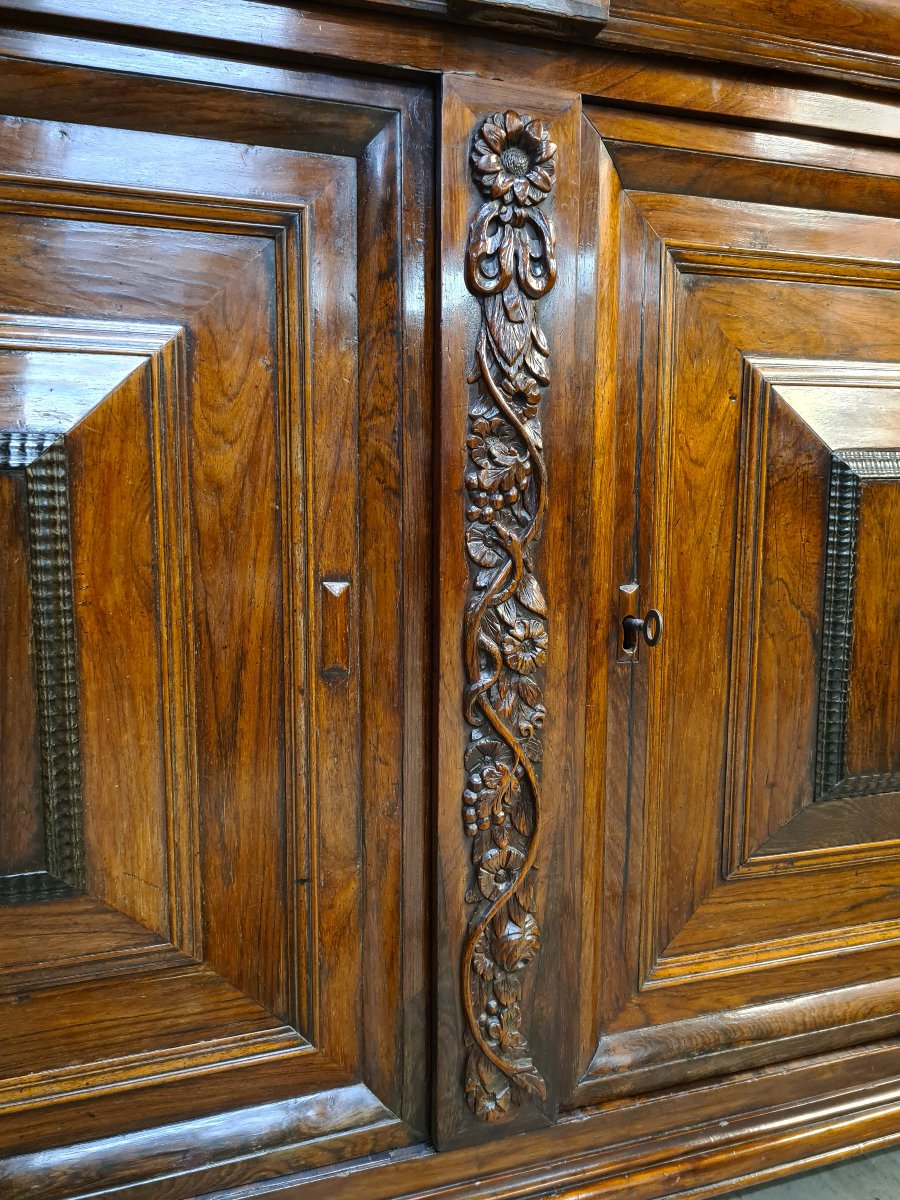
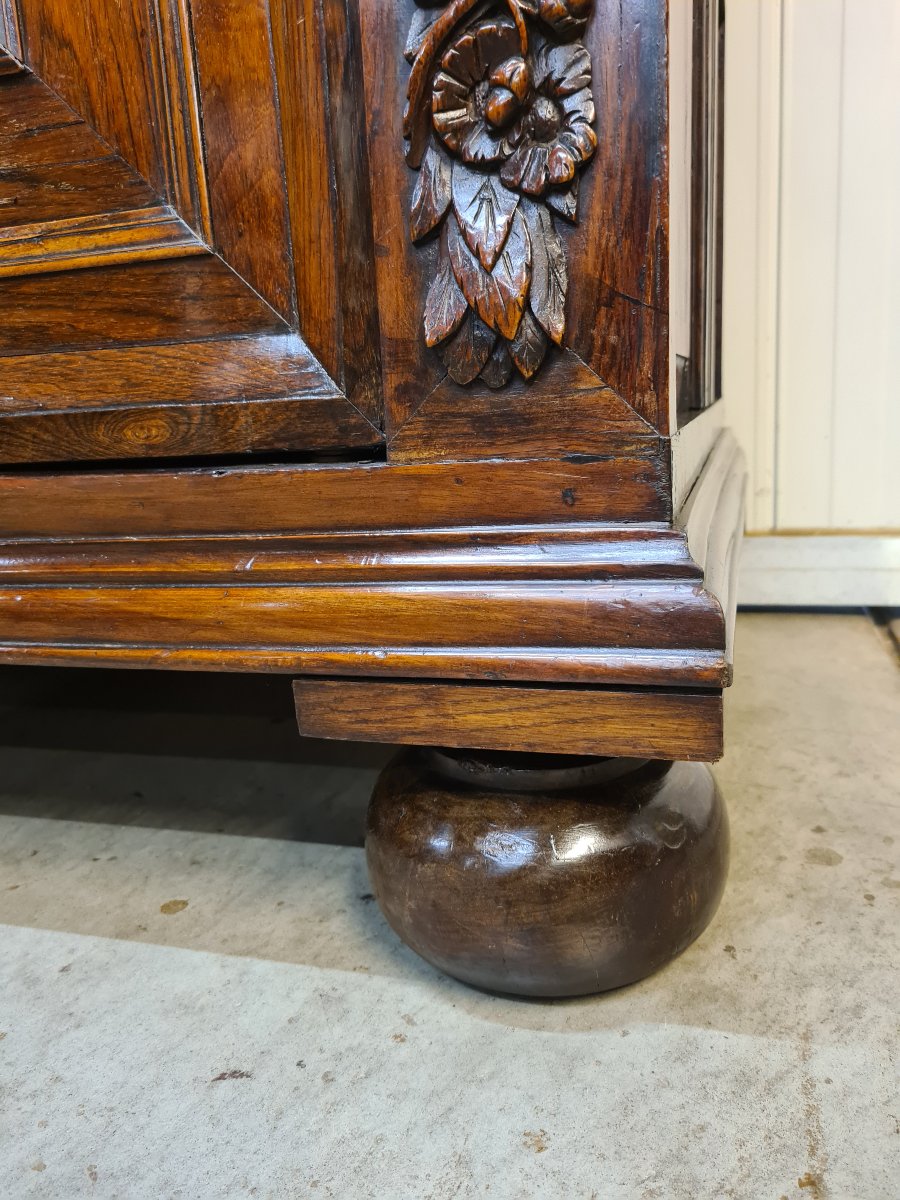
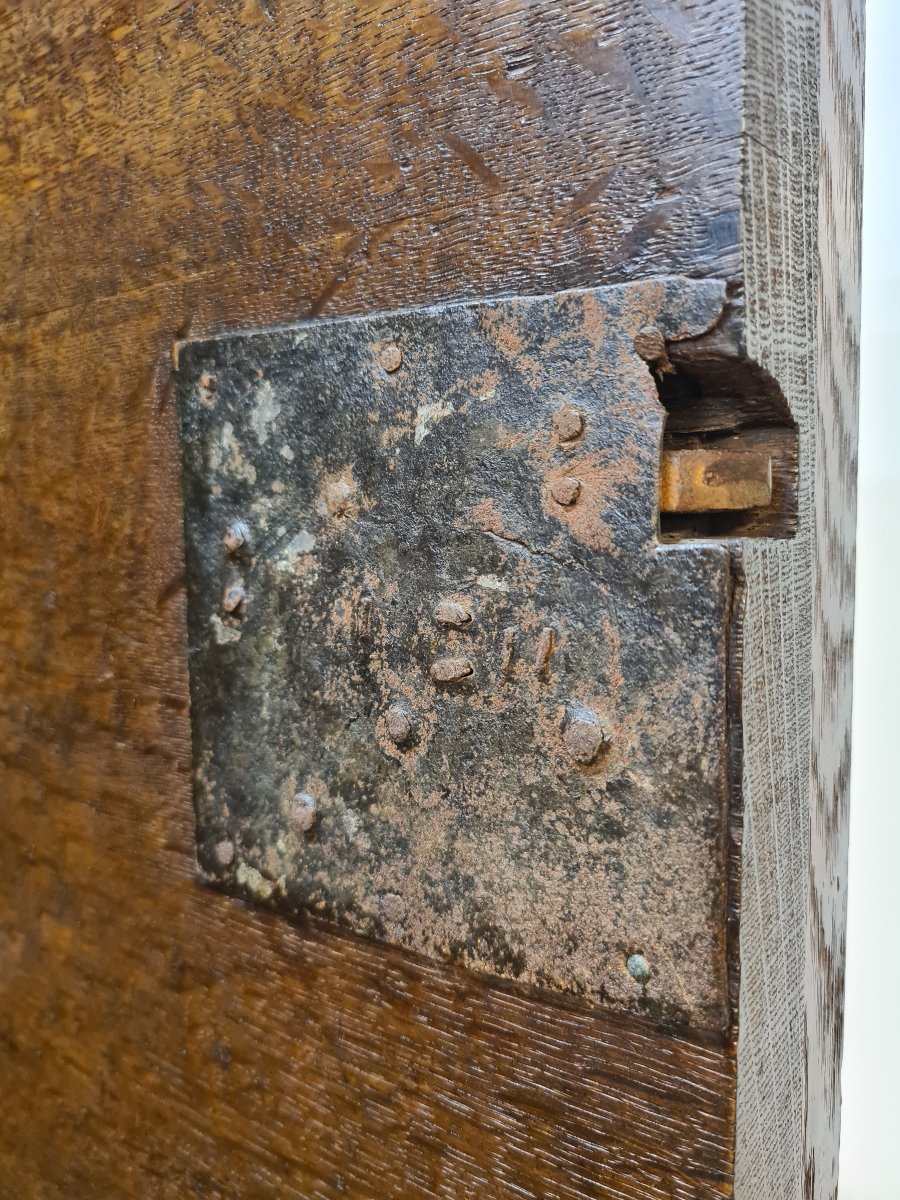
A four-door cabinet from the late 17th century, dating from the Dutch Baroque period, circa 1680–1690. The lower section, which is nearly as tall as it is wide, displays characteristics typical of cabinets originating in Zeeland.This cabinet is crafted from solid oak and high-quality tropical rosewood, veneered with rosewood. It is assembled using curved mortise and tenon joints, as well as glued and/or nailed joints (square, hand-forged); see the close-ups.Composed of two sections, the cabinet is, as its name suggests, fitted with four doors featuring tufted panels. A wide drawer is integrated into the frieze separating the two sections.The cabinet is richly decorated with highly refined carvings: cherub heads on the upper section, lion consoles on the uprights of the upper section, and floral and plant motifs on the uprights of the lower section. In addition, the cabinet is adorned with inlays on the side panels and various profiled and ribbed moldings.At the front, it rests on turned, ebony-finished ball feet, which have replaced the original feet. This is almost always the case, as the elm wood originally used is highly susceptible to moisture, rot, and woodworms.The doors pivot on their original hinges, and the three locks operate with a single key. The lock on the lower compartment has likely been replaced.The piece shows normal signs of wear, as well as previous restorations to the hinges, moldings, and veneer. Overall, it is well-maintained and consistent with what one would expect from a piece of furniture over 300 years old.The entire piece features a deep, warm orange-brown hue and magnificent shades ranging from chocolate brown to black in the flamed grain pattern.
The shipment of objects can be arranged and will be packed with care. Shipment prices vary per country and are there for on request to make sure you will get the best price!
The shipment of objects can be arranged and will be packed with care. Shipment prices vary per country and are there for on request to make sure you will get the best price!
2 750 €
Period: 17th century
Style: Renaissance, Louis 13th
Condition: Good condition
Material: Solid wood
Width: 170 cm
Height: 171 cm
Depth: 68,5 cm
Reference (ID): 1801751
Availability: In stock
Print