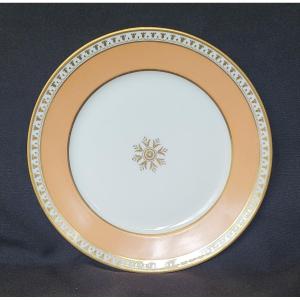


Plate - "a La Molette" Gilding On Porcelain From The Nast Manufactory - Paris - Empire Period
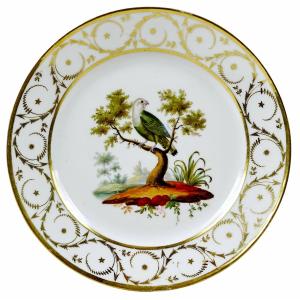
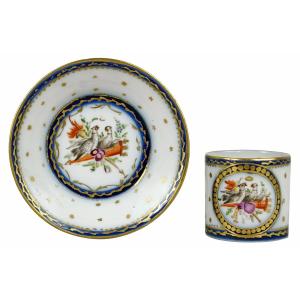
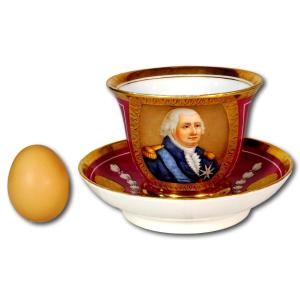
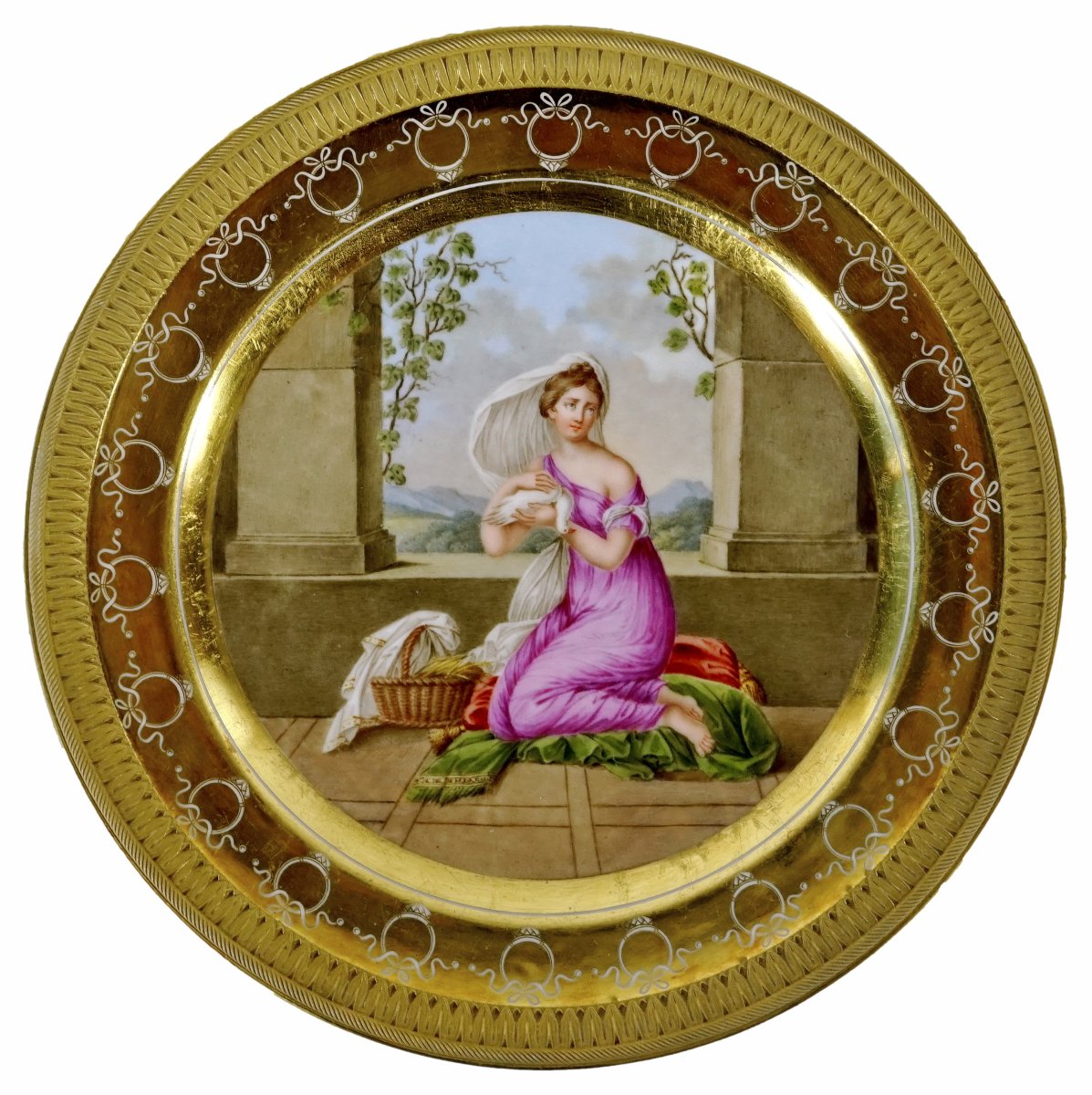
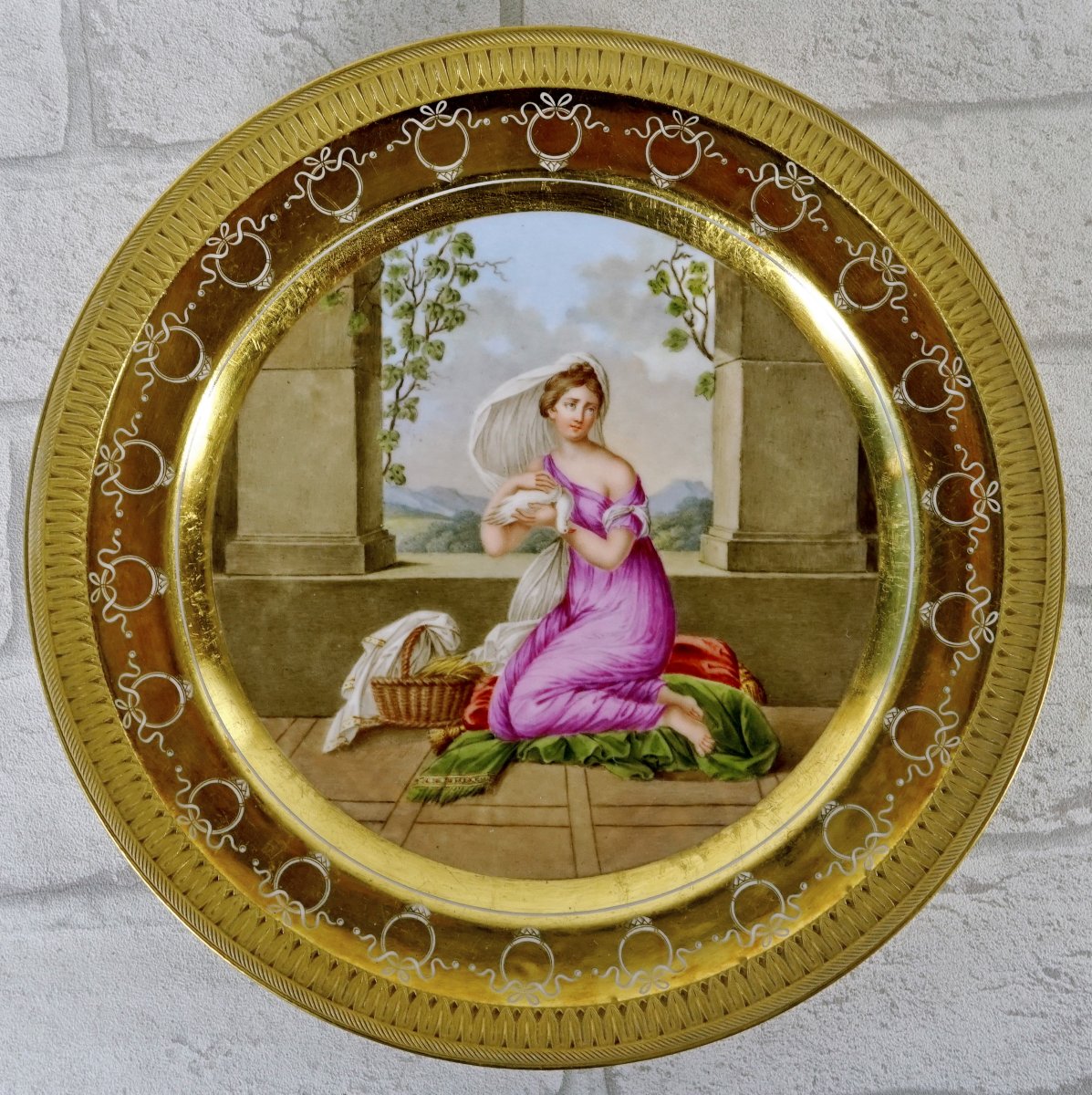
The central basin features an exceptional scene depicting a young woman draped in the classical style, an allegory of “Germinal,” the seventh month of the French Revolutionary calendar. Dressed in a dress in shades of purple, she is depicted in an architectural setting opening onto a landscape, kneeling on cushions and holding a light veil, in the spirit of neoclassical representations inspired by antiquity and early 19th-century allegories. The panel is entirely covered with a rich gold background, embellished with a series of circular medallions connected by linear motifs and stylized knots on a white background. The border is adorned with a large frieze executed with a roller, forming a geometric relief decoration of the kymation type, typical of the rich roller gilding employed by the Nast workshop in the early 19th century.
Provenance: Former collection of the BETMANN family, one of the most powerful German banking dynasties of the 18th and 19th centuries, based in Frankfurt am Main. In 1748, they founded the famous Gebrüder Bethmann (“Bethmann Brothers”) bank, which quickly became one of Europe’s leading financial institutions.
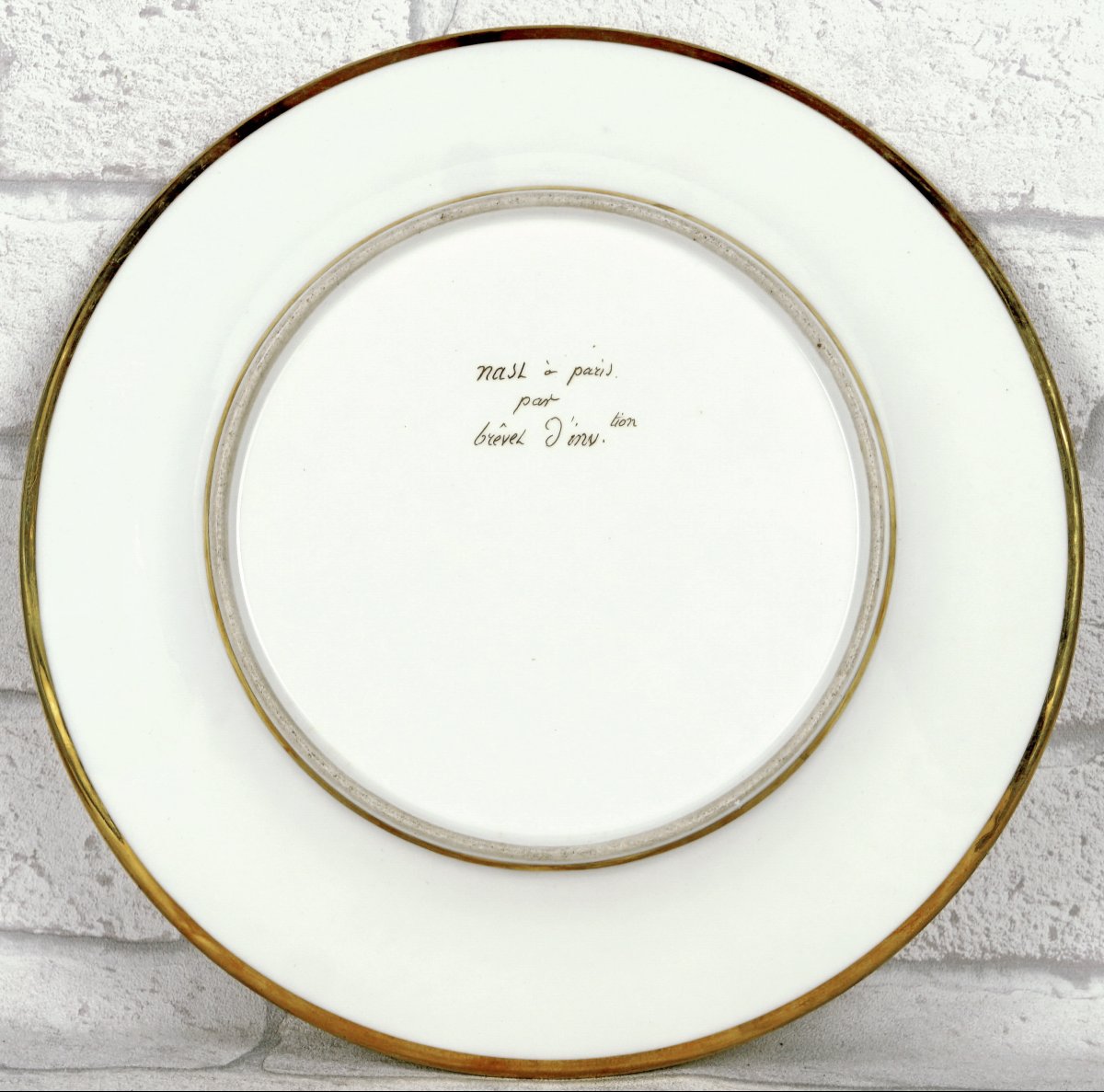
Mark(s): Painted in gold: “Nast in Paris by Patent of Invention,”
Dimensions: Diameter 24 cm,
Condition: PERFECT CONDITION,
Period: EMPIRE,
Remarks: Minimal signs of wear.
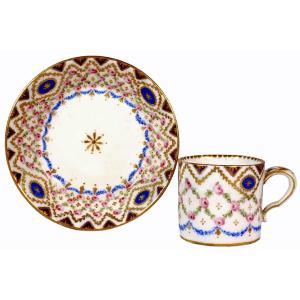
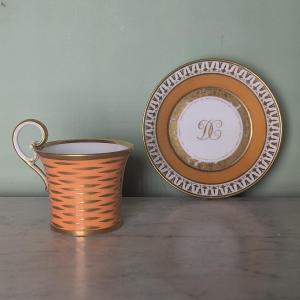
The wheel-gilding technique gives the porcelain a very precious look, almost as if one were dealing with silverware or chiseled bronze rather than simple ceramics. Since the reliefs are imprinted directly in gold before firing, the decorative surface gains truly exceptional depth and a luminous quality. Unlike gilding applied with a brush, which generally remains smooth and uniform, wheel-gilding creates a rich interplay of textures and reflections.
When light falls on it, each motif captures the light differently, producing subtle variations between matte, glossy, and slightly satin-finish areas. This technique brings the porcelain’s surface to life and enhances the sophistication of the design. The resulting friezes often evoke the chiseled work on gilded bronze, the trims of precious fabrics, or even certain motifs from ancient architecture.
This technical mastery was an integral part of the luxurious style that the Nast manufactory had developed during the Empire. At that time, porcelain was no longer merely an everyday object: it was a true decorative piece, designed to dazzle with the richness of its ornamentation and the quality of its craftsmanship. With these extremely refined gilded reliefs, each piece took on an almost architectural appearance. Light played with the depth of the motifs, and the gold sparkled brilliantly.
Period: 19th century
Style: Consulat, Empire
Condition: Perfect condition
Material: Porcelain
Diameter: 24 cm
Reference (ID): 1794721
Availability: In stock