

Carel De Vogelaer, A Roman Painter Of The Second Half Of The 17th Century, *garland Of Flowers*
Carel de Vogelaer (1653–1695), a Roman painter of the second half of the 17th century
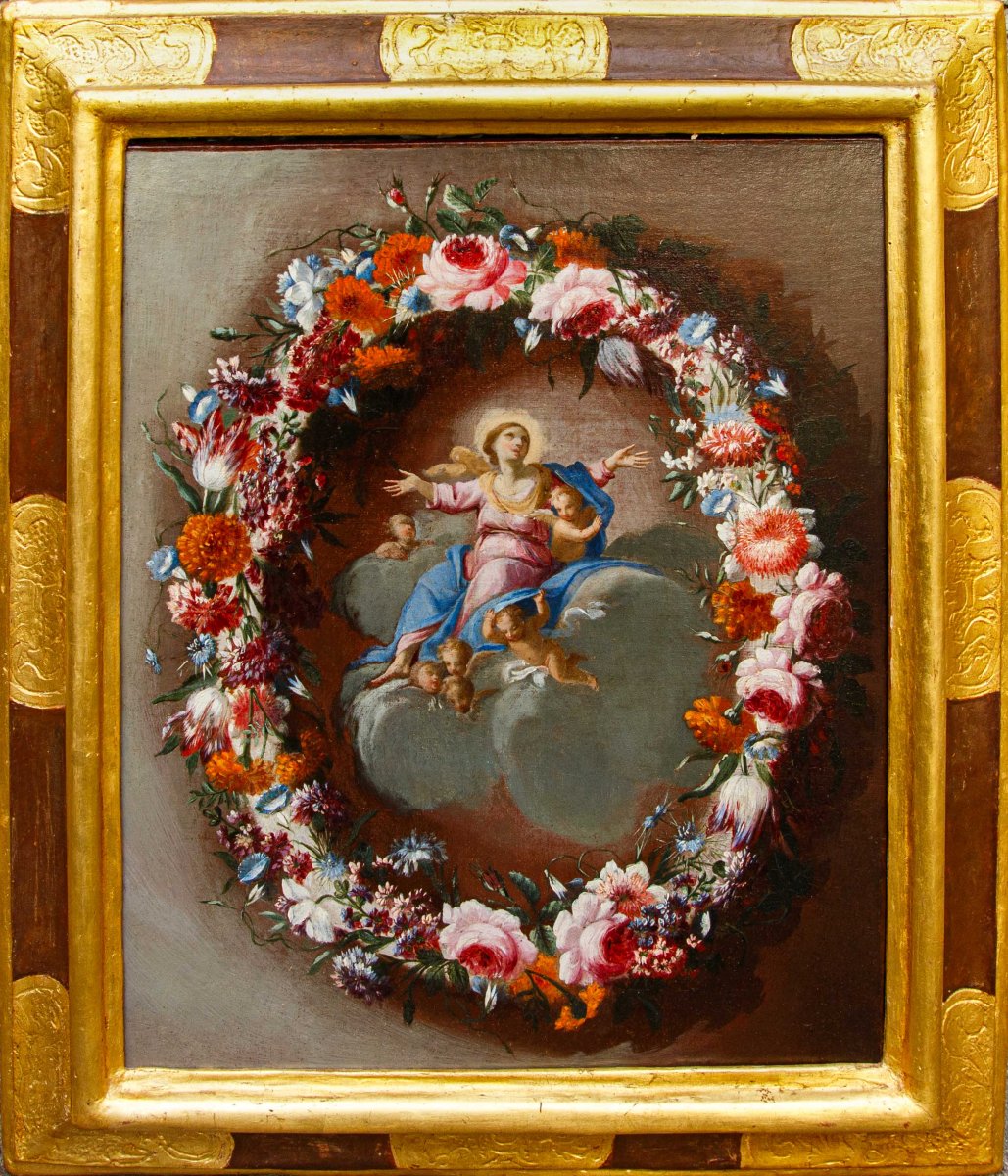
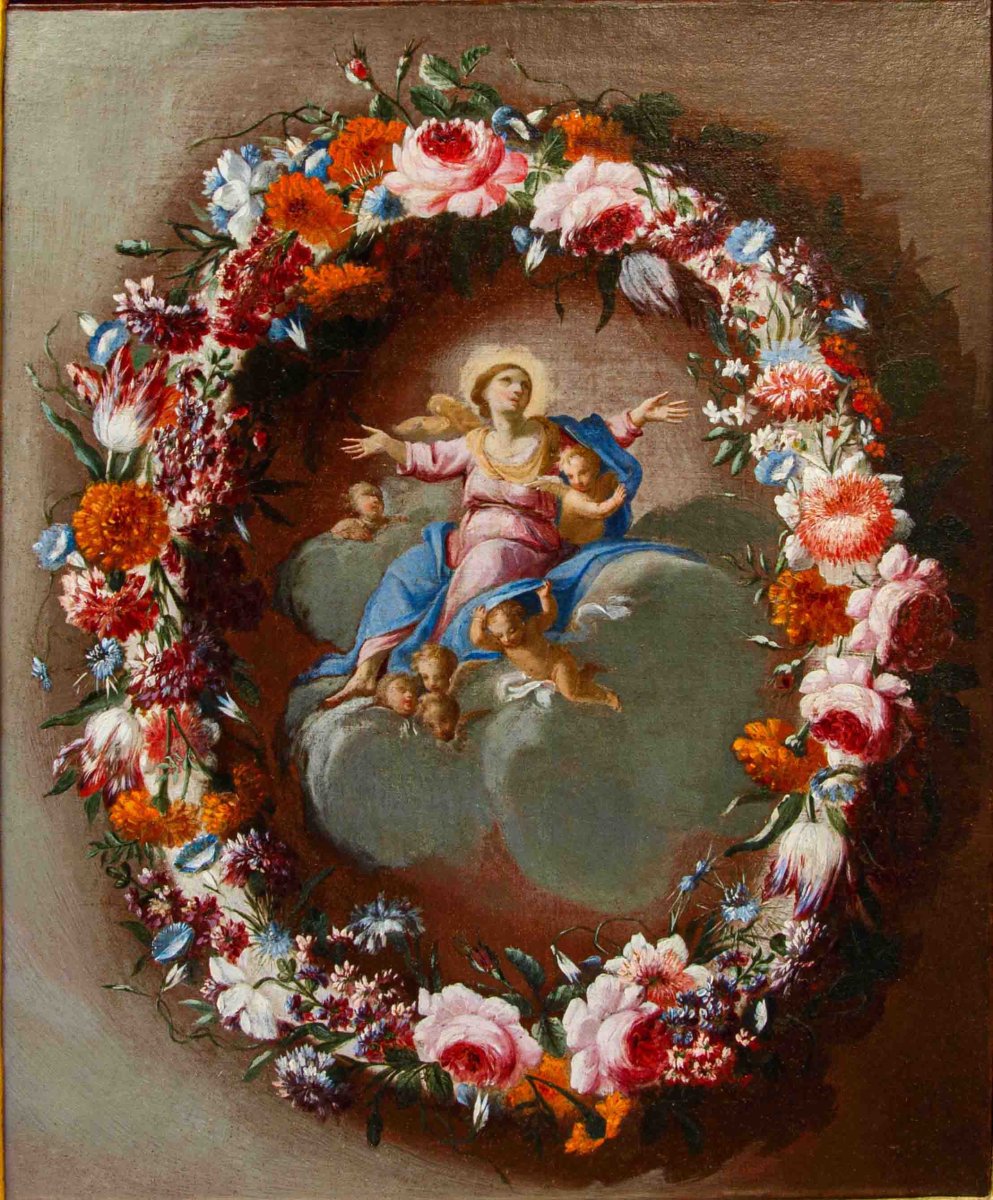
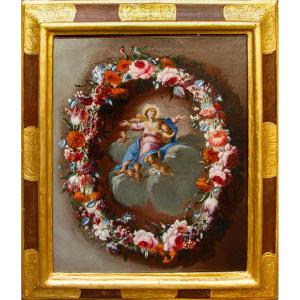
Garland of Flowers with the Assumption and Angels
Oil on canvas, 44.5 x 35 cm
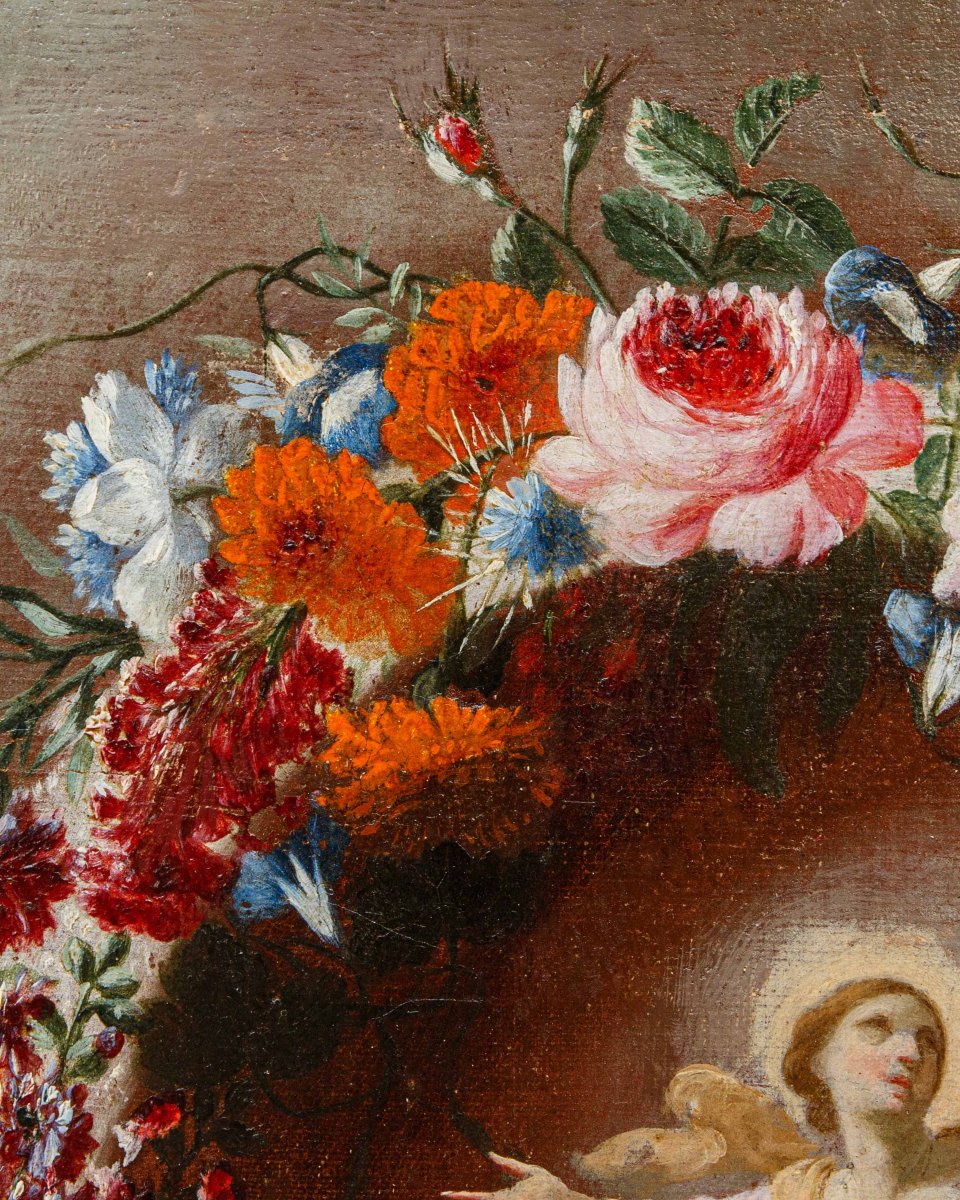
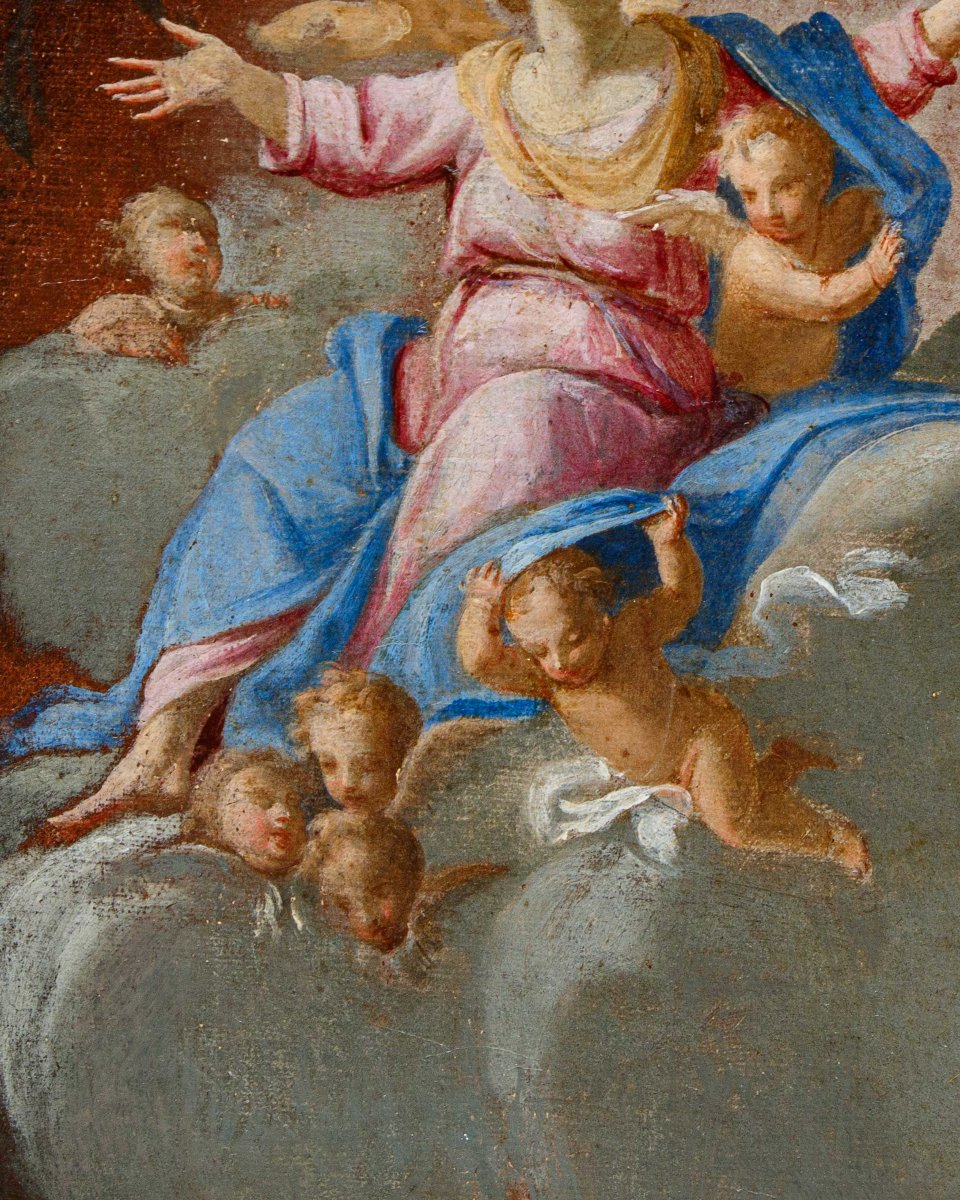
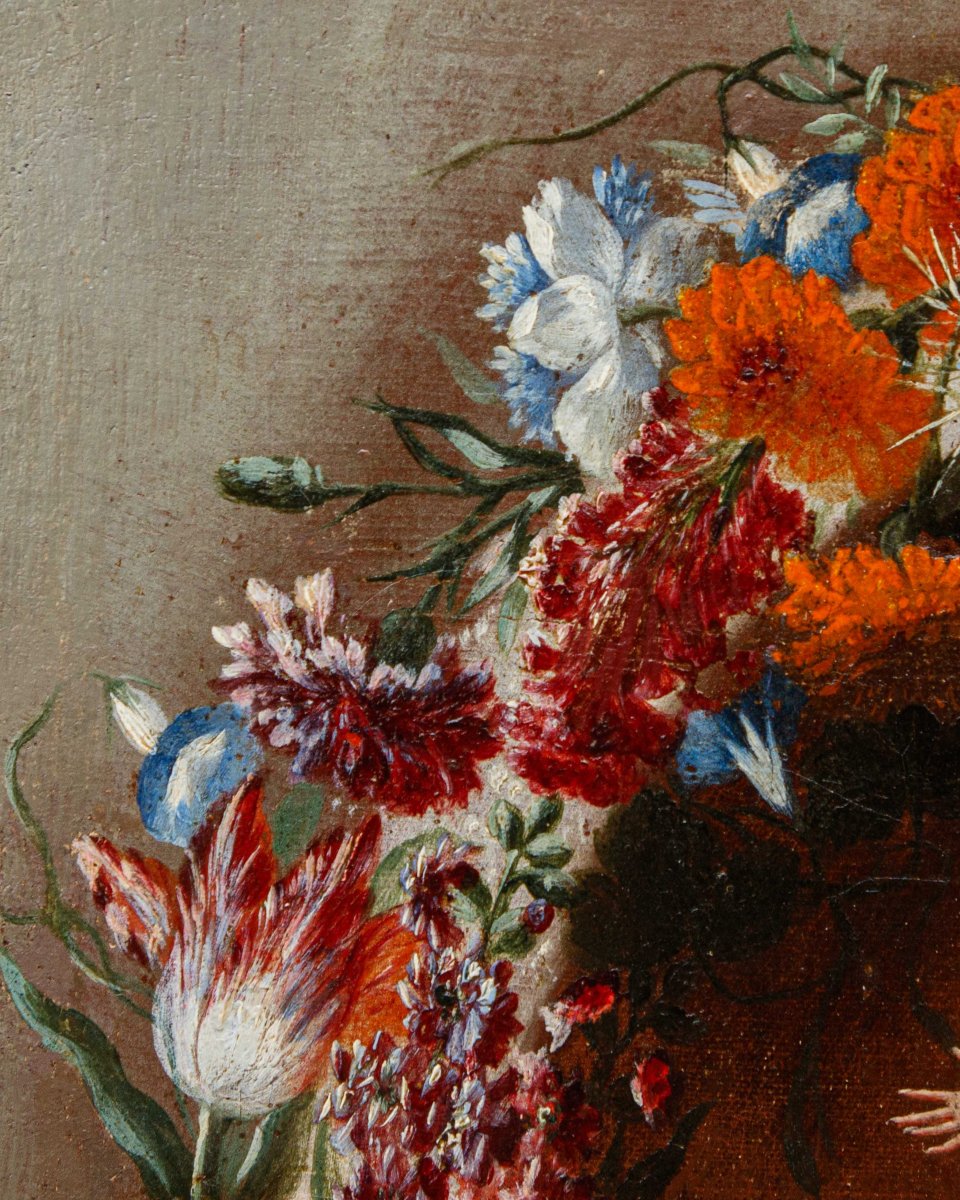
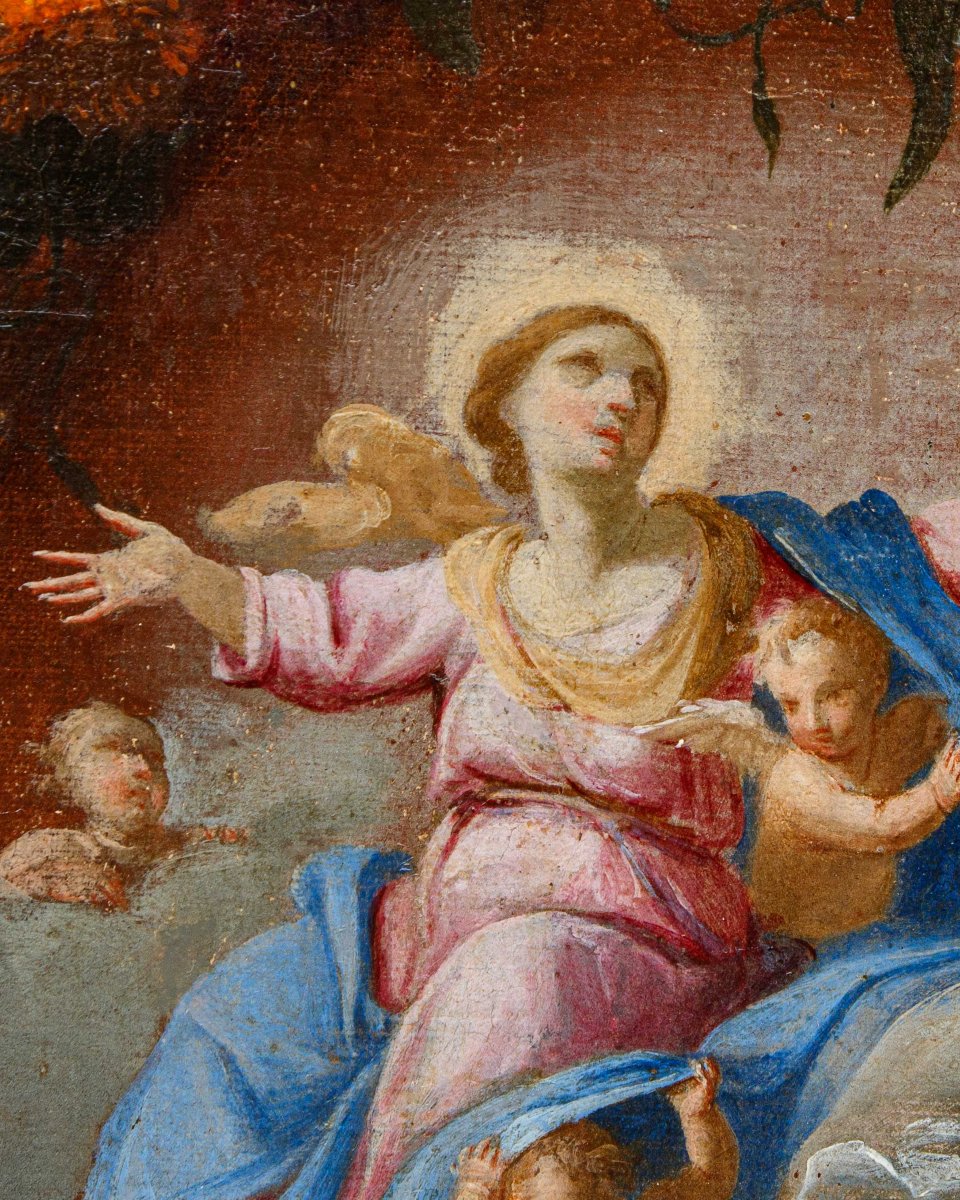
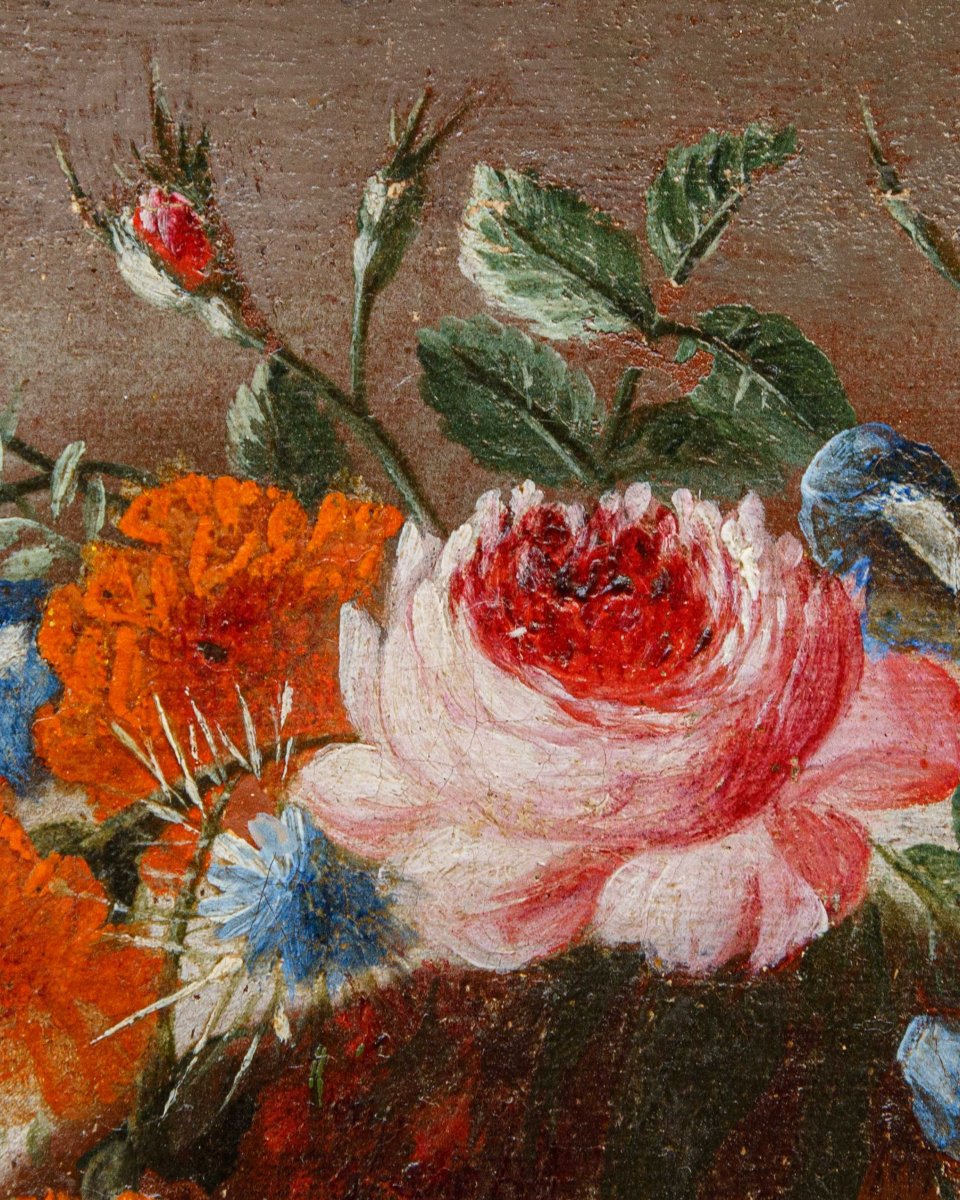
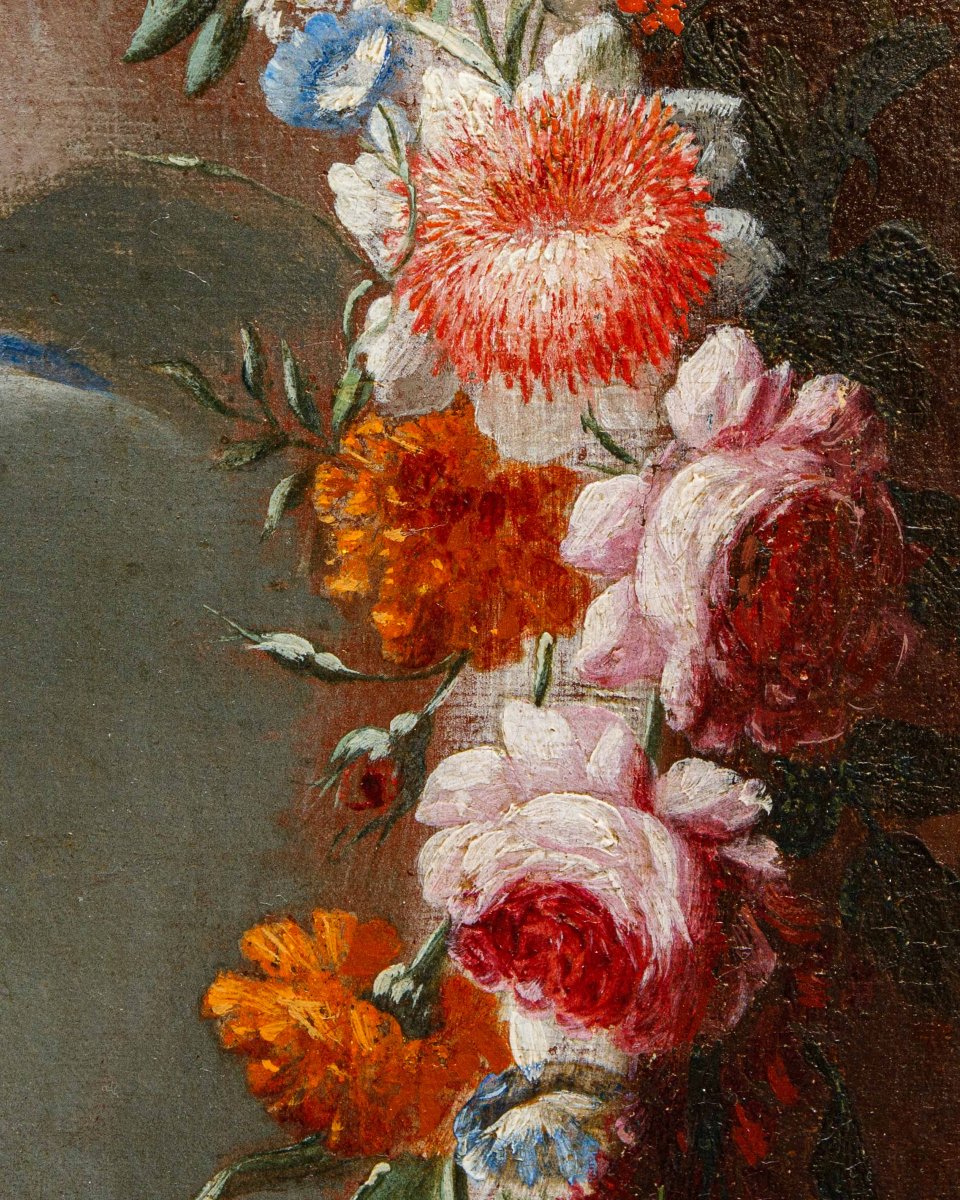
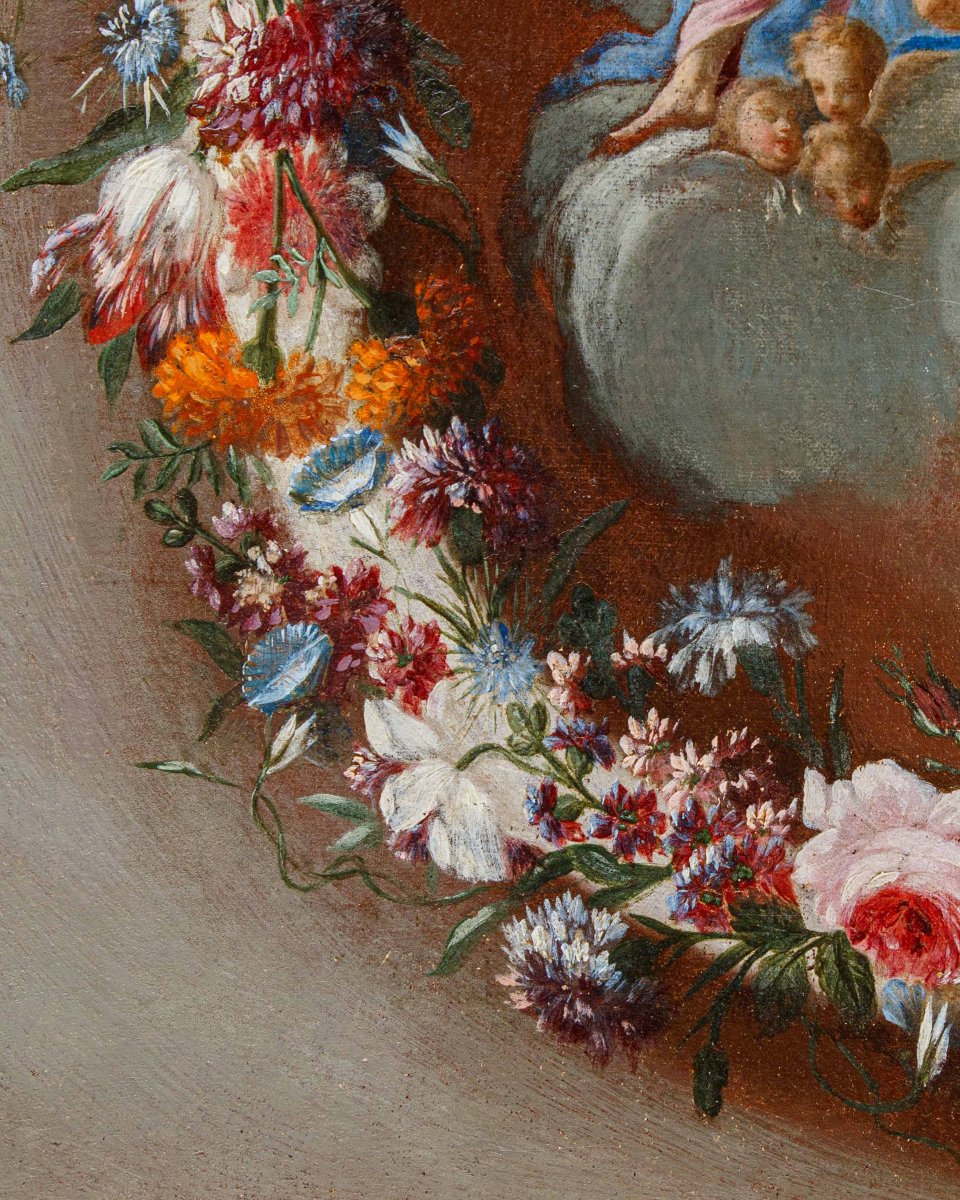
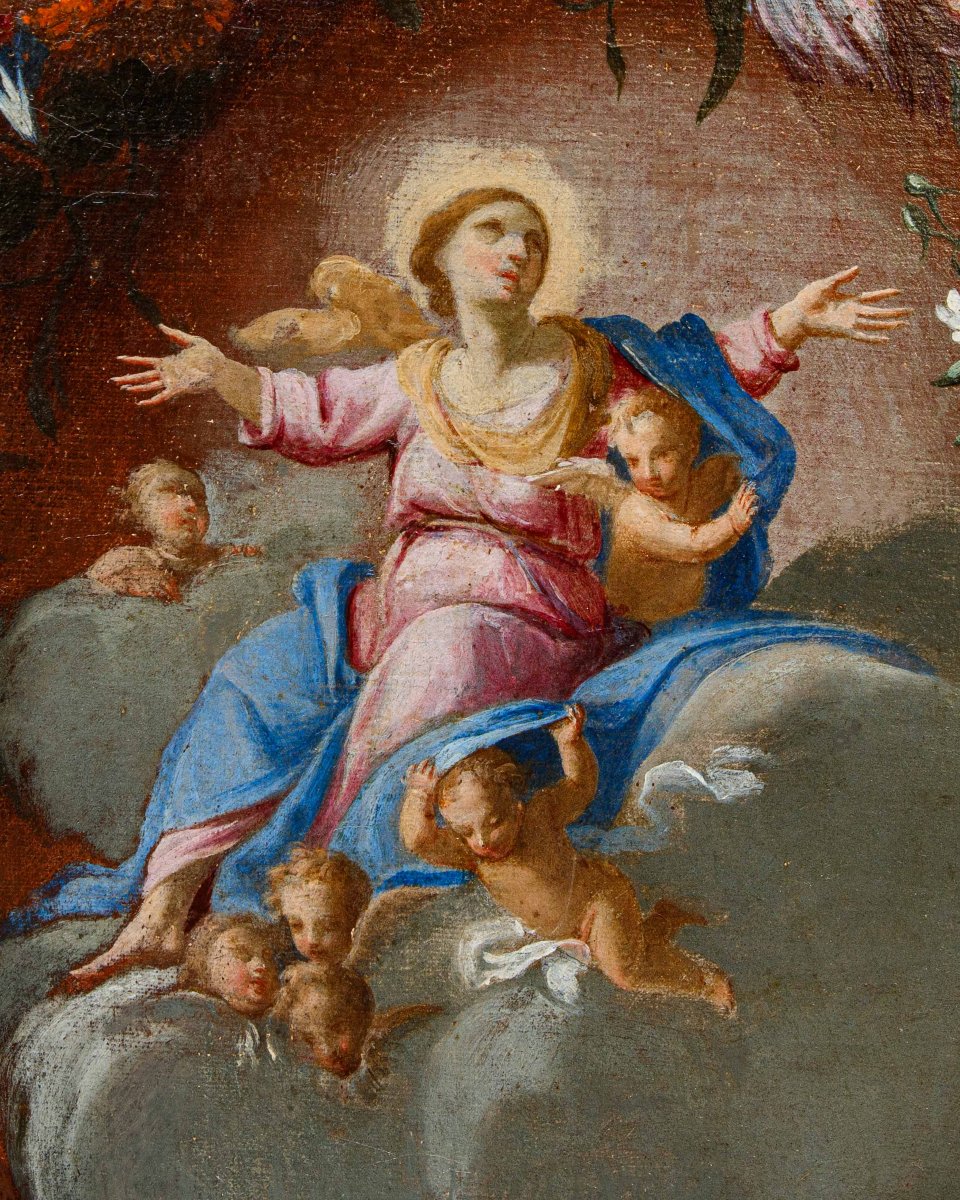
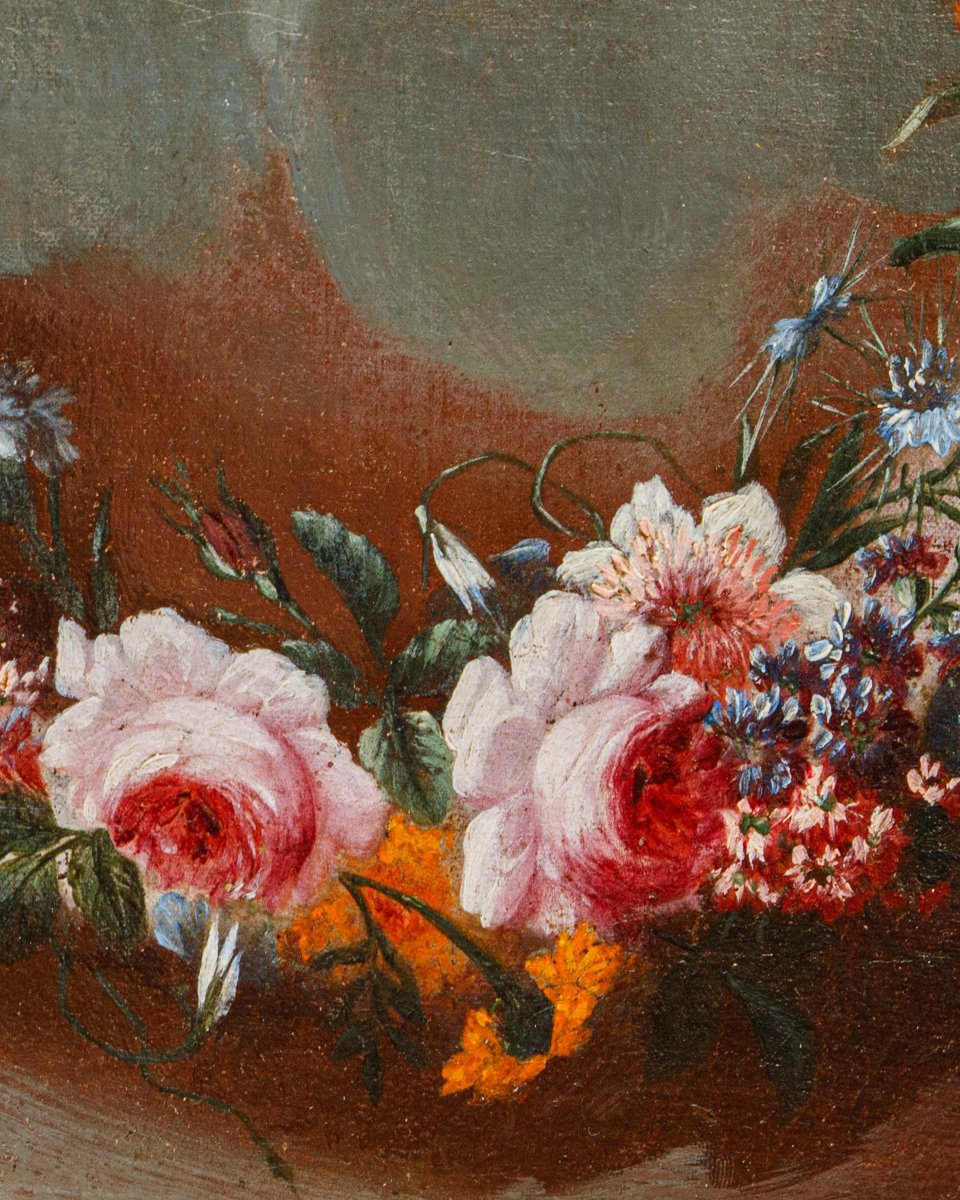
The painting under consideration here appears as a splendid garland of flowers painted in oil on canvas, within which a celestial vision unfolds featuring the Assumption, supported by clouds and surrounded by angels and cherubs forming a crown around her. The work clearly reveals the coexistence of two distinct artistic styles: on the one hand, the floral still life, of extraordinary chromatic and botanical variety, featuring roses, tulips, carnations, marigolds, and cornflowers rendered with a dense and luminous brushstroke; on the other, the sacred figures at the center, painted with a softer, more nuanced brushstroke typical of the Roman painting tradition of the second half of the seventeenth century. This stylistic duality, common in Baroque works depicting similar subjects, allows us to distinguish the artist of the garland from that of the figurative scene, in accordance with a collaborative practice that was widespread in Rome during that period.
The floral portion is by Carel de Vogelaer, a Dutch painter born in Maastricht and known in Italy by the nickname Carlo dei Fiori. The son of the artist Pieter de Vogelaer, after a stay in France he moved to Rome around 1671, where he joined the Bentvueghels, the guild of Northern European artists active in the city, and was given the nickname Distelbloem, “thistle flower”—a motif he often included as a hidden signature in his compositions. Vogelaer quickly achieved great success, working for collectors such as the Marquis Pallavicini, Francesco Montioni, Abbot Paolucci, and Giambattista Cefalassi, and collaborating with artists such as Carlo Maratta, Luigi Garzi, Giovan Battista Gaulli, Filippo Lauri, and Mario Nuzzi, known as Mario de’ Fiori.
The attribution to Vogelaer is confirmed by a detailed comparison with other works in his catalog. The *Garland of Flowers with Cherubs*, now in a private collection and dated 1685 by Prof. Fred Meijer, shares with the painting discussed here not only nearly identical dimensions but also the same types of flowers and an identical quality of execution, suggesting that the two canvases were conceived as a pair. The *Flower Garland with the Infant Jesus*, also in a private collection, further demonstrates the artist’s dedication to this devotional genre, as it employs compositional schemes similar to those observed here. Finally, the *Portrait of a Woman as Flora*, in which the floral still life is by Vogelaer while the figure is attributed to Carlo Maratta, confirms the artist’s custom of relying on Roman colleagues for the figurative elements, exactly as is the case with the canvas presented here.
The painting thus fits squarely within the flourishing 17th-century Roman tradition of floral garlands with sacred scenes at their center, a genre that combined Flemish botanical virtuosity with the solemnity of Italian devotional painting, finding favor with aristocratic and ecclesiastical patrons eager for images intended for private devotion—images capable of uniting naturalistic beauty and spirituality in a single, precious work of art.
Period: 17th century
Style: Other Style
Condition: Good condition
Material: Oil painting
Width: 35
Height: 44,5
Reference (ID): 1791247
Availability: In stock