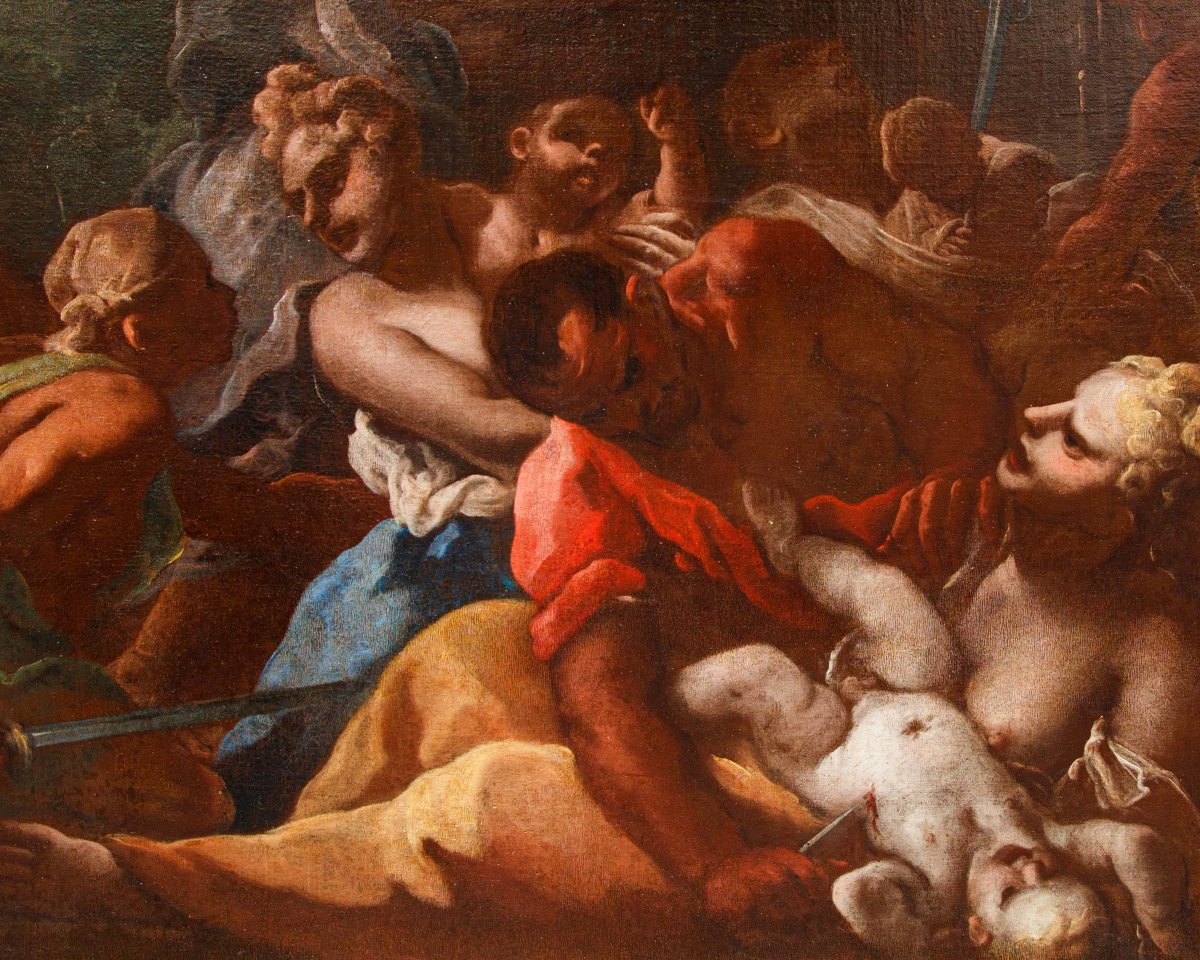
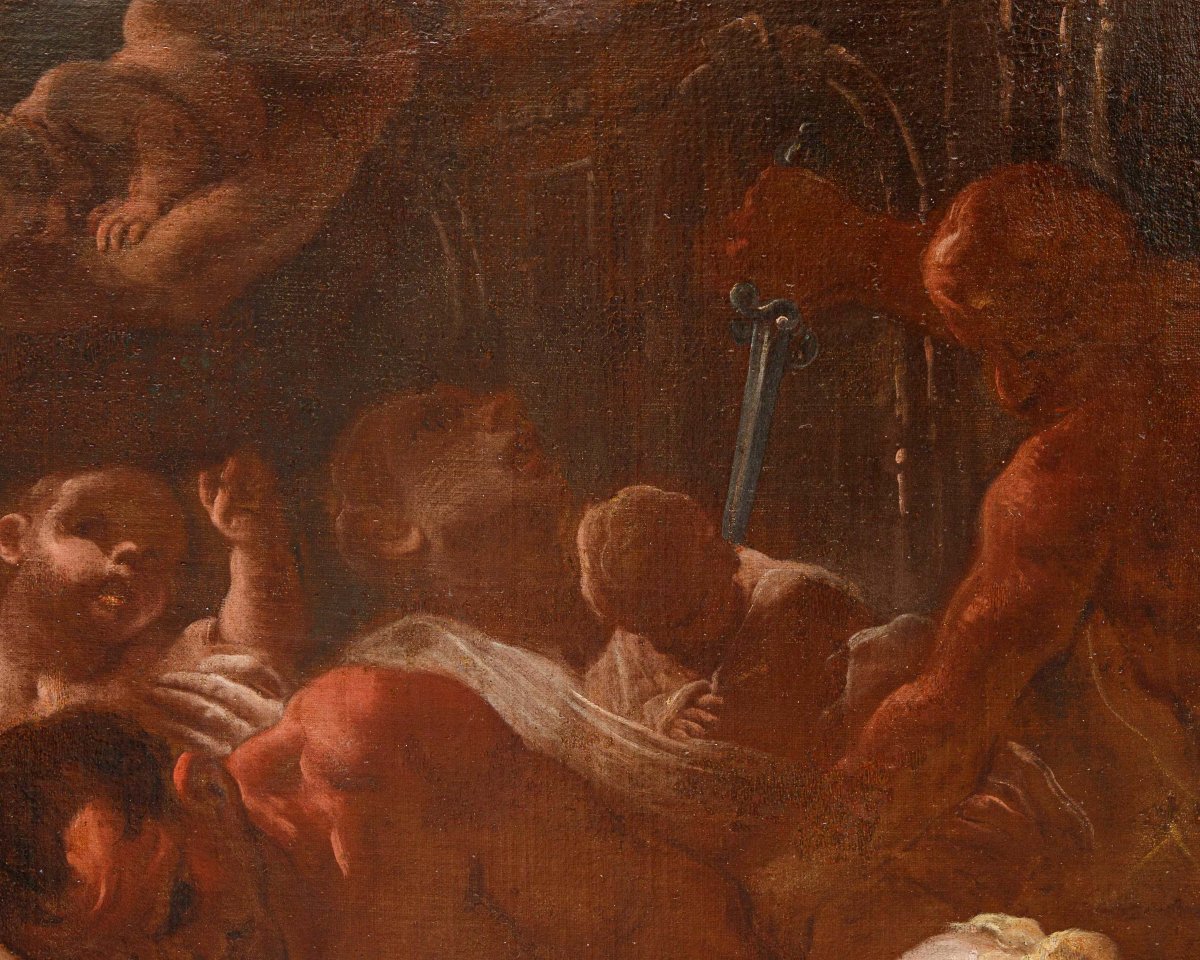
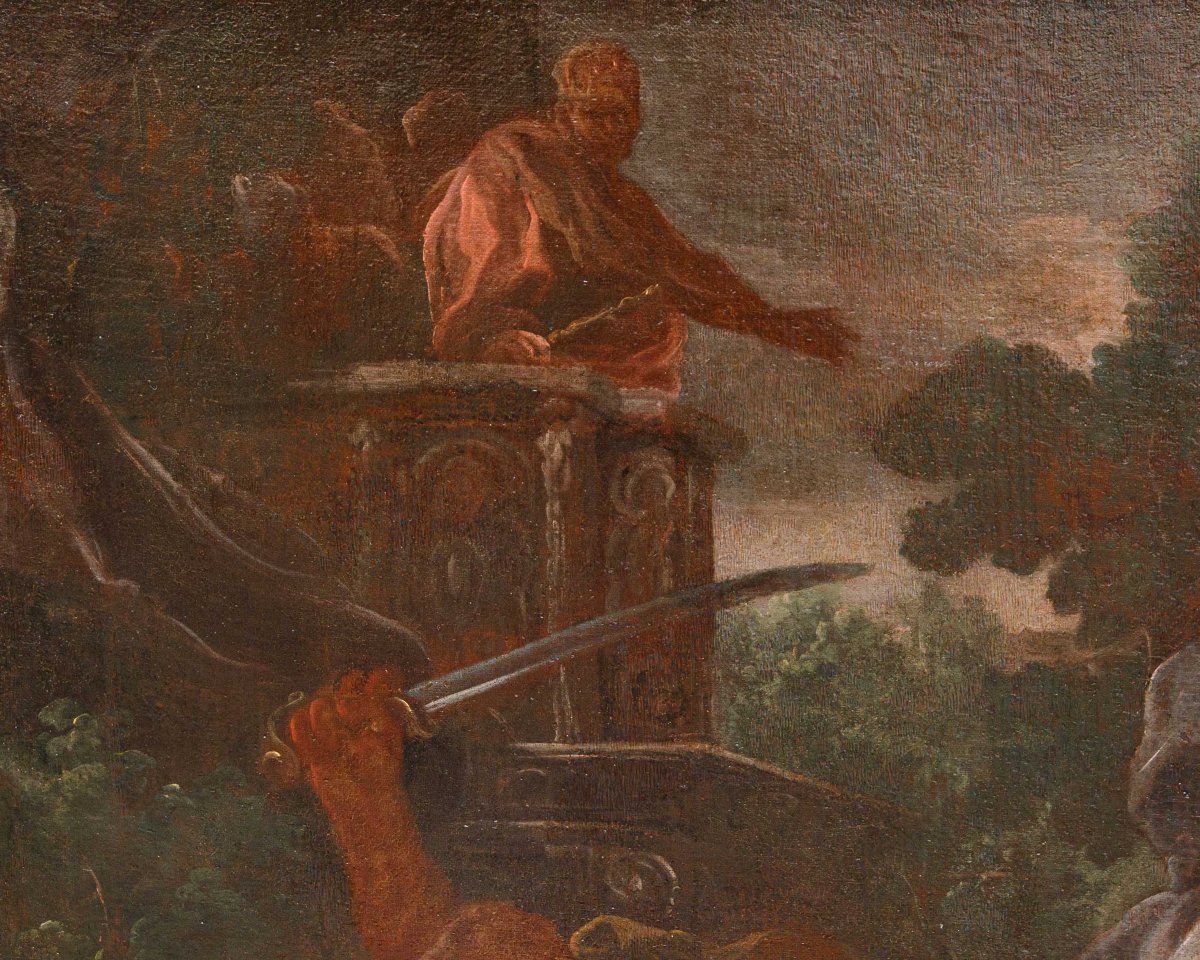
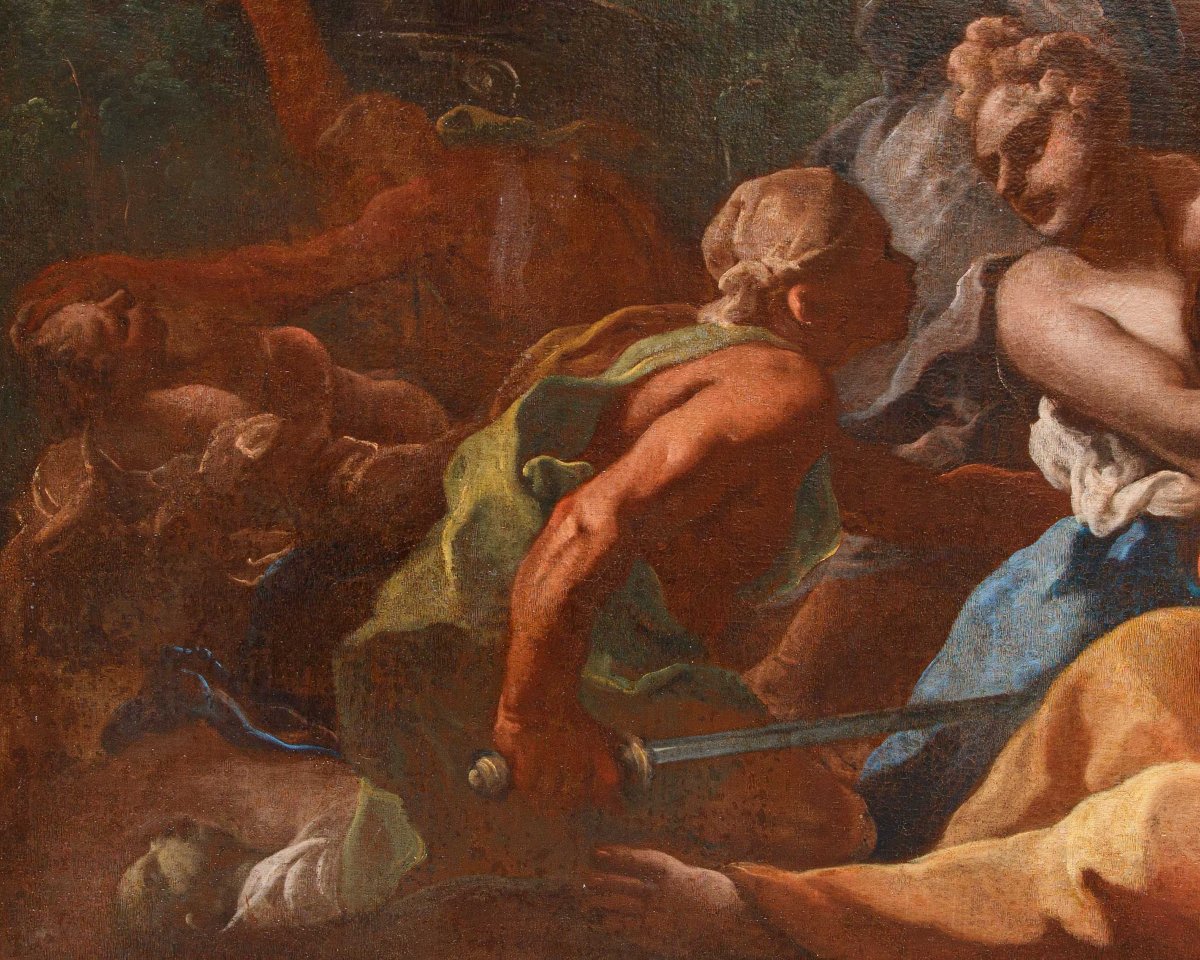



Carlo Preda (milan, Ca. 1651/52 – 1729), The Massacre Of The Innocents
Carlo Preda (Milan, ca. 1651/52 – 1729)
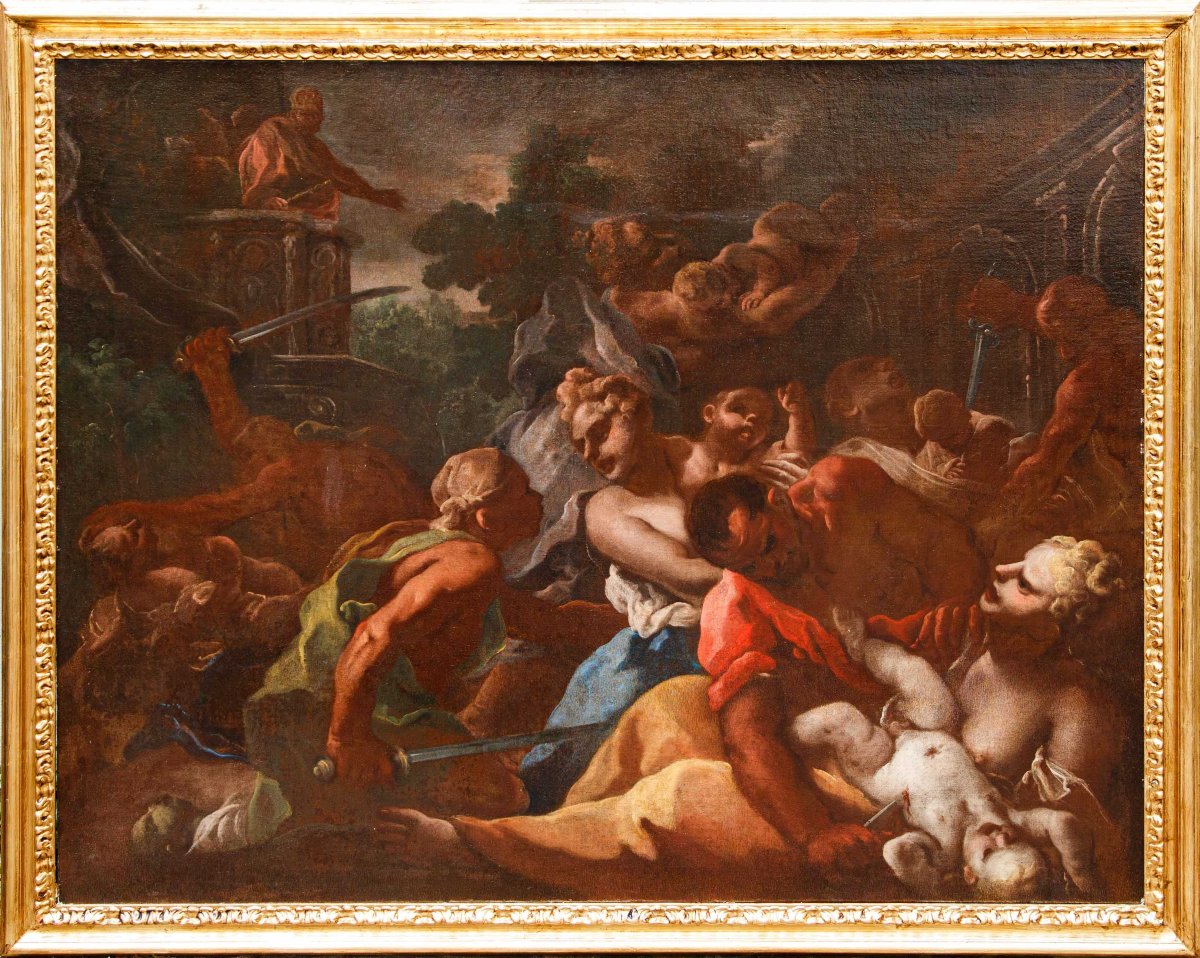
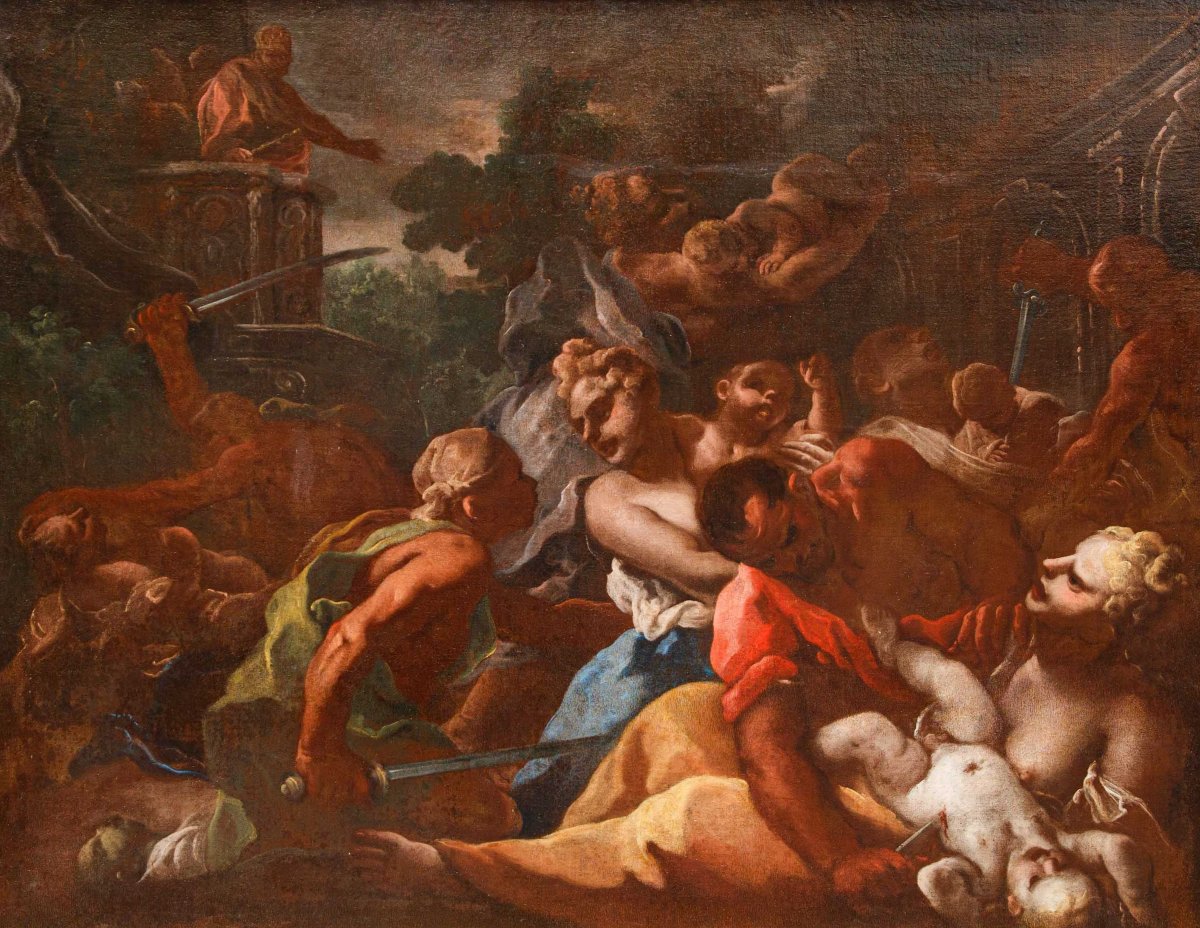
The Massacre of the Innocents
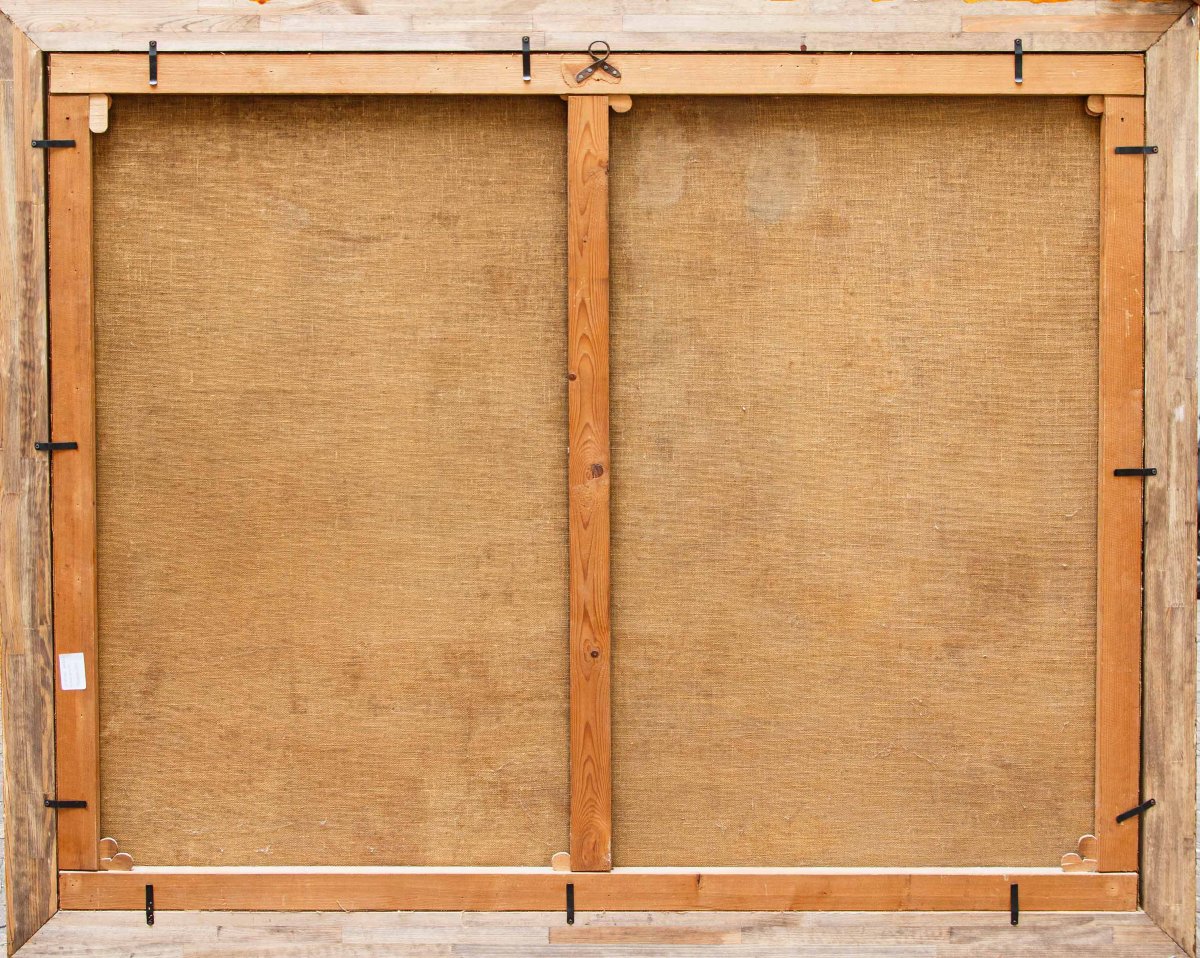
Oil on canvas, 120 x 150 cm
With frame, 134 x 163 cm
Artistic Analysis by Prof. Alberto Crispo
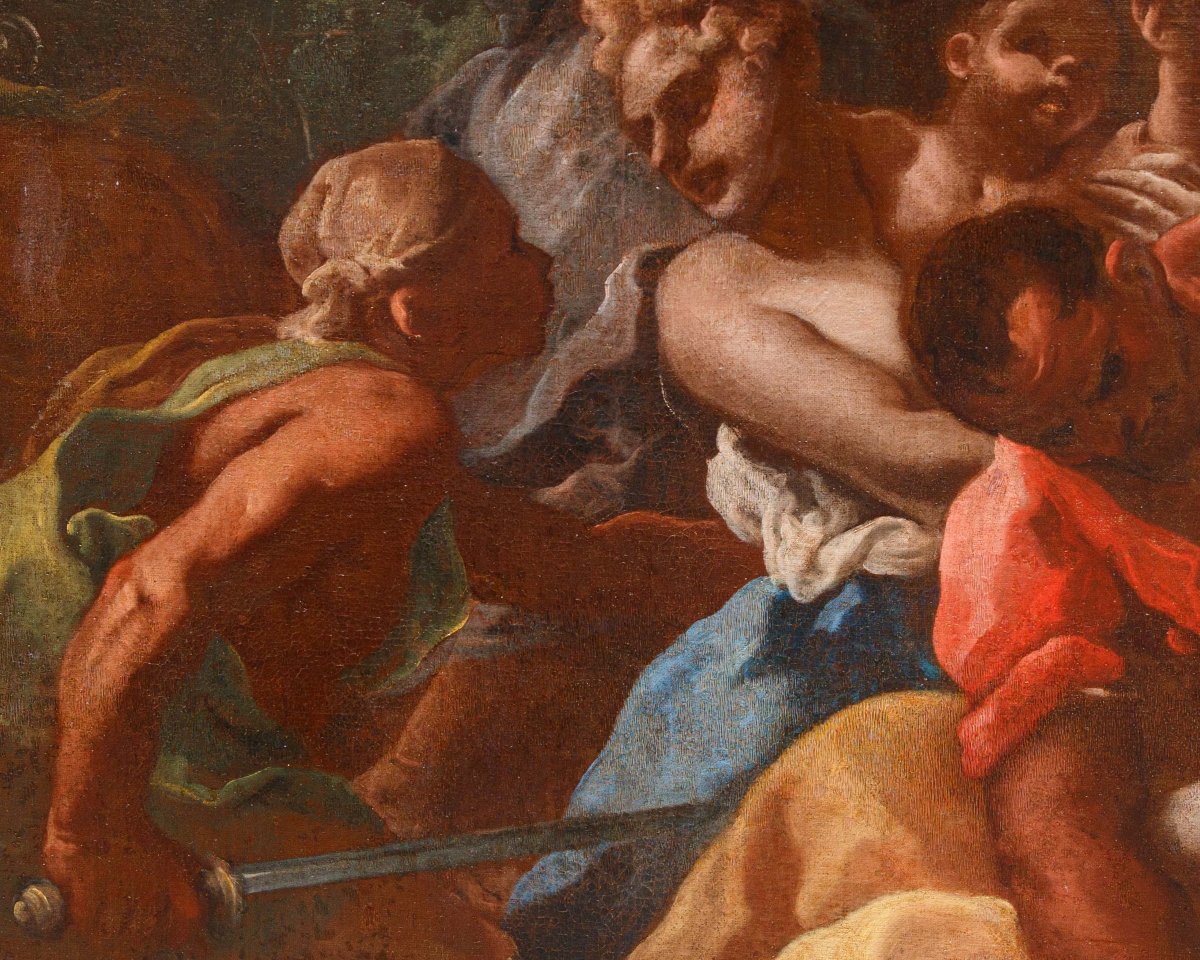
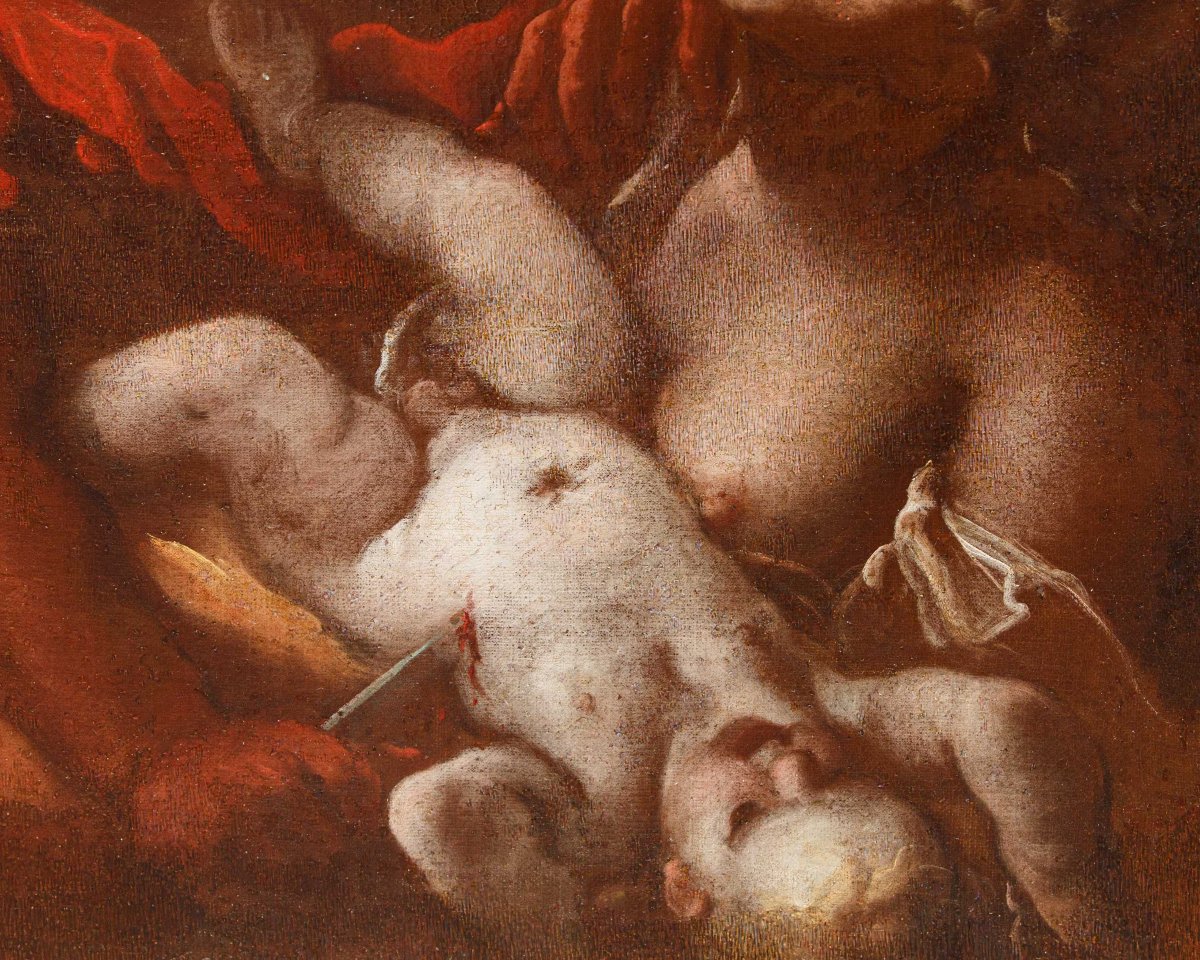
The painting depicts the dramatic Gospel scene of the Massacre of the Innocents. The composition is characterized by a strong dynamic momentum in the foreground, where the desperate and frantic defense of the mothers unfolds as they attempt to protect their children from the blind violence of Herod’s henchmen. In the background, standing elevated on a balcony, the solemn figure of Herod coldly watches the massacre unfold. The work is distinguished by an interesting stylistic transition: while the exasperated facial expressions and marked chiaroscuro contrasts emphasize the intrinsic tragedy of the episode, the use of delicate pastel tones in the drapery of the garments marks a clear departure from the more austere seventeenth-century models, revealing a full and mature embrace of the emerging Baroque style. This specific stylistic trait finds compelling confirmation in a direct comparison with other works documented in the Milanese painter’s catalog. In fact, one finds entirely comparable facial features and the same use of color and light both in The Miraculous Rescue of Pilgrims Traveling to Santiago de Compostela by Saint Dominic de Guzmán (sold at Bertolami in Rome on November 21, 2019, lot 52) and in the *Holy Family* from a private collection. Further decisive formal evidence emerges from *The Education of the Virgin* (which appeared on the market at Il Ponte in October 2024, lot 242), in which the profile of the young Mary appears almost identical to that of her mother lying on the ground in the lower right corner of the present canvas. The painting fits perfectly into the biographical and professional trajectory of Carlo Preda, born in Milan between 1651 and 1652 to Andrea and Bianca Bianchi. He received his early training within the family circle under the guidance of his maternal uncle, the painter Federico Bianchi. His early style, initially influenced by the works of Bianchi himself and Filippo Abbiati, would evolve over time thanks to a thorough immersion in the late Genoese Baroque style—particularly that of Domenico Piola, Bartolomeo Guidobono, and Gregorio De Ferrari—and shifted toward softer, more languid tones with a distinct neo-Correggio influence. His successful career and his constant travels throughout the region attest to his success: the painting *The Immaculate Conception and Saints* for the Milanese church of San Giorgio a Palazzo dates from around 1680, followed in 1682 by the canvas for the sacristy of the Carmine in Pavia. In 1688, the year he was officially listed among the members of the Academy of San Luca in Milan, the artist shifted his focus toward Piedmont, painting the *Assumption and Saints* intended for Terruggia, followed in 1690 by *The Communion of a Capuchin Prelate* for the Civic Museum of Casale Monferrato. Having returned permanently to the Milanese art scene, he completed by 1691 *Saint Charles Burning the Letter* for the prestigious cycle of late large-scale panels in Milan Cathedral. The *Stories of Saint Catherine* for the Pinacoteca of the Sforza Castle and the *Virgin with the Child and Saint Paul*, originally in San Vincenzo in Cremona and now in a collection in Piacenza, date from 1694. Established as a leading figure in the Milanese art scene, he was elected prince of the Academy of San Luca in 1702, while his works became permanent fixtures in the art collections of the most influential Lombard families of the time, such as the Carrara, Clerici, D’Adda, the Pertusati, and the Secco Borella. In 1708, Preda diversified his work by painting the fresco *The Rapture of Saint Paul to the Third Heaven* in the sacristy of San Barnaba in Milan and, at the same time, creating an altarpiece for the Sanctuary of Caravaggio. During his mature years, he painted two canvases for the cycle of the Holy Nail in Milan Cathedral (of which *Heraclius Prevented from Carrying the Cross* remains) and gradually moved toward the Verbano region and the northern Novara area, painting *Christ the Judge* for the collegiate church of Pallanza (c. 1716), *St. Anthony and Saints* in Santo Stefano in Milan (c. 1718), and, finally, the 1724 altarpiece for Palazzo Leonardi in Trecate, now housed in the local monastery of the Sisters of Charity, which is his last known work before his death in Milan on January 27, 1729.
Period: 17th century
Style: Other Style
Condition: Good condition
Material: Oil painting
Width: 150
Height: 120
Reference (ID): 1783177
Availability: In stock