


17th Century, Saint Jerome In The Desert
17th century
Saint Jerome in the Desert
Oil on parchment applied to panel, 18 x 23 cm Framed, 29.5 x 24 cm
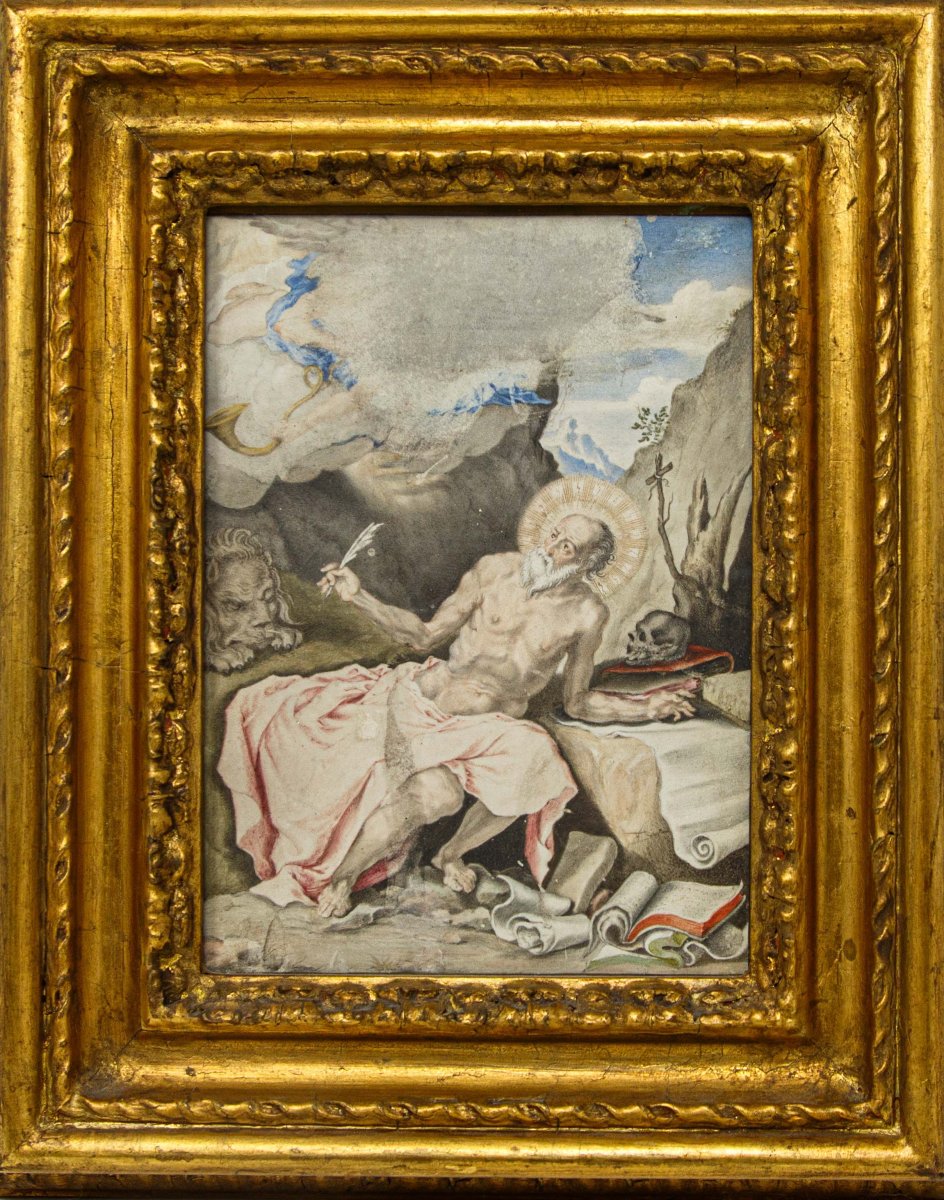
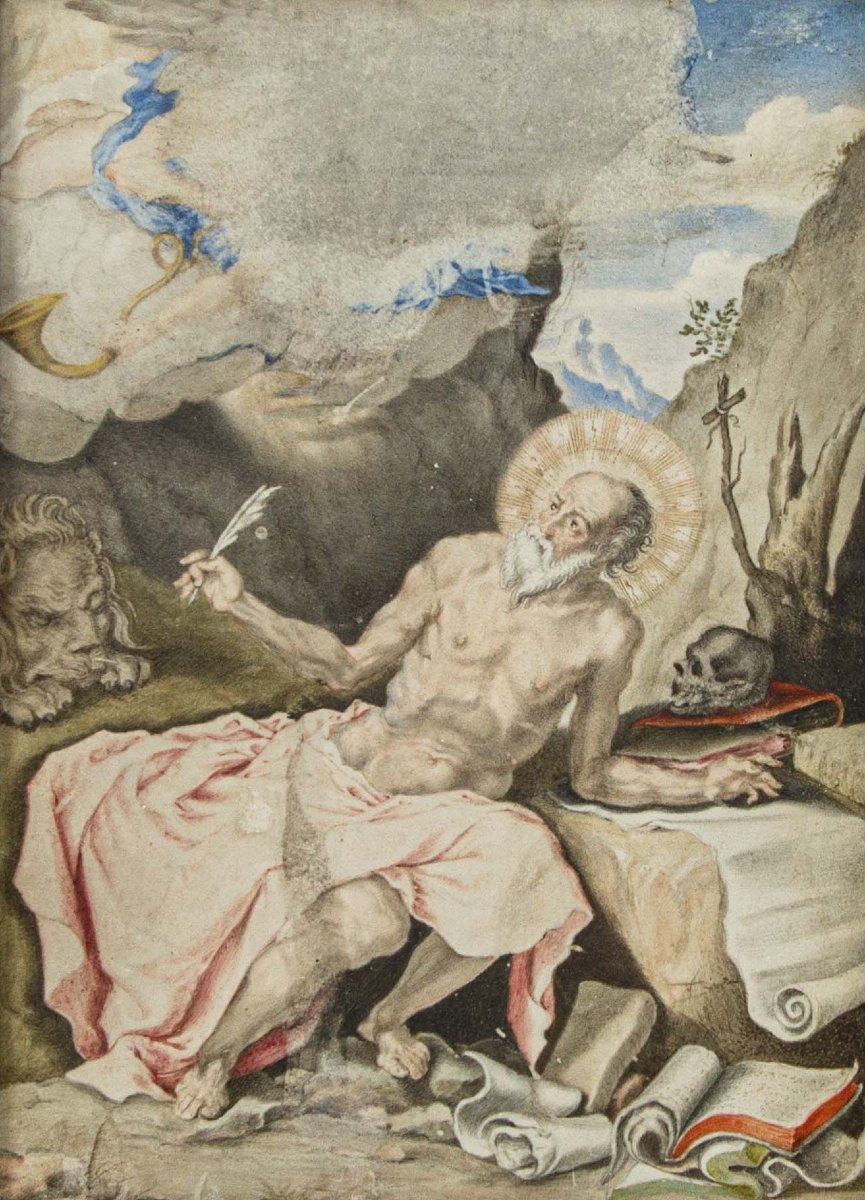
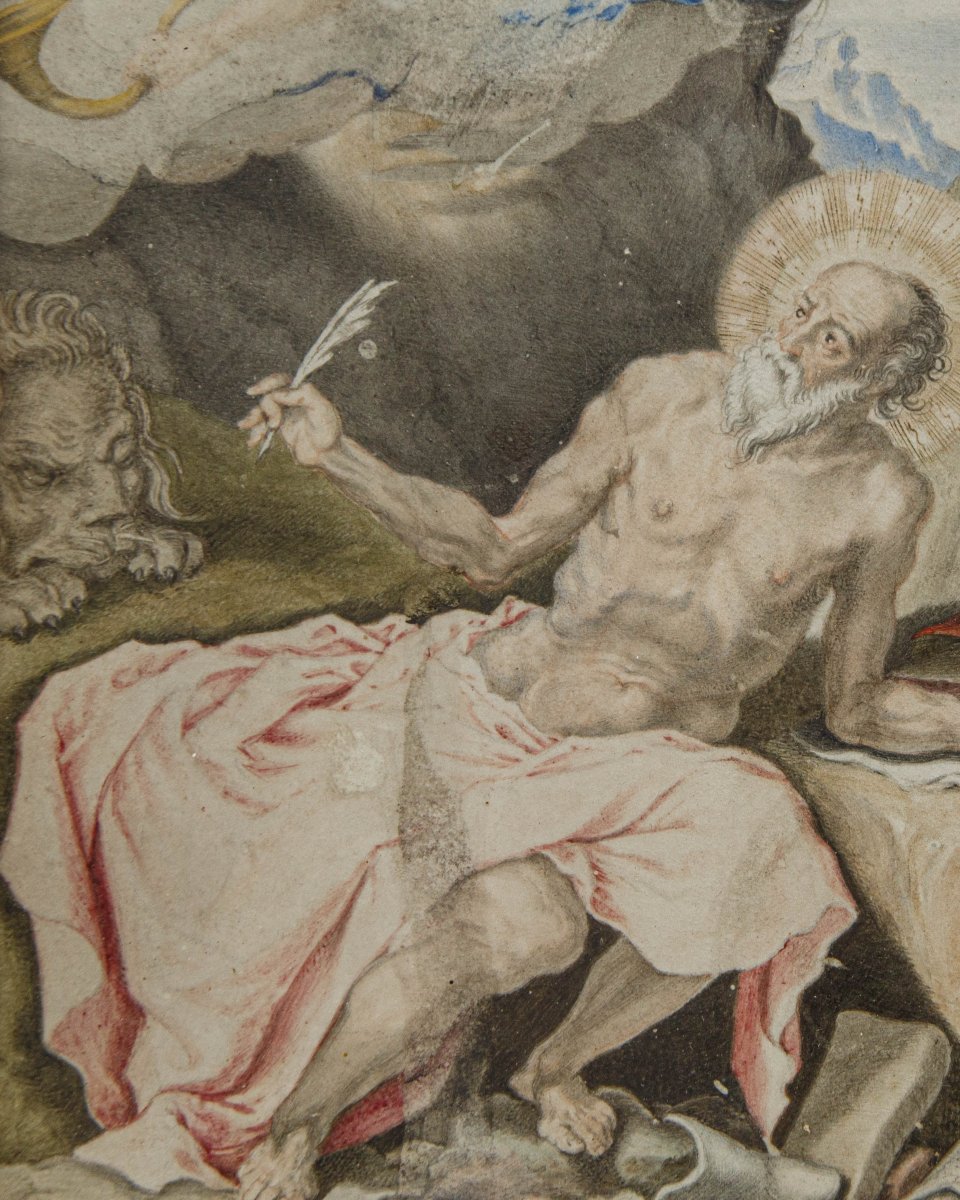
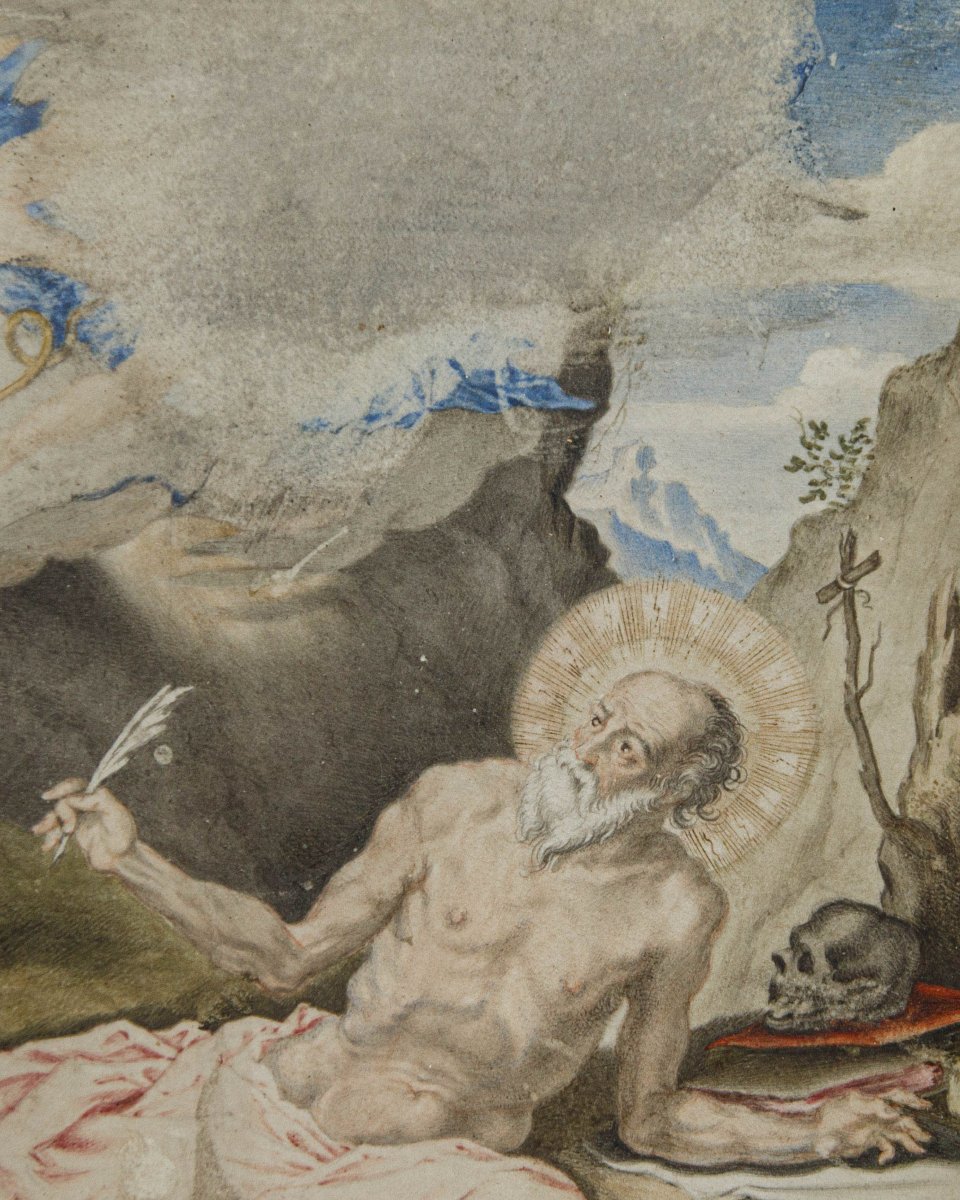
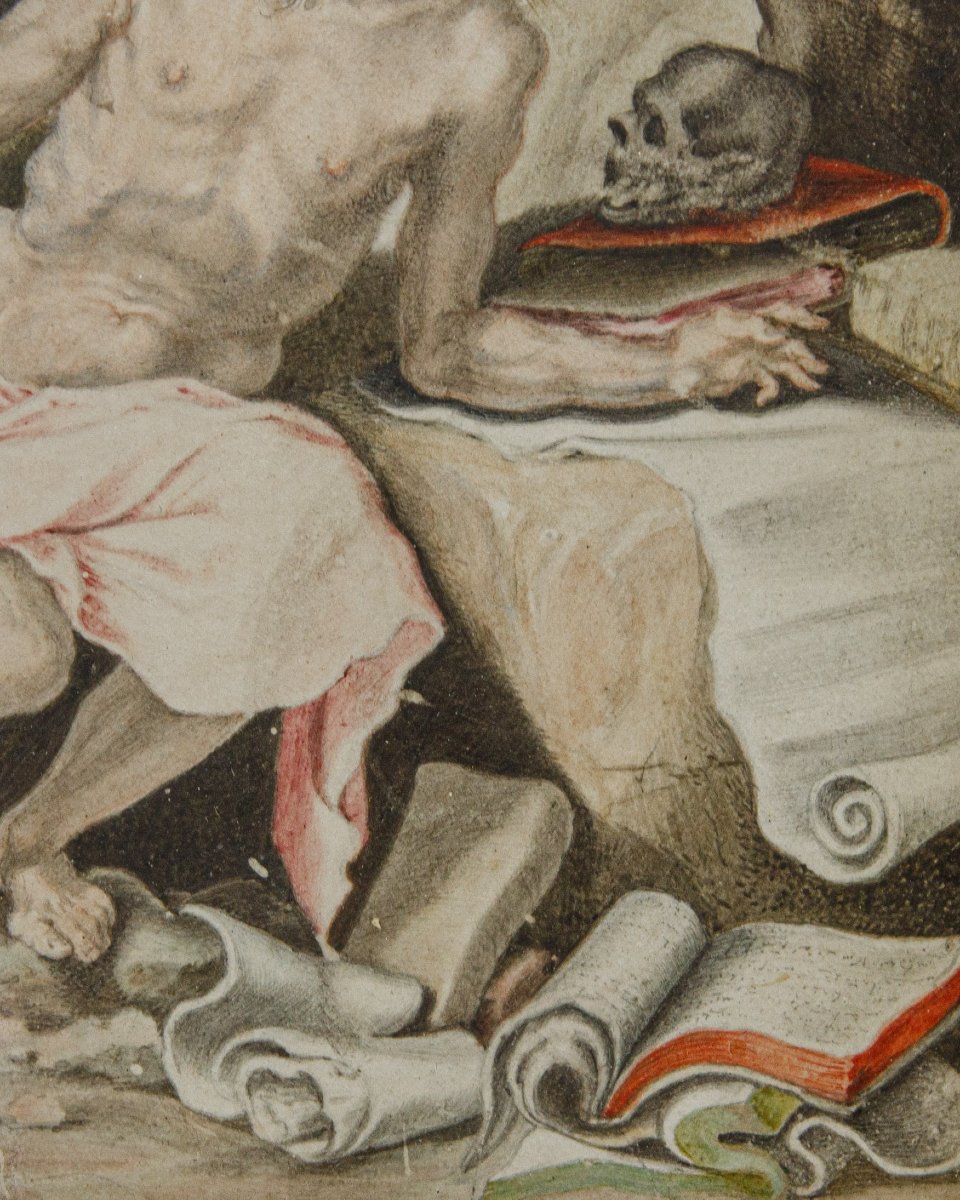
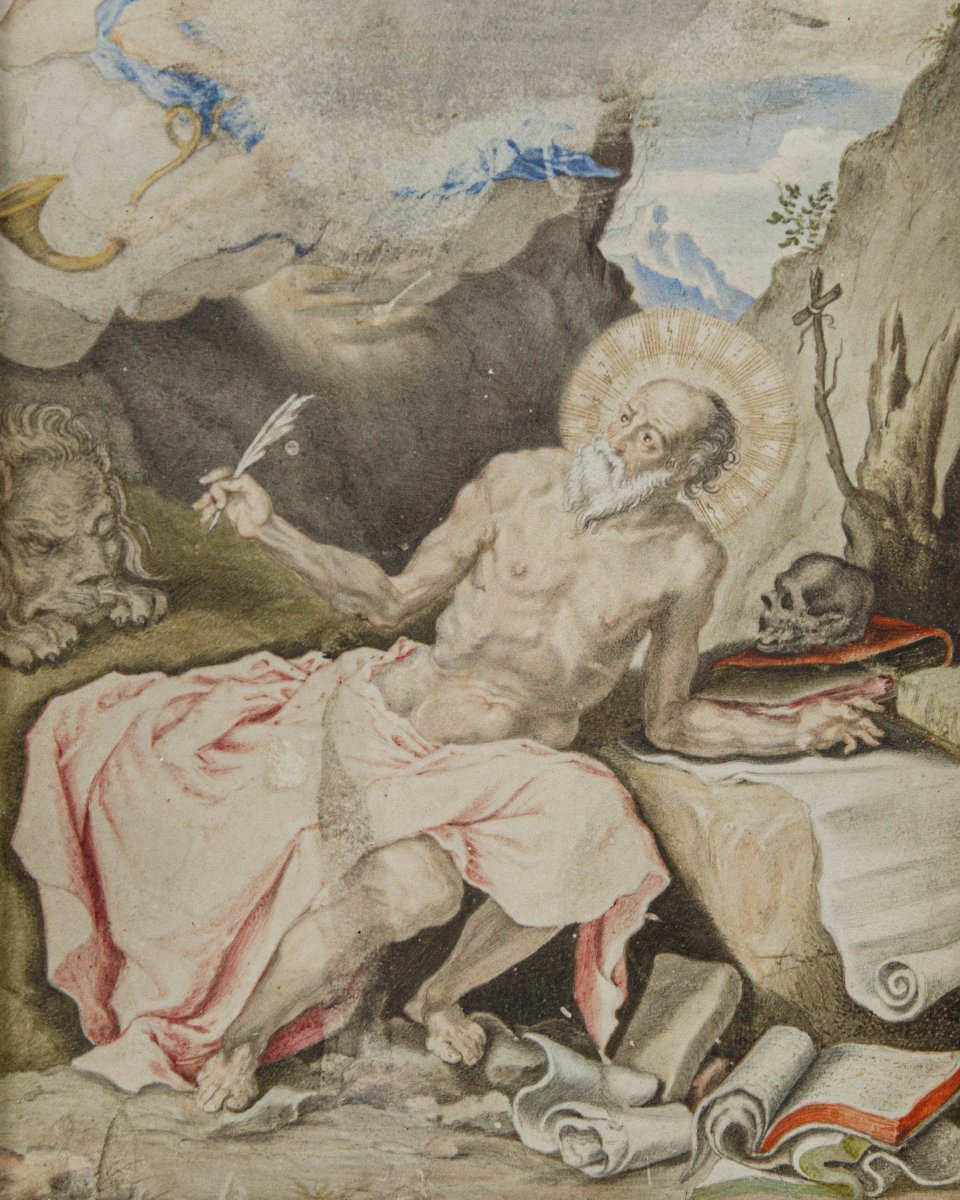
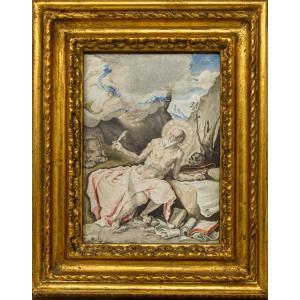
This small painting, made in oil on parchment applied to panel, depicts Saint Jerome penitent, captured in a moment of intense meditation among the rocks of a rugged desert wasteland. The old man, with a hollow face and a hoary beard, is surrounded by a luminous halo that emphasizes his sanctity; his half-naked body, covered only by a pink cloth, testifies to his ascetic choice to renounce earthly goods. Next to him appears the lion, his faithful companion according to hagiographic legend, while on the rocky boulder one can see a skull, a symbol of vanitas and memento mori that recalls the transience of human life. In the foreground are books and a sheet of paper, an allusion to his work as a Bible translator and Doctor of the Church. In the sky, amidst vaporous clouds, an angelic figure with a trumpet can be glimpsed, while a small cross on the summit of the mountain reinforces the sense of Christian devotion. The pictorial style, with the soft rendering of the flesh and the chromatic contrast between the pink of the drape and the earthy tones of the landscape, is typical of the devotional production of the seventeenth century, a period in which the subject of Saint Jerome penitent experienced extraordinary iconographic success in the climate of the Counter-Reformation, which exalted introspection, penance and meditation on death, in line with the baroque taste for emotional pathos and descriptive naturalism.
Saint Jerome in the Desert
Oil on parchment applied to panel, 18 x 23 cm Framed, 29.5 x 24 cm
This small painting, made in oil on parchment applied to panel, depicts Saint Jerome penitent, captured in a moment of intense meditation among the rocks of a rugged desert wasteland. The old man, with a hollow face and a hoary beard, is surrounded by a luminous halo that emphasizes his sanctity; his half-naked body, covered only by a pink cloth, testifies to his ascetic choice to renounce earthly goods. Next to him appears the lion, his faithful companion according to hagiographic legend, while on the rocky boulder one can see a skull, a symbol of vanitas and memento mori that recalls the transience of human life. In the foreground are books and a sheet of paper, an allusion to his work as a Bible translator and Doctor of the Church. In the sky, amidst vaporous clouds, an angelic figure with a trumpet can be glimpsed, while a small cross on the summit of the mountain reinforces the sense of Christian devotion. The pictorial style, with the soft rendering of the flesh and the chromatic contrast between the pink of the drape and the earthy tones of the landscape, is typical of the devotional production of the seventeenth century, a period in which the subject of Saint Jerome penitent experienced extraordinary iconographic success in the climate of the Counter-Reformation, which exalted introspection, penance and meditation on death, in line with the baroque taste for emotional pathos and descriptive naturalism.
2 400 €
Period: 17th century
Style: Other Style
Condition: Good condition
Material: Parchment
Width: 23
Height: 18
Reference (ID): 1783161
Availability: In stock
Print