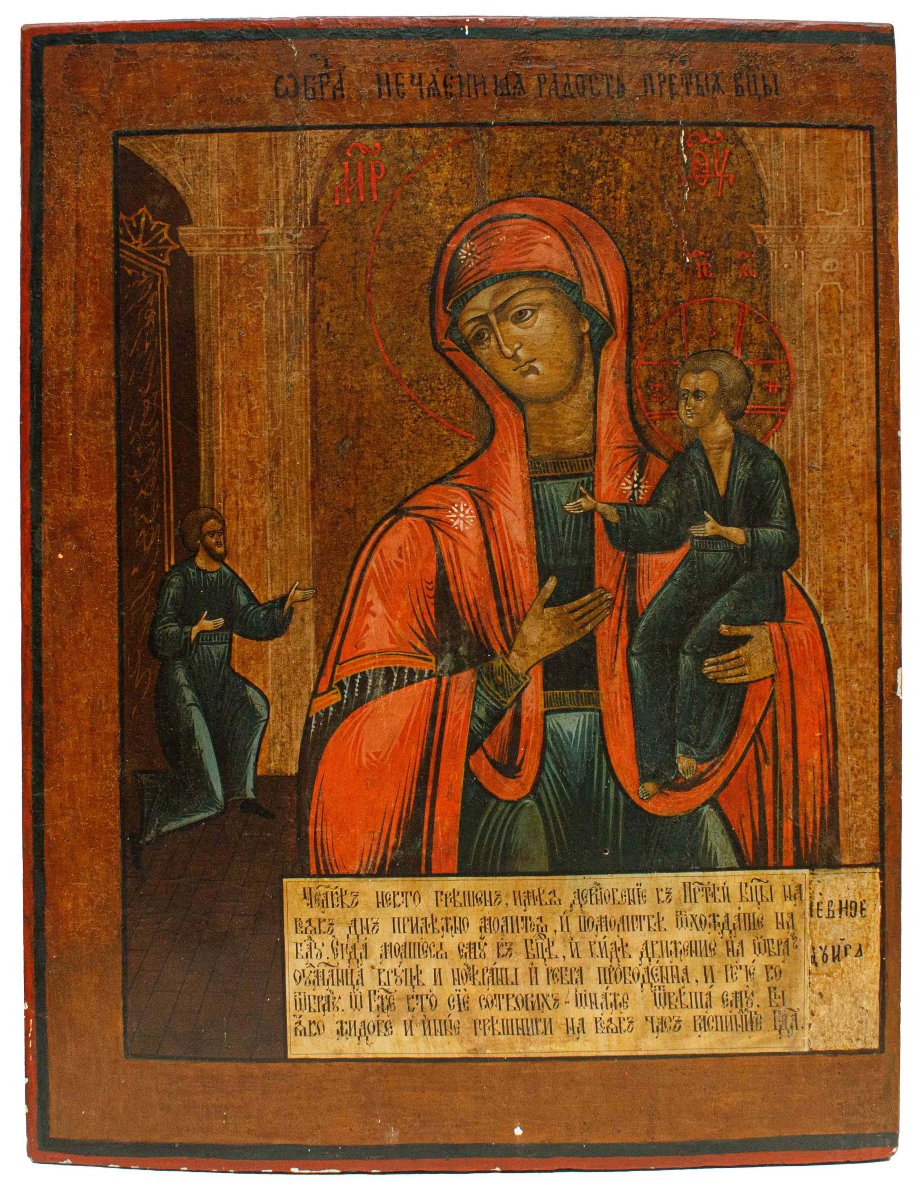
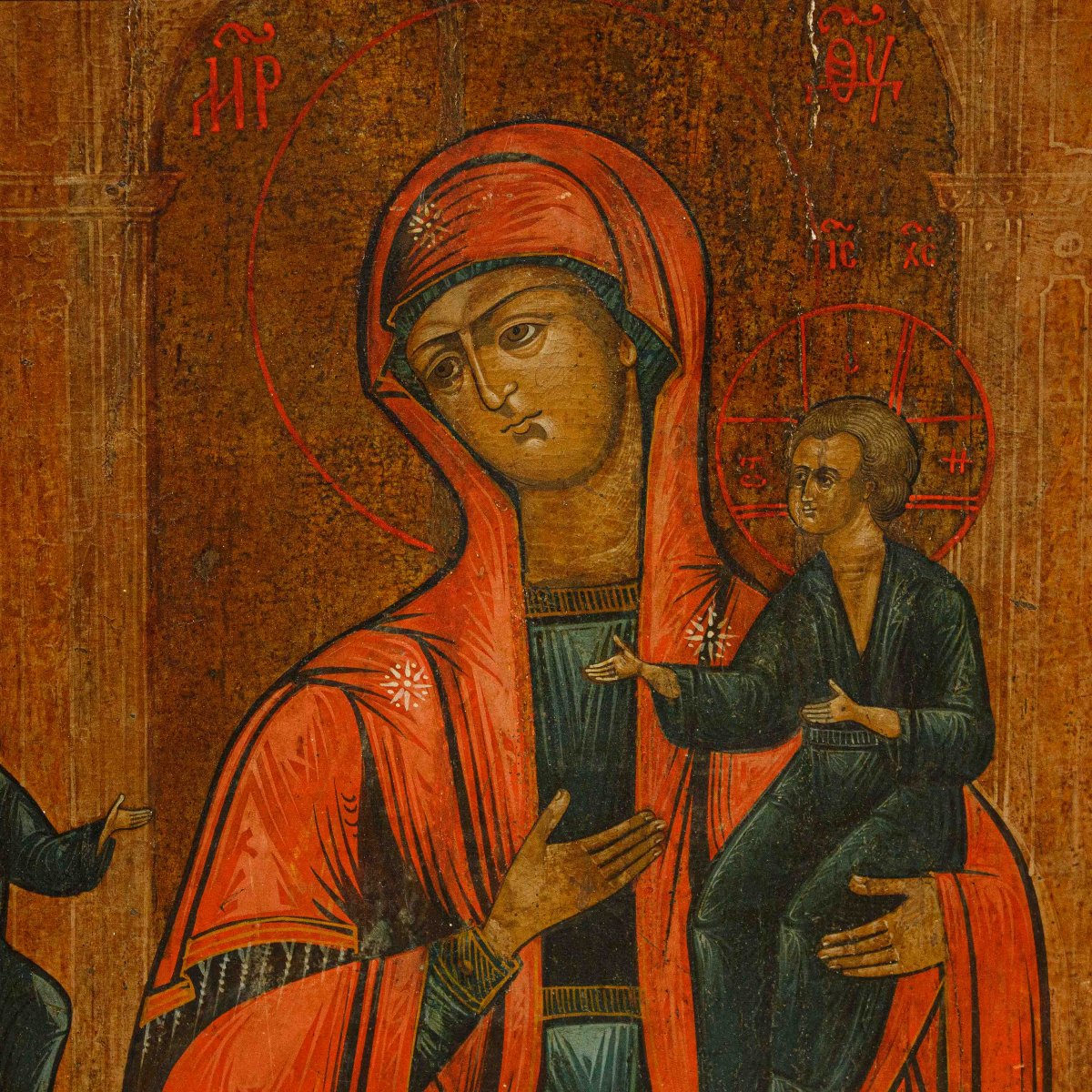
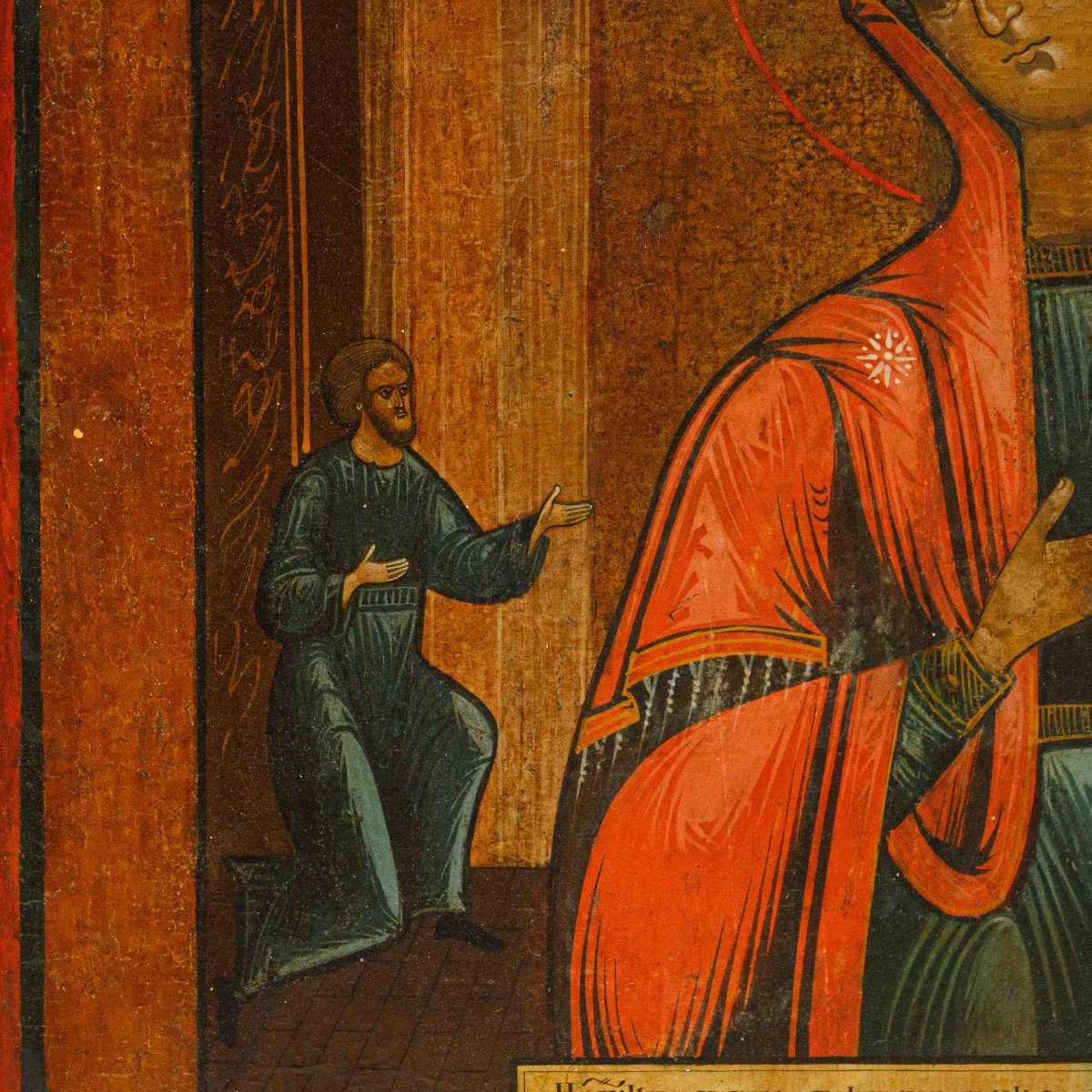
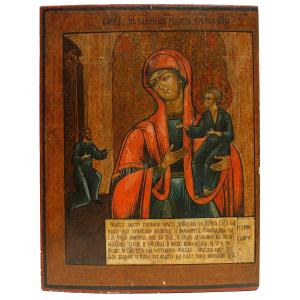


Russia, 19th Century, Icon; Madonna And Child With The Patron
Russia, 19th century
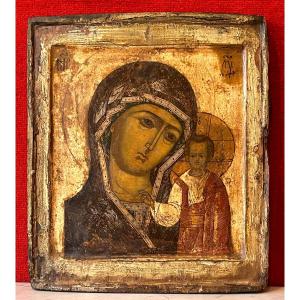
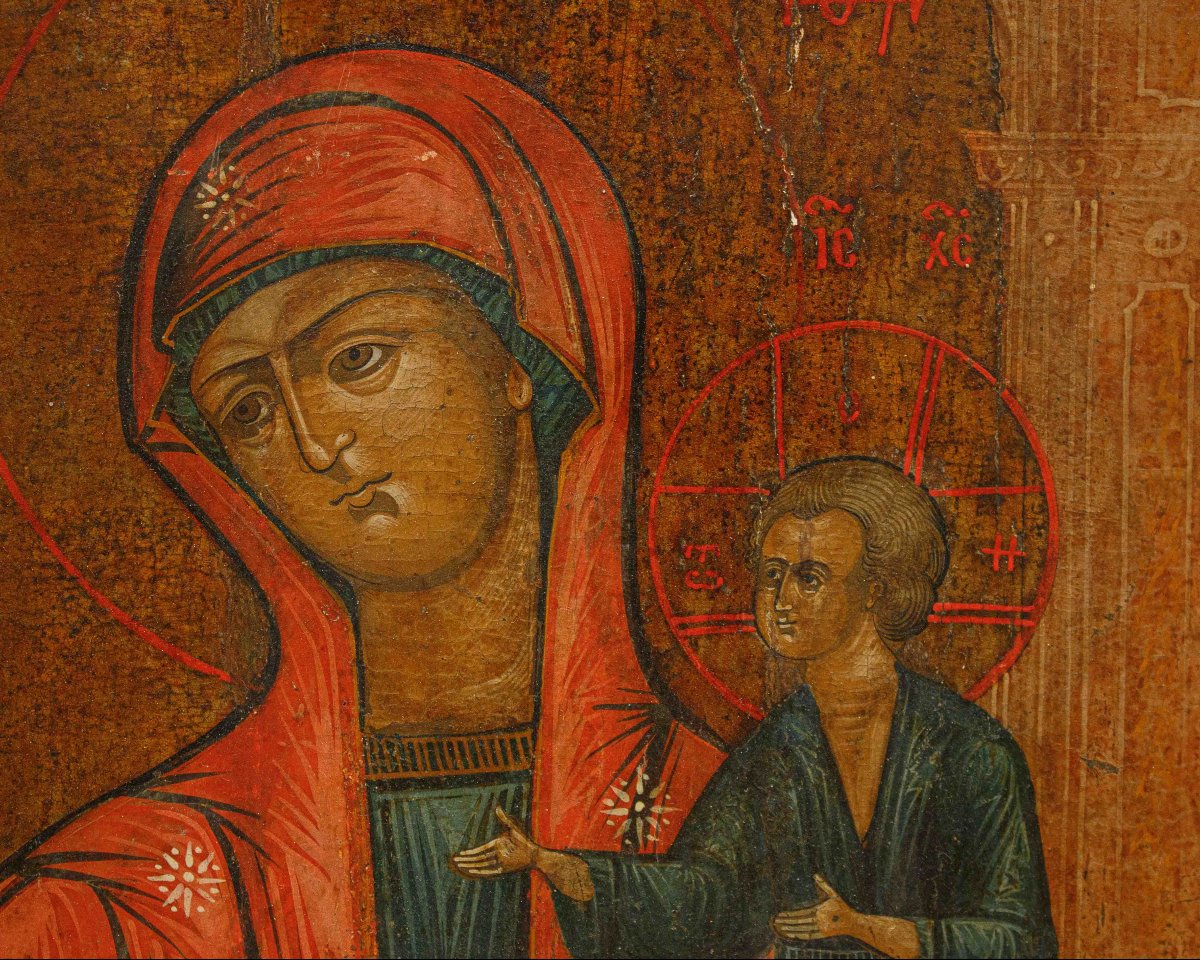
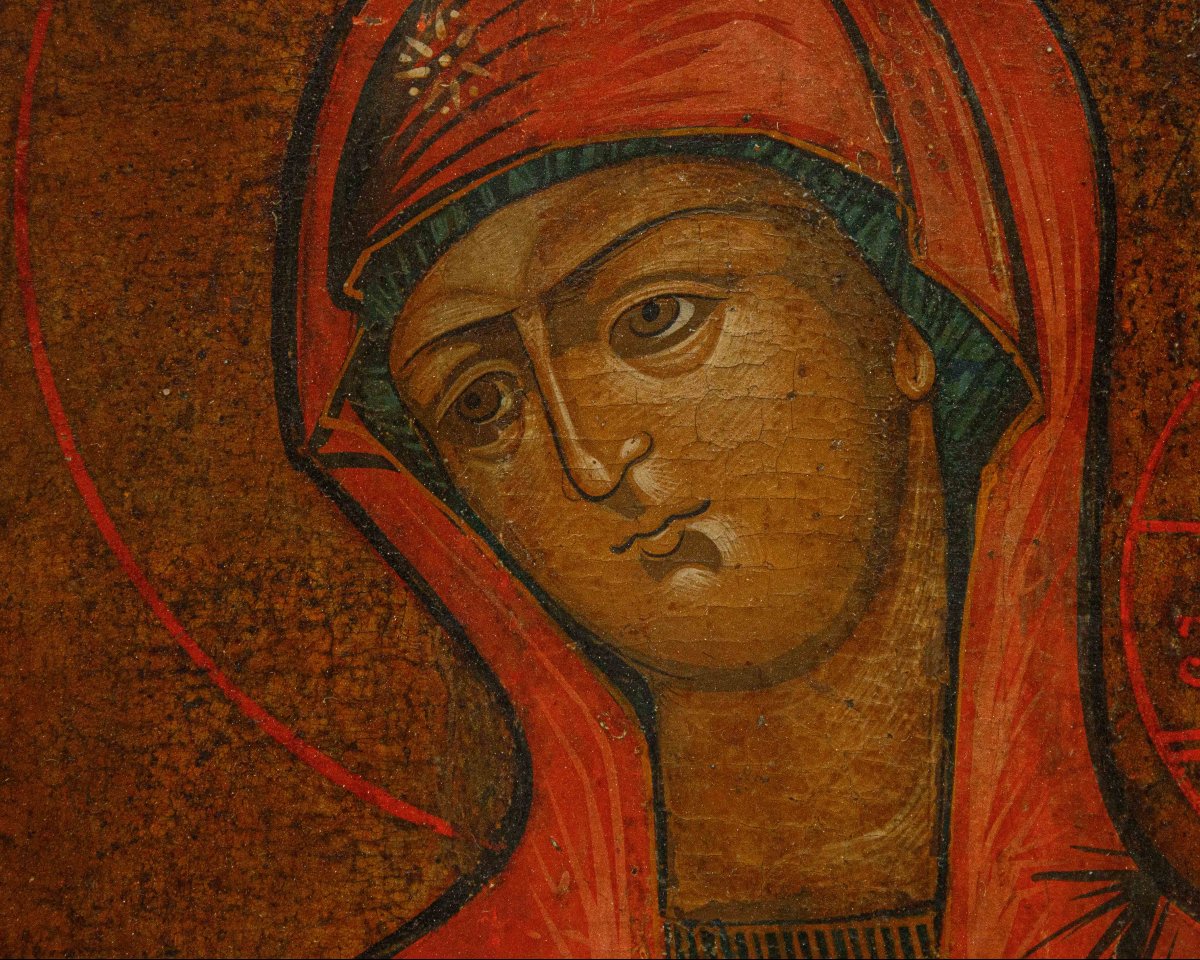
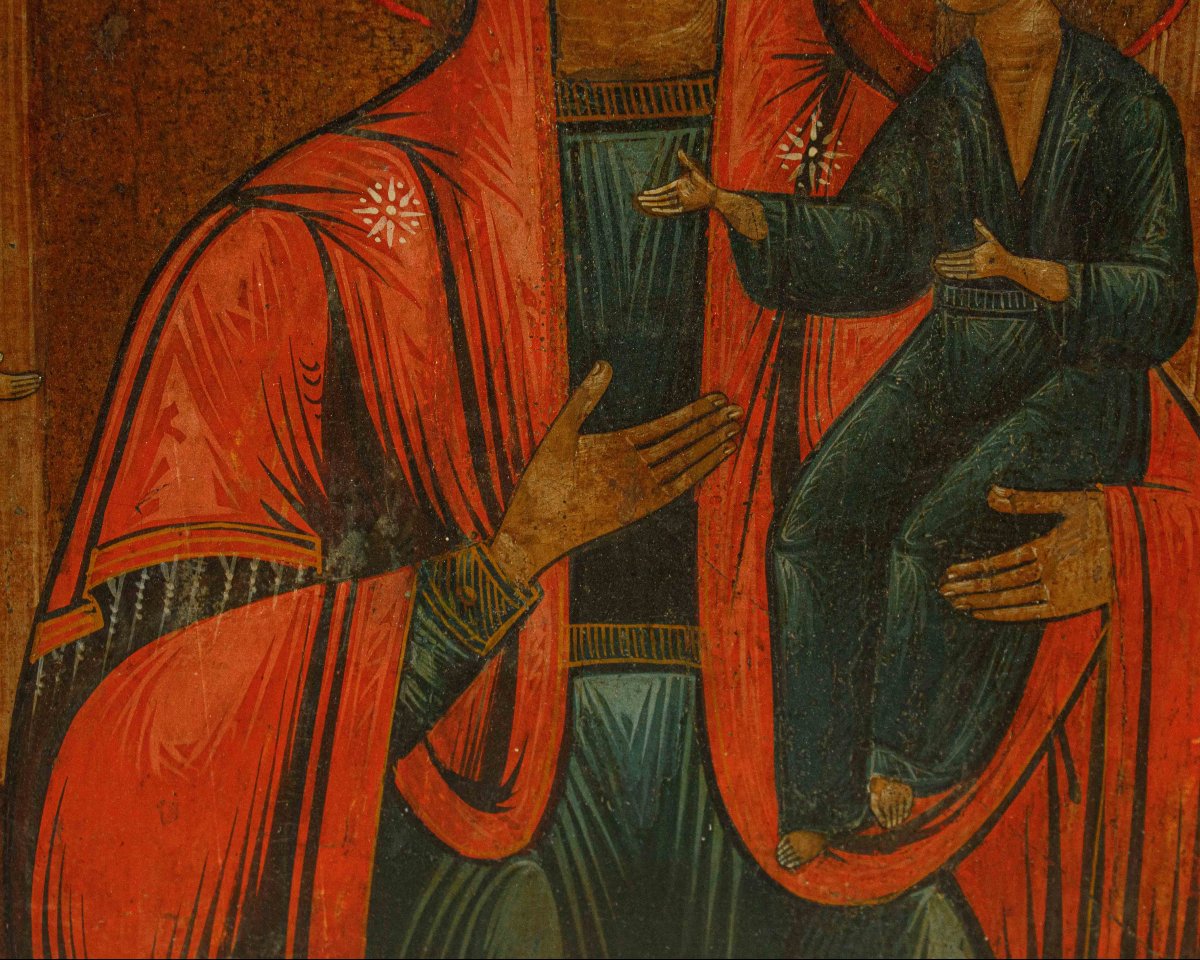
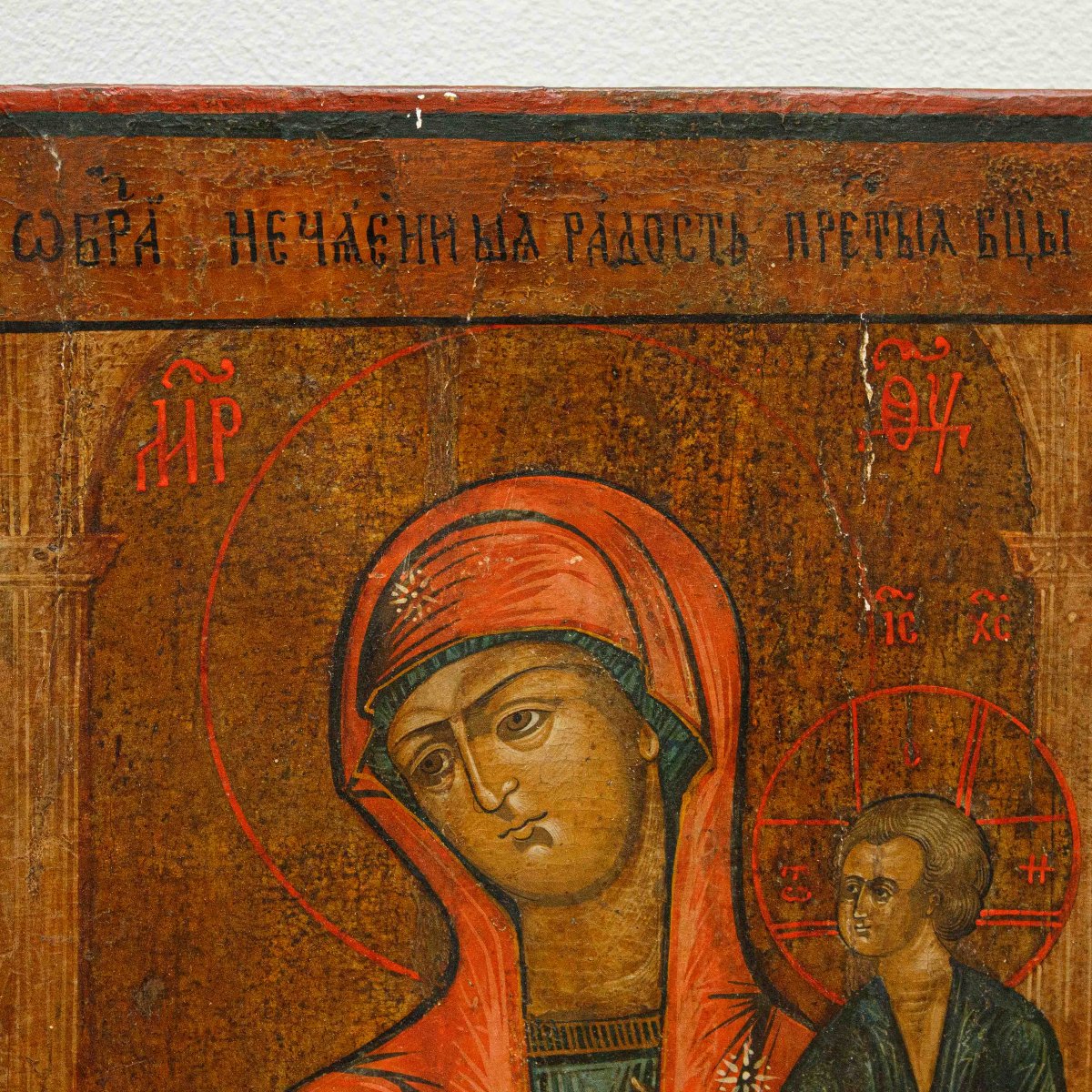
Icon; Madonna and Child with the Patron
Tempera on wood, 52 x 40 cm
The icon, from the Greek eikon, meaning “image,” depicts scenes from the lives of the Virgin Mary and Jesus, constituting a theological treatise in color.
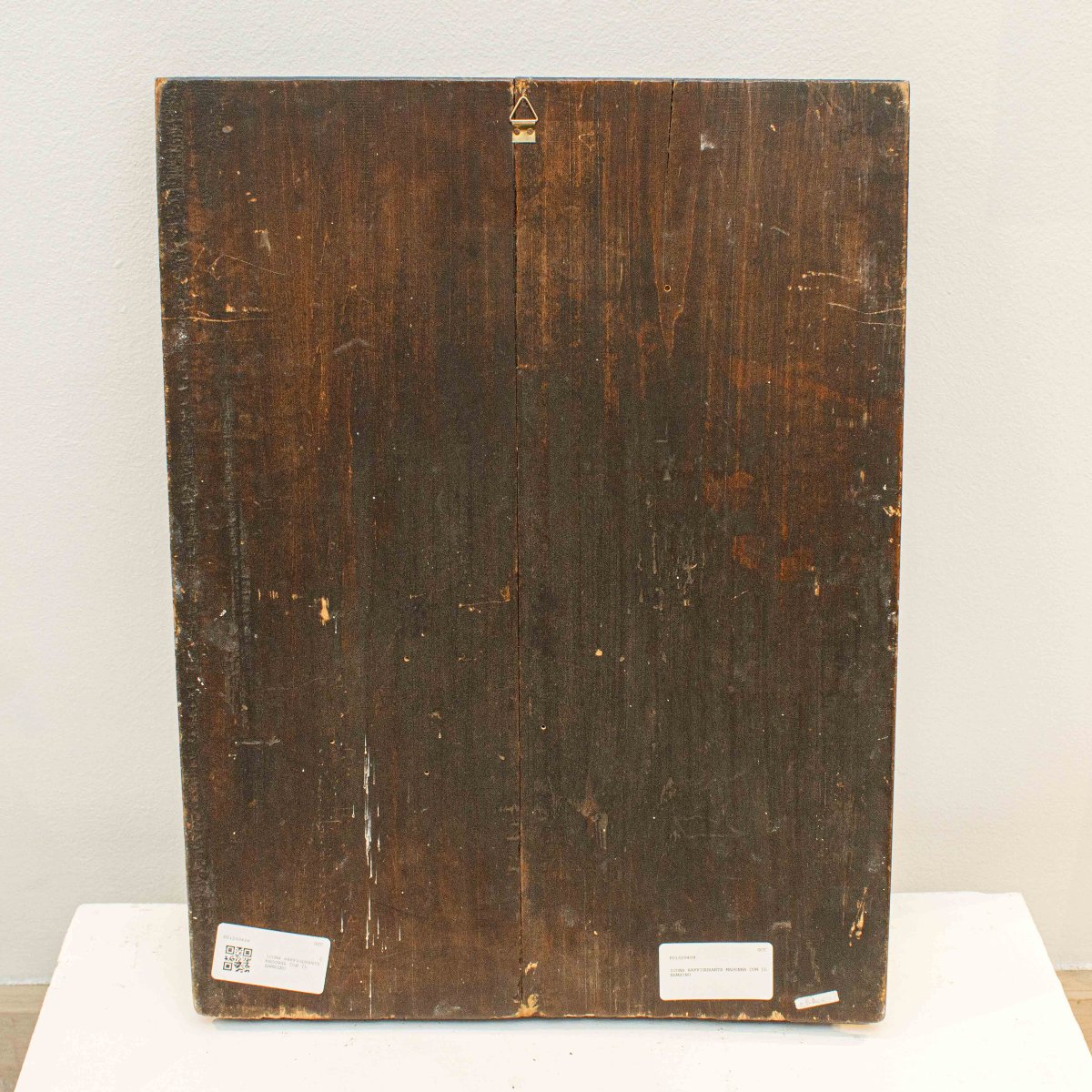
The distinctive nature of icons is evident right from the preparation of the support on which they are painted. The wooden panel itself symbolizes the cross, while the canvas symbolizes the mandylion—that is, Veronica’s veil or the Shroud of Turin; the gesso applied to the canvas, known as levkas, symbolizes stone. Icons were painted on wooden panels, typically made of linden, larch, or fir. On the inner side of the panel, a recess—called a “chest” or “ark”—was usually carved out to create a raised border along the edges. An icon is not a personal interpretation but a ritual with precise rules to be followed; unlike paintings, where the artist’s name is often known, an icon must remain anonymous. Theology regarded icons as works of God Himself, created through the hands of the iconographer.
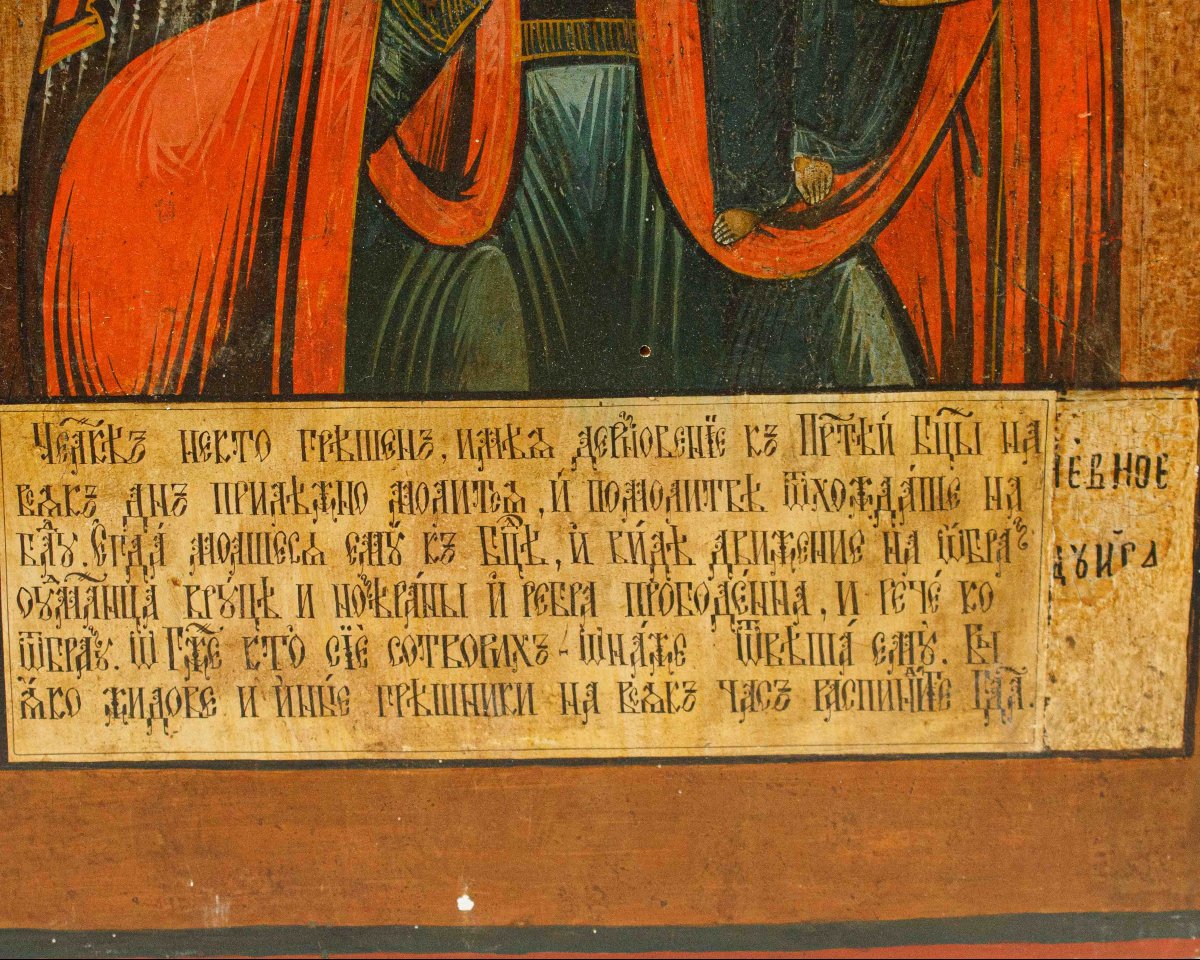
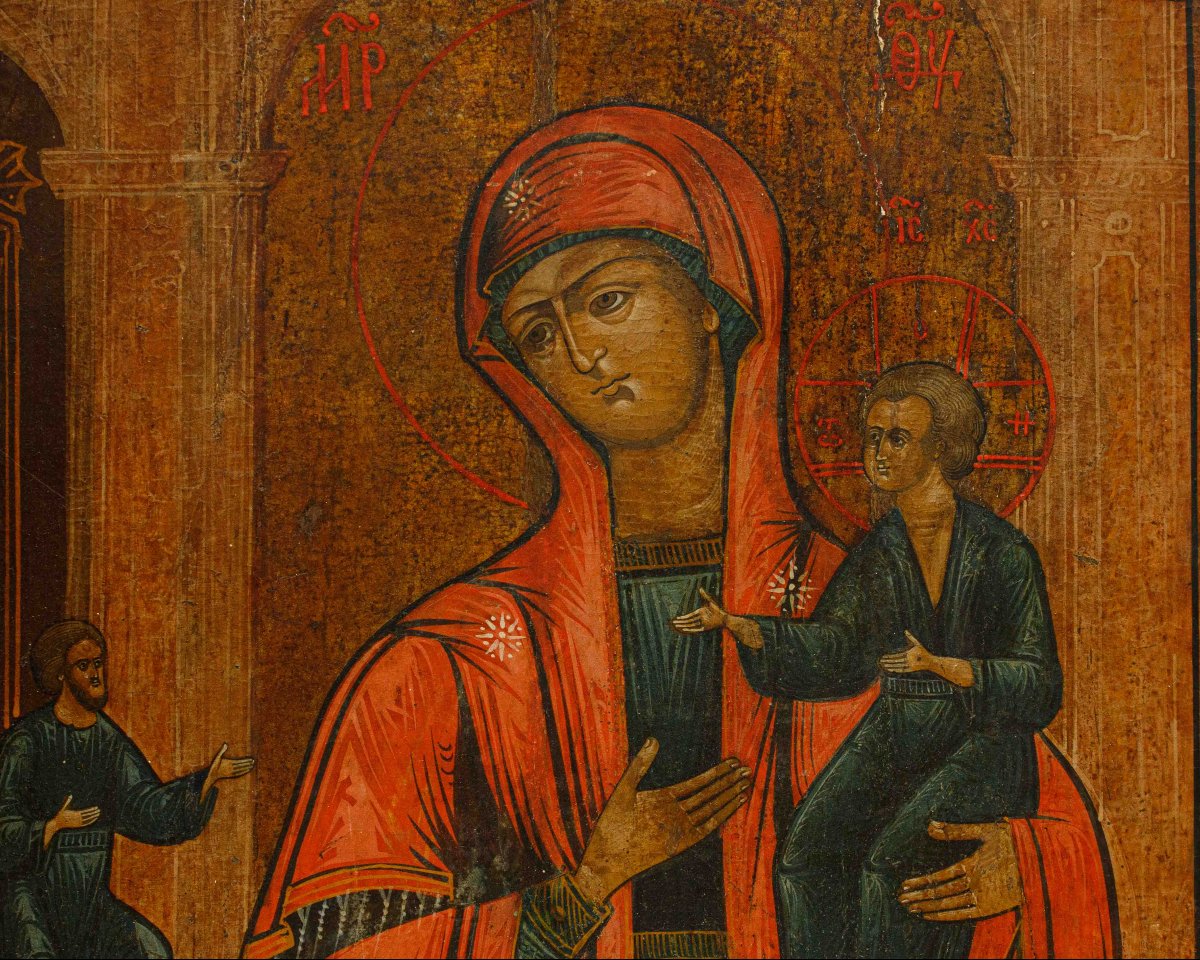
In the icon under consideration, we find a recurring depiction of the Virgin and Child, in this case enriched by the figure of the patron/donor, who is indicated by the hand of Christ.
Period: 19th century
Style: Other Style
Condition: Good condition
Material: Oil painting on wood
Width: 40
Height: 52
Reference (ID): 1791037
Availability: In stock