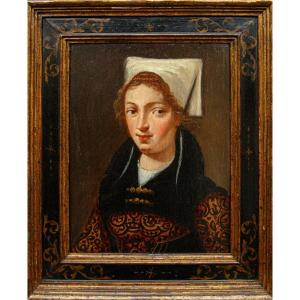


17th-century German-flemish School, Portrait Of A Young Woman
17th-century German-Flemish school
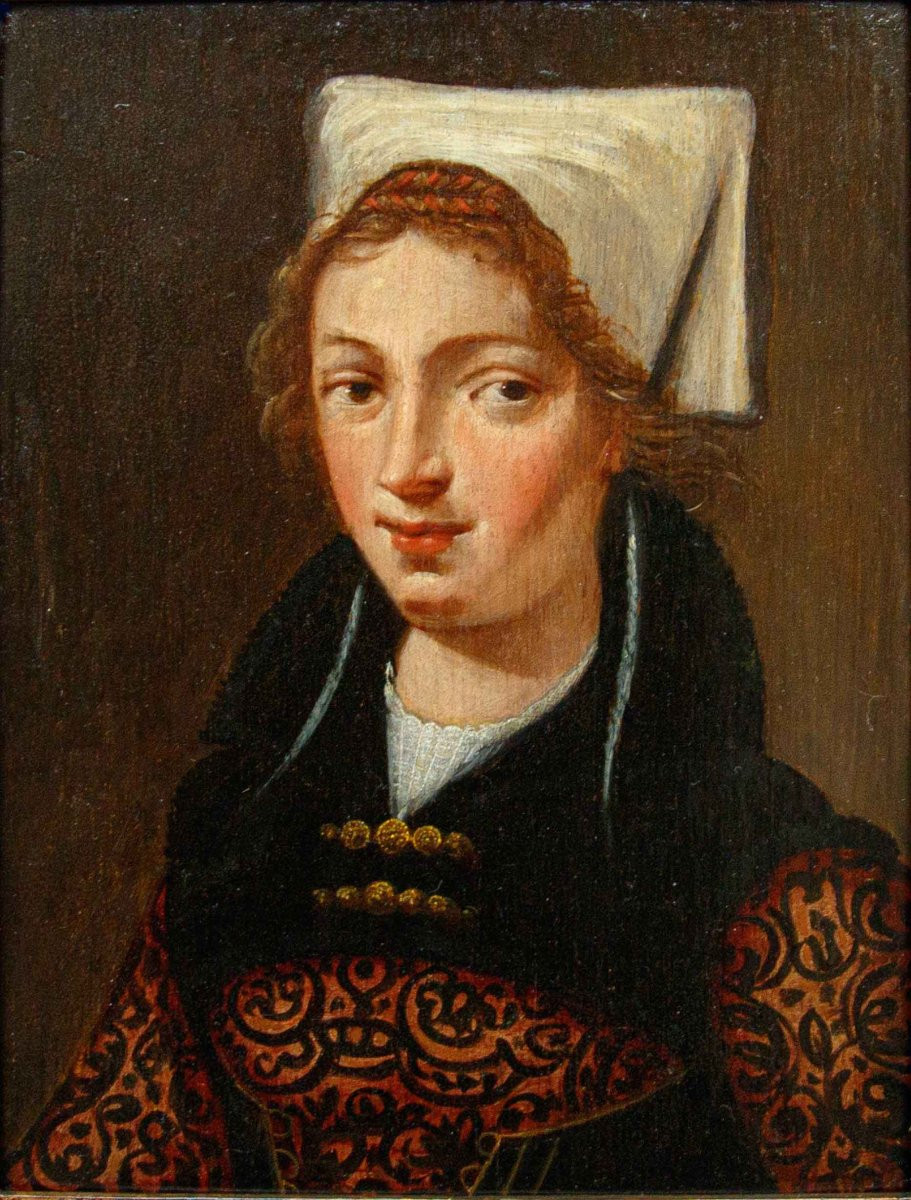
Portrait of a Young Woman
Oil on oak panel
28 × 20.5 cm, with frame: 36.5 × 30.5 cm
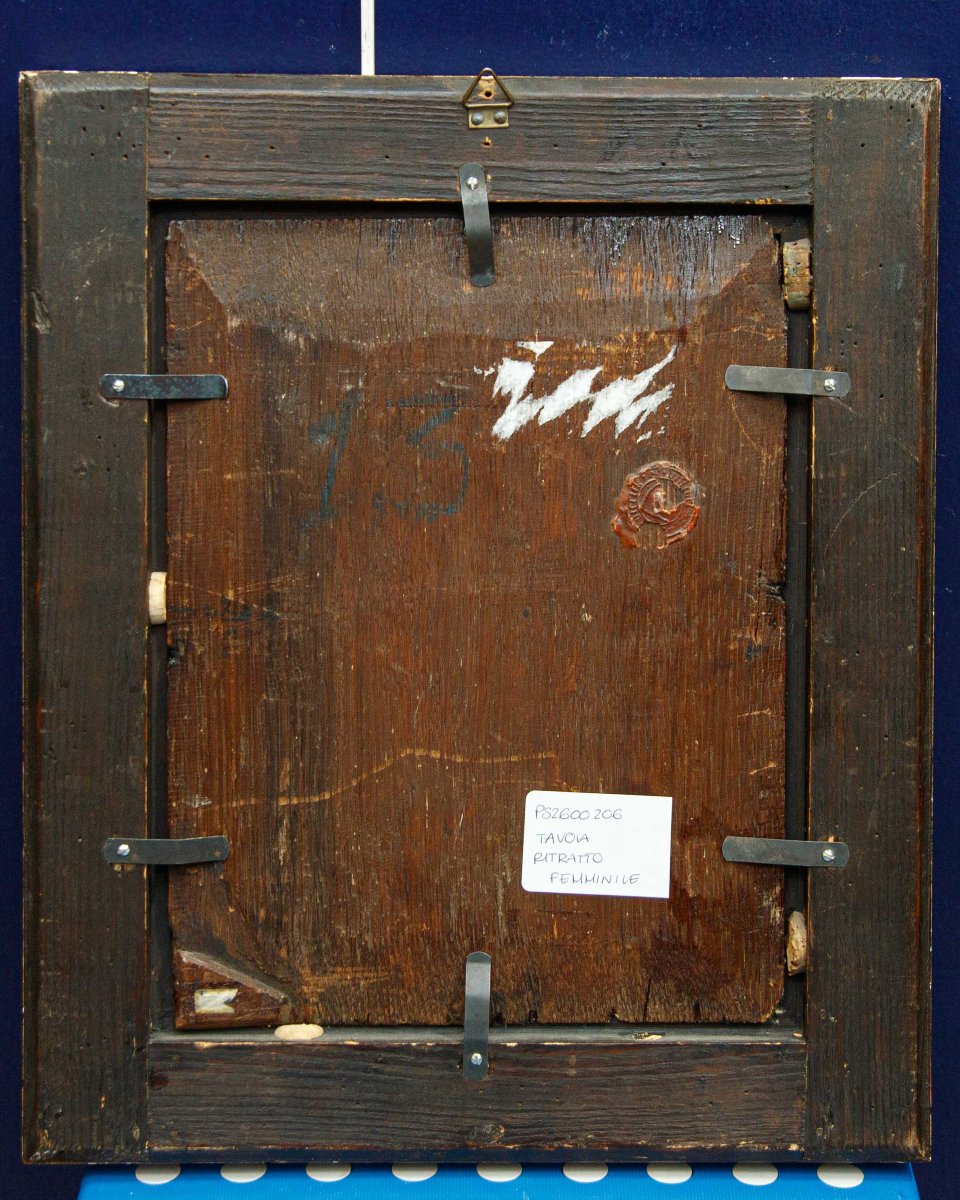
On the reverse: Antique wax seal
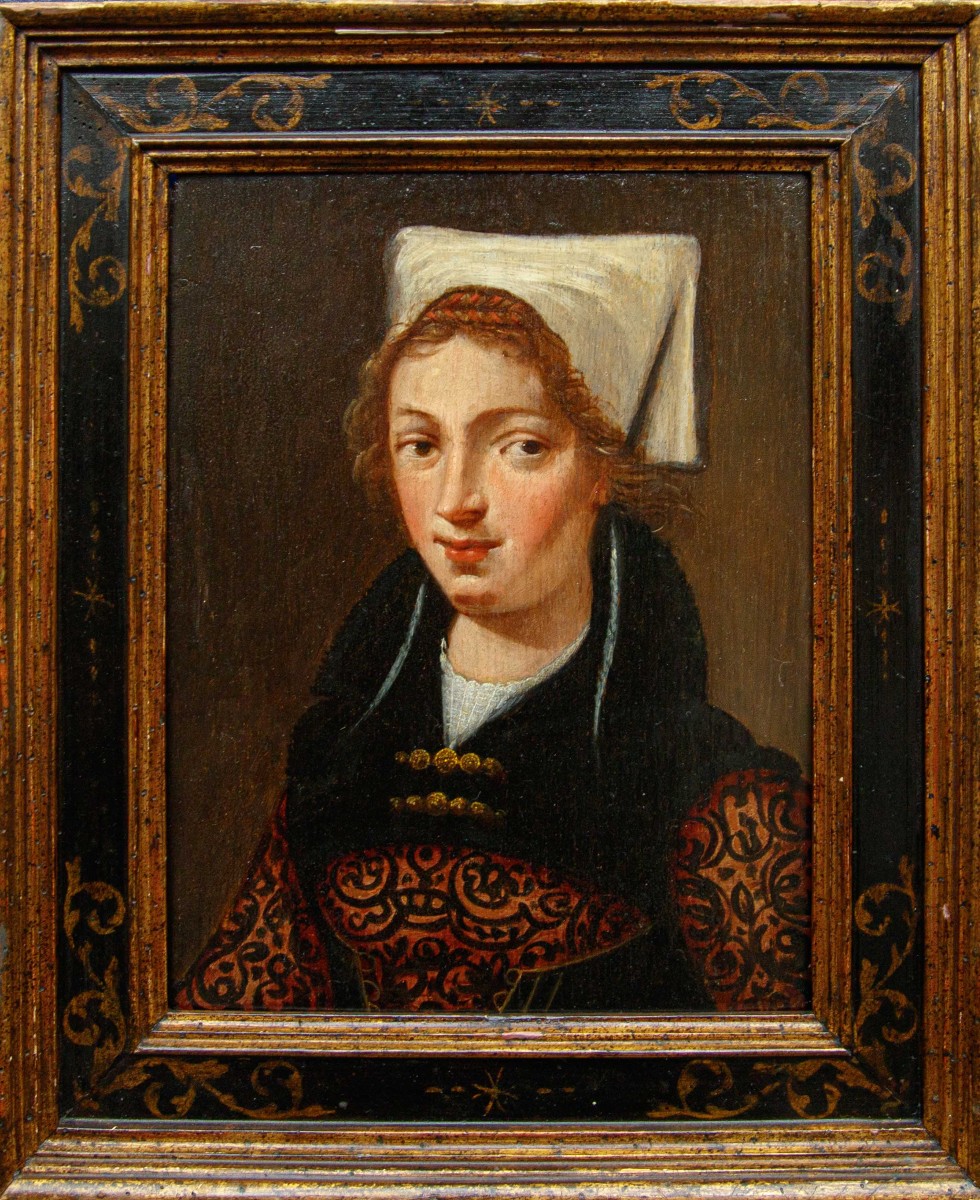
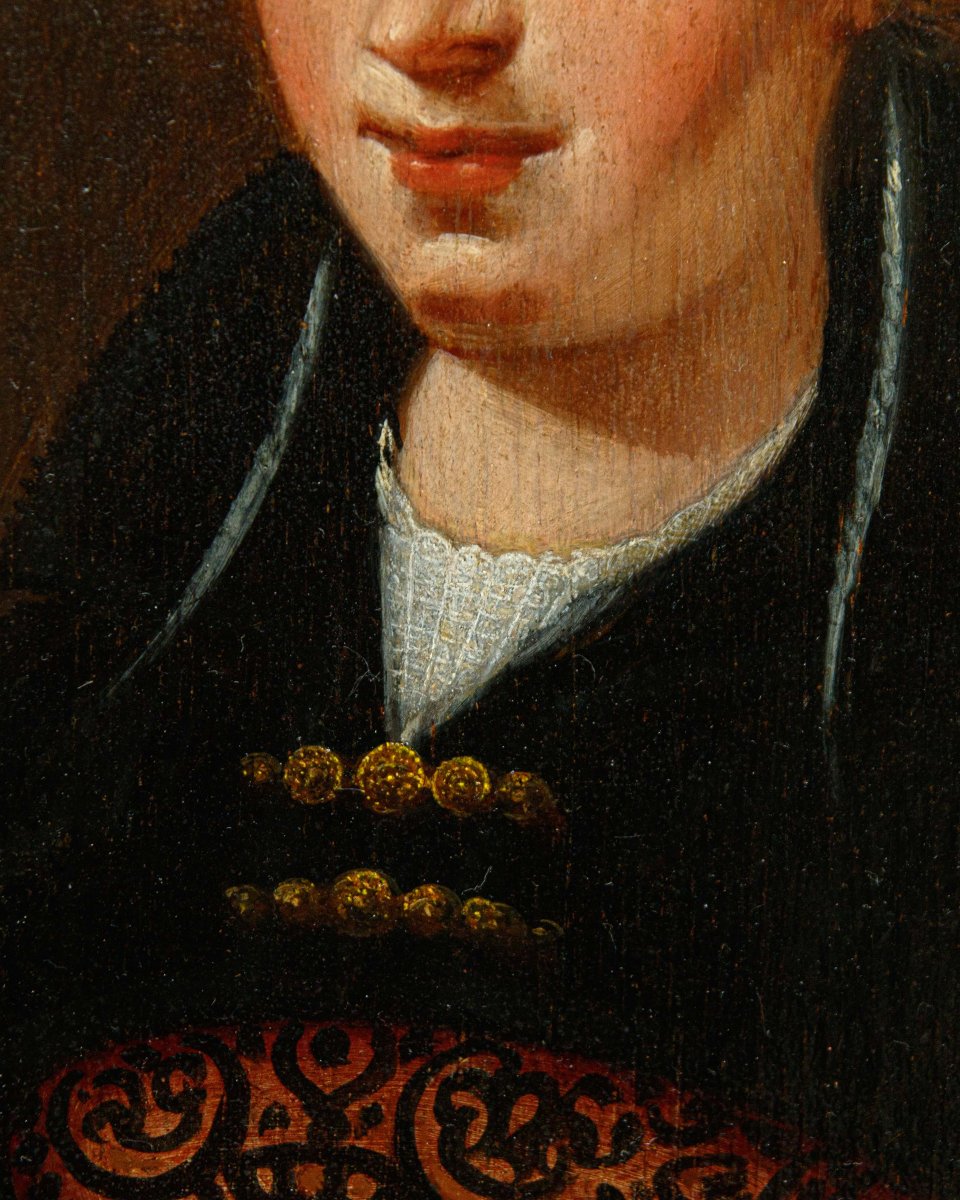
This portrait of a young woman, executed on an oak panel typical of the Northern tradition, represents a significant testament to the persistence of the aesthetic canons of the Antwerp school during the transition from the 16th to the 17th century. Although the work can be chronologically placed within the German-Flemish school of the early 17th century, its stylistic signature is rooted in the tradition of figurative honesty and compositional rigor, of which Catharina van Hemessen was the most sensitive and innovative interpreter.
To fully understand the pictorial approach of this panel, one must examine the biography of Van Hemessen, a pioneering figure and daughter of an artist, trained by her father Jan Sanders van Hemessen. Catharina was not only the first Flemish female painter whose signed and dated works have survived, but she also became one of the most esteemed portraitists of her time, so much so that she earned the prestigious patronage of Mary of Austria, Queen of Hungary and Governor of the Netherlands, who wished to have her at the Spanish court. This solid training, combined with a distinctly feminine and introspective sensibility, allowed her to develop a style that eschewed grandiosity and rhetoric to focus on the intimate dimension of the subject.
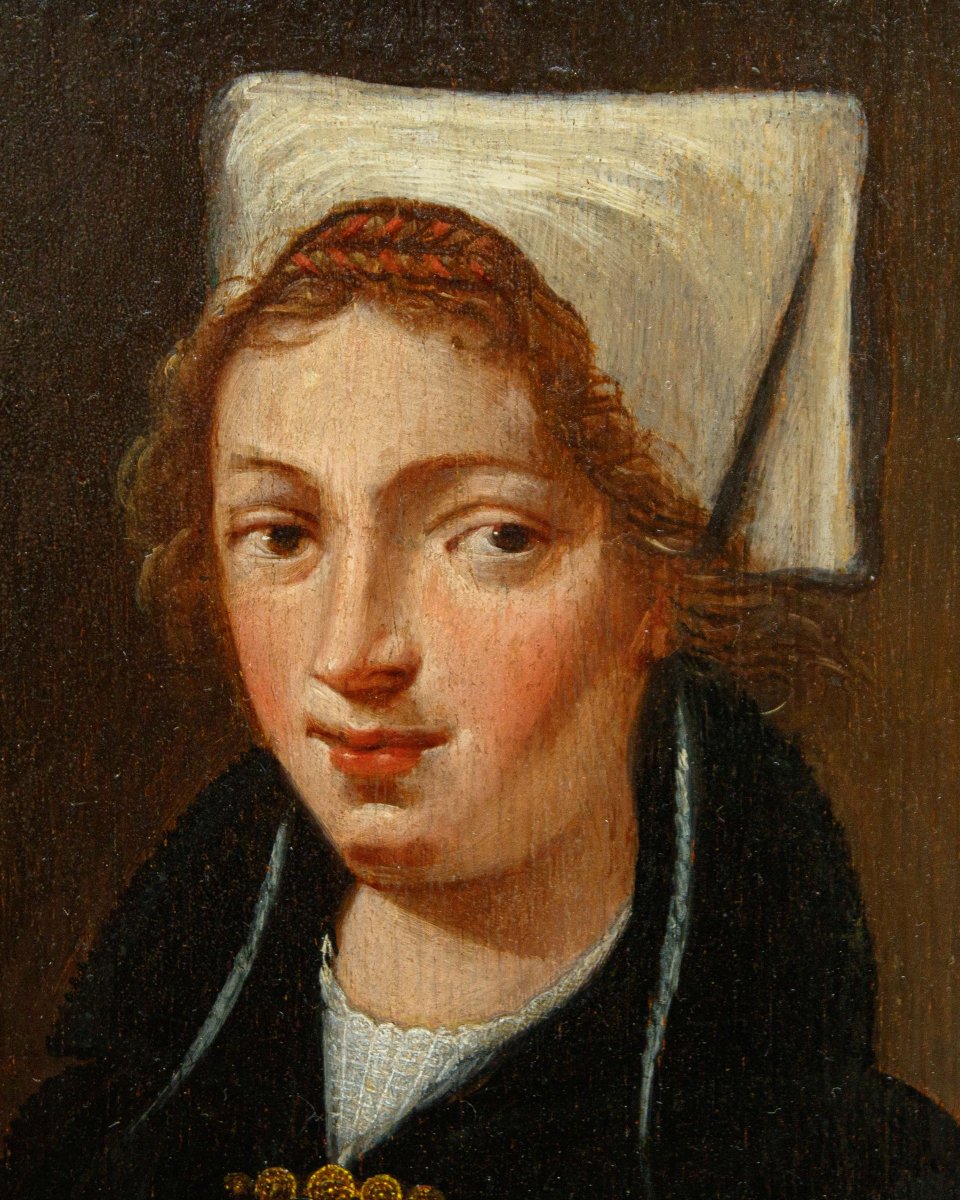
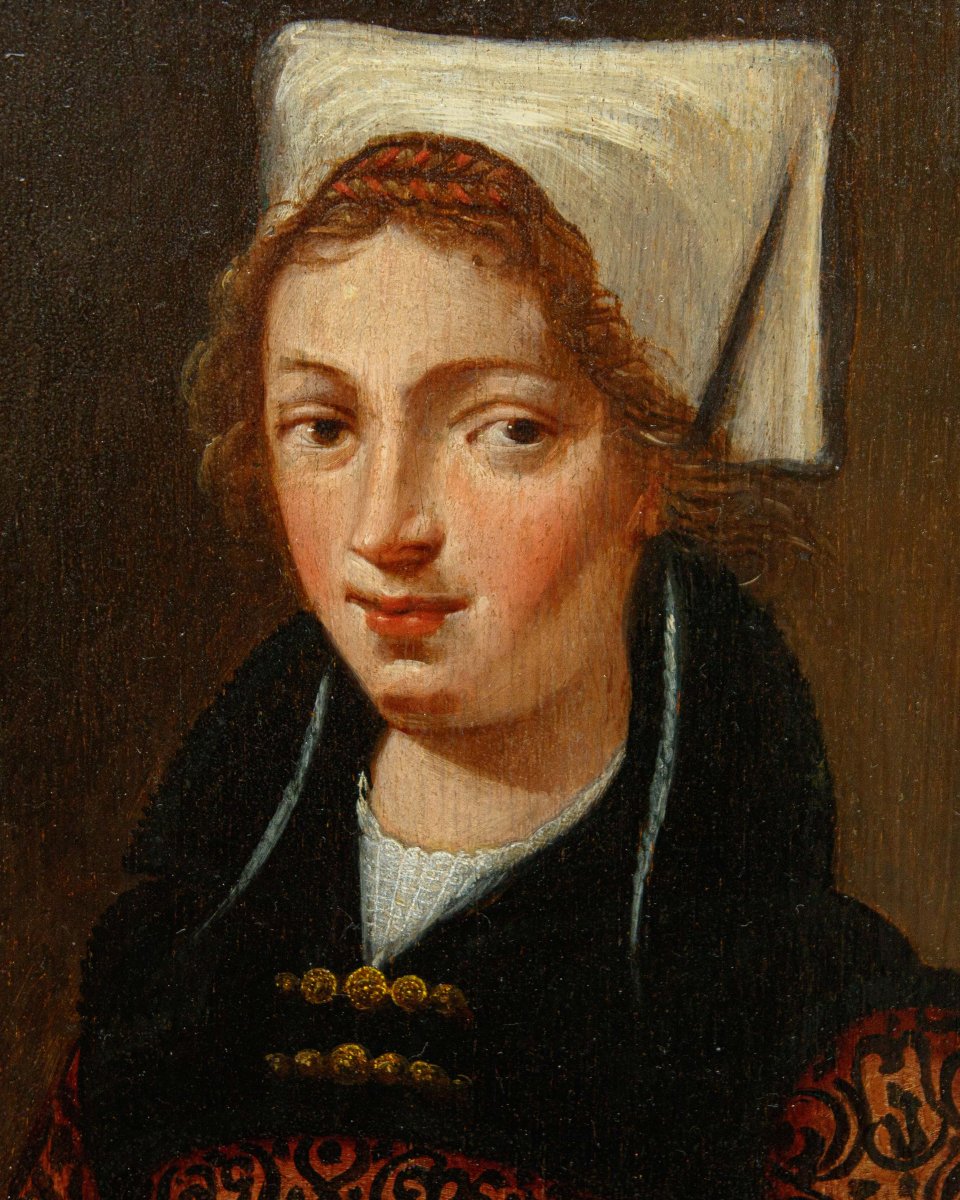
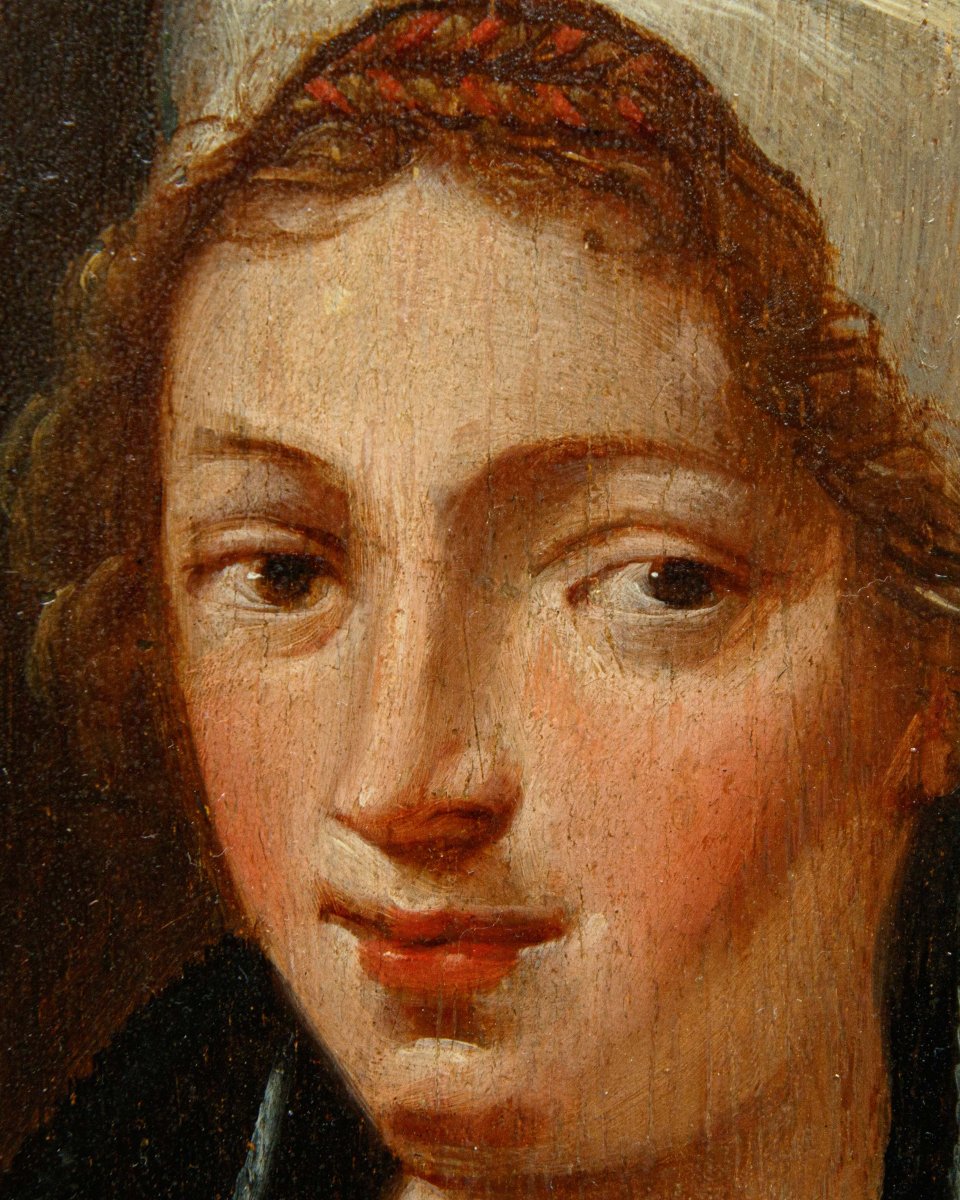
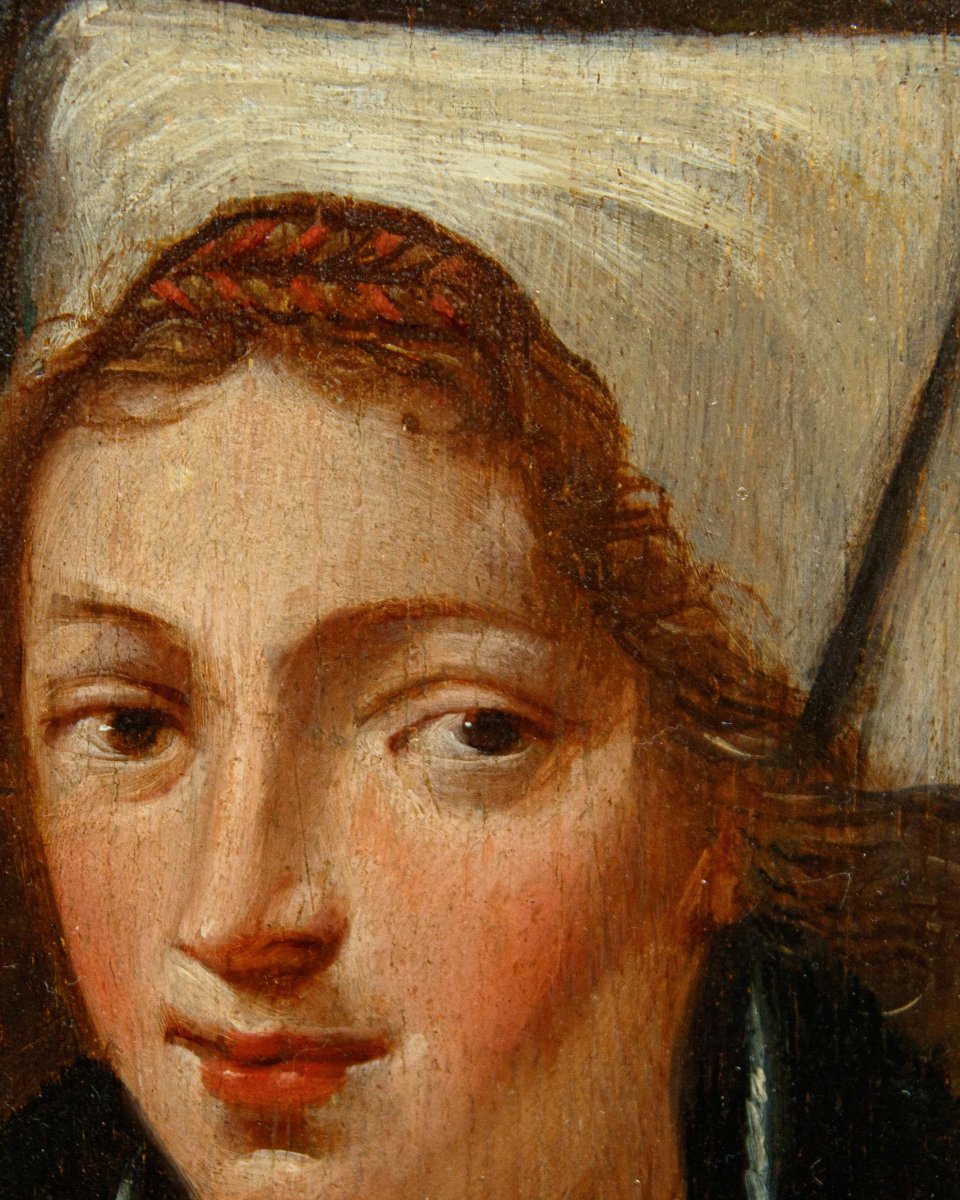
The work in question faithfully follows this approach, adopting the typical three-quarter or half-length composition that Catharina favored for her small, intense portraits. The choice to place the young woman against a neutral, dark background is no accident: it is a fundamental device to eliminate any environmental distractions and force the viewer into a direct engagement with the subject. Against this dark background, the figure emerges not through stark contrasts, but through a light that gently models the facial features and the texture of the garments, just as in Van Hemessen’s works, where sobriety was synonymous with inner nobility.
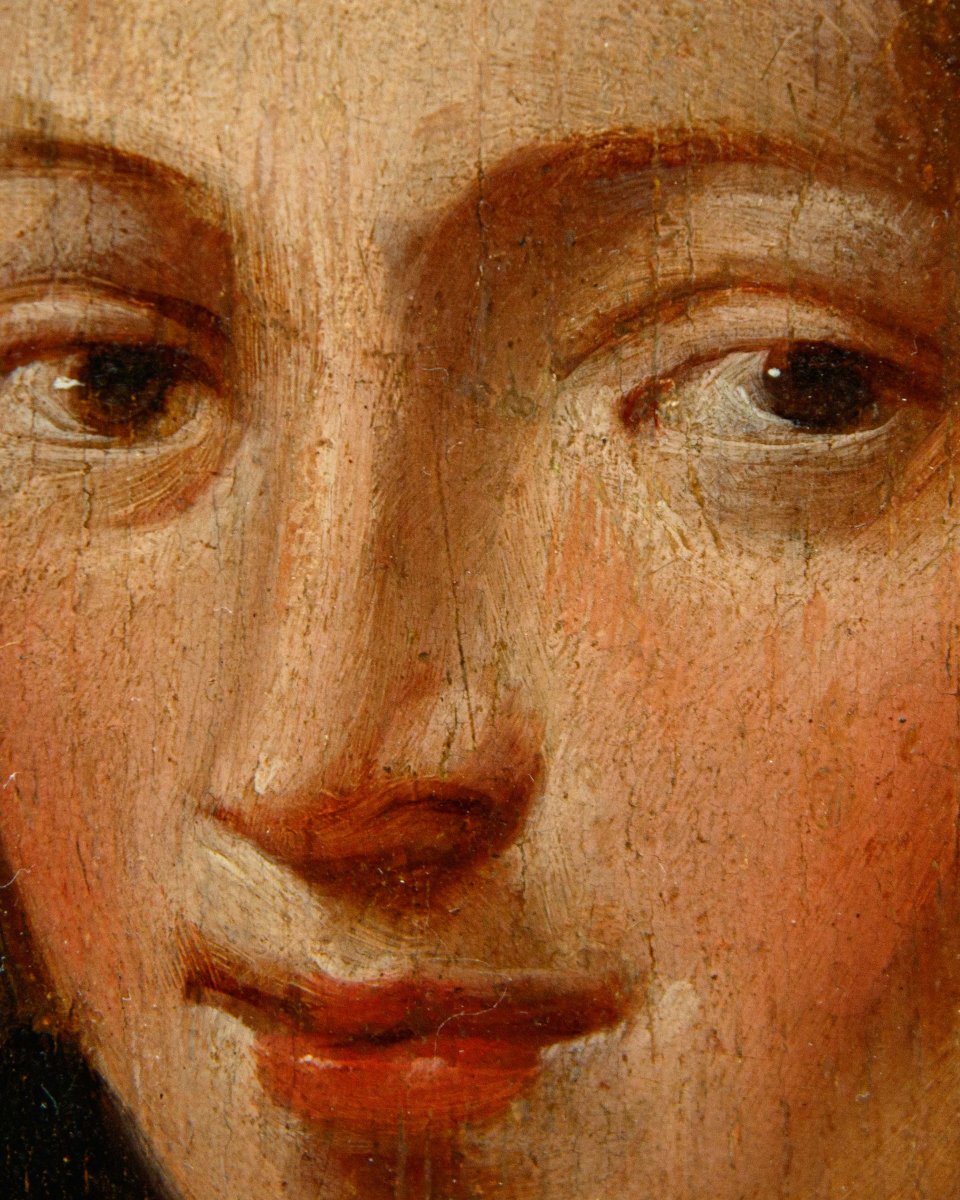
Reflection on this pictorial approach reveals a deliberate avoidance of idealizing embellishment. In this painting, as in the 16th-century models, there is no indulgence in decorative detail for its own sake or in the magnificence of costume. Beauty is not sought in artifice, but in the truth of the pose and the features. It is in this context that the young woman’s gaze takes on crucial importance: here we find that same calm, lucid, and almost solemn fixity that characterizes the faces painted by Catharina (think of her famous self-portrait or the portrait of a noblewoman in the Fitzwilliam Museum). It is a gaze that does not challenge the viewer, but welcomes them with composed seriousness, establishing a silent and honest dialogue. Ultimately, this oak panel stands as an ideal bridge between two eras, demonstrating how the sober realism and psychological dignity codified by Van Hemessen continued to inform Flemish portraiture well beyond the mid-century.
Period: 17th century
Style: Other Style
Condition: Good condition
Material: Oil painting on wood
Width: 20,5
Height: 28
Reference (ID): 1757118
Availability: In stock