




Circle Of Giacomo Serpotta (palermo, 1656 – 1732), Cherub Heads
Circle of Giacomo Serpotta (Palermo, 1656 – 1732)
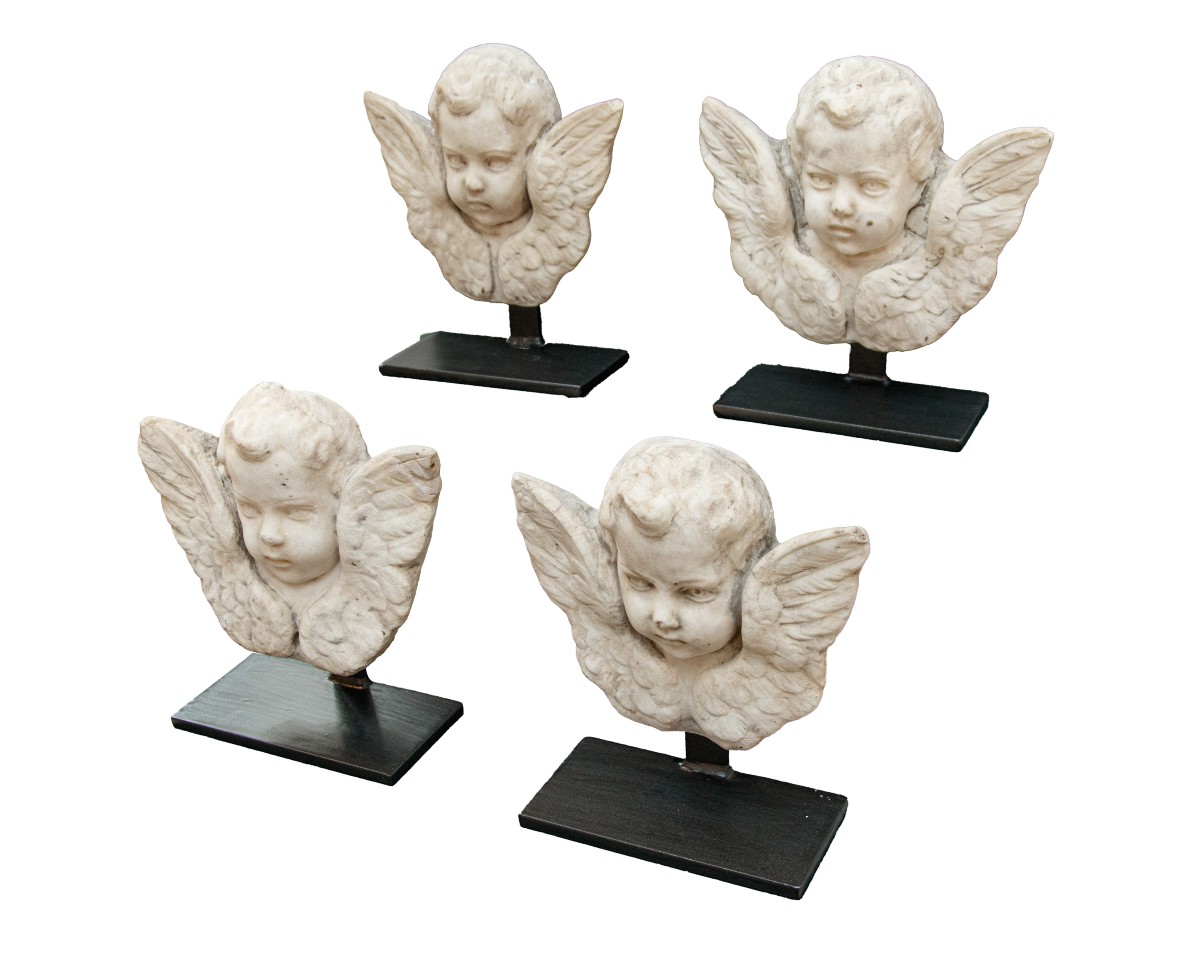
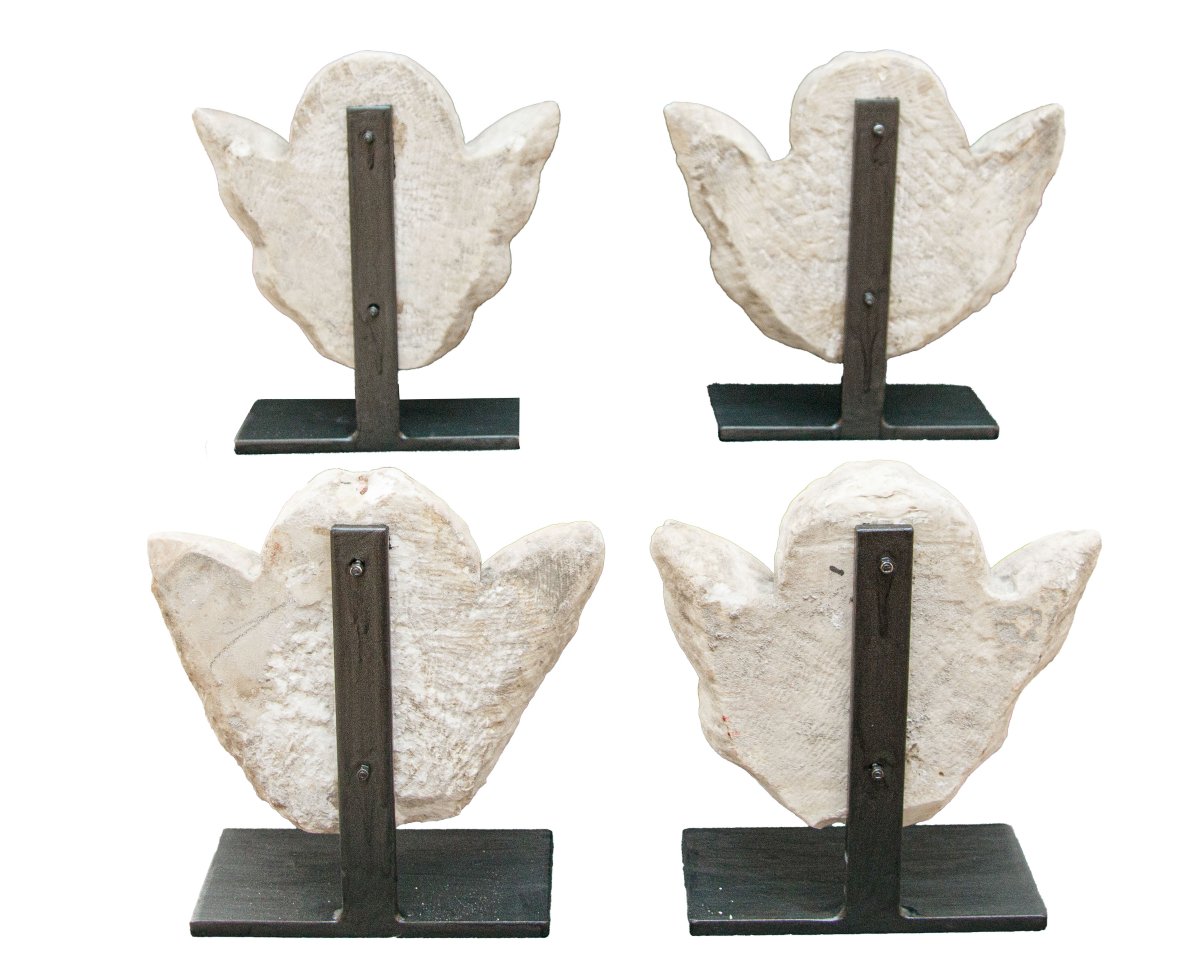
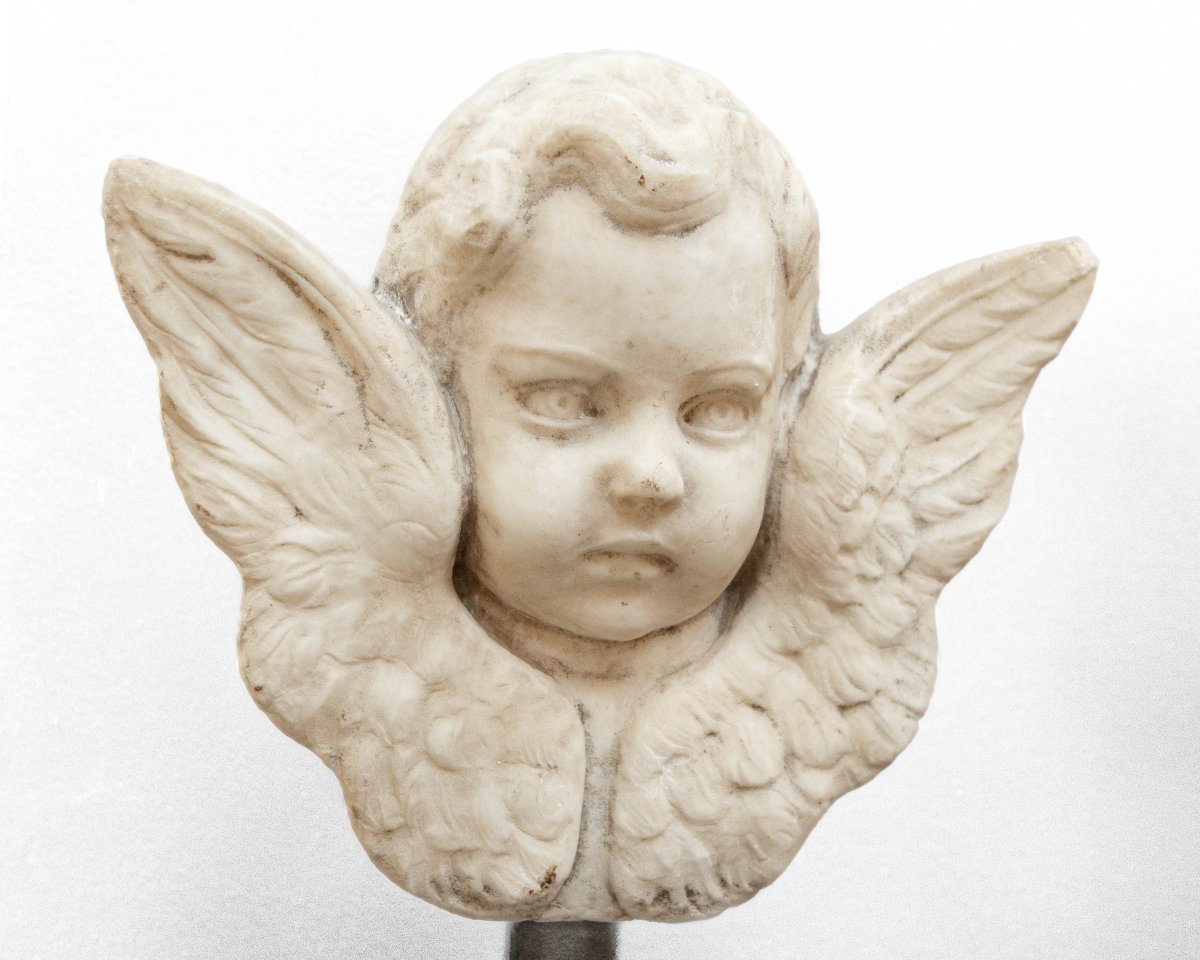
Cherub heads
(4) Marble, cm 28 x 26 x 10
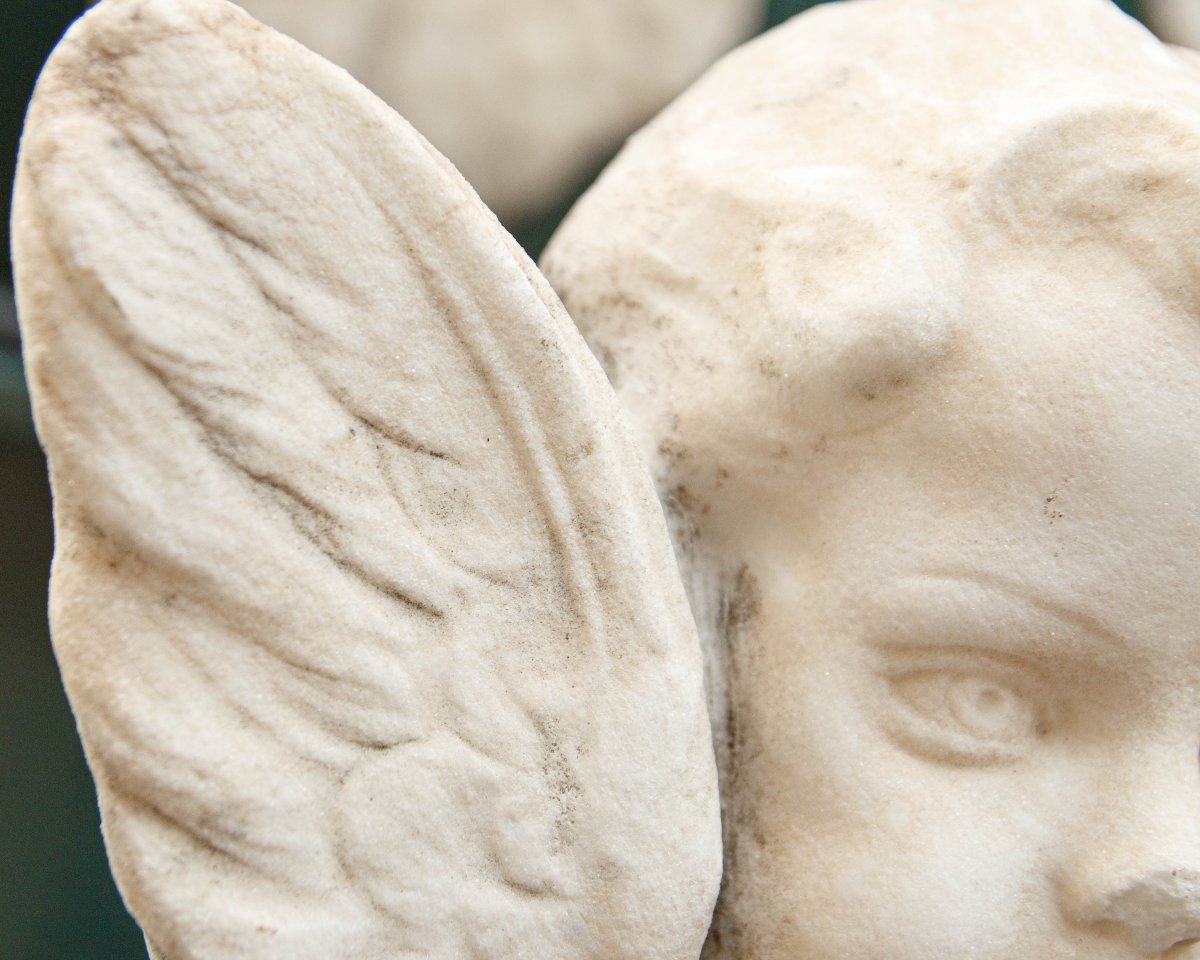
Giacomo Serpotta (born Giacomo Isidoro Nicolò Serpotta) was born in Palermo in the Kalsa district on March 10, 1656, always a privileged place for marble workers' workshops due to its proximity to the port where the precious materials arrived. The second son, after Giuseppe, of Gaspare Serpotta and Antonina Travaglia, his family had been included in the circle of artists of Baroque Palermo for generations: his father and grandfather, in fact, were active marble workers and sculptors, cited as the authors of the most beautiful sculptural and pictorial works in the city. Trained together with his brother in his father's workshop, his life spent almost entirely in the alleys of Palermo, dedicating himself entirely and specializing in a technique that led to heights never achieved again, the so-called "allustratura". Thanks to this process, which involved the use of marble powder and egg white, his sculptures replicated the effect of a controlled reflection and a visual compactness similar to porcelain, neutralizing the natural porosity of stucco or marble. Serpotta's work represented, in fact, the technical pinnacle of sculpture in the European Baroque and Rococo panorama, embracing a modular and dynamic plasticity. His artistic evolution is part of the context of Palermo's congregations and oratories, architectural spaces that he transformed through a total integration between structure and plastic apparatus. The most important public commissions, such as the Oratory of San Lorenzo (1699 - 1706) and the Oratory of the Rosary in Santa Cita (1710 - 1717), testify to a compositional maturity where the sacred narrative is fragmented into perspective "teatrini". In these spaces, Serpotta applies quasi-architectural laws of optics and foreshortening, creating fictitious spatial depths that amplify the limited volumes of the walls. An in-depth focus deserves the treatment of cherubs and putti, which in Serpotta's compositions never perform a merely filling function, but constitute a structural and psychological device. From an anatomical point of view, the sculptor abandons classical idealization for a rigorous realism, which takes into account the infantile proportions and muscular tensions typical of spontaneous movement. From a stylistic point of view, the four cherub heads under examination can be included among the works of the Palermo master's circle, presenting features consistent with his production: the rounded shape of the face, the pronounced superciliary arches and the cut of the eyes are, in fact, recurring elements in his works; as in Serpotta's autograph works, the hair modeling and the rendering of the plumage tend towards an almost ethereal lightness, with very deep and throbbing undercuts.
Cherub heads
(4) Marble, cm 28 x 26 x 10
Giacomo Serpotta (born Giacomo Isidoro Nicolò Serpotta) was born in Palermo in the Kalsa district on March 10, 1656, always a privileged place for marble workers' workshops due to its proximity to the port where the precious materials arrived. The second son, after Giuseppe, of Gaspare Serpotta and Antonina Travaglia, his family had been included in the circle of artists of Baroque Palermo for generations: his father and grandfather, in fact, were active marble workers and sculptors, cited as the authors of the most beautiful sculptural and pictorial works in the city. Trained together with his brother in his father's workshop, his life spent almost entirely in the alleys of Palermo, dedicating himself entirely and specializing in a technique that led to heights never achieved again, the so-called "allustratura". Thanks to this process, which involved the use of marble powder and egg white, his sculptures replicated the effect of a controlled reflection and a visual compactness similar to porcelain, neutralizing the natural porosity of stucco or marble. Serpotta's work represented, in fact, the technical pinnacle of sculpture in the European Baroque and Rococo panorama, embracing a modular and dynamic plasticity. His artistic evolution is part of the context of Palermo's congregations and oratories, architectural spaces that he transformed through a total integration between structure and plastic apparatus. The most important public commissions, such as the Oratory of San Lorenzo (1699 - 1706) and the Oratory of the Rosary in Santa Cita (1710 - 1717), testify to a compositional maturity where the sacred narrative is fragmented into perspective "teatrini". In these spaces, Serpotta applies quasi-architectural laws of optics and foreshortening, creating fictitious spatial depths that amplify the limited volumes of the walls. An in-depth focus deserves the treatment of cherubs and putti, which in Serpotta's compositions never perform a merely filling function, but constitute a structural and psychological device. From an anatomical point of view, the sculptor abandons classical idealization for a rigorous realism, which takes into account the infantile proportions and muscular tensions typical of spontaneous movement. From a stylistic point of view, the four cherub heads under examination can be included among the works of the Palermo master's circle, presenting features consistent with his production: the rounded shape of the face, the pronounced superciliary arches and the cut of the eyes are, in fact, recurring elements in his works; as in Serpotta's autograph works, the hair modeling and the rendering of the plumage tend towards an almost ethereal lightness, with very deep and throbbing undercuts.
4 500 €
Period: 17th century
Style: Other Style
Condition: Good condition
Material: Marble
Width: 26
Height: 28
Depth: 10
Reference (ID): 1726507
Availability: In stock
Print