




Emilian Sole, 16th Century, Annunciation
Emilian sole, 16th century
Annunciation
Oil on panel, 56.5 x 43 cm
With frame, 72 x 56 cm
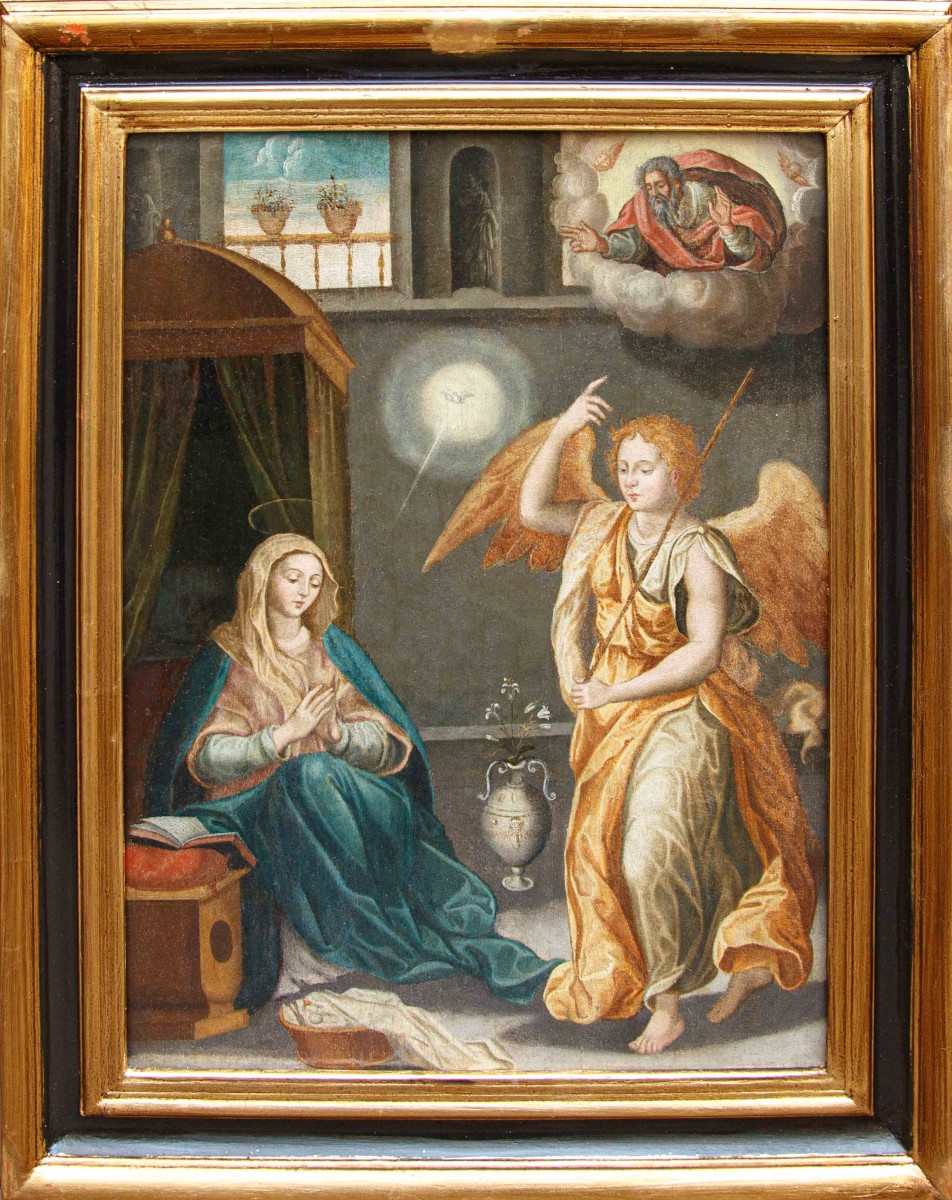
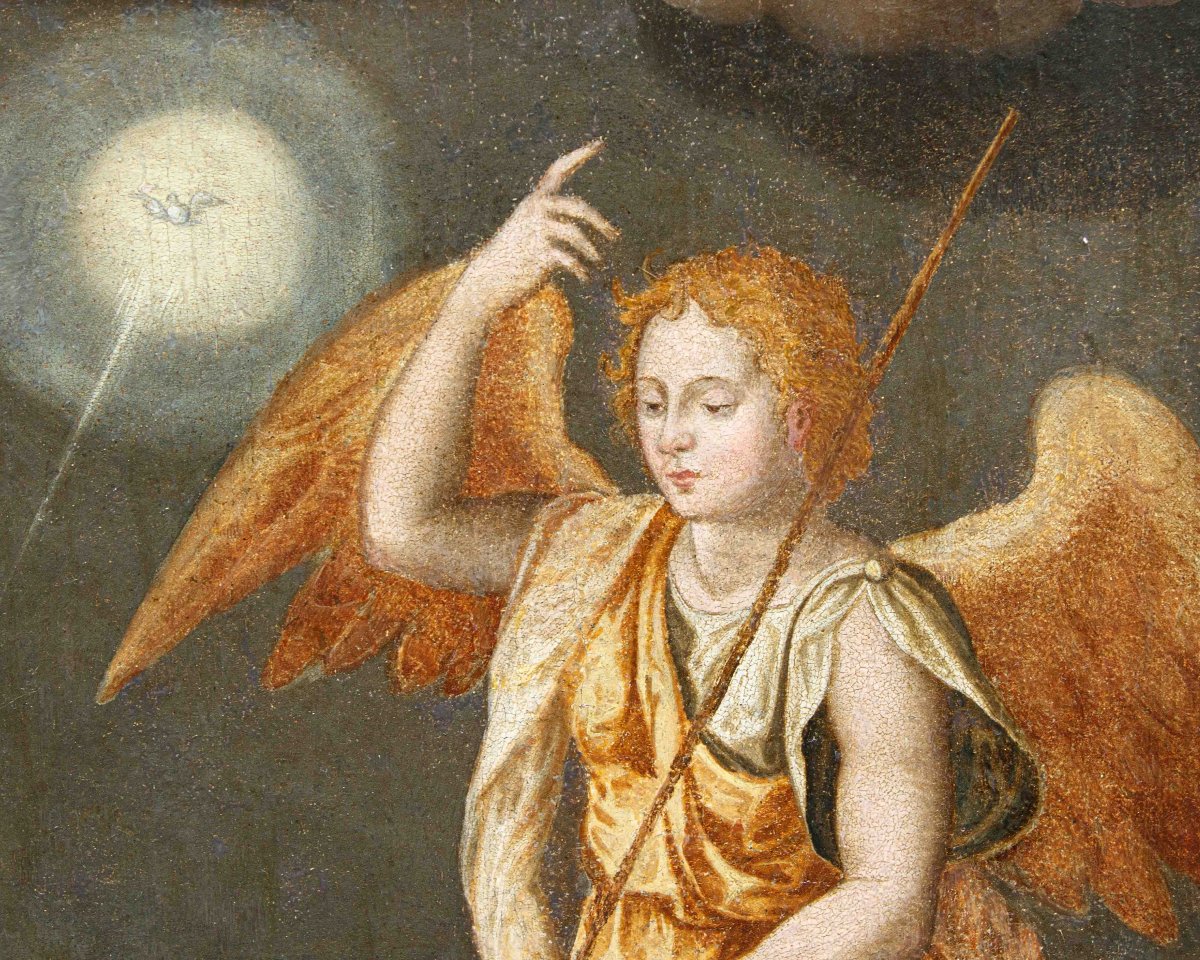
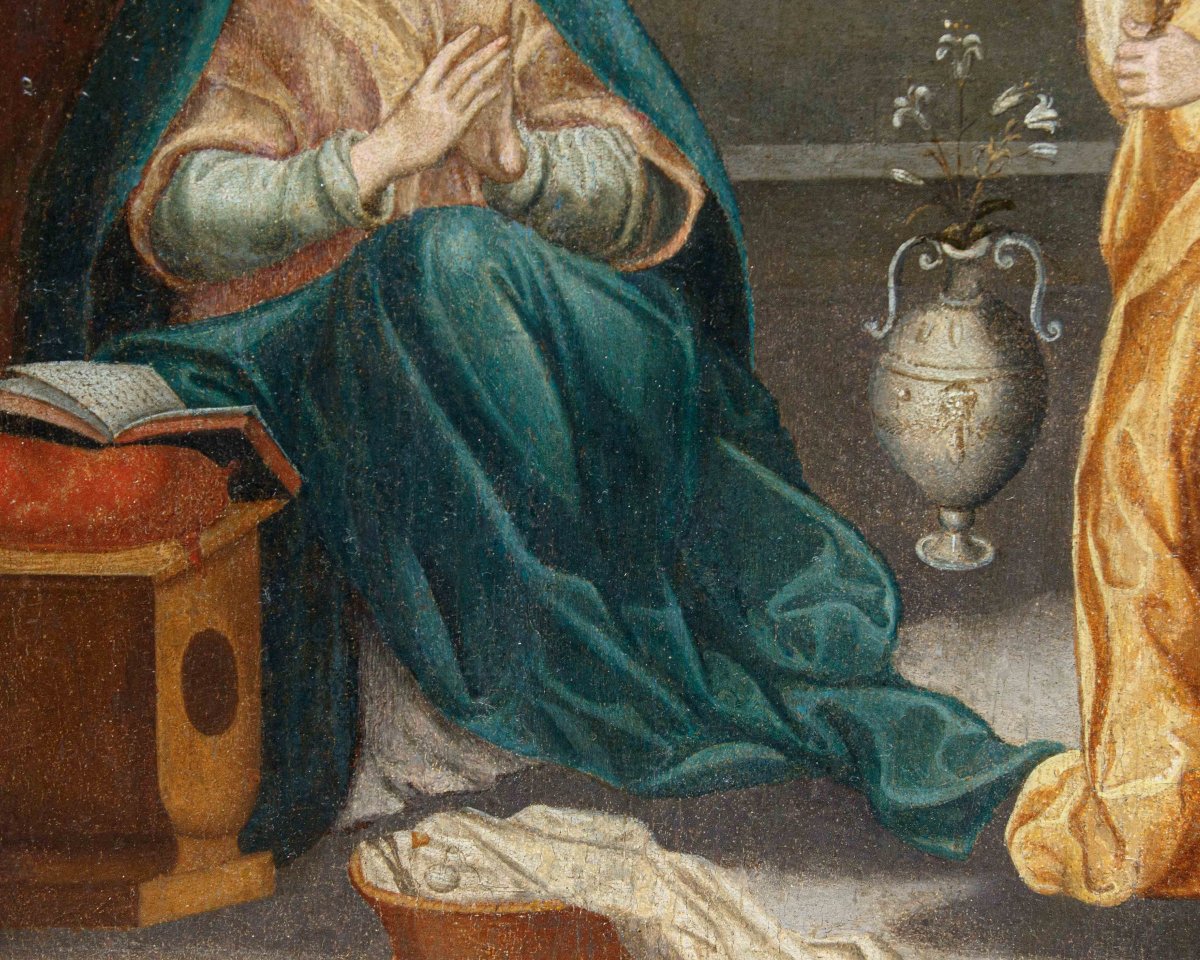
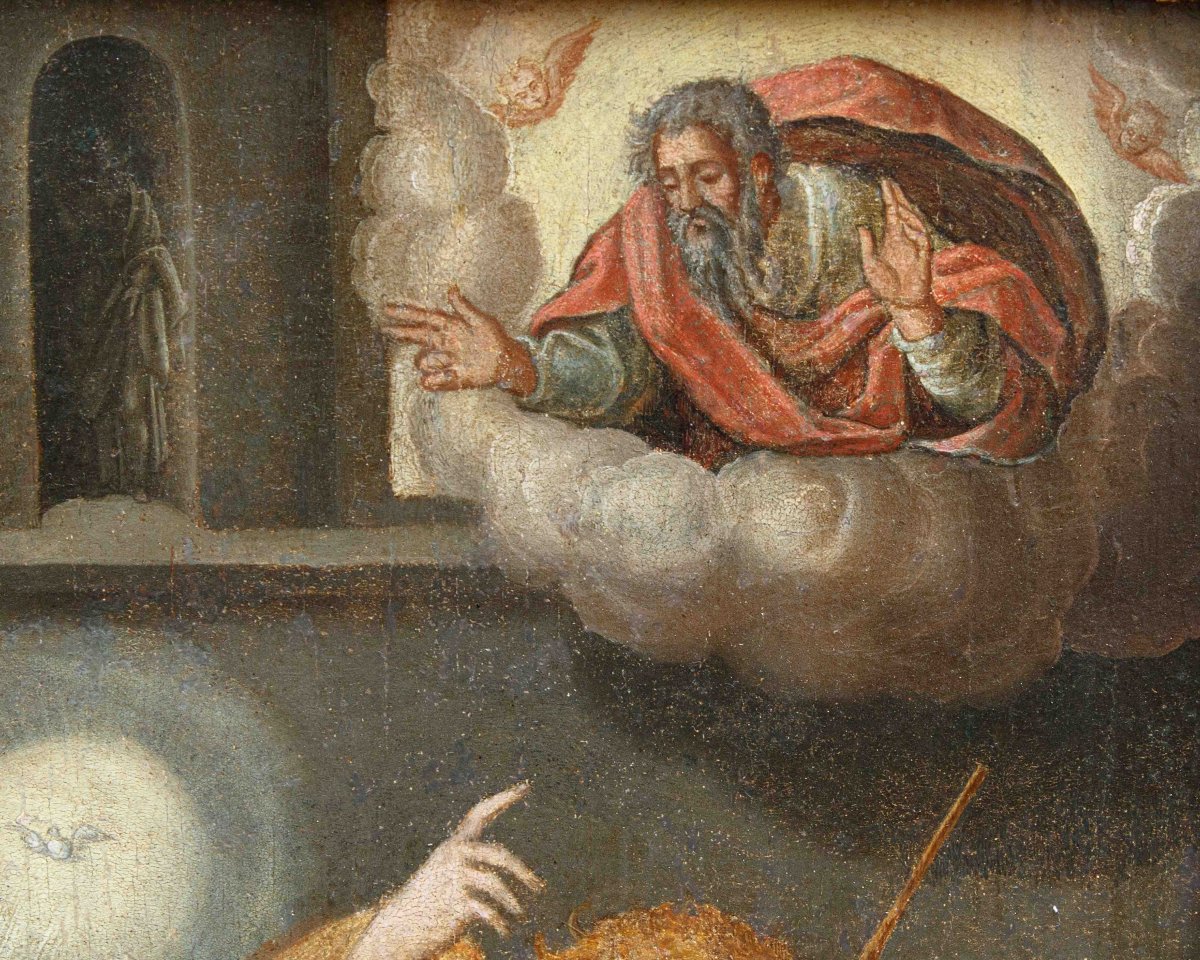
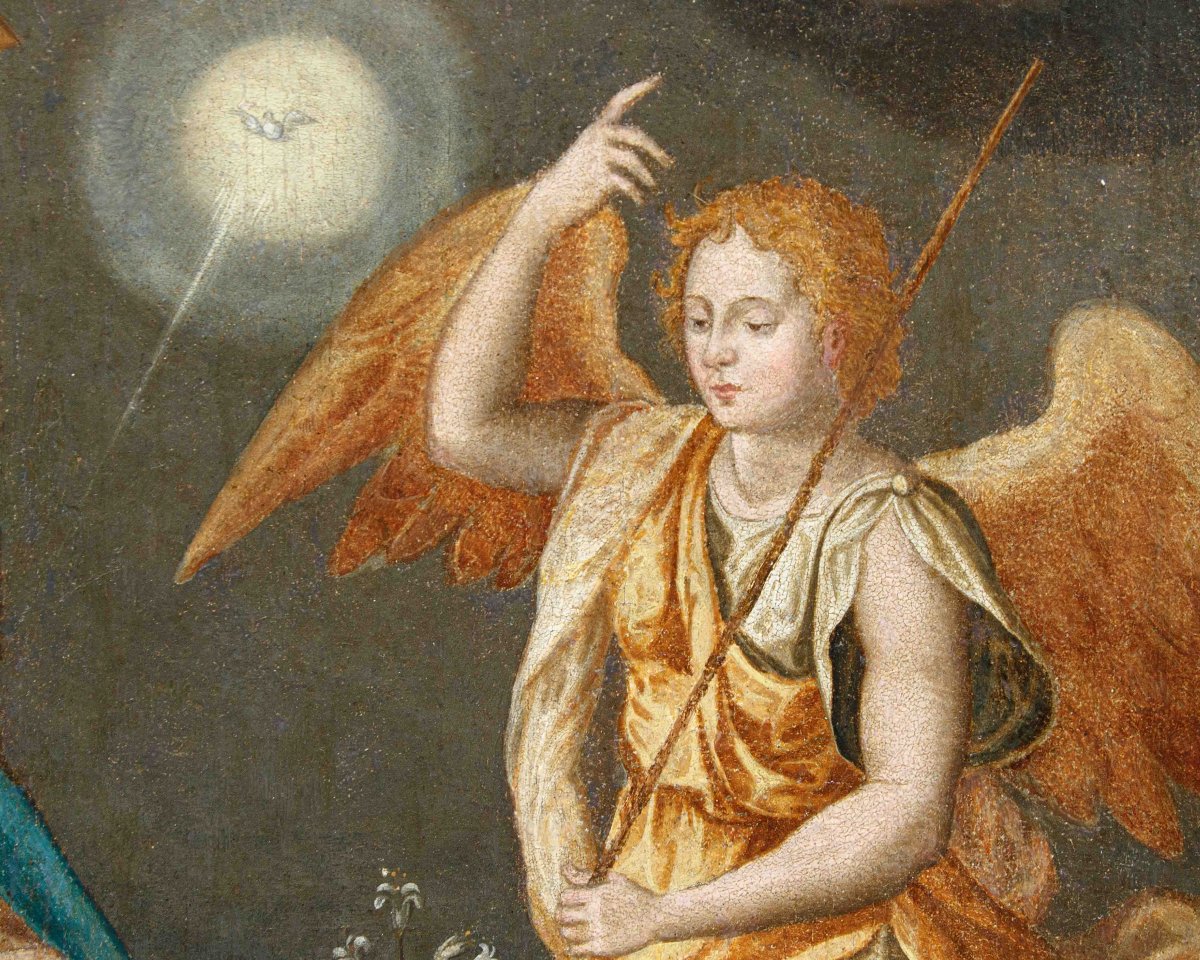
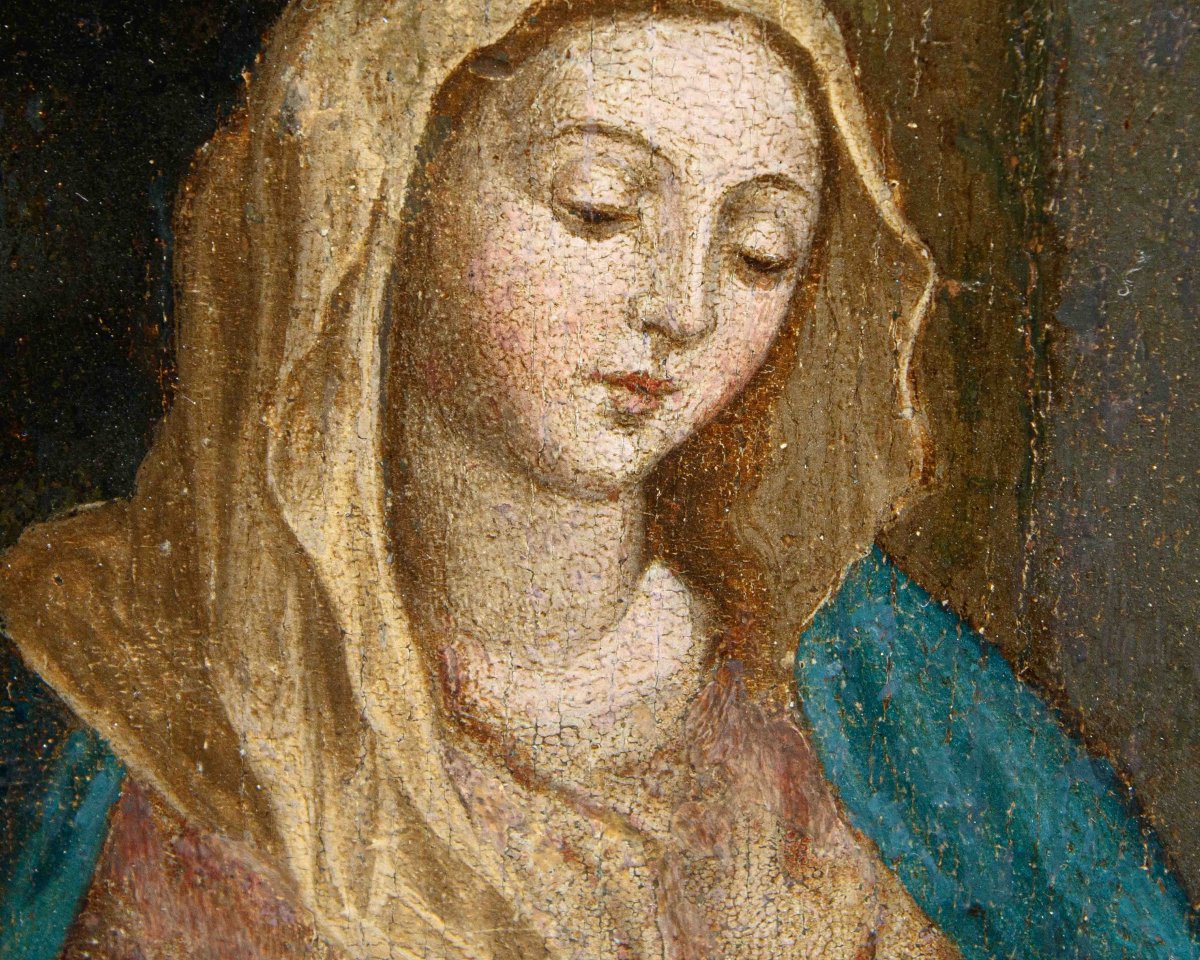
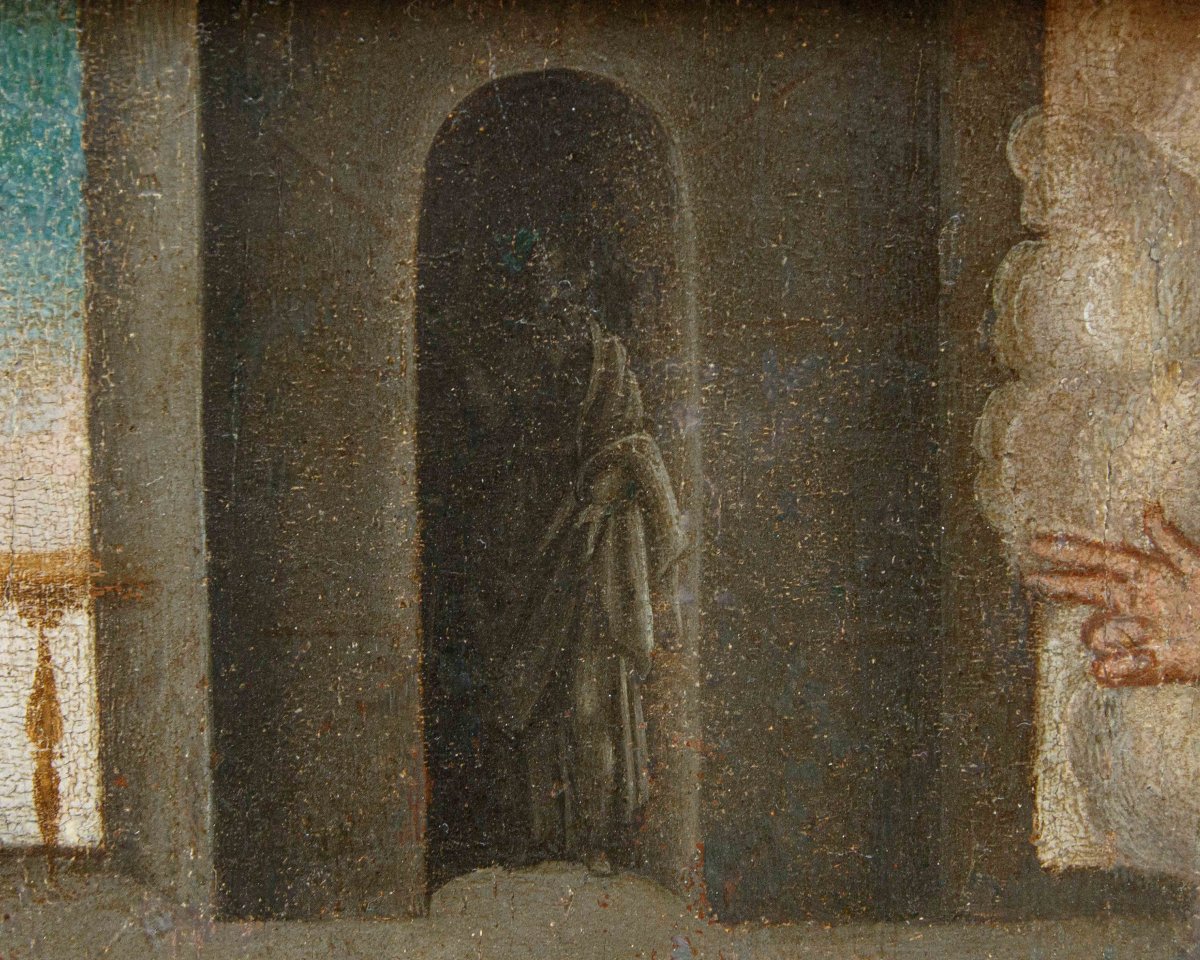
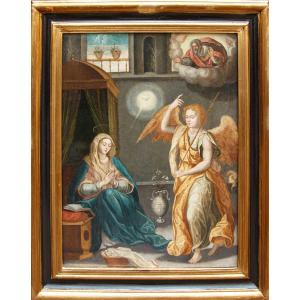
The panel in question depicting the sacred episode of the Annunciation, attributable to the Emilian context of the 16th century, clearly shows the influence of Mannerism, a movement that in the area, thanks to masters such as Correggio and Parmigianino, reached heights of sophisticated elegance. The work departs from the typically Renaissance classical balance in a search for artifice and emotional complexity. The figures of the Virgin Mary and the Archangel Gabriel are placed in an interior setting, probably Mary's room, but with a typically Mannerist spatial tension. Perspective is not rigidly central or natural, but serves to compose a scene rich in detail and charged with spirituality. The scene is constructed on a diagonal running from the top right (God the Father in the clouds) to the Virgin in the bottom left, balanced by the imposing, slender figure of the Archangel Gabriel on the right: this arrangement creates a sense of movement and drama, with the Angel appearing to have just "landed" and the Virgin reacting with a gesture of turmoil and acceptance. The Archangel displays a slightly twisted and elongated pose, a typical characteristic of Mannerism aimed at conferring grace and non-naturalistic sophistication. Its iridescent drapes –with abundant and almost "inflated" folds – in golden-orange hues, contribute to this aesthetic of artificial elegance and technical virtuosity.
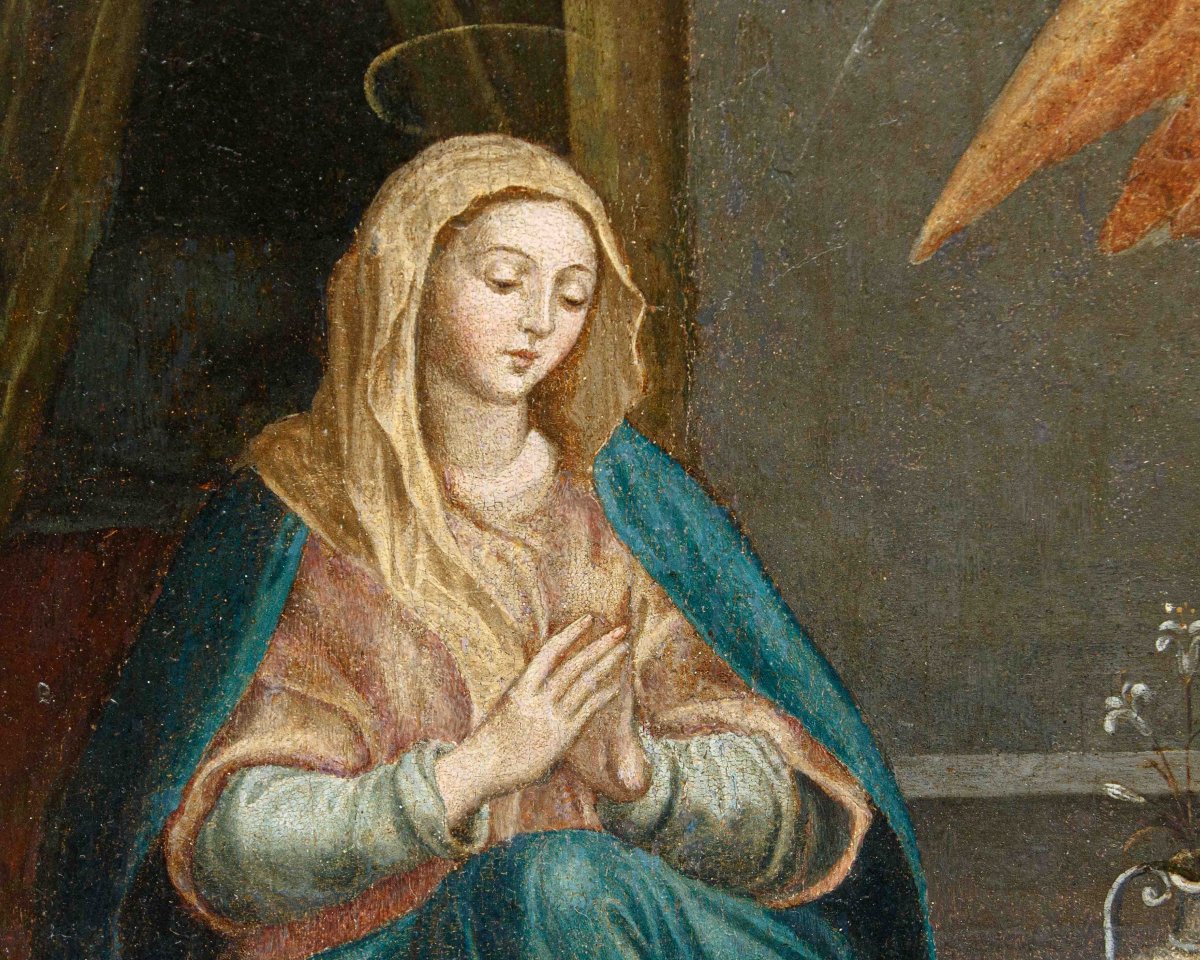
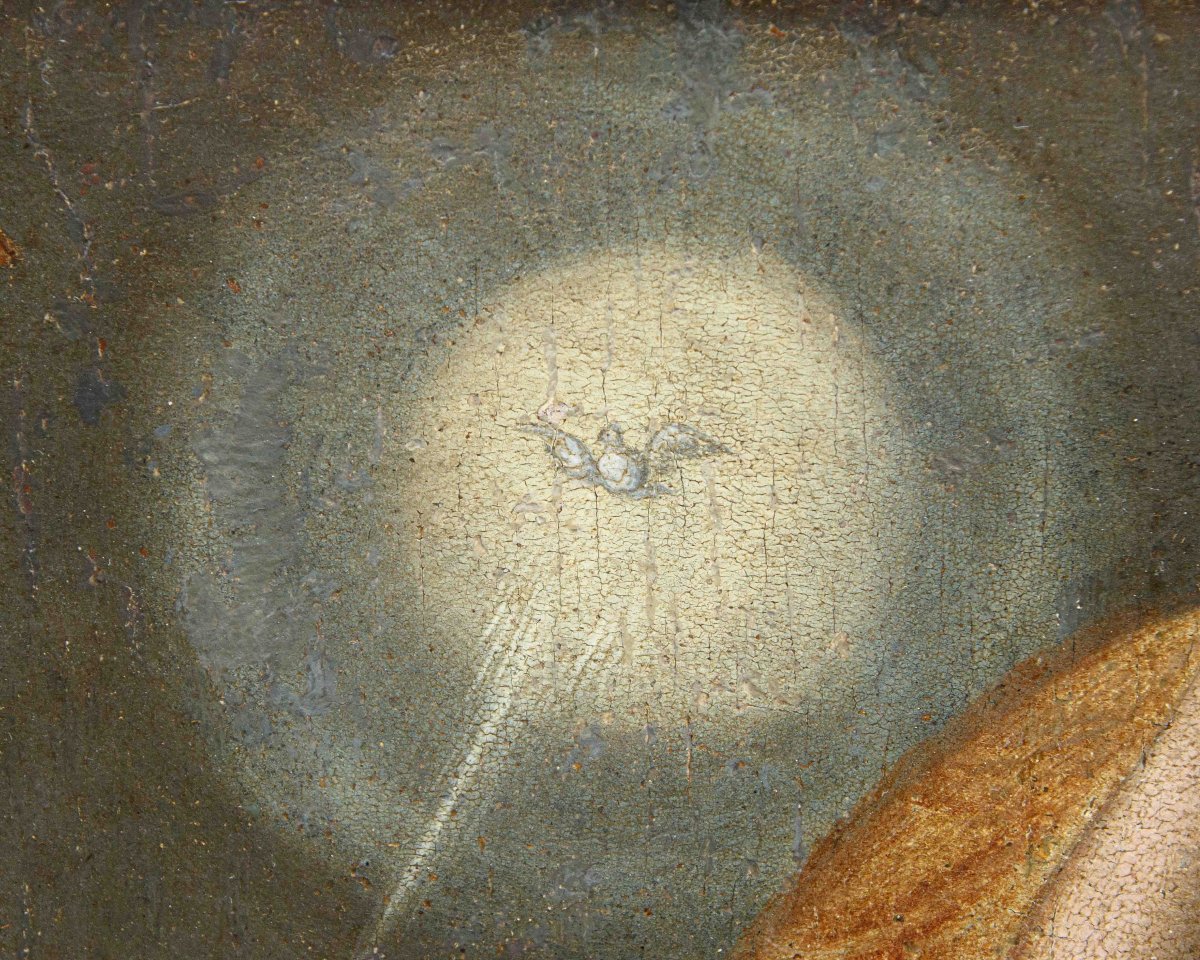
The lighting is not naturalistic but serves to enhance the drama and volumes, with a marked contrast that focuses on the main figures and the divine apparition. The colors are rich but handled with vagueness and contrasts unusual compared to classicism, as seen in the blue-green and ochre robes of the Virgin. The symbols are placed here centrally by the artist: above, the appearance of God the Father among the clouds with his blessing hand and the Dove of the Holy Spirit descending with a beam of light, represent the Trinity and the Incarnation. The Virgin would seem to have been caught during the reading of the Holy Scriptures, as can be seen from the open book on the lectern, recalling her role as "Seat of Wisdom". The presence of a vase with white flowers, probably lilies, a symbol of purity, in the foreground, and the domestic environment with the four-poster bed and window, anchor the mystical event in an everyday but idealized reality, typical of the iconography of the Annunciation.
Annunciation
Oil on panel, 56.5 x 43 cm
With frame, 72 x 56 cm
The panel in question depicting the sacred episode of the Annunciation, attributable to the Emilian context of the 16th century, clearly shows the influence of Mannerism, a movement that in the area, thanks to masters such as Correggio and Parmigianino, reached heights of sophisticated elegance. The work departs from the typically Renaissance classical balance in a search for artifice and emotional complexity. The figures of the Virgin Mary and the Archangel Gabriel are placed in an interior setting, probably Mary's room, but with a typically Mannerist spatial tension. Perspective is not rigidly central or natural, but serves to compose a scene rich in detail and charged with spirituality. The scene is constructed on a diagonal running from the top right (God the Father in the clouds) to the Virgin in the bottom left, balanced by the imposing, slender figure of the Archangel Gabriel on the right: this arrangement creates a sense of movement and drama, with the Angel appearing to have just "landed" and the Virgin reacting with a gesture of turmoil and acceptance. The Archangel displays a slightly twisted and elongated pose, a typical characteristic of Mannerism aimed at conferring grace and non-naturalistic sophistication. Its iridescent drapes –with abundant and almost "inflated" folds – in golden-orange hues, contribute to this aesthetic of artificial elegance and technical virtuosity.
The lighting is not naturalistic but serves to enhance the drama and volumes, with a marked contrast that focuses on the main figures and the divine apparition. The colors are rich but handled with vagueness and contrasts unusual compared to classicism, as seen in the blue-green and ochre robes of the Virgin. The symbols are placed here centrally by the artist: above, the appearance of God the Father among the clouds with his blessing hand and the Dove of the Holy Spirit descending with a beam of light, represent the Trinity and the Incarnation. The Virgin would seem to have been caught during the reading of the Holy Scriptures, as can be seen from the open book on the lectern, recalling her role as "Seat of Wisdom". The presence of a vase with white flowers, probably lilies, a symbol of purity, in the foreground, and the domestic environment with the four-poster bed and window, anchor the mystical event in an everyday but idealized reality, typical of the iconography of the Annunciation.
3 800 €
Period: 16th century
Style: Other Style
Condition: Good condition
Material: Oil painting on wood
Width: 43
Height: 56,5
Reference (ID): 1668450
Availability: In stock
Print