


18th Century, Emilian School, Virgin And Child
18th century, Emilian School
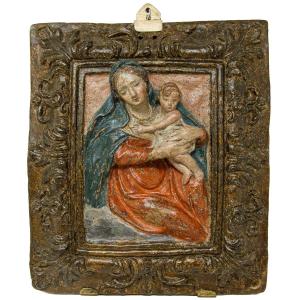
Virgin and Child
Polychrome terracotta, h cm 24
In an area like Emilia, devoid of stone quarries and bathed by the waters of the Po, the history of sculpture was born, out of necessity and genius, from clay. In a region where marble was a distant and inaccessible luxury, artists learned to work the land of rivers, transforming a humble material into extraordinary art. It was not a fallback, but a precise choice: terracotta became the ideal means of telling the faith in a direct and carnal way. Through clay, the Emilian masters managed to translate the great sacred themes into a language close to the people, giving rise to a "tactile" and profoundly human religiosity, capable of speaking to anyone's heart.
The path of Emilian sculpture reached its first, shocking peak in the fifteenth century with Niccolò dell'Arca. With him, humble clay abandoned all decorative functions to become the scene of pain: the famous Lamentation over the Dead Christ in Santa Maria della Vita in Bologna represents, in this sense, a point of no return for the expressive intensity of the material.
However, as the centuries passed, that dramatic violence was transforming: if the Renaissance had been the age of the cry, the eighteenth century became the age of affection and grace. The work under examination — the Virgin and Child — fits perfectly into this context, a wonderful example of how clay, in the hands of the Bolognese and Modena masters, could compete with the nobility of marble through the warmth of the material and the softness of the modelling.
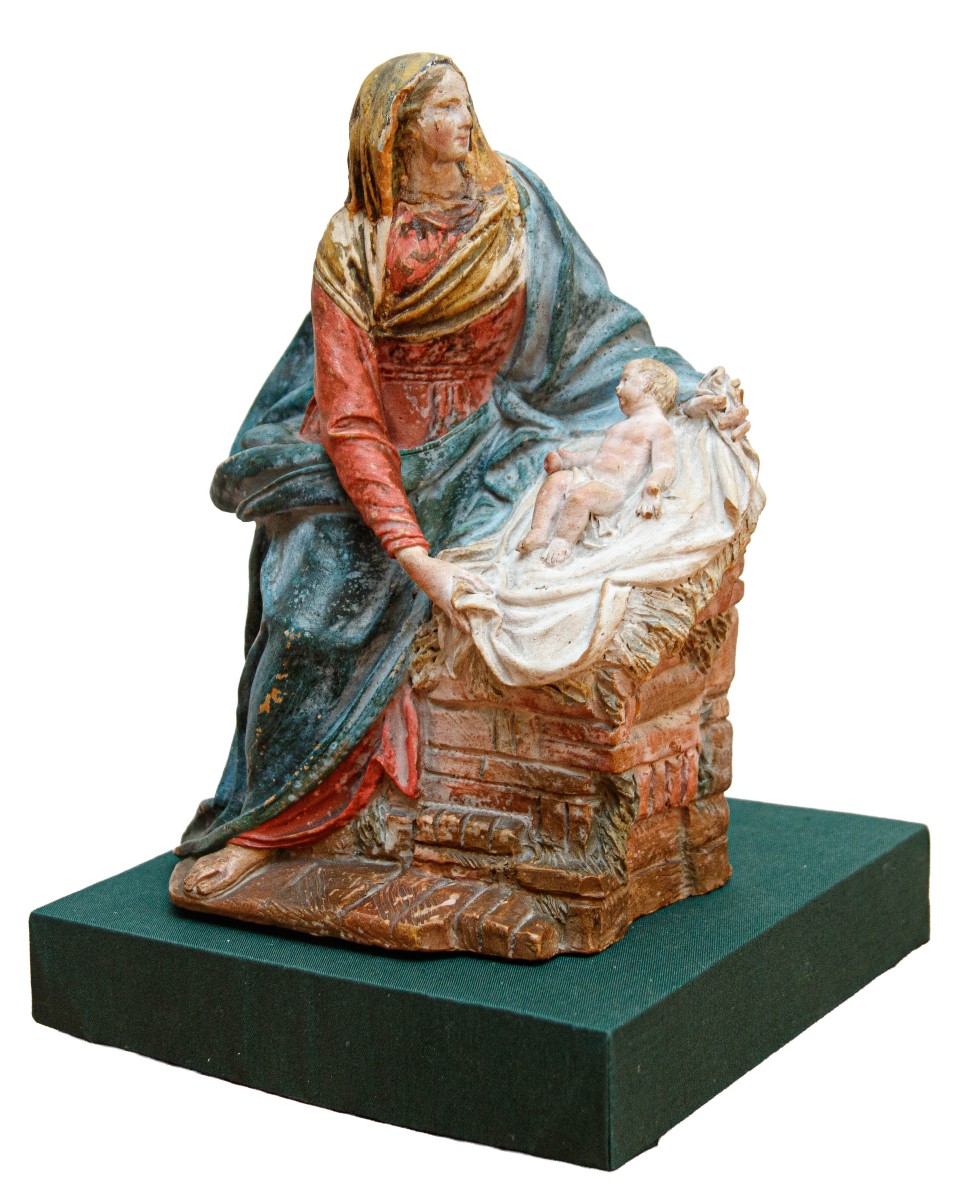
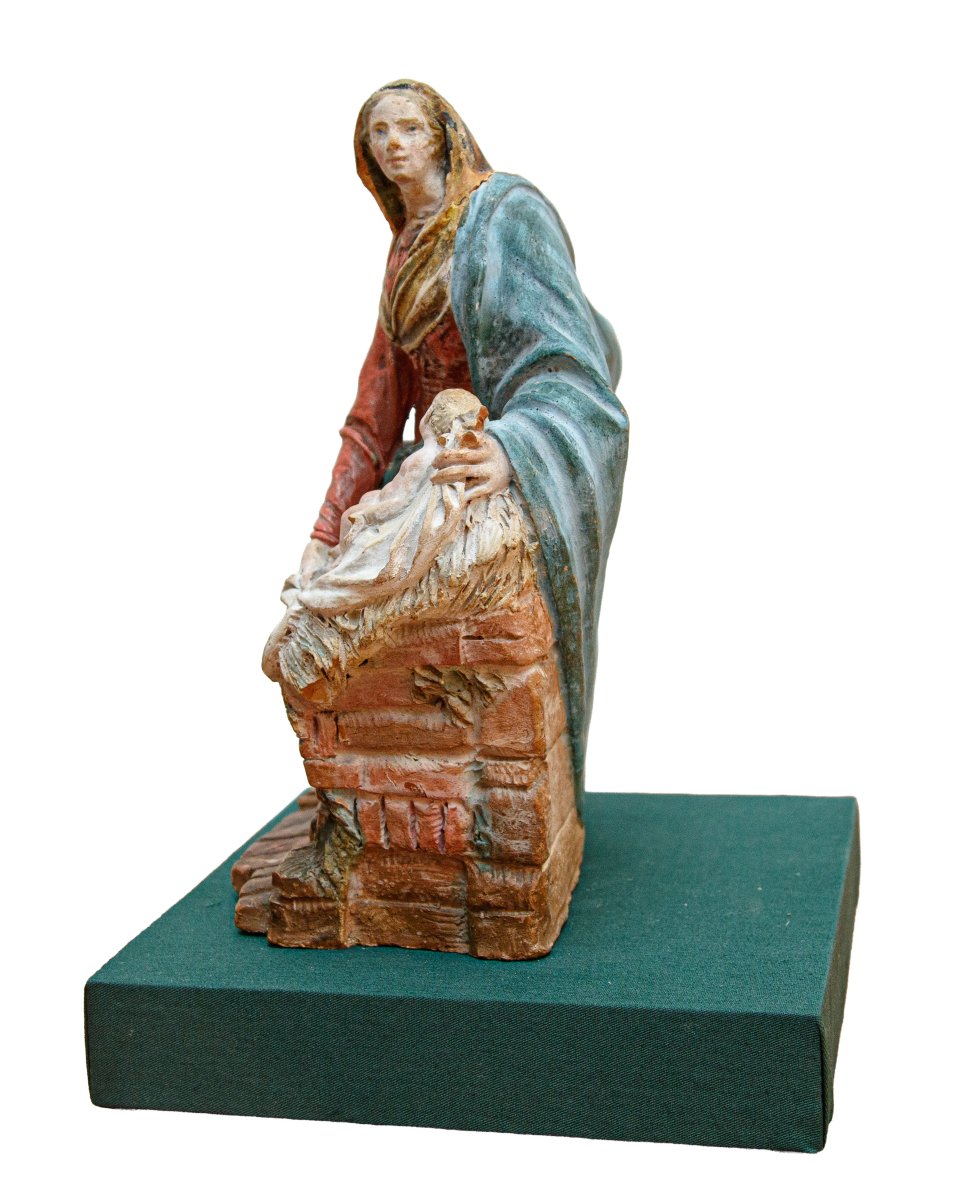
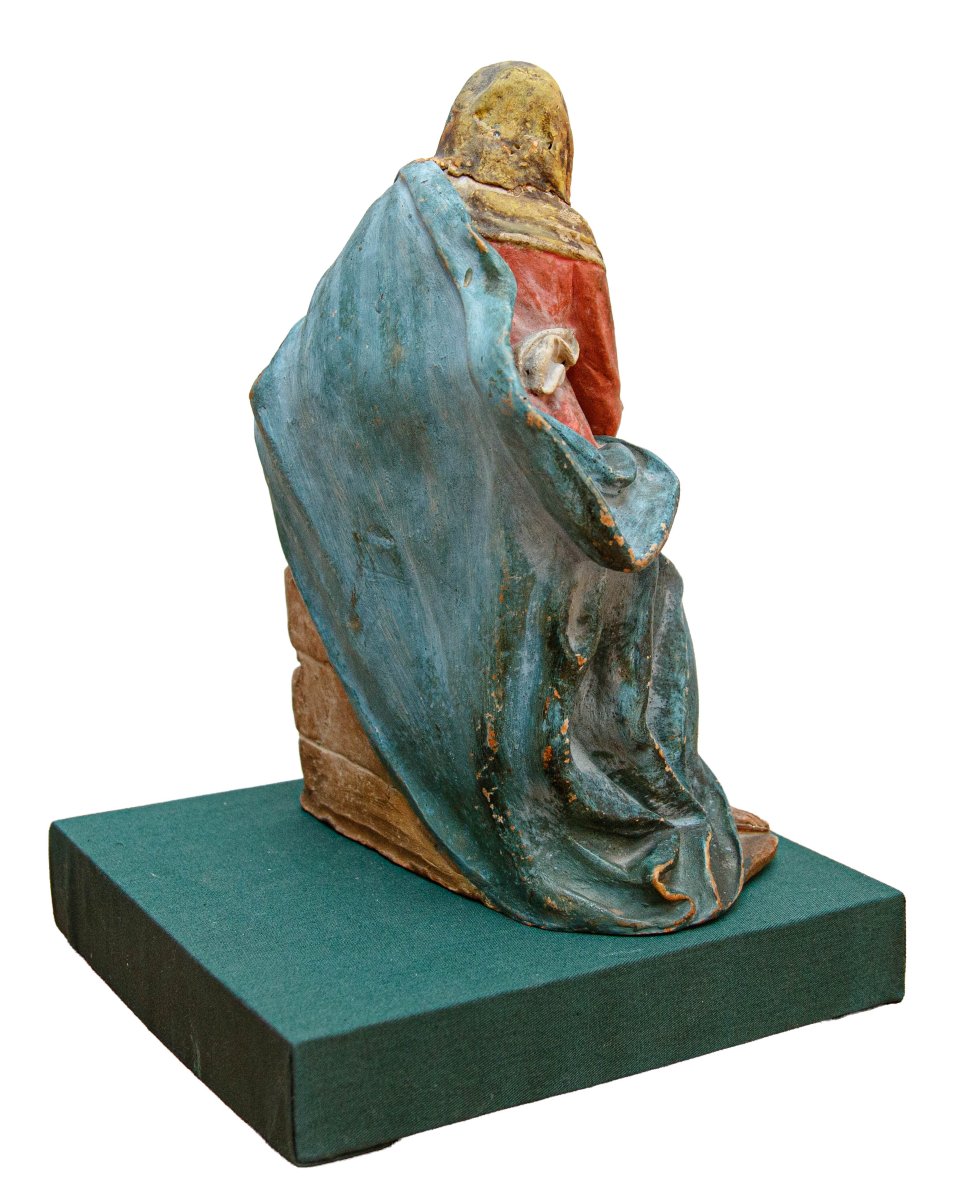
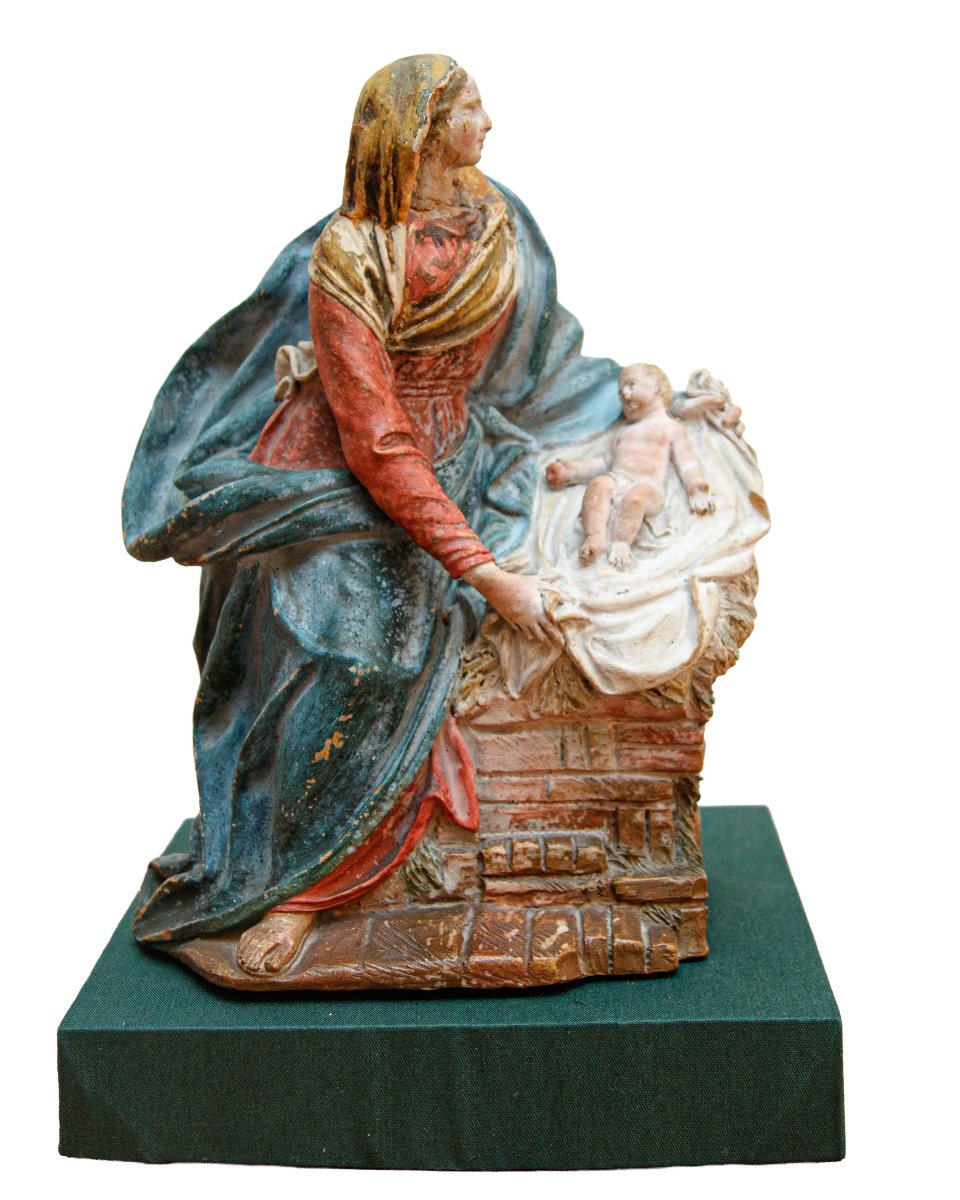
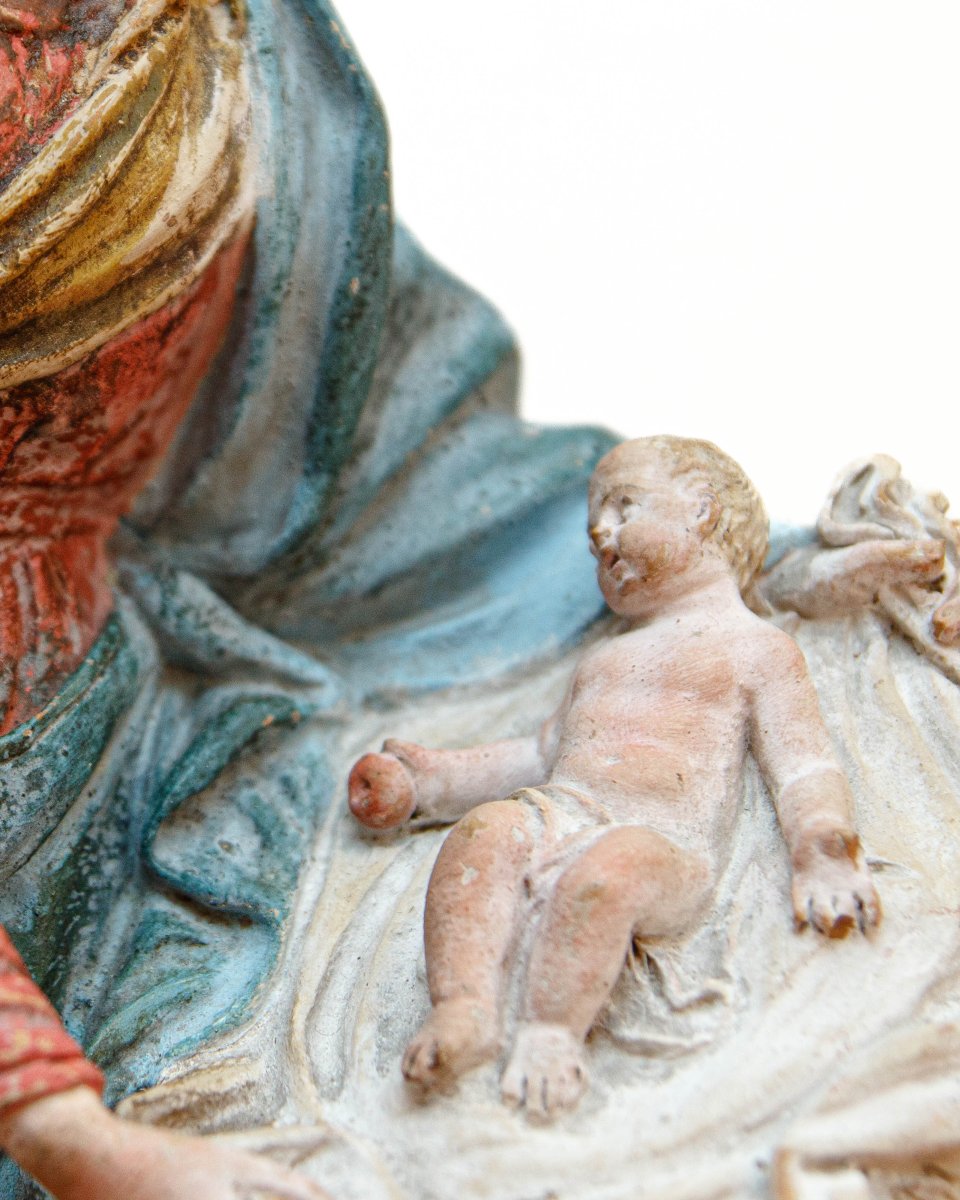
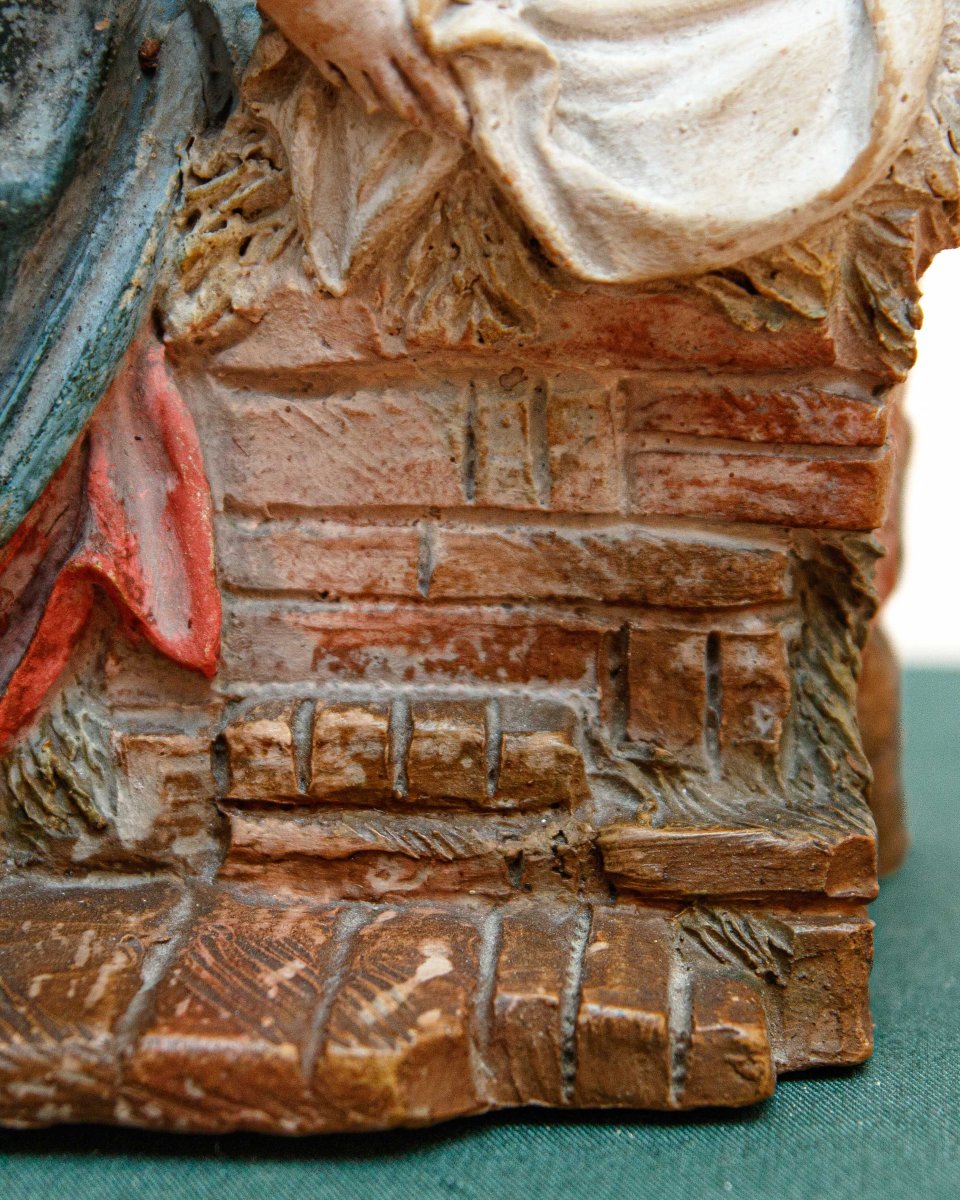
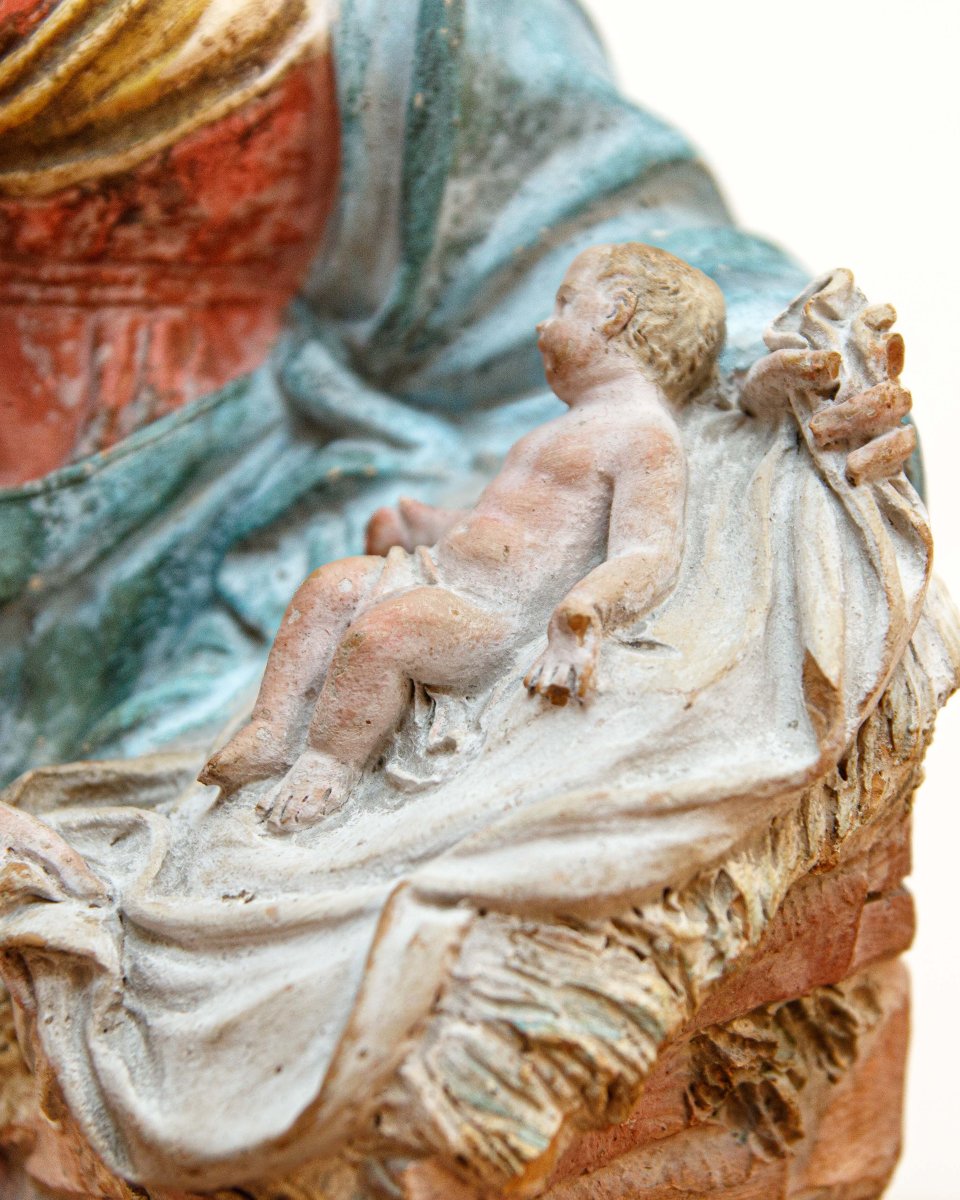
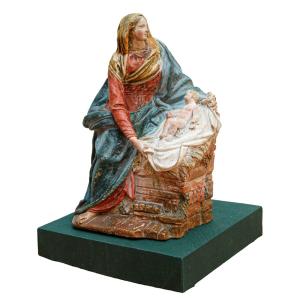
Structural analysis of the sculptural group reveals a pyramidal composition typical of the late Baroque, in which the figure of the Virgin dominates the space wrapped in flowing, almost theatrical drapery. The heavy folds of the blue cloak, contrasting with the vibrant red of the robe, act as vectors of movement that guide the eye towards the fulcrum of the scene: the Child. He appears lying on a ruined wall, an iconographic topos symbolizing the twilight of the pagan era and the birth of the New Covenant.
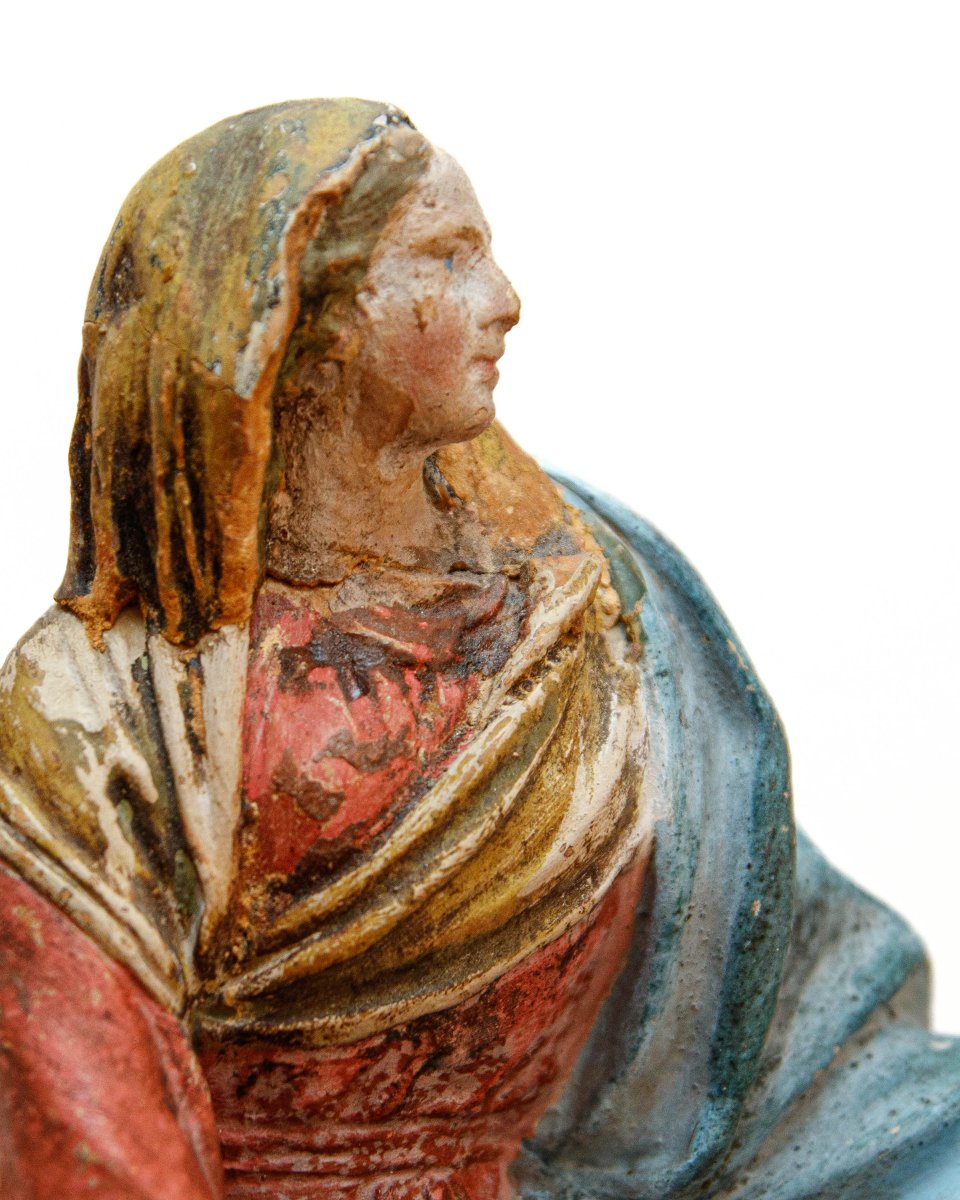
The cold polychromy technique, perfected in the 18th century, contributes to making the work even more vivid. Thanks to painting, the sculptures were able to simulate with extraordinary realism the softness of the flesh tones and the preciousness of the fabrics, making the experience of the sacred a close, tangible and profoundly everyday encounter.
Virgin and Child
Polychrome terracotta, h cm 24
In an area like Emilia, devoid of stone quarries and bathed by the waters of the Po, the history of sculpture was born, out of necessity and genius, from clay. In a region where marble was a distant and inaccessible luxury, artists learned to work the land of rivers, transforming a humble material into extraordinary art. It was not a fallback, but a precise choice: terracotta became the ideal means of telling the faith in a direct and carnal way. Through clay, the Emilian masters managed to translate the great sacred themes into a language close to the people, giving rise to a "tactile" and profoundly human religiosity, capable of speaking to anyone's heart.
The path of Emilian sculpture reached its first, shocking peak in the fifteenth century with Niccolò dell'Arca. With him, humble clay abandoned all decorative functions to become the scene of pain: the famous Lamentation over the Dead Christ in Santa Maria della Vita in Bologna represents, in this sense, a point of no return for the expressive intensity of the material.
However, as the centuries passed, that dramatic violence was transforming: if the Renaissance had been the age of the cry, the eighteenth century became the age of affection and grace. The work under examination — the Virgin and Child — fits perfectly into this context, a wonderful example of how clay, in the hands of the Bolognese and Modena masters, could compete with the nobility of marble through the warmth of the material and the softness of the modelling.
Structural analysis of the sculptural group reveals a pyramidal composition typical of the late Baroque, in which the figure of the Virgin dominates the space wrapped in flowing, almost theatrical drapery. The heavy folds of the blue cloak, contrasting with the vibrant red of the robe, act as vectors of movement that guide the eye towards the fulcrum of the scene: the Child. He appears lying on a ruined wall, an iconographic topos symbolizing the twilight of the pagan era and the birth of the New Covenant.
The cold polychromy technique, perfected in the 18th century, contributes to making the work even more vivid. Thanks to painting, the sculptures were able to simulate with extraordinary realism the softness of the flesh tones and the preciousness of the fabrics, making the experience of the sacred a close, tangible and profoundly everyday encounter.
2 800 €
Period: 18th century
Style: Other Style
Condition: Good condition
Material: Terracotta
Height: 24
Reference (ID): 1726376
Availability: In stock
Print