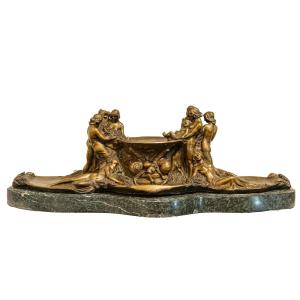


Domenico Mastroianni (arpino (fr), 1876 – Rome, 1962), Baptism
Domenico Mastroianni (Arpino (FR), 1876 – Rome, 1962)
Baptism
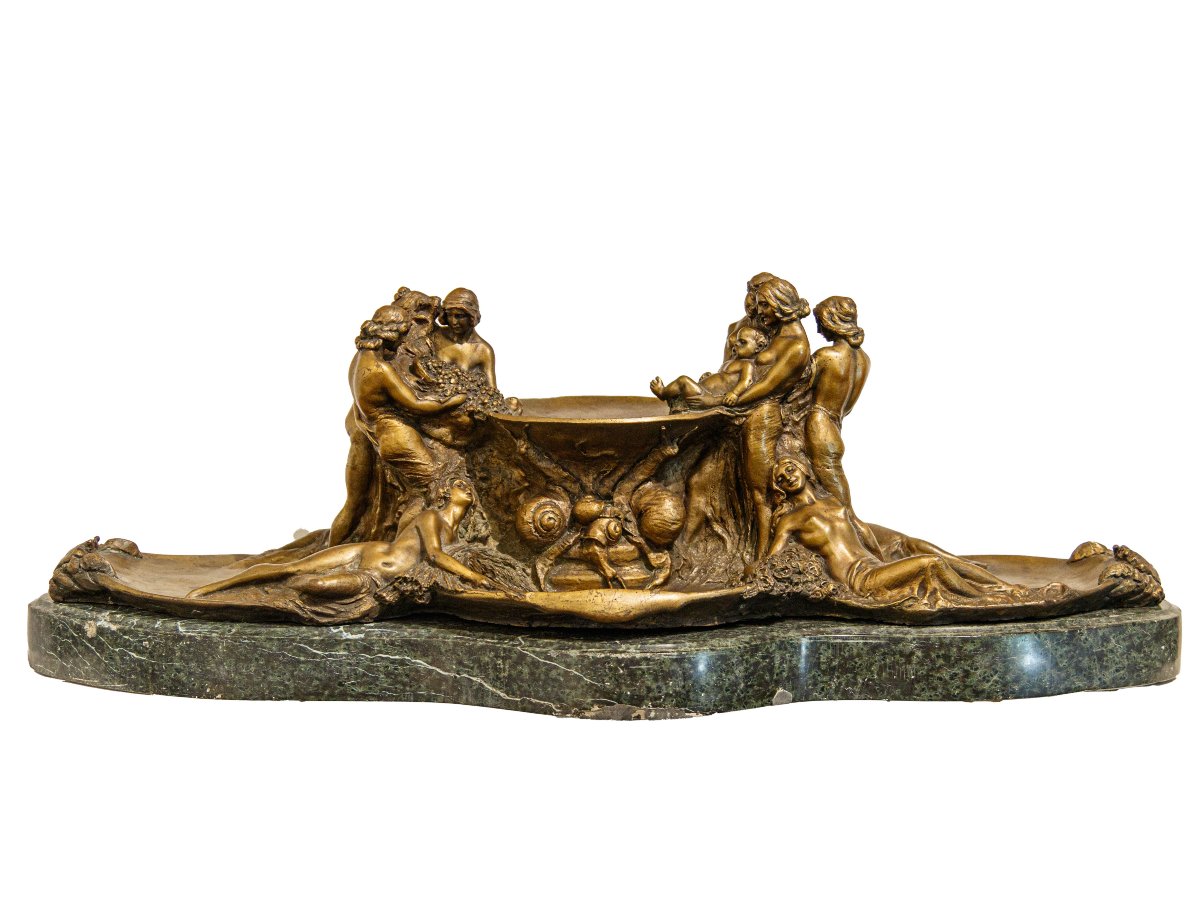
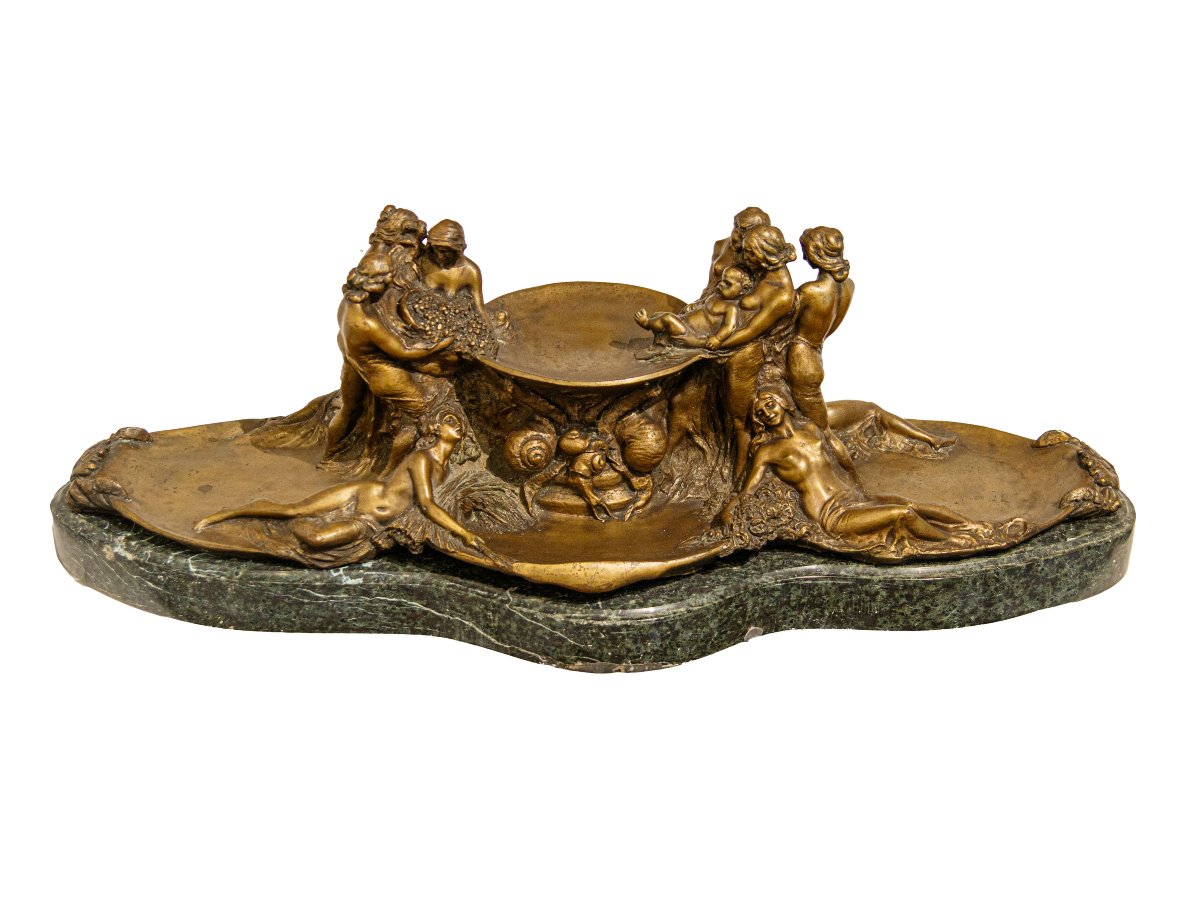
Bronze with a golden patina, 23 x 78 x 30 cm
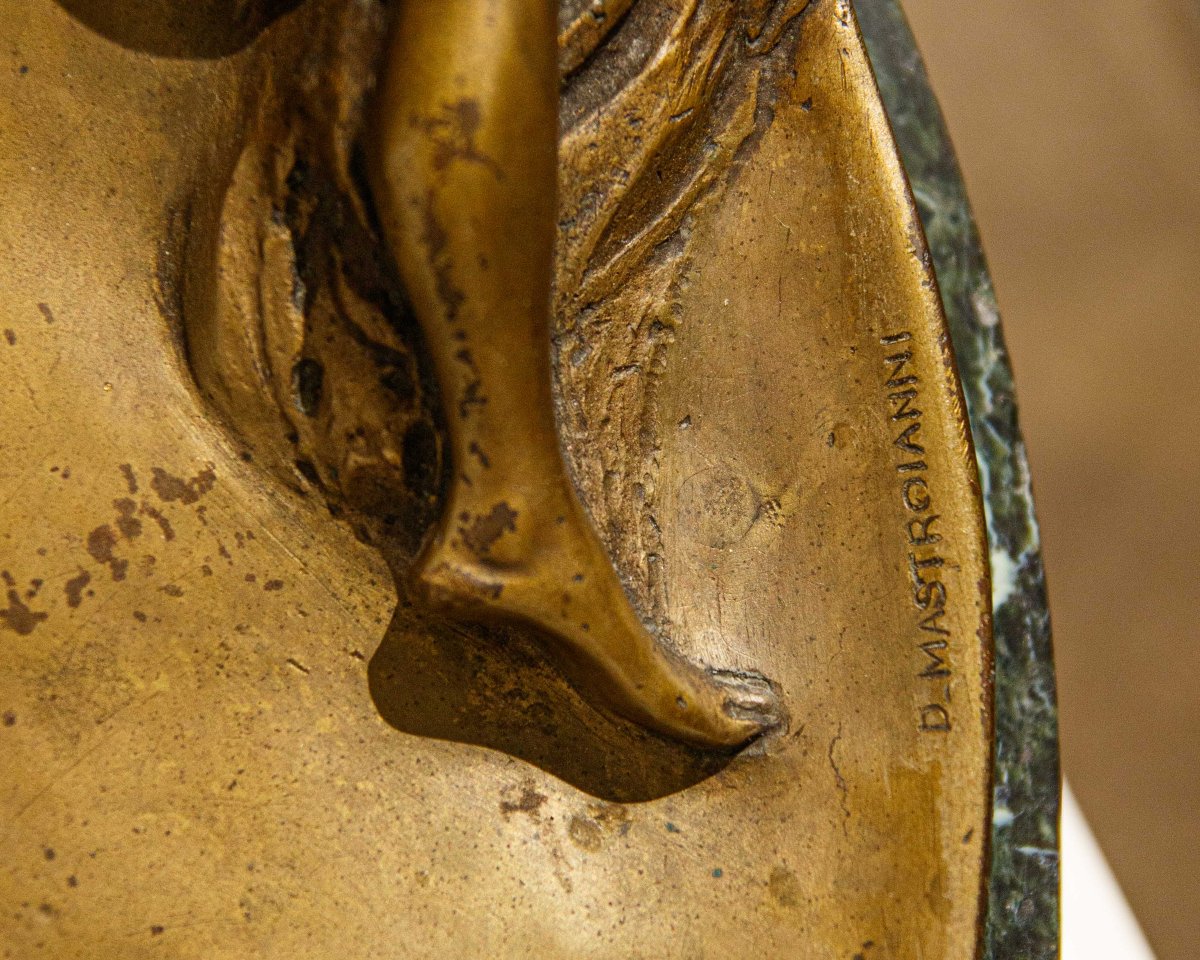
Signed on the base D. MASTROIANNI
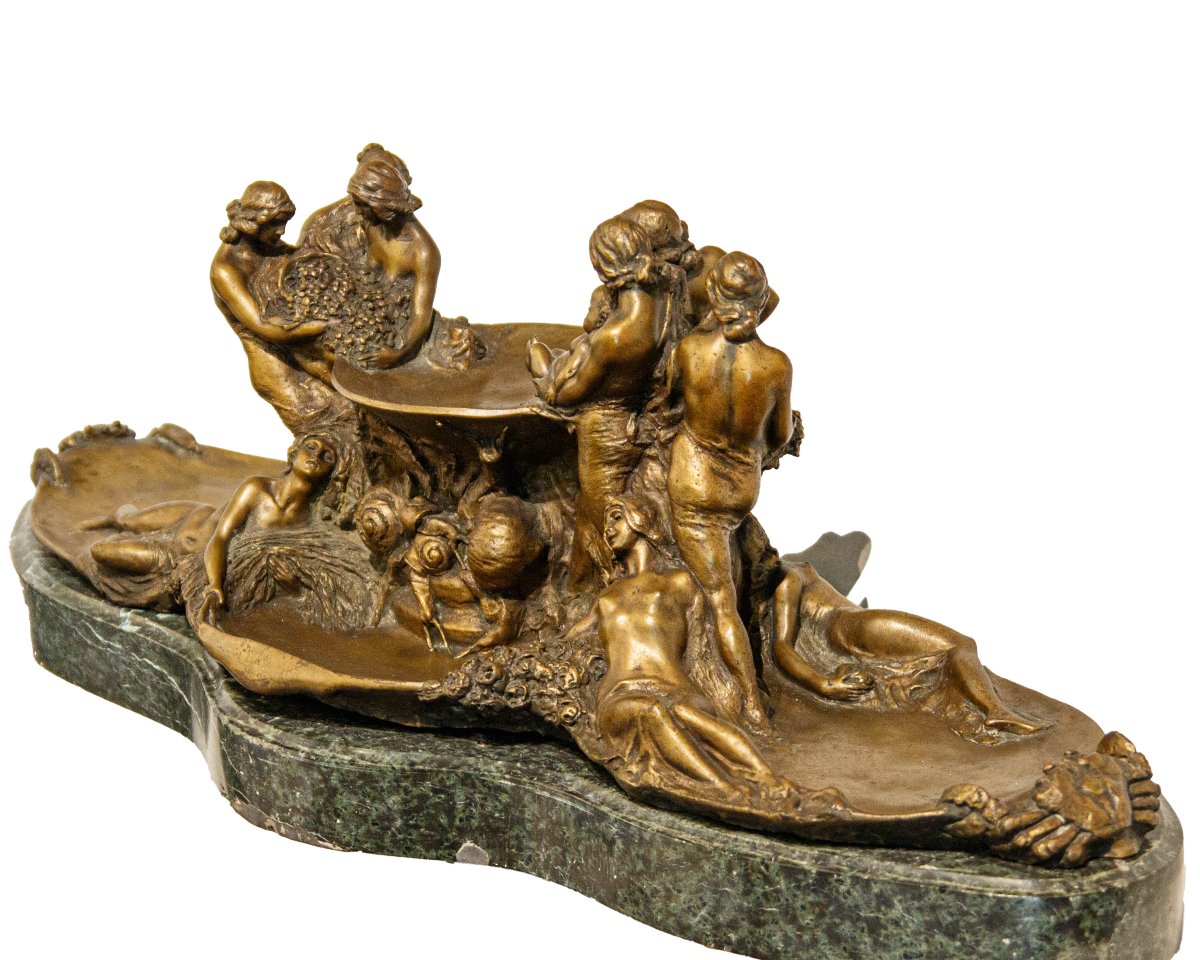
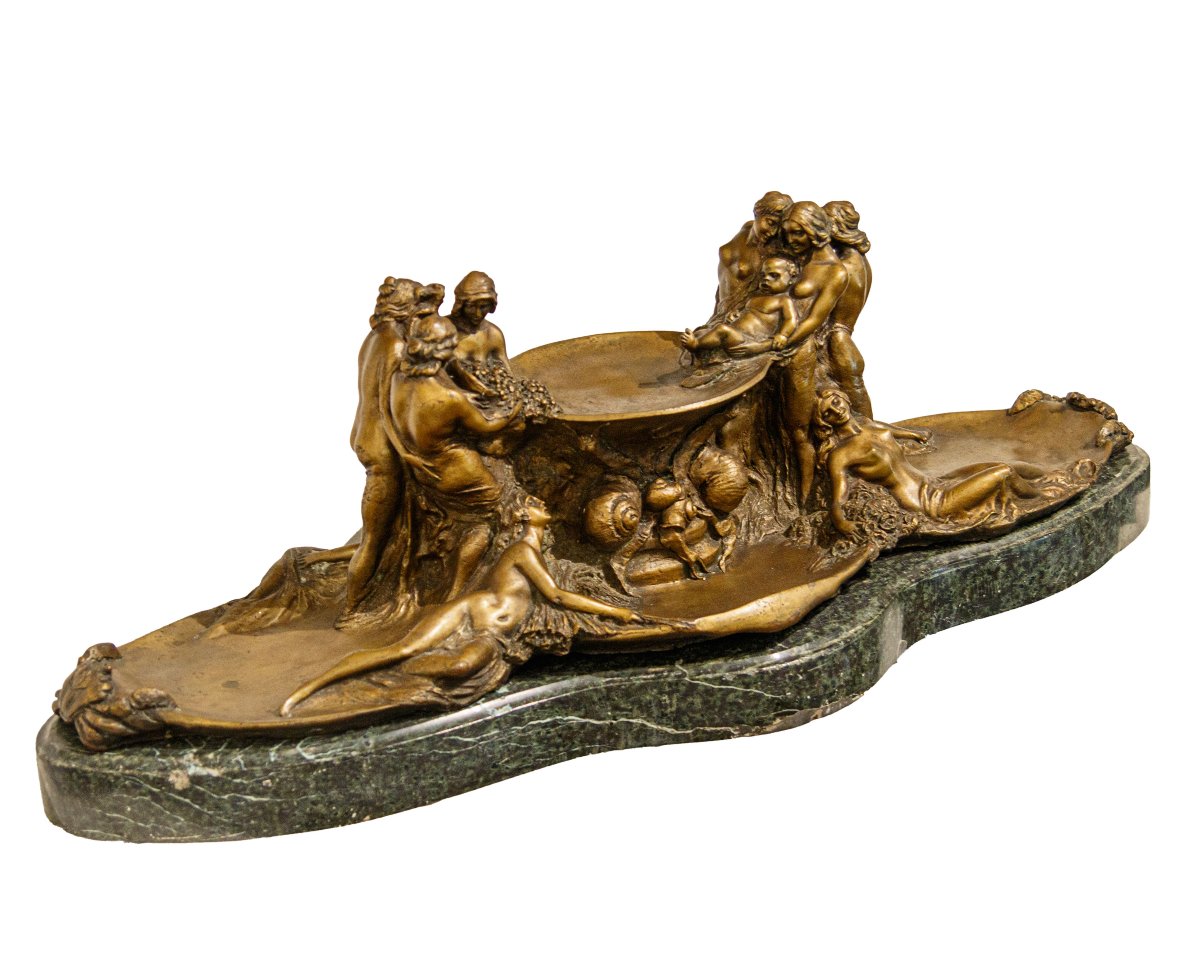
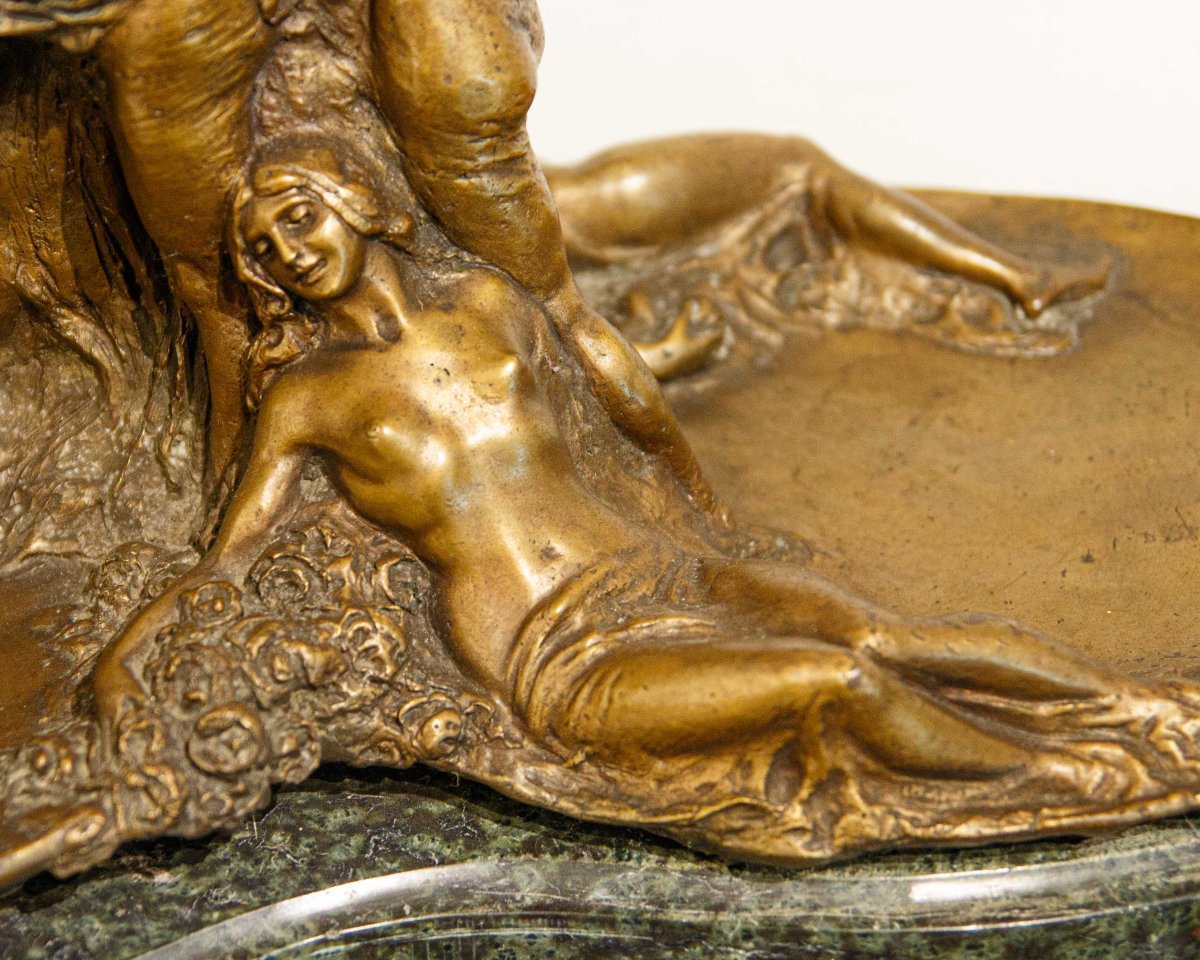
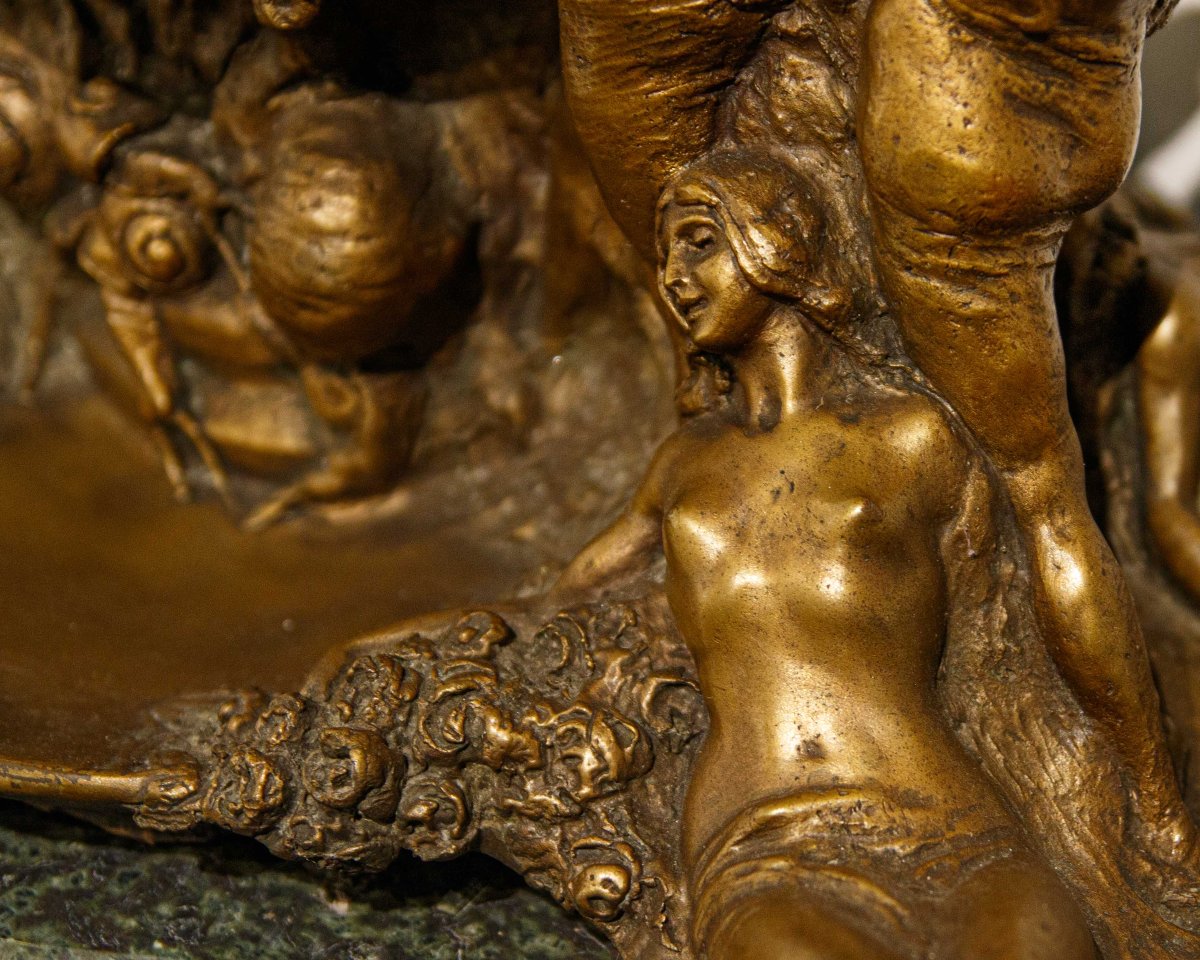
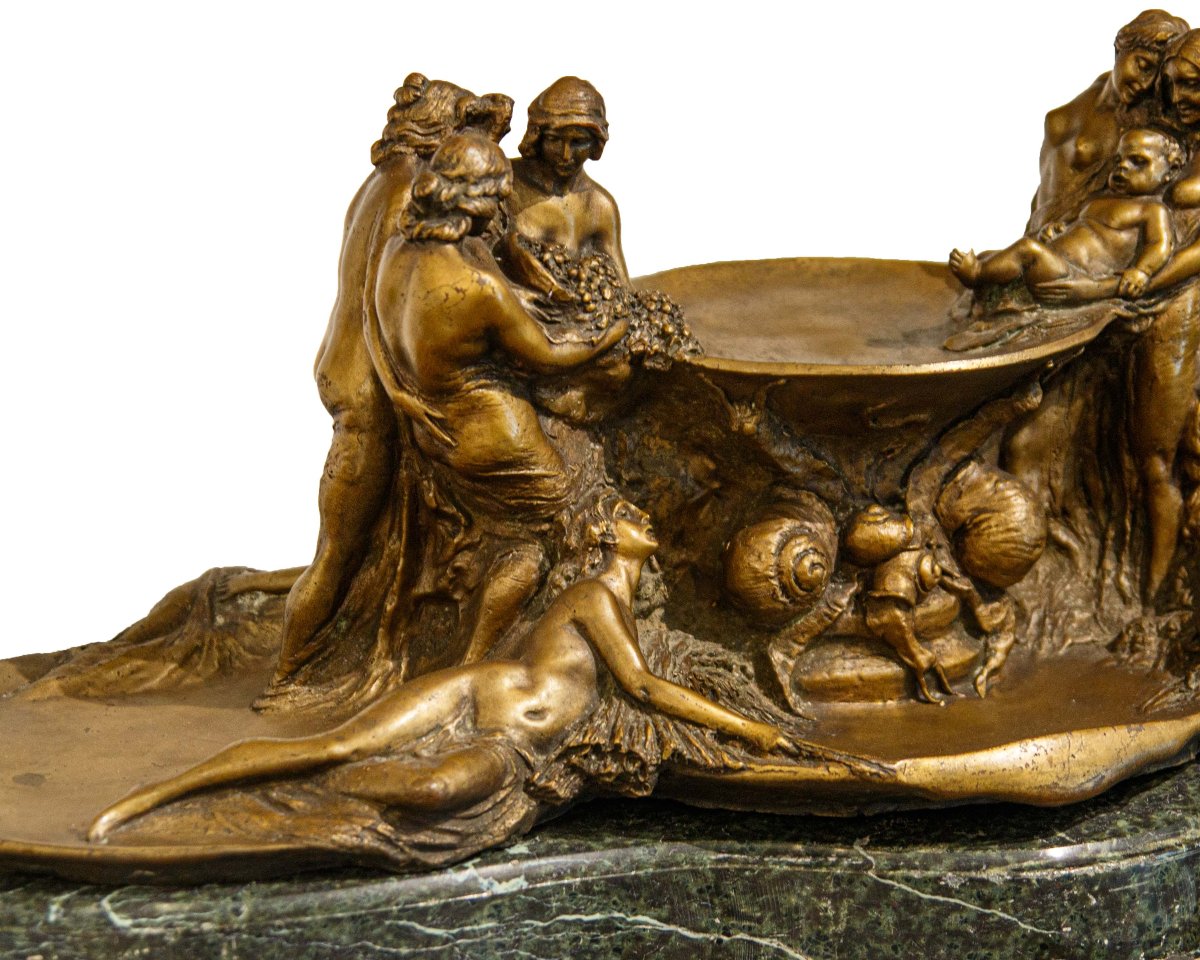
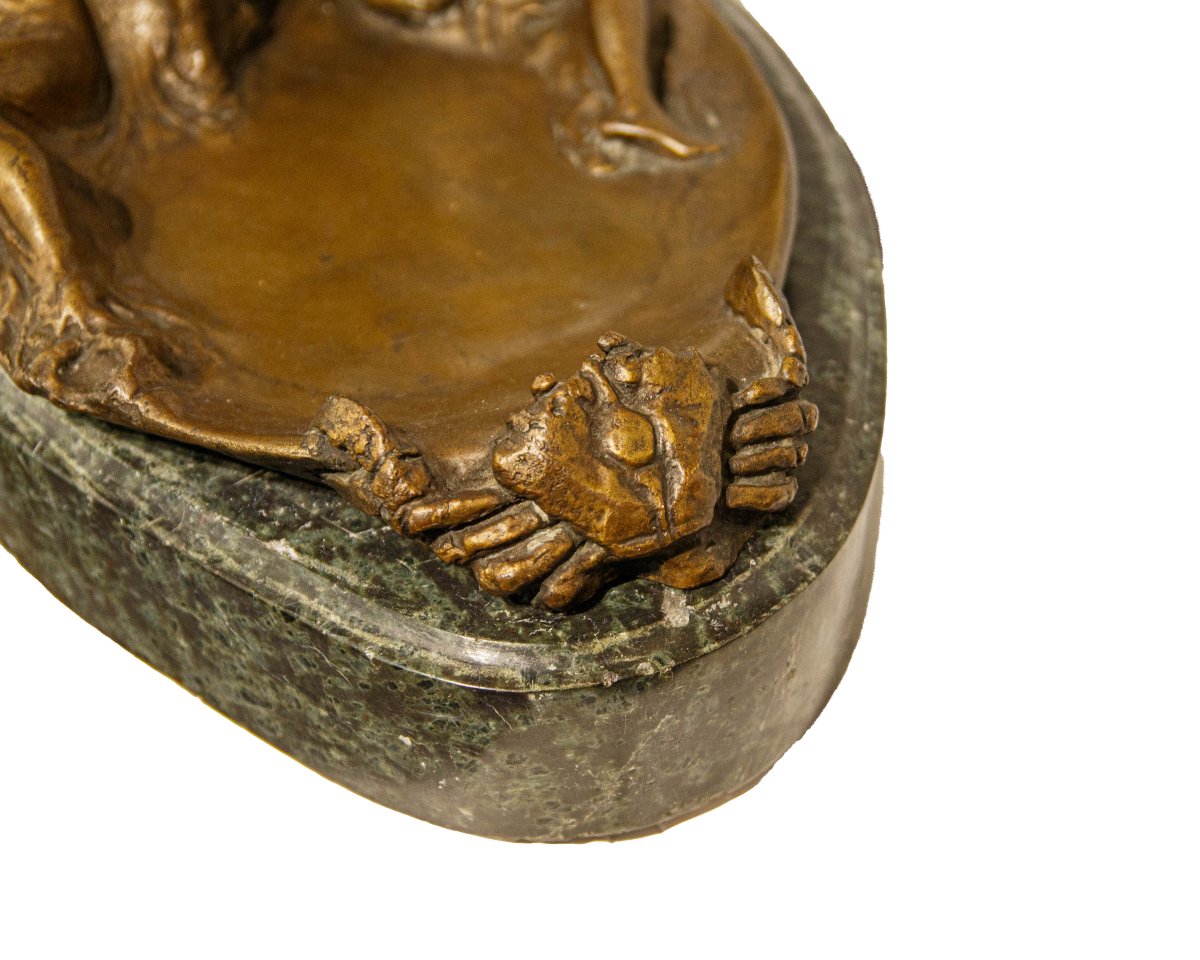
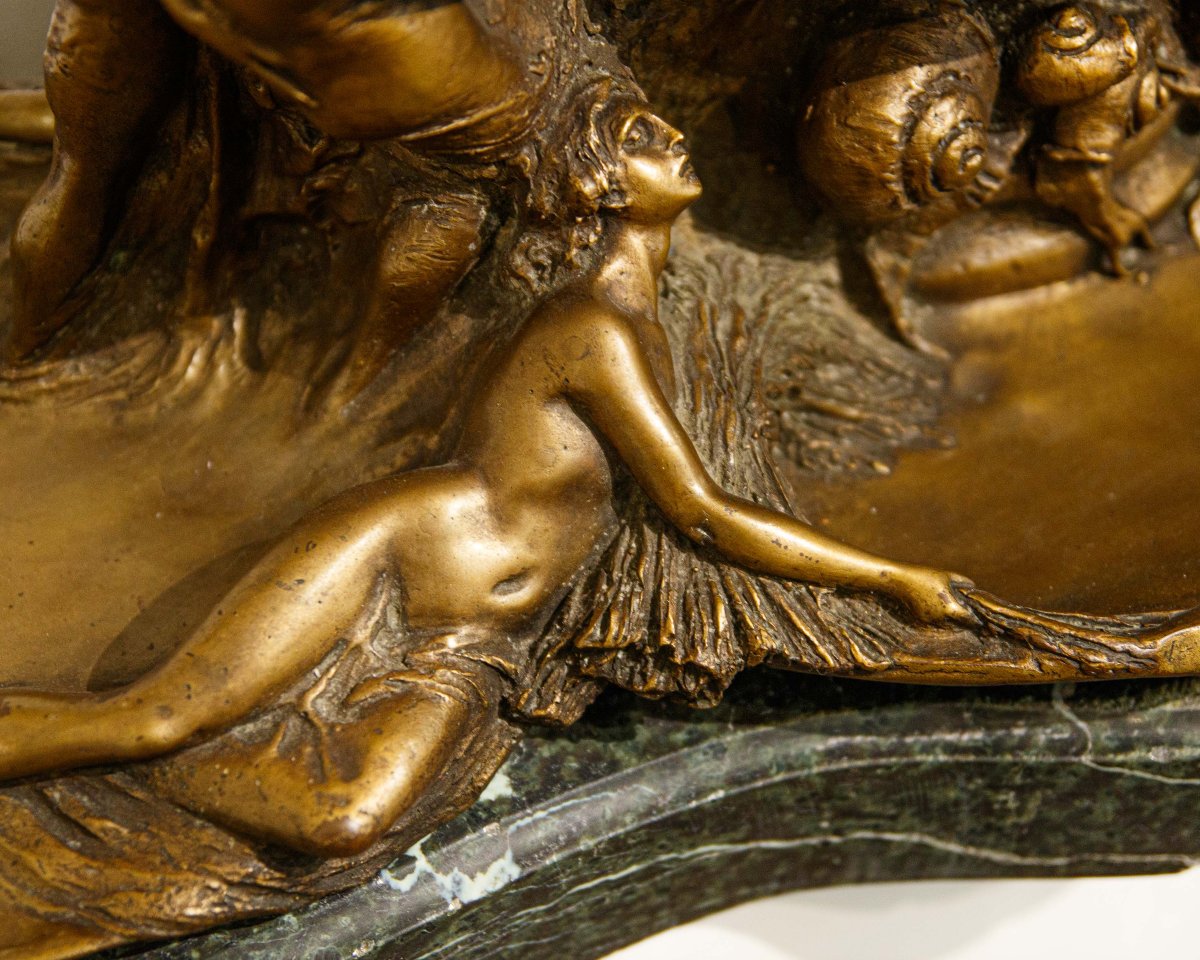
A masterpiece of bronze casting and chiseling, Domenico Mastroianni’s Baptism is a composition of extraordinary figurative richness. The work, crafted in bronze with a gilded patina on an oval base of mottled green marble, unfolds horizontally, revealing a world of mythological and symbolic figures that evoke both classical tradition and the sinuous style of Art Nouveau. At the center of the composition is a shell-shaped basin, supported by a rocky structure from which naturalistic elements—snails and crabs—emerge on either side of the base. Six female figures are arranged around this focal point: three hold an infant in their arms, evoking the themes of motherhood and the baptismal rite, while the other three hold baskets filled with flowers. Other figures lie along the base in languid, relaxed poses reminiscent of the nymphs and naiads of the Hellenistic tradition.
Domenico Mastroianni was born in Arpino in 1876 to Pietro, a craftsman, and Angela Redivivo. From a young age, he showed exceptional talent as a draftsman, honing his early manual skills in his father’s workshop, where he learned to work with wood. Later, he turned to terracotta and ceramics by frequenting the workshops active in Arpino since the early 19th century. His life took a new direction in 1894, when the collector Carlo Quadrini, a member of one of the city’s wealthiest families, welcomed him into his Roman residence on Via del Babuino and opened the doors to a cultural horizon that had been inaccessible to him until then. Self-taught by both training and vocation, Mastroianni embarked in the following decades on a long European journey that took him to Vienna, Budapest, Berlin, London, and Brussels, with decisive stops in Paris. In the French capital, he was captivated by the Impressionists—Renoir, Pissarro, Degas, Manet—and fell under the pervasive spell of Art Nouveau and, to some extent, the influence of Auguste Rodin. It was, however, Honoré Daumier who suggested something deeper to him: the romantic idea of a beauty to be sought not in an abstract ideal but in the living fabric of modern society. In Vienna, he was drawn to Gustav Klimt and Alfons Mucha for the sinuous grace and sensuality with which they depicted the female figure. These influences settled into his artistic language, transforming into a highly personal style in which classicism, symbolism, and decorativism merge. Battesimo fits coherently into the trajectory of an artist who was able to explore the great themes of life—birth, motherhood, gift, purification—through the lens of a visual sensibility nourished by diverse cultures. A significant point of comparison is offered by the War Memorial in Arpino, in which Mastroianni translates collective mourning into solemn and moving forms, demonstrating his ability to master both the celebratory and the intimate registers with equal authority. A further layer of interpretation is offered by the forty-two postcards with illustrations drawn from the Divine Comedy—eighteen for Hell, fourteen for Purgatory, ten for Paradise—published by A. Traldi of Milan and now preserved at the Umberto Mastroianni Foundation in Arpino, which houses a substantial collection of the artist’s photoscultures. These works on paper, born from the encounter between Dante’s vision and Mastroianni’s mark, reveal the same ability to construct spaces inhabited by bodies in emotional tension found in The Baptism, confirming the profound coherence of a poetics that spans different genres and materials while remaining true to itself.
Period: 19th century
Style: Other Style
Condition: Good condition
Material: Bronze
Width: 78
Height: 23
Depth: 30
Reference (ID): 1777132
Availability: In stock