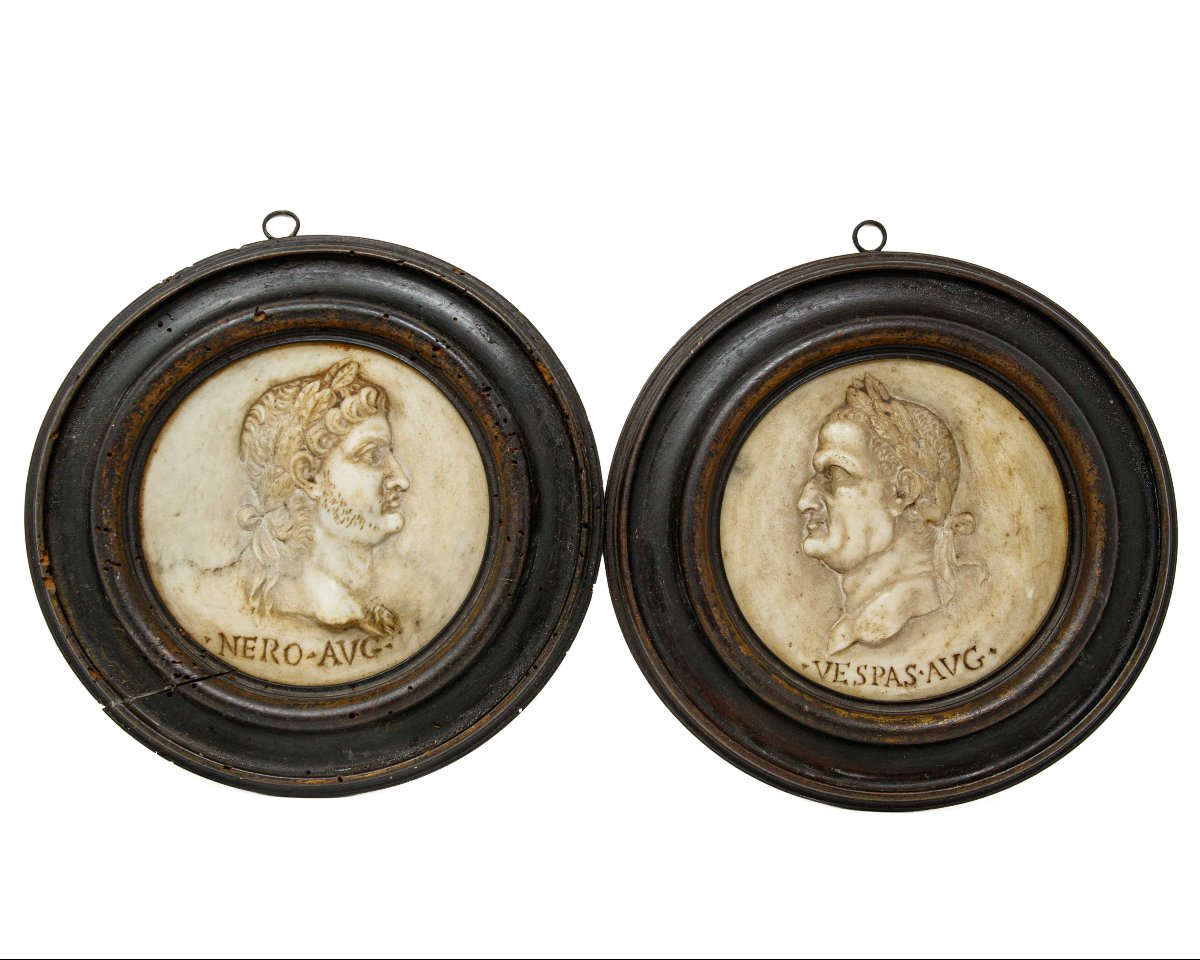


Rome, 16th Century, Pair Of Medallions Depicting Nero And Vespasian
Rome, 16th century
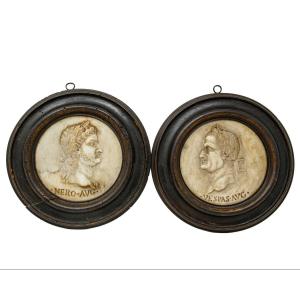
Pair of medallions depicting Nero and Vespasian
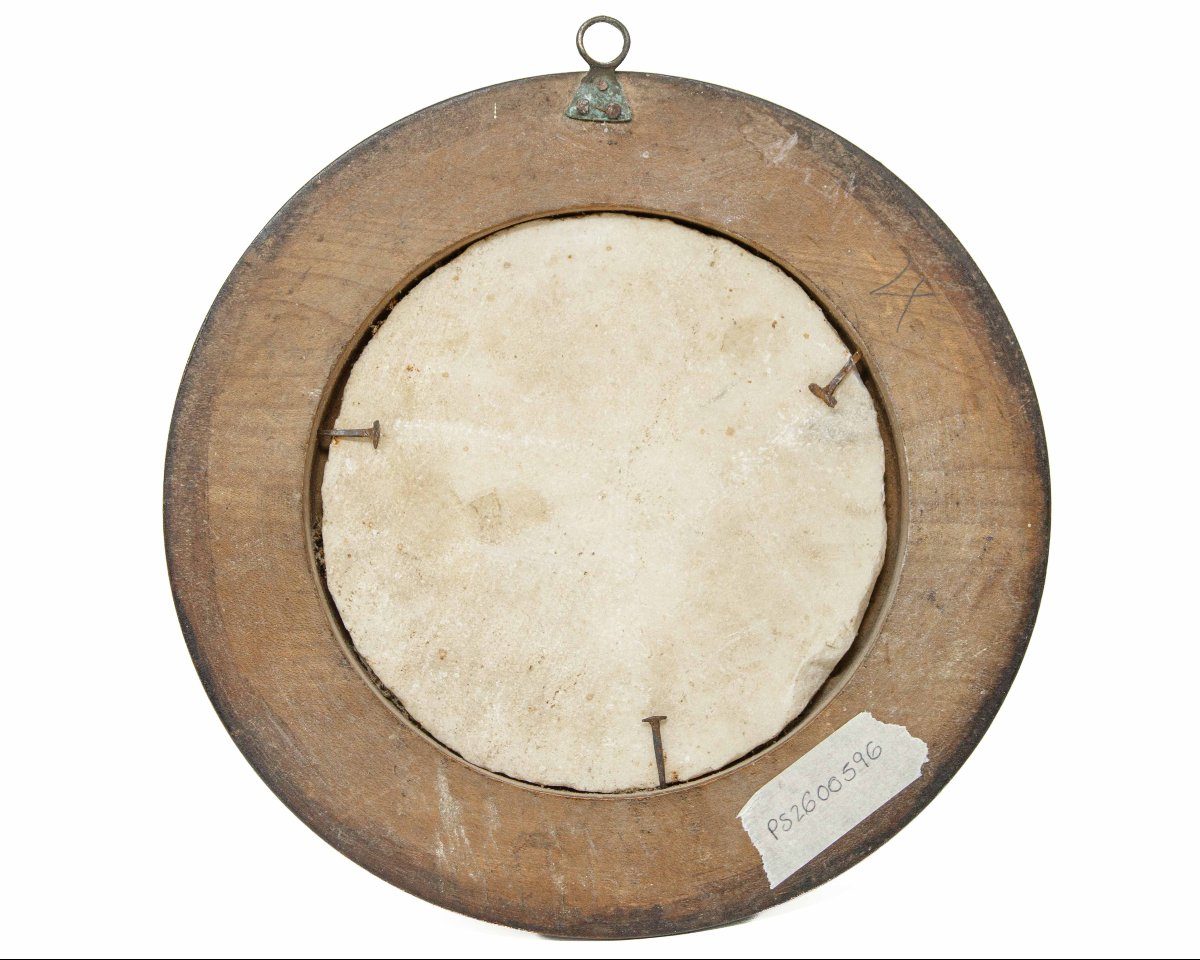
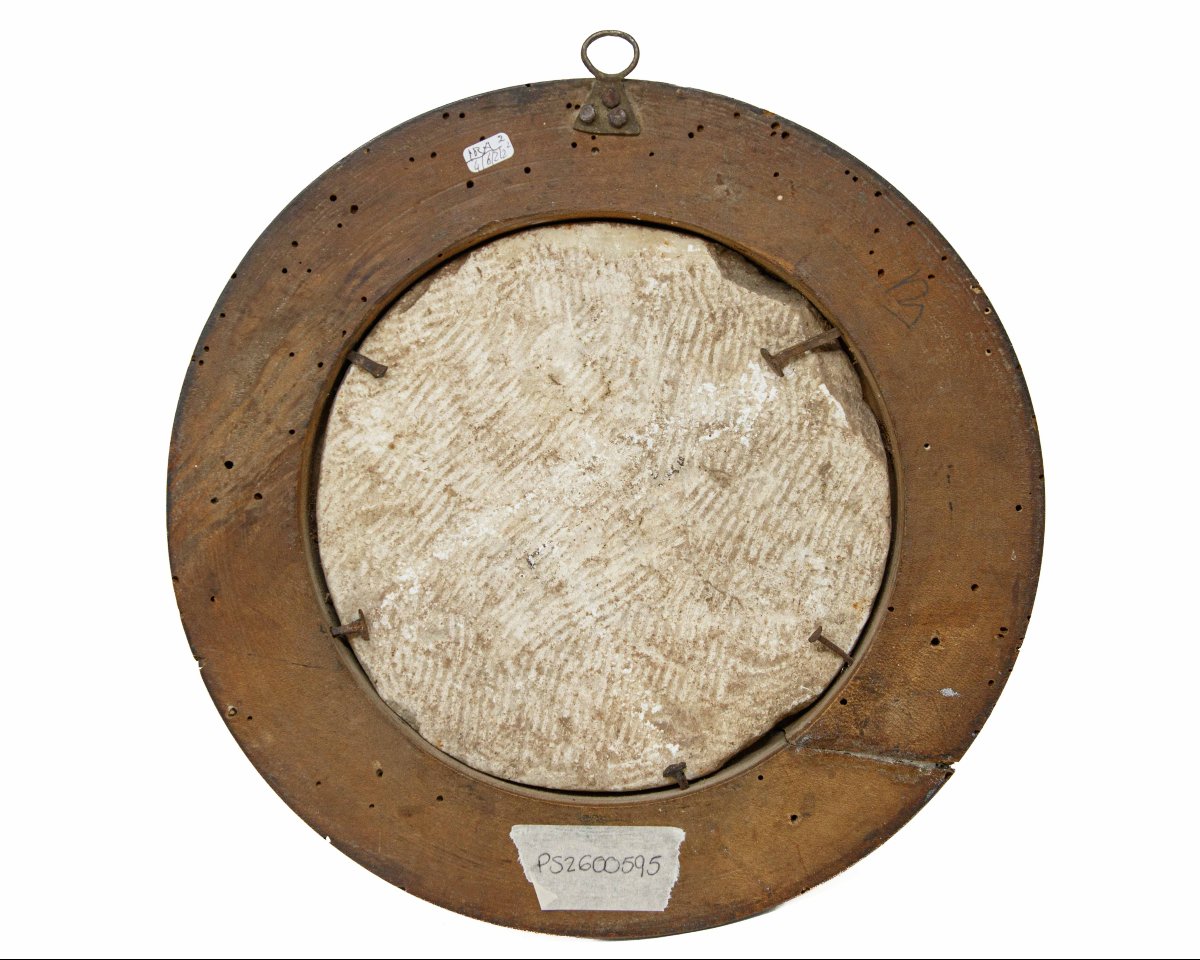
(2) Marble, 17 cm in diameter – Frame, 26 cm in diameter
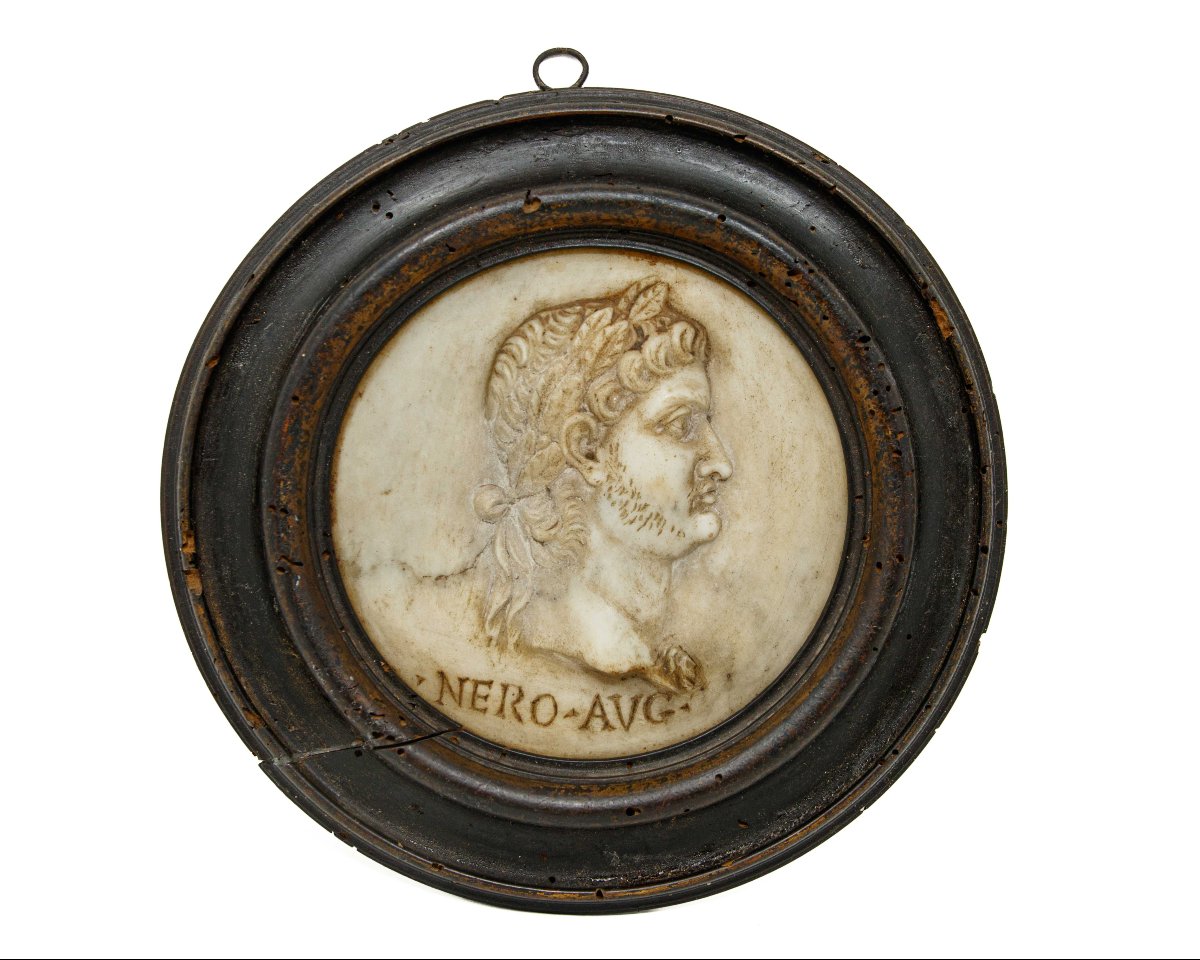
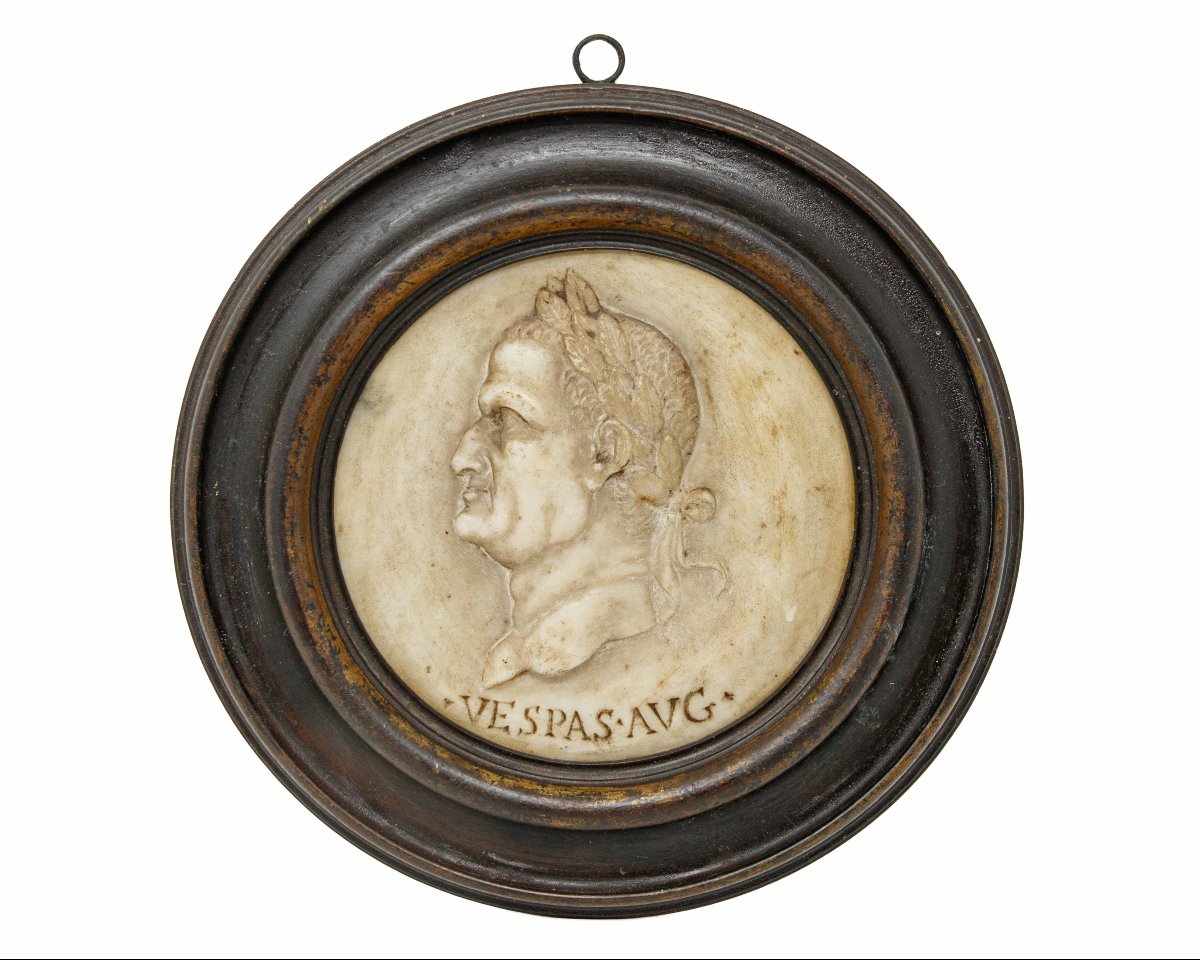
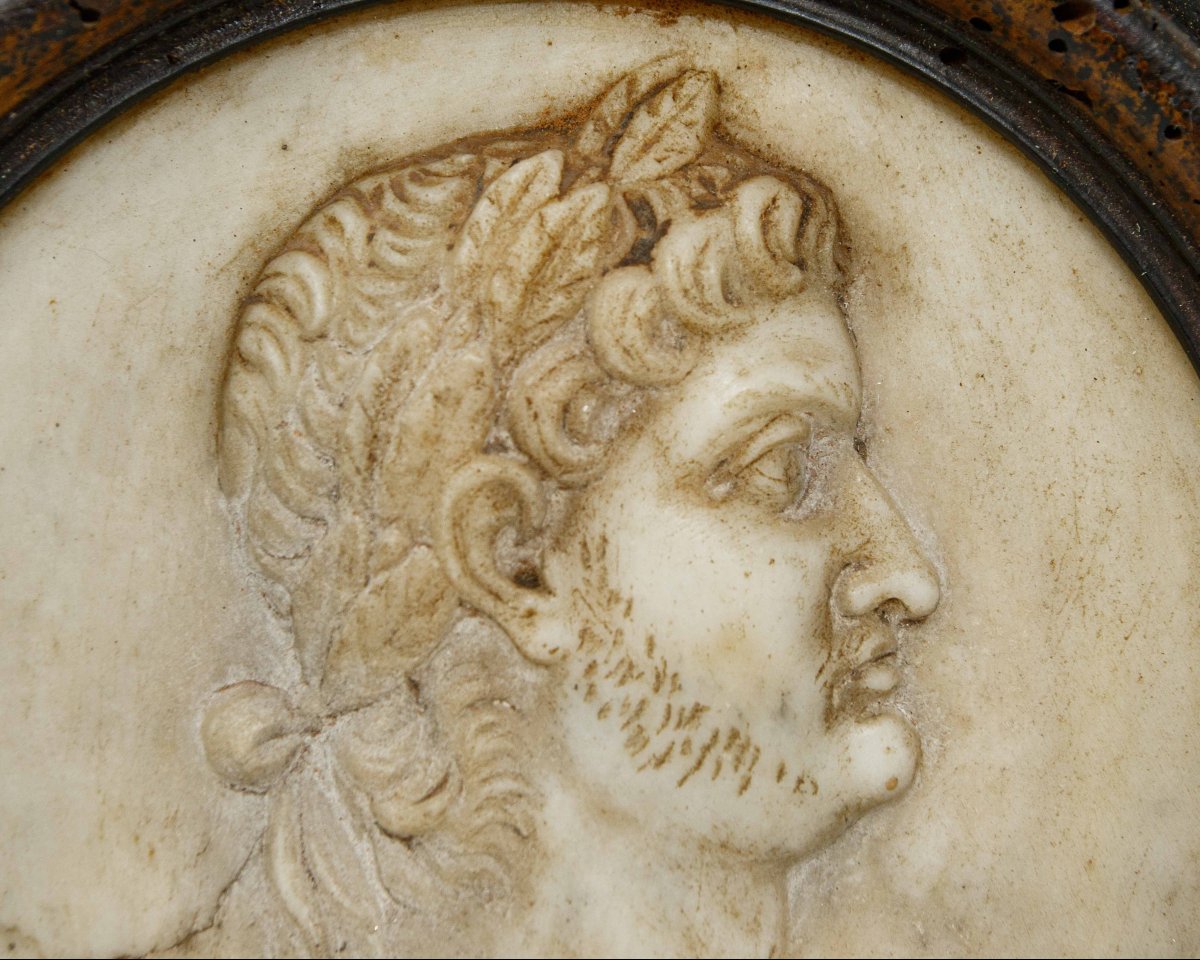
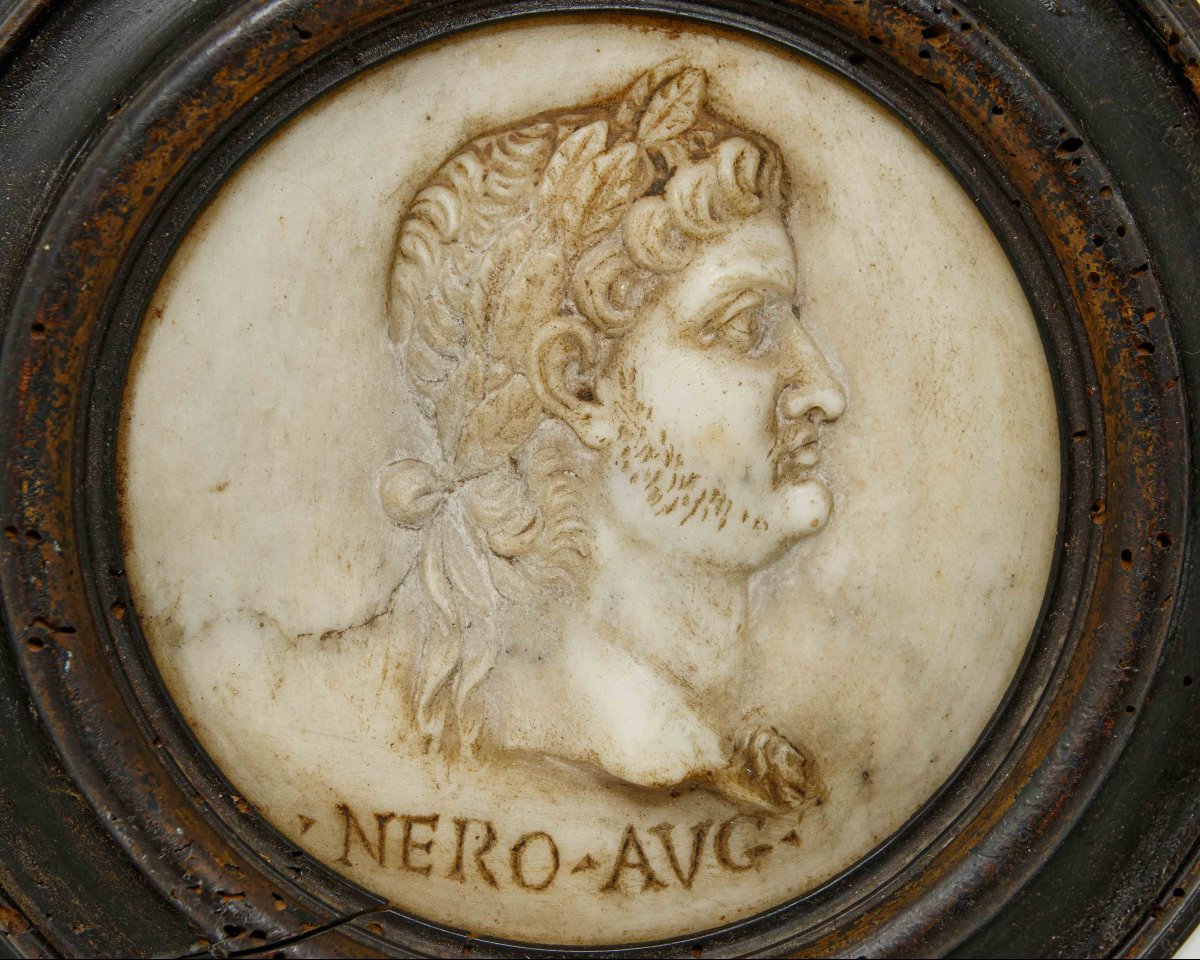
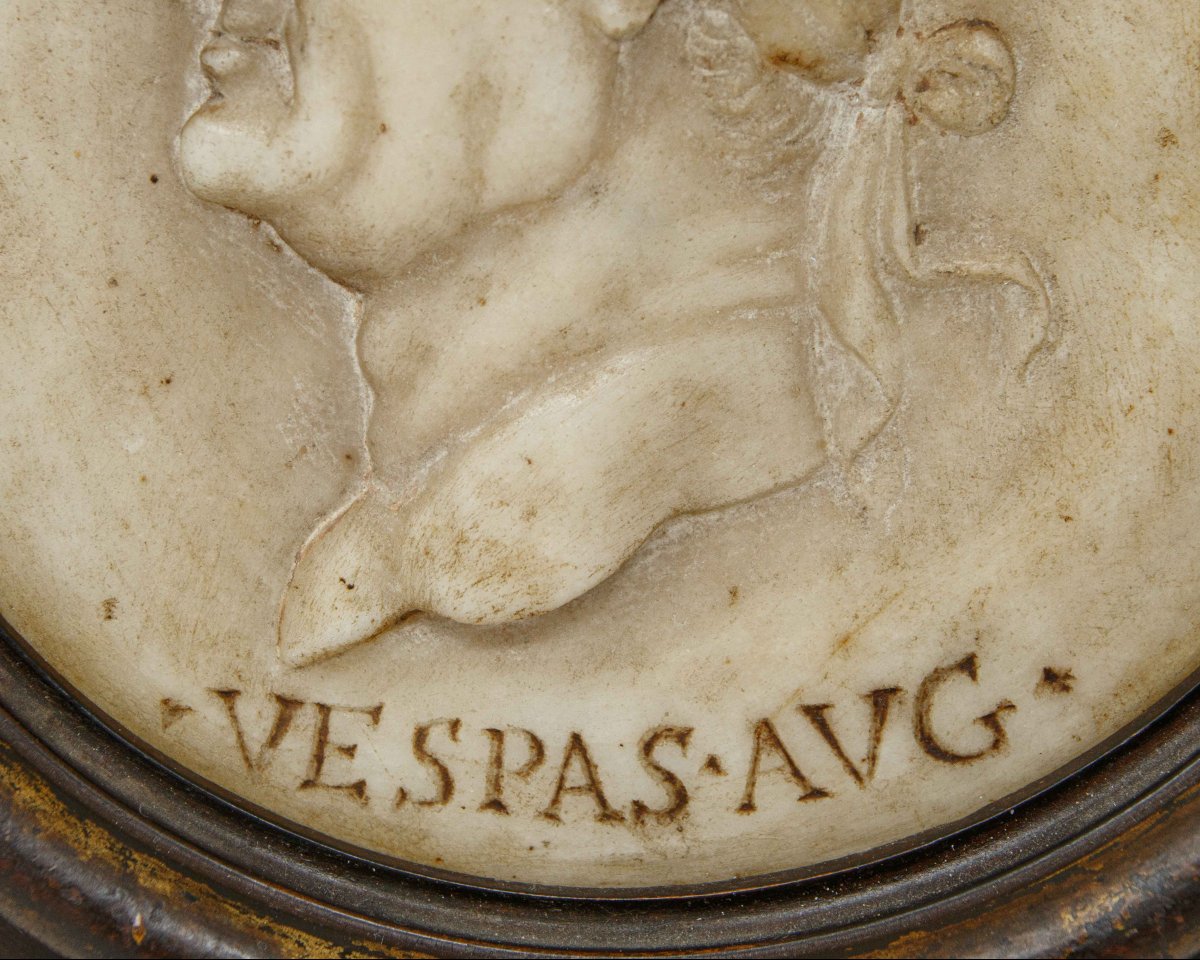
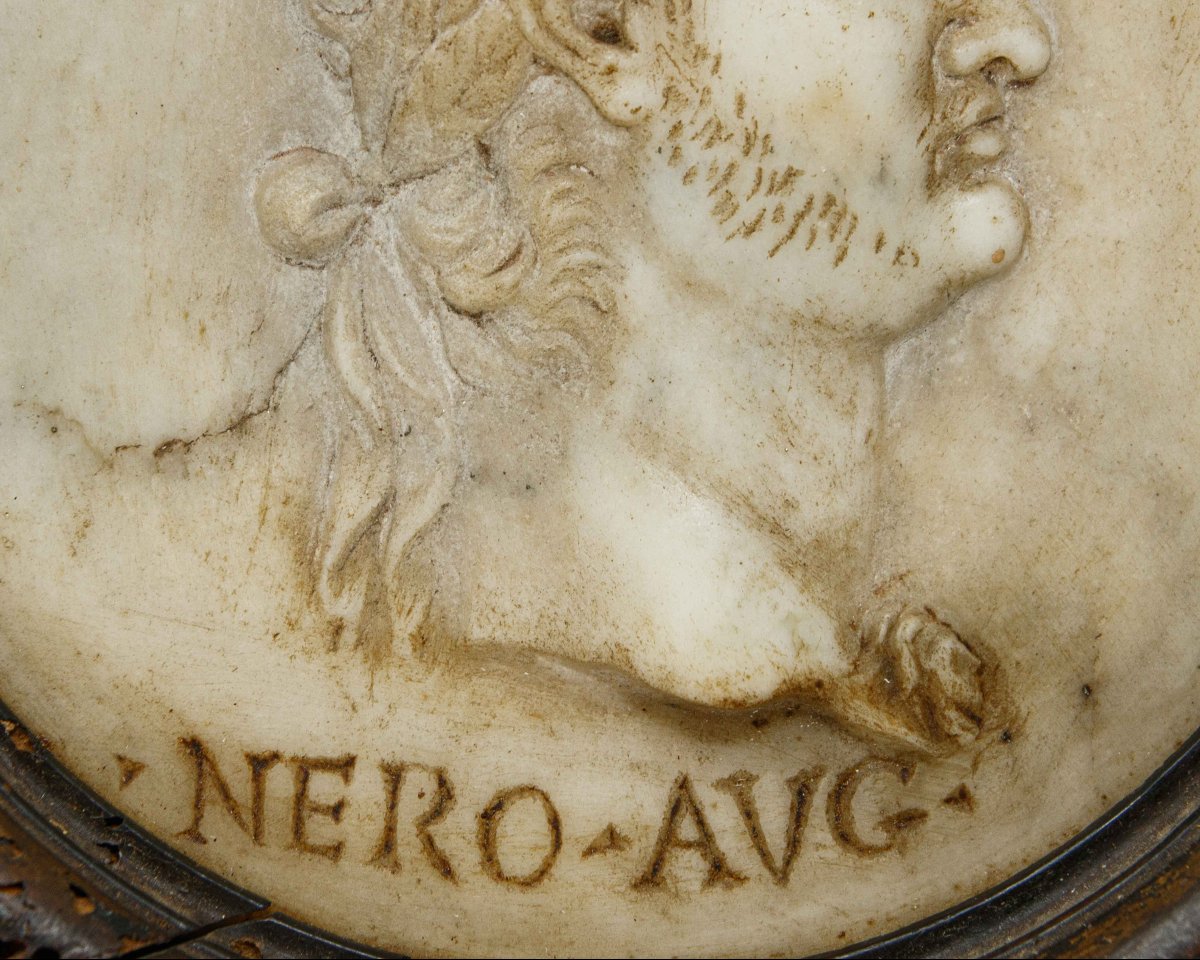
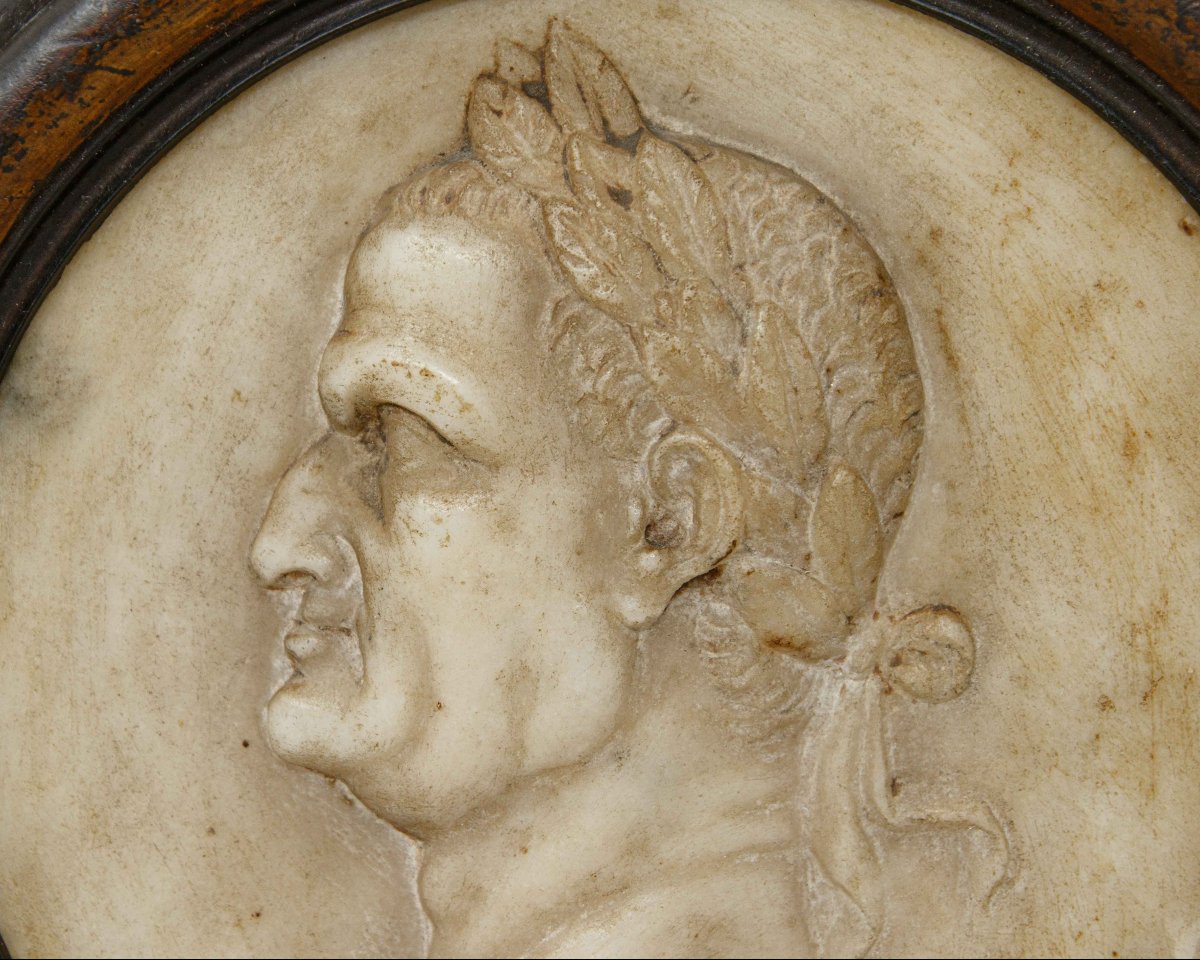
In ancient Rome, as part of an ambitious program to promote the imperial image, official portraiture played a decisive role, to say the least, forming part of a full-fledged political communication strategy. In Roman times, in fact, portraits of statesmen—and especially of emperors—adhered to specific stylistic guidelines, forming part of a “communication campaign” in every sense of the word. During the Flavian era (69–96 CE), the apparent incompatibility between the strong tradition of realistic, Republican-style portraiture and the Neo-Hellenistic tendency to idealize the subject was resolved through the coexistence of the two distinct styles. The two medallions depict the busts of Emperors Nero and Vespasian in profile, identified by their respective Latin inscriptions engraved at the bottom of the medallions: “NERO AVG” and “VESPAS AVG.” The placement of the portraits within circular frames of molded wood not only enhances the three-dimensionality and luster of the marble, but also echoes the structure of ancient coins and commemorative medallions, which served as the primary vehicle for political propaganda and the assertion of power in the Roman world. In the context of the sixteenth century, the revival of these images was not merely for decorative or purely archaeological purposes, but was linked to a complex system of visual communication and rhetoric. For Renaissance courts, possessing the effigies of the twelve Caesars—whose biographical tradition had been codified by Suetonius—meant asserting an ideal continuity with the moral, intellectual, and political grandeur of Rome, while at the same time offering models of virtue (or warnings against vice) for the ideal ruler. An analysis of the physiognomic details reveals a profound understanding of the expressive specificity of classical art, interpreted through the sensibilities of the 16th century. In the tondo of Nero, the artist renders the image of the last emperor of the Julio-Claudian dynasty through his most famous iconographic features, standardized by tradition: hair arranged in voluminous, elaborate curls, held in place by a laurel wreath, and the characteristic short beard that frames the jaw and chin—a stylistic device the emperor historically adopted to emphasize his connection to Greek culture and Hellenism. The profile, characterized by a slightly aquiline nose and a proud yet stern gaze, conveys an air of youthful yet theatrical majesty. In contrast, the adjacent relief depicts Vespasian, founder of the Flavian dynasty, rendered in a diametrically opposed expressive style. Here, the facial features depart from late Hellenistic idealization to embrace the raw realism of the Republican and Flavian traditions, aimed at conveying the virtues of firmitas and frugalitas. Vespasian’s profile bears the clear signs of age and the resolute character of a man of arms: a forehead marked by deep wrinkles, a high and receding hairline beneath the laurel wreath, a distinctly prominent nose, and thin, tightly pursed lips that accentuate the firmness of the chin and the sculptural quality of the cheeks. Through this meticulous physiognomic differentiation, the sixteenth-century sculptor does not merely copy ancient models but reactivates their original communicative significance, contrasting the refined and at times ambiguous sophistication of the Julio-Claudian dynasty with the solid, pragmatic, and reassuring authority of the restorer of the state following the civil wars. The skillful use of bas-relief—which plays on subtle variations in thickness to suggest the depth of the skin’s texture, hair, and the ribbons of the crown that fall onto the neck, demonstrates the high technical skill of the workshop responsible for its creation and its ability to transform marble into a sophisticated manifesto of political philosophy and humanistic aesthetics
Period: 16th century
Style: Other Style
Condition: Good condition
Material: Marble
Diameter: 17
Reference (ID): 1817215
Availability: In stock