

Carlo Francesco Nuolone (milan, 1609–1662), The Angel’s Appearance To Hagar And Ishmael
Carlo Francesco Nuolone (Milan, 1609 – 1662)
The Apparition of the Angel to Hagar and Ishmael
Oil on canvas, 50 x 67 cm
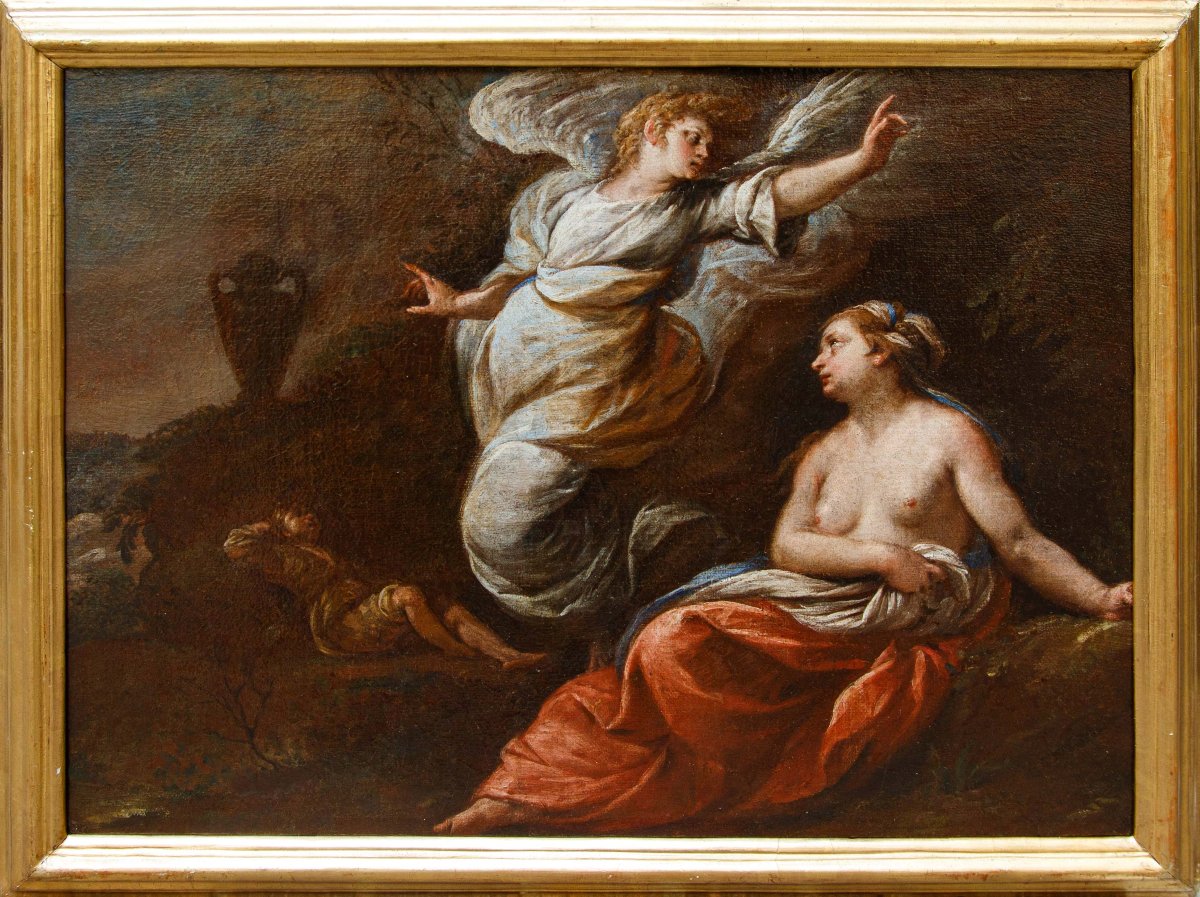
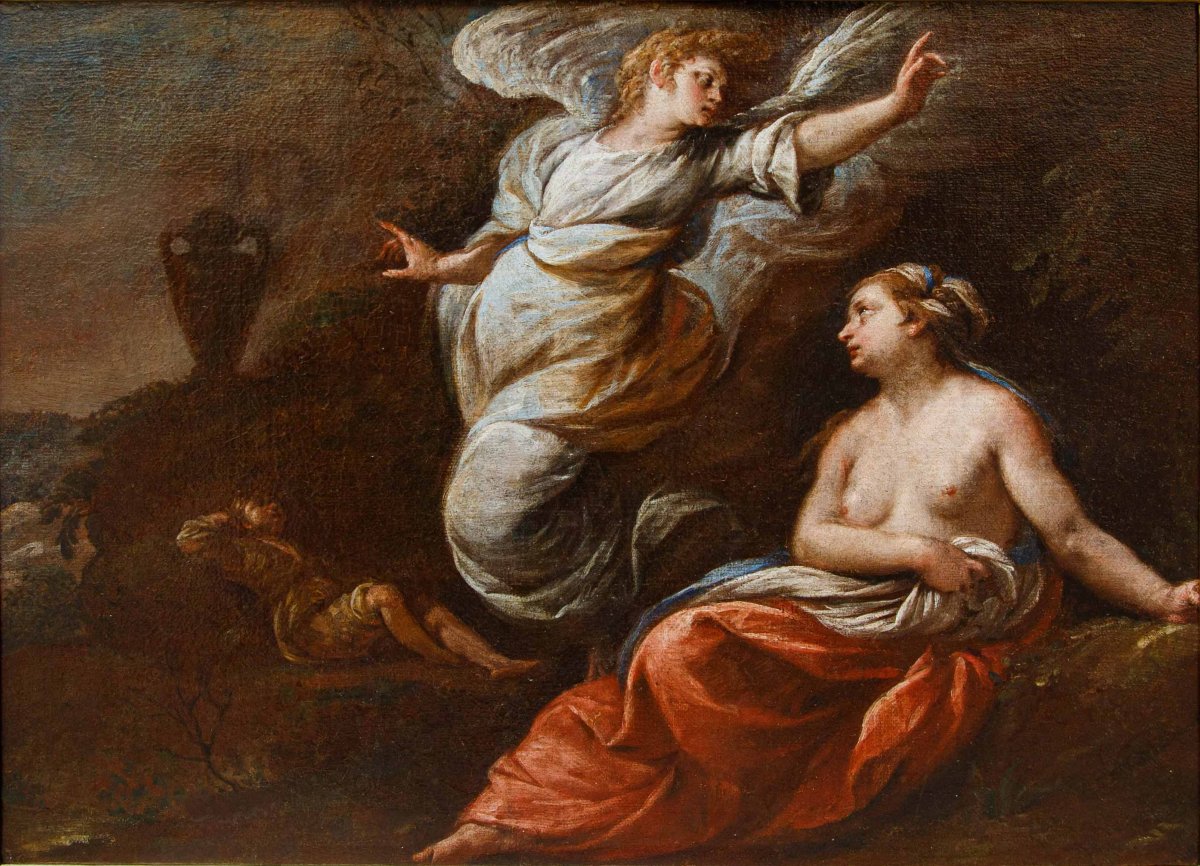
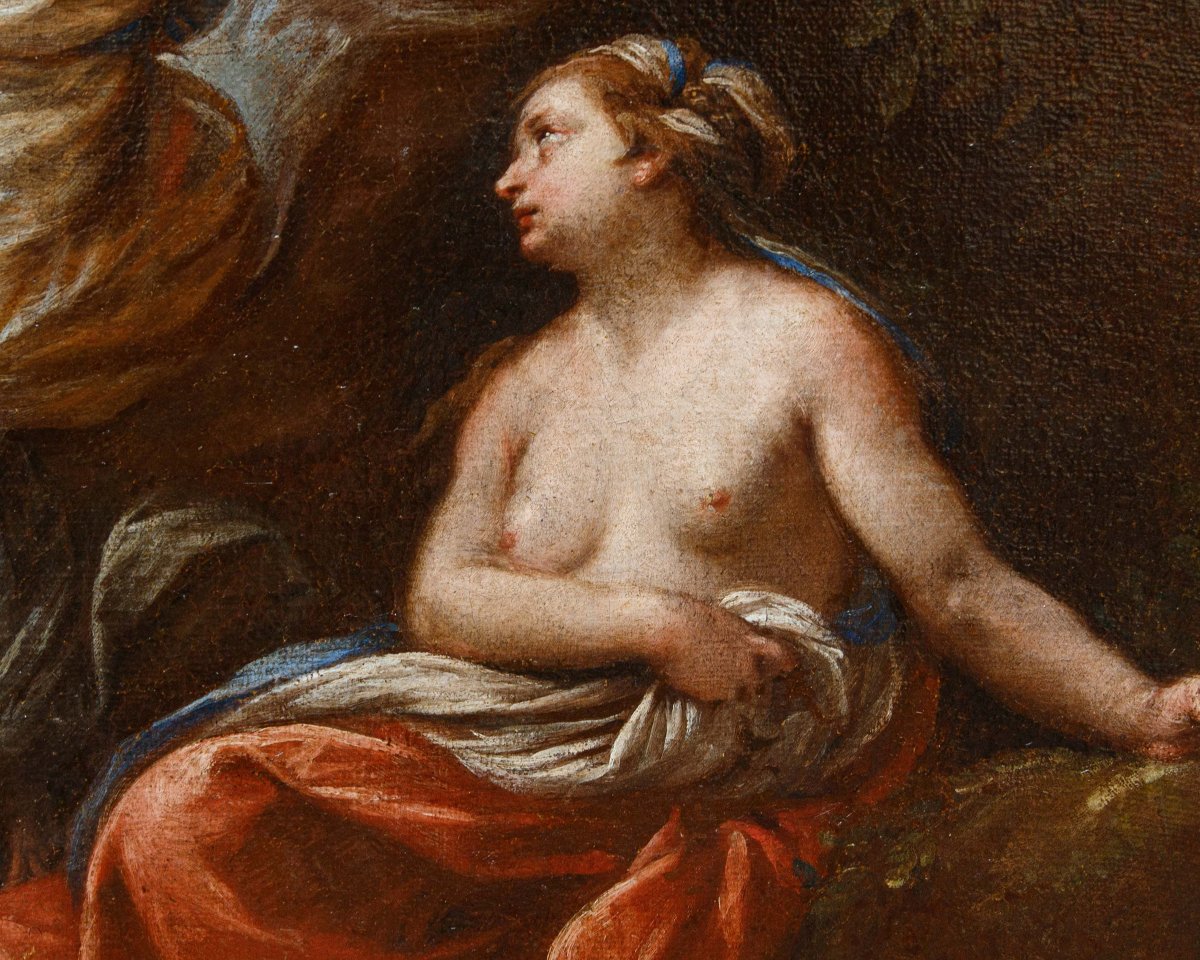
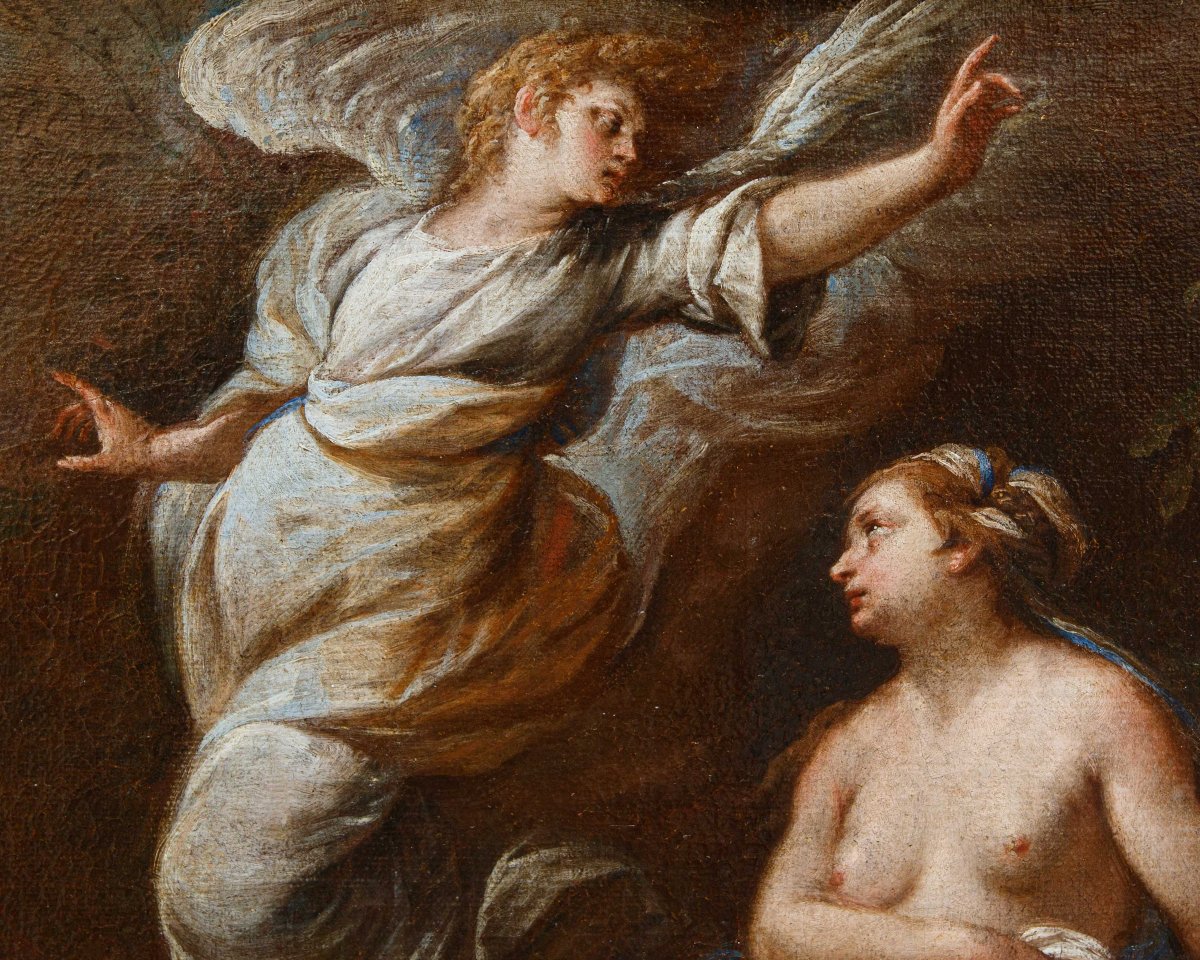
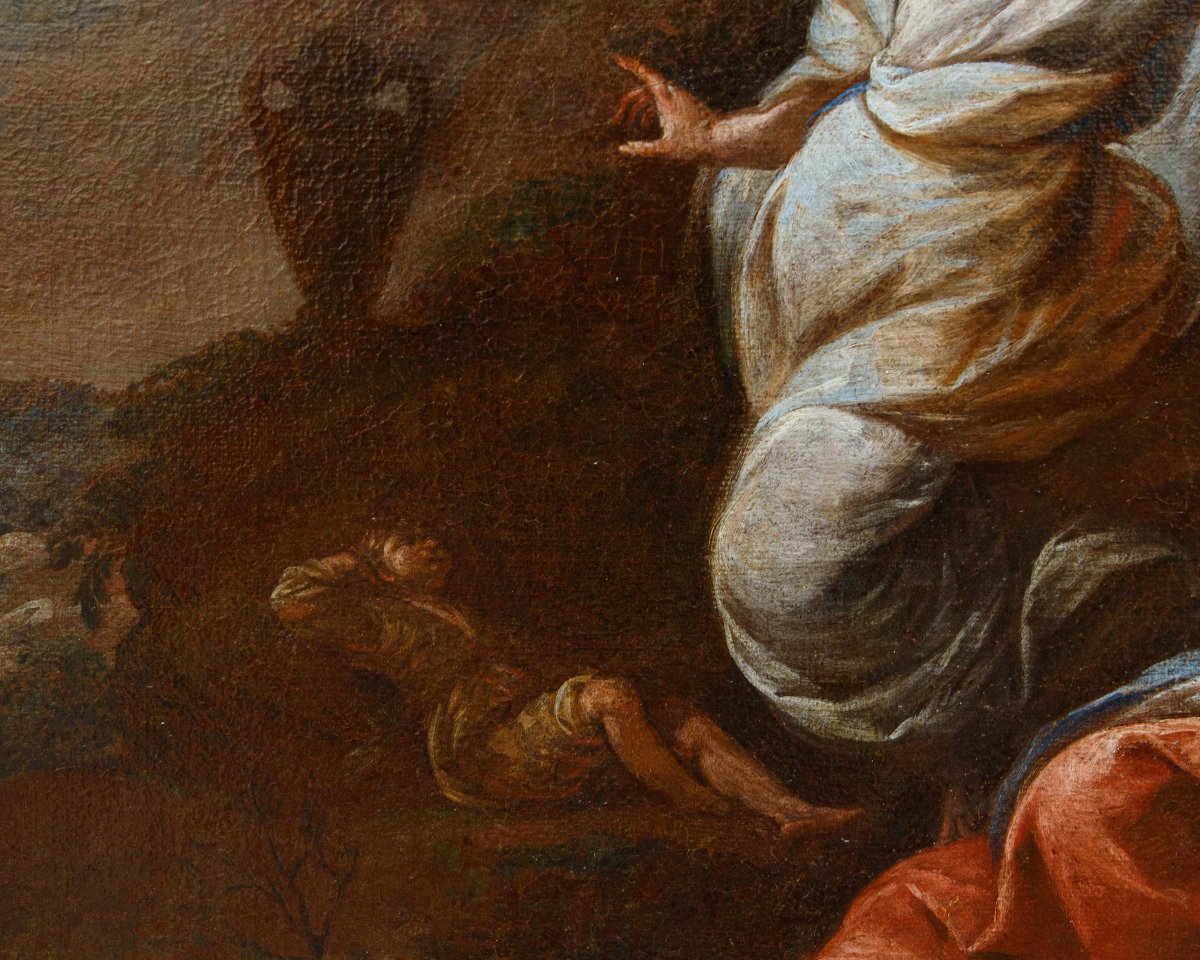
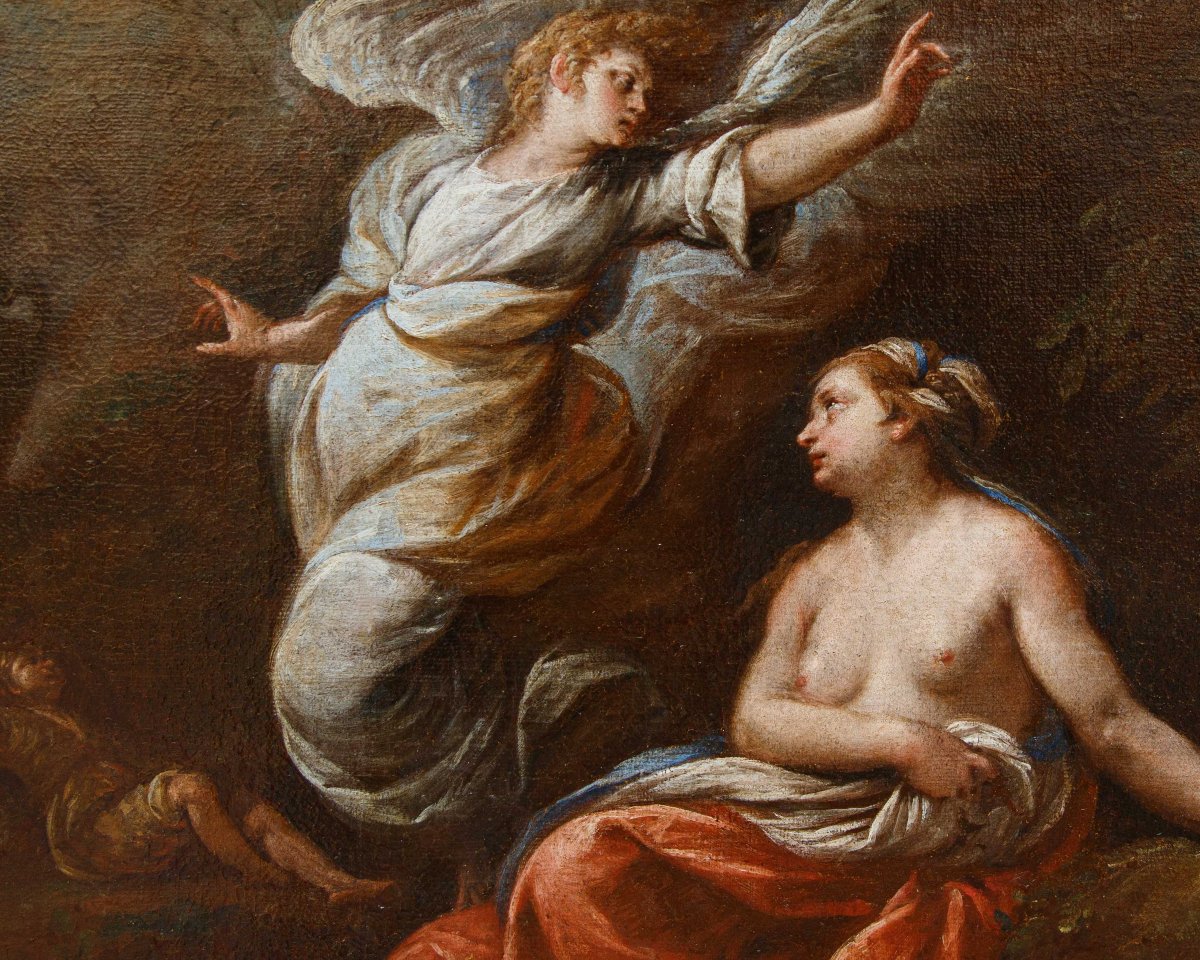
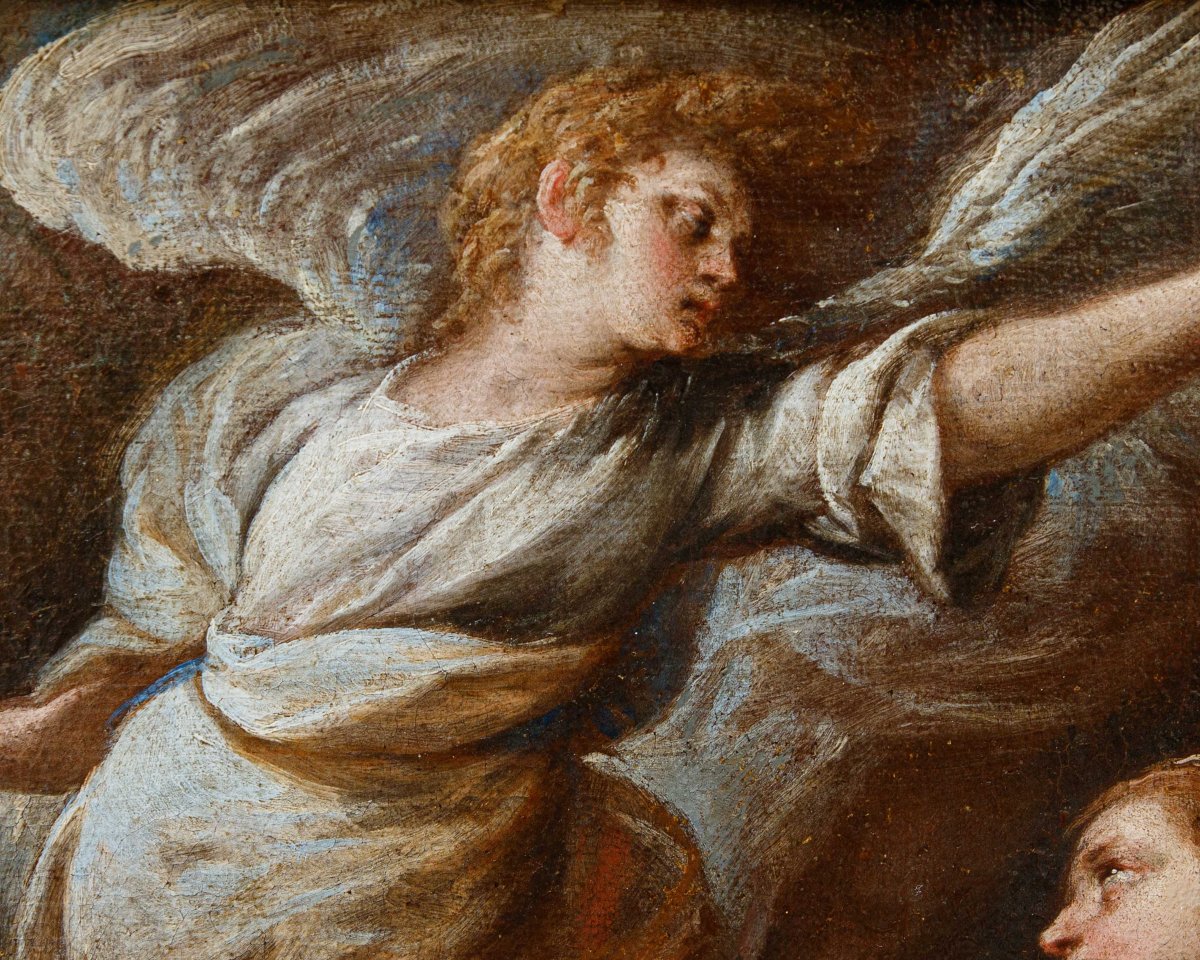
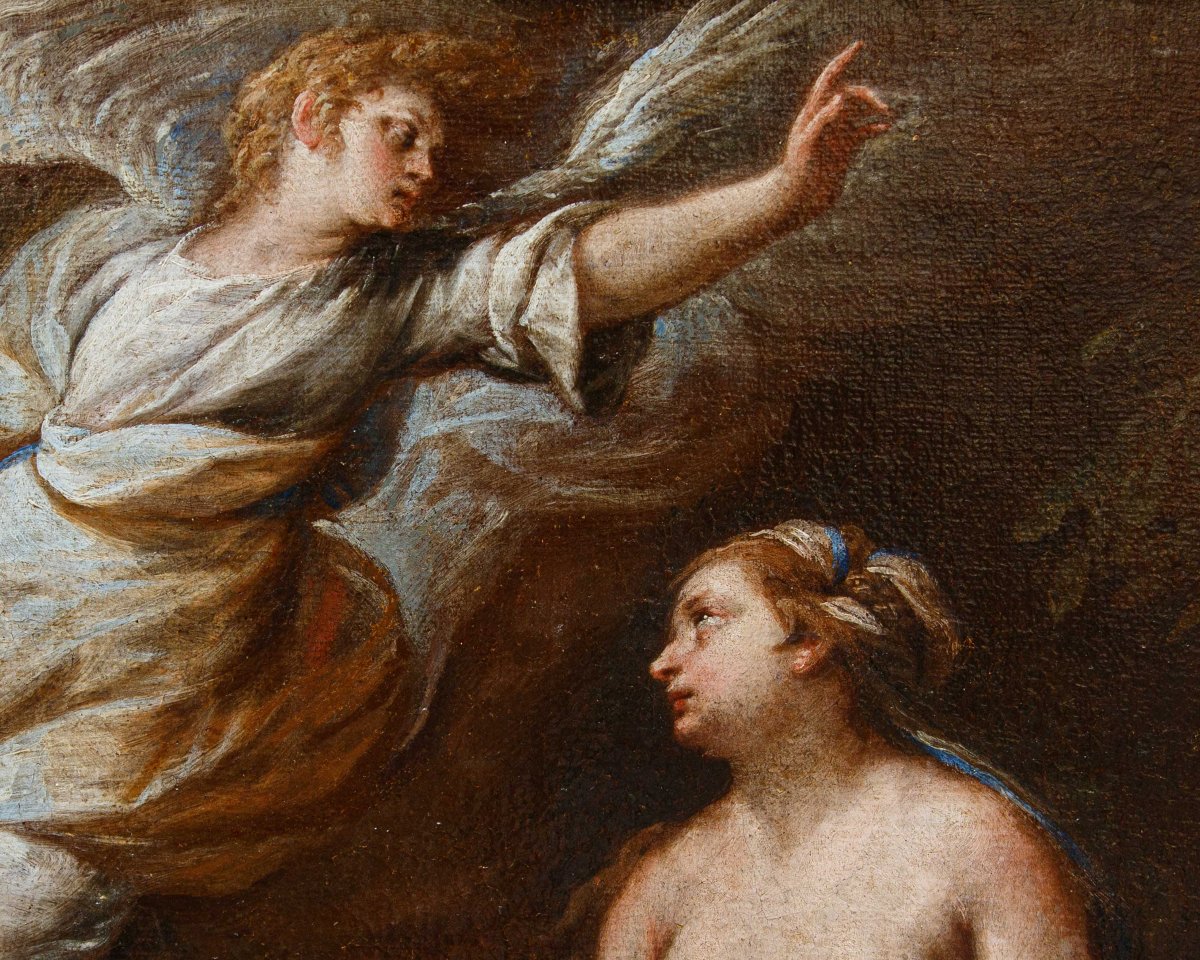
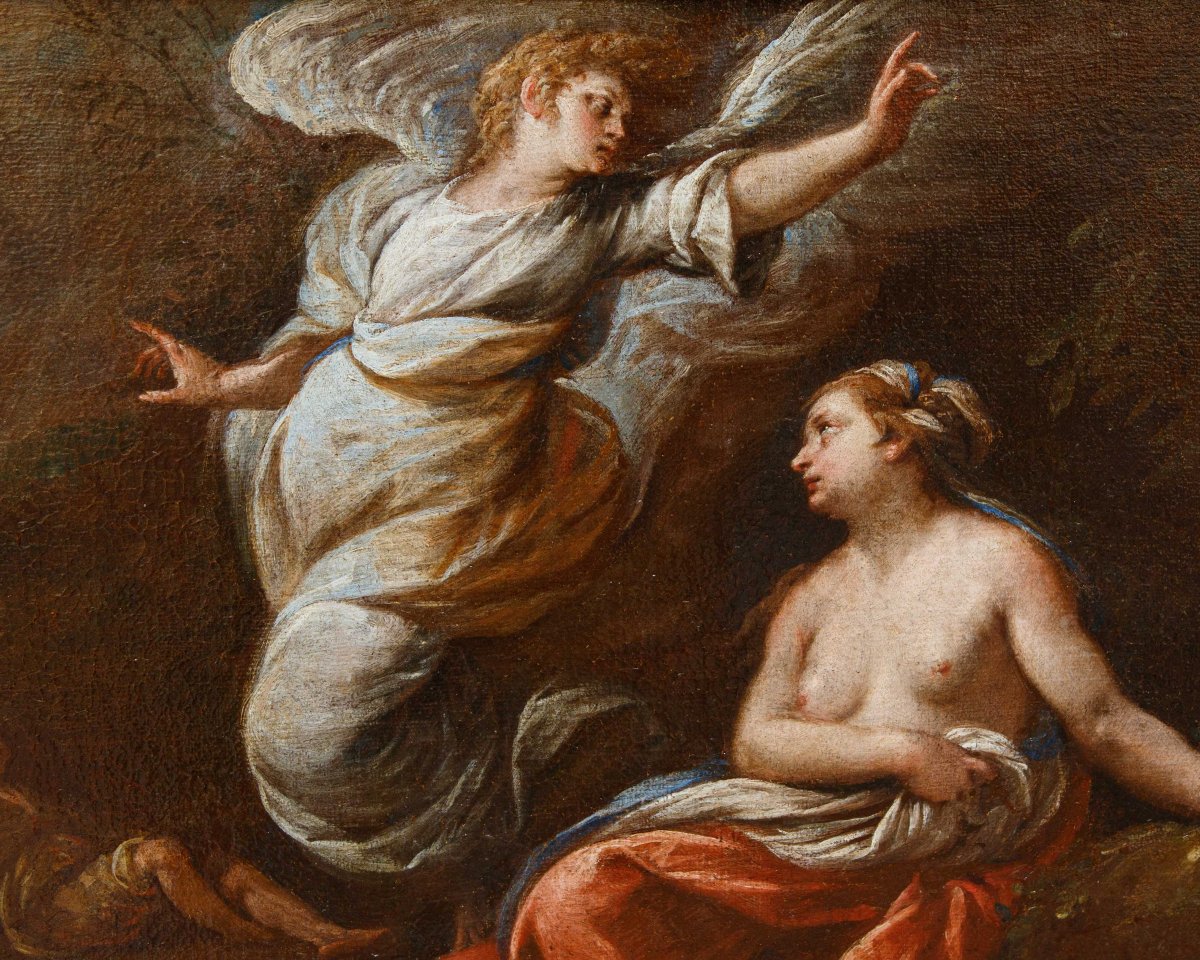
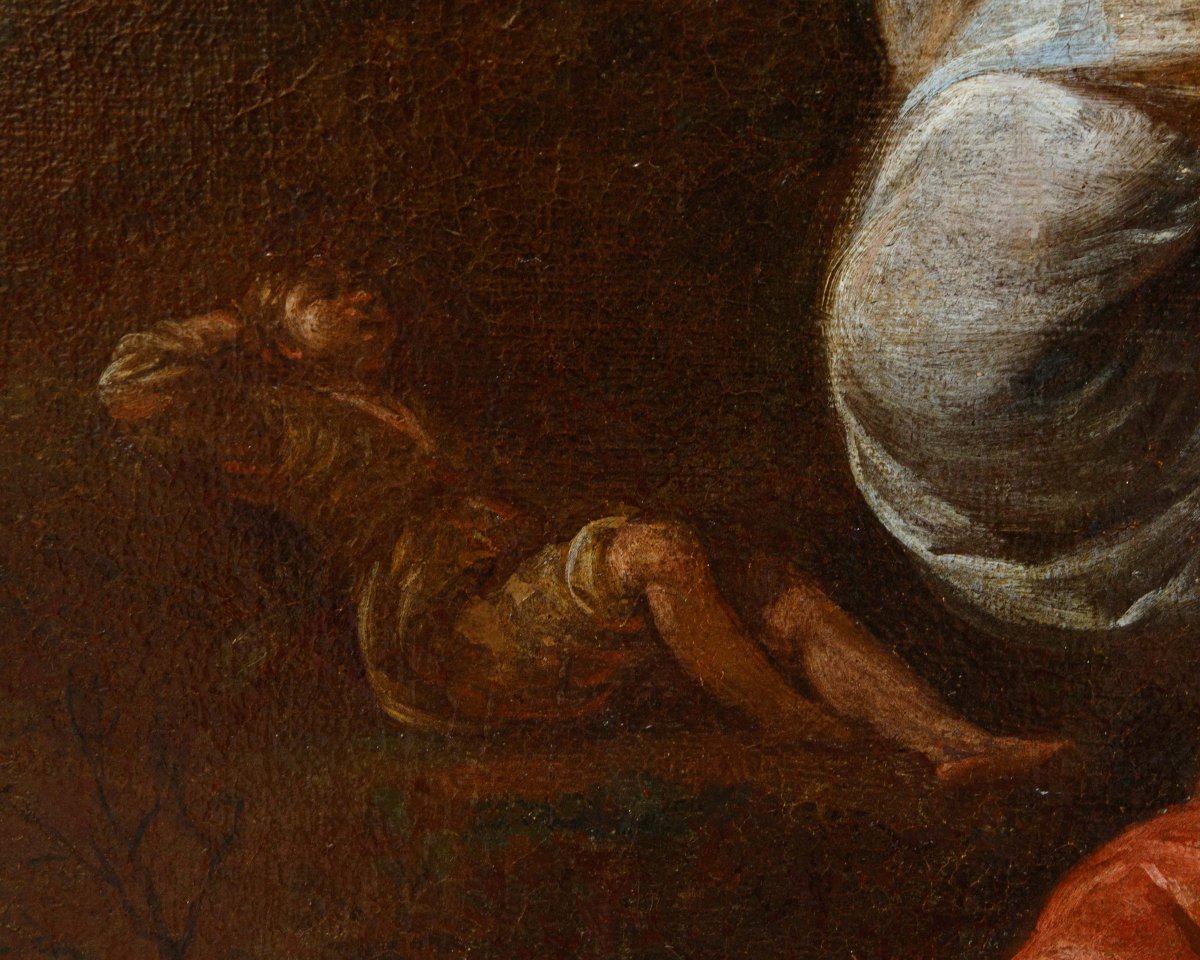
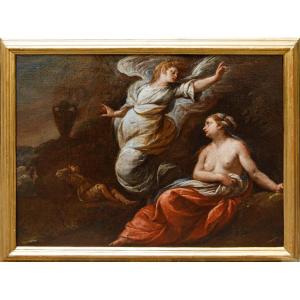
This fascinating work, depicting the Apparition of the Angel to Hagar and Ishmael in the Desert, constitutes an exemplary testimony to the refined mature production of Carlo Francesco Nuvolone, the undisputed protagonist of seventeenth-century Lombardy, often nicknamed by the critic Roberto Longhi (together with his brother Giuseppe) as the master of "Blue Cloud" for his characteristic vaporous, soft and nuanced atmospheres. The episode, taken from the book of Genesis, shows Abraham's servant driven out into the desert of Bersabea, now resigned to the tragic end of herself and of little Ishmael, visible in the background in a moment of abandonment and exhaustion next to a now completely empty orb. The sudden divine intervention is revealed through an angel with ephebic features, who pierces the darkness of the landscape, indicating with an eloquent gesture the spring of saving water. The painting clearly reveals Nuvolone's stylistic transition, starting from the severe and dramatic models of early seventeenth-century Milan, marked by Giovan Battista Crespi known as Cerano and Giulio Cesare Procaccini, arriving at a significantly more lyrical, elegant and sensual language, strongly influenced by Venetian colorism and, above all, by the influence of Anthony van Dyck and the Emilian softness of Guido Reni and Correggio. The figure of Hagar perfectly embodies the feminine ideal typical of Nuvolonian poetic universe, presenting herself as a young woman with generous forms, characterized by a mother-of-pearl and velvety complexion, cheeks flushed with restrained emotion, an important neck, full lips with a characteristic well-shaped upper lip and languid eyes turned towards the celestial messenger. The sensuality of the exposed breast, balanced by the classicism of the draperies of the red-orange robe, creates a vibrant emotional counterpoint that dialogues admirably with the figure of the angel. The latter soars from above wrapped in a whirlwind of clouds and light draperies that almost seem to liquefy in the atmosphere, guided by a theatrical yet graceful gesture, signed by the typical lengthening of the fingers that gives the hands an extraordinary expressiveness. Carlo Francesco, son of the painter Panfilo and his wife Isabella, was born between 1608 and 1609 in Milan, the city where he resided all his life. Having left his father Panfilo's workshop, and in it surpassing his brother in technical expertise, the artist soon threw himself into the study of the works of the greatest Lombards, namely Cerano – whom he met while attending the school of painting directed by him at the Accademia Ambrosiana - Giulio Cesare Procaccini, Morazzone and Daniele Crespi. He drew a lively figurative feeling from these, overcoming their Borromaic Mannerism when the Manzonian plague took place in 1630, and with it the Counter-Reformation panorama was overturned. Confirmation of Nuvolone's early artistic phase is the Pietà e Santi of the collegiate church of Bormio, executed between 1631 and 1634. Already in the altarpiece for the church of Santa Marta in Milan, however, a clearer compositional resolution is assumed, more sensitive to the light of the flesh tones. The painter's total adherence to the Baroque spirit is also manifested in the unique characteristics of his works intended for private collectors. In particular, around 1640, a marked preference developed for the representation of secular scenes, inspired not only by mythology, but also by key texts of sixteenth-century literature, such as Giovan Battista Guarini's "Il Pastor Fido".
The Apparition of the Angel to Hagar and Ishmael
Oil on canvas, 50 x 67 cm
This fascinating work, depicting the Apparition of the Angel to Hagar and Ishmael in the Desert, constitutes an exemplary testimony to the refined mature production of Carlo Francesco Nuvolone, the undisputed protagonist of seventeenth-century Lombardy, often nicknamed by the critic Roberto Longhi (together with his brother Giuseppe) as the master of "Blue Cloud" for his characteristic vaporous, soft and nuanced atmospheres. The episode, taken from the book of Genesis, shows Abraham's servant driven out into the desert of Bersabea, now resigned to the tragic end of herself and of little Ishmael, visible in the background in a moment of abandonment and exhaustion next to a now completely empty orb. The sudden divine intervention is revealed through an angel with ephebic features, who pierces the darkness of the landscape, indicating with an eloquent gesture the spring of saving water. The painting clearly reveals Nuvolone's stylistic transition, starting from the severe and dramatic models of early seventeenth-century Milan, marked by Giovan Battista Crespi known as Cerano and Giulio Cesare Procaccini, arriving at a significantly more lyrical, elegant and sensual language, strongly influenced by Venetian colorism and, above all, by the influence of Anthony van Dyck and the Emilian softness of Guido Reni and Correggio. The figure of Hagar perfectly embodies the feminine ideal typical of Nuvolonian poetic universe, presenting herself as a young woman with generous forms, characterized by a mother-of-pearl and velvety complexion, cheeks flushed with restrained emotion, an important neck, full lips with a characteristic well-shaped upper lip and languid eyes turned towards the celestial messenger. The sensuality of the exposed breast, balanced by the classicism of the draperies of the red-orange robe, creates a vibrant emotional counterpoint that dialogues admirably with the figure of the angel. The latter soars from above wrapped in a whirlwind of clouds and light draperies that almost seem to liquefy in the atmosphere, guided by a theatrical yet graceful gesture, signed by the typical lengthening of the fingers that gives the hands an extraordinary expressiveness. Carlo Francesco, son of the painter Panfilo and his wife Isabella, was born between 1608 and 1609 in Milan, the city where he resided all his life. Having left his father Panfilo's workshop, and in it surpassing his brother in technical expertise, the artist soon threw himself into the study of the works of the greatest Lombards, namely Cerano – whom he met while attending the school of painting directed by him at the Accademia Ambrosiana - Giulio Cesare Procaccini, Morazzone and Daniele Crespi. He drew a lively figurative feeling from these, overcoming their Borromaic Mannerism when the Manzonian plague took place in 1630, and with it the Counter-Reformation panorama was overturned. Confirmation of Nuvolone's early artistic phase is the Pietà e Santi of the collegiate church of Bormio, executed between 1631 and 1634. Already in the altarpiece for the church of Santa Marta in Milan, however, a clearer compositional resolution is assumed, more sensitive to the light of the flesh tones. The painter's total adherence to the Baroque spirit is also manifested in the unique characteristics of his works intended for private collectors. In particular, around 1640, a marked preference developed for the representation of secular scenes, inspired not only by mythology, but also by key texts of sixteenth-century literature, such as Giovan Battista Guarini's "Il Pastor Fido".
9 000 €
Period: 17th century
Style: Other Style
Condition: Good condition
Material: Oil painting
Width: 67
Height: 50
Reference (ID): 1798883
Availability: In stock
Print