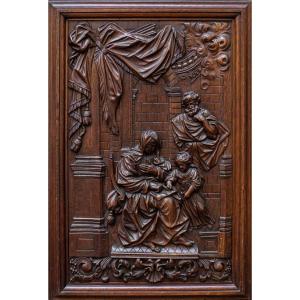


Flanders, 17th Century, Door Panels Depicting Allegories Of Summer And Winter
Flanders, 17th century
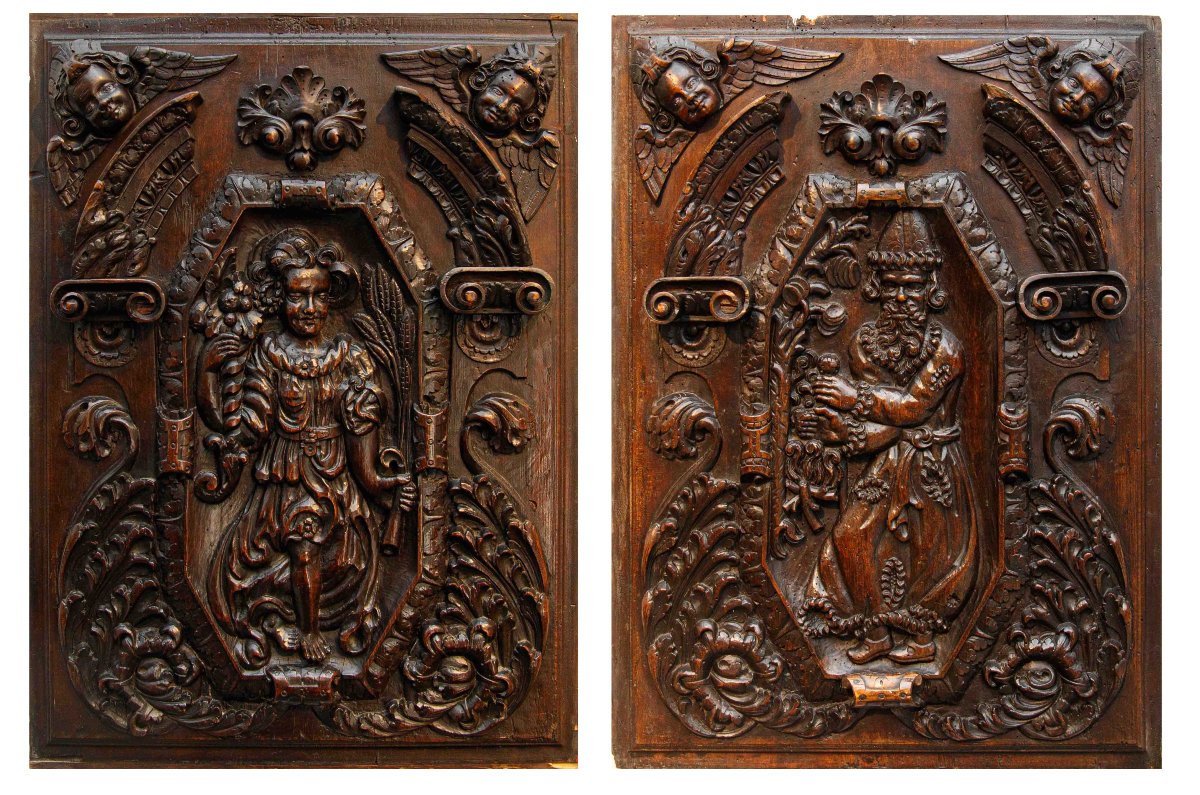
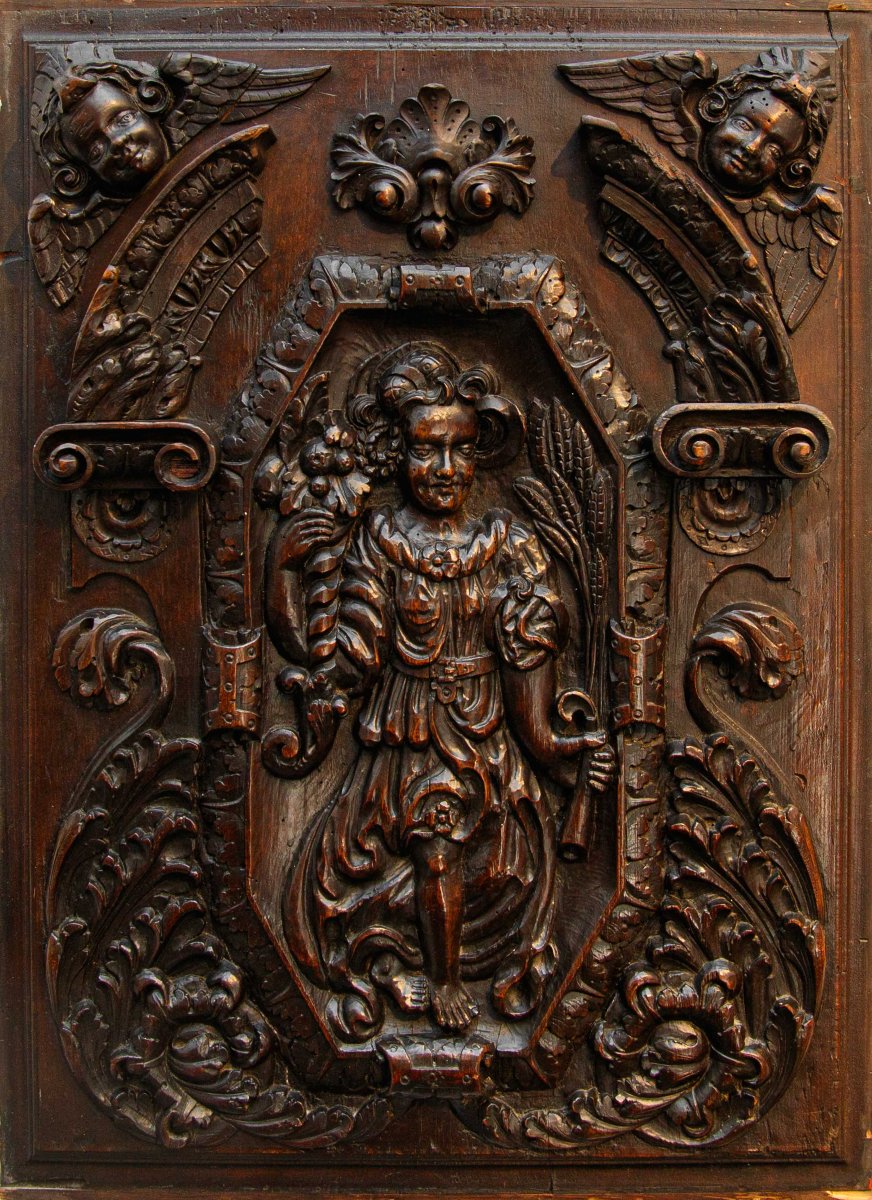
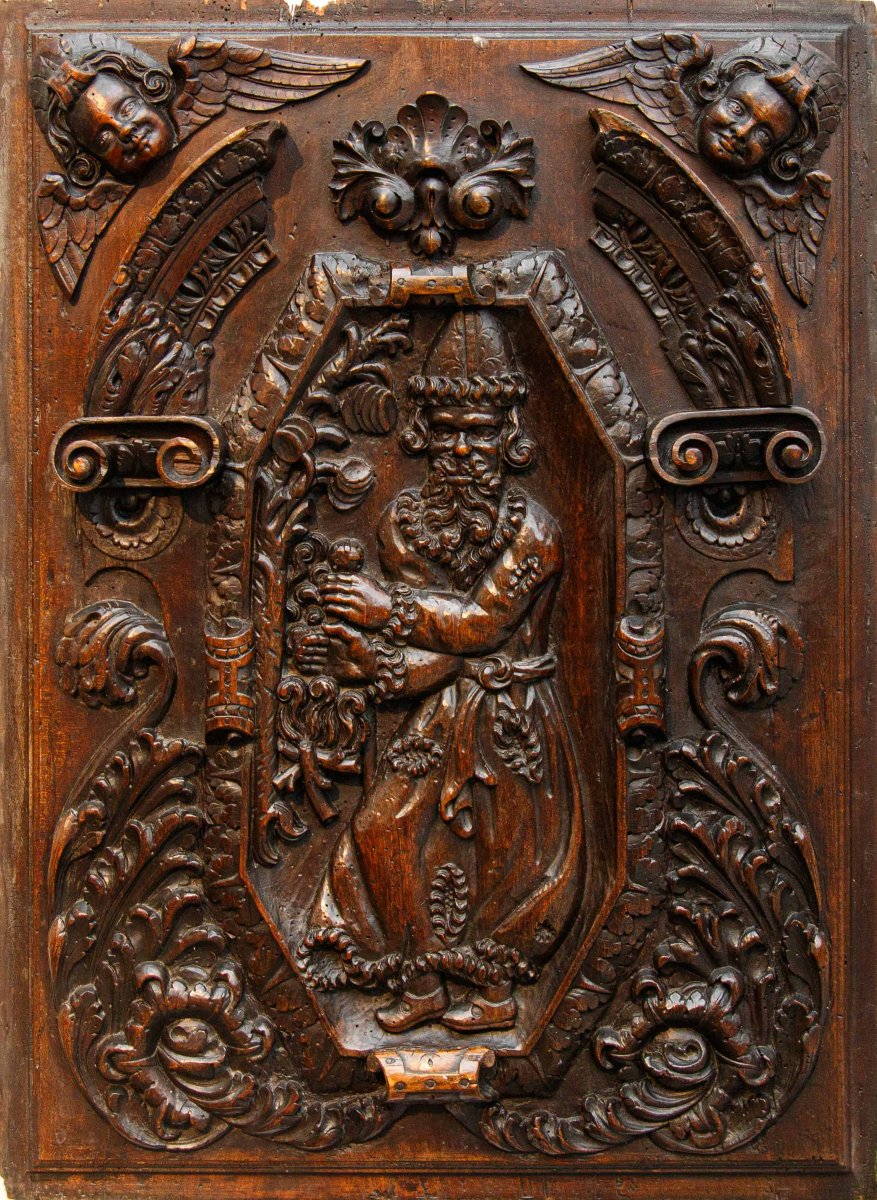
Door panels depicting Allegories of Summer and Winter
Carved walnut, 67 x 49 cm
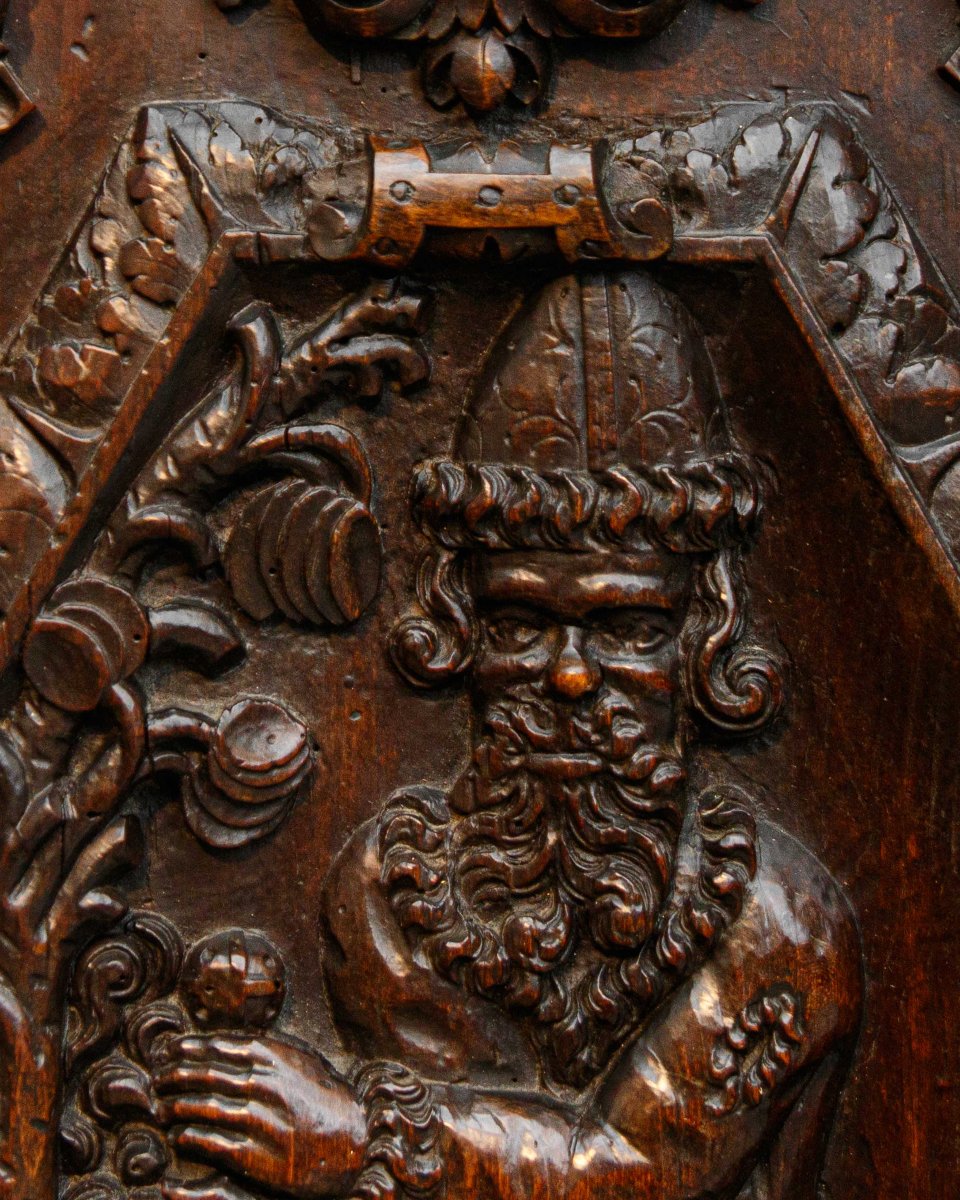
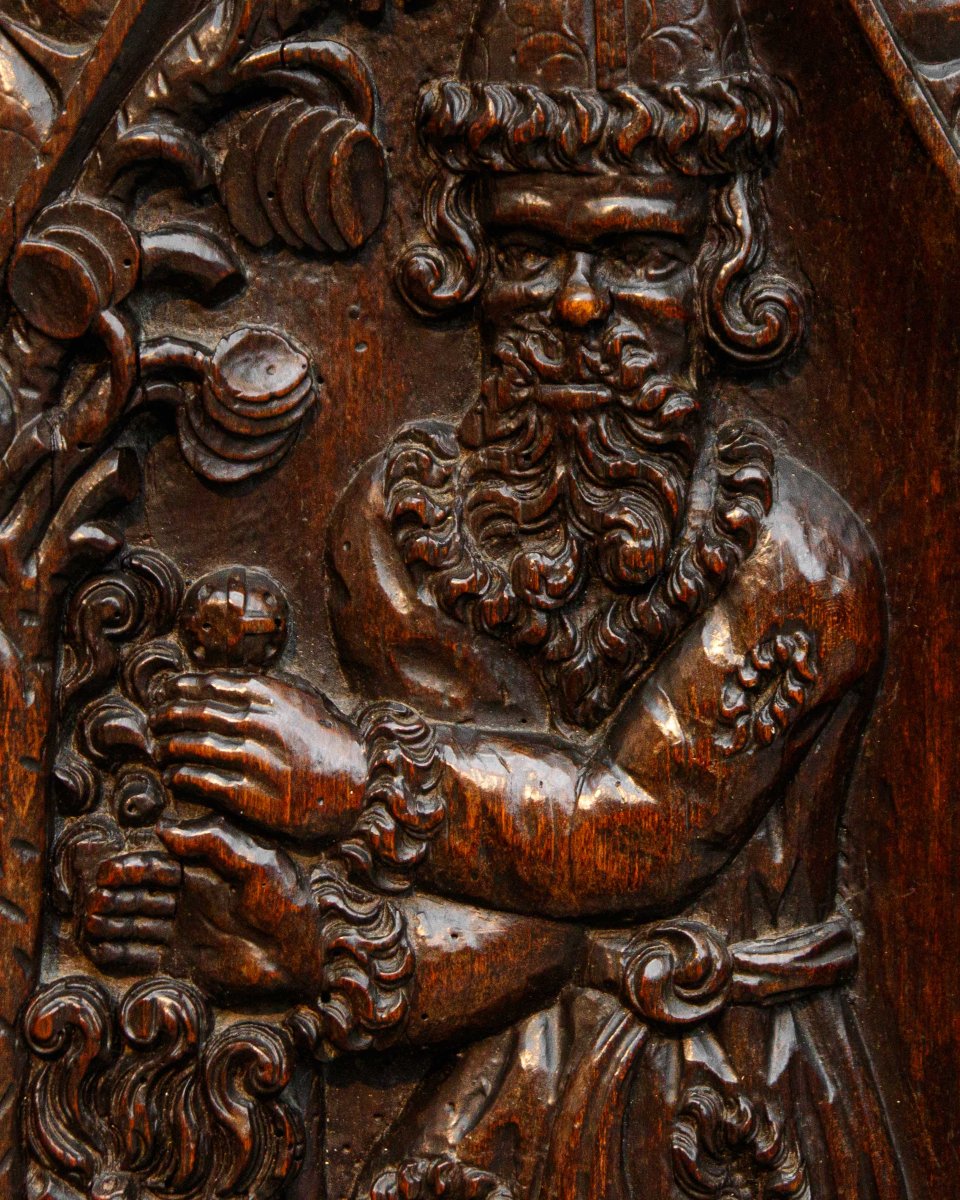
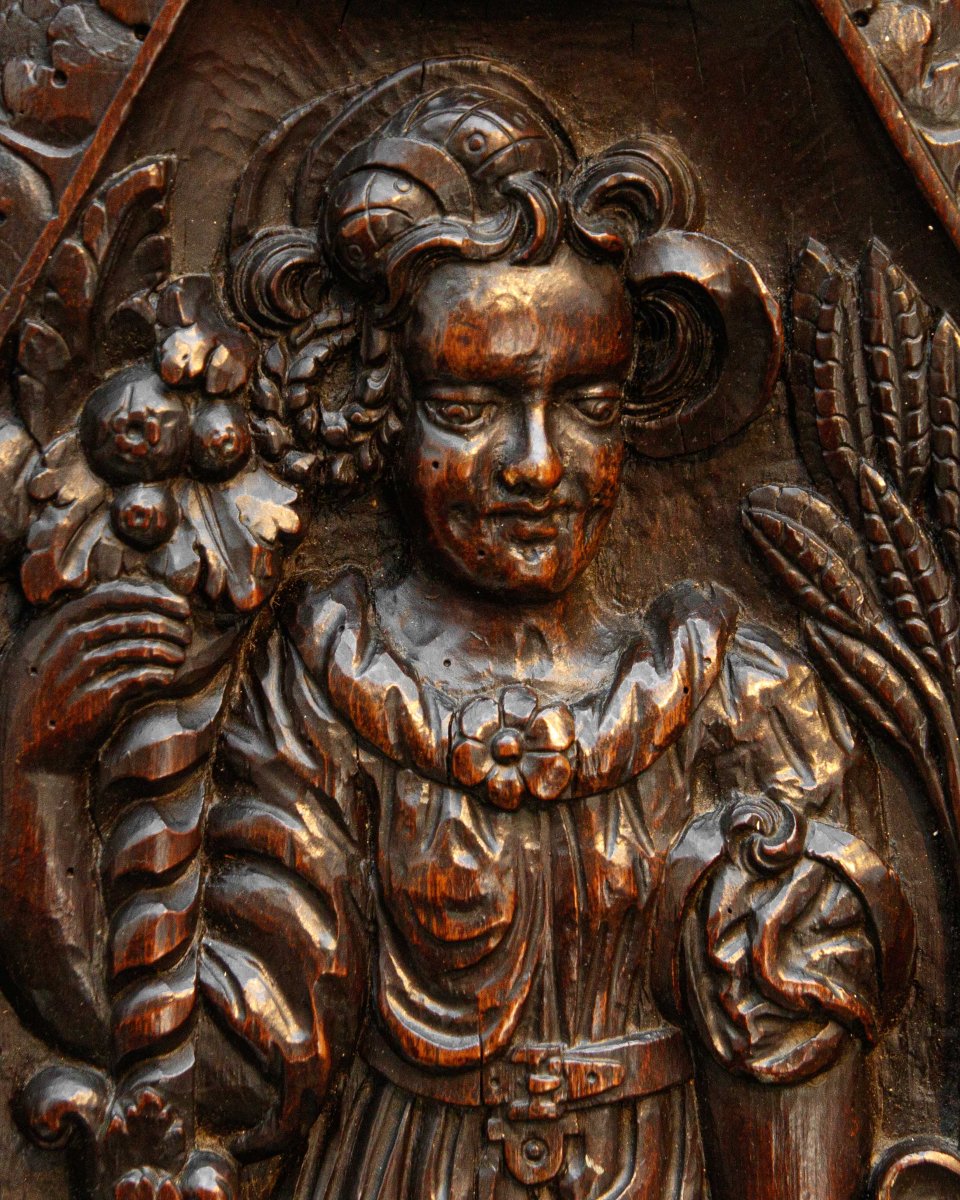
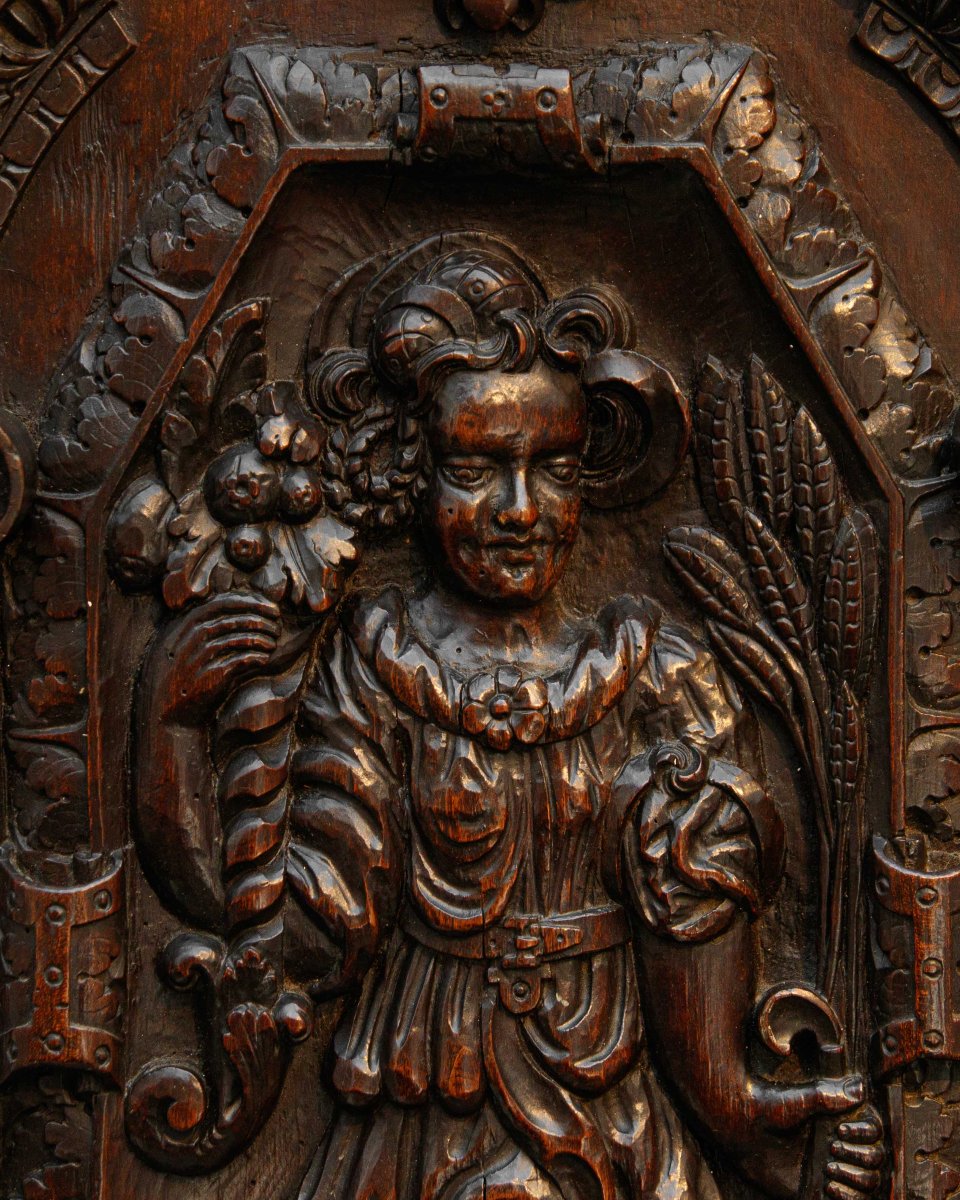
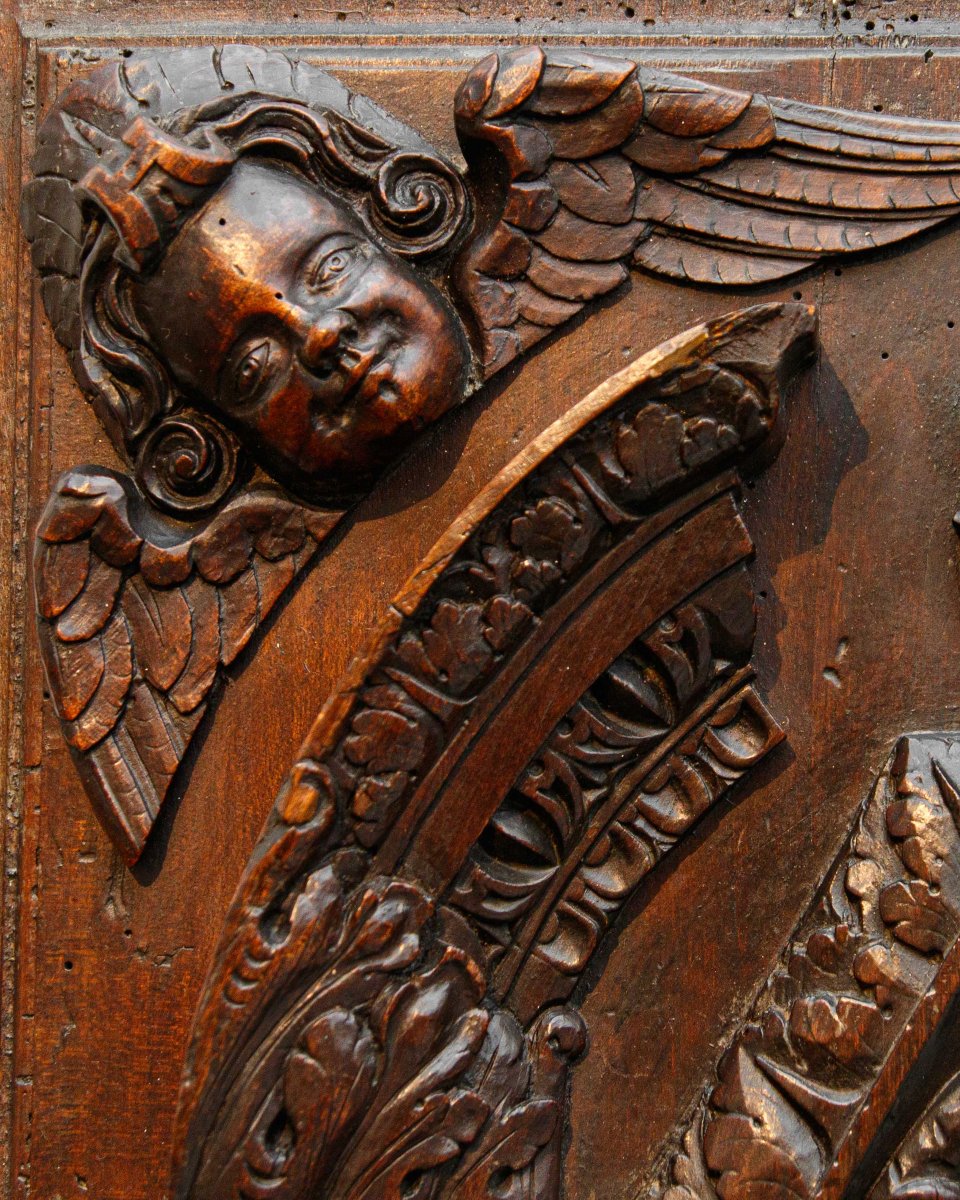
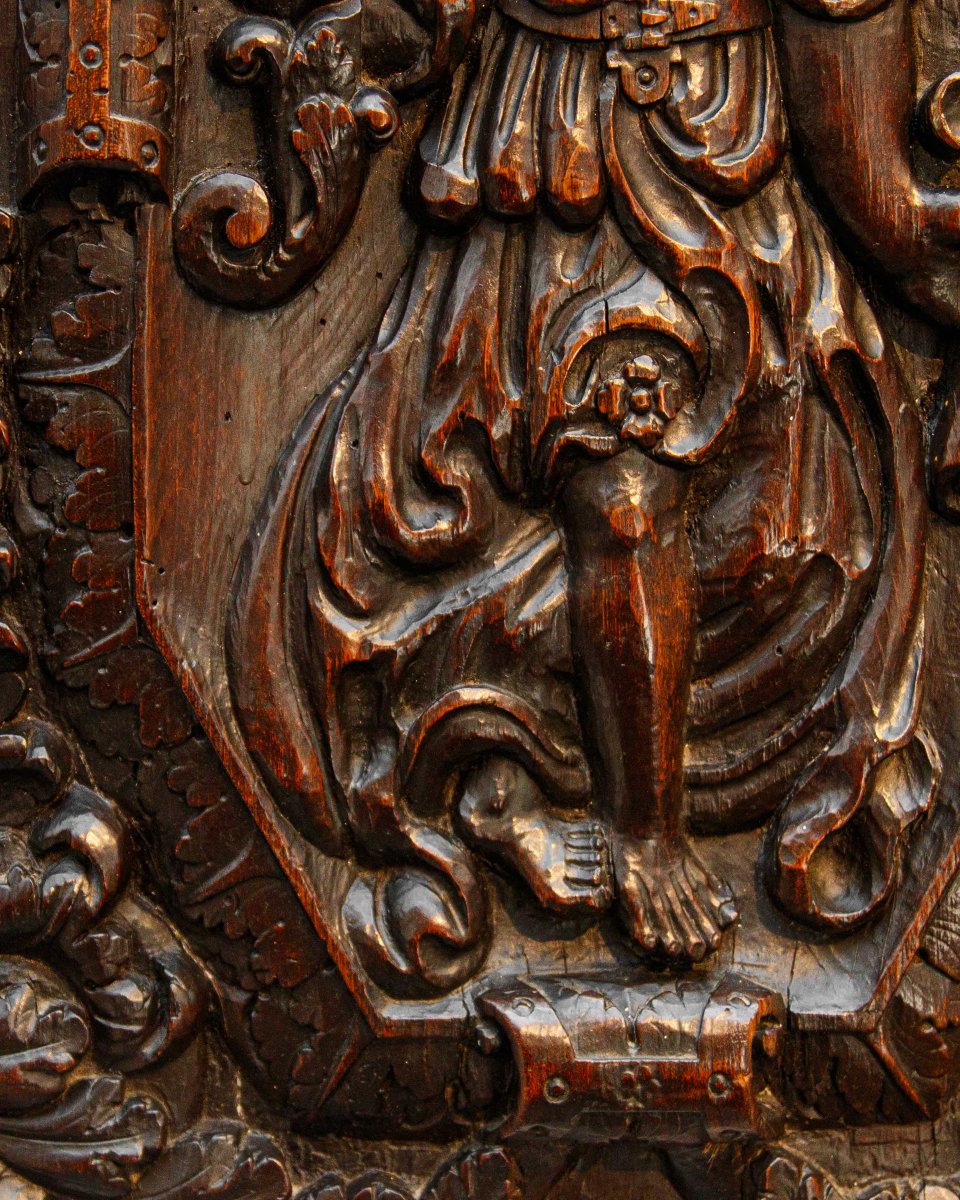
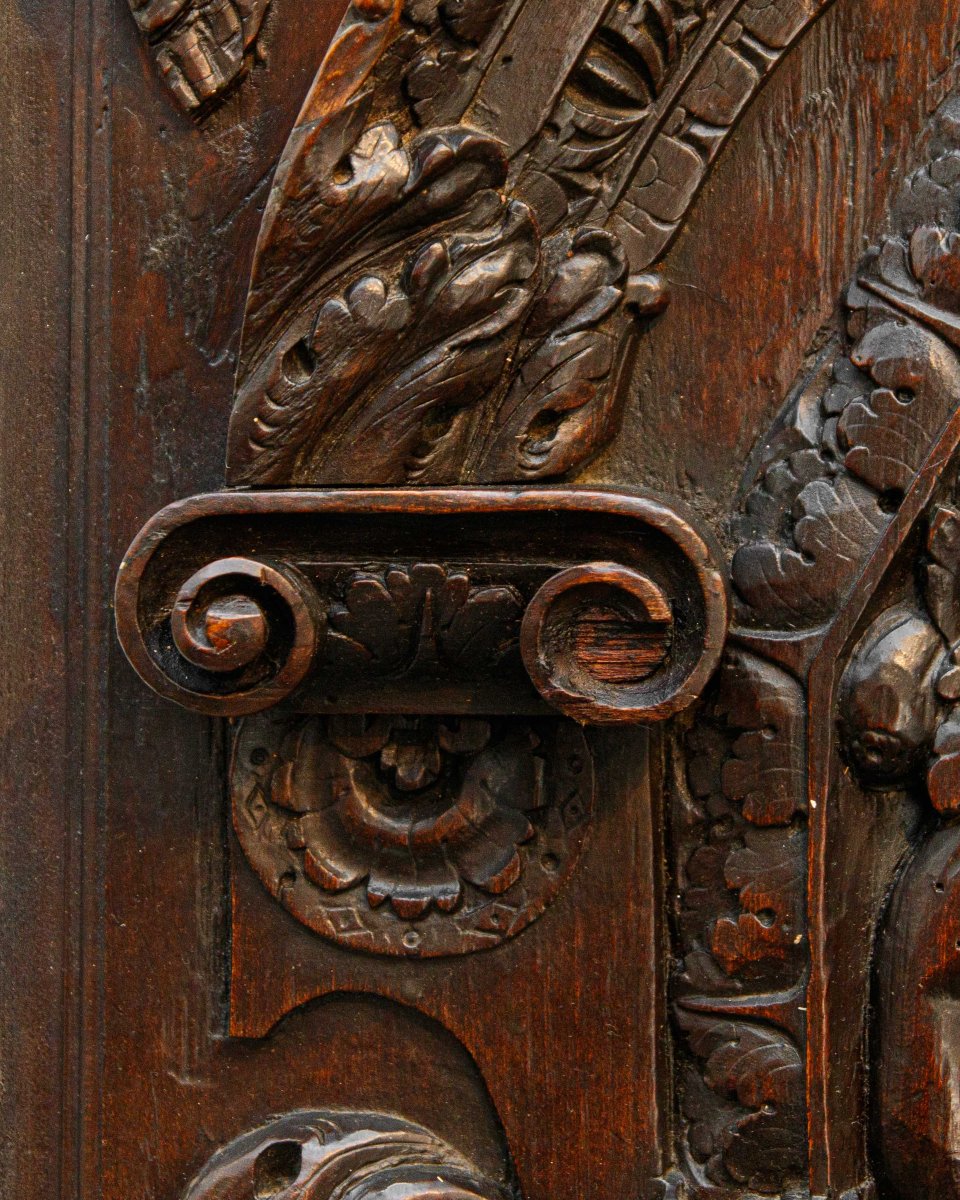
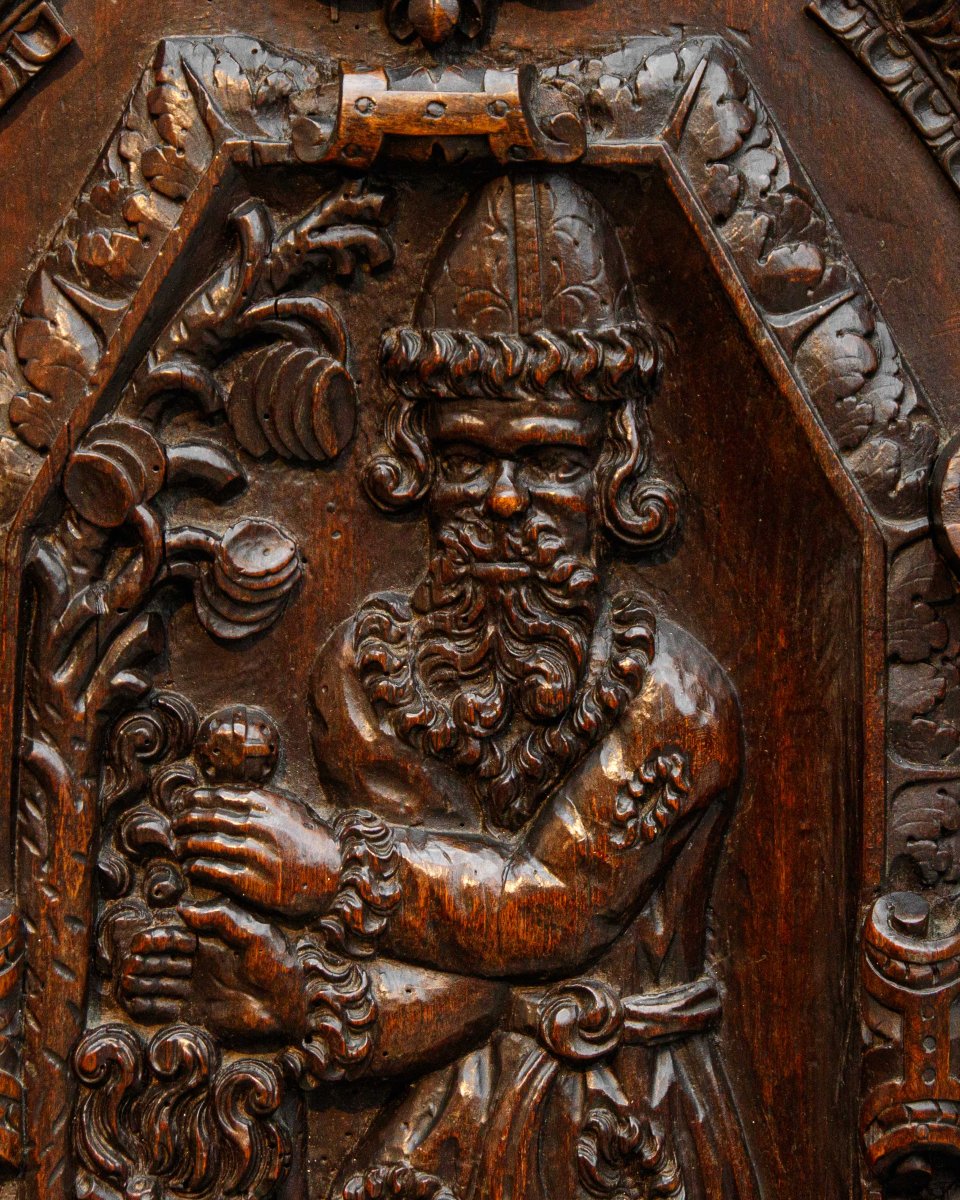
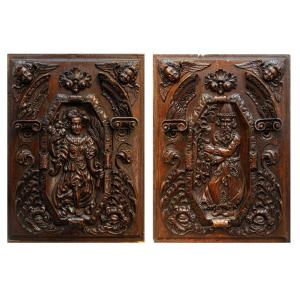
A pair of walnut panels carved in relief, originally intended as decoration for a grand door or a piece of Flemish architectural furniture, depicting the allegories of Summer and Winter. The two figures are enclosed within octagonal-profiled lozenge frames, flanked by Ionic capitals carved with pronounced volutes and surmounted by pointed arches. The upper spandrels feature winged cherub heads, rendered with great finesse in the details of their curls and feathers. The female figure, identifiable as Summer, holds a sheaf of wheat, a symbol of the harvest and seasonal abundance; the bearded male figure, crowned with vine branches, personifies Winter, accompanied by a bundle of wood and dried plant elements alluding to the cold season. Both panels are framed by fleshy, voluminous acanthus leaves, carved with great technical skill and a marked sense of plasticity, typical of Flemish wood sculpture from the height of the 17th century. The ensemble is completed by a pediment, also carved from walnut, decorated at the center by a cherub’s head enclosed within broad, symmetrically arranged leafy fronds, with curling side volutes that echo the decorative style of the two panels below, confirming that the three elements belong to a single architectural composition.
Works of this kind are part of the rich tradition of 17th-century Flemish woodcarving, a period in which cities such as Antwerp, Bruges, and Mechelen were centers of the highest caliber for the production of secular and ecclesiastical furnishings. The depiction of the four seasons—often rendered in complete cycles for doors, cabinets, chests, or wainscoting—reflected the Baroque taste for naturalistic allegory and the celebration of the cycle of life through agricultural labor and seasonal changes. The use of walnut, a prized and malleable material, allowed for deep carvings and minute details, while the iconography of winged cherubs and architectural volutes drew from the Italian and French decorative repertoire, reworked by Flemish carvers with a characteristic sculptural vigor. These artifacts, often produced by specialized workshops affiliated with the cabinetmakers’ guilds, attest to the high technical level achieved in Flanders during an era of great artistic and commercial flourishing.
Period: 17th century
Style: Other Style
Condition: Good condition
Material: Solid wood
Width: 49
Height: 67
Reference (ID): 1791216
Availability: In stock