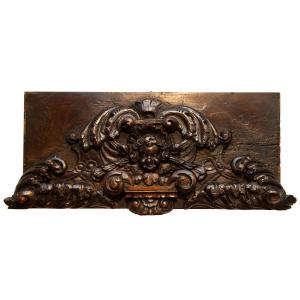


17th Century, The Education Of The Virgin
17th century
The Education of the Virgin
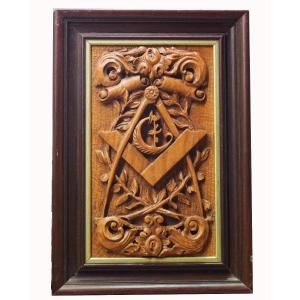
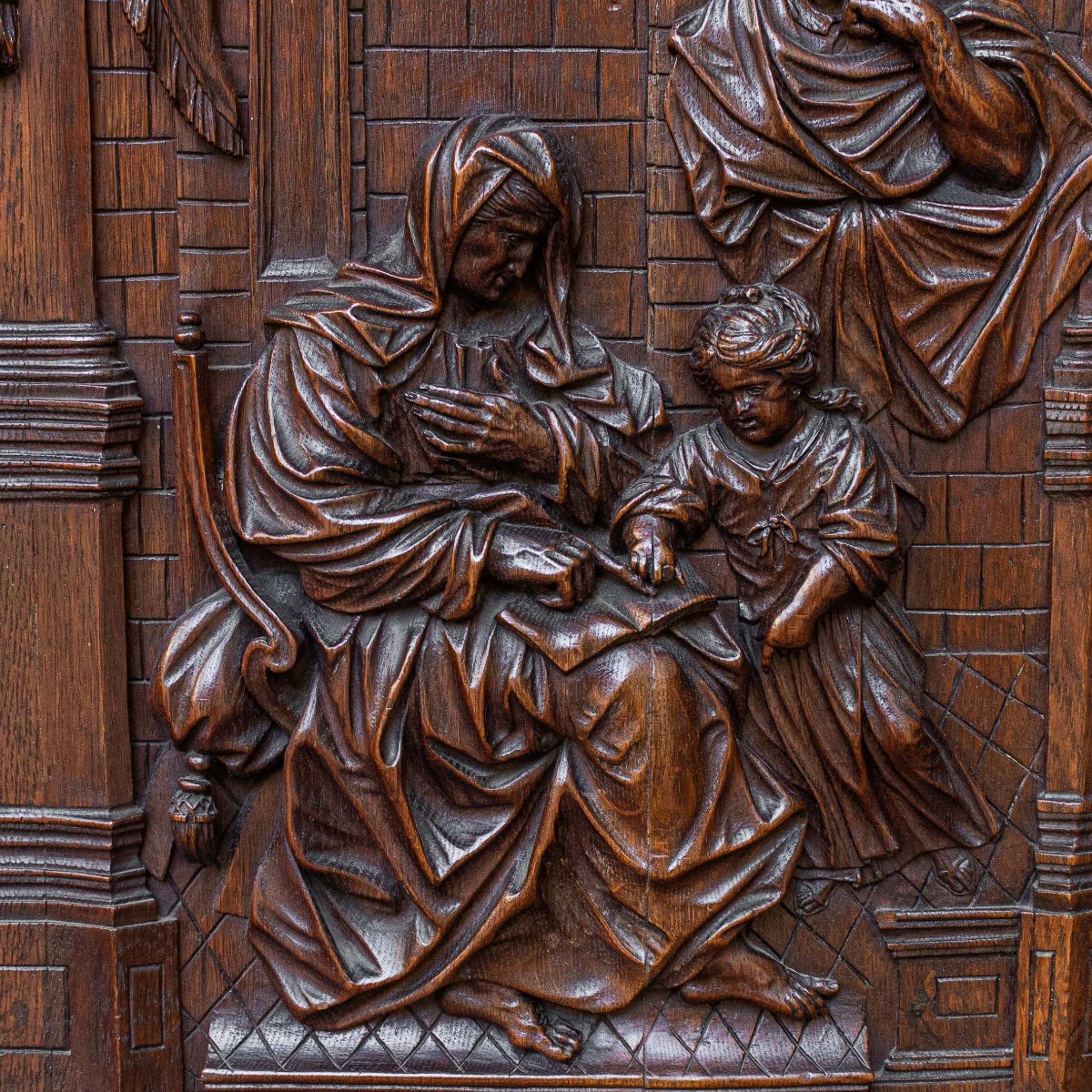
Wooden relief, 77 x 48 cm – frame, 90 x 61 cm
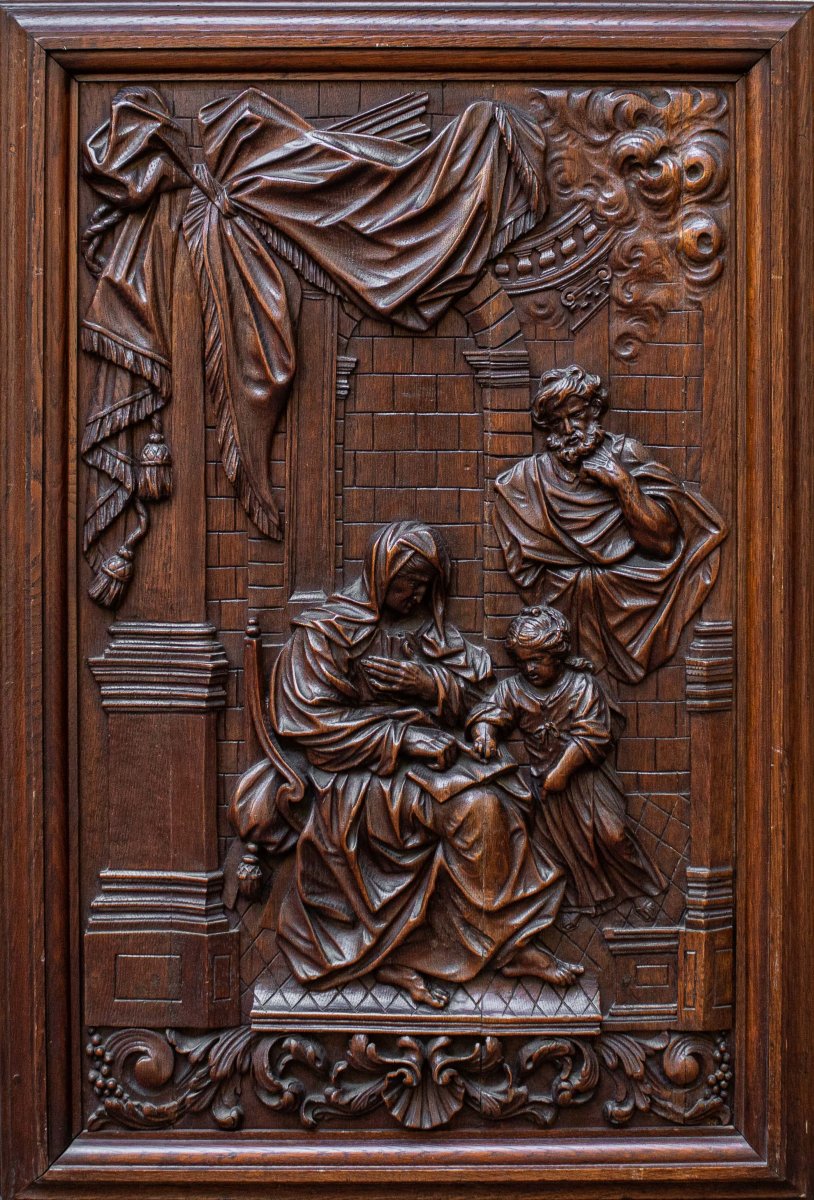
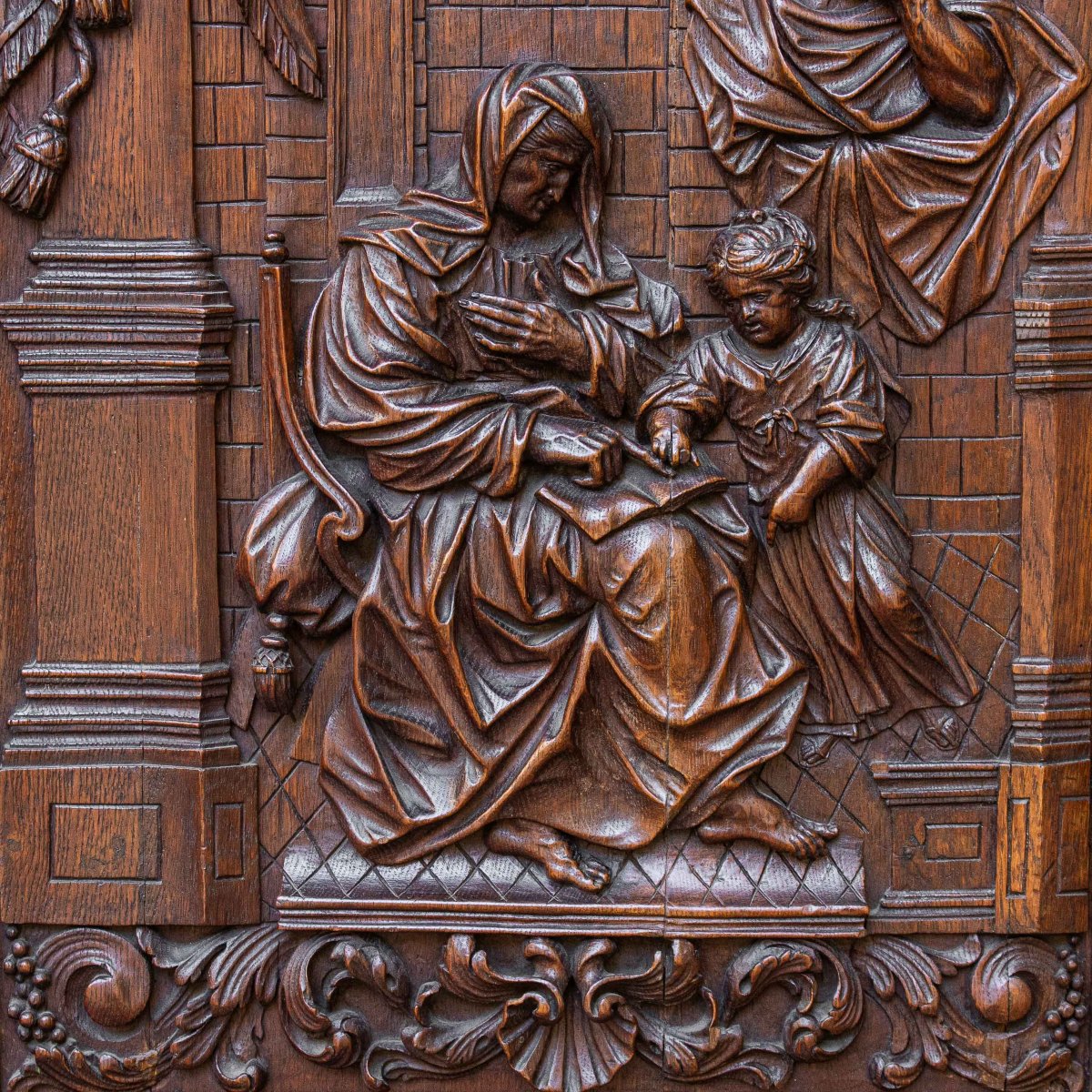
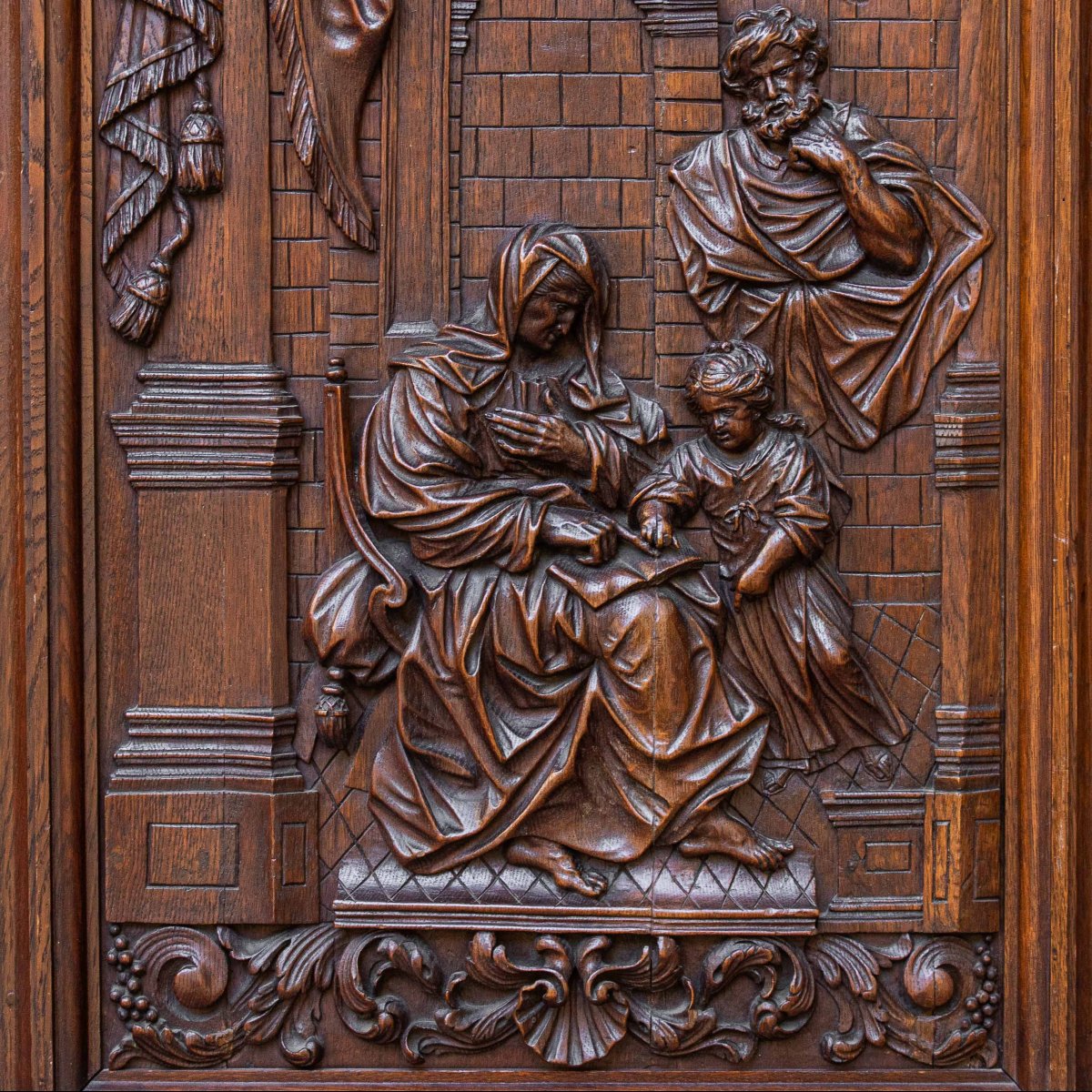
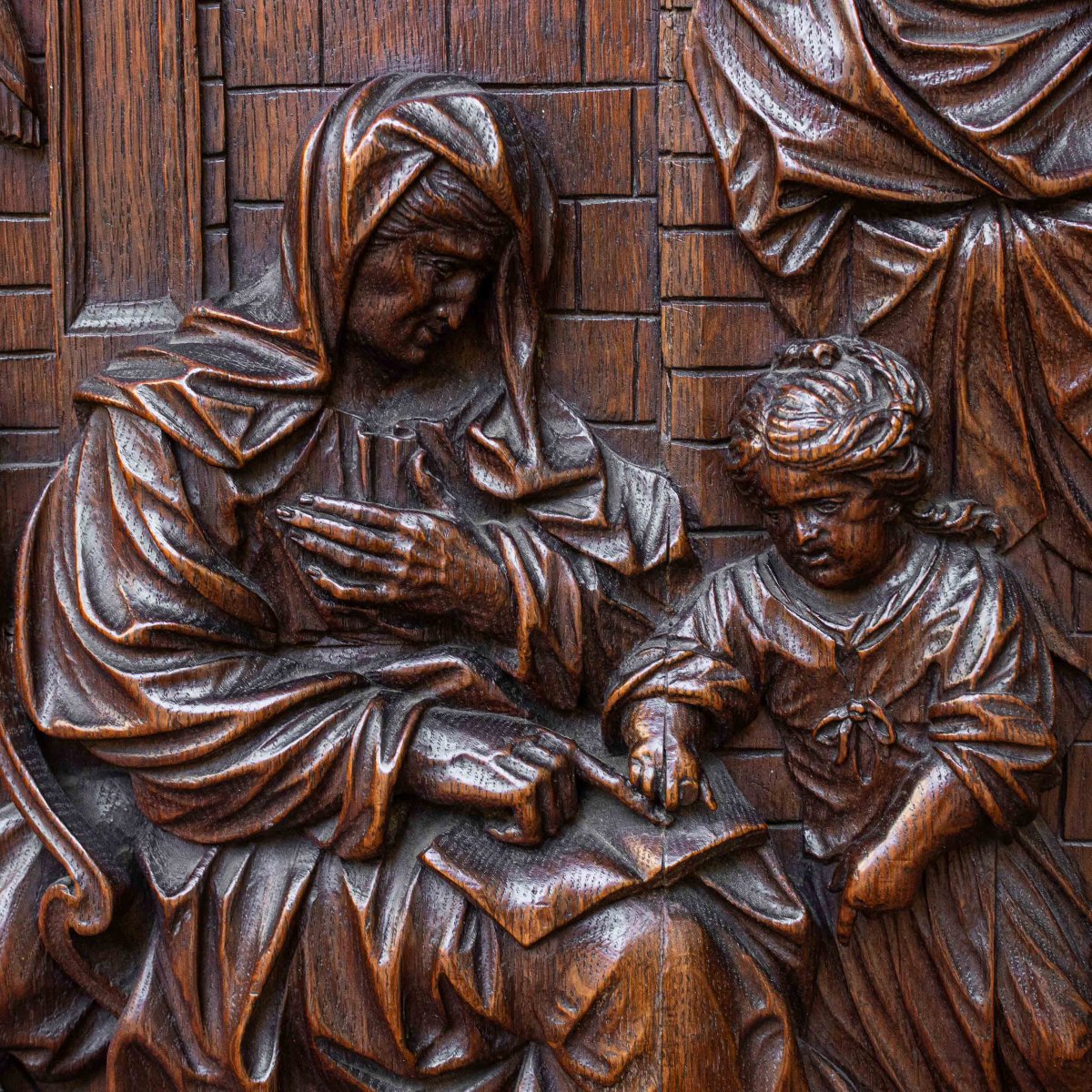
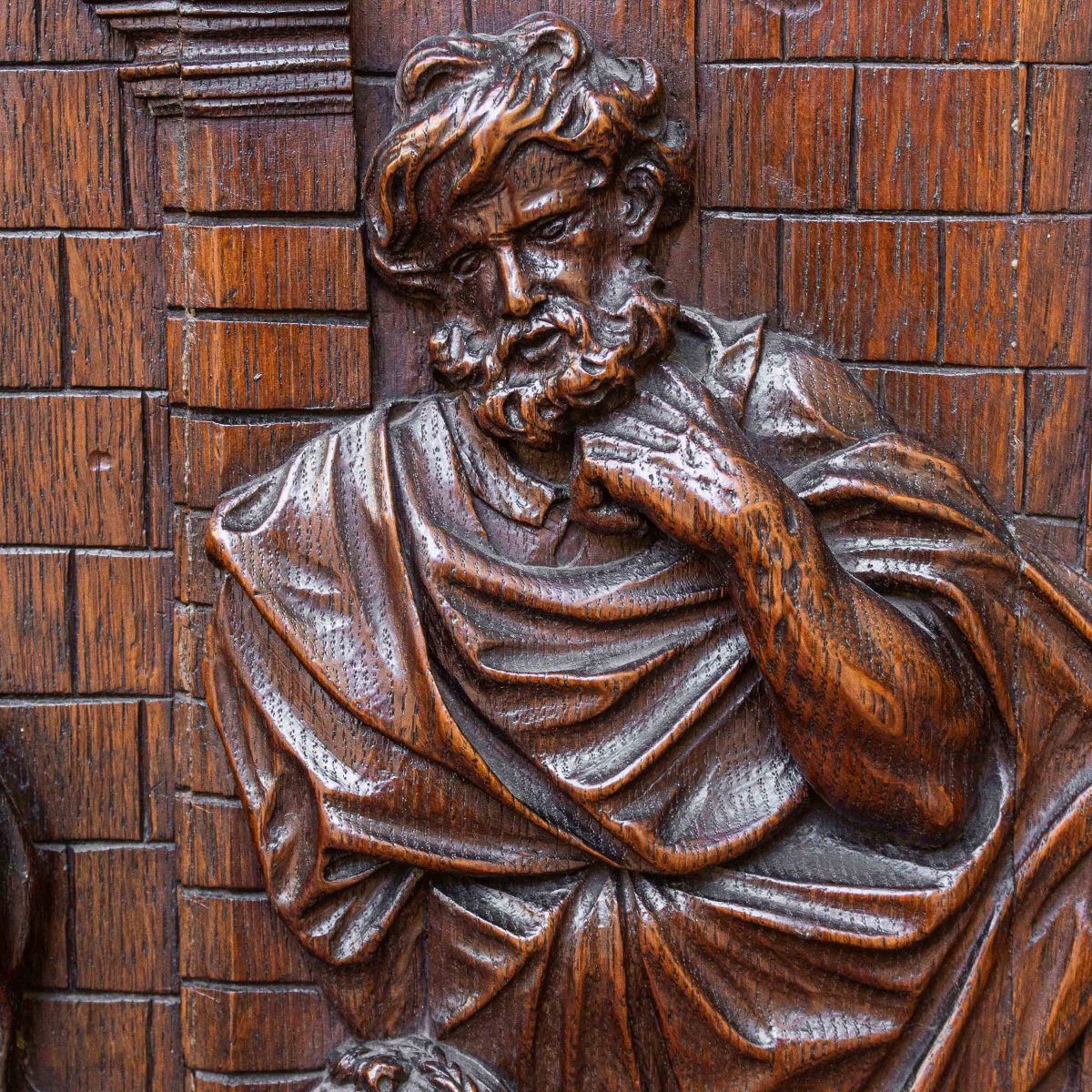
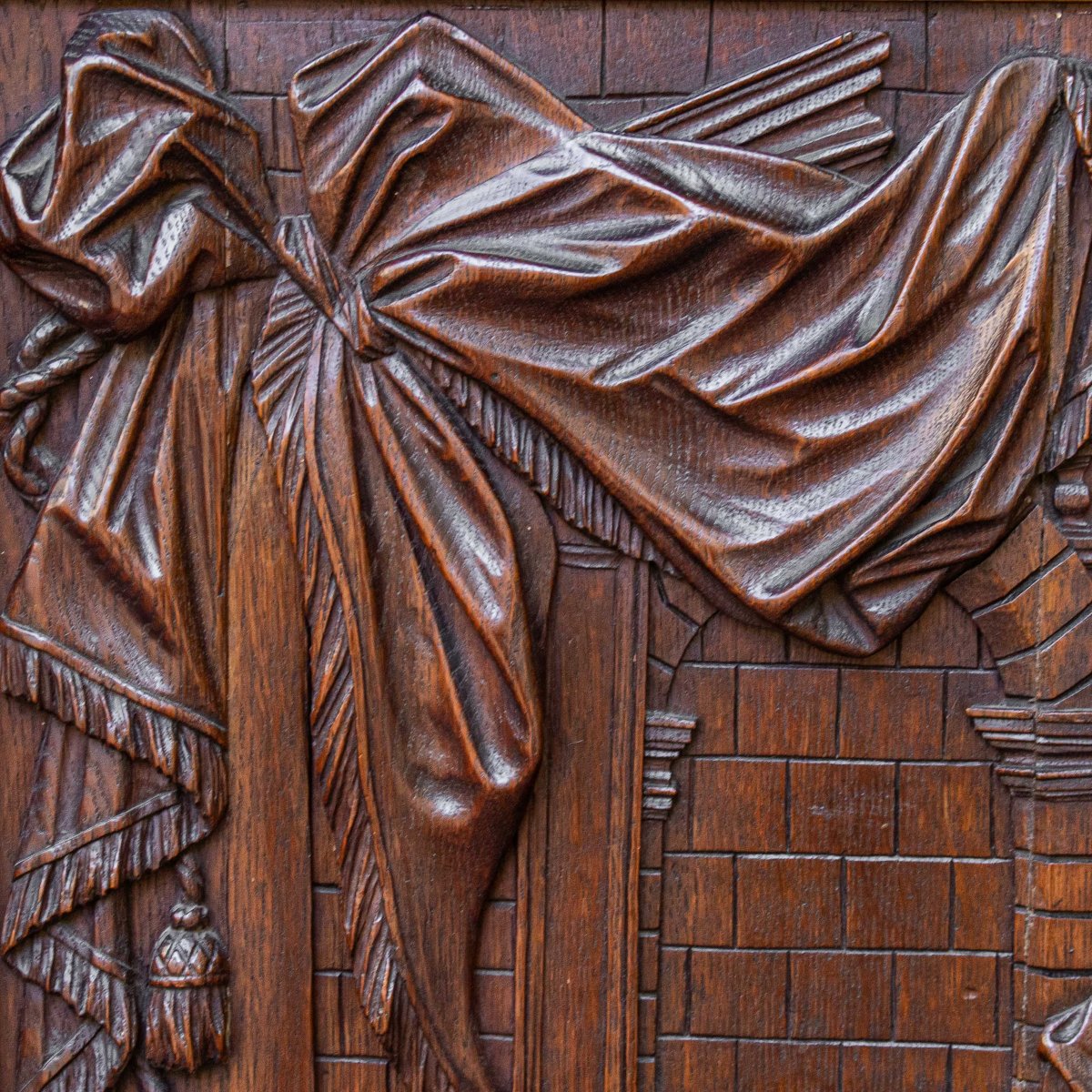
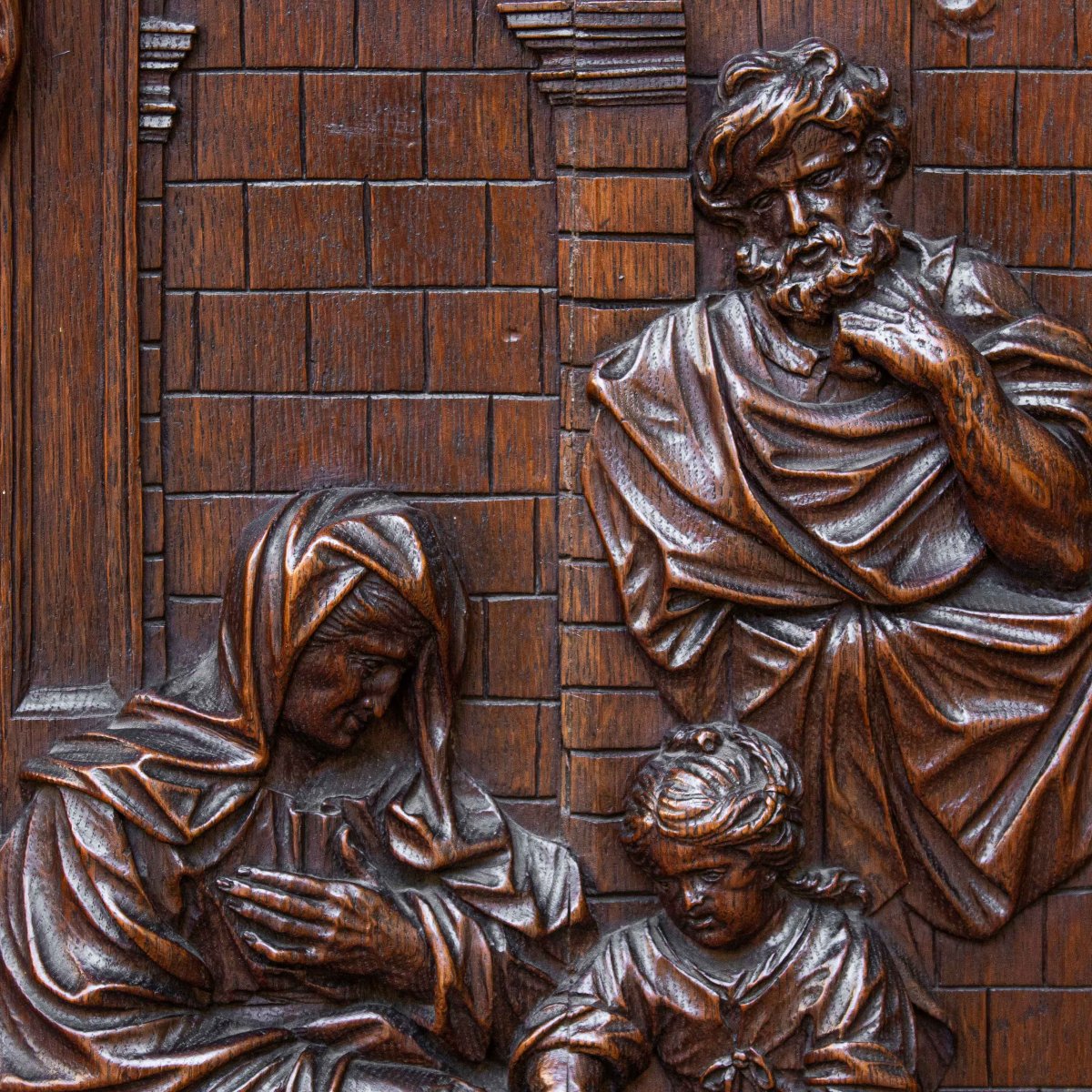
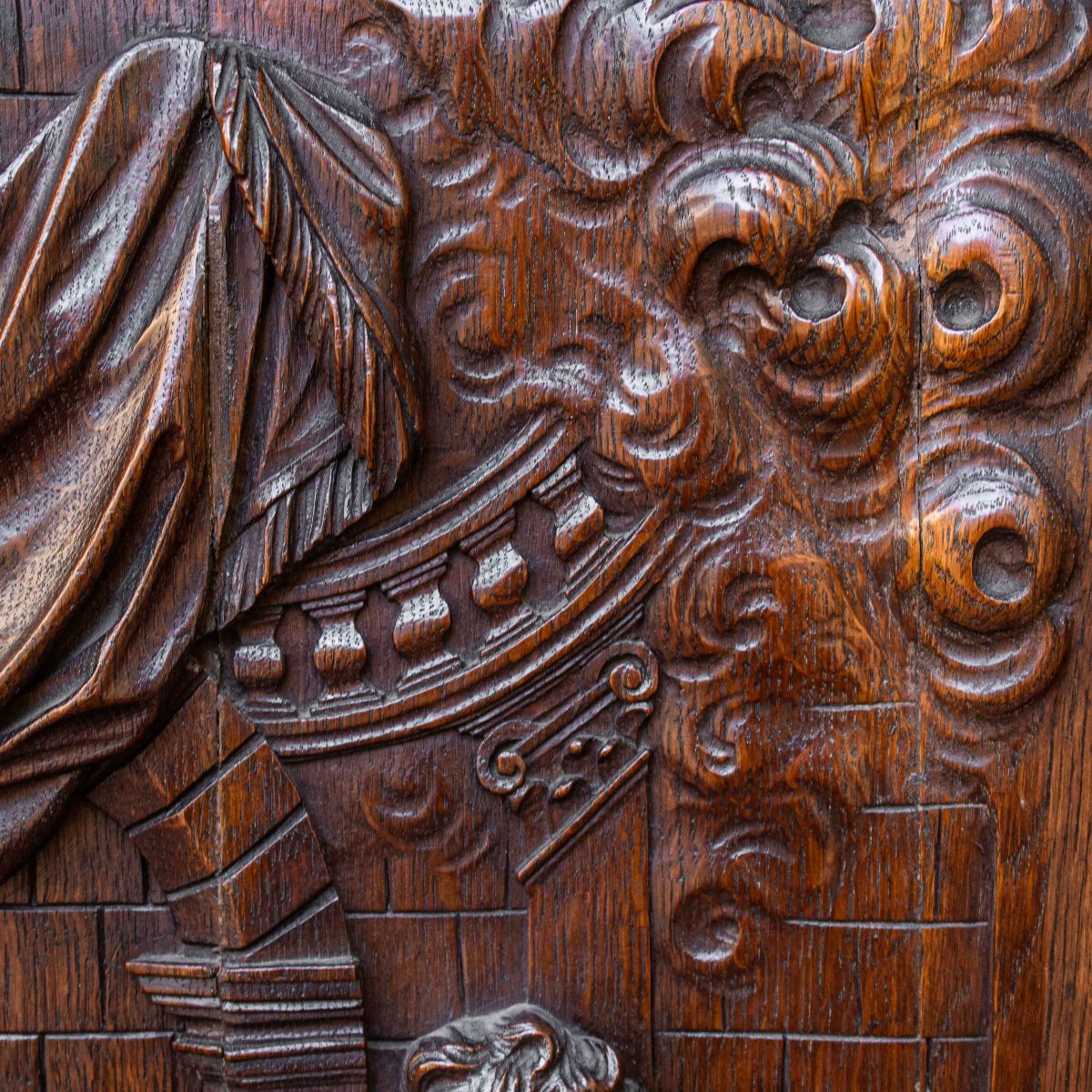
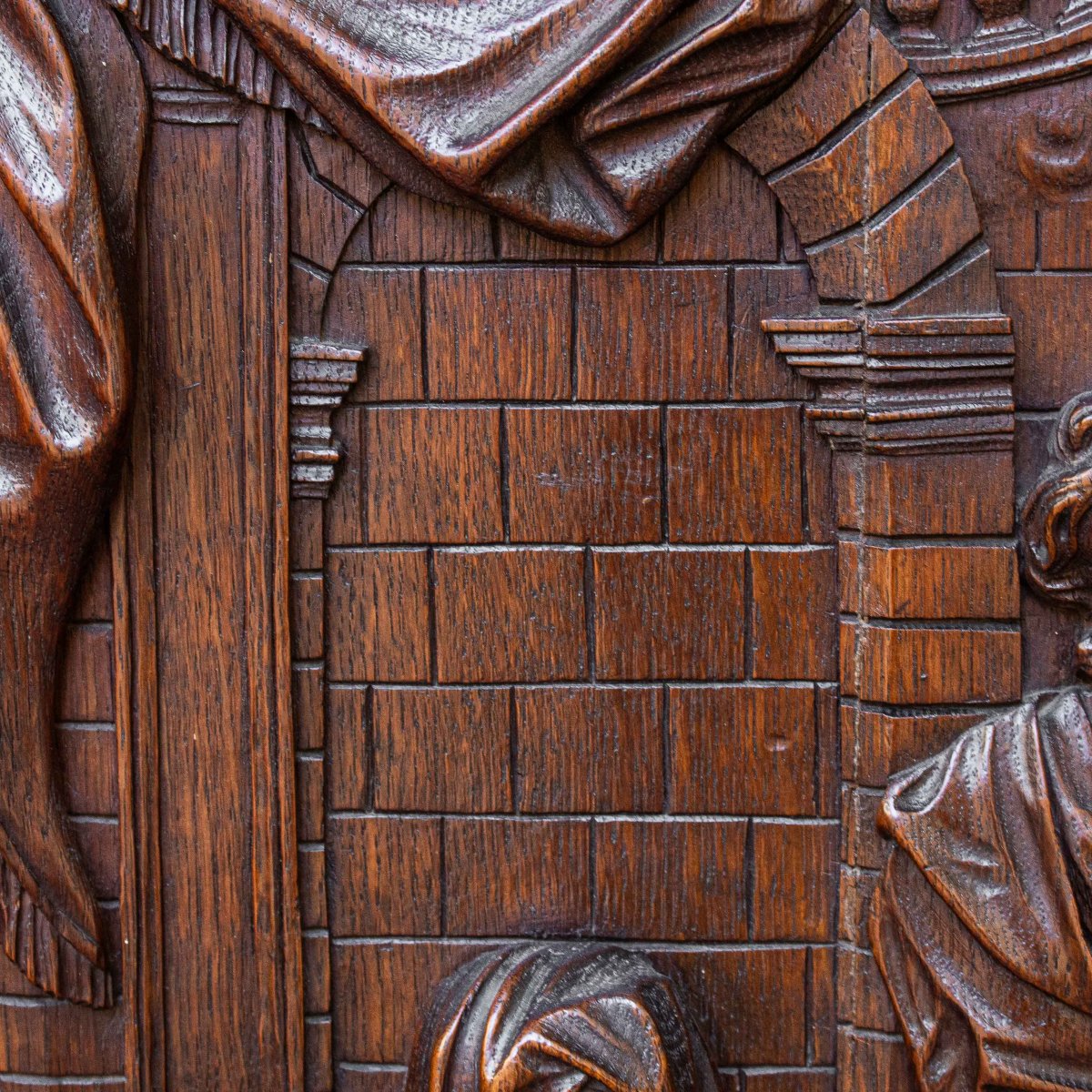
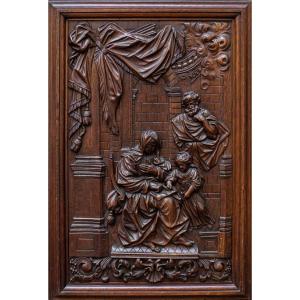
The subject of Mary’s education is quite rare in the art world. This particular Marian iconography draws inspiration from the apocryphal writings, especially the Protoevangelium of James and the Gospel of Pseudo-Matthew, which are rich in fairy-tale-like anecdotes. Mary spent her earliest childhood in Jerusalem, in the home of her parents, Anne and Joachim. The little girl was admired by the entire people of Israel: she spent most of her time praying and embroidering fabrics. By the age of three, she was already walking with a sure step and speaking like an adult. Her mother, Anna, also taught her to read: this wooden relief depicts Saint Anna, seated amid a sumptuous swirl of robes, as she helps the young Mary with her reading. Standing apart—as is typical in the iconography of Saint Joseph—Joachim watches the scene in rapt attention. The opulent setting in which the artist places the scene—even if it does not historically reflect that of a typical Israelite home—is intended to convey the reverent atmosphere of austerity and religious devotion fostered by the Virgin’s family. The walls and columns are tall and unadorned, free from any hint of distraction or pomposity. The heavy curtain in the foreground is drawn back to allow the viewer to share in this intimate moment of contemplation. The series of scrolls and acanthus leaves below is an embellishment added by the artist to showcase his graceful skill. The central conch shell is a further Marian reference, an allegory of the Divine Conception.
The subject of Mary engrossed in reading—sometimes kneeling on a cushion—is almost absent from medieval art. This iconography was revived beginning in the Renaissance, aided by the renewed veneration of Saint Anne; note, however, that its execution on a wooden panel is truly rare. While there is no shortage of examples in painting (Francesco Cairo, 17th century, ASST Spedali Civili di Brescia; Filippo Lauri, 17th century, Galleria dell’Accademia Nazionale di San Luca, Rome; Giuseppe Bazzani, 1729, MAST Castel Goffredo; Giambattista Tiepolo, 1732, Church of Santa Maria della Consolazione or della Fava, Venice; Venanzio Bisini, 1786, Diocesan Art Gallery of Leonessa), this work is an extremely rare example in medium relief, dating from a time significantly earlier than most of the paintings cited.
Period: 17th century
Style: Other Style
Condition: Good condition
Material: Solid wood
Width: 48
Height: 77
Reference (ID): 1791209
Availability: In stock