



Follower Of Jan Soens ('s-hertogenbosch, 1547 Or 1548 – Parma, 1611), Ecce Agnus Dei
Follower of Jan Soens ('s-Hertogenbosch, 1547 or 1548 – Parma, 1611)
Ecce Agnus Dei
Oil on copper, 18 x 13 cm – with frame, 40 x 35 cm
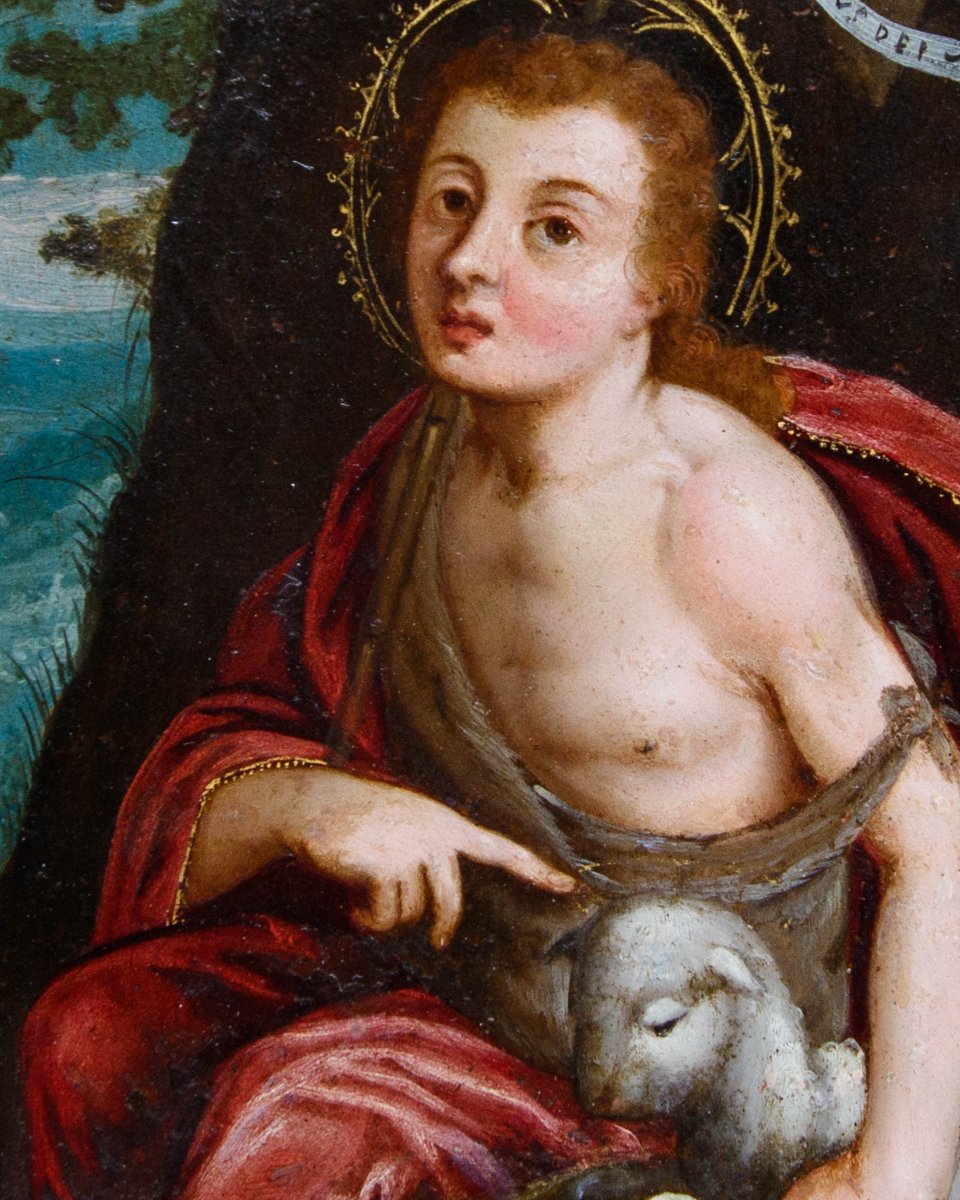
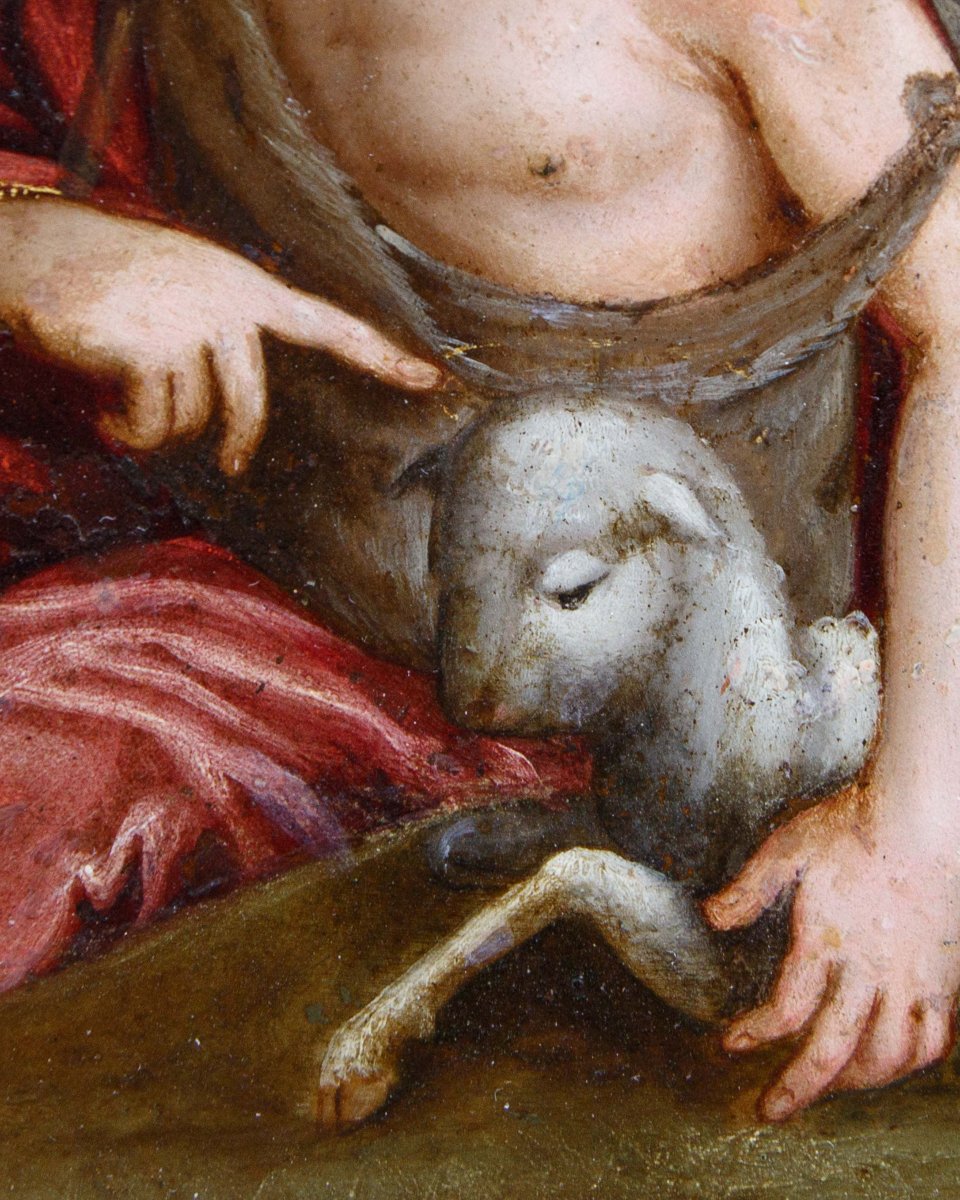
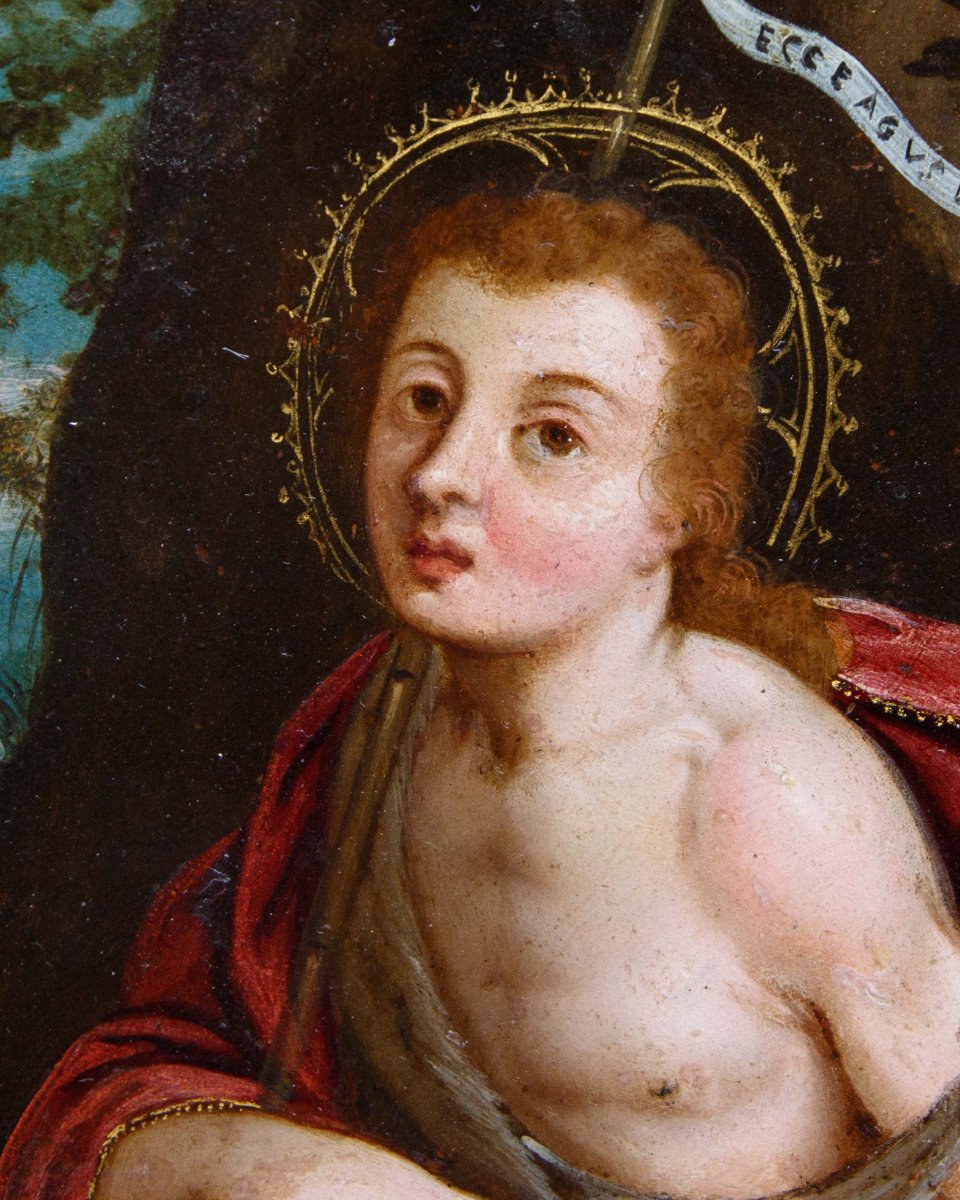
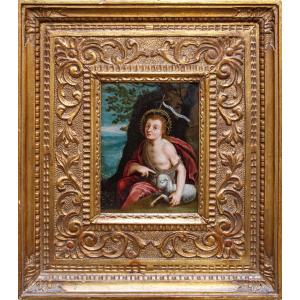
The oil on copper painting depicts St. John the Baptist in an intimate and collected composition, set in a natural landscape that opens in the background with trees and a distant view. The saint is depicted half-length, wrapped in a reddish drape that leaves the torso exposed. Next to him appears the lamb, symbol of Christ, which John indicates with an eloquent gesture of his hand, while with the other he holds it gently. Above the figure stands a thin cross with a fluttering cartouche bearing the inscription “Ecce Agnus Dei”, an element that explains the theological meaning of the scene. The whole is constructed with a balance between figure and nature, where the landscape is not merely a backdrop but contributes to creating a contemplative and devotional atmosphere.
The work, by a follower of Jan Soens, seems to be based on a composition by the same artist with a similar subject, now in a private collection. Soens, originally from Antwerp, trained in the Flemish tradition before moving to Rome around 1573, where he gained fame mainly as a landscape painter, also working under the direction of Giorgio Vasari. In 1575 he entered the service of the Farnese family in Parma, the city where he worked for a long time until 1606, dedicating himself both to decorations for ducal palaces, largely lost, and to altarpieces and paintings on canvas still preserved between Parma and Piacenza. His painting is distinguished by its attention to landscape and a narrative sensitivity that is also well reflected in the works of his workshop and followers.
The theme of the ’“Ecce Agnus Dei” refers to a fundamental episode of the Gospel of John, in which the Baptist indicates Christ as the lamb of God destined for sacrifice. In the painting, this gesture takes on a central value: the saint's hand guides the viewer's gaze towards the animal, transforming the image into a visual meditation on the mystery of redemption. The lamb, docile and serene, anticipates the destiny of Christ, while the cross with the scroll strengthens the connection between proclamation and fulfillment. The scene, despite its simplicity, therefore contains a strong symbolic content, typical of 17th-century devotional painting, in which the immediacy of the figure and the clarity of the message were privileged tools to foster contemplation and understanding of the faithful.
Ecce Agnus Dei
Oil on copper, 18 x 13 cm – with frame, 40 x 35 cm
The oil on copper painting depicts St. John the Baptist in an intimate and collected composition, set in a natural landscape that opens in the background with trees and a distant view. The saint is depicted half-length, wrapped in a reddish drape that leaves the torso exposed. Next to him appears the lamb, symbol of Christ, which John indicates with an eloquent gesture of his hand, while with the other he holds it gently. Above the figure stands a thin cross with a fluttering cartouche bearing the inscription “Ecce Agnus Dei”, an element that explains the theological meaning of the scene. The whole is constructed with a balance between figure and nature, where the landscape is not merely a backdrop but contributes to creating a contemplative and devotional atmosphere.
The work, by a follower of Jan Soens, seems to be based on a composition by the same artist with a similar subject, now in a private collection. Soens, originally from Antwerp, trained in the Flemish tradition before moving to Rome around 1573, where he gained fame mainly as a landscape painter, also working under the direction of Giorgio Vasari. In 1575 he entered the service of the Farnese family in Parma, the city where he worked for a long time until 1606, dedicating himself both to decorations for ducal palaces, largely lost, and to altarpieces and paintings on canvas still preserved between Parma and Piacenza. His painting is distinguished by its attention to landscape and a narrative sensitivity that is also well reflected in the works of his workshop and followers.
The theme of the ’“Ecce Agnus Dei” refers to a fundamental episode of the Gospel of John, in which the Baptist indicates Christ as the lamb of God destined for sacrifice. In the painting, this gesture takes on a central value: the saint's hand guides the viewer's gaze towards the animal, transforming the image into a visual meditation on the mystery of redemption. The lamb, docile and serene, anticipates the destiny of Christ, while the cross with the scroll strengthens the connection between proclamation and fulfillment. The scene, despite its simplicity, therefore contains a strong symbolic content, typical of 17th-century devotional painting, in which the immediacy of the figure and the clarity of the message were privileged tools to foster contemplation and understanding of the faithful.
2 400 €
Period: 17th century
Style: Other Style
Condition: Good condition
Material: Oil painting on copper
Width: 13
Height: 18
Reference (ID): 1742852
Availability: In stock
Print