

Lombard School Of The 17th Century, Still Life With Dishes, Flowers And Fruit
Lombard school of the 17th century
Still life with dishes, flowers and fruit
Oil on canvas, 70 x 93.5 cm – with frame, 82 x 105 cm
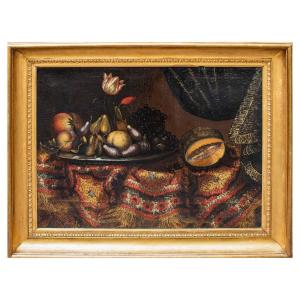
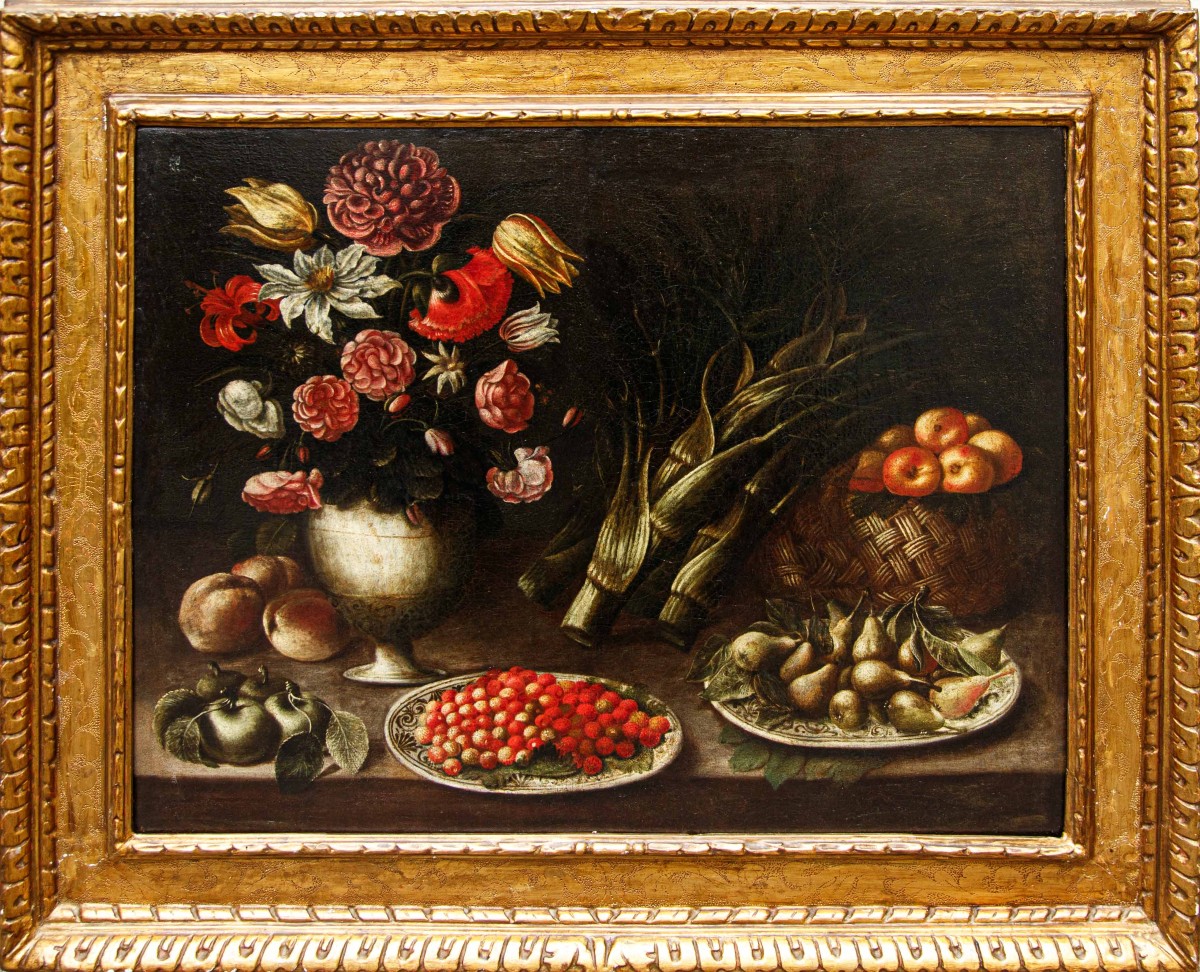
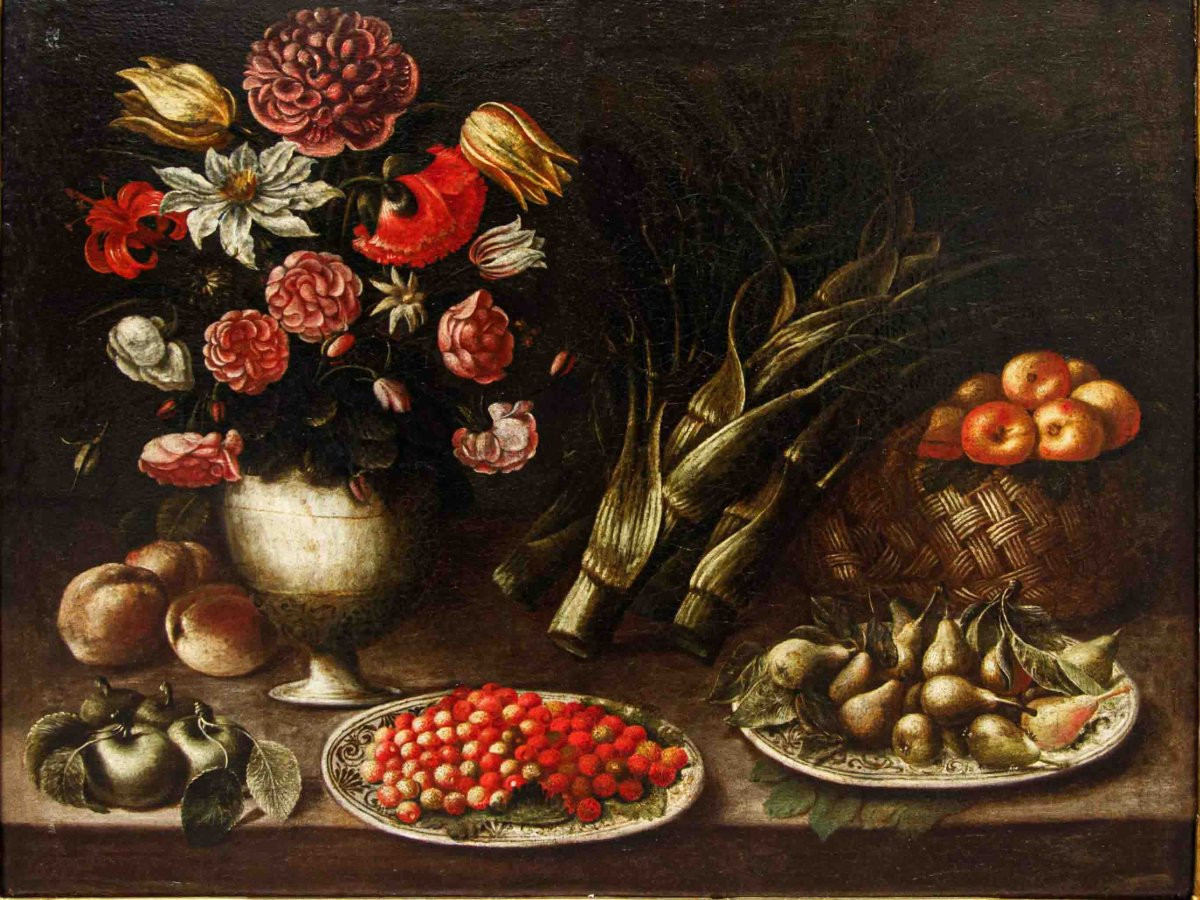
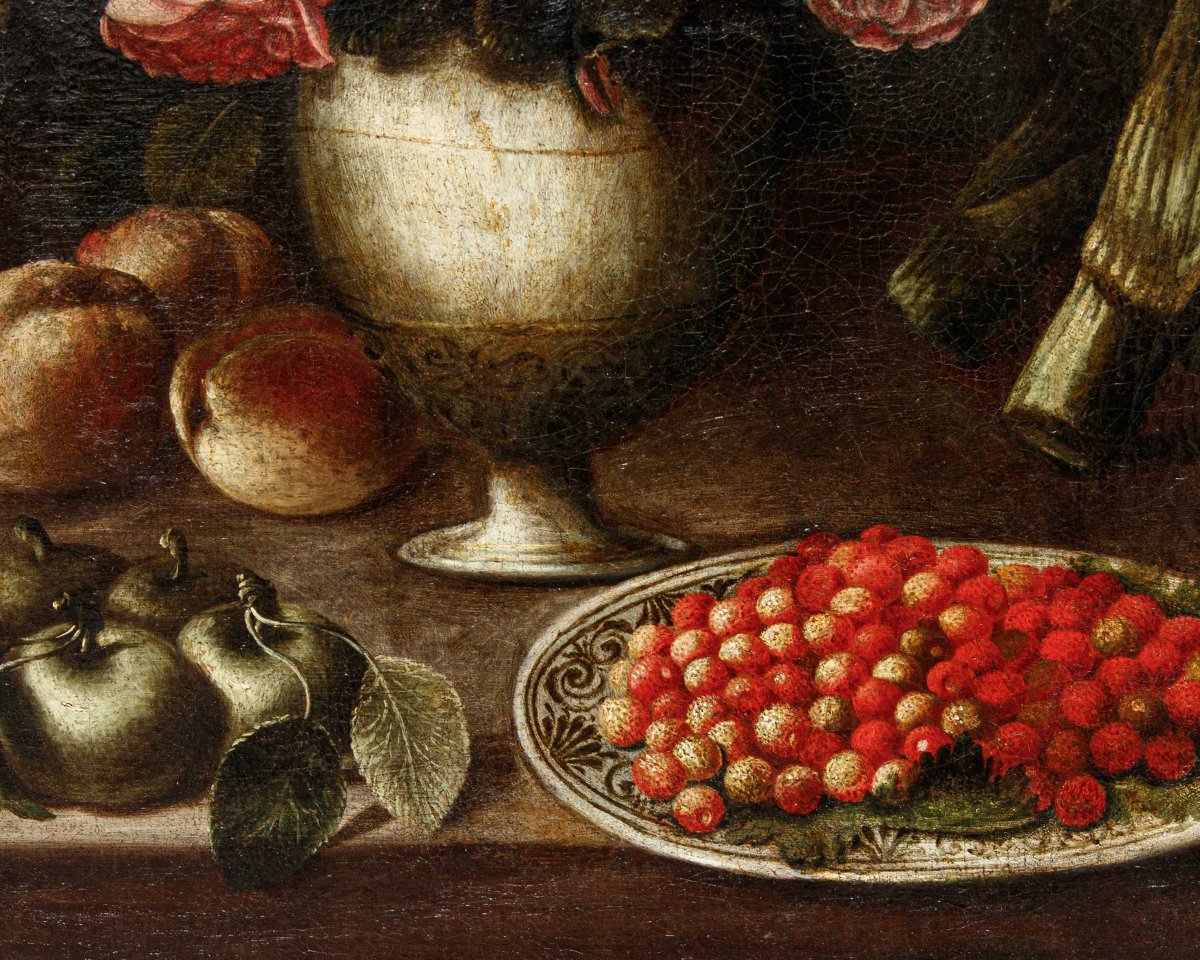
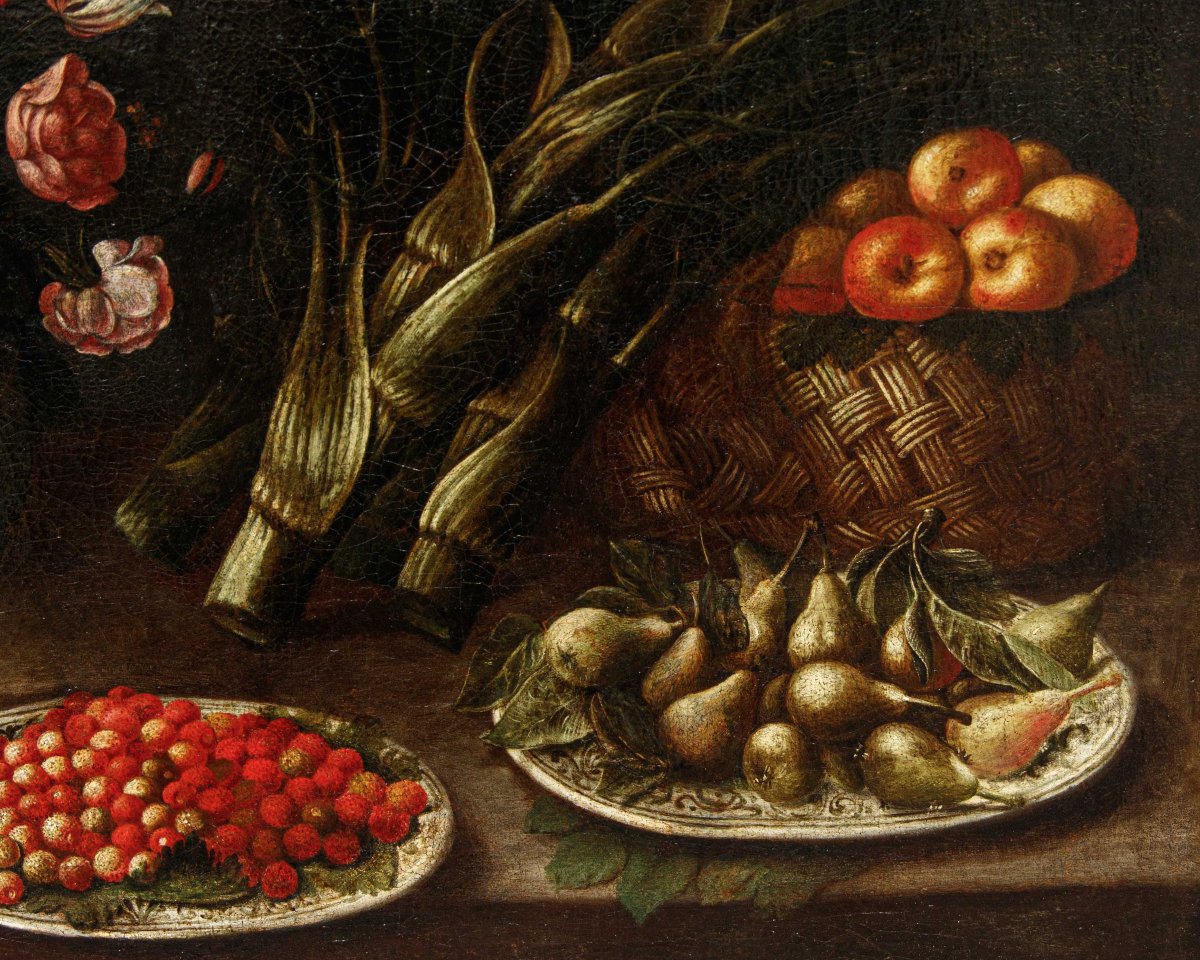
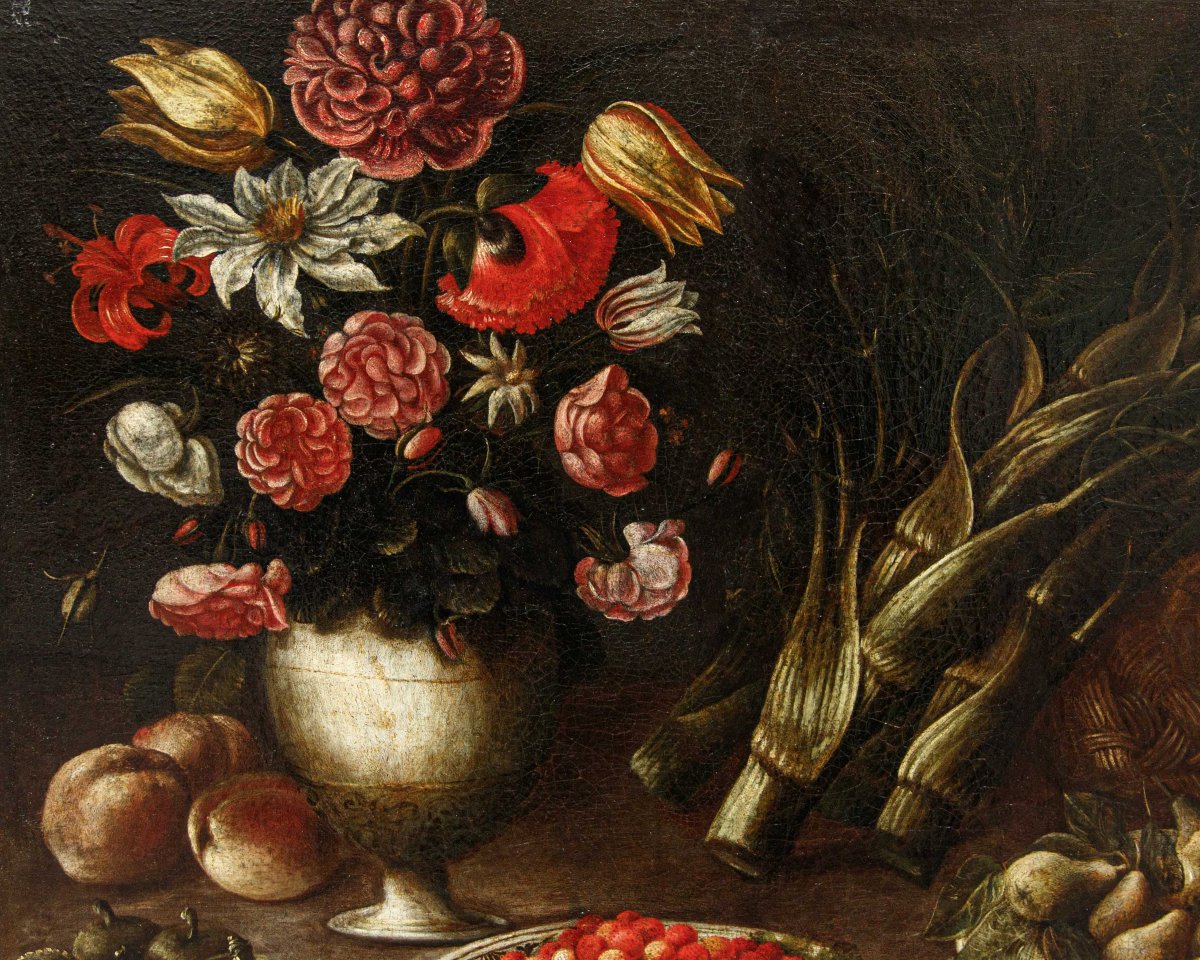
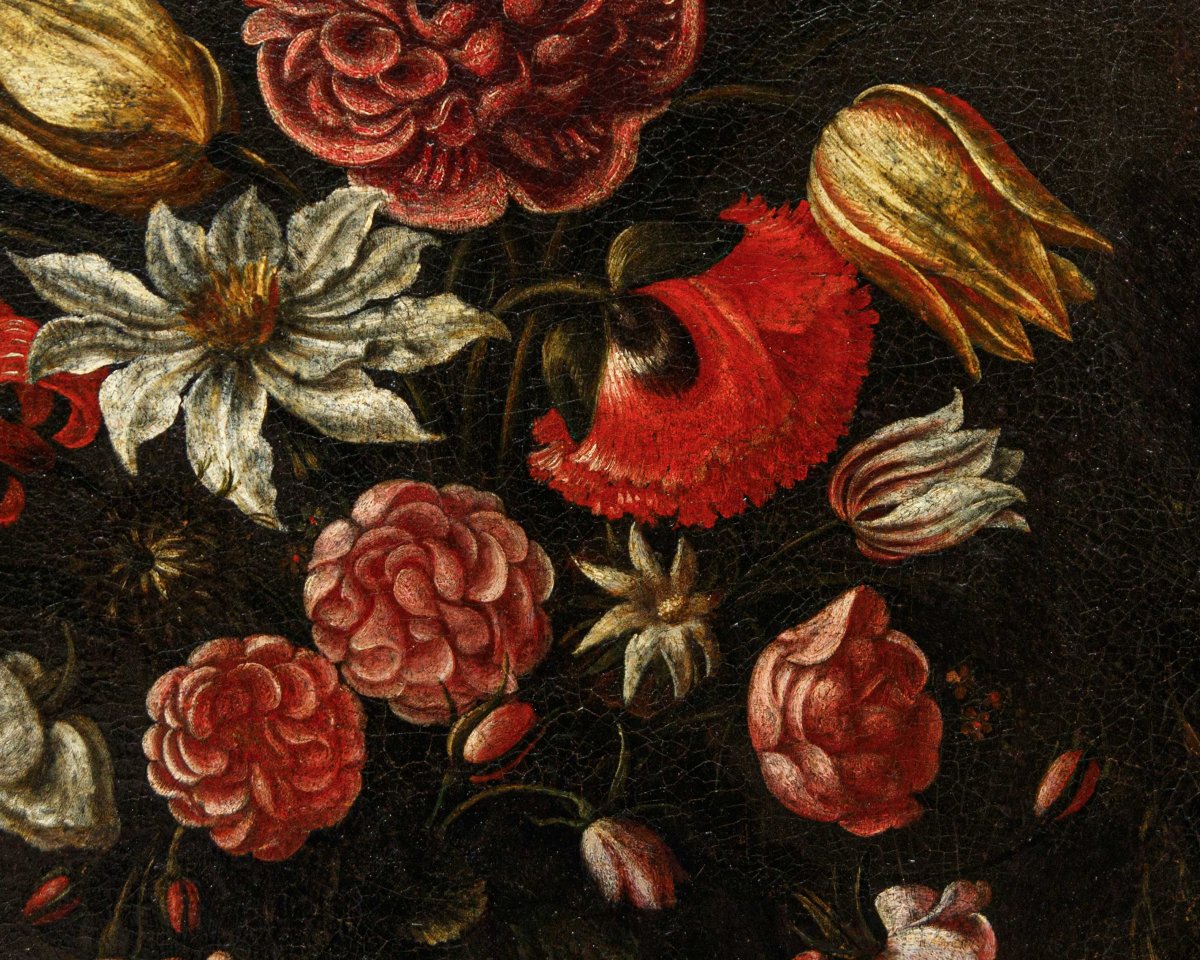
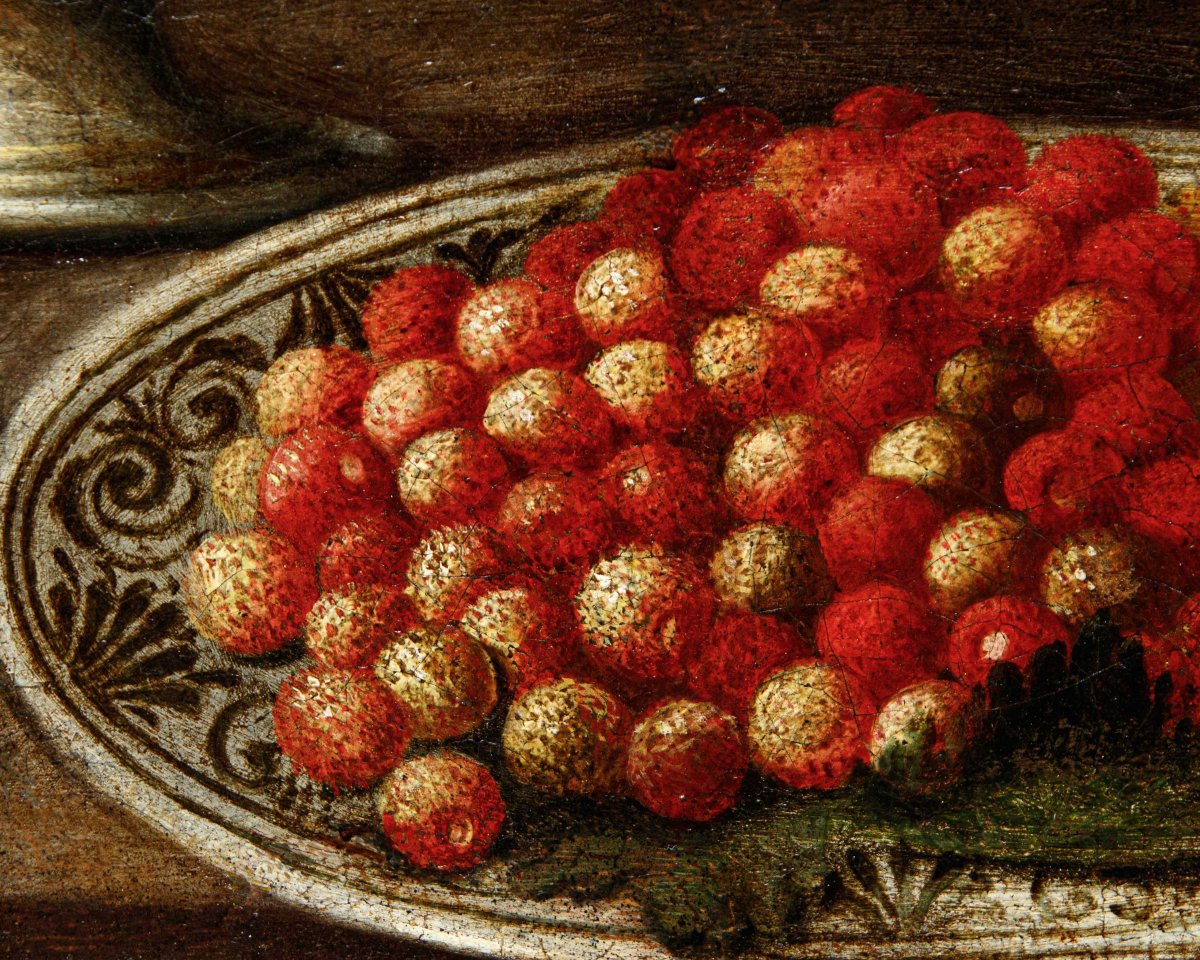
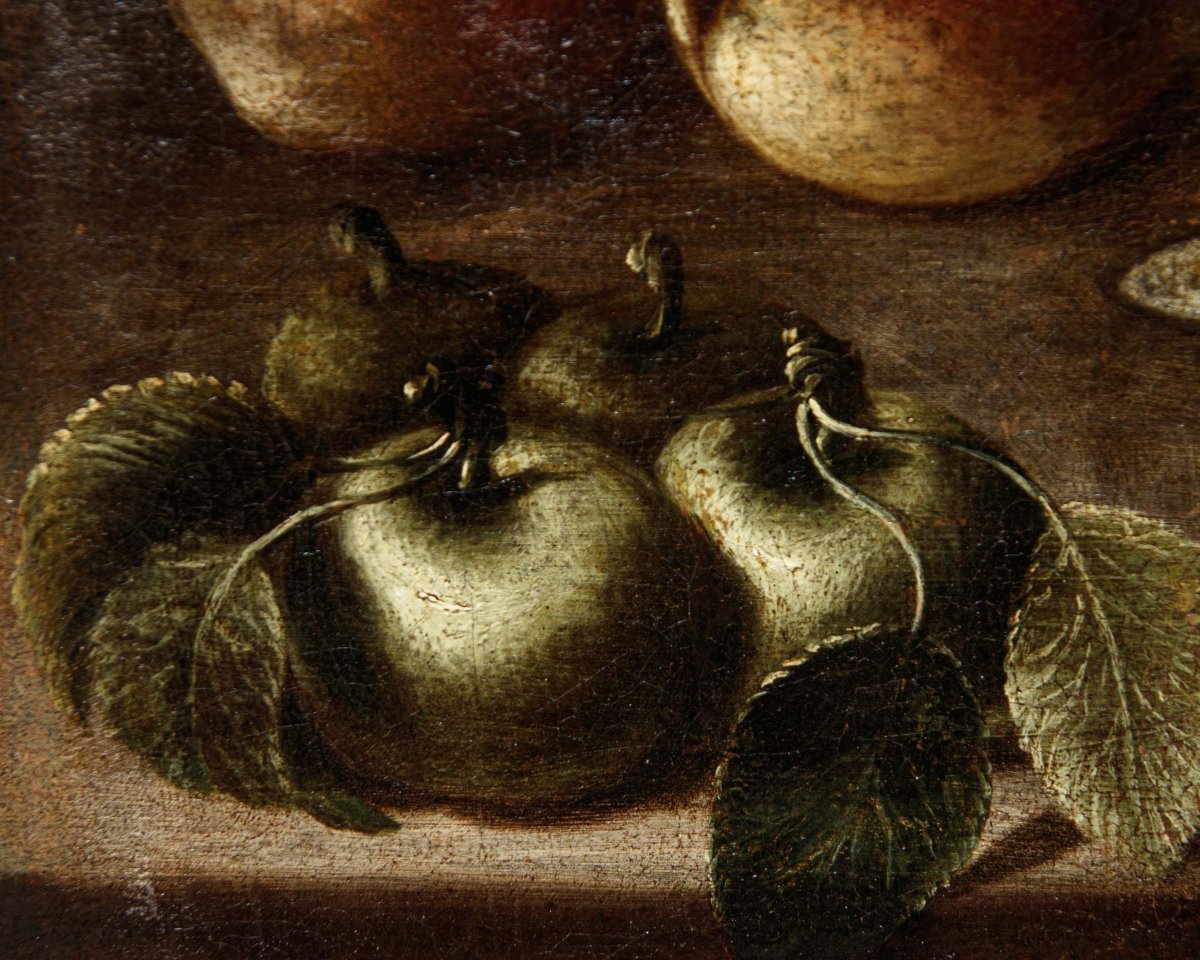
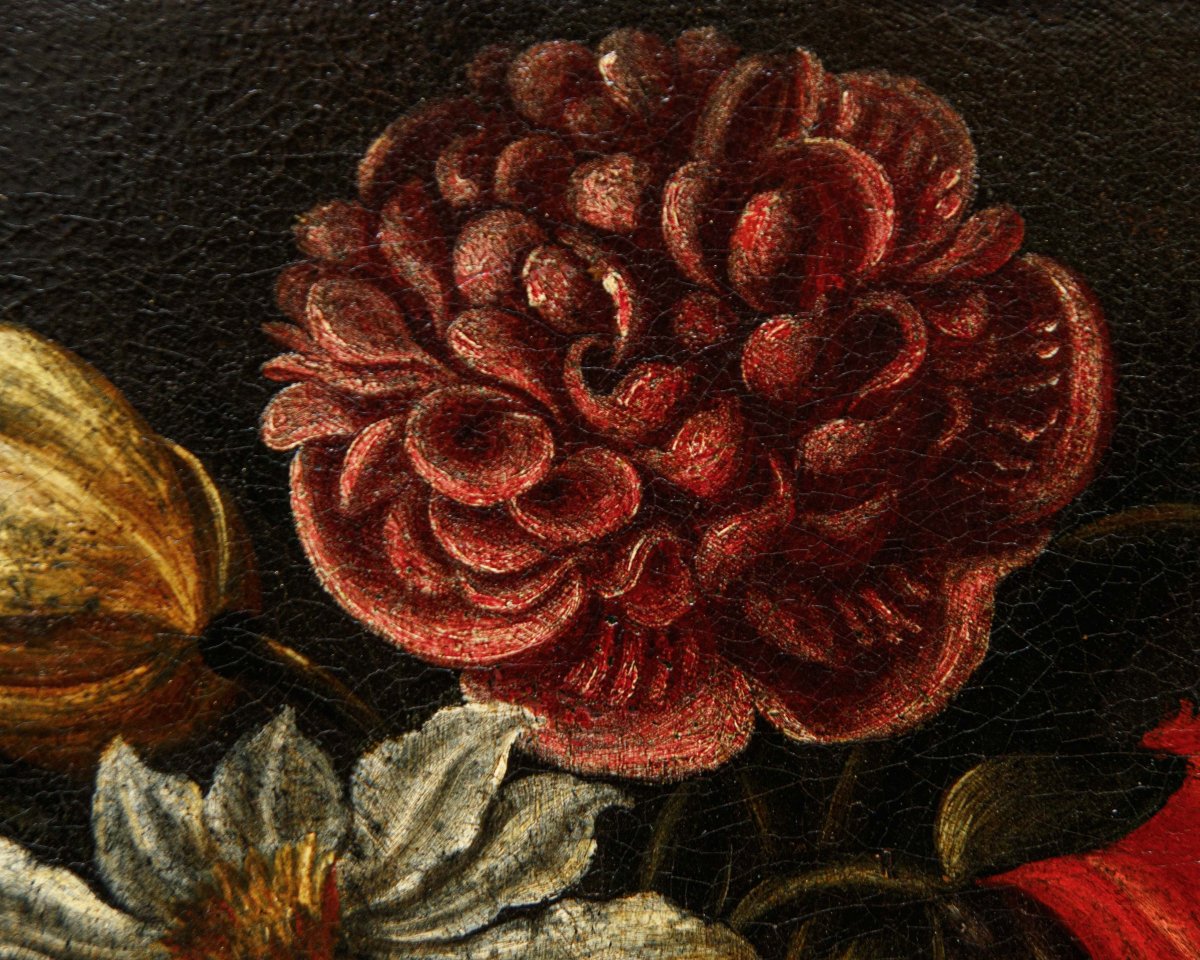
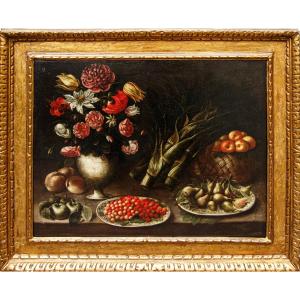
Still Life with Dishes, Flowers, and Fruit, attributed to a Lombard school artist active in the mid-17th century, is an excellent example of the "painting of reality" that characterized the Naturamortist production of northern Italy. The composition is structured on a dark support surface, where the light, almost of Caravaggio influence, investigates the different material consistencies with analytical precision. On the left, the pivotal element of the painting consists of a singular series of white ceramic plates, filled with small red fruits and olives, serving as the visual linchpin of the entire scene. A detail of extraordinary critical and documentary interest can be seen in the last plate at the end of the series, placed frontally towards the viewer: in the centre of the cable, the façade of a church is painted with subtle skill, characterised by a gabled profile and architectural orders that recall the great domes or basilicas of Northern Italy, perhaps a symbolic homage to the client or to a specific city of origin. This refined decoration transforms the object of use into a small civil identity document, ideally in dialogue with the vase of flowers placed on the right, where mottled red carnations emerge from the darkness with vibrant brushstrokes. In the first floor, the distribution of fruit follows a calm rhythm: peaches and apricots have a velvety pulp that contrasts with the wrinkled skin of lemons on the left and the plastic firmness of pears and apples. Each element is rendered with a solid volume, where the chiaroscuro passages honestly describe even the small imperfections of maturity, inviting a silent reflection on the beauty of creation, typical of the Vanitas theme. The deep brown background is not an inert void, but an atmospheric space that allows the warm colors and milky whites of the majolica to stand out with tactile force, while the rich golden frame with leafy motifs closes the scene, reaffirming the importance of the work as an object intended for the painting library of a cultured provincial aristocracy. The whole reveals a hand expert in making the "skin" of things, capable of combining scientific observation of nature with a domestic and collected spirituality, typical of the best Lombard pictorial tradition of the seventeenth century.
Still life with dishes, flowers and fruit
Oil on canvas, 70 x 93.5 cm – with frame, 82 x 105 cm
Still Life with Dishes, Flowers, and Fruit, attributed to a Lombard school artist active in the mid-17th century, is an excellent example of the "painting of reality" that characterized the Naturamortist production of northern Italy. The composition is structured on a dark support surface, where the light, almost of Caravaggio influence, investigates the different material consistencies with analytical precision. On the left, the pivotal element of the painting consists of a singular series of white ceramic plates, filled with small red fruits and olives, serving as the visual linchpin of the entire scene. A detail of extraordinary critical and documentary interest can be seen in the last plate at the end of the series, placed frontally towards the viewer: in the centre of the cable, the façade of a church is painted with subtle skill, characterised by a gabled profile and architectural orders that recall the great domes or basilicas of Northern Italy, perhaps a symbolic homage to the client or to a specific city of origin. This refined decoration transforms the object of use into a small civil identity document, ideally in dialogue with the vase of flowers placed on the right, where mottled red carnations emerge from the darkness with vibrant brushstrokes. In the first floor, the distribution of fruit follows a calm rhythm: peaches and apricots have a velvety pulp that contrasts with the wrinkled skin of lemons on the left and the plastic firmness of pears and apples. Each element is rendered with a solid volume, where the chiaroscuro passages honestly describe even the small imperfections of maturity, inviting a silent reflection on the beauty of creation, typical of the Vanitas theme. The deep brown background is not an inert void, but an atmospheric space that allows the warm colors and milky whites of the majolica to stand out with tactile force, while the rich golden frame with leafy motifs closes the scene, reaffirming the importance of the work as an object intended for the painting library of a cultured provincial aristocracy. The whole reveals a hand expert in making the "skin" of things, capable of combining scientific observation of nature with a domestic and collected spirituality, typical of the best Lombard pictorial tradition of the seventeenth century.
6 000 €
Period: 17th century
Style: Other Style
Condition: Good condition
Material: Oil painting
Width: 93,5
Height: 70
Reference (ID): 1739320
Availability: In stock
Print