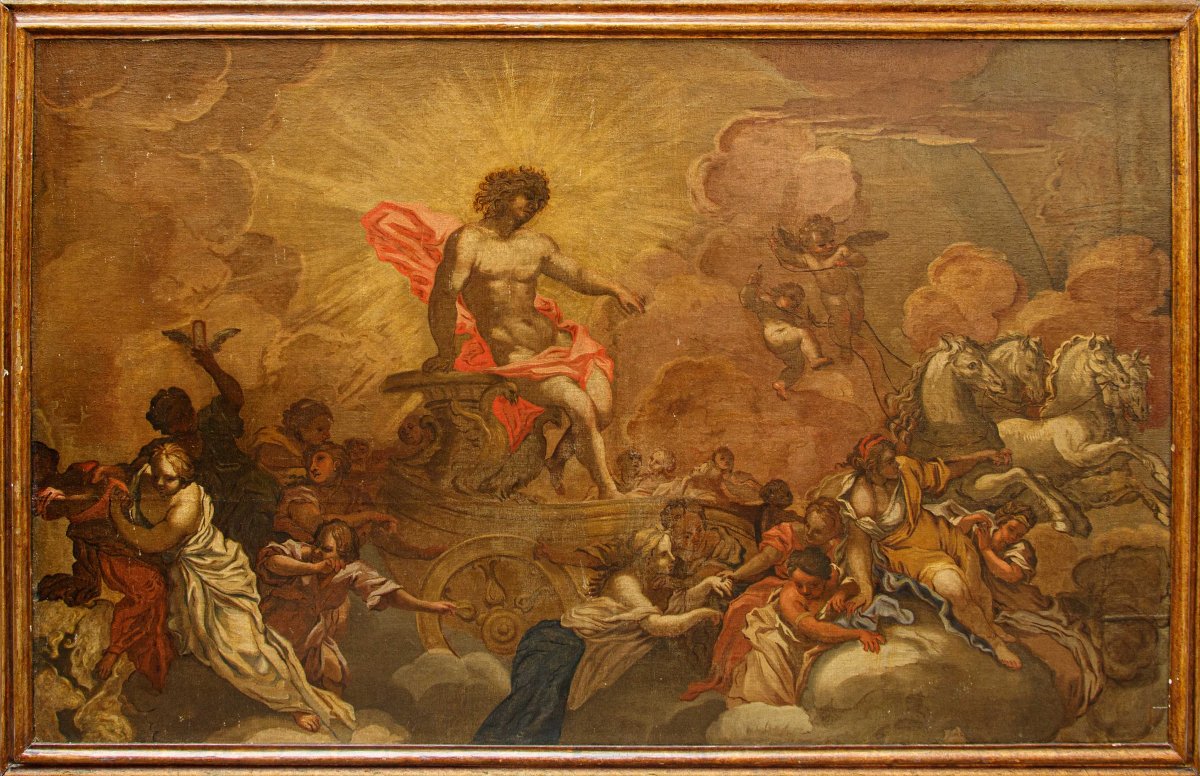


Filippo Comerio (locate Varesino, 1747 – Milan, 1827), Apollo’s Chariot
Filippo Comerio (Locate Varesino, 1747 – Milan, 1827)
Apollo’s Chariot
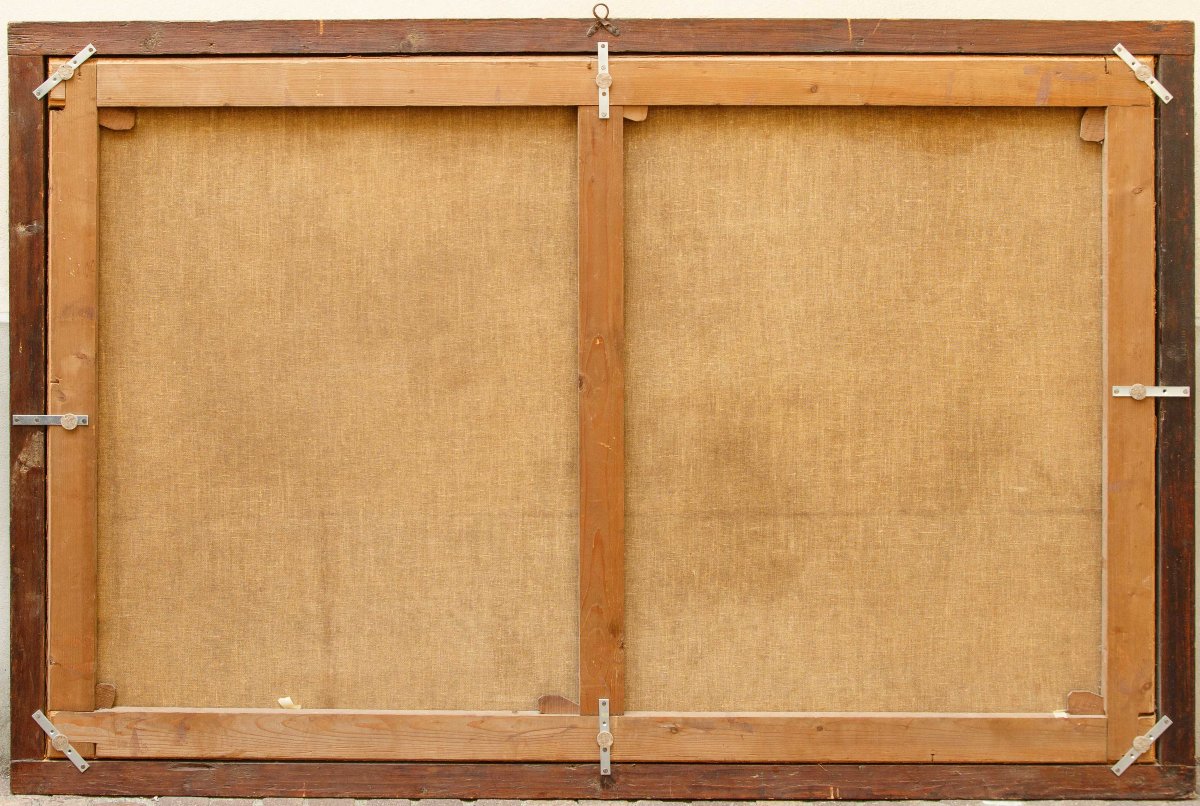
Oil on canvas, 112 x 174 cm – framed, 124 x 186 cm
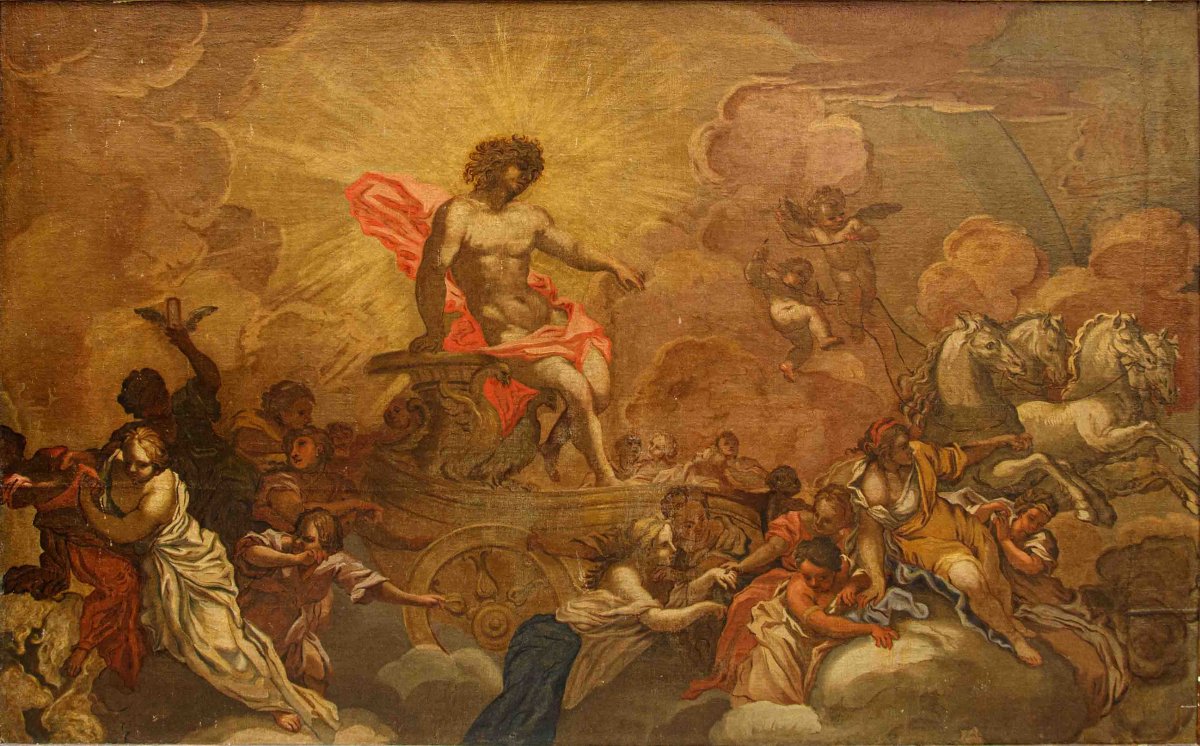
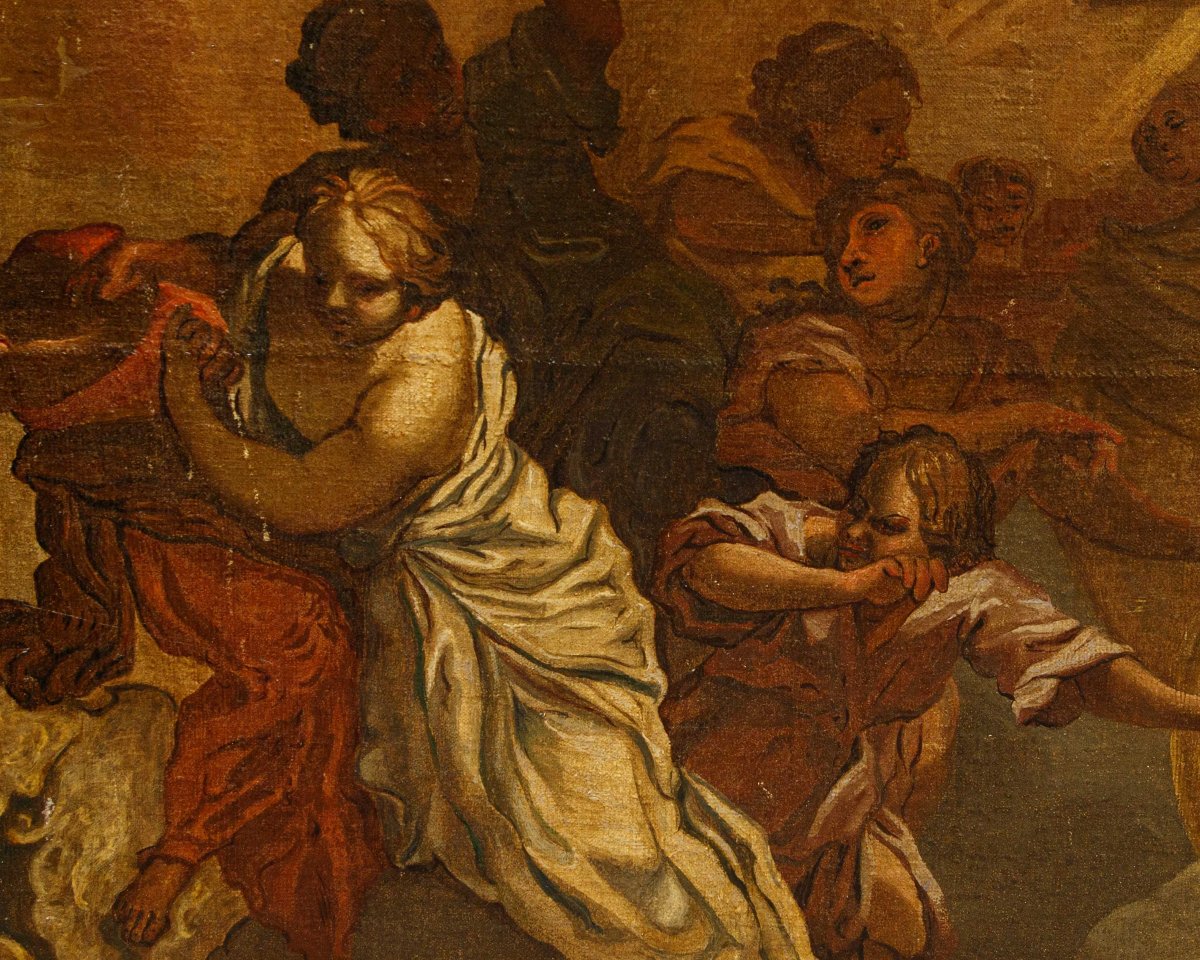
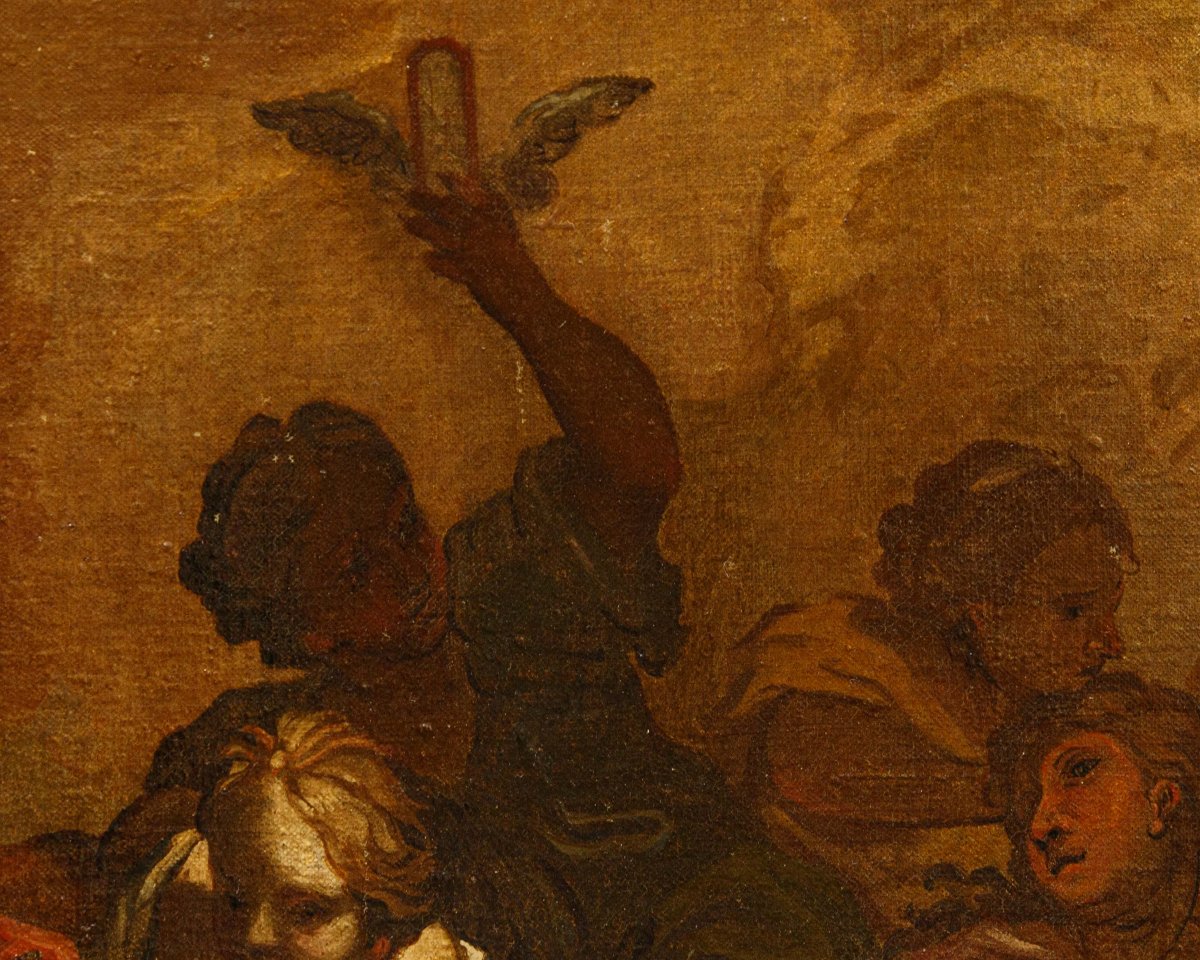
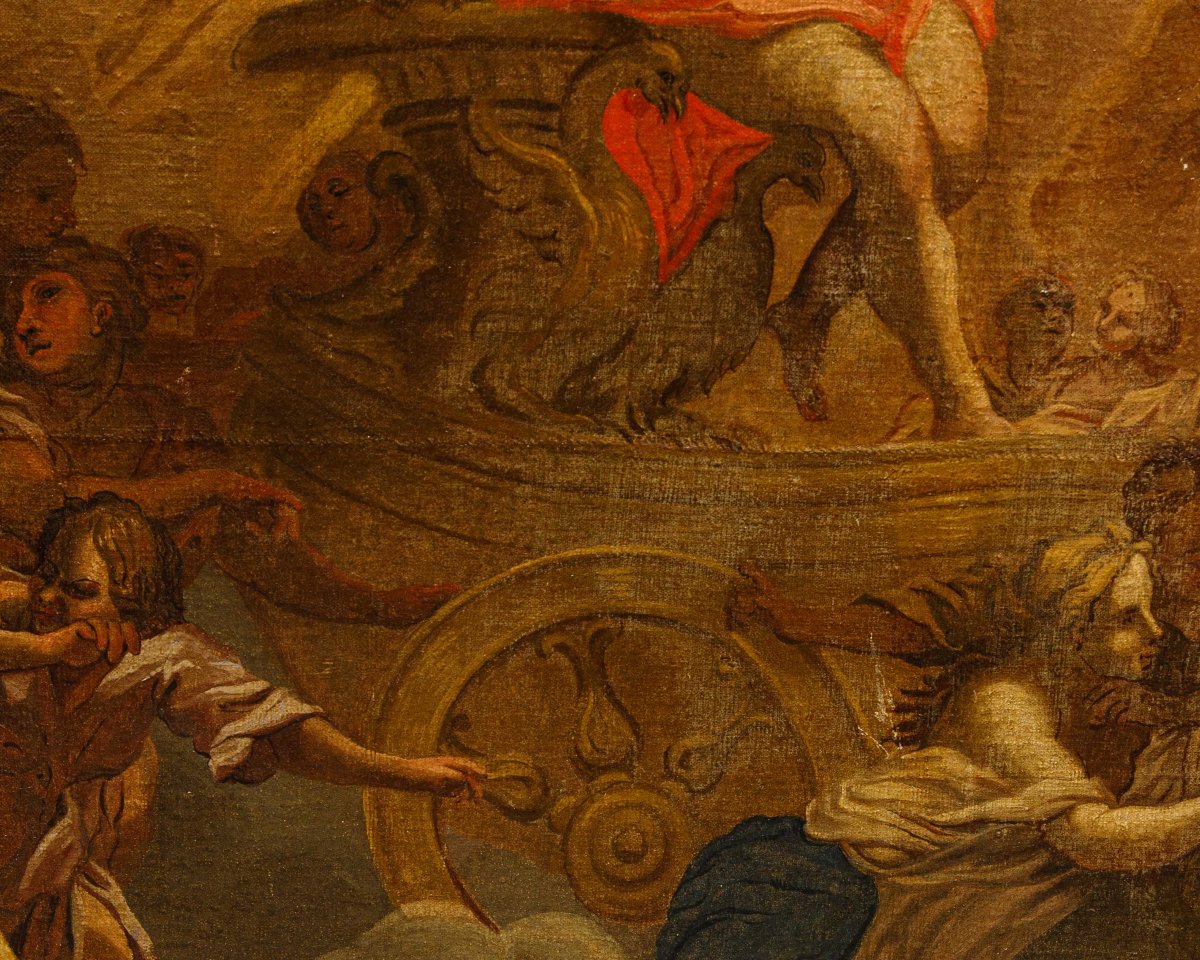
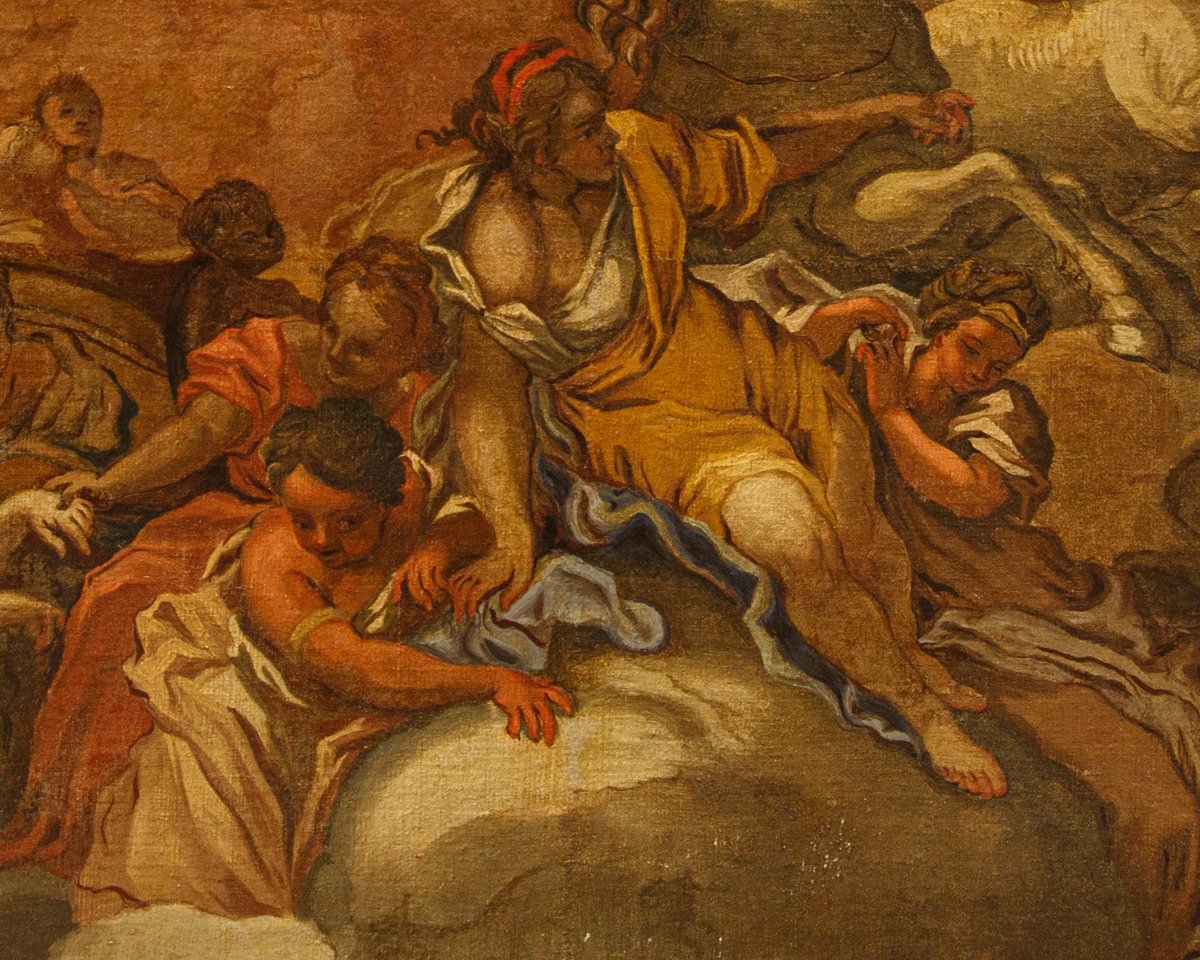
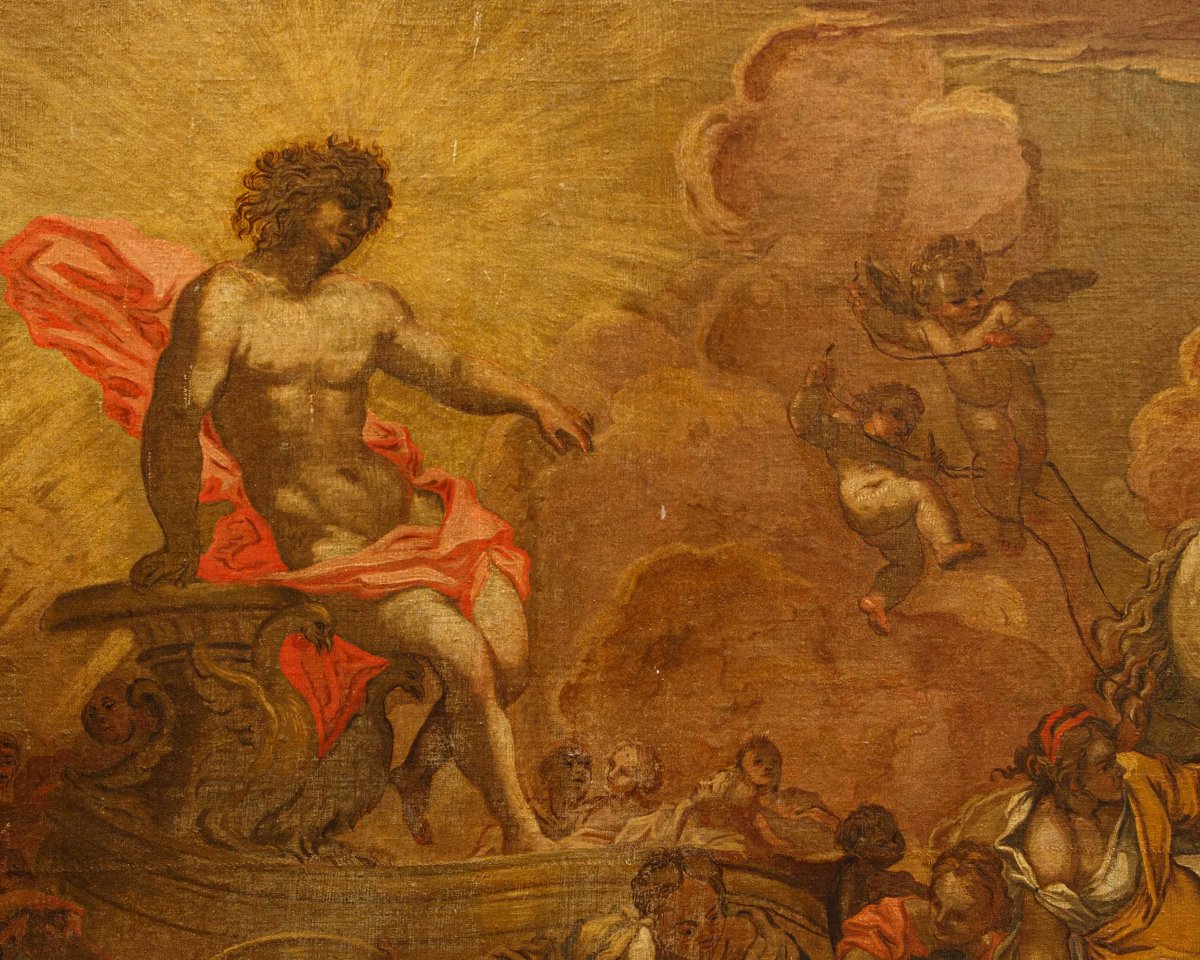
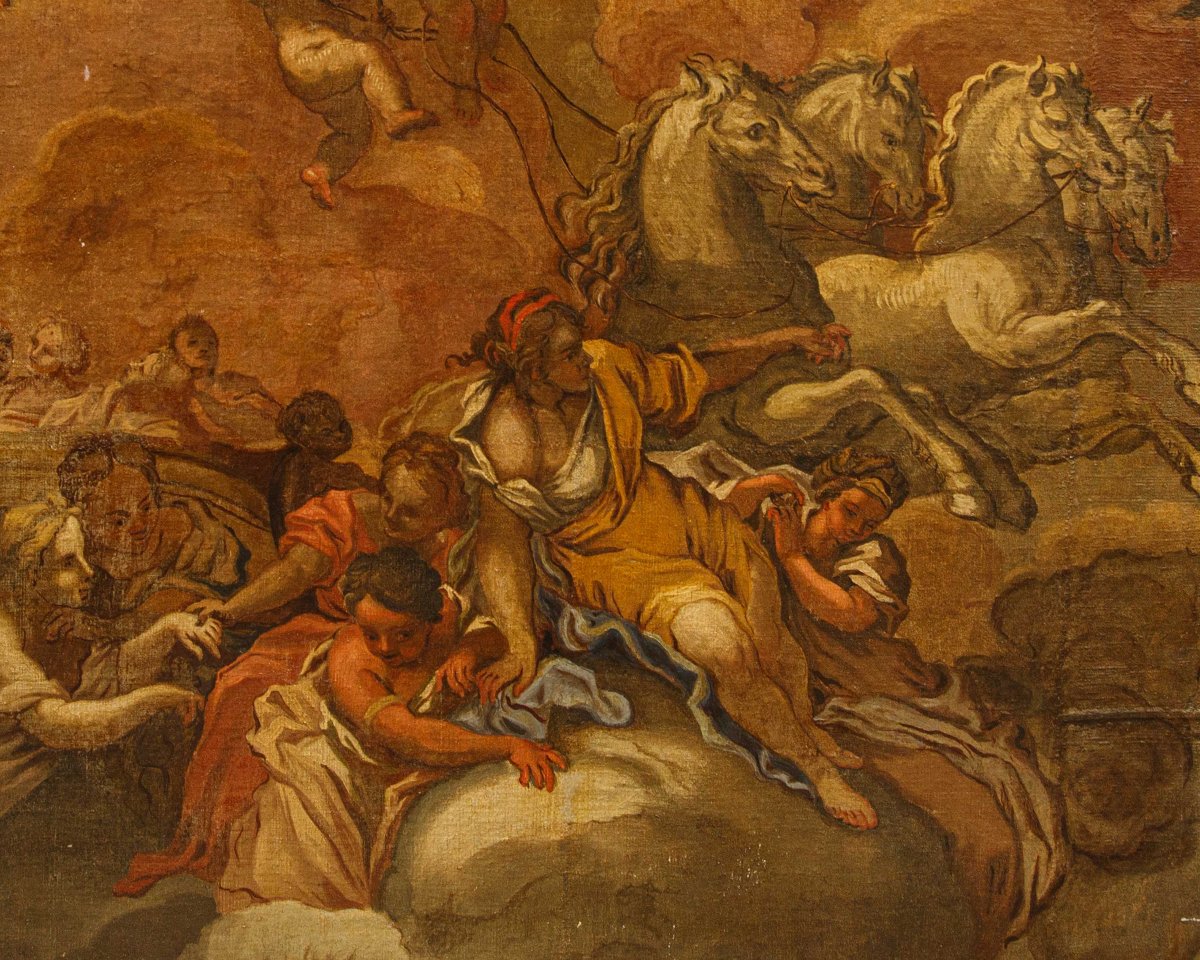
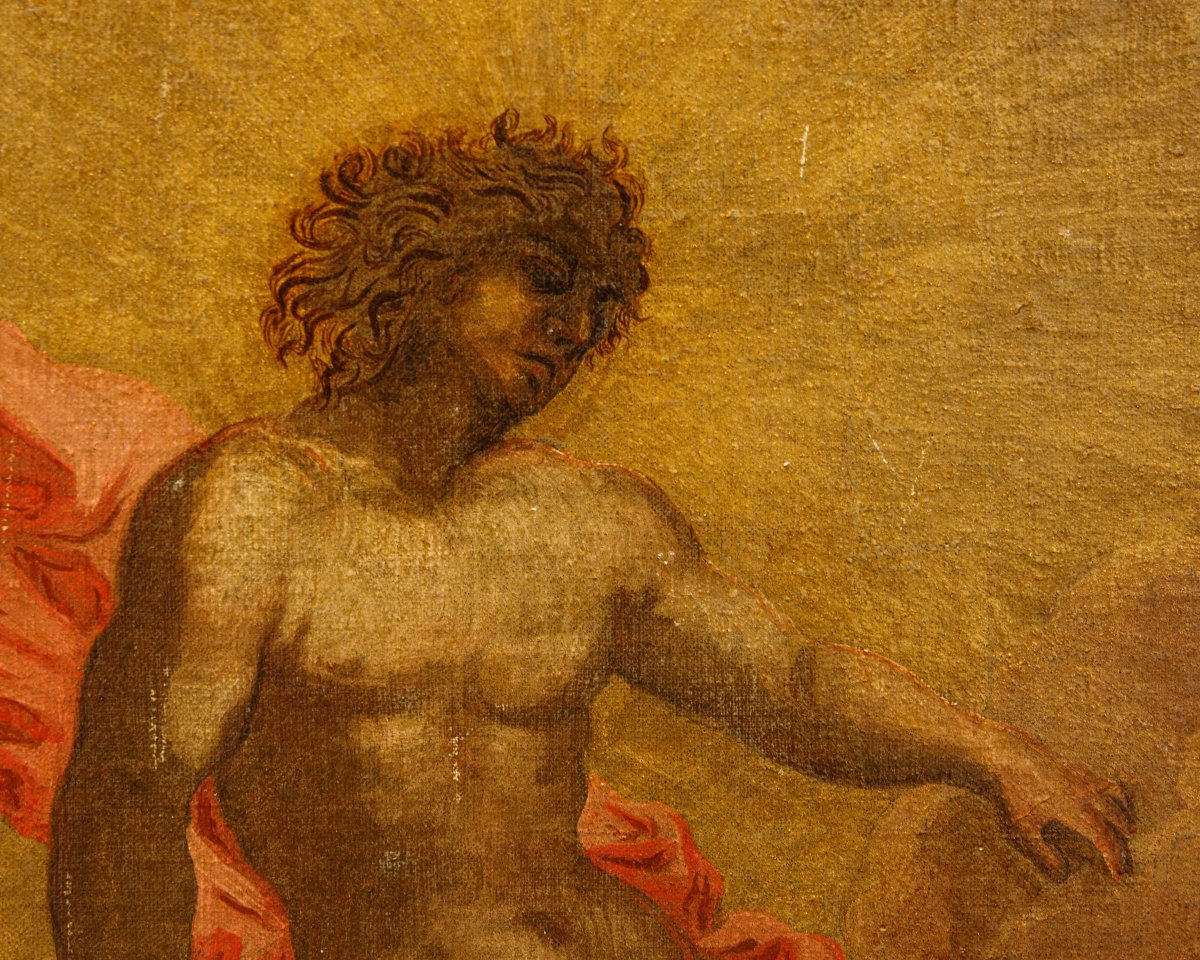
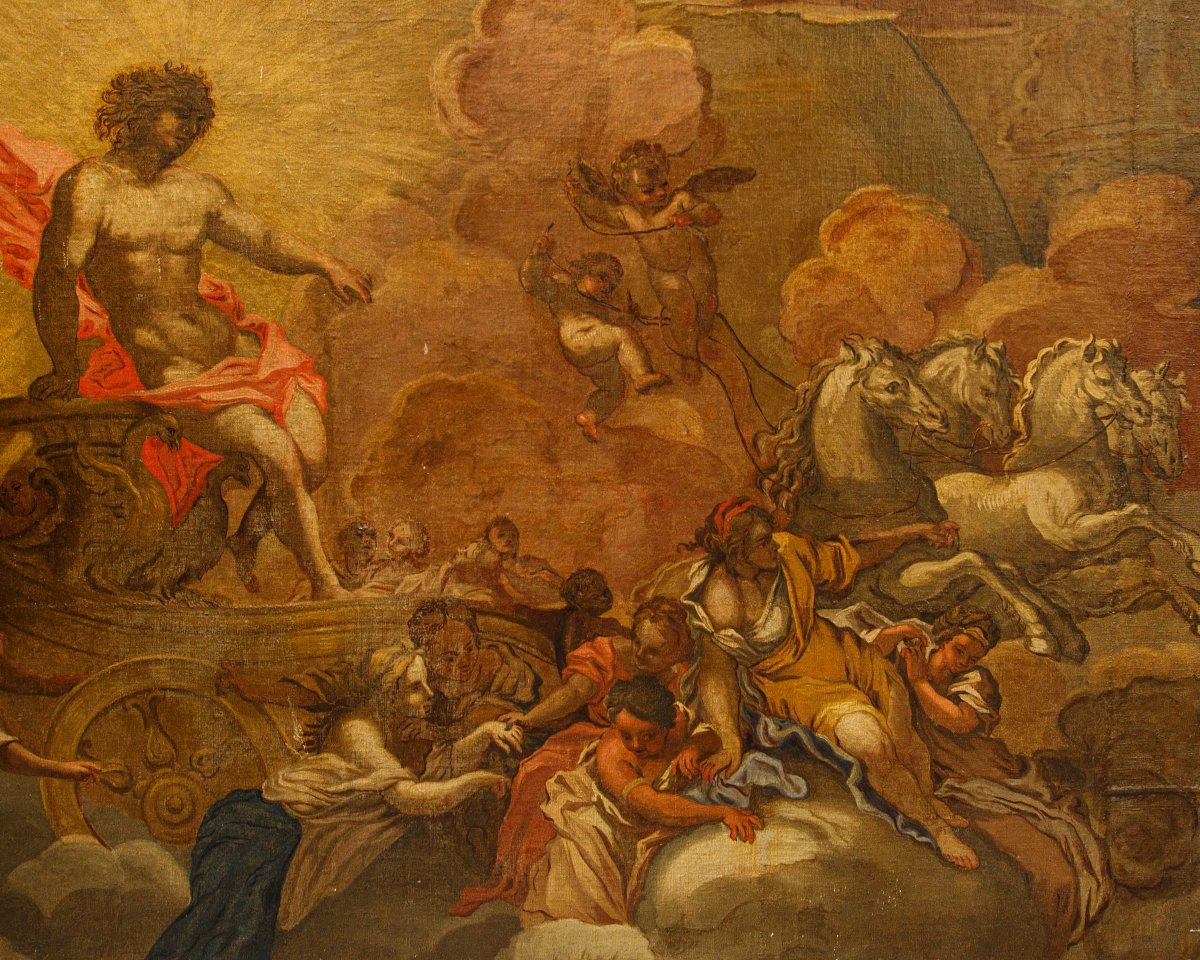
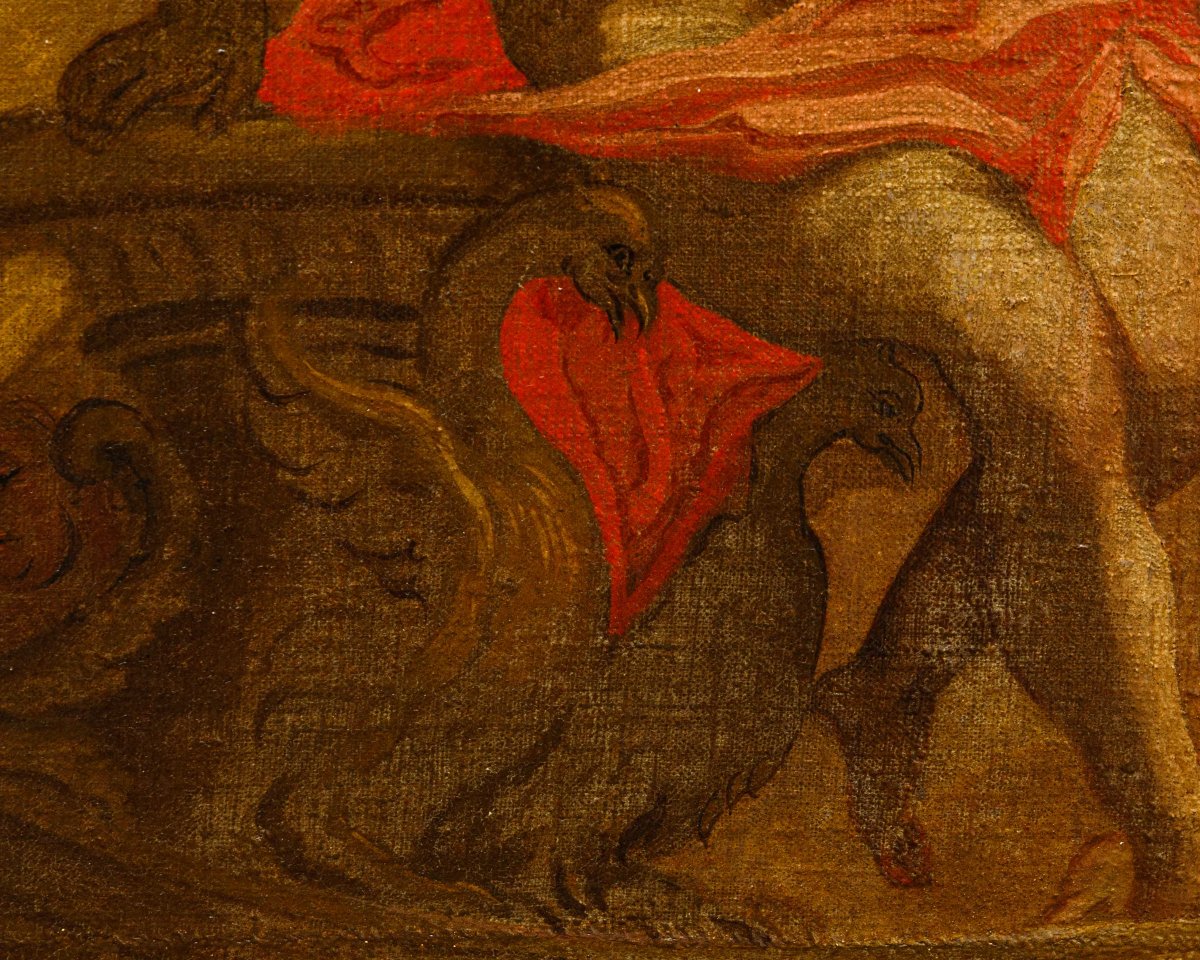
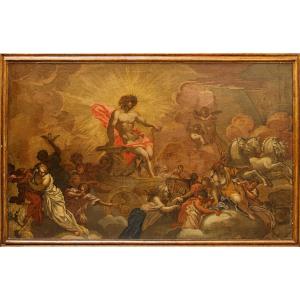
Apollo sits at the center of the composition, wrapped in a bright red cloak that stands out against the radiant golden glow behind him, the scene’s sole true source of light. The sun god dominates the chariot, while a multitude of figures crowd around him, seemingly supporting him, imploring him, or accompanying him on his celestial journey: draped women, winged cherubs, a dark figure holding an hourglass on the left, and on the right, the four rearing white horses, rendered with almost sculptural energy, ready to launch the chariot into the clouds. The clouds, painted in brown and pinkish tones, occupy the entire background, while the light, concentrated on the figure of the god, radiates downward, illuminating the bodies and garments of the crowd below and leaving the edges of the canvas in shadow. A decisive piece of evidence for the attribution to Filippo Comerio comes from a large autograph drawing, acquired in 1995 by the Istituto Centrale della Grafica in Rome, executed in black pencil, pen, and brown watercolor ink, of monumental dimensions—over two meters high and three meters wide. The drawing follows the same composition as the painting, with Apollo, the chariot, and the horses arranged according to the same pattern, but omits some figures present on the right side of the canvas—a sign of a change of plan during the creative process. A comparison of the two works sheds light on Comerio’s compositional method, which began with a large-format preparatory drawing—almost a cartoon—which he then translated into a painting while enriching the margins. This process reveals the artist’s graphic and decorative style, which stems from his experience with porcelain and majolica design: the clean lines and the almost linear construction of the figures derive from this decorative sensibility, which he later transferred to oil painting.
Filippo Comerio was born in Locate Varesino, the son of Agostino and Maria Antonia Castiglioni. He trained in Bologna at the Accademia Clementina, studying under Vittorio Maria Bigari and the Gandolfi brothers, before moving to Rome in 1773, where he developed a neoclassical style by studying antiquities and frequenting Füssli’s circle. After leaving Rome in 1777, he settled in Faenza, where he remained for five years, also working on the “Ovals with the Four Holy Doctors,” which are still on display in the cathedral today. There he married Lauretana Benini, daughter of the chief painter at Count Ferniani’s majolica factory, and devoted himself to ceramic decoration, developing a personal style associated with the famous “Comerio green” and other colors such as black, rust, and purple. After the 1781 earthquake, he left Faenza to return to Lombardy, working during his final years in the Bergamo area, in competition with Vincenzo Bolomini, before moving with his family to Milan in 1800.
The Chariot of Apollo can be compared to other mythological and allegorical works by the painter, which confirm his classicist style: the cycle of the Four Allegories of the Seasons in Palazzo Daiano de Valsecchi in Bergamo, the *Offerings to the Earthly Deities* in Villa Locatelli Milesi in Villa d’Almè, and the horses in the fresco depicting Elijah throwing his cloak to his disciple Elisha, which are very similar to those in the painting under consideration here. Even his sacred works, such as the Four Holy Doctors in the Cathedral of Faenza or the frescoes in Spirano depicting the Glory of Saints Gervasius and Protasius and the Ecstatic Saint Ambrose, display the same scenic composition of crowded groups and the same theatrical use of light. It is likely that the canvas served as a model for a fresco that is now lost, perhaps intended for one of the private villas decorated by Comerio in Lombardy, such as Villa Benaglio in Valbrembo, of which no traces remain.
Period: 18th century
Style: Other Style
Condition: Good condition
Material: Oil painting
Width: 174
Height: 112
Reference (ID): 1797347
Availability: In stock