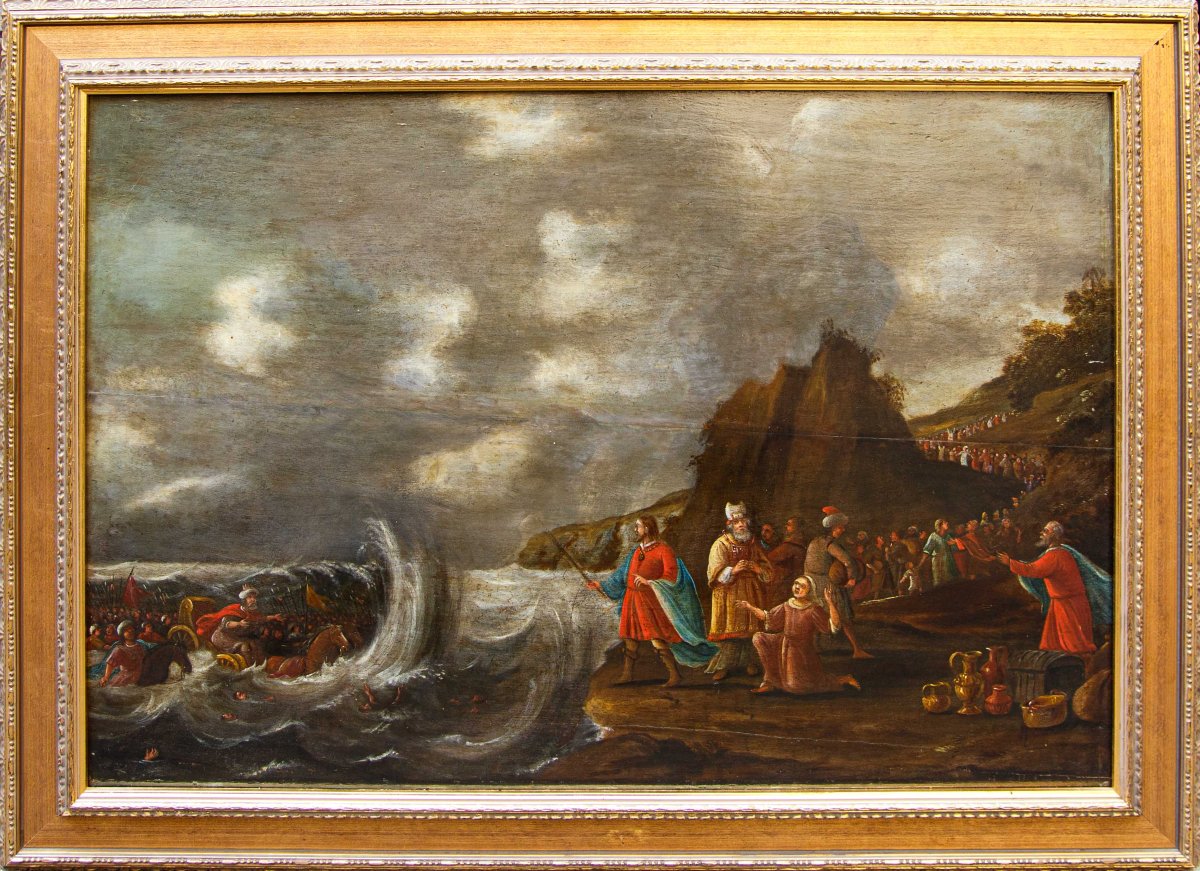
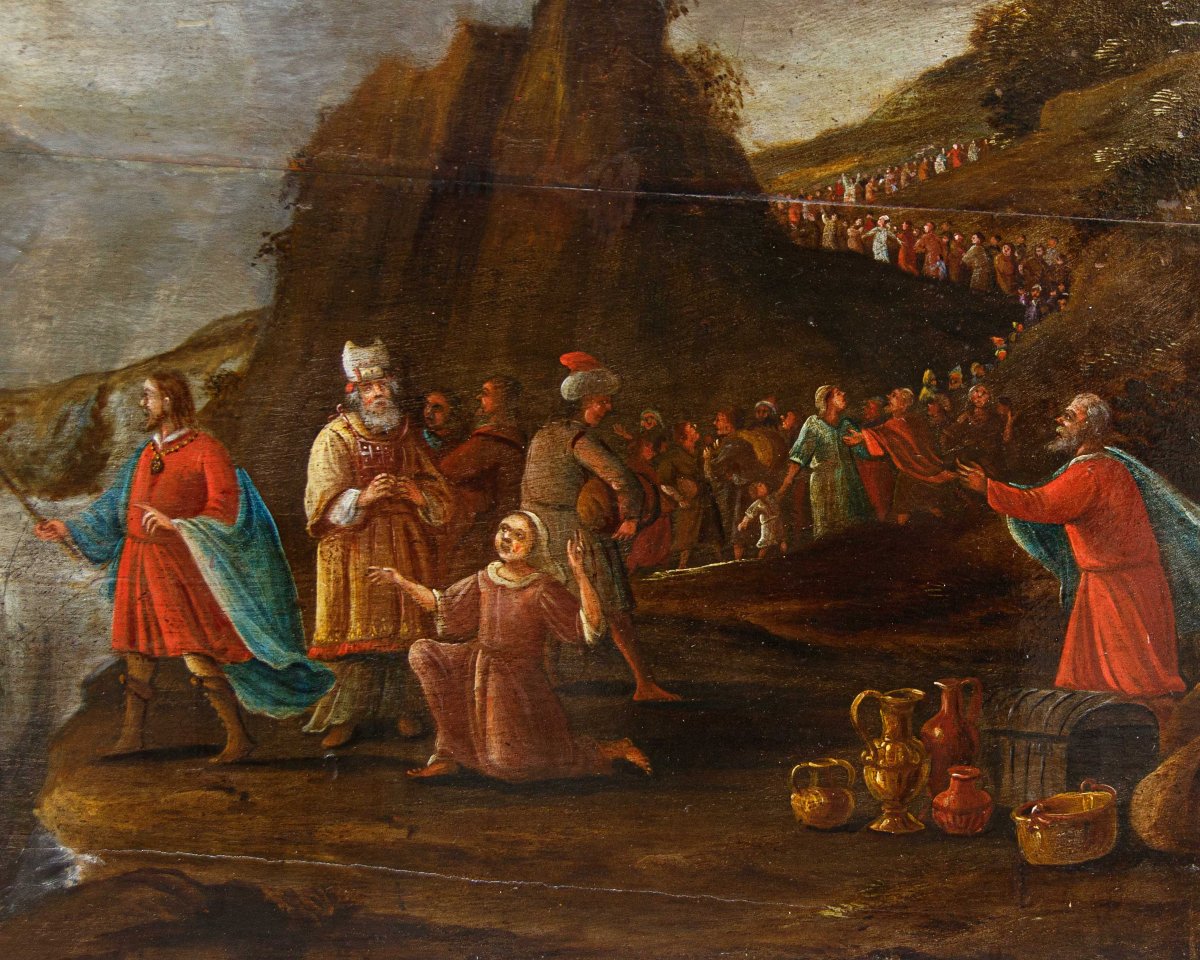
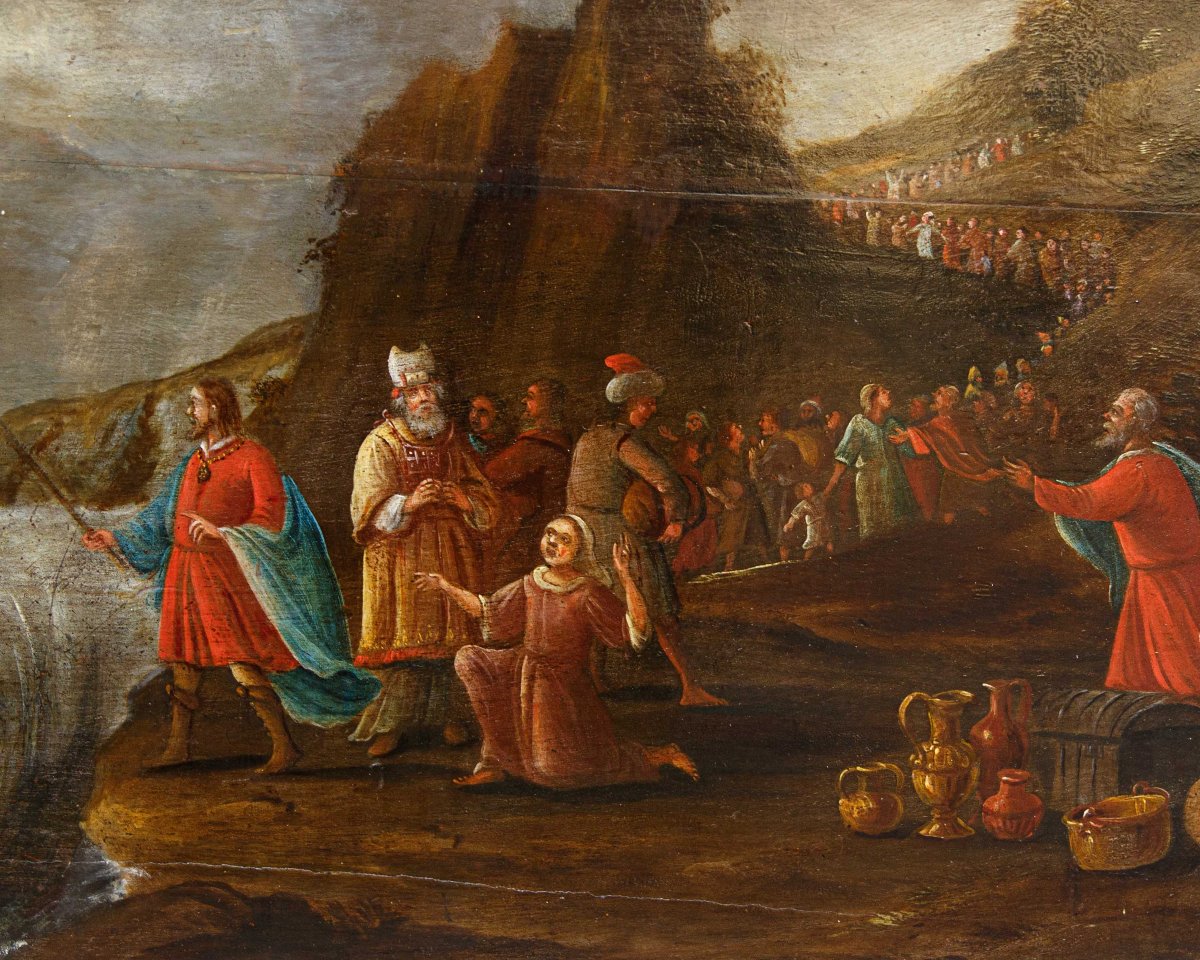
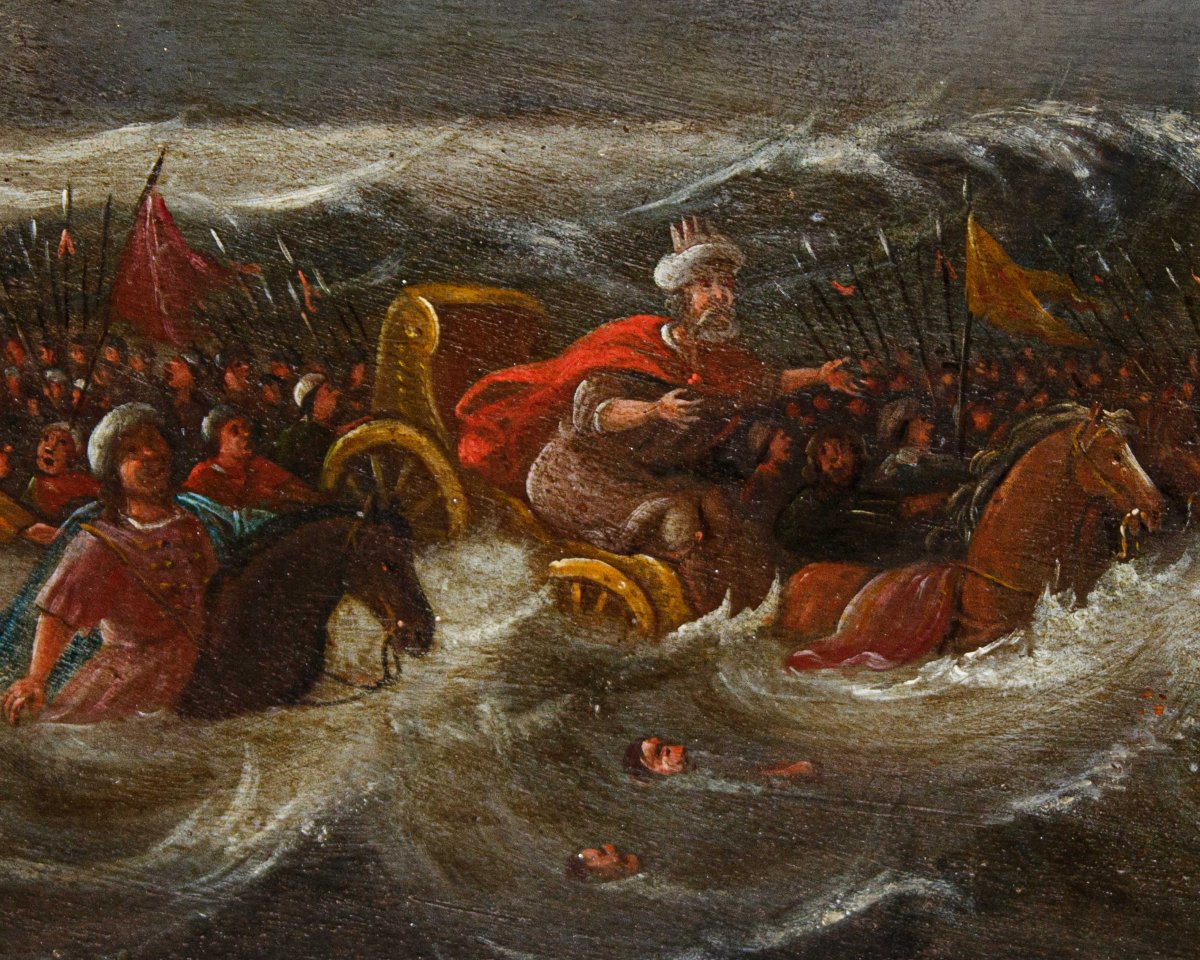
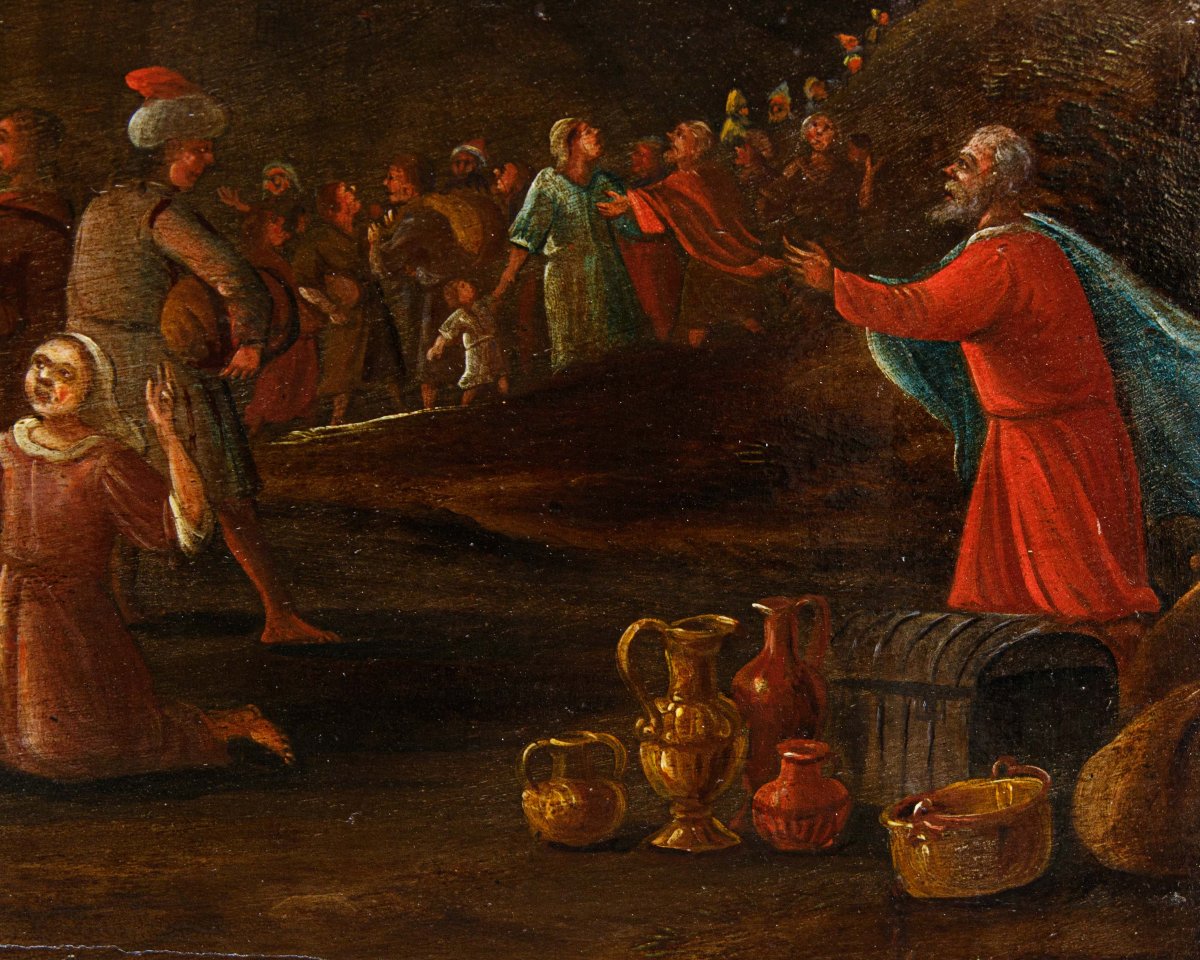


Workshop Of Frans Francken The Younger (1581–1642), The Drowning Of The Egyptians In The Red Sea
Workshop of Frans Francken the Younger (Antwerp, 1581–1642)
The Drowning of the Egyptians in the Red Sea
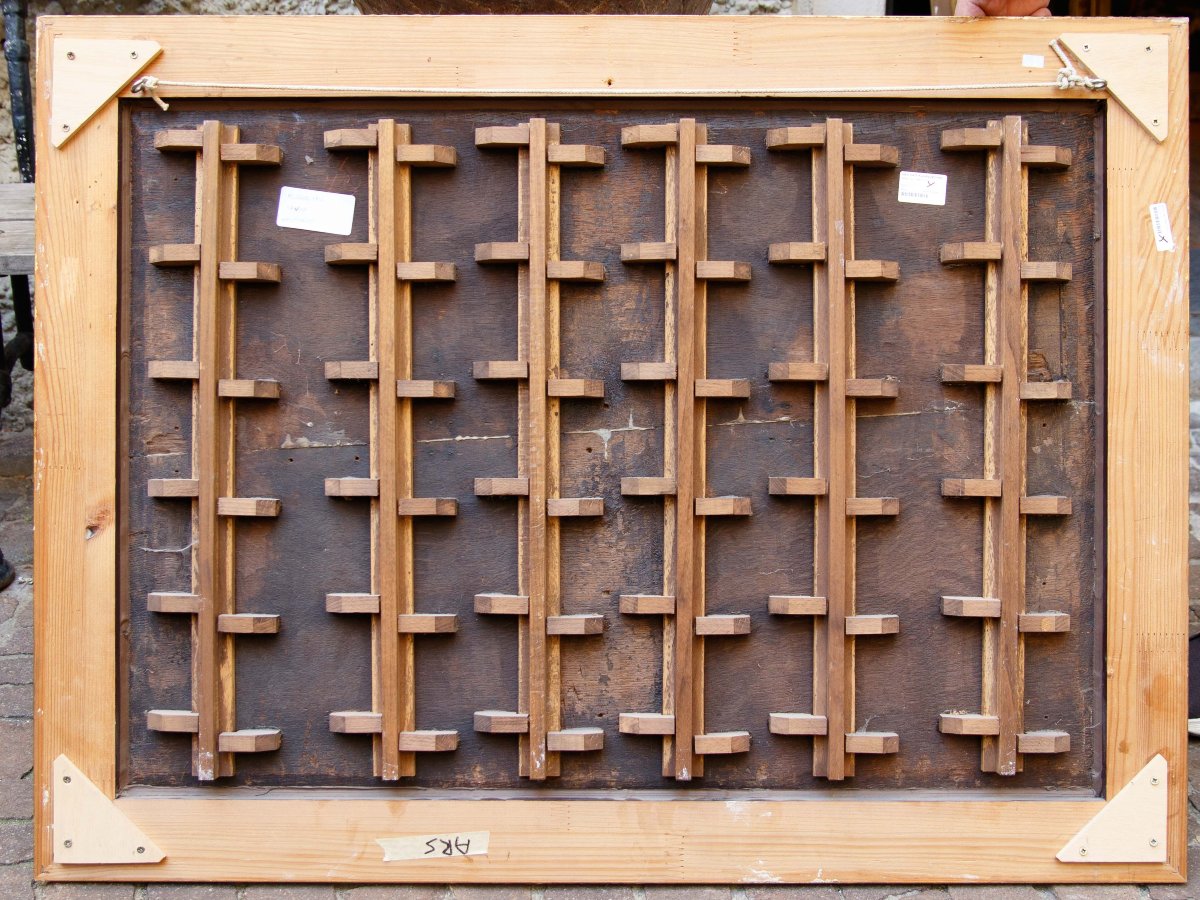
Oil on wood, 58 x 83 cm – with frame, 74 x 98 cm
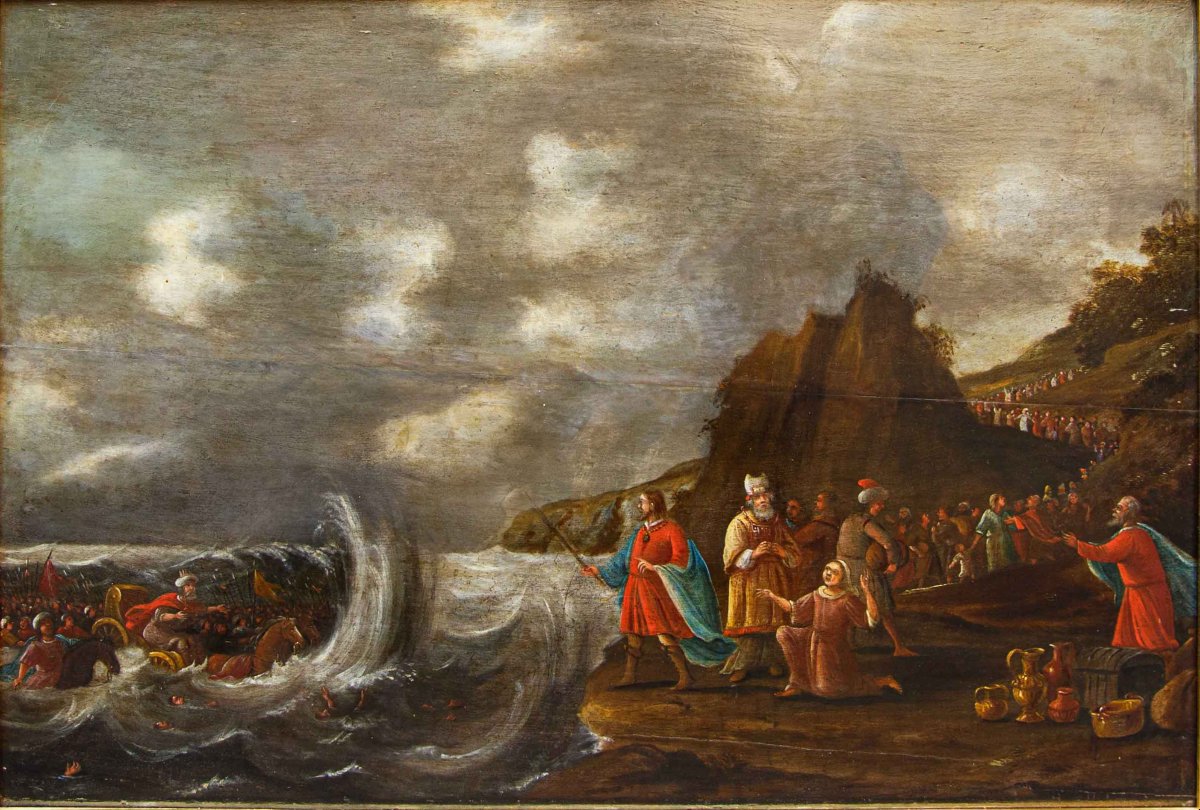
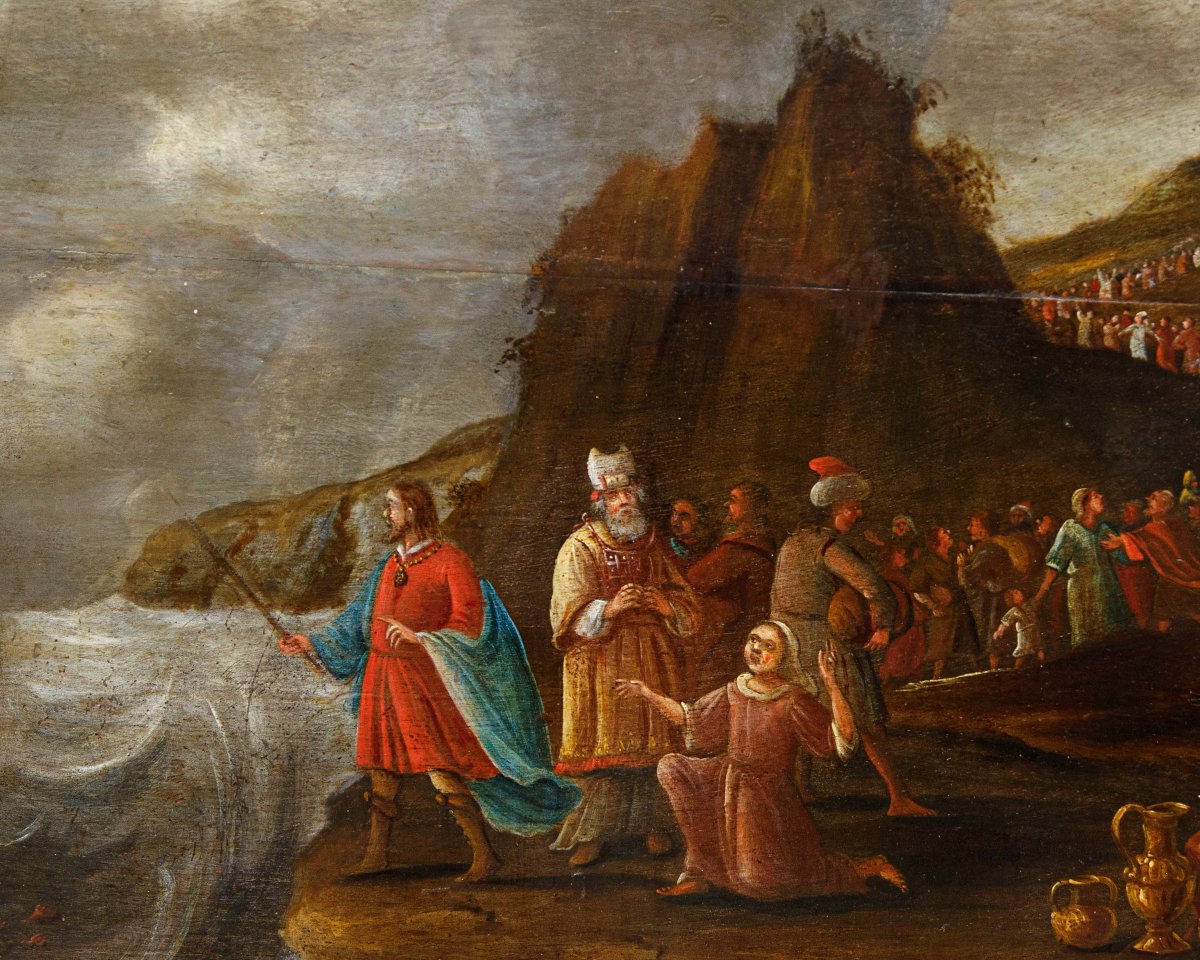
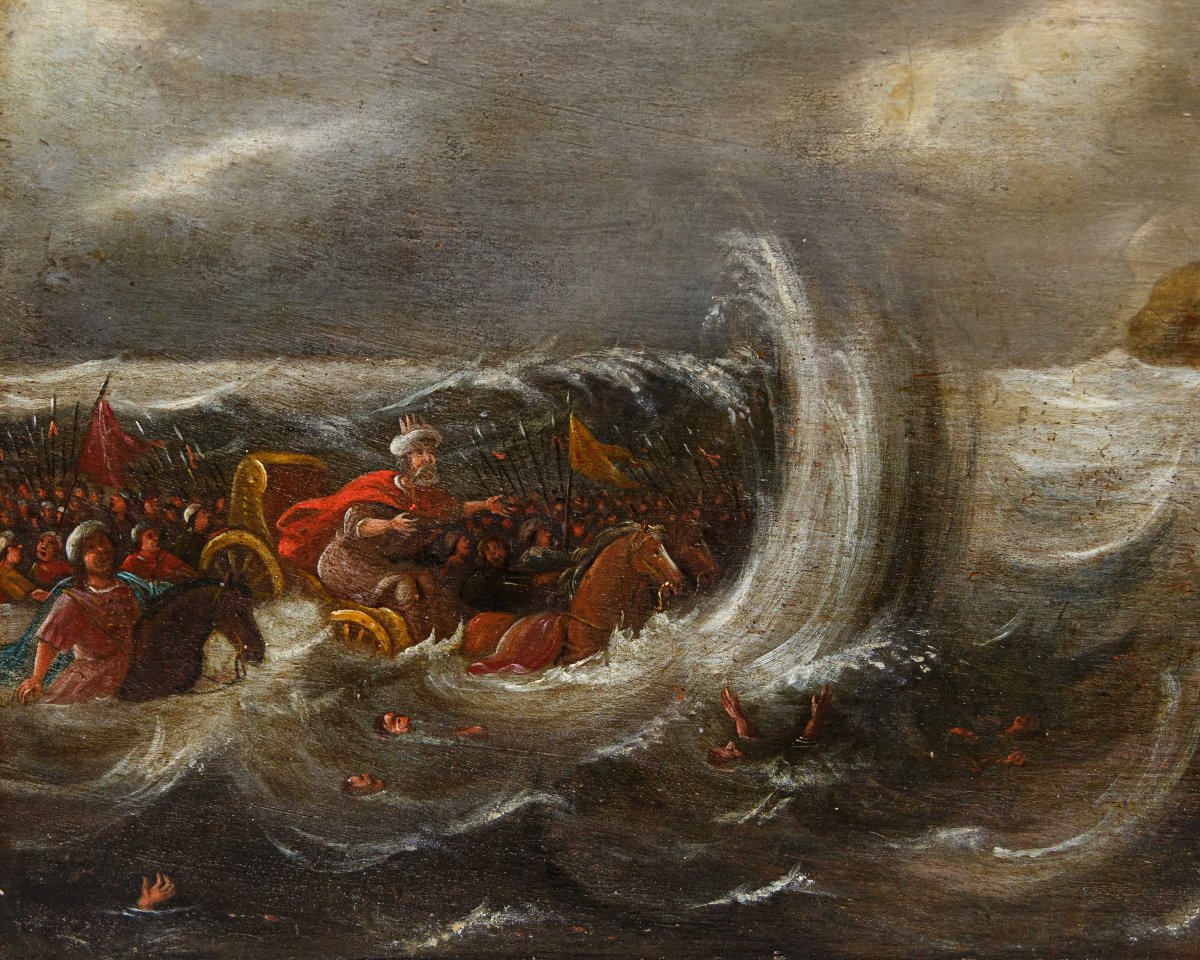
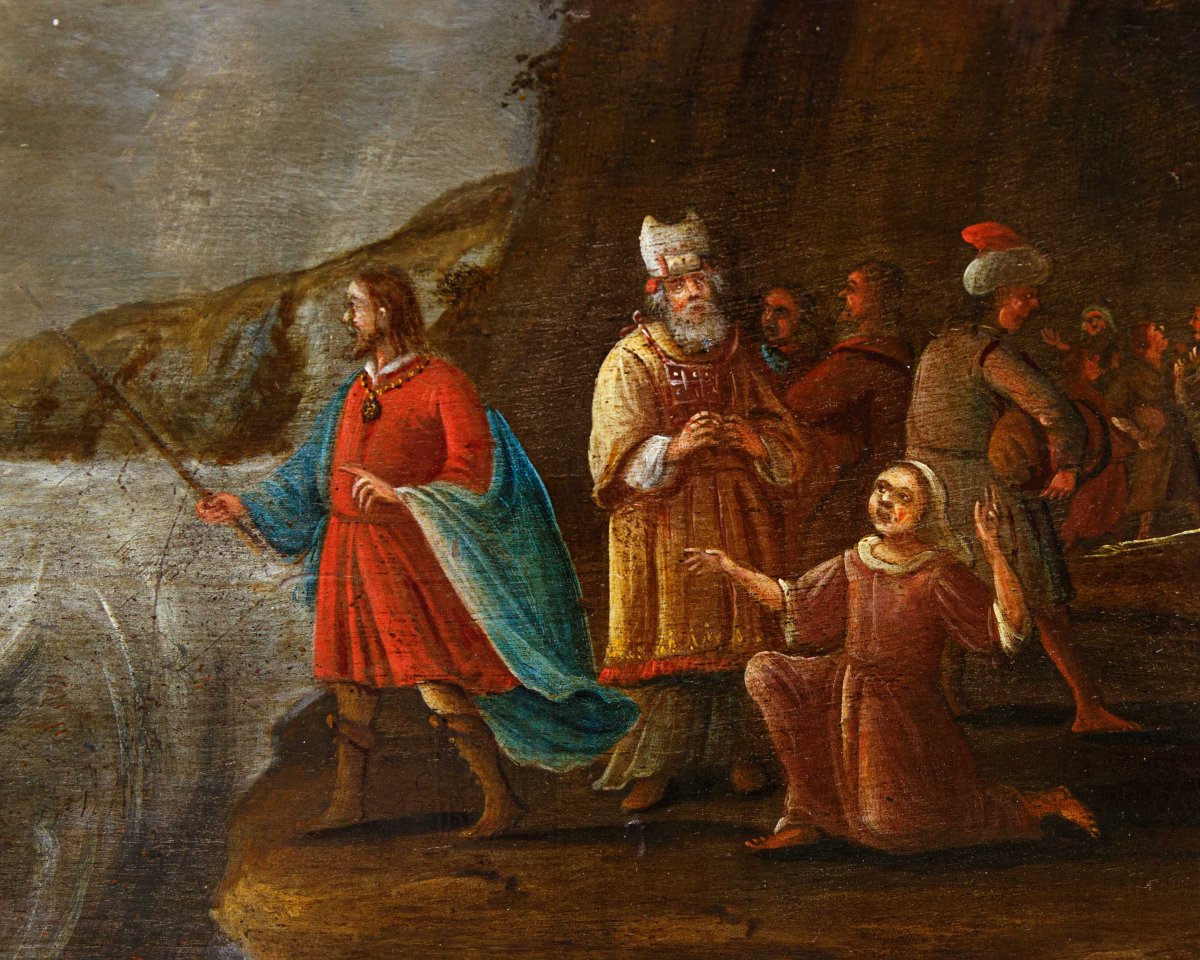
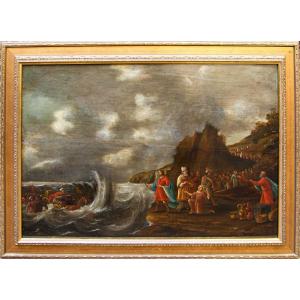
The work under examination, a refined oil on panel from the workshop of Frans Francken the Younger, captures with narrative vitality one of the most dramatic and iconic moments of the Old Testament: the drowning of the Egyptians in the Red Sea. The scene is built on an effective dynamic and chromatic contrast, where the left side of the painting is dominated by the tumult of dark waters swirling shut around Pharaoh’s army, engulfing horses, golden chariots, and soldiers in a whirlpool of white foam. In contrast, on the right, the safe shore is populated by the people of Israel, led by Moses, who, with his staff still outstretched, seals the fulfillment of the divine miracle. The figures of the survivors—among whom priests in ceremonial robes and women praying beside precious vases and chests stand out—express a mixture of awe and gratitude, while a long procession of figures winds upward along the hillside path, symbolizing the freedom they have finally attained. The biblical episode, taken from the Book of Exodus, recounts the Jews’ escape from slavery in Egypt; pursued by Pharaoh’s troops, the fugitives found salvation thanks to God’s intervention, who, through Moses, parted the waters to allow their passage, then fatally closed them over their pursuers. Frans Francken the Younger, a leading figure in the famous dynasty of Antwerp painters, was trained by his father, Frans Francken the Elder, and became the family’s most prolific and innovative artist. Specializing in small- and medium-sized paintings—the so-called “cabinet paintings”—Francken was renowned for his extraordinary skill in rendering small figures and for introducing new subjects into Flemish art, often collaborating with specialists in landscape or architectural painting. His work was not intended merely for aesthetic pleasure, as behind his elaborate mythological, historical, and biblical depictions there was almost always a profound moral message, intended to instruct the viewer on the consequences of sin or the power of divine providence. Francken’s studio was an enormously active family enterprise, where sons, sons-in-law, and apprentices produced replicas and variations of his most successful subjects to meet the demand of the art market of the time. An emblematic example of the critical acclaim of this specific theme is found at the Nationalmuseum in Stockholm, which houses the painting *The Crossing of the Red Sea*, an autograph version by Frans Francken the Younger. This work shares with the panel described here the compositional layout and attention to fine details, confirming that the master’s original prototype had become a model for his entire workshop. Another painting by Francken with the same subject but a different compositional approach is *The Israelites After the Crossing of the Red Sea with the Body of Joseph in the Tomb*, now in the collections of the English National Trust. Over time, Francken’s style evolved from a dense application of paint toward thinner glazes and freer brushstrokes, but he always retained that ability to transform the sacred narrative into a genre scene rich in narrative details, where the epic nature of the miracle blends with the meticulous attention to everyday objects and exotic costumes, typical of the Flemish Baroque sensibility.
Period: 17th century
Style: Other Style
Condition: Good condition
Material: Oil painting on wood
Width: 83
Height: 58
Reference (ID): 1789564
Availability: In stock