

16th Century, Figure In Armor With A Lion
16th century
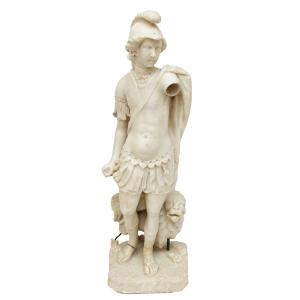
Figure in Armor with a Lion
Marble, 56 x 17 x 16.5 cm
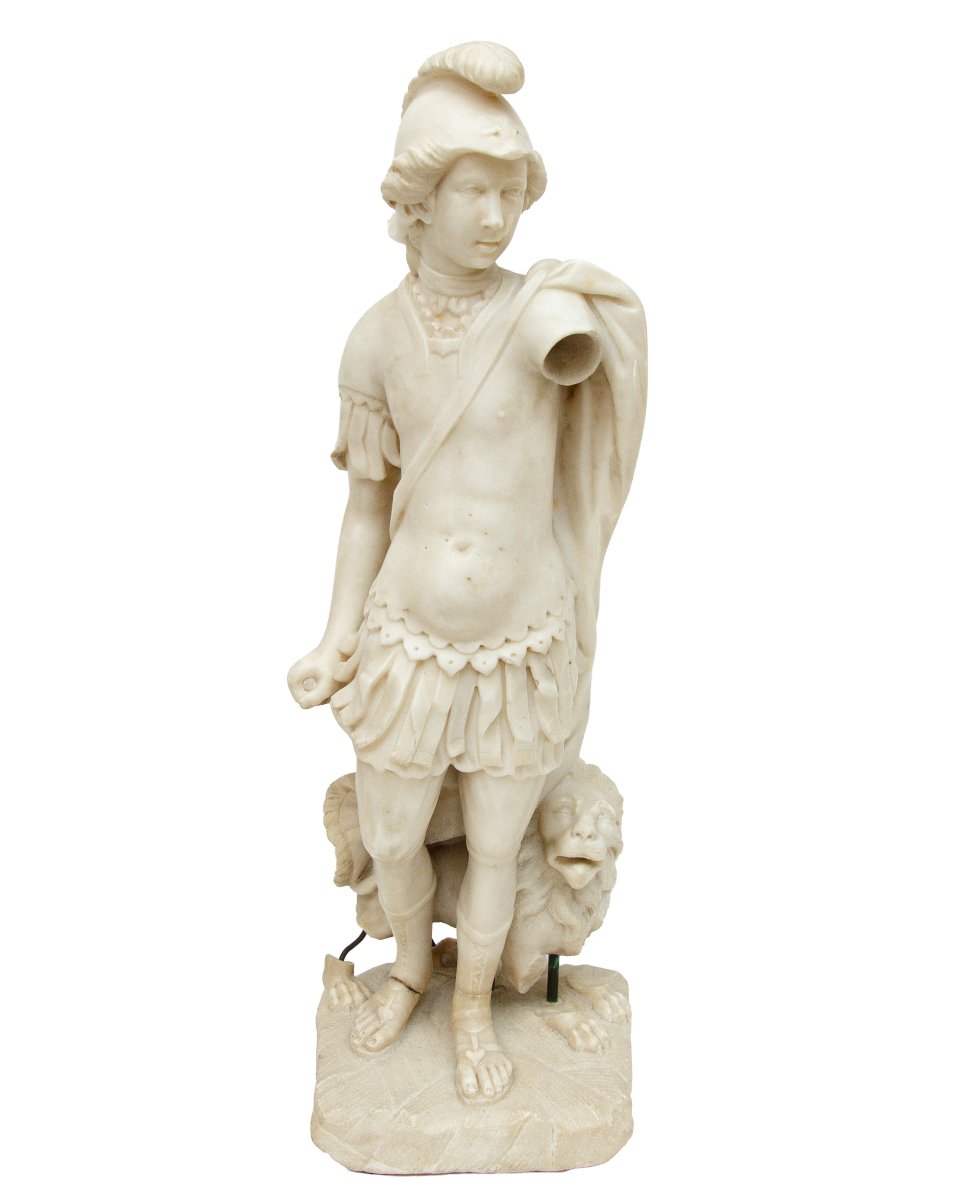
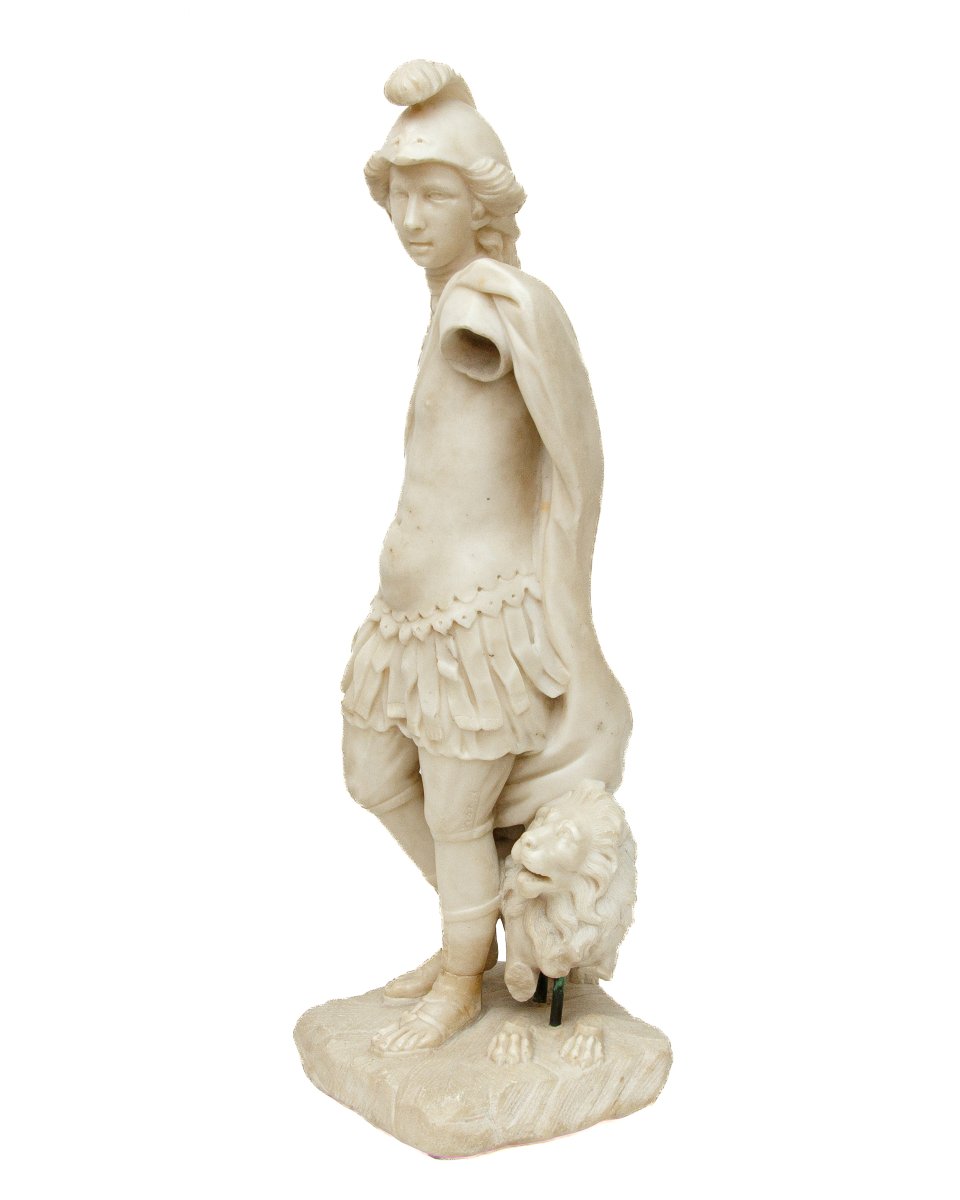
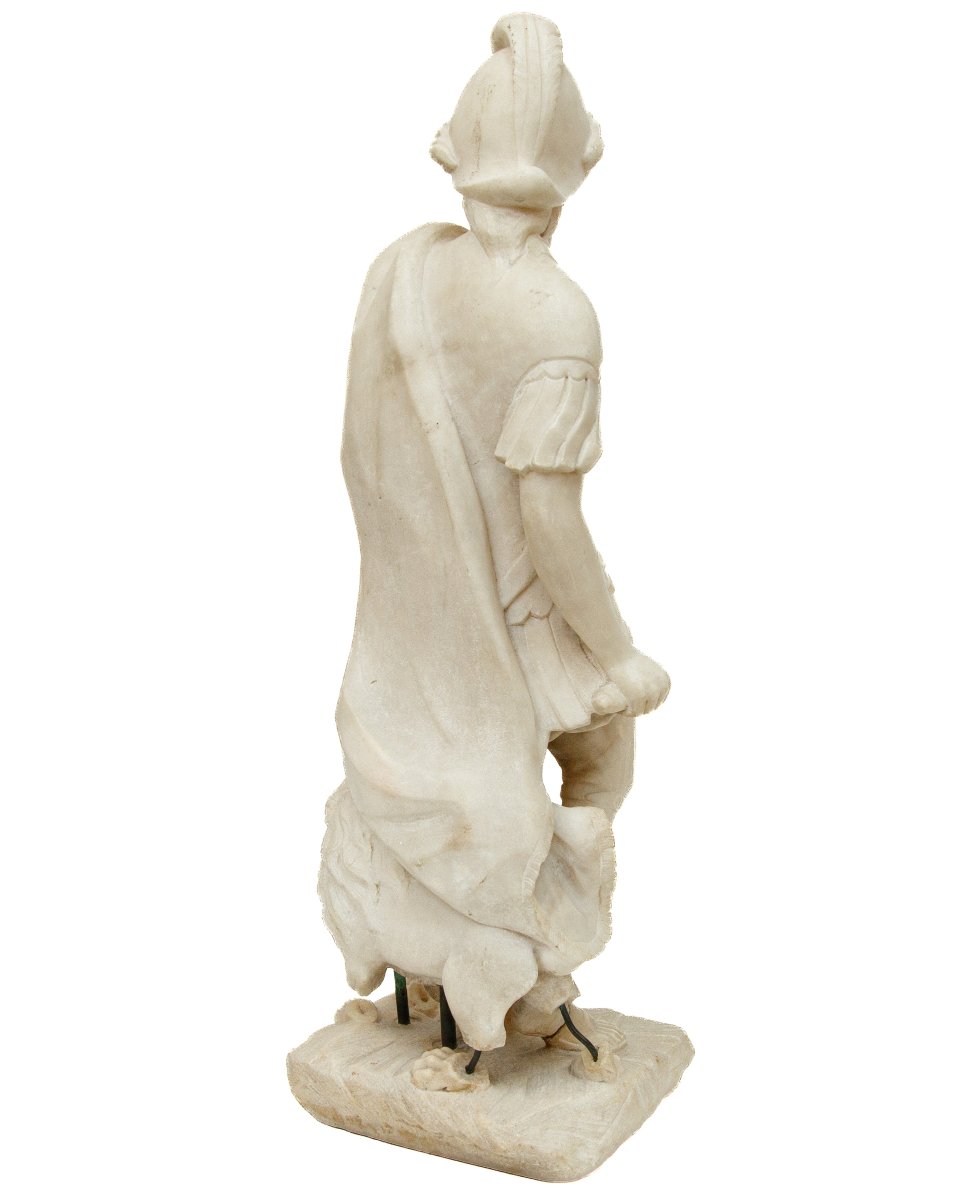
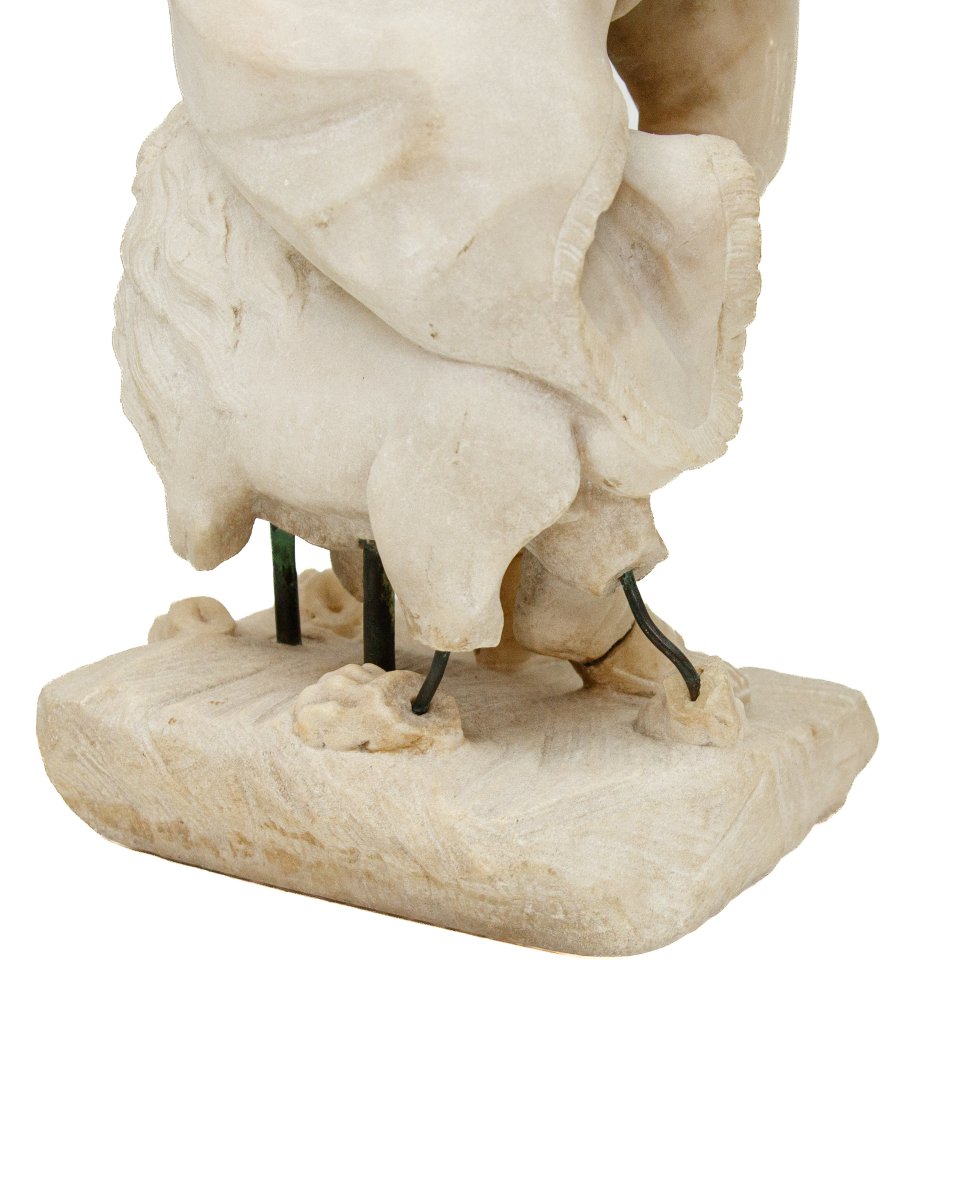
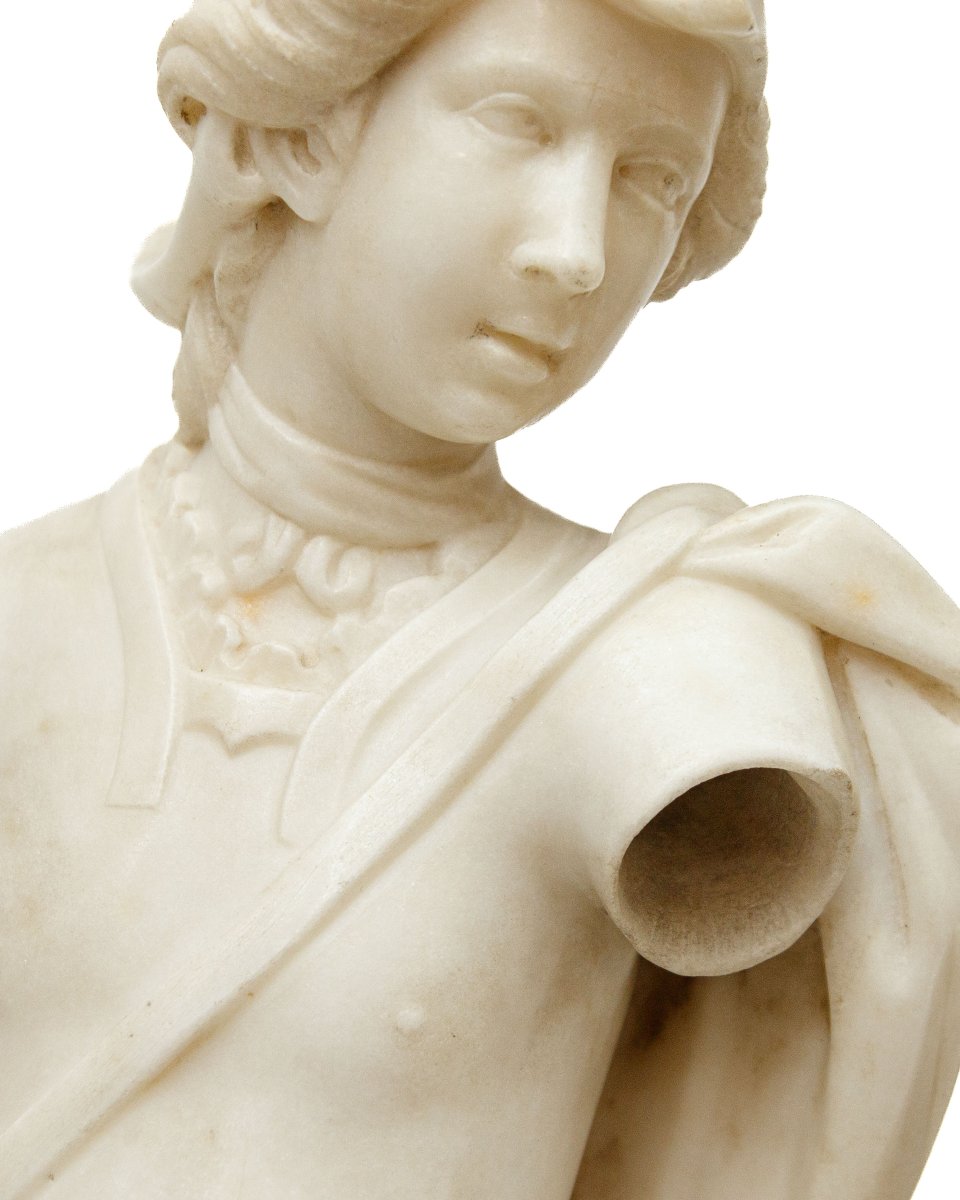
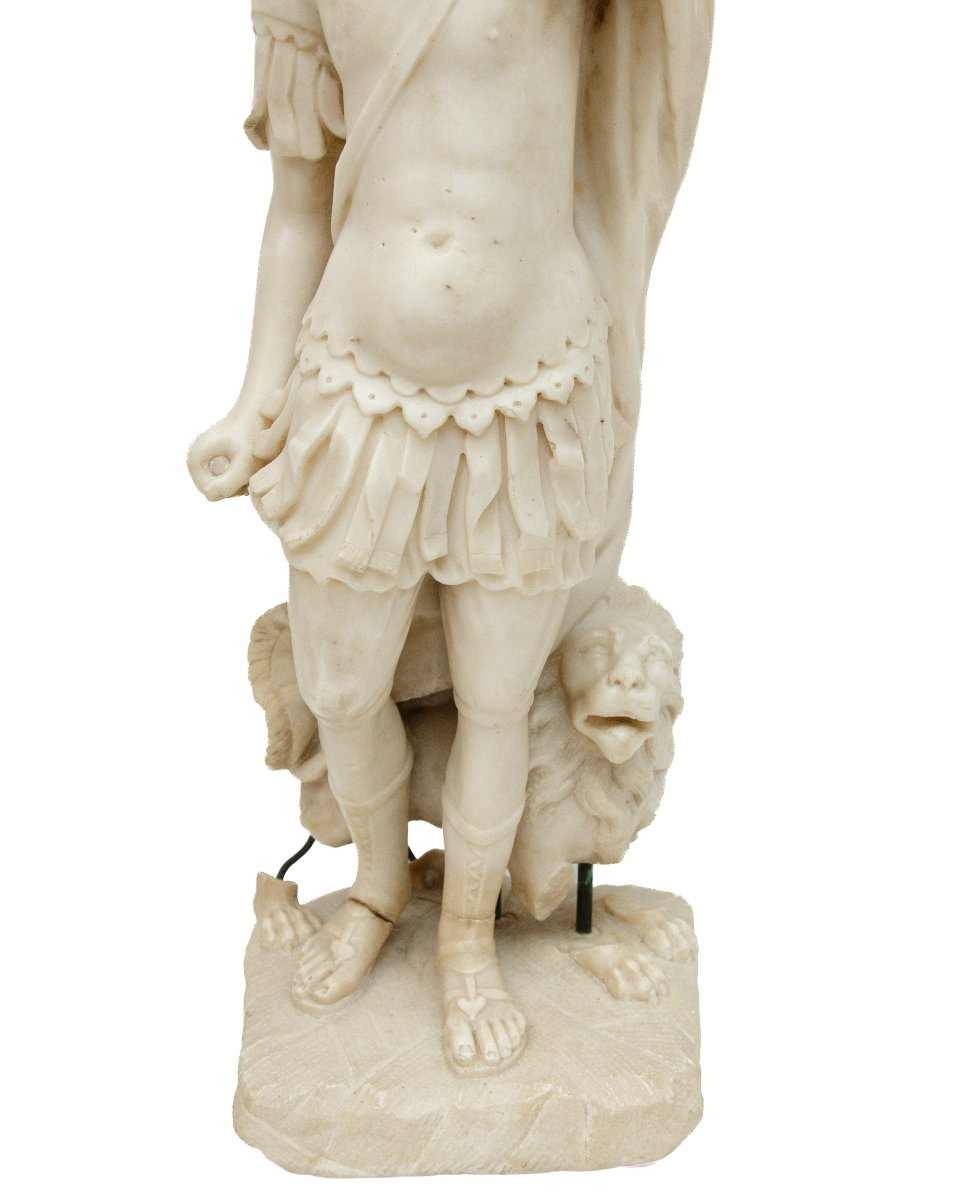
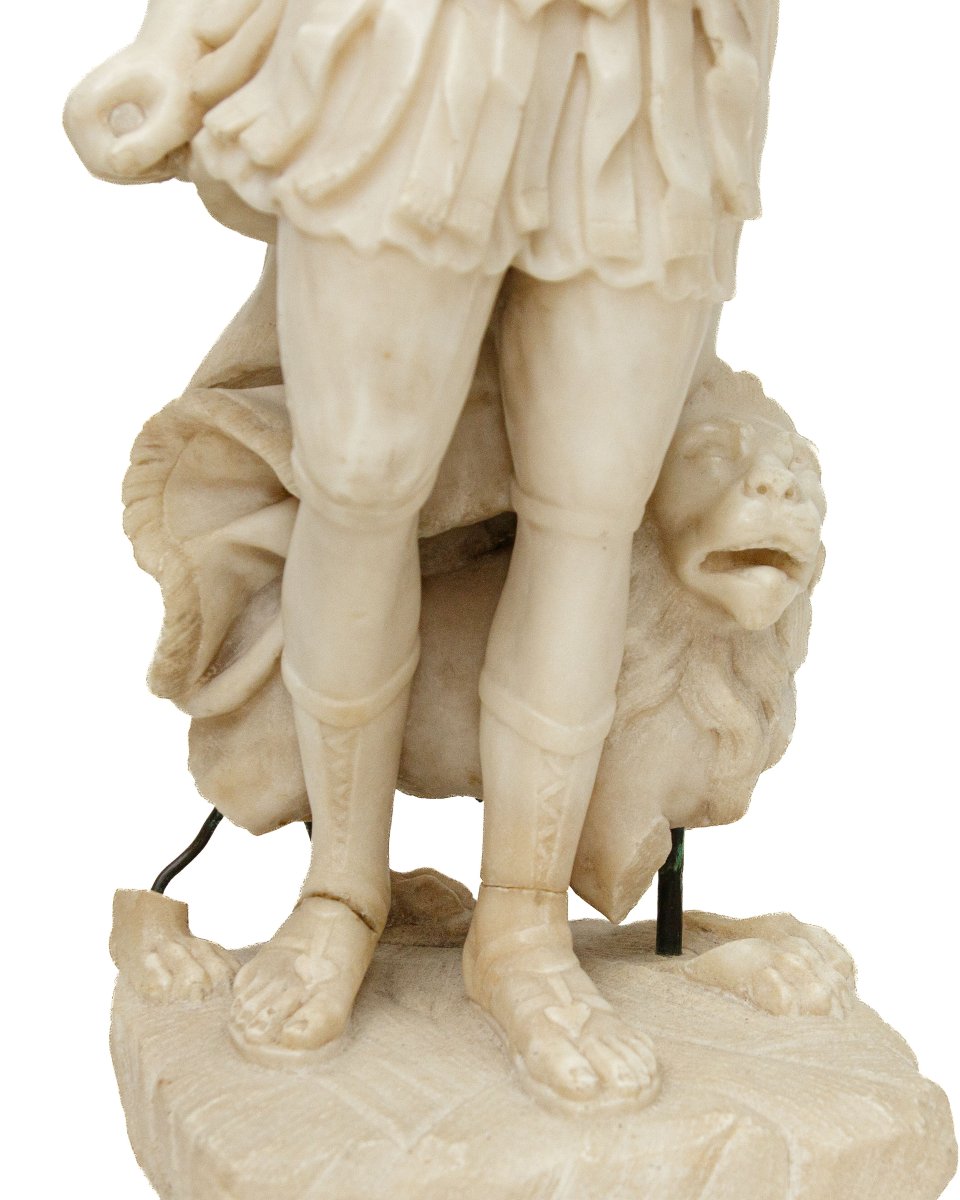
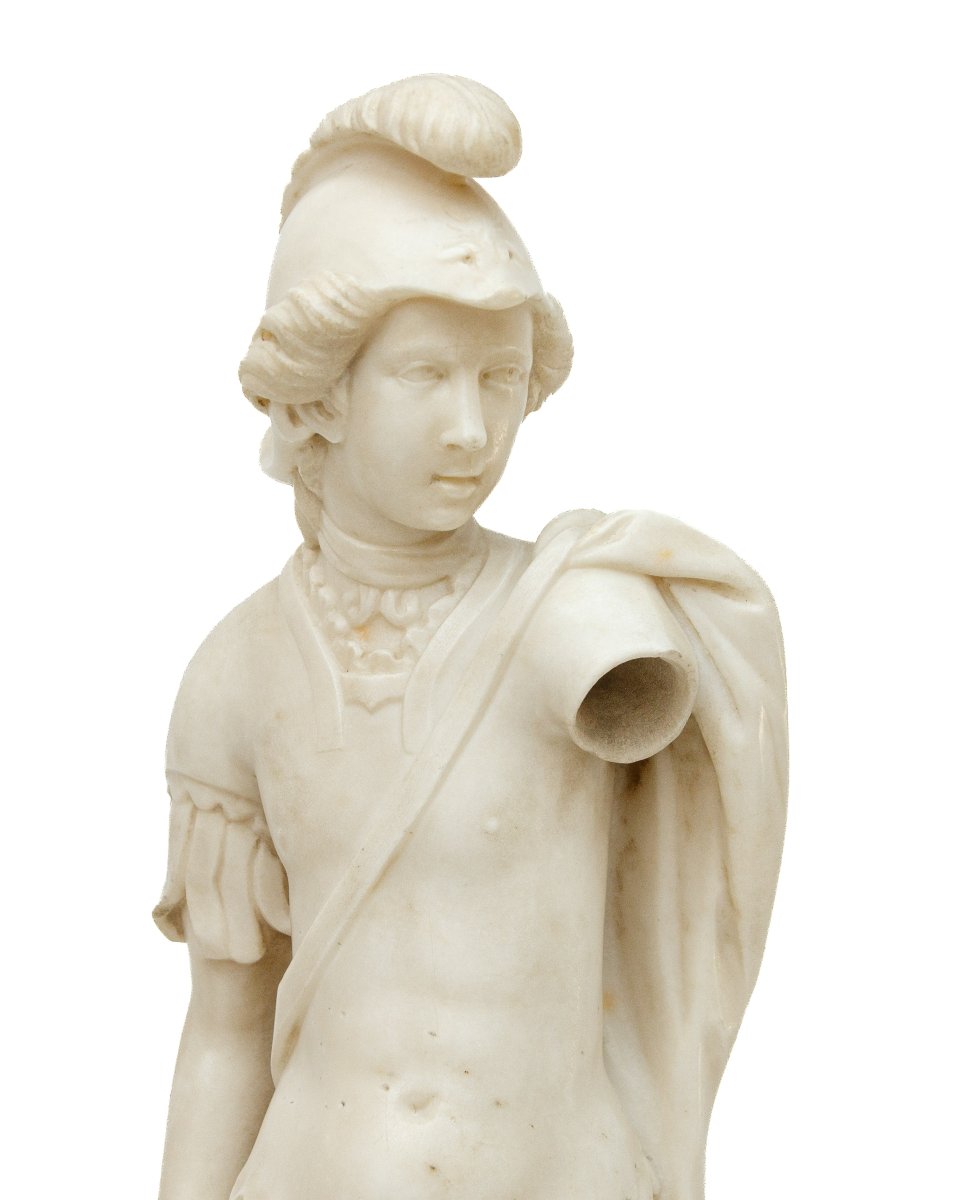
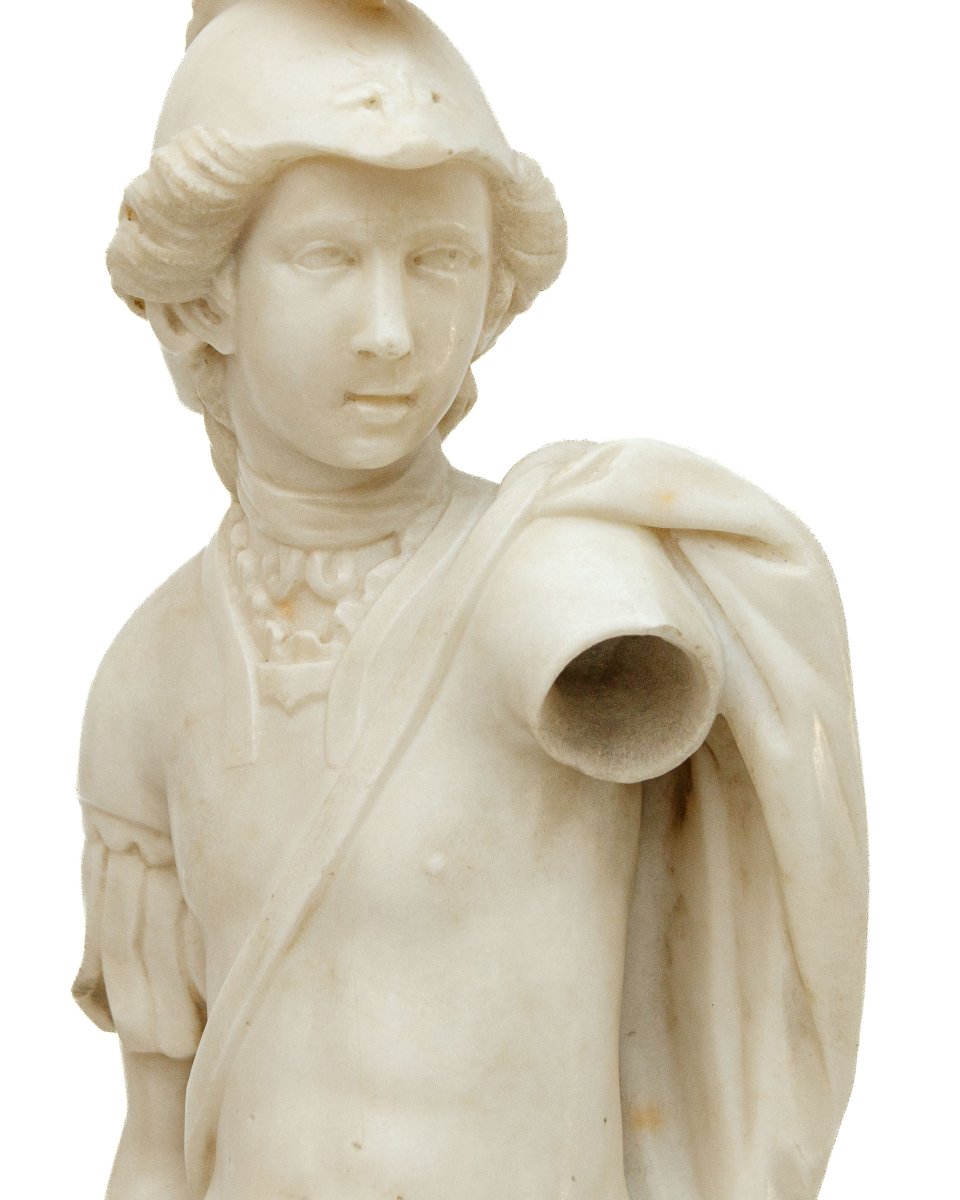
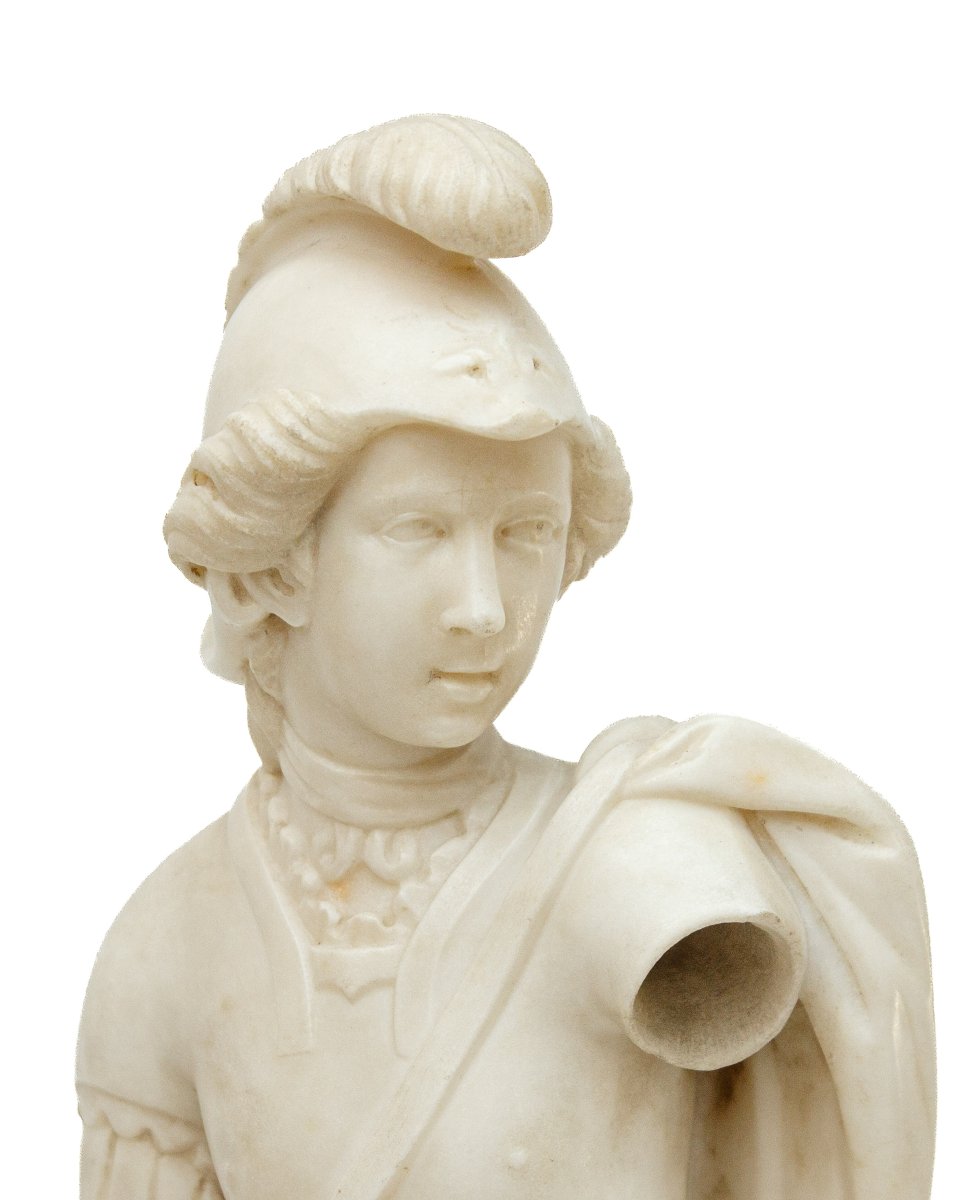
The work in question, a refined marble sculpture attributable to a 16th-century Northern Italian workshop, perfectly embodies the synthesis of late-Renaissance and Mannerist formal sensibilities. The figure, characterized by a sinuous and elegant pose, is depicted as a warrior with distinctly youthful and ephebe-like features, framed by wavy hair emerging from an elaborate, ancient-style crested helmet. The stark contrast between the almost boyish features and the military nature of the attire, combined with the iconographic presence of the lion crouching at the figure’s feet, opens the door to a dual and fascinating interpretation, equally divided between the sacred and the profane. From a religious perspective, the sculpture fits coherently within the vast 16th-century body of work consisting of altar monuments and devotional objects dedicated to the martyr saints of the Roman tradition. The delicacy of the face and the absence of a beard immediately suggest the figure of a young saint who faced martyrdom at a tender age. In this context, one of the most plausible hypotheses points to Saint Venantius of Camerino, traditionally depicted as a noble adolescent in Roman armor who, according to his hagiography, miraculously tamed the lions in the amphitheater, causing them to crouch at his feet rather than devour him. However, the possible geographical connection to northern Italy invites us to consider with equal weight the figure of Saint Mamete, a young shepherd and martyr highly venerated in Lombardy and Ticino, famous for his complete communion with wild beasts and often depicted alongside a lion—a symbol of the violence of the pagan world tamed by the purity of the Christian faith. In both sacred interpretations, the mutilation of the left arm—which once likely housed a pivot joint to support the palm of martyrdom, a banner, or a model of a protected city—has unfortunately deprived the work of its most explicit Christian attributes. At the same time, the work lends itself to an equally evocative secular interpretation, linked to private commissions from the courts and noble palaces of the Po Valley or Veneto, where the myth of classical antiquity served as a vehicle for dynastic or allegorical celebration. The finely decorated helmet and breastplate recall the “heroic” parade armor in vogue during the sixteenth century, which sculptors used to give form to the deities and heroes of myth. The statue could therefore depict a young Mars, the god of war, captured in a moment of respite and stripped of his usual mature ferocity, or Achilles, the Homeric hero par excellence, celebrated for his aristocratic beauty and his courage. Finally, an identification with Alexander the Great cannot be ruled out; his legendary youth and mythical descent from Hercules were often extolled by associating him with the lion—no longer as a miraculous beast, but as an emblem of royalty, strength of character (virtus), and unchallenged dominion over nature and the conquered peoples.
Period: 16th century
Style: Other Style
Condition: Good condition
Material: Marble
Width: 17
Height: 56
Depth: 16,5
Reference (ID): 1786558
Availability: In stock