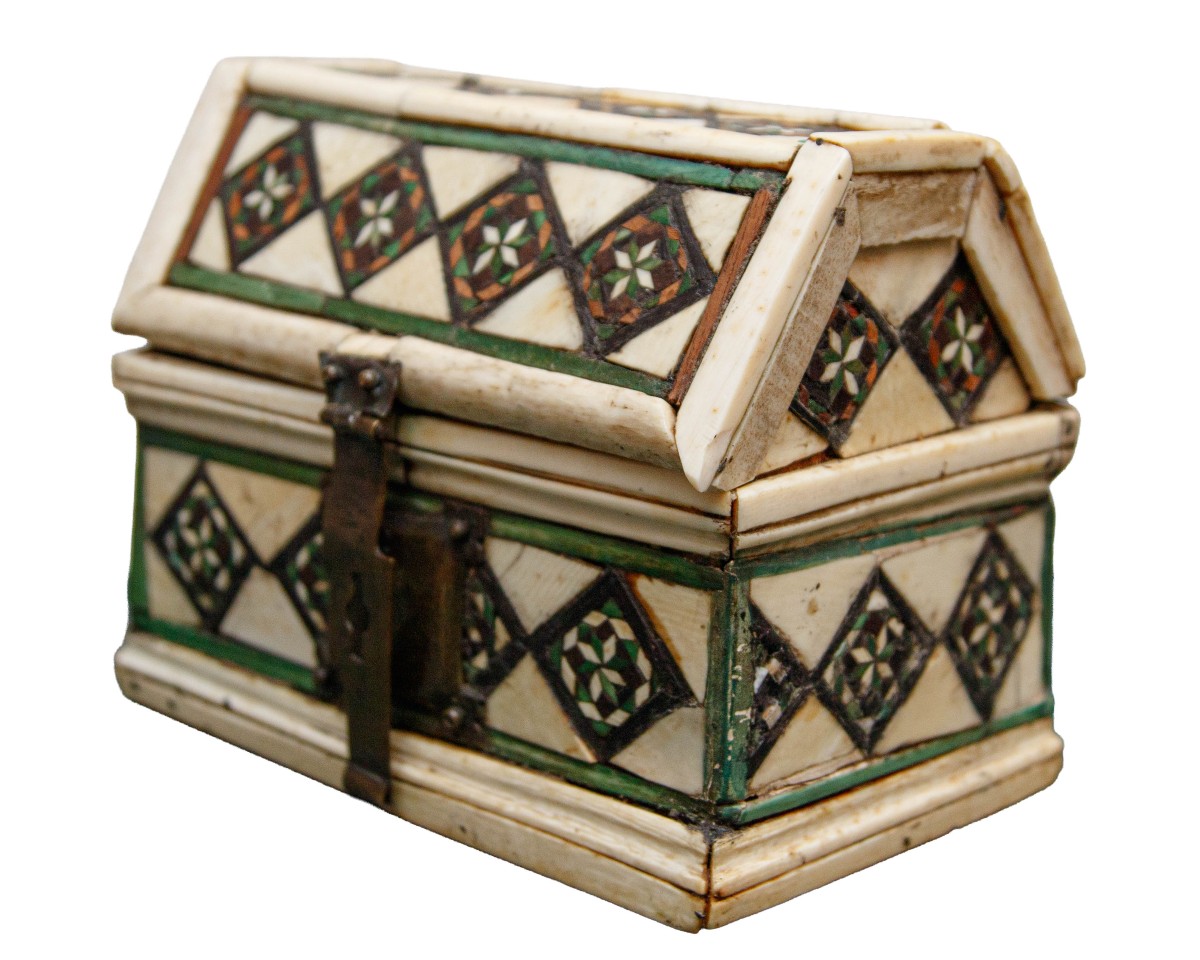
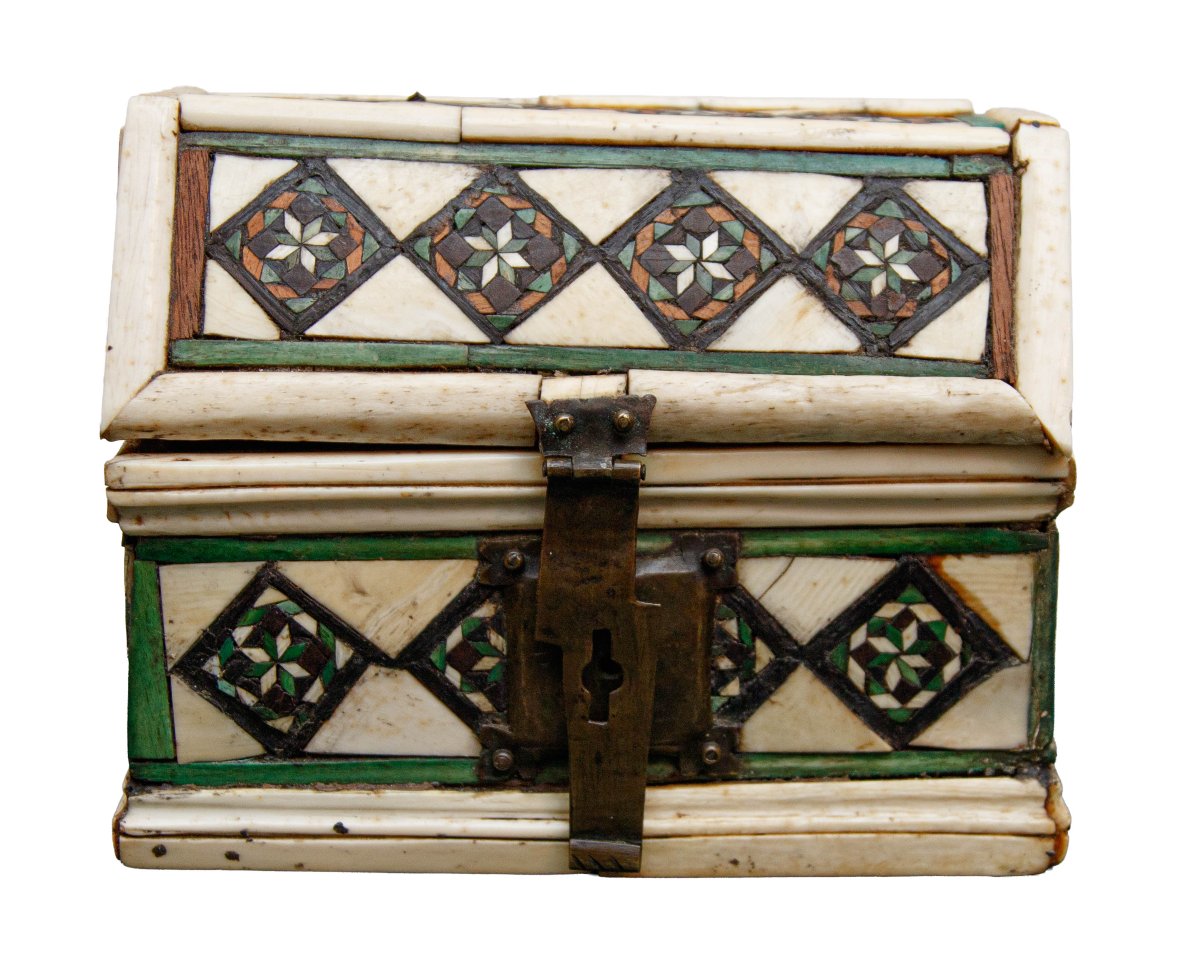
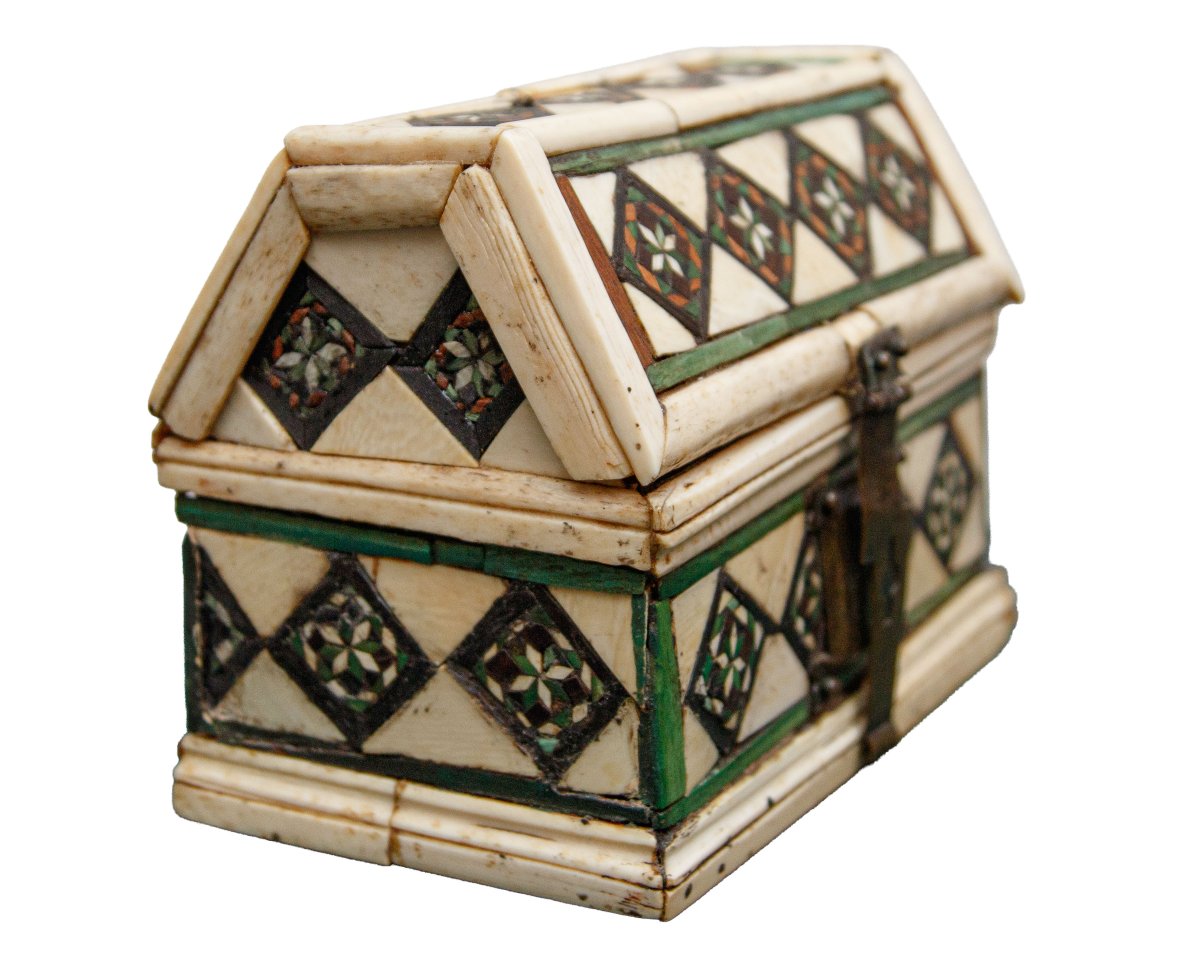
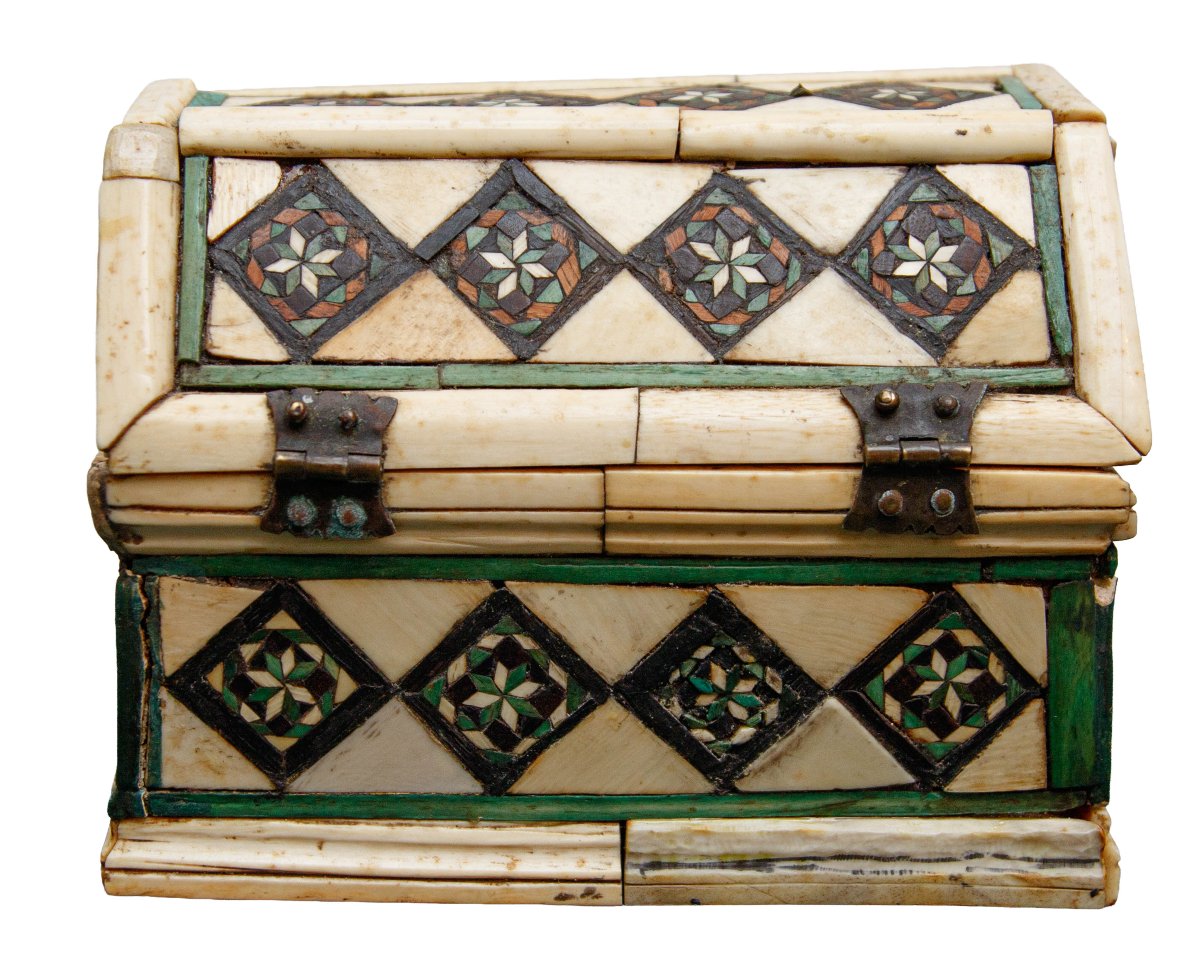


16th Century, Bottega Degli Embriachi, Venice Or Florence, Small Chest
16th century, Workshop of Baldassare degli Embriachi, Venice or Florence
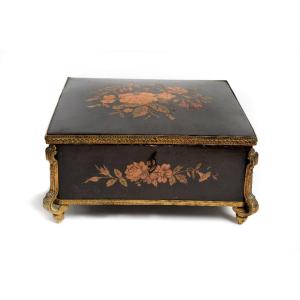
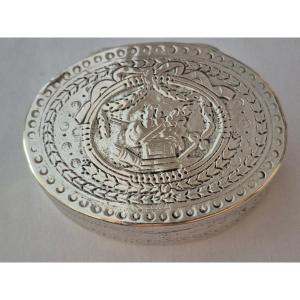
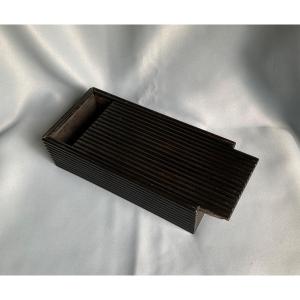
Small box
Bone and wood, 14 x 12 cm
Seal wax on the bottom
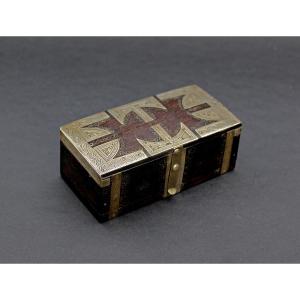
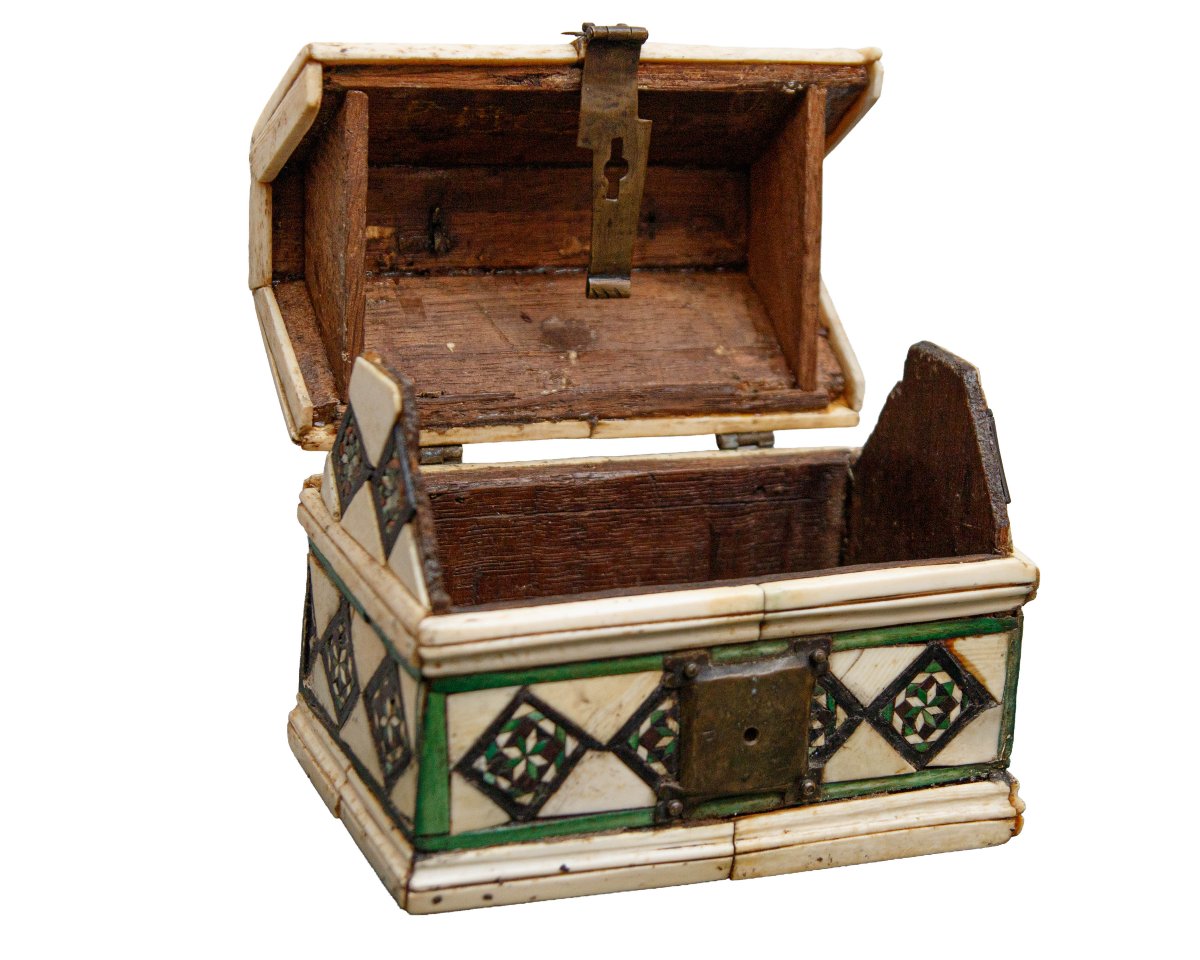
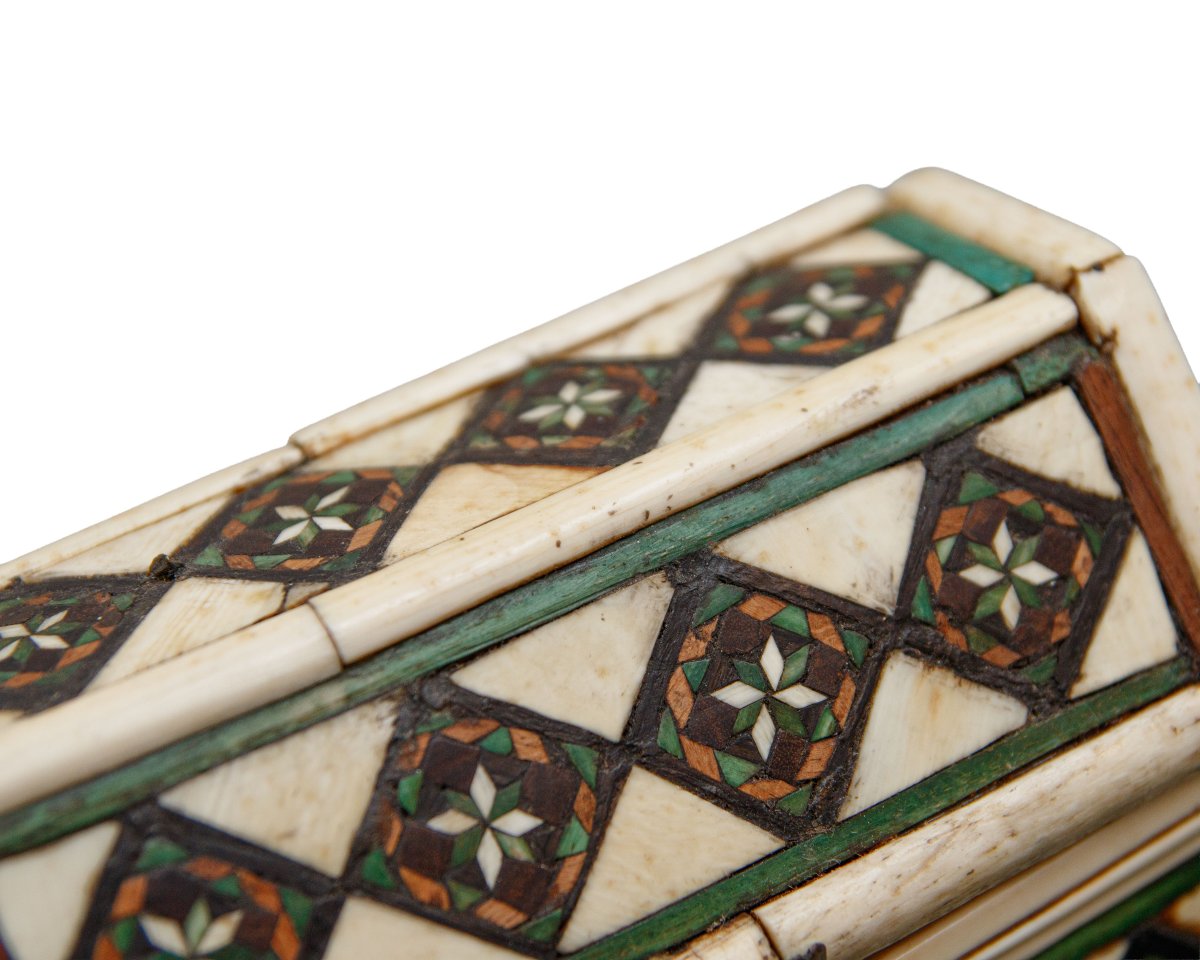
This box is a classic example of the work of the renowned workshop of Baldassare degli Embriachi. The object represents the convergence of Florence’s typical business acumen and Venice’s refined taste, during a transitional period between the late Middle Ages and the early Renaissance. The piece stands out for its precise decoration created using the "alla certosina" inlay technique, which is the true hallmark of this workshop: it is a design language composed of repeated geometric patterns. The decoration, created by fitting small pieces of bone, horn, and colored wood together with extreme precision, reflects the Embriachi’s desire to offer a sober and dignified luxury. The repetition of star and lozenge patterns lends the object a solid, timeless beauty, perfect for the market of the time.
The Embriachi workshop, likely of Genoese origin but established as a leading enterprise between Florence and Venice from the late 14th to the 16th century, represents a pinnacle of late Gothic craftsmanship. Founded by the merchant and diplomat Baldassarre Ubriachi (or Embriachi), a multifaceted figure who also served as a banker and political agent for the Visconti, the workshop specialized in the systematic working of bovine or equine bone. This technical choice, which replaced the rarer ivory with vertically arranged, decorated strips, allowed for the large-scale production of sacred and secular objects, framed by complex wood and bone inlays known as “alla certosina” for their geometric precision.
The body of work is divided into two main areas: major religious commissions and the production of household objects for the aristocracy. The absolute masterpiece is the monumental altarpiece of the Certosa di Pavia (1400–1409), commissioned by Gian Galeazzo Visconti from Baldassarre. This polyptych presents a vast narrative cycle dedicated to the lives of Christ, the Virgin Mary, and the Magi, drawing extensively from the Apocrypha. It is accompanied by other monumental works such as the altarpiece of the Abbey of Poissy (now in the Louvre) and the dismembered chests of Casa Cagnola in Milan. Although these large altarpieces sometimes exhibit a certain monotony due to the repetitiveness of the panels and the fragmentation of the narrative, the workshop achieves its greatest expressive success in smaller objects, where the architectural simplicity of the forms blends perfectly with the ornamentation. In addition to the large altarpieces, the Embriachi’s work is universally known for its wedding caskets and mirror frames (such as those preserved at the Bargello in Florence or the Civic Museum of Bologna). The caskets, generally quadrangular with a gabled lid or polygonal with a pyramidal top, featured iconography dear to the courtly culture of the time: from the tales of Mattabruna and the Golden Eagle to the classical myths of Jason, Pyramus and Thisbe, Paris, and Theseus, all reinterpreted according to the refined and chivalric taste of the era. The style, more restrained and sculptural than the fluid linearism of French Gothic art, reflects the family’s Tuscan roots, which documents indicate were in Florence before their move to Venice.
After Baldassarre, the workshop was carried on by family members, including Andrea, Antonio, and Giovanni, along with the latter’s sons, Geronimo and Lorenzo, who kept the workshop active until the mid-15th century and early 16th century. Critics tend to distinguish the production into two phases: an earlier one, directly linked to Baldassarre, and a later one, characterized by a progressive formal rigidity despite the persistence of Gothic modes. Today, the works of the Embriachi family are found in the world’s most prestigious collections, from the British Museum and the Victoria and Albert Museum in London to the Metropolitan Museum of Art in New York and the Grünes Gewölbe in Dresden, while in Italy significant collections are preserved in Venice (Museo Correr), Bologna, Ravenna, Catania, and Turin, bearing witness to the incredible commercial and artistic success of what was the first true “industry” of luxury art objects in Italy.
Period: 16th century
Style: Other Style
Condition: Good condition
Material: Bone
Width: 12
Height: 14
Reference (ID): 1751409
Availability: In stock