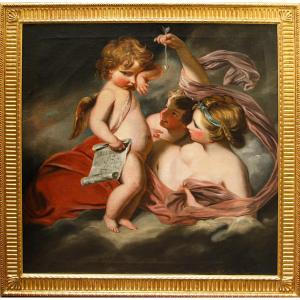


Joshua Reynolds (plympton, 1723 – London, 1792), The Education Of Cupid
Joshua Reynolds (Plympton, July 16, 1723 – London, February 23, 1792), Follower of
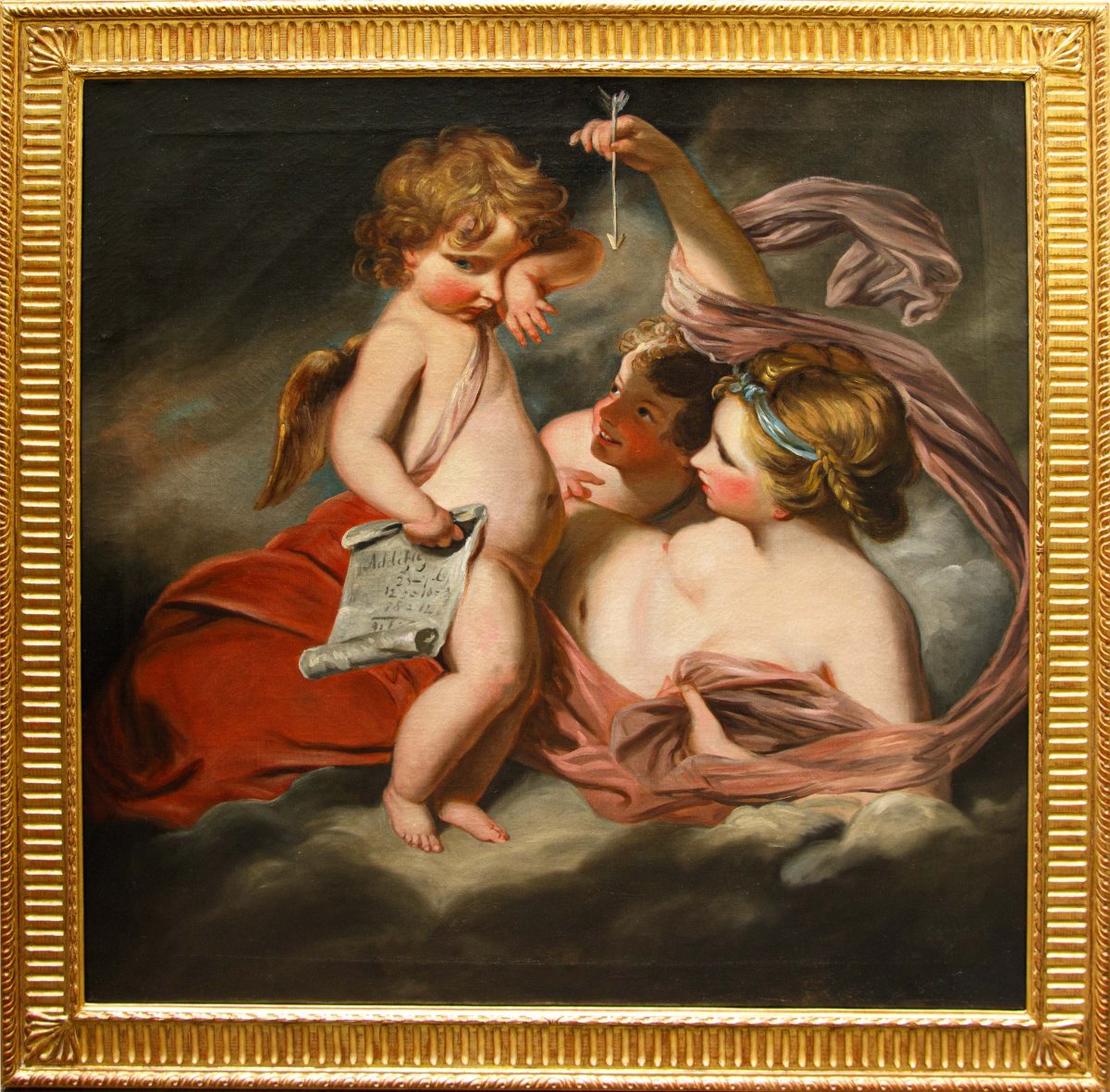
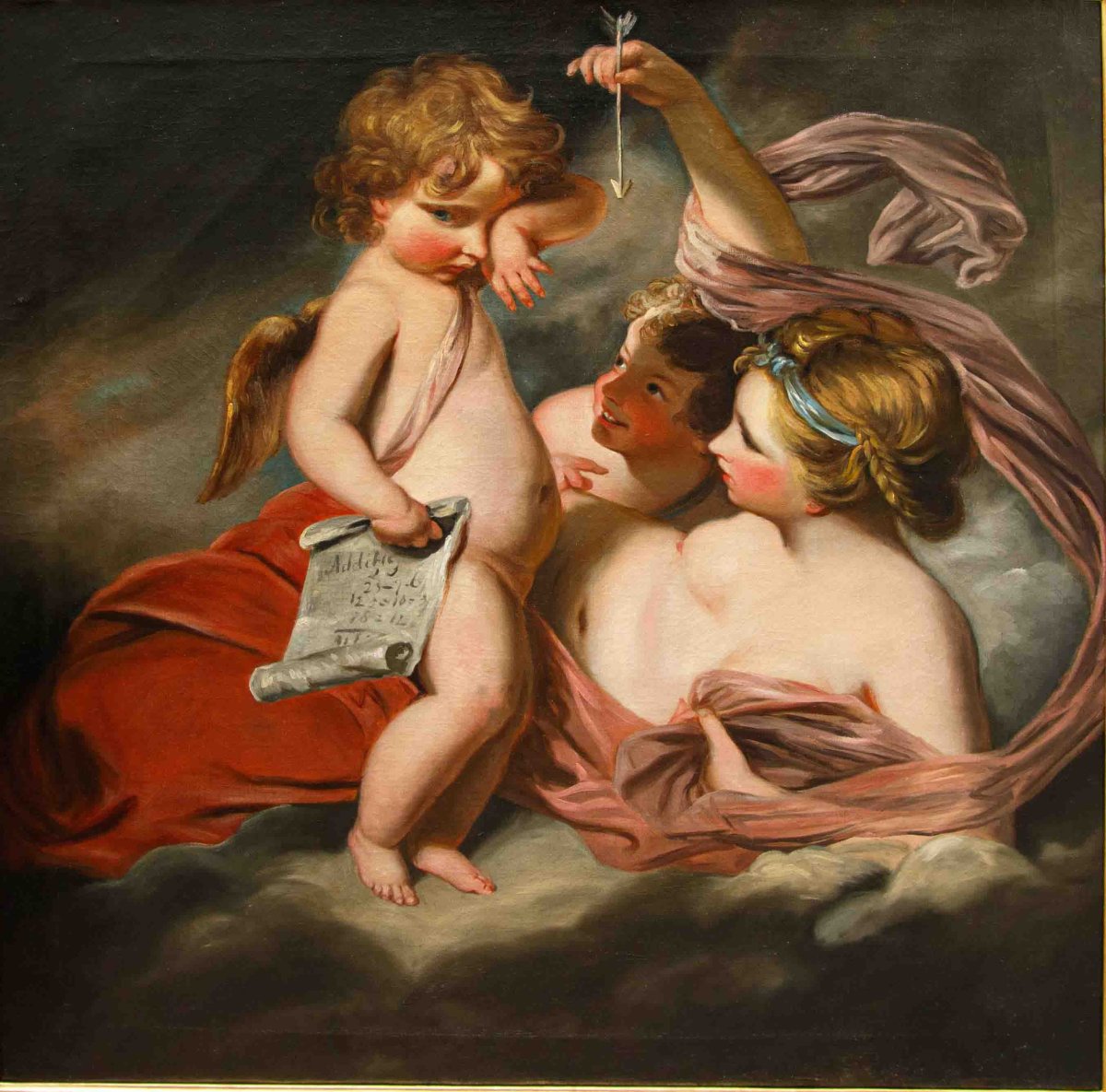
The Education of Cupid
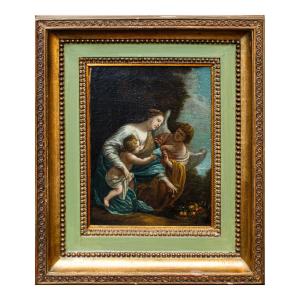
Oil on canvas, 102 x 99.5 cm – with frame, 117 x 111 cm
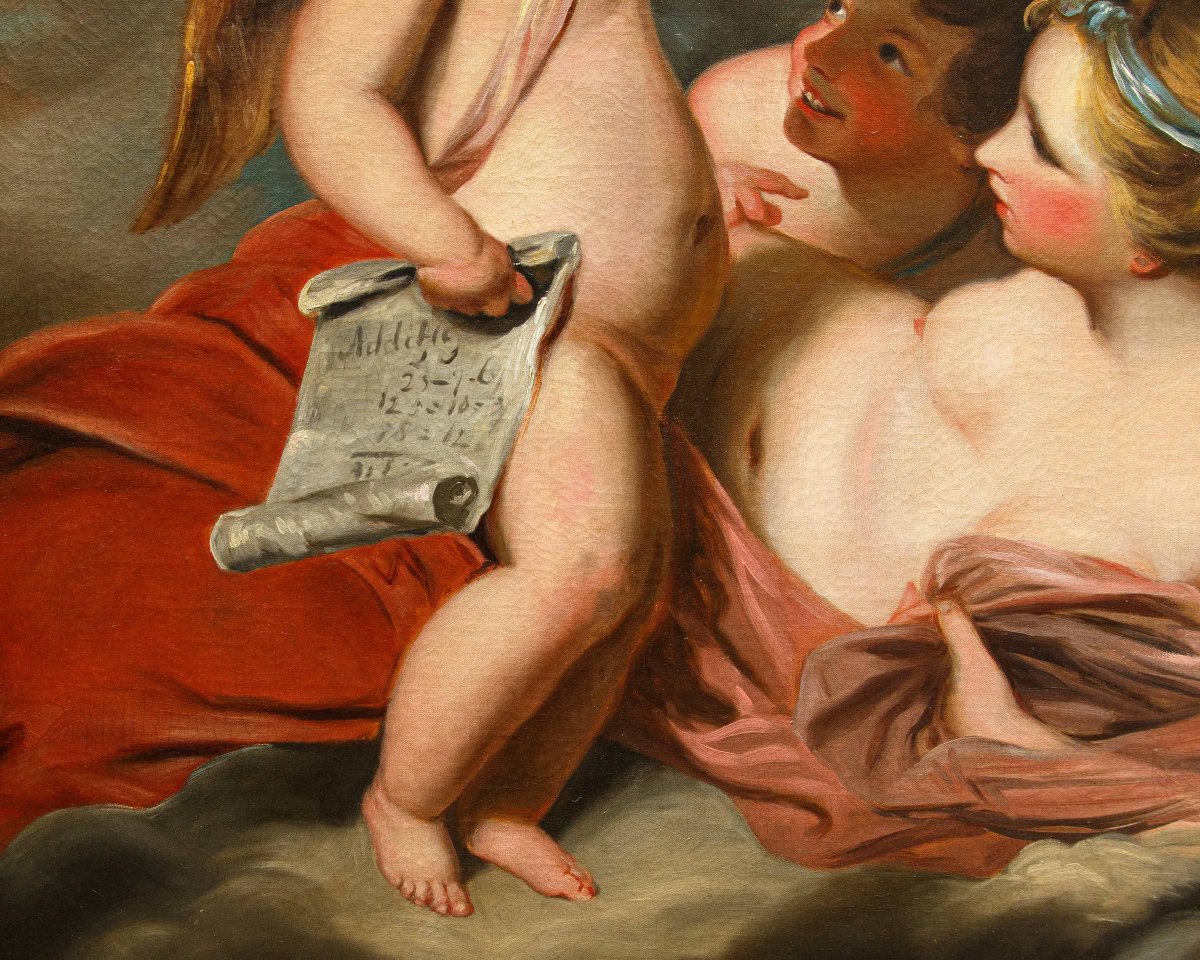
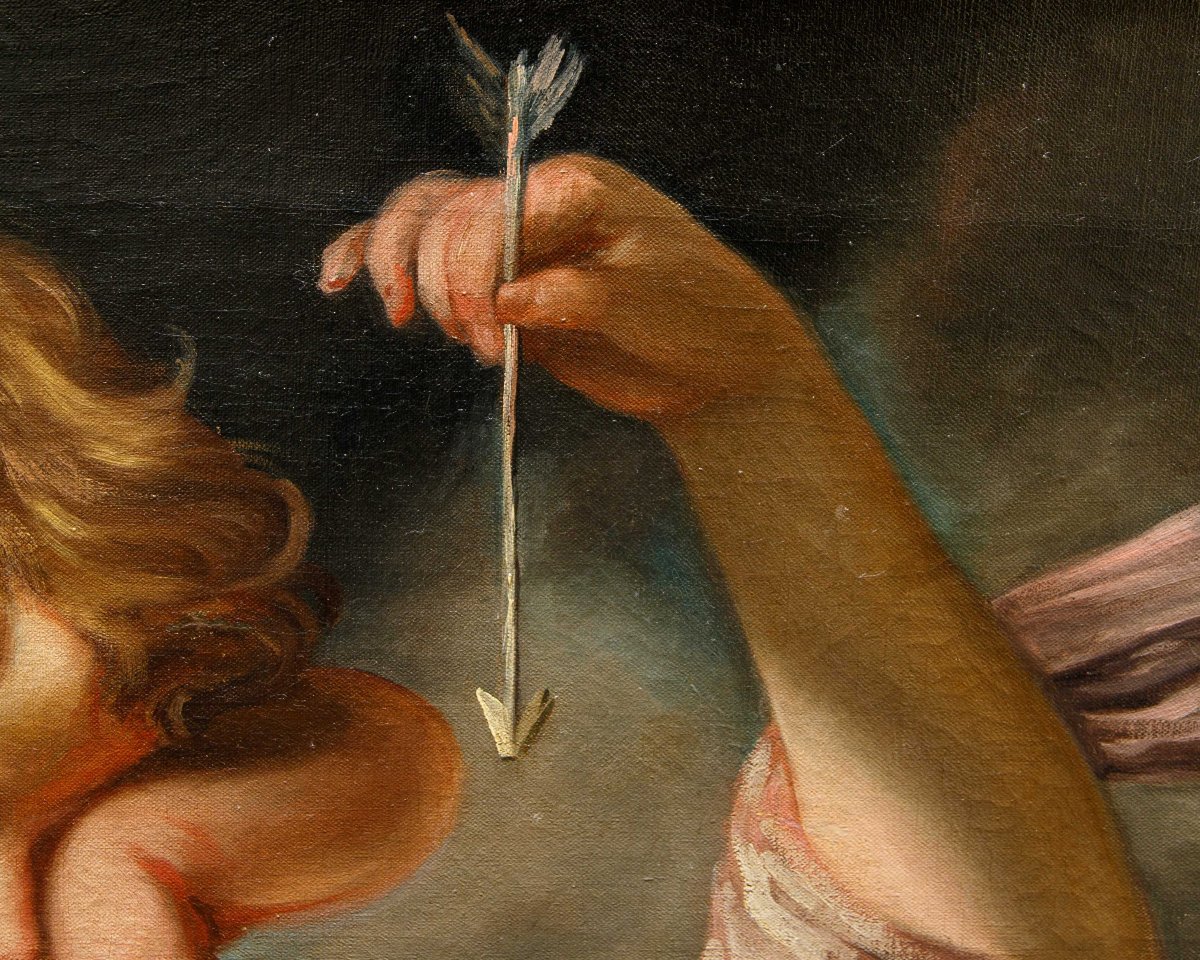
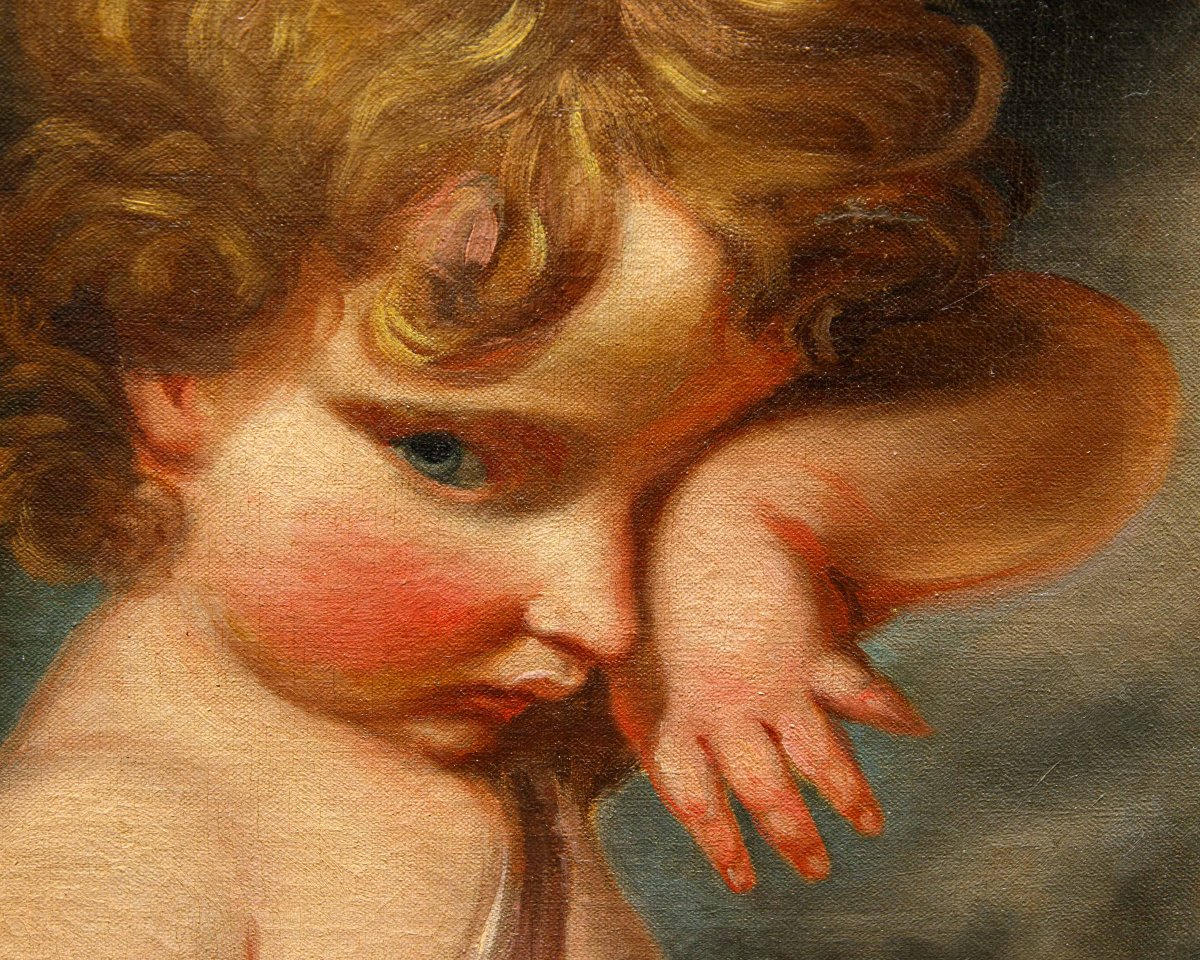
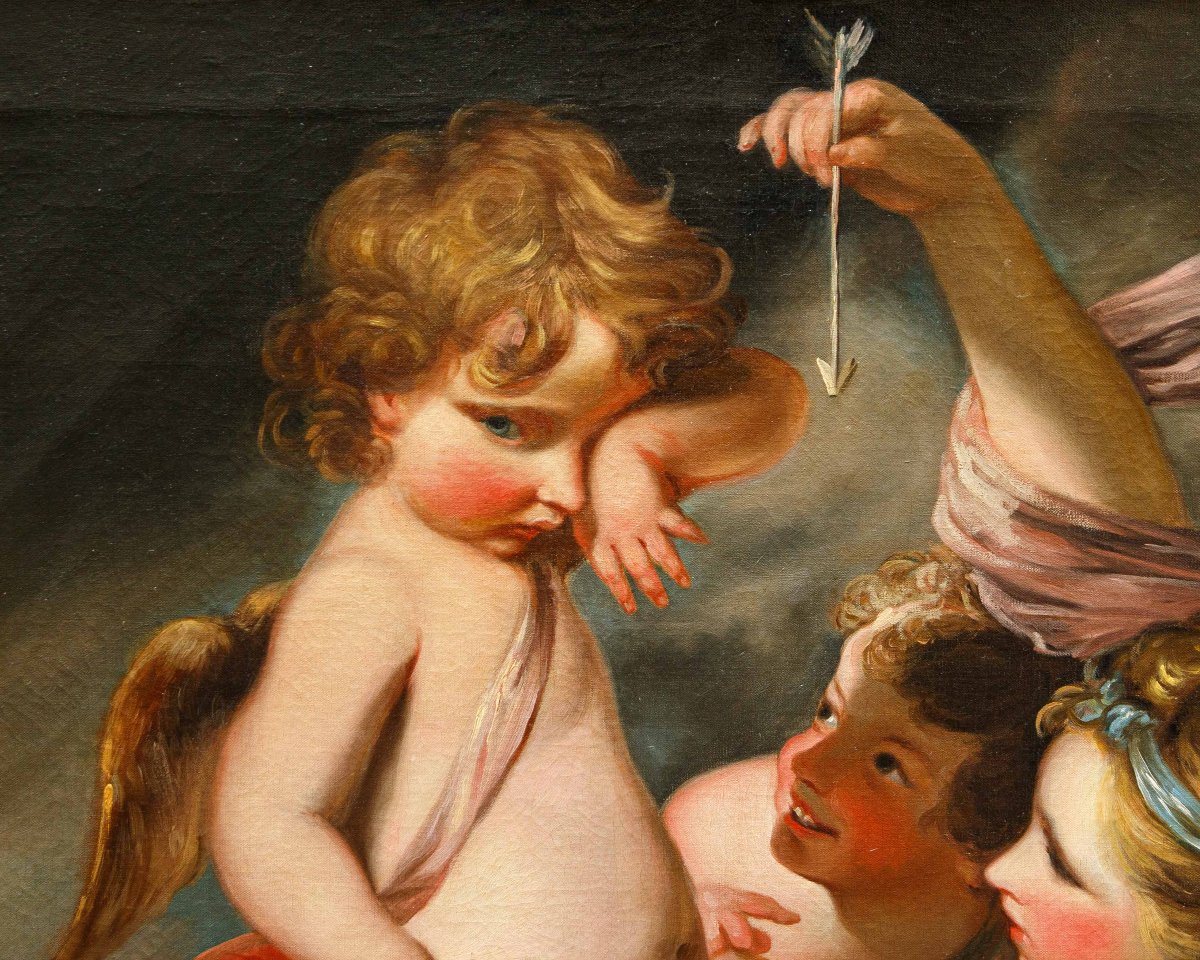
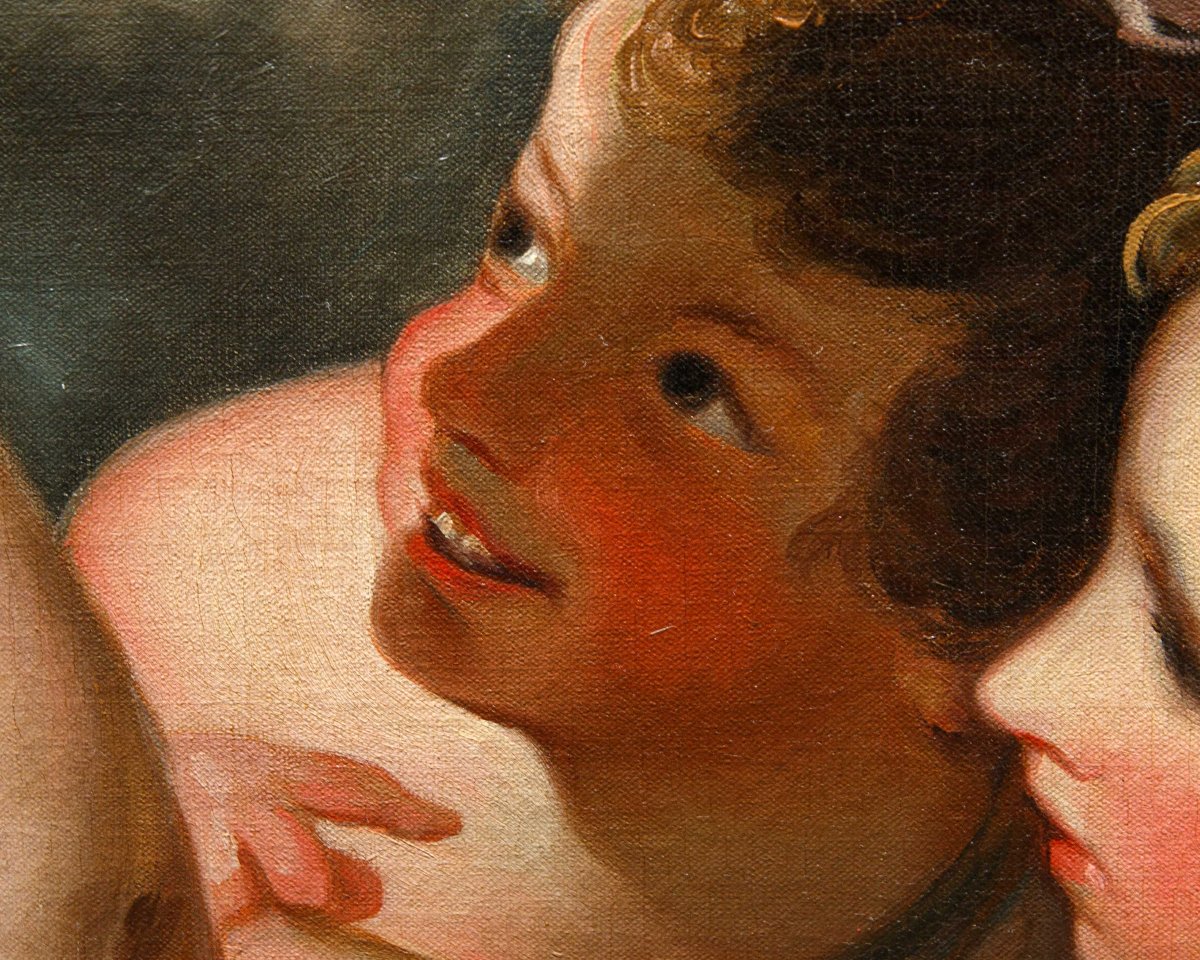
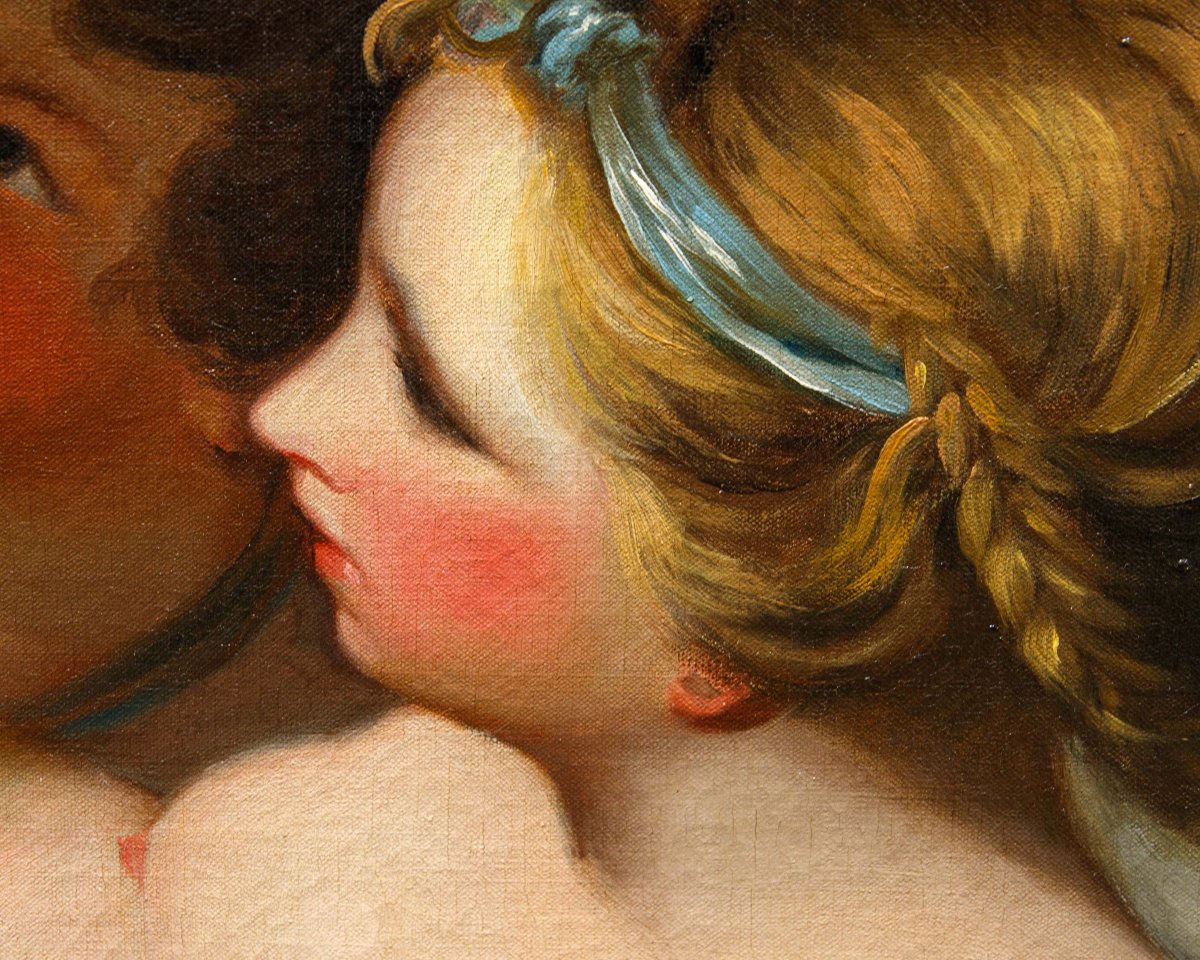
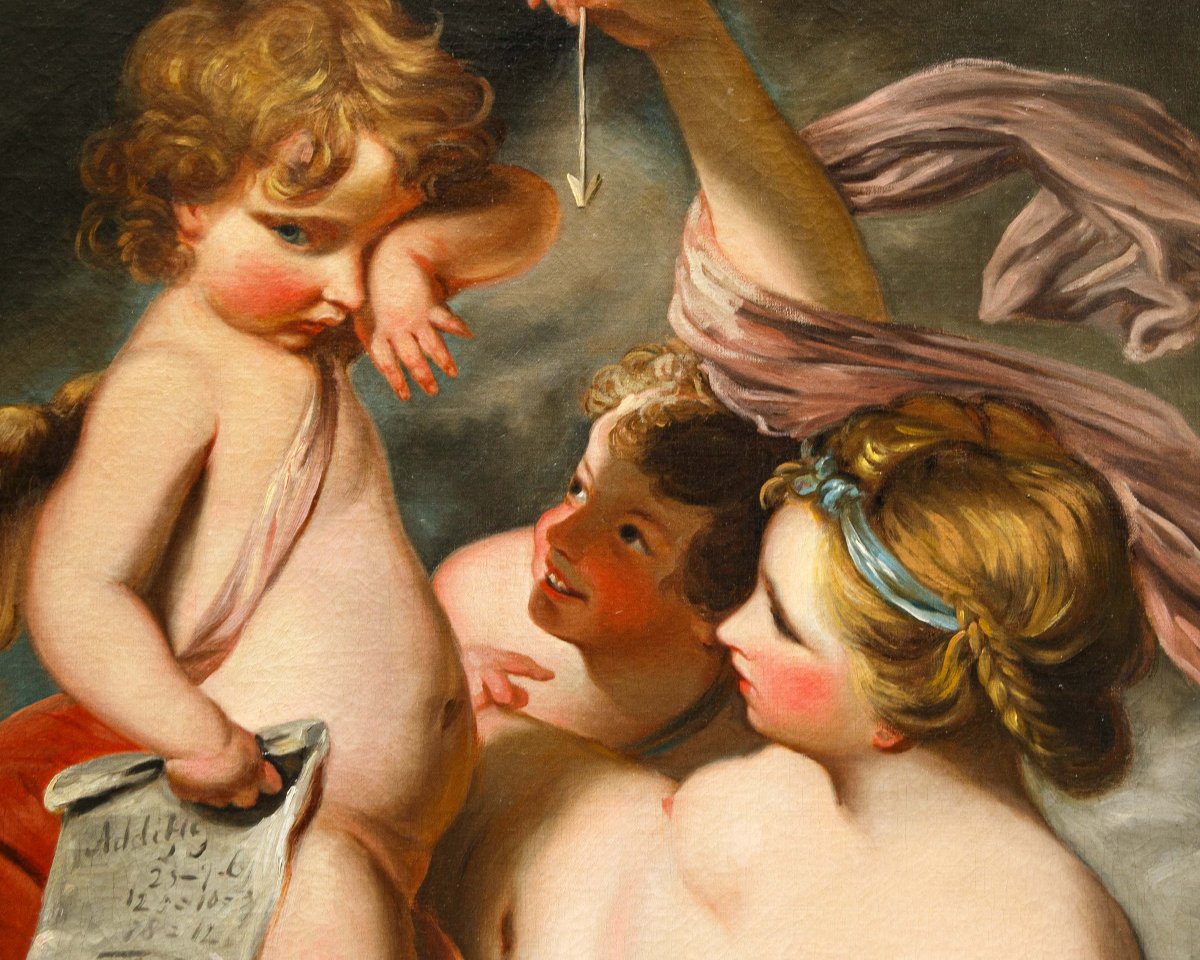
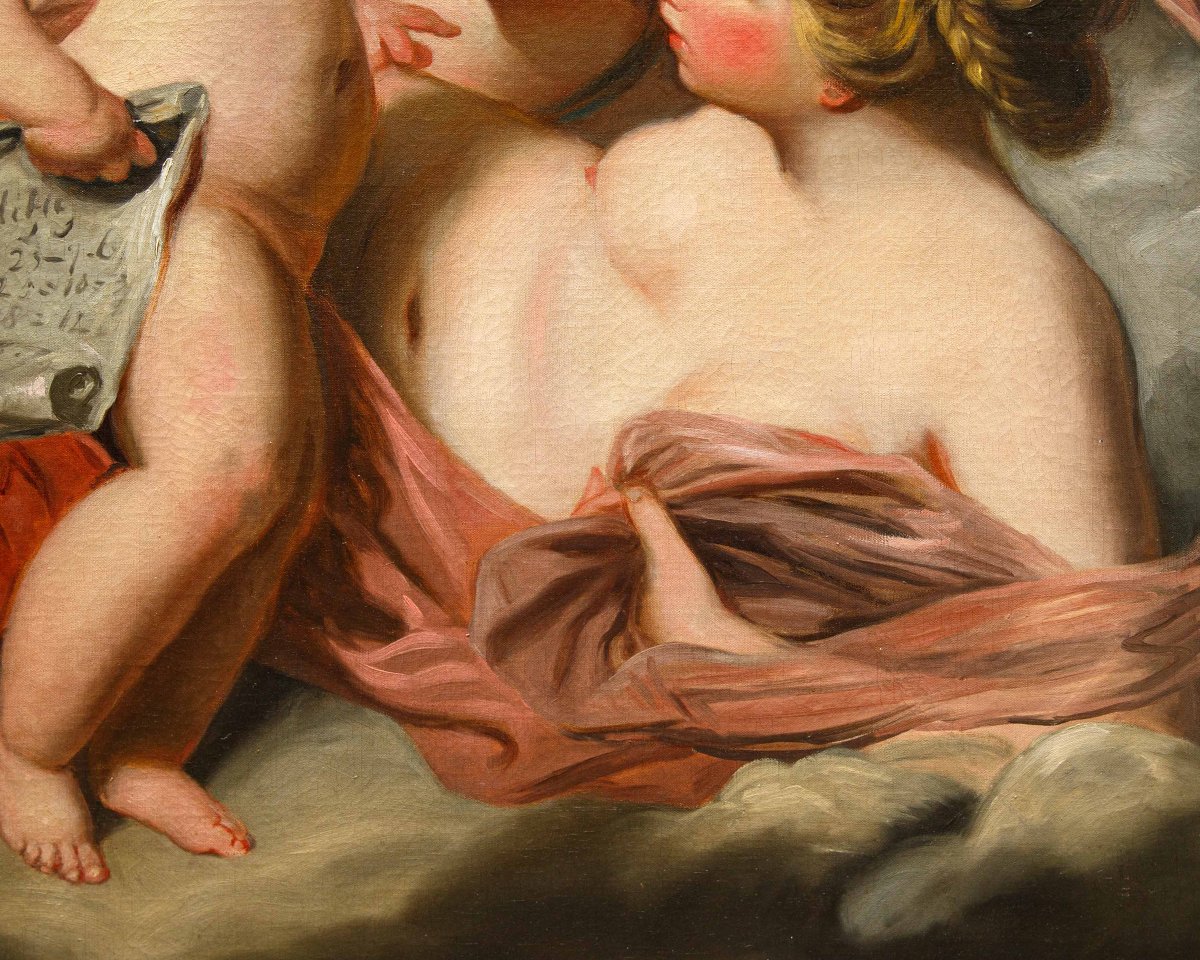
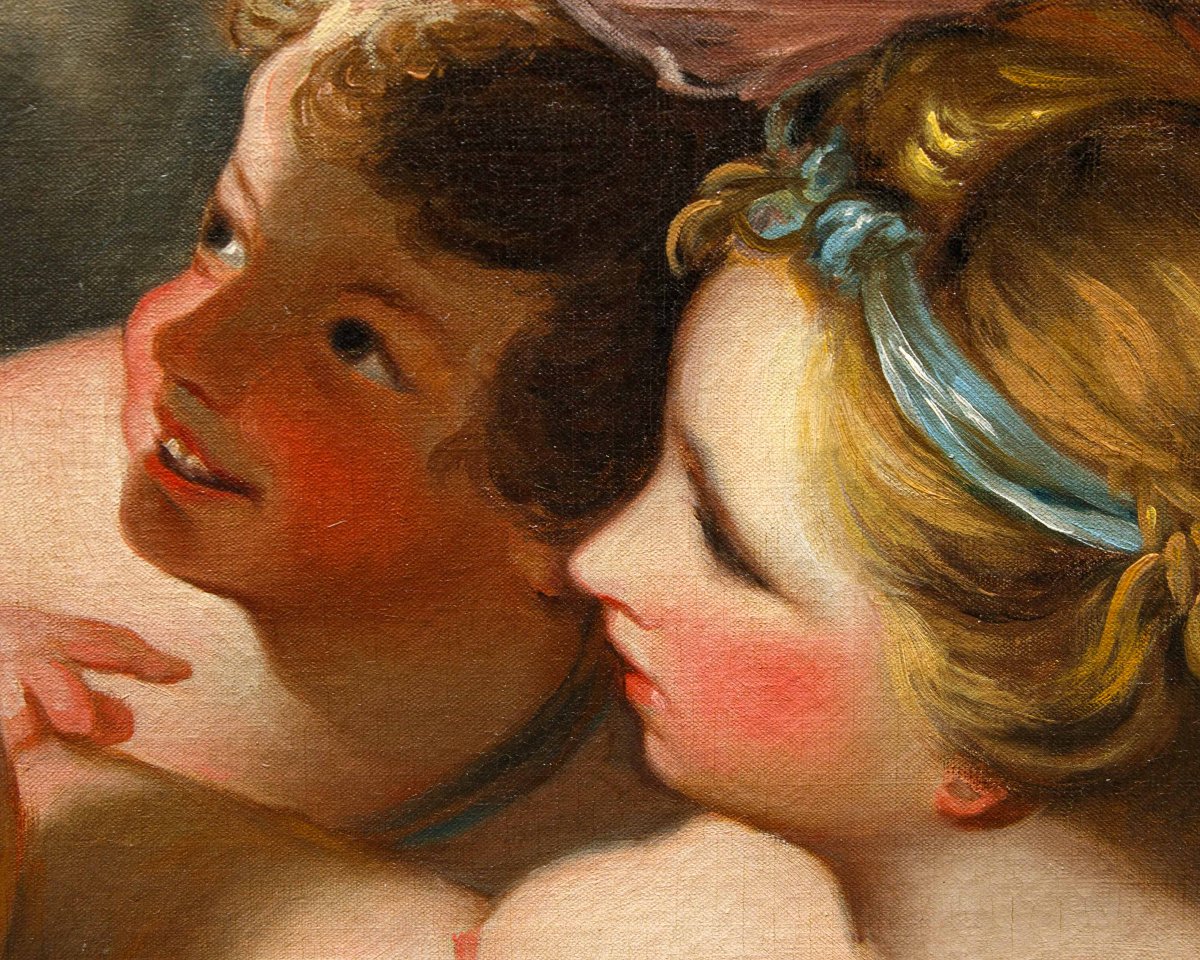
The work in question, titled *The Education of Cupid* and created by a skilled follower of the famous English painter Joshua Reynolds, offers an interesting insight into the critical and iconographic popularity of the mythological subjects explored by the master during the 18th century. The painting depicts the young Cupid, captured in a moment of tender instruction, flanked by Venus and another child observing the scene. The composition unfolds through a refined interplay of glances and gestures: the little god of love, with plump cheeks and blond curls, holds a scroll—a symbol of learning—in his hands, while the female deity guides him with maternal grace. The scene is immersed in a dense, chiaroscuro atmosphere, where the figures emerge powerfully from a dark, undefined background—a stylistic choice that emphasizes the luminosity of the skin tones and the vibrant colors of the drapery, particularly the deep red enveloping the lower part of the boy and the pink of the woman’s gown. This specific painting finds its direct and indispensable model in an autograph canvas by Joshua Reynolds featuring the same subject and compositional arrangement, now housed in the prestigious public collection at Kenwood House in London. The Kenwood House prototype perfectly embodies the poetics of the Grand Style theorized by Reynolds, in which the nobility of the subject is combined with a cultured revival of the Italian Renaissance tradition. The unknown follower who painted the canvas analyzed here demonstrates that he has absorbed his master’s teachings with extreme precision, reproducing not only the arrangement of the figures but also that particular atmospheric rendering that lends the work a sense of timeless suspension.
Although Joshua Reynolds is universally known and celebrated for his vast body of portraiture dedicated to members of the English nobility and aristocracy, his works on mythological and historical subjects represent a qualitative pinnacle of fundamental importance for understanding his artistic ambition. *The Education of Cupid* fits seamlessly into this tradition, displaying extraordinary formal affinities with other major works in Reynolds’s oeuvre. Consider, for example, *Venus and Cupid* at the Hermitage in St. Petersburg, where one finds the same subtle sensuality and the same type of female face, characterized by idealized yet vibrant features. The rendering of the children’s anatomy, with that sense of natural fullness and innocent grace, also recalls the *Infant Hercules* at the Princeton Art Museum, where the child’s body is modeled through impasto chiaroscuro strokes that define its volume in space. The comparison can also be extended to *The Death of Dido* in the Royal Collection in London, a work in which Reynolds tackles the epic drama with a chromatic sensibility and a treatment of drapery that find a faithful echo in the softness of the garments depicted in this *Education of Cupid*. Even in his most celebrated portraiture, such as *The Brummel Children*, also housed at Kenwood House, that masterful ability to capture the expressions of children emerges—an ability the artist of this painting has sought to emulate with dedication. Ultimately, the work is not only a tribute to Reynolds’s genius but also a precious record of how his aesthetic vision—capable of ennobling the natural world through the lens of classicism—was internalized and disseminated by his collaborators and followers, while preserving intact the expressive power that made 18th-century English painting an indispensable reference point on the European scene.
Period: 18th century
Style: Other Style
Condition: Good condition
Material: Oil painting
Width: 99,5
Height: 102
Reference (ID): 1797769
Availability: In stock