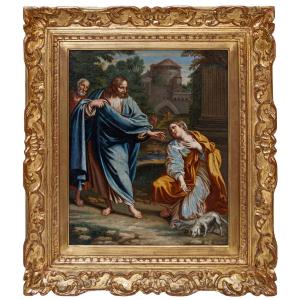


A Follower Of Annibale Carracci (bologna, 1560 – Rome, 1609), 17th Century, Christ And The Canaanite Woman
A follower of Annibale Carracci (Bologna, 1560 – Rome, 1609), second half of the 17th century
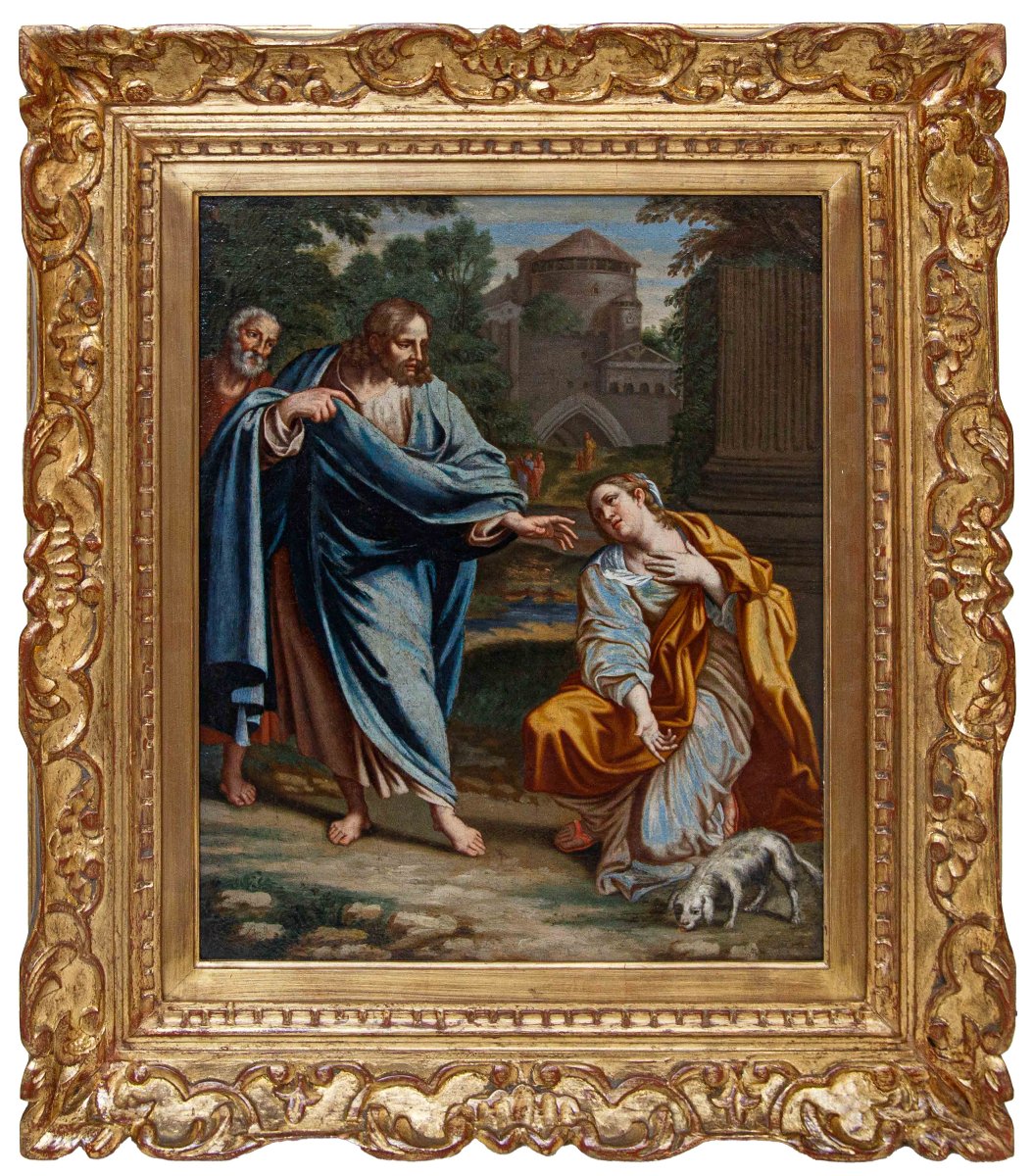
Christ and the Canaanite Woman
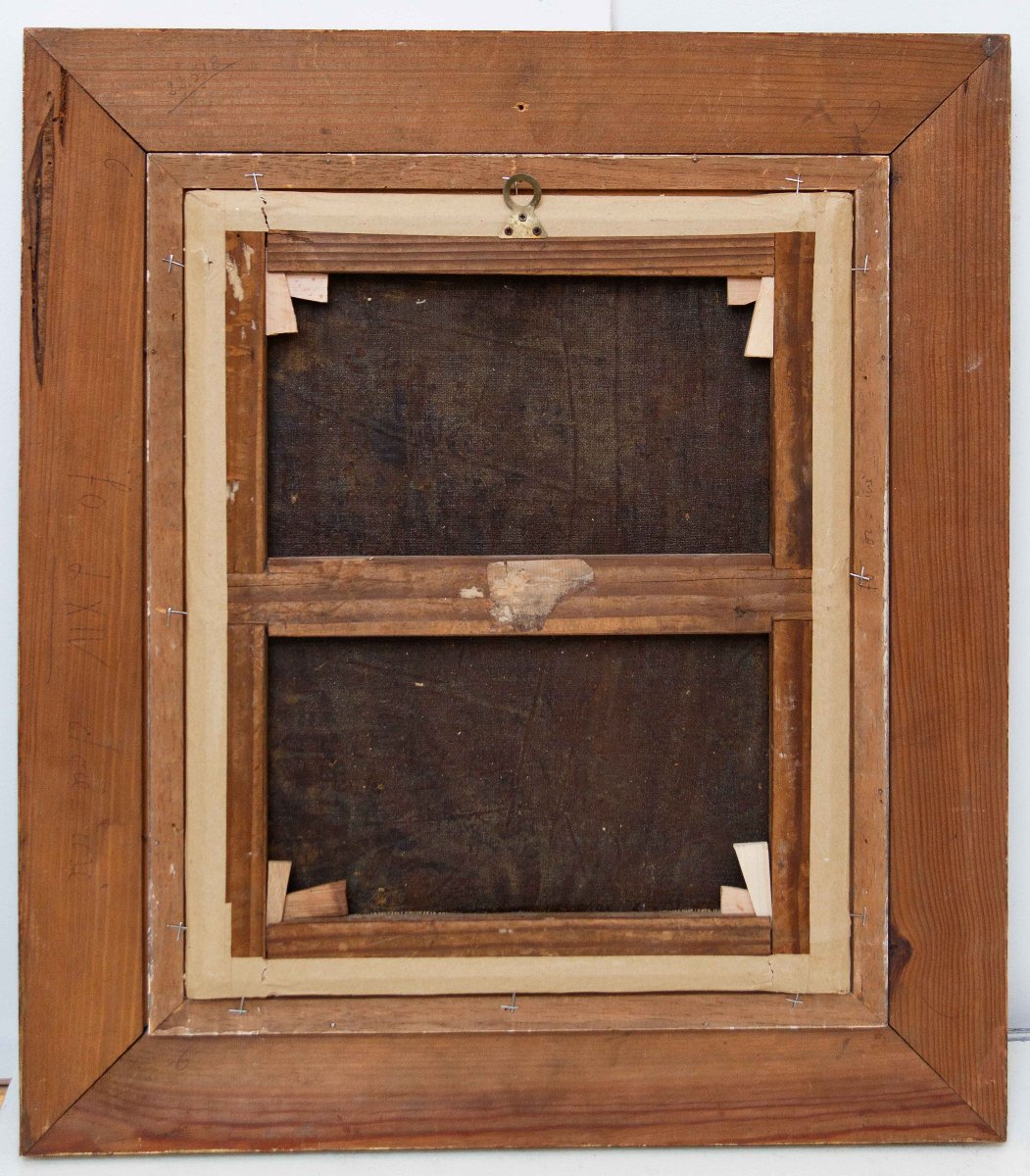
Oil on canvas, 46 x 38 cm – with frame, 65 x 59 cm
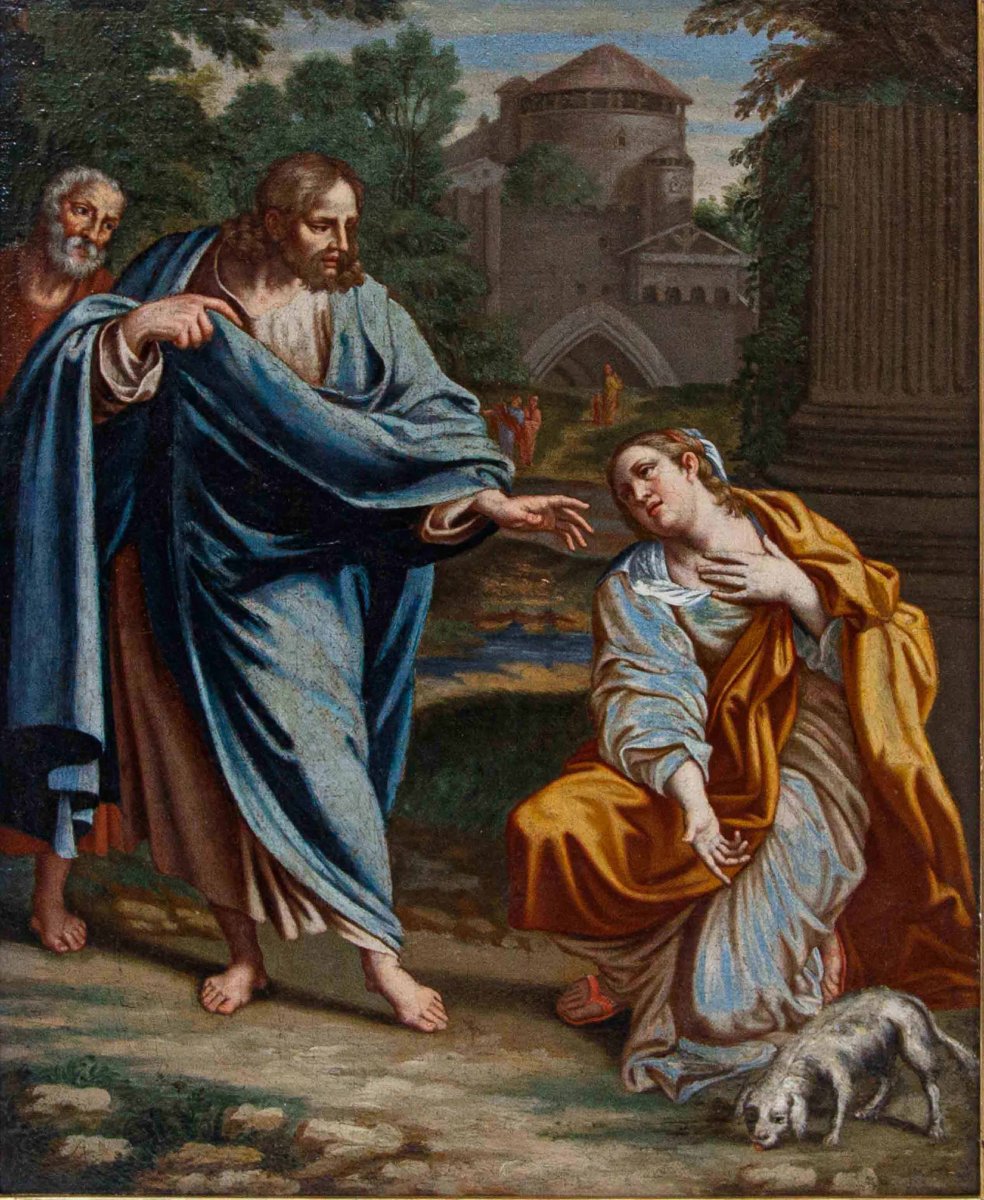
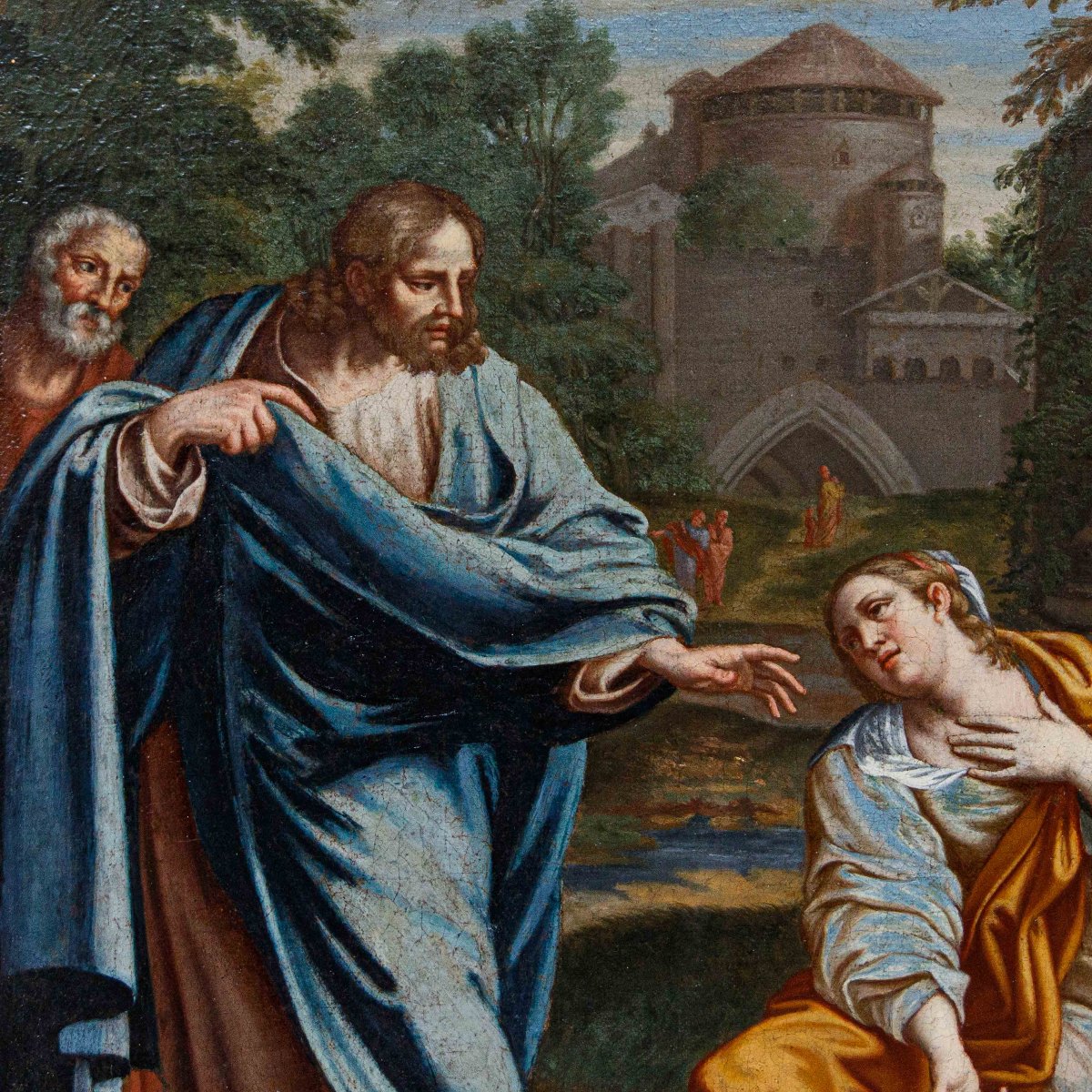
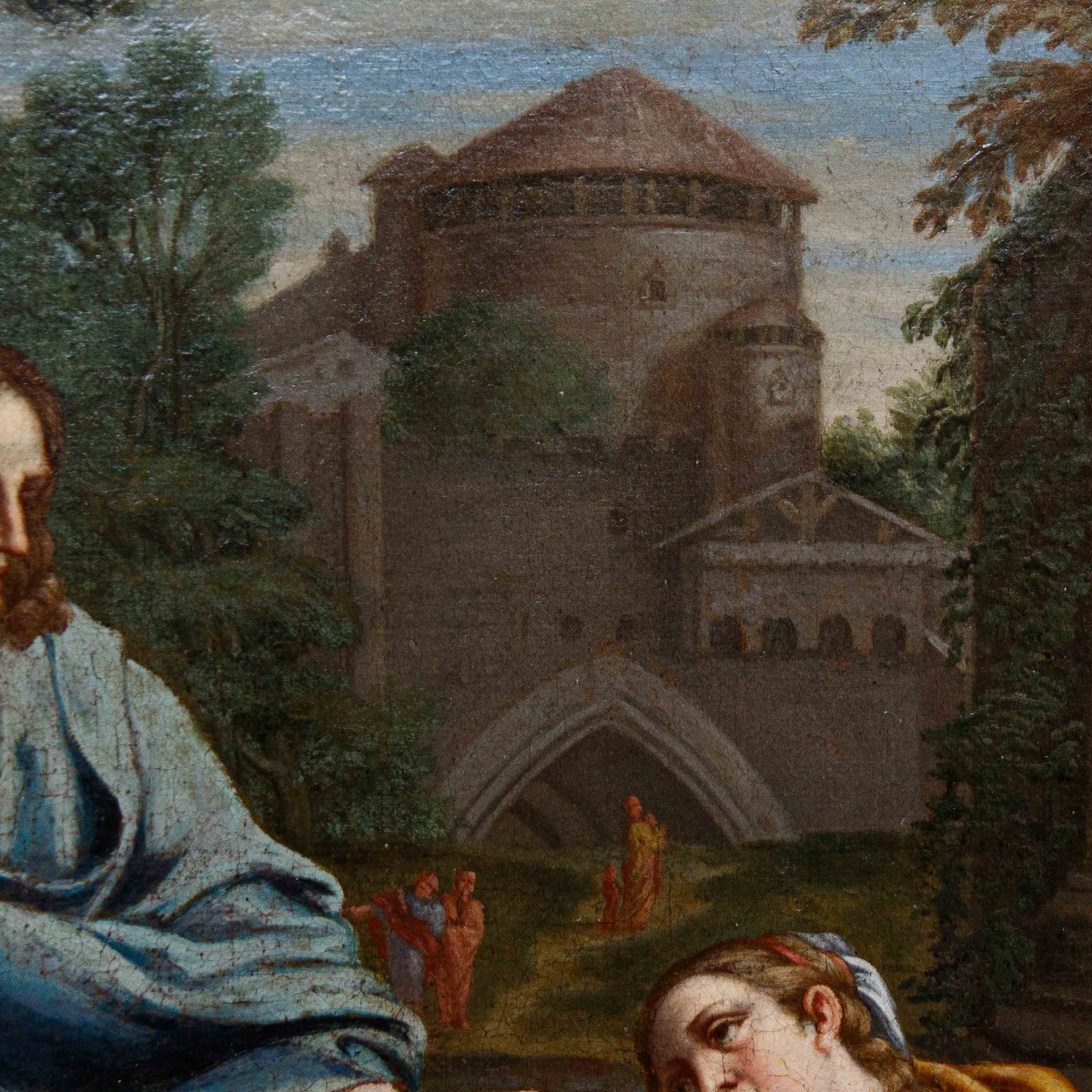
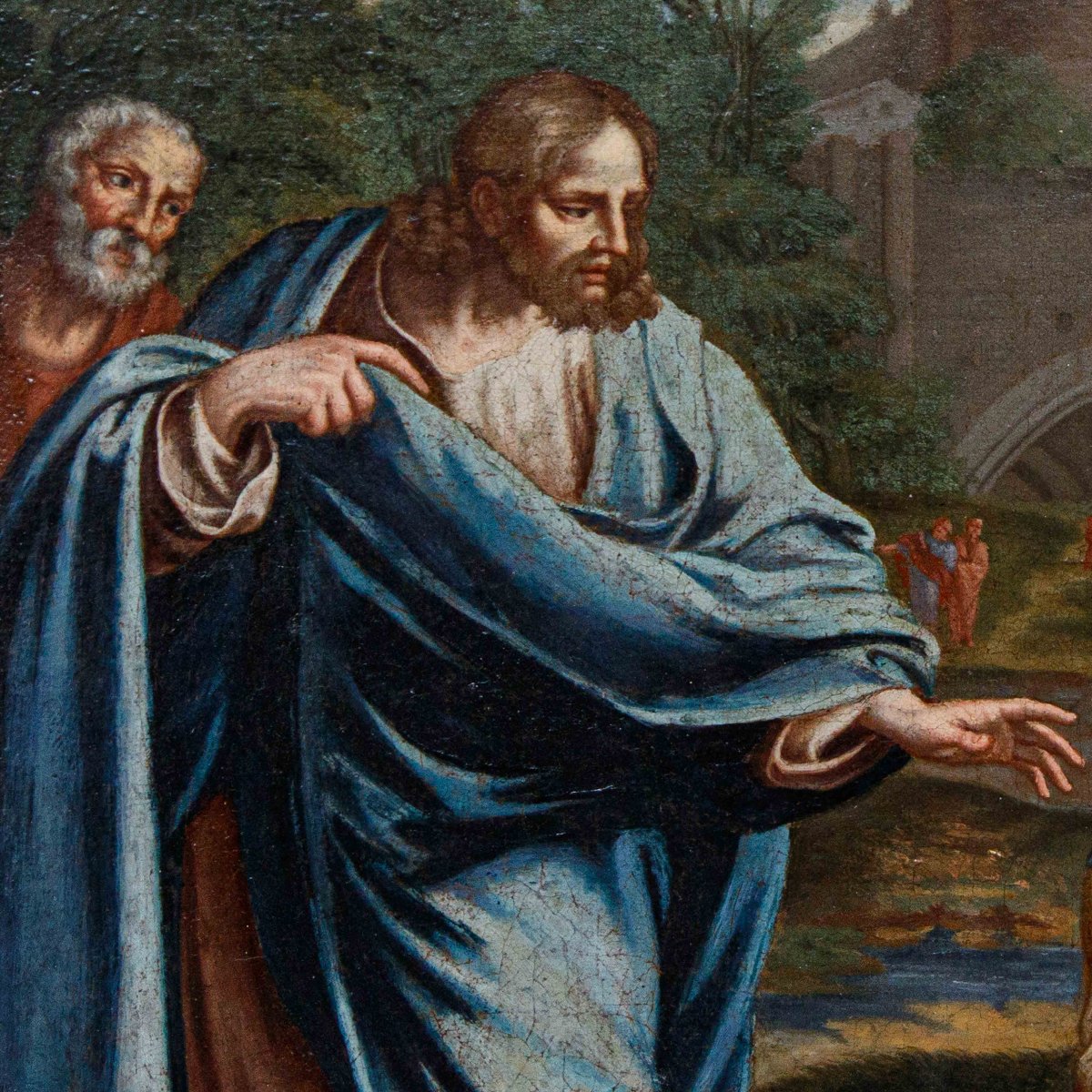
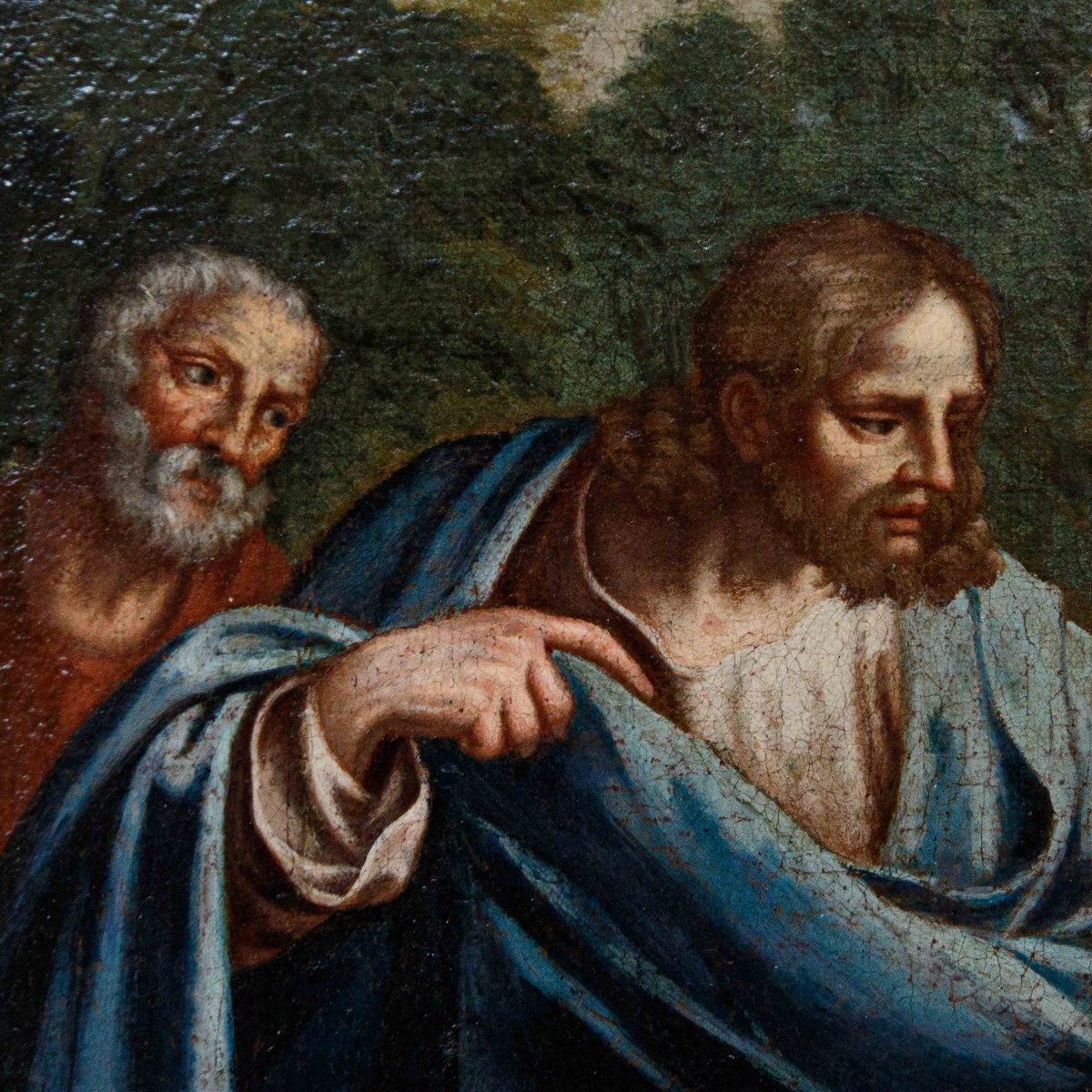
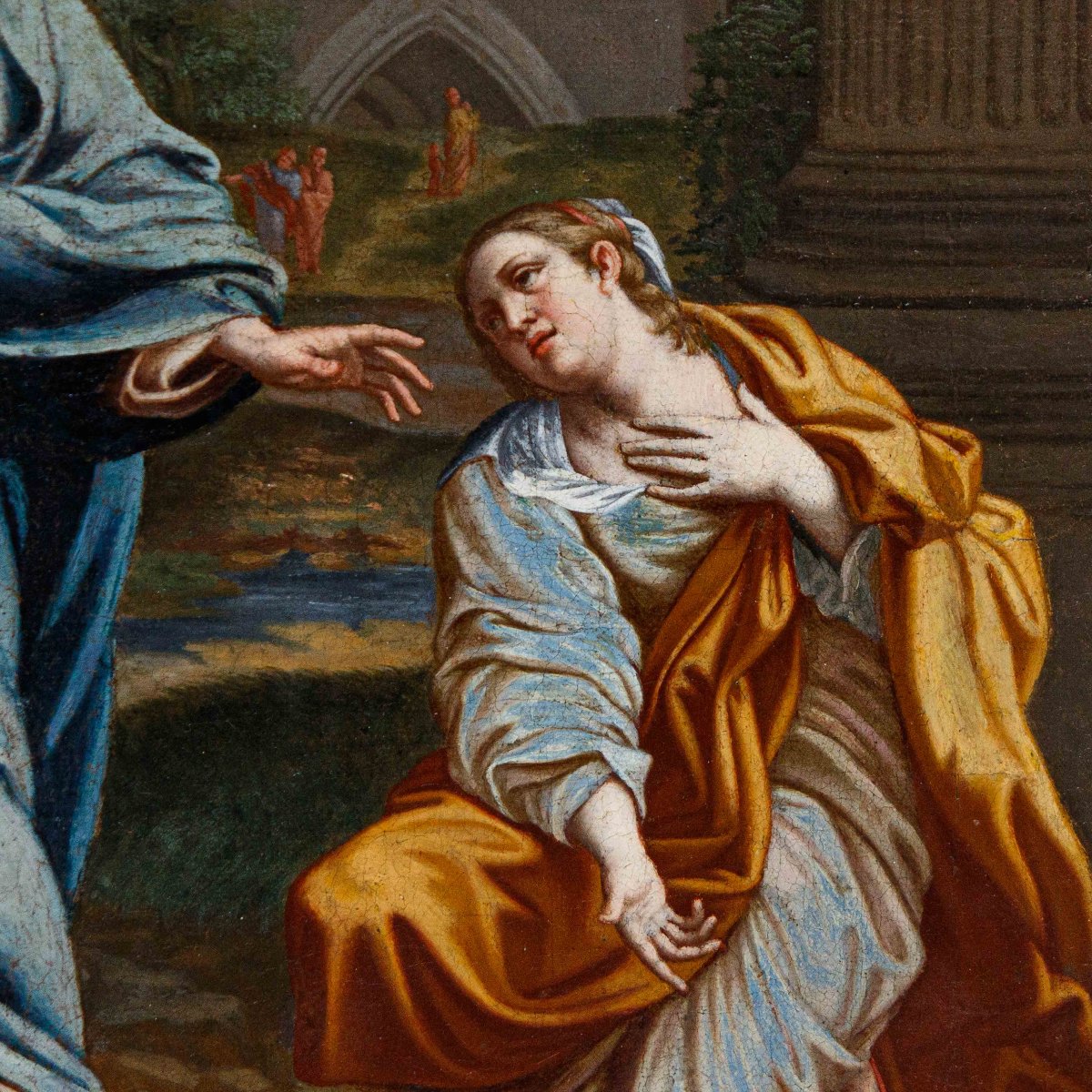
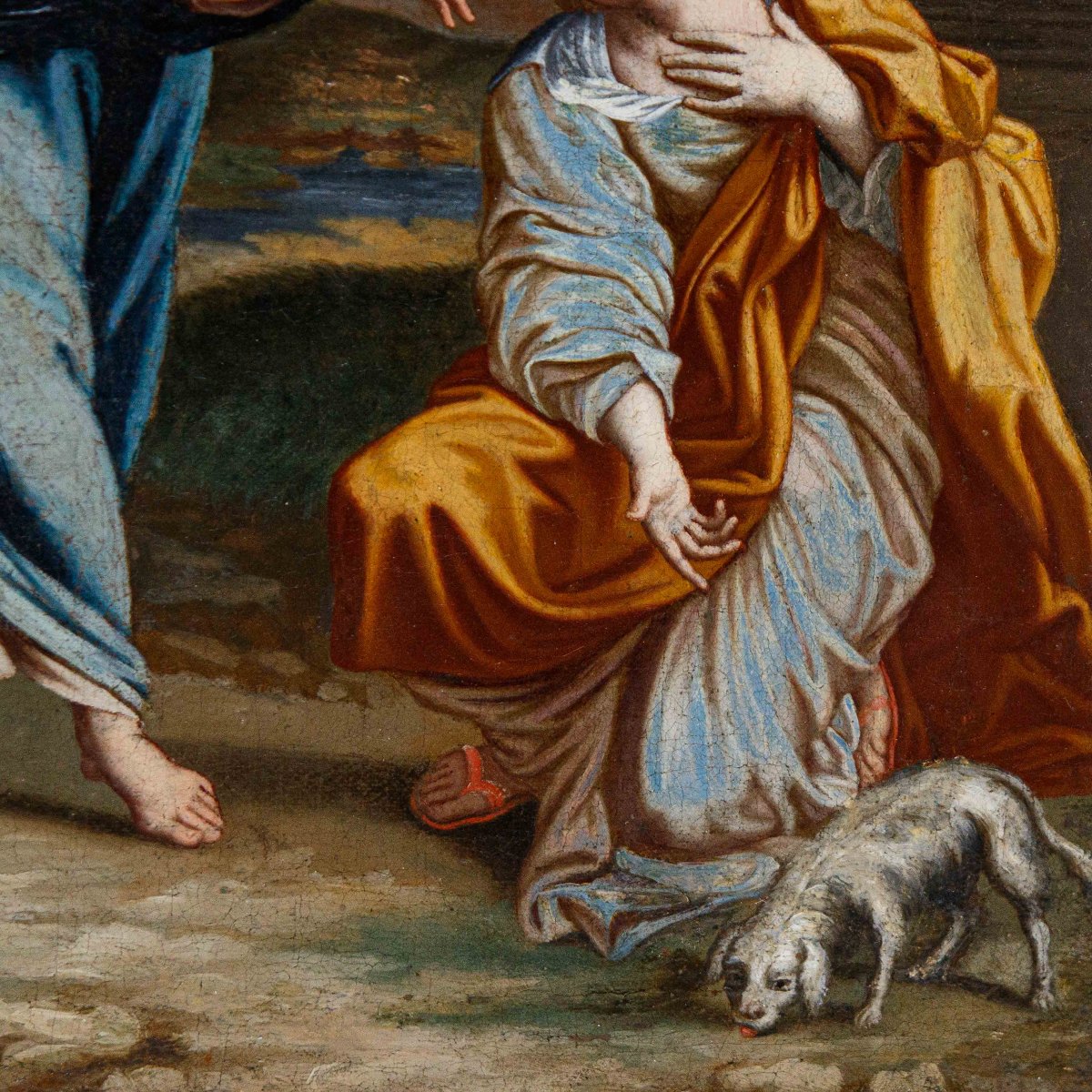
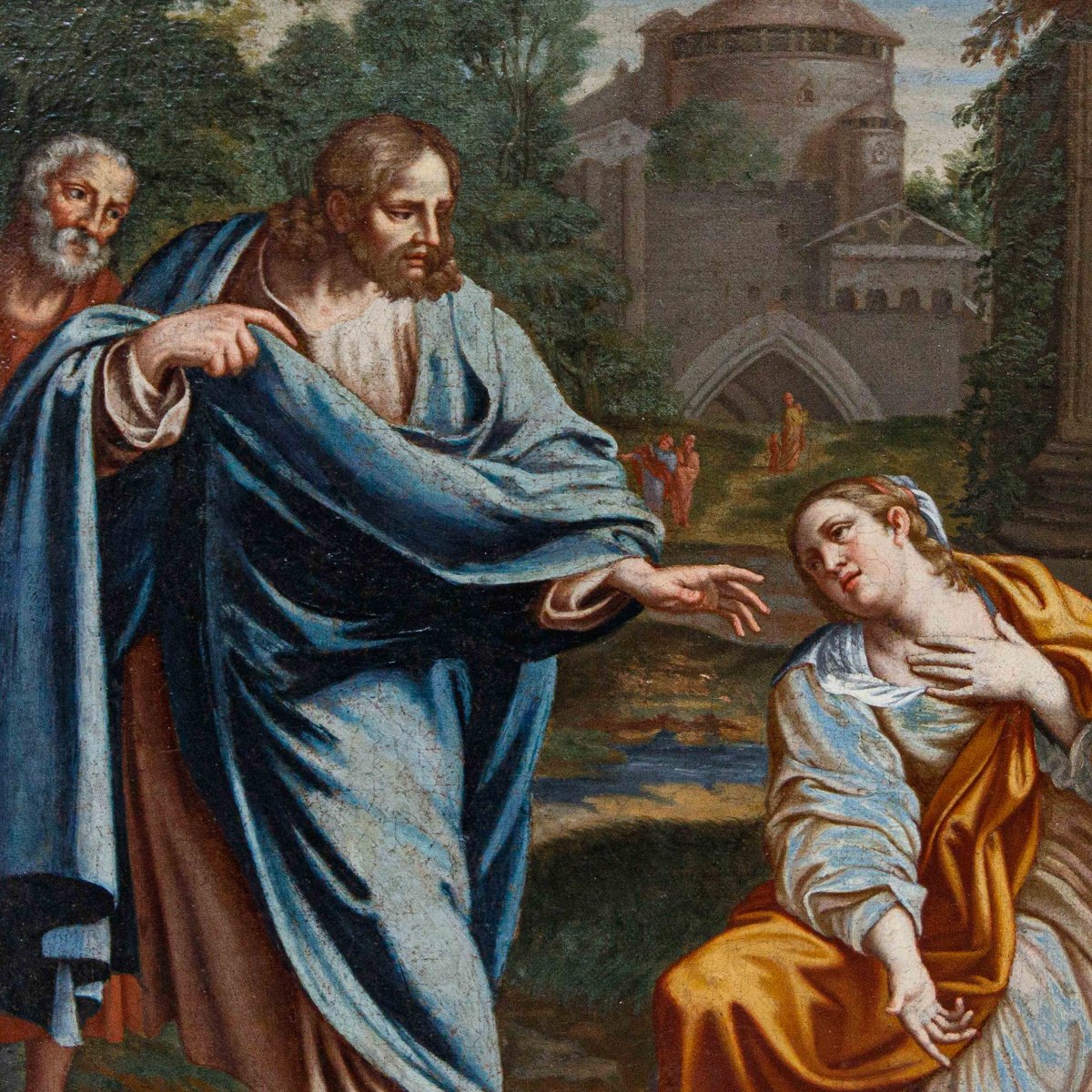
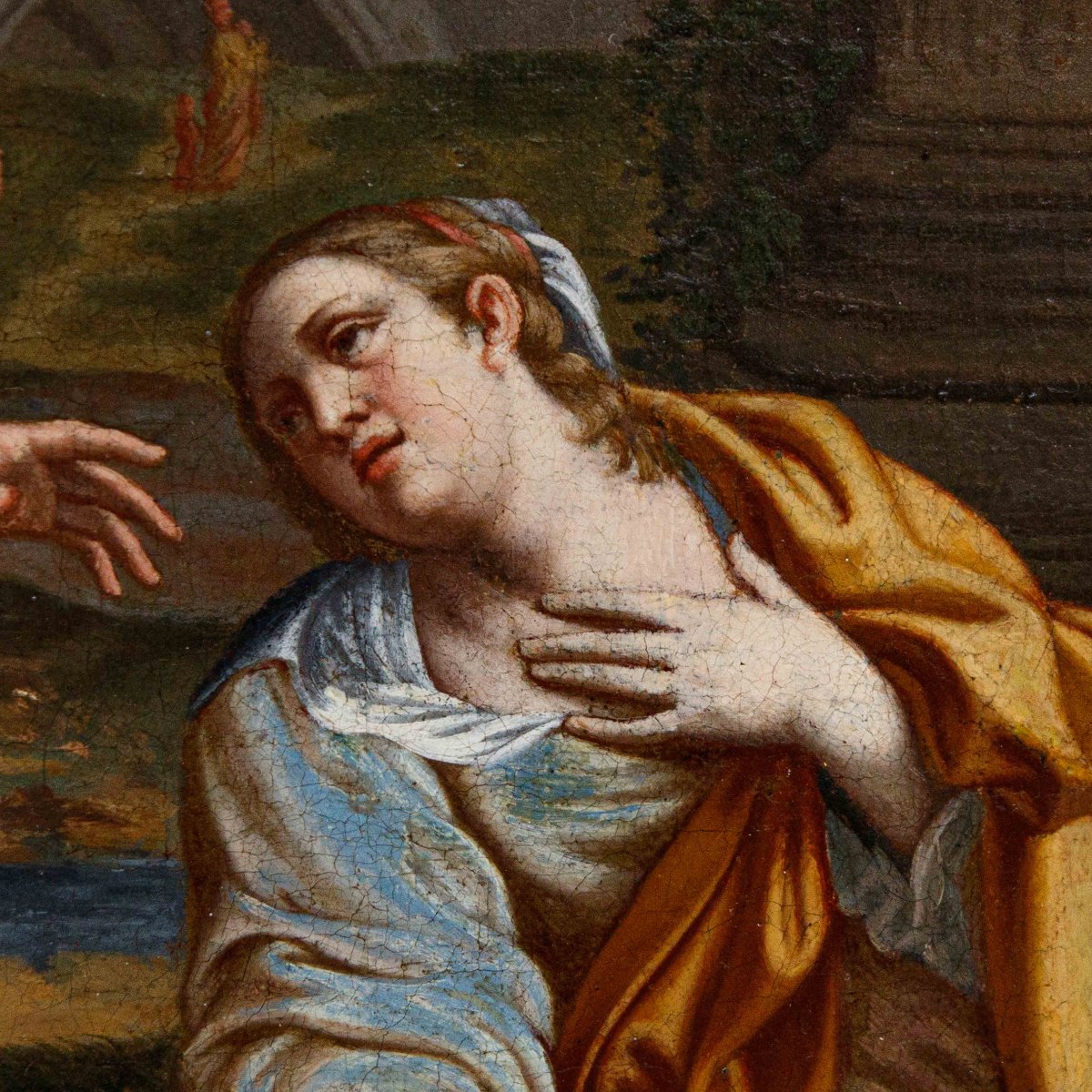
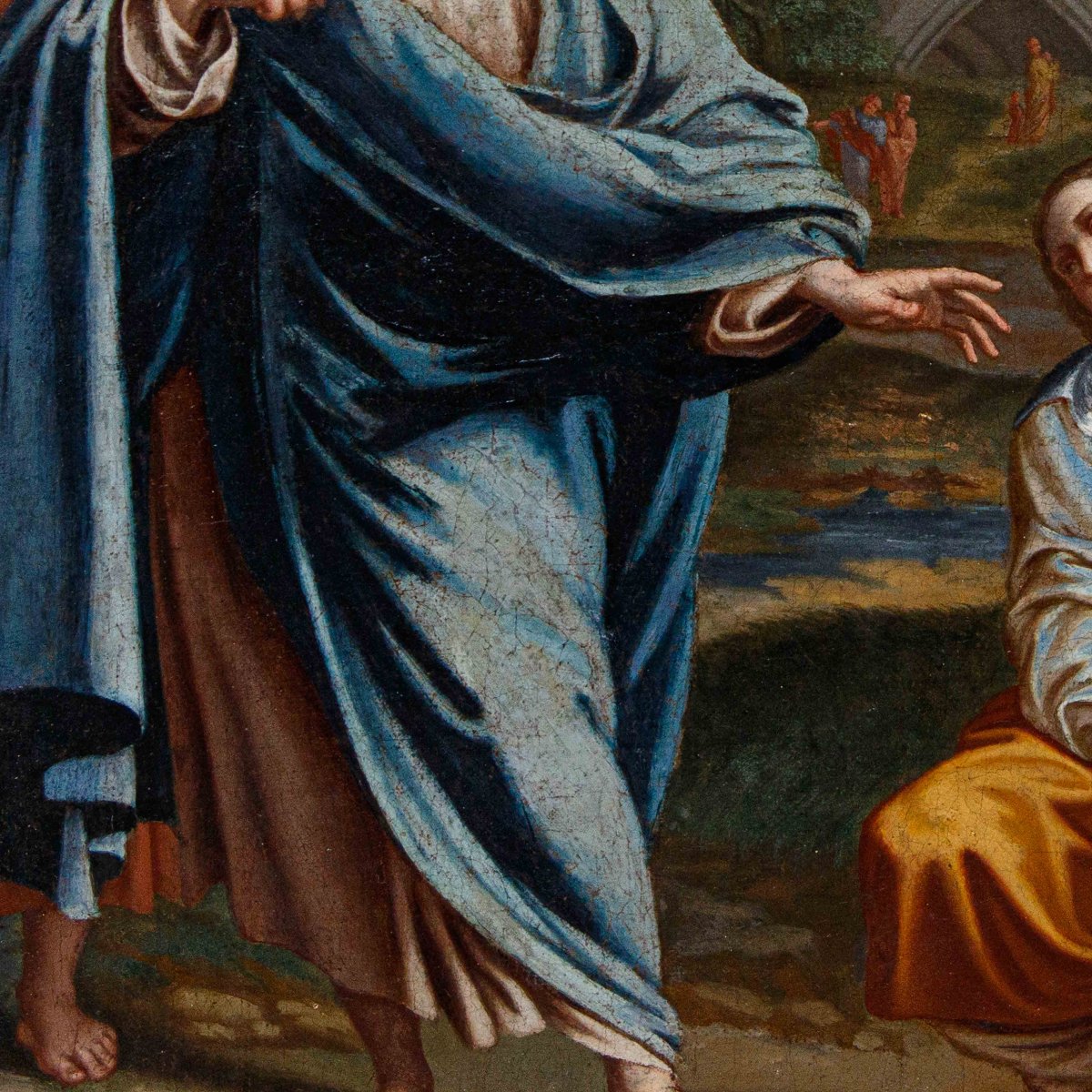
The painting depicts the encounter between Christ and the Canaanite Woman, an episode recounted in the Gospels of Matthew and Mark. While preaching, Jesus is approached by a Canaanite woman—and thus a pagan—who begs him to heal her daughter, who is suffering from a serious illness, also described as demonic possession. The Savior, testing the woman’s faith, initially gives her a dismissive reply, reminding her that he had been sent only to the lost sheep of the house of Israel; but faced with the humility and perseverance of the supplicant—who compares herself to the little dogs that eat the crumbs that fall from the children’s table—Christ recognizes her faith and grants the healing. When the woman returns home, she finds her daughter healed. The scene, captured at the climax of her plea, shows Christ bending toward the kneeling woman in a gesture of welcome that foreshadows the granting of grace, while a small dog crouched at the woman’s feet alludes precisely to the parable of the crumbs.
The composition presented here is directly based on the famous original by Annibale Carracci, now housed at the Pinacoteca Stuard in Parma, considered one of the Bolognese master’s earliest Roman works. The painting was created for the private chapel inside Palazzo Farnese in Rome and still bears evident traces of the figurative style that Annibale brought with him from Bologna, in particular the affinity with the canvas of a similar subject painted a few years earlier by his cousin Ludovico Carracci as part of the decoration of Palazzo Sampieri, a project in which Annibale himself had participated alongside his brother Agostino. Our painting, the work of a follower active in the second half of the seventeenth century, faithfully reproduces the Carracci-style compositional structure: the arrangement of the figures, Christ’s gesture, the woman’s supplicating posture, and even the presence of the little dog are taken from the original model, testifying to the enduring influence of that composition on painters of subsequent generations.
The popularity of Annibale Carracci’s *Cananea* was, in fact, extraordinary and spanned the entire 17th century. In addition to the autograph version now in Parma, another version is known to exist in Dijon, and numerous copies executed by different artists attest to the widespread circulation of the composition among collectors and workshops. The engravings based on the original played a decisive role in cementing its fame, notably those by Pietro del Pò and Carlo Cesi, which allowed Carracci’s creation to circulate far beyond Rome’s borders, reaching workshops and collectors throughout Italy and becoming an iconographic benchmark for the subject. The work’s renown is also confirmed by written accounts from the period: both Giovan Pietro Bellori and Carlo Cesare Malvasia discussed it in their biographical and critical writings, recognizing this canvas as one of the most successful and widely imitated compositions in Annibale Carracci’s entire body of work, capable of establishing itself as an enduring model for the pictorial rendering of this Gospel episode well beyond the end of the century.
Period: 17th century
Style: Other Style
Condition: Good condition
Material: Oil painting
Width: 38
Height: 46
Reference (ID): 1804131
Availability: In stock